2027 Best Online Bachelor's in Mechanical Engineering With the Best Fit for Busy Professionals

Co-Founder and Chief Data Scientist
Choosing an online mechanical engineering bachelor's degree is difficult because the field is hands-on, math-heavy, and often tied to licensure. The payoff can be strong: the U. S. Bureau of Labor Statistics reported a $99,510 median annual wage for mechanical engineers in May 2024. This guide is for working adults comparing reputable online programs, transfer pathways, accreditation, scheduling flexibility, costs, licensure, and career outcomes so they can choose a degree that fits both their calendar and long-term engineering goals.
Key Things You Should Know
- For most students, the best online mechanical engineering bachelor's program is one that is ABET-accredited, offers remote-friendly labs or clearly scheduled campus lab sessions, and accepts transfer credits without weakening licensure eligibility.
- Mechanical engineering is a strong but demanding investment: BLS data shows a $99,510 median annual wage in May 2024, but outcomes vary by industry, region, experience, internships, and whether the graduate pursues professional engineering licensure.
- Busy professionals should compare programs by total cost, lab requirements, course pacing, transfer policy, advising access, and employer recognition rather than relying only on rankings or the word "online."
What makes an online mechanical engineering bachelor's degree reputable?
A reputable online mechanical engineering bachelor's degree is not simply a video version of a campus program. It should teach the same engineering fundamentals, include credible lab and design experiences, and come from an institution with recognized accreditation. For students comparing a mechanical engineering online degree, the most important question is whether the program can support real engineering work after graduation, not just whether it is convenient.
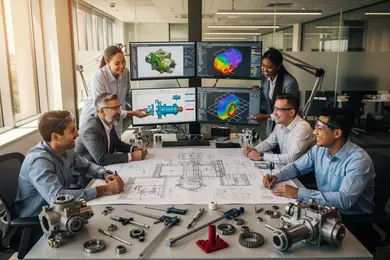
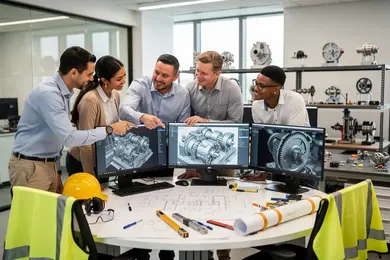
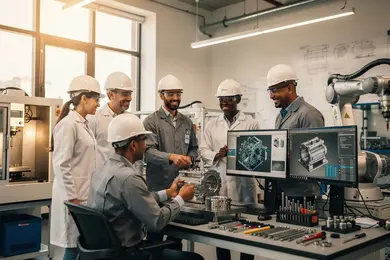
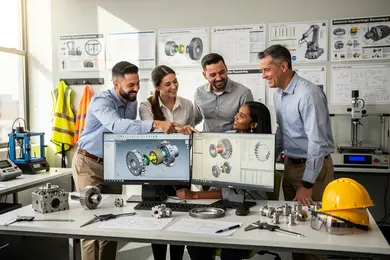
Mechanical engineering programs prepare students to analyze, design, test, and improve machines, energy systems, manufacturing processes, vehicles, robotics, and thermal systems. Because employers expect graduates to solve physical-world problems, reputable online programs must show how they handle labs, teamwork, senior design, software tools, and faculty interaction.
The table below summarizes the quality signals that matter most when evaluating online mechanical engineering bachelor's programs. Use it to separate strong options from programs that may be convenient but risky.
| Quality signal | Why it matters | What to verify before enrolling |
| ABET program accreditation | It is the most important external quality marker for engineering programs and may affect licensure eligibility. | Confirm the exact program name, degree level, campus or online modality, and accreditation status in ABET's official database. |
| Clear lab model | Mechanical engineering requires applied learning in materials, fluids, controls, manufacturing, and thermal systems. | Ask whether labs are online, kit-based, simulation-based, completed locally, or completed during short campus residencies. |
| Senior design experience | Employers often use design projects as evidence that graduates can work in teams and solve open-ended problems. | Review sample capstone projects, team expectations, sponsor involvement, and required presentation formats. |
| Transfer-friendly structure | Working adults often enter with community college, military, or prior university credits. | Request a written transfer evaluation before committing financially. |
| Engineering career support | Online students need access to internships, co-ops, resume support, and employer networks. | Ask whether online students can use the same career services as campus students. |
A common mistake is choosing the cheapest or fastest program without checking whether it is actually a mechanical engineering degree. Mechanical engineering technology, manufacturing engineering technology, and general engineering degrees can be useful, but they may lead to different jobs and different licensure pathways than a traditional mechanical engineering bachelor's degree.
Which schools offer the best online mechanical engineering bachelor's degrees for working adults?
The best online mechanical engineering bachelor's degrees for working adults tend to be offered by public universities with established engineering colleges, ABET-accredited curricula, and realistic lab plans. Because fully online mechanical engineering bachelor's programs are less common than online business or IT degrees, the strongest choices are usually "online-first" or "mostly online" programs with limited in-person requirements.
The table below highlights reputable U.S. options that working adults commonly evaluate. Always confirm current program format, accreditation, tuition, and residency requirements directly with the university before applying, because engineering programs can change delivery methods more often than general online degrees.
| School | Degree to investigate | Why it may fit busy professionals | Key caution |
| University of North Dakota | Bachelor's in Mechanical Engineering | Known for distance engineering delivery and a long-standing online engineering model. | Students should verify lab schedules, proctoring rules, and any required in-person components. |
| Arizona State University Online | Bachelor of Science in Engineering in Mechanical Engineering | Large online infrastructure, accelerated course sessions, and a recognizable engineering school brand. | Short course sessions can be intense for students working full time. |
| The University of Alabama | Bachelor of Science in Mechanical Engineering through distance learning | Offers a traditional engineering degree through a format designed for distance students. | Students should confirm how labs, exams, and any campus visits are handled. |
To choose among these programs, focus on fit rather than prestige alone. A highly ranked program may be a poor choice if required labs conflict with your work schedule, while a less famous but ABET-accredited program with strong transfer acceptance and predictable course rotations may be more practical.
Before you apply, take these steps to avoid expensive surprises:
- Ask for a degree plan showing exactly which courses you still need after transfer credits are evaluated.
- Confirm whether every required mechanical engineering course is offered online often enough to keep you on schedule.
- Request details on labs, senior design, exams, group projects, and any mandatory campus visits.
- Compare total cost, including fees, software, hardware, travel, textbooks, and extra semesters caused by prerequisites.
- Ask whether online students have access to internships, co-ops, engineering career fairs, and faculty advising.
Is an online mechanical engineering degree respected by employers?
An online mechanical engineering degree can be respected by employers when it comes from a properly accredited institution and the transcript reflects a rigorous engineering curriculum. Many employers care less about whether lectures were online and more about whether the degree is legitimate, whether the student completed credible labs and design work, and whether the graduate can use engineering tools to solve real problems.
That said, not all online engineering degrees carry the same weight. Mechanical engineering is a physical design field, so employers may look closely at project experience, internship history, CAD and simulation skills, communication ability, and evidence of hands-on problem solving. Online students can strengthen employer confidence by building a portfolio that includes capstone work, design reports, lab data, prototypes, coding projects, or manufacturing analysis.
The table below shows how employers often evaluate online engineering graduates. It can help you decide where to invest your time while enrolled.
| Employer concern | What reduces the concern | What can raise a red flag |
| Was the program rigorous? | ABET accreditation, calculus-based engineering coursework, and faculty-led labs. | Vague program descriptions or a curriculum light on physics, design, and engineering analysis. |
| Can the graduate work in teams? | Senior design, group projects, and documented collaboration tools. | No capstone project or no explanation of how online teamwork is assessed. |
| Does the graduate have applied skills? | CAD, MATLAB, Python, finite element analysis, manufacturing, testing, and controls experience. | A transcript with theory courses but little design, lab, or software evidence. |
| Can the graduate function in a professional engineering environment? | Internships, co-ops, employer-sponsored projects, and strong references. | No career support or no plan for gaining experience before graduation. |
The most practical strategy is to treat the online format as a delivery method, not the full value proposition. Your degree becomes more credible when you pair it with visible engineering work, strong grades in core courses, and experience that shows you can apply theory outside the classroom.
What accreditation should an online mechanical engineering program have?
An online mechanical engineering program should have institutional accreditation and, for most students, programmatic accreditation from ABET's Engineering Accreditation Commission. Institutional accreditation confirms that the college or university meets broad academic and administrative standards. ABET accreditation evaluates whether the engineering program itself meets discipline-specific expectations.
This distinction matters because state licensing boards, graduate engineering programs, and some employers may treat ABET-accredited engineering degrees differently from non-ABET or engineering technology degrees. Requirements vary, so students planning to become licensed professional engineers should verify rules in the state where they expect to work.
When checking accreditation, do not rely only on marketing language. Follow this short verification process:
- Search the institution's official website for the exact degree title and department offering the program.
- Look up the program in ABET's official accredited program search using the same institution and degree name.
- Confirm whether the accredited program is mechanical engineering, mechanical engineering technology, general engineering, or another related field.
- Ask admissions whether online students graduate from the same accredited program as campus students.
- Save written confirmation before paying a deposit if licensure is part of your career plan.
A major red flag is a school saying it is "aligned with ABET standards" without holding ABET accreditation for the specific program. Alignment is not the same as accreditation, and it may not satisfy licensing or employer requirements.
Can you become a licensed professional engineer with an online degree?
Yes, it may be possible to become a licensed professional engineer with an online degree, but the degree must fit your state's licensing rules. In the United States, professional engineering licensure is handled by state boards, and the standard pathway usually includes an accredited engineering degree, passing the Fundamentals of Engineering exam, relevant supervised work experience, and passing the Principles and Practice of Engineering exam.
For mechanical engineering students, licensure is most important in roles involving public safety, consulting, regulated infrastructure, stamped engineering documents, HVAC design for buildings, energy systems, and some government contracts. It may be less essential in certain manufacturing, product design, robotics, or private-sector R&D roles, though it can still support advancement.
Students who want PE eligibility should use the following sequence before enrolling:
- Identify the state where you expect to seek licensure after graduation.
- Review that state engineering board's education rules for online, ABET, non-ABET, and engineering technology degrees.
- Confirm whether the program's exact accreditation type satisfies the board's preferred pathway.
- Ask the school whether graduates have historically sat for the FE exam and pursued PE licensure.
- Plan for supervised engineering experience after graduation, because the bachelor's degree alone is not the license.
The key limitation is that licensure rules are not identical nationwide. If your career goal requires a PE license, do not assume that "online" or "engineering" is enough; verify the specific pathway with the relevant licensing board.
What courses are included in an online mechanical engineering curriculum?
An online mechanical engineering curriculum usually includes the same foundation as a campus program: advanced mathematics, physics, engineering science, design, lab work, and a capstone project. The online format may change how students attend lectures or submit assignments, but it should not remove the core analytical and design requirements of the discipline.
The table below outlines common course areas and why they matter. It is especially useful for transfer students who want to know which community college credits are likely to apply.
| Course area | Common subjects | Why it matters professionally |
| Mathematics and science | Calculus, differential equations, physics, chemistry, statistics. | Builds the quantitative foundation used in modeling, testing, and design. |
| Engineering mechanics | Statics, dynamics, mechanics of materials, vibrations. | Helps engineers analyze forces, motion, stress, failure, and safety. |
| Thermal and fluid systems | Thermodynamics, heat transfer, fluid mechanics, energy systems. | Supports work in HVAC, power systems, engines, aerospace, and industrial processes. |
| Design and manufacturing | CAD, machine design, manufacturing processes, materials engineering. | Connects theory to product development and production decisions. |
| Controls and computation | Control systems, numerical methods, MATLAB, Python, simulation. | Prepares students for automation, robotics, modeling, and data-informed engineering work. |
| Professional practice | Engineering ethics, technical communication, economics, senior design. | Develops judgment, documentation skills, teamwork, and project accountability. |
Current technology trends make software fluency especially important. AI-assisted design, digital twins, additive manufacturing, robotics, and simulation tools are changing mechanical engineering work, but they do not replace the need to understand physics, materials, tolerances, and safety. Students should look for programs that teach both fundamentals and modern tools.
How long does an online mechanical engineering bachelor's degree take?
A full online mechanical engineering bachelor's degree typically takes about four years for first-time, full-time students, but many working adults take longer because engineering courses are sequential. Calculus, physics, statics, dynamics, thermodynamics, and design courses often must be completed in order, so one missed prerequisite can delay graduation.
The table below compares common timelines for busy adults. Use it to estimate whether a program's advertised completion time matches your actual work, family, and transfer-credit situation.
| Student profile | Typical timeline | Best fit | Main trade-off |
| First-time full-time student | About 4 years | Students who can prioritize school and take heavy math and science loads. | Less compatible with full-time work. |
| Transfer student with an associate degree | About 2 to 3 years after transfer | Students who completed calculus, physics, and general education before enrolling. | Engineering major courses may still be tightly sequenced. |
| Part-time working adult | Often 5 to 7 years total | Students balancing full-time employment, military service, or caregiving. | Longer time to graduation can increase total cost and delay career change. |
| Accelerated course student | Varies by transfer credits and course availability | Students with strong math preparation and predictable weekly study time. | Compressed courses can be difficult in calculus-based subjects. |
If you are still deciding whether a lab-heavy engineering program fits your life, it can help to compare it with other science pathways such as geology degrees online, which may have different fieldwork, lab, and career expectations. The right choice depends on whether you want to design mechanical systems, study earth systems, or pursue another STEM direction entirely.
For most working adults, the safest timeline strategy is to avoid overloading the first term. Start with a manageable number of courses, especially if you have been away from calculus or physics, then increase your pace only after you understand the weekly workload.
What are the admission requirements for online mechanical engineering programs?
Admission requirements for online mechanical engineering programs are usually more demanding than requirements for many general online bachelor's degrees. Schools want evidence that students can handle calculus-based coursework, laboratory science, and a structured engineering sequence.
Most programs ask for a combination of academic records and readiness indicators. Requirements vary, but applicants should be prepared to provide the following:
- High school transcripts or college transcripts from every institution attended.
- Evidence of math readiness, often through precalculus, calculus, placement testing, or completed college math.
- Science preparation, especially physics and chemistry for students entering lower-division engineering courses.
- Minimum GPA requirements that may differ for first-year, transfer, and engineering-major admission.
- Transfer course syllabi or catalog descriptions if the school needs to evaluate engineering, math, or science credits.
- English proficiency documentation for applicants whose prior education requires it.
Working adults should pay special attention to transfer policy. A generous general transfer policy does not always mean engineering credits will apply to the major. Calculus, physics, and engineering science courses may need to match the university's content closely, and older technical credits may be reviewed individually.
If you are comparing online degrees broadly and discover that engineering prerequisites are not a fit, an information-focused path such as a librarian degree online may offer a different kind of professional pathway with less emphasis on calculus, physics, and lab sequencing. That does not make one path easier in every respect, but it shows why admissions requirements should be matched to your strengths and goals.
What jobs can you get with a mechanical engineering bachelor's degree?
A mechanical engineering bachelor's degree can lead to roles in product design, manufacturing, energy, aerospace, automotive systems, robotics, HVAC, testing, quality, and technical sales. The degree is broad, which is one reason it appeals to students who want options across industries rather than training for only one job title.
The table below summarizes common career paths and the type of work associated with each. Actual job titles vary by employer and may require industry-specific tools, internships, or experience.
| Career path | Typical responsibilities | Skills that help |
| Mechanical design engineer | Designs components, assemblies, machines, or products and evaluates performance constraints. | CAD, materials, mechanics, tolerancing, simulation, technical documentation. |
| Manufacturing engineer | Improves production processes, tooling, workflow, quality, and equipment performance. | Lean methods, manufacturing processes, data analysis, automation, troubleshooting. |
| Test engineer | Plans experiments, collects performance data, validates prototypes, and reports failures. | Instrumentation, statistics, lab methods, coding, communication. |
| HVAC or building systems engineer | Supports heating, ventilation, cooling, energy, and mechanical systems in buildings. | Thermodynamics, fluids, codes, energy modeling, PE licensure for some roles. |
| Robotics or automation engineer | Works on mechanical systems integrated with controls, sensors, and manufacturing automation. | Controls, programming, mechatronics, systems thinking, troubleshooting. |
| Quality or reliability engineer | Analyzes failures, improves product reliability, and supports compliance or production quality. | Root-cause analysis, statistics, materials, testing, documentation. |
Students who want remote-first careers should be realistic. Some mechanical engineering jobs require plant visits, labs, testing facilities, fieldwork, or prototype work. Hybrid roles are increasingly common in design, simulation, documentation, and project coordination, but early-career engineers often benefit from in-person exposure to equipment and teams.
If your main goal is a knowledge, archives, or information-management career rather than physical product design, a library science degree may align better with your interests. Mechanical engineering is strongest for students who enjoy math, physical systems, constraints, testing, and design trade-offs.
How much do mechanical engineers earn and what is the job outlook?
Mechanical engineering can offer strong earnings potential, but salary depends on industry, location, experience, degree quality, internships, technical skills, and licensure. According to the U.S. Bureau of Labor Statistics, the median annual wage for mechanical engineers was $99,510 in May 2024. This figure is best used as a labor-market benchmark, not a guarantee for new graduates.
The job outlook is also favorable. BLS projects employment for mechanical engineers to grow 11% from 2023 to 2033, which is faster than the average for all occupations. For students, this suggests durable demand, but competition can still be significant for preferred industries such as aerospace, automotive, robotics, and clean energy.
The table below shows how different factors can influence return on investment. It is designed to help you look beyond headline salary figures.
| ROI factor | Why it matters | How to evaluate it |
| Total program cost | Engineering degrees can require extra fees, software, hardware, lab travel, and additional semesters. | Compare full cost of attendance, not tuition alone. |
| Transfer credits | Accepted credits can shorten time to graduation and reduce borrowing. | Get a written transfer audit before enrolling. |
| Internships and co-ops | Experience can improve competitiveness for entry-level engineering roles. | Ask whether online students can access employer partnerships and career fairs. |
| Accreditation and licensure fit | ABET status can affect PE pathways and employer screening. | Verify the exact program in ABET and with the relevant state board. |
| Course pace | Part-time study may be necessary but can delay earnings gains. | Model realistic timelines for full-time, part-time, and transfer scenarios. |
Cost should be evaluated carefully. College Board's 2024 Trends in College Pricing reported average published tuition and fees of $11,610 for in-state students at public four-year institutions and $43,350 at private nonprofit four-year institutions for 2024-25. Online engineering students may pay different rates, but the comparison shows why residency, transfer credits, and program length can materially change affordability.
Other Things You Should Know About Mechanical Engineering
Busy professionals should consider flexible scheduling, course delivery methods, and access to support services. A program offering asynchronous courses, practical hands-on experience options, and comprehensive career support will best fit professionals balancing work, life, and study.
It can be done, but it is challenging. Calculus-based courses often require consistent weekly study, problem-solving practice, and project time. Many working adults succeed by taking lighter course loads, using summer terms strategically, and avoiding multiple difficult technical courses in the same term.
Yes, but they may need to be more proactive than campus students. Strong options include local manufacturers, utilities, engineering firms, defense contractors, HVAC companies, and employer-sponsored projects. Ask each school whether online students can use the same career platform and employer events as campus students.
A master's degree can help for specialized roles in robotics, aerospace, thermal systems, simulation, controls, or research-heavy positions. It is usually not necessary for every entry-level mechanical engineering job, so it makes the most sense after you identify a specialization or employer requirement.
References
- Online Mechanical Engineering Degrees - MSME, BSME https://www.onlineengineeringprograms.com/mechanical
- 2025 Best Online Mechanical Engineering Degrees https://www.onlineu.com/degrees/mechanical-engineering
- International Professionals | NCEES https://ncees.org/licensure/international-professionals/
- Top Online Bachelor's Degrees In Mechanical Engineering https://www.accreditedschoolsonline.org/online-degrees/best-online-bachelors-in-mechanical-engineering/
- Can an Engineering Technology Major Become a Professional Engineer (PE)? https://engineeringtechnology.org/introduction-to-engineering-technology/can-an-engineering-technology-major-become-an-engineer/
- What is a PE? https://www.nspe.org/about/about-professional-engineering/what-pe
- How Long to Become a Mechanical Engineer? | University of Bridgeport https://www.bridgeport.edu/news/time-to-become-a-mechanical-engineer/
- Online Mechanical Engineering Degrees 2025 https://www.affordablecollegesonline.org/degrees/engineering-programs/mechanical-engineering/
- Campus vs Online Engineering Degrees - What Employers Think https://www.itcareerfinder.com/brain-food/blog/entry/what-employers-think-about-online-engineering-degrees.html