2027 Best States for Mechanical Engineering Career Growth

Co-Founder and Chief Data Scientist
Choosing where to study or work as a mechanical engineer can affect salary, internships, industry access, and long-term mobility. The U.S. Bureau of Labor Statistics reports a 2024 median pay of $102,320 for mechanical engineers and projects 9% employment growth from 2024 to 2034, making location strategy more important than ever.
This guide is for students, career changers, and early-career engineers comparing states, schools, and degree formats. You will learn where opportunities are strongest, what credentials matter, and how to avoid costly education or relocation mistakes.
Key Things You Should Know
- Mechanical engineering career growth is strongest where multiple industries overlap, especially advanced manufacturing, aerospace, automotive electrification, semiconductors, energy, defense, and robotics.
- The national median pay for mechanical engineers was $102,320 in 2024, but state-level earning power depends on local industry mix, cost of living, clearance requirements, and employer type.
- For long-term advancement, an ABET-accredited bachelor's degree is the safest baseline, while master's degrees are most useful for specialized roles in thermal systems, controls, robotics, aerospace, and computational design.
Which states offer the strongest career growth opportunities for mechanical engineers?
The best states for mechanical engineering career growth are not always the states with the highest salaries. A strong state combines employer concentration, industry diversity, research activity, internship access, licensing pathways, and realistic cost of living. For most students and early-career engineers, the strongest choices are states where mechanical engineers can move between industries without starting over.
The table below summarizes states that stand out for mechanical engineering opportunity based on industry depth, hiring diversity, and career mobility rather than salary alone.
| State | Why it stands out | Best fit for mechanical engineers interested in | Main trade-off |
| California | Large technology, aerospace, defense, clean energy, robotics, and hardware design economy | Product design, aerospace, EV systems, robotics, thermal engineering, R&D | High cost of living and competitive entry-level market |
| Texas | Energy, manufacturing, aerospace, semiconductors, infrastructure, and industrial systems | Energy systems, manufacturing, HVAC, process equipment, aerospace, facilities engineering | Opportunities vary sharply by metro area and industry cycle |
| Michigan | Deep automotive and mobility engineering ecosystem with strong supplier networks | Vehicle systems, EV platforms, manufacturing automation, testing, quality engineering | Career options are strong but more concentrated around mobility and manufacturing |
| Colorado | Aerospace, defense, renewable energy, advanced manufacturing, and federal research presence | Aerospace structures, thermal systems, controls, defense, energy technology | Some roles require security clearance or specialized experience |
| Ohio | Manufacturing, aerospace suppliers, automotive suppliers, industrial equipment, and lower living costs | Manufacturing engineering, mechanical design, plant engineering, quality systems | Salary ceilings may be lower than in coastal R&D hubs |
| Arizona | Semiconductor expansion, aerospace, defense, electronics manufacturing, and rapid metro growth | Semiconductor equipment, manufacturing systems, thermal management, aerospace | Labor market is growing but still smaller than California or Texas |
| Washington | Aerospace, clean technology, hardware, maritime systems, and advanced manufacturing | Aerospace, propulsion-adjacent systems, structures, product engineering | Employer concentration can make local hiring sensitive to large-company cycles |
Students who want the broadest safety net should look first at California, Texas, Michigan, and Ohio because each has a large base of mechanical engineering employers. Students who want specialized growth may prefer Colorado, Arizona, or Washington, especially if they are targeting aerospace, defense, semiconductors, or clean technology.
How do mechanical engineering salaries compare across different U.S. states?
Mechanical engineering salaries vary by state because employers pay for different kinds of expertise. A mechanical engineer working on spacecraft thermal systems, semiconductor equipment, or energy infrastructure may face different pay conditions than one working in plant maintenance or entry-level CAD design. The BLS national median wage of $102,320 in 2024 is a useful benchmark, but it should not be treated as a guaranteed outcome for any degree or state.
The most practical way to compare states is to look at salary alongside cost of living, employer mix, and advancement potential. The table below explains how to interpret salary signals by state type.
| State group | Typical salary signal | Why pay may be higher or lower | How to evaluate it |
| High-cost technology and aerospace states such as California, Washington, and Colorado | Often above the national benchmark for specialized roles | Employers compete for R&D, aerospace, software-adjacent, and advanced hardware talent | Compare salary after rent, taxes, commuting, and relocation costs |
| Large manufacturing states such as Michigan, Ohio, Indiana, and Pennsylvania | Often competitive, especially for experienced engineers | Strong demand in automotive, industrial equipment, automation, and suppliers | Look for promotion paths into systems, project, manufacturing, or operations leadership |
| Energy and industrial states such as Texas and Louisiana | Can be strong in energy, process systems, and heavy industry | Pay may reflect field conditions, plant responsibility, travel, or cyclical demand | Ask whether compensation includes overtime, bonuses, site premiums, or relocation support |
| Defense-heavy states such as Alabama, Arizona, Virginia, Maryland, and New Mexico | Can be strong for cleared or highly specialized engineers | Security clearance, systems engineering, testing, and federal contracting can raise value | Check whether roles require U.S. citizenship, clearance eligibility, or onsite work |
A common mistake is choosing a state only because the average salary looks high. A better approach is to compare entry-level pay, senior engineer pay, local housing costs, internship access, and whether the state has enough employers to support a job change without relocating again.
What is the job outlook for mechanical engineers in top-growth states?
The national outlook is favorable: BLS projects 9% growth for mechanical engineers from 2024 to 2034. That matters because mechanical engineering is no longer limited to traditional machinery; employers increasingly need engineers who can work on electrification, automated production, thermal management, robotics, and physical products connected to software systems.
Top-growth states tend to share several labor-market traits. These traits help students separate real opportunity from short-term hype.
- They have more than one hiring sector, such as aerospace plus manufacturing, or energy plus semiconductors.
- They support internships and co-ops through nearby employers, university labs, suppliers, or federal contractors.
- They have demand for both design engineers and hands-on manufacturing, testing, quality, reliability, or field engineers.
- They offer pathways into advanced roles, including project engineering, systems engineering, product development, and engineering management.
Current trends are also reshaping the job outlook. AI-assisted design, simulation automation, digital twins, additive manufacturing, and data-driven maintenance are changing what employers expect from mechanical engineers. These tools are unlikely to replace the need for engineering judgment, but they do raise the value of engineers who can combine mechanics, materials, coding basics, and systems thinking.
Which mechanical engineering degrees best support long-term career advancement?
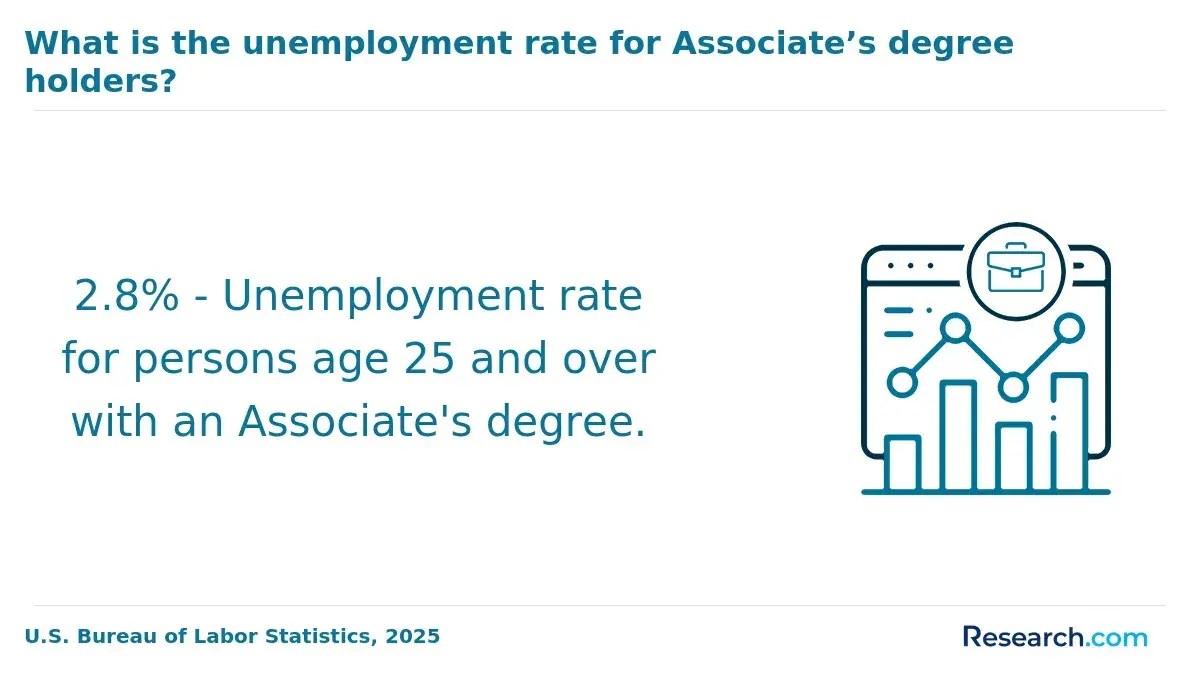
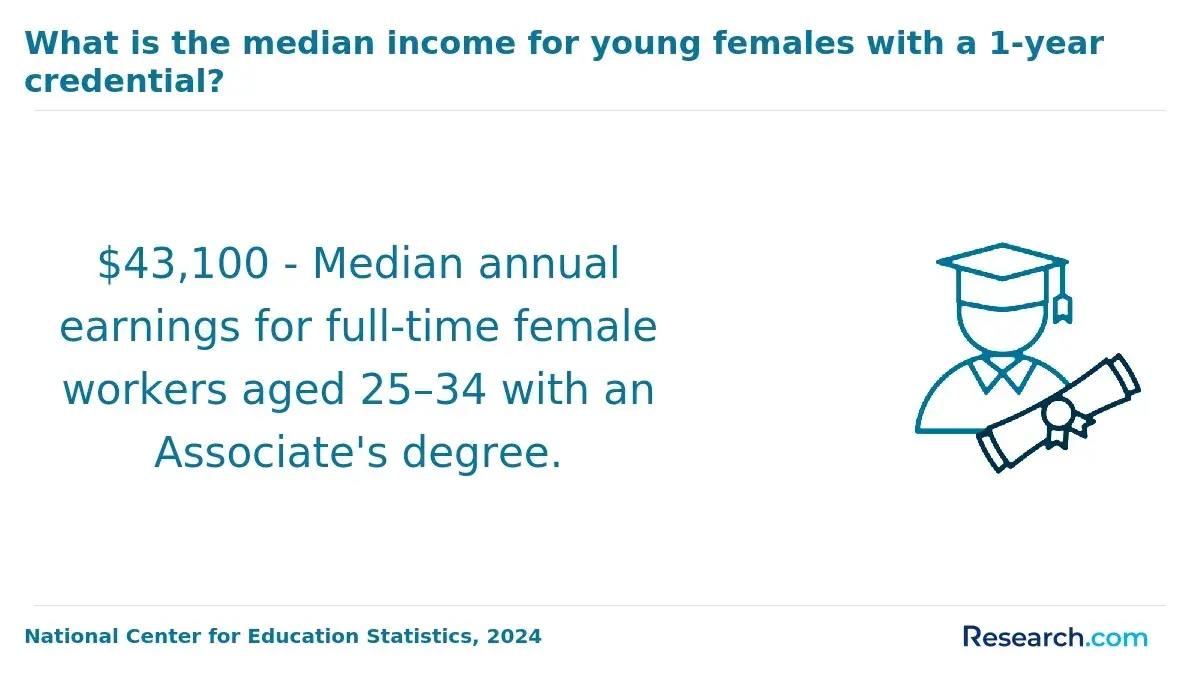
The best mechanical engineering degree depends on the role you want. For most licensed engineering, design engineering, aerospace, energy, manufacturing, and R&D pathways, a bachelor's degree in mechanical engineering from an ABET-accredited program is the standard foundation. Associate degrees and certificates can support technician or CAD-focused work, while graduate degrees are more useful for specialization than for basic entry.
The table below compares common degree options and the career situations where each one makes the most sense.
| Credential | Typical timeline | Best for | Limitations |
| Associate degree in engineering technology or mechanical design | About 2 years | CAD technician, mechanical drafter, test technician, manufacturing support | May not meet requirements for engineer-level roles or Professional Engineer licensure |
| Bachelor's degree in mechanical engineering | About 4 years full time | Mechanical design engineer, manufacturing engineer, test engineer, systems engineer, energy engineer | Requires strong math, physics, lab, and design preparation |
| Master's degree in mechanical engineering | Often 1 to 2 years after the bachelor's | Thermal sciences, robotics, controls, aerospace, computational mechanics, advanced product design | Best ROI when tied to a specific specialization or employer need |
| PhD in mechanical engineering | Often 4 to 6 years after the bachelor's | Research faculty, national labs, advanced R&D, highly specialized simulation or experimental work | Usually unnecessary for standard industry engineering roles |
Students seeking affordability should compare transfer pathways, community college articulation agreements, employer tuition benefits, and public in-state options before borrowing heavily. If flexibility is a priority, a cheap online engineering degree may be worth reviewing, but students should verify lab requirements, ABET status, and whether the program supports their target engineering role.
How do online mechanical engineering programs compare to campus-based options?
Online mechanical engineering programs can work well for students who need flexibility, already work in a technical role, or can travel for required labs. Campus-based programs are often stronger for students who need intensive lab access, design studios, maker spaces, in-person faculty support, and employer recruiting events. The right choice depends less on format and more on accreditation, labs, outcomes, and fit with your schedule.
The comparison below shows where online and campus-based options usually differ for mechanical engineering students.
| Factor | Online mechanical engineering program | Campus-based mechanical engineering program |
| Flexibility | Stronger for working adults, military students, and part-time learners | Stronger for full-time students who can relocate or commute |
| Labs | May use lab kits, simulations, local lab partners, or short residencies | Usually offers direct access to equipment, shops, testing labs, and project spaces |
| Recruiting | Can be effective if the school has strong virtual career services and employer ties | Often stronger for local internships, co-ops, and career fairs |
| Peer network | Requires more intentional networking | Often easier through clubs, design teams, labs, and study groups |
| Best fit | Self-directed students with strong time management and clear goals | Students who benefit from structure, hands-on support, and frequent faculty access |
Online study can also be useful after a mechanical engineering degree. For example, engineers moving into simulation, predictive maintenance, robotics analytics, or digital product development may later consider a doctorate in data analytics online, especially if their goal is applied research or technical leadership rather than traditional mechanical design.
What accreditation should mechanical engineering programs have in the United States?
In the United States, the key accreditation signal for mechanical engineering is ABET accreditation, especially from the Engineering Accreditation Commission for bachelor's-level engineering programs. ABET accreditation matters because many employers recognize it, and state engineering boards commonly use it when evaluating education for the Engineer in Training and Professional Engineer pathways.
Before enrolling, students should check accreditation directly rather than relying only on marketing language. Use the following steps to reduce risk.
- Search the school's exact program name, not just the institution name, because accreditation applies to specific programs.
- Confirm whether the degree is mechanical engineering, mechanical engineering technology, or another related title, since these can lead to different career paths.
- Check whether the program's accreditation covers the location or delivery format you plan to use.
- Ask admissions how graduates meet lab, senior design, internship, and licensure preparation requirements.
- If Professional Engineer licensure may matter later, review the state board rules in the state where you expect to practice.
A major red flag is a program that uses phrases like "aligned with ABET standards" but does not clearly show current ABET accreditation for the specific degree. Alignment is not the same as accreditation, and that distinction can affect licensure eligibility, employer screening, and graduate school options.
What coursework and skills do mechanical engineering students need for high-growth markets?
High-growth mechanical engineering markets reward students who can connect fundamentals with modern tools. Core courses such as statics, dynamics, thermodynamics, fluid mechanics, heat transfer, materials, machine design, controls, and manufacturing processes still matter. The difference is that employers increasingly expect graduates to apply those fundamentals using simulation, data, automation, and collaborative design workflows.
Students targeting strong engineering states should build a skill set that matches the industries in those regions. The list below shows practical skill areas that can improve readiness for competitive internships and entry-level roles.
- CAD and product design skills, including parametric modeling, tolerance analysis, drawings, and design for manufacturability.
- Simulation and analysis skills, especially finite element analysis, computational fluid dynamics basics, thermal modeling, and validation against test data.
- Manufacturing and automation knowledge, including CNC, additive manufacturing, robotics, quality systems, lean manufacturing, and process improvement.
- Programming and data skills, including Python or MATLAB, sensor data analysis, test automation, and basic machine learning awareness.
- Communication skills, including technical writing, design reviews, cost trade-off explanations, and cross-functional teamwork.
Students who want to add data skills without committing to another full degree can compare short courses carefully. If cost is a concern, asking what is the cheapest data science course in the US? can be a practical starting point, but the better question is whether the course teaches tools that apply to engineering test data, manufacturing analytics, or simulation workflows.
How much do mechanical engineering programs cost in leading engineering states?
Mechanical engineering program costs vary widely by residency, institution type, housing, lab fees, transfer credits, and time to graduation. College Board's 2024 pricing data reports average published tuition and fees of $11,610 for in-state students at public four-year institutions, $30,780 for out-of-state students at public four-year institutions, and $43,350 at private nonprofit four-year institutions. Those figures are not engineering-specific, but they are a useful baseline for comparing the tuition side of the decision.
For engineering students, total cost often depends on more than tuition. The most important cost drivers are listed below because they can change the real price of a degree substantially.
- Residency status, especially in states with strong public engineering universities and lower in-state tuition.
- Time to graduation, since engineering sequencing can delay students who miss prerequisite courses.
- Lab, software, equipment, transportation, and senior design project costs.
- Housing costs in high-opportunity metros such as the Bay Area, Los Angeles, Denver, Seattle, Austin, Phoenix, and Detroit suburbs.
- Co-op and internship availability, which can offset costs while improving employment readiness.
- Transfer credit policies, especially for students starting at community colleges before moving into a bachelor's program.
The lowest tuition is not always the best value. A slightly more expensive program may be worth it if it offers ABET accreditation, strong co-op placement, modern labs, high graduation support, and direct employer pipelines in the state where you want to work.
What mechanical engineering roles and industries dominate in top-growth regions?
Mechanical engineers design, test, improve, and maintain physical systems. In top-growth regions, the work often blends traditional mechanics with electronics, software, manufacturing data, environmental performance, and systems integration. Day-to-day responsibilities may include CAD modeling, simulation, prototype testing, supplier coordination, failure analysis, cost reduction, production support, or technical documentation.
The table below connects common roles with the industries and states where they are especially relevant.
| Role | Common responsibilities | Industries and regions where it is common |
| Mechanical design engineer | Creates models, drawings, assemblies, and design documentation | Automotive in Michigan and Ohio; hardware and robotics in California; industrial products across the Midwest |
| Manufacturing engineer | Improves production processes, tooling, quality, automation, and cost efficiency | Michigan, Ohio, Indiana, Texas, Arizona, Pennsylvania |
| Thermal engineer | Analyzes heat transfer, cooling systems, energy efficiency, and thermal reliability | California, Colorado, Arizona, Texas, Washington |
| Aerospace mechanical engineer | Works on structures, mechanisms, test systems, propulsion-adjacent hardware, or environmental control | California, Washington, Colorado, Arizona, Alabama, Florida |
| Energy systems engineer | Works on turbines, pumps, HVAC, power systems, renewables, or industrial energy efficiency | Texas, Louisiana, Colorado, California, Pennsylvania |
| Quality or reliability engineer | Investigates failures, validates products, manages testing, and improves reliability | Automotive, aerospace, medical devices, electronics, and manufacturing hubs nationwide |
Entry-level engineers should not dismiss manufacturing, test, or quality roles. These positions often build practical judgment quickly because they expose new engineers to real failure modes, production constraints, suppliers, and customer requirements. Over time, that experience can support advancement into design leadership, systems engineering, operations, project management, or product management.
How can students choose the best state and school for mechanical engineering careers?
The best state and school are the ones that match your target industry, budget, academic preparation, and preferred lifestyle. Rankings can be a helpful starting point, but they should not replace a program-level review of accreditation, labs, employer access, retention support, and career outcomes.
Use the following process to compare options before applying or relocating.
- Choose a target industry first, such as automotive, aerospace, energy, semiconductors, robotics, HVAC, medical devices, or manufacturing automation.
- Identify states where that industry has multiple employers, not just one famous company.
- Shortlist ABET-accredited mechanical engineering programs in or near those employer clusters.
- Compare total cost, including tuition, housing, fees, transportation, lost income, and likely time to graduation.
- Ask each school about co-ops, internship employers, senior design sponsors, lab access, transfer credit, and graduate outcomes.
- Review whether the curriculum includes the tools your target market uses, such as CAD, FEA, controls, manufacturing automation, Python, MATLAB, or thermal simulation.
- Talk to current students, alumni, and local employers before making a final decision.
Several mistakes can weaken the return on a mechanical engineering degree. Avoid choosing a non-accredited program, assuming online and campus labs are equivalent without checking details, borrowing heavily for a school with weak engineering placement, or picking a state with only one employer in your desired niche. Also be honest about fit: students who discover they prefer information organization, research support, or digital collections over engineering design may want to compare a library science degree instead of forcing a path that does not match their strengths.
Other Things You Should Know About Mechanical Engineering
In 2027, the top states for mechanical engineering career growth include Texas, California, Michigan, and Massachusetts. These states offer a combination of strong industry presence, competitive salaries, and ample job opportunities in innovative sectors.
Yes. Internships and co-ops help students prove they can apply classroom knowledge to real equipment, deadlines, teams, and constraints. They can also clarify whether a student prefers design, testing, manufacturing, energy, or field engineering.
Mechanical engineering is challenging because it requires calculus, physics, mechanics, thermodynamics, materials, labs, and design projects. It is not automatically harder than every other engineering major, but students should expect a demanding workload and sequential prerequisites.
Some can, especially in simulation, CAD, analysis, documentation, project coordination, or software-adjacent roles. However, many mechanical engineering jobs require onsite work for labs, prototypes, manufacturing lines, testing, inspections, or customer equipment.
References
- How to be a Successful Mechanical Engineer & Stay on Top of the https://study-in-hungary.com/blog/how-to-be-a-successful-mechanical-engineer-stay-on-top-of-the-industry/
- Mechanical Engineering Salaries State by State https://interestingengineering.com/culture/mechanical-engineering-salaries-state-by-state
- Mechanical Engineering Career Paths - Complete Guide | Vista Projects https://www.vistaprojects.com/mechanical-engineering-career-paths-guide/
- Seven essential skills for your mechanical engineering career - Academic and Future Workforce https://blogs.sw.siemens.com/academic/seven-essential-skills-mechanical-engineering-career/
- The Best Industries for Mechanical Engineers https://www.matchtech.com/resources/blog/best-industries-for-mechanical-engineers/
- Future-Ready Mechanical Engineering Courses in 2025 https://snu.edu.in/blogs/mechanical-engineering-courses-future-trends-technologies-job-market/
- How Much Does Mechanical Engineering Cost in ... https://swivl.tech/cost-guide-customer/mechanical-engineering/statesboro-ga
- Top Jobs for a Mechanical Engineer in 2026 https://www.stonebridge.uk.com/blog/engineering/jobs-for-a-mechanical-engineer-or/
- Campus vs Online Engineering Degrees - What Employers Think https://www.itcareerfinder.com/brain-food/blog/entry/what-employers-think-about-online-engineering-degrees.html
- Alabama https://www.findengineeringschools.org/Search/Cost/cost_by_state.htm