2027 Online Mechanical Engineering Degrees That Prepare Students for Cross-Functional Engineering Roles

Co-Founder and Chief Data Scientist
Choosing an online mechanical engineering degree is really a question about career fit, lab access, accreditation, and return on investment. The field remains attractive: the U. S. Bureau of Labor Statistics reported a May 2024 median pay of $102,320 for mechanical engineers, but employers increasingly want engineers who can work across design, manufacturing, data, quality, and business teams. This guide explains how online programs work, what to verify before enrolling, and how to choose a degree that supports cross-functional engineering roles.
Key Things You Should Know
- For engineering licensure and many traditional engineering roles, an online mechanical engineering bachelor's degree should normally hold ABET accreditation; regional institutional accreditation alone is not the same thing.
- Mechanical engineers had a May 2024 median wage of $102,320, according to the U.S. Bureau of Labor Statistics, but pay varies by industry, location, experience, and whether the role includes systems, product, automation, or leadership responsibilities.
- Online programs can work well for working adults, transfer students, and military learners, but students should verify lab delivery, proctored exams, capstone requirements, tuition structure, and employer-recognized outcomes before enrolling.
What is an online mechanical engineering degree and how does it prepare cross-functional engineers?
An online mechanical engineering degree is a bachelor's or master's program that teaches the design, analysis, testing, and improvement of mechanical systems through online coursework, digital collaboration tools, simulations, and some form of hands-on lab or project work. At the bachelor's level, the degree prepares students for entry-level engineering roles. At the master's level, it usually helps practicing engineers specialize, move into technical leadership, or shift toward advanced design, manufacturing, robotics, energy, aerospace, or systems roles.
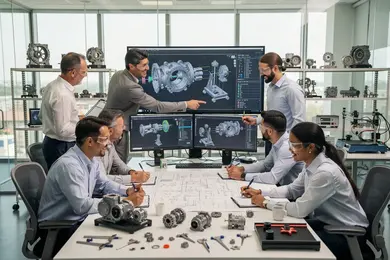
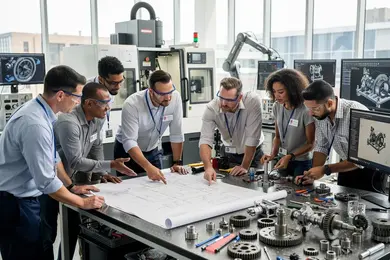
"Cross-functional" means the engineer does not work only inside one narrow technical lane. A cross-functional mechanical engineer may coordinate with electrical engineers, software developers, manufacturing teams, quality specialists, supply-chain staff, product managers, safety teams, and customers. That is why strong programs combine mechanics and thermodynamics with communication, data analysis, project management, design reviews, and systems thinking.
The degree is usually a strong fit for students who want a broad engineering foundation but also want flexibility in where they work. Mechanical engineering connects to vehicles, medical devices, renewable energy systems, HVAC, robotics, consumer products, aerospace, industrial equipment, and automated manufacturing. It may be a weaker fit for students who dislike advanced math, physics, open-ended problem solving, or iterative design work.
The table below summarizes the main online mechanical engineering degree options and how each supports cross-functional career goals.
| Degree option | Typical student profile | Cross-functional value | Important limitation |
| Bachelor of Science in Mechanical Engineering | First-time college students, transfer students, military learners, and career changers seeking engineering entry | Builds the core foundation for design, analysis, testing, manufacturing, and engineering teamwork | Should be checked carefully for ABET accreditation if licensure or traditional engineering employment is a goal |
| Bachelor of Science in Engineering Technology with mechanical focus | Students who want more applied, production-oriented, or technician-to-engineer advancement paths | Can support manufacturing, quality, process improvement, and technical operations roles | May not be viewed the same as a mechanical engineering degree for some engineering licenses or design roles |
| Master of Science in Mechanical Engineering | Engineers or STEM graduates seeking advanced technical depth | Supports specialization in areas such as robotics, thermal systems, materials, controls, or advanced manufacturing | Usually expects prior engineering, calculus, physics, and mechanics preparation |
| Professional engineering master's or engineering management track | Working engineers moving toward project leadership, product development, or technical management | Combines engineering judgment with budgeting, team coordination, systems planning, and business decisions | May offer less research depth than a thesis-based engineering master's |
Students who want an engineering-adjacent path should also compare neighboring fields. For example, students drawn to robotics, power, embedded systems, or automation may want to review online electrical engineering career outcomes before choosing mechanical engineering as their primary route.
How do online mechanical engineering programs compare to campus-based options for hands-on learning?
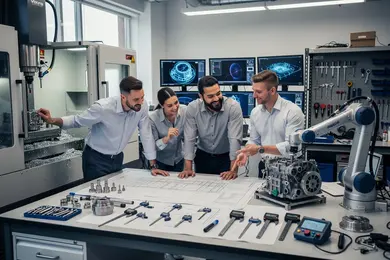
Online mechanical engineering programs can be rigorous, but the biggest difference from campus-based study is how hands-on learning is delivered. Mechanical engineering is not a purely theoretical field; students need experience with measurement, materials, instrumentation, modeling, design iteration, and testing. Reputable online programs address this through remote lab kits, simulation software, local lab partnerships, on-campus intensives, maker-space projects, or employer-based projects for working students.
The table below compares common learning components so students can identify where an online format is equivalent, where it is different, and where they should ask more questions.
| Learning component | Online delivery model | Campus delivery model | What to verify |
| Lectures and problem-solving sessions | Recorded or live classes, discussion boards, virtual office hours, and digital whiteboards | In-person lectures, recitations, and office hours | Whether live attendance is required and whether recordings are available for working students |
| Labs | Remote kits, simulations, local approved labs, short campus residencies, or employer-supervised work | Dedicated campus laboratories with instructor supervision | How lab competencies are assessed and whether lab fees or travel are required |
| Design projects | Virtual teams, CAD collaboration, prototypes built locally, mailed components, or capstone demonstrations | Team-based design studios, machine shops, and in-person reviews | Whether students build physical prototypes or only complete simulations |
| Peer collaboration | Video meetings, shared models, project management tools, and asynchronous teamwork | Studio work, study groups, and in-person project meetings | How the program handles time zones, team accountability, and group grading |
| Career networking | Virtual career fairs, online advising, alumni networks, and employer projects | Campus recruiting, labs, clubs, and local employer relationships | Whether online students have equal access to career services and internships |
Online study often works best for disciplined students who can schedule weekly problem-solving time and access a reliable computer setup. Campus-based study may be better for students who need frequent in-person tutoring, want extensive machine-shop access, or prefer structured daily contact with faculty and classmates.
Before choosing an online format, students should ask direct questions about hands-on requirements. The most important questions are practical rather than promotional.
- Are labs fully remote, hybrid, completed during campus visits, or arranged near the student?
- What software and hardware must students purchase or access, such as CAD, MATLAB-style tools, finite element analysis, or 3D printing?
- Are exams proctored online, at testing centers, or during in-person sessions?
- Does the capstone include a physical prototype, a simulation-based design, an industry-sponsored project, or a research project?
- Do online students have the same faculty, courses, advising, and career services as campus students?
What accreditation should online mechanical engineering degrees have for engineering careers?
Accreditation is one of the most important checks for an online mechanical engineering degree. Institutional accreditation means the college or university meets broad academic and administrative standards. Programmatic accreditation, especially ABET accreditation for engineering programs, evaluates whether a specific engineering curriculum meets recognized professional standards.
For students who want to become licensed Professional Engineers, ABET accreditation can be especially important because many state licensing boards use it when evaluating education requirements. Requirements vary by state, so students should confirm rules with the state board where they plan to seek licensure.
Employers in regulated, safety-sensitive, defense, aerospace, utilities, and public infrastructure settings may also prefer or require ABET-accredited engineering degrees.
The table below explains which accreditation signals matter and why students should not treat them as interchangeable.
| Credential signal | What it means | Why it matters | Risk if missing |
| Institutional accreditation | The university is accredited by a recognized institutional accreditor | Supports federal financial aid eligibility, credit transfer, and general academic legitimacy | Credits may not transfer easily, and students may be ineligible for federal aid |
| ABET accreditation for mechanical engineering | The specific engineering program meets engineering education standards | Often important for licensure, employer recognition, and traditional engineering pathways | Graduates may face barriers in PE licensure or certain engineering roles |
| State authorization | The school is approved to enroll online students in the student's state | Confirms the institution can legally serve distance learners in that location | A student may be unable to enroll or complete required activities from their state |
| Specialized approvals or employer partnerships | The program has industry, military, or workforce relationships | Can improve access to projects, tuition benefits, or career pathways | Partnerships alone do not replace accreditation |
A common mistake is assuming that "accredited university" automatically means "ABET-accredited engineering program." Students should search the ABET program database by institution and program name, then confirm that the online version is included if the school offers both campus and distance formats.
Students interested in earth systems, energy resources, geomechanics, or environmental site work may also compare mechanical engineering with a geology online degree, but they should remember that accreditation and licensure pathways differ by discipline.
What courses and concentrations support cross-functional roles in online mechanical engineering programs?
Mechanical engineering programs are broad by design. That breadth is what makes the degree useful for cross-functional roles, but students should still check whether a program's electives and projects align with the industries they want to enter. A student aiming for robotics needs different elective depth than a student aiming for HVAC, medical devices, automotive systems, or advanced manufacturing.
Most online mechanical engineering bachelor's programs build from math and science into engineering analysis, design, and systems courses. Master's programs usually assume that foundation and let students specialize.
| Course or concentration area | What students learn | Cross-functional roles supported |
| Statics, dynamics, and mechanics of materials | How forces, motion, stress, strain, and failure affect components and structures | Design engineer, test engineer, reliability engineer, product engineer |
| Thermodynamics, heat transfer, and fluids | How energy, temperature, flow, and pressure behave in engineered systems | Energy engineer, HVAC engineer, aerospace systems engineer, thermal analyst |
| CAD, computer-aided engineering, and simulation | How to model, analyze, and refine parts before manufacturing | Mechanical designer, product development engineer, simulation engineer |
| Manufacturing and materials | How materials, processes, tolerances, and production systems shape product performance | Manufacturing engineer, quality engineer, process engineer, supplier quality engineer |
| Controls, mechatronics, and robotics | How mechanical systems interact with sensors, actuators, electronics, and software | Automation engineer, robotics engineer, systems integration engineer |
| Engineering economics and project management | How technical decisions affect cost, schedule, risk, and business value | Project engineer, product manager, technical lead, engineering manager |
Cross-functional roles reward students who can translate technical findings into decisions. When reviewing curricula, look for assignments that require design reviews, team documentation, cost trade-offs, failure analysis, risk assessment, and presentations to non-specialist audiences.
Students can strengthen the degree by choosing electives and projects strategically. These combinations are especially useful for interdisciplinary work.
- Product development: CAD, materials, manufacturing, prototyping, statistics, and user-centered design
- Automation and robotics: Controls, mechatronics, sensors, programming, manufacturing systems, and safety standards
- Energy systems: Thermodynamics, heat transfer, fluids, renewable energy, HVAC, and sustainability-focused design
- Aerospace and mobility: Dynamics, fluids, lightweight materials, simulation, controls, and testing
- Medical devices and human-centered systems: Biomechanics, materials, quality systems, ergonomics, and regulatory awareness
Students interested in biomechanics, ergonomics, rehabilitation technology, or human performance may find it useful to compare mechanical engineering with the best online exercise science degree options, especially if they are deciding between engineering design and health-science practice.
What are the typical admission requirements for online mechanical engineering bachelor's and master's degrees?
Admission requirements depend heavily on degree level. Bachelor's programs usually evaluate college readiness in math and science, while master's programs focus on prior engineering preparation, GPA, technical prerequisites, and professional fit. Online programs may also require students to show they can participate in remote labs, proctored exams, or scheduled live sessions.
The table below compares typical requirements for online mechanical engineering bachelor's and master's programs.
| Requirement area | Bachelor's degree | Master's degree |
| Prior education | High school diploma, GED, or transfer coursework | Bachelor's degree, often in mechanical engineering or a closely related STEM field |
| Math preparation | College algebra, pre-calculus, or calculus readiness may be required | Calculus, differential equations, linear algebra, and engineering math may be expected |
| Science preparation | Physics and chemistry preparation can strengthen admission readiness | Physics, mechanics, thermodynamics, materials, and related engineering coursework may be required |
| GPA | Minimums vary by institution and transfer status | Minimum undergraduate GPA is commonly reviewed, especially in engineering and math courses |
| Testing | SAT or ACT may be optional or required depending on school policy | GRE requirements vary; many engineering programs have made the exam optional |
| Professional materials | Application, transcripts, and sometimes essays or placement tests | Transcripts, resume, statement of purpose, recommendations, and sometimes portfolio or work history |
Transfer students should pay special attention to prerequisite sequencing. Mechanical engineering courses build on each other, so missing calculus, physics, or statics can delay graduation even when many general education credits transfer.
Applicants can improve readiness by completing a few practical steps before applying. These steps help avoid the common problem of being admitted to a university but not being ready to progress in the engineering major.
- Confirm whether calculus, physics, and chemistry courses must be completed before upper-division engineering courses.
- Ask for a transfer-credit evaluation before enrolling, not after the first term begins.
- Check whether online students need to attend any campus sessions and whether those sessions have fixed dates.
- Review software and hardware requirements before assuming a standard laptop is enough.
- For master's programs, ask whether bridge courses are available if the bachelor's degree is in another STEM field.
How long do online mechanical engineering degrees take and what do they cost?
Online mechanical engineering bachelor's degrees commonly require about 120 credits, while master's programs often require about 30 credits, though exact requirements vary by school, transfer credits, thesis options, and specialization. Full-time bachelor's students often plan for about four years, while transfer students may finish sooner. Many online master's students study part time while working, which can extend the timeline but reduce income disruption.
Cost depends on more than tuition. Students should calculate total program cost using tuition, engineering fees, online fees, lab kits, software, textbooks, proctoring, travel for any campus residencies, and the opportunity cost of reducing work hours.
College Board's 2024 Trends in College Pricing reported average published tuition and fees of $11,610 for in-state public four-year students and $43,350 for private nonprofit four-year students for the 2024-25 academic year. Those figures are not specific to online mechanical engineering, but they show why residency status and institution type can materially affect the budget.
The table below outlines the main timeline and cost factors students should compare before choosing a program.
| Factor | Why it affects timeline or cost | Decision tip |
| Transfer credits | Accepted credits can shorten time to completion, but engineering prerequisites may not transfer cleanly | Request a written degree audit before enrolling |
| Full-time versus part-time study | Full-time study can be faster, while part-time study may be more manageable for working adults | Choose the pace that allows consistent performance in math-heavy courses |
| Residency tuition | Public universities may charge different rates for in-state and out-of-state students | Confirm whether online students receive a special distance-learning rate |
| Lab and software fees | Engineering programs may require simulation tools, lab kits, or specialized hardware | Ask for an itemized fee list, not just tuition per credit |
| Campus visits | Some online programs require short residencies for labs, exams, or presentations | Include travel, lodging, and time away from work in the total cost |
| Employer tuition assistance | Working students may lower out-of-pocket costs through employer benefits | Check grade requirements, repayment clauses, and annual benefit caps |
To estimate return on investment, students should compare the total net price against realistic career paths, not only the highest salary they see online. A lower-cost program may be attractive, but not if it lacks ABET accreditation needed for the student's intended path. An accelerated program can save time, but not if the course load makes it hard to master calculus, mechanics, and design fundamentals.
What cross-functional engineering careers can graduates pursue with an online mechanical engineering degree?
Graduates of online mechanical engineering programs can pursue many of the same engineering paths as campus graduates when the program is reputable, appropriately accredited, and aligned with the employer's expectations. Cross-functional roles are especially common in industries where mechanical systems interact with software, electronics, manufacturing, safety, data, and customer requirements.
The table below connects common roles with the type of cross-functional work students should expect.
| Career path | Typical responsibilities | Teams commonly involved |
| Mechanical design engineer | Create, model, test, and refine components or systems | Manufacturing, quality, suppliers, product management, testing |
| Product development engineer | Turn customer needs and technical requirements into manufacturable products | Design, marketing, operations, finance, compliance, customer support |
| Manufacturing engineer | Improve production processes, tooling, workflow, and equipment performance | Operations, maintenance, quality, safety, supply chain |
| Quality or reliability engineer | Analyze failures, reduce defects, validate performance, and improve durability | Testing, suppliers, manufacturing, design, customer service |
| Automation or robotics engineer | Integrate mechanical systems with controls, sensors, actuators, and software | Electrical engineering, software, manufacturing, safety, maintenance |
| Systems engineer | Coordinate requirements, interfaces, risks, and verification across complex products | Mechanical, electrical, software, program management, customers |
| Project engineer | Manage technical scope, schedules, vendors, risks, and engineering deliverables | Engineering, procurement, construction, operations, finance |
Entry-level graduates often begin with design, test, manufacturing, field engineering, or quality roles. With experience, they may move into senior engineering, systems engineering, product ownership, project leadership, engineering management, or specialized analysis roles.
Students should not assume the degree alone is enough for every cross-functional role. Employers often look for evidence that candidates can communicate across teams and use modern engineering tools. Strong candidates usually build a portfolio of projects that demonstrates several abilities.
- CAD models, simulations, drawings, or prototypes that show design judgment
- Test plans, lab reports, or validation work that show evidence-based problem solving
- Manufacturing or quality projects that show cost, process, and reliability awareness
- Programming, data analysis, or automation projects that show comfort with digital tools
- Team-based capstone work that shows communication, documentation, and trade-off analysis
What salary ranges and earning potential do mechanical engineers in cross-functional roles have?
Mechanical engineering salaries vary by experience, industry, geography, education level, and responsibility. The U.S. Bureau of Labor Statistics reported a May 2024 median annual wage of $102,320 for mechanical engineers. Readers should use that figure as a labor-market benchmark, not as a guaranteed outcome for any specific graduate or program.
Cross-functional roles may offer higher earning potential when they add responsibility for systems integration, advanced analysis, automation, product ownership, vendor management, or technical leadership. However, salary premiums depend on the employer and role scope. A manufacturing engineer in a lower-cost region may earn less than a robotics engineer in a high-cost technology hub, even if both hold similar degrees.
The table below shows how salary context can differ by career stage and responsibility level without implying guaranteed earnings.
| Career stage | Common role examples | What tends to influence pay |
| Entry level | Design engineer, test engineer, manufacturing engineer, field engineer | Internship experience, ABET-accredited degree, software skills, location, and industry |
| Mid-career | Product engineer, reliability engineer, automation engineer, project engineer | Specialized tools, cross-functional project ownership, process improvement results, and technical depth |
| Senior technical | Senior mechanical engineer, systems engineer, simulation specialist, principal engineer | Architecture decisions, risk ownership, mentorship, advanced modeling, and domain expertise |
| Leadership | Engineering manager, program technical lead, product development manager | Budget responsibility, team leadership, stakeholder communication, and delivery accountability |
Students evaluating salary potential should compare job postings in their target region and industry before enrolling. Look for required degree level, ABET preferences, software tools, clearance requirements, travel expectations, and whether the role is truly engineering or closer to technician, drafting, sales, or operations support.
How is the job outlook for mechanical engineers who work in cross-functional, interdisciplinary teams?
The job outlook for mechanical engineers is positive relative to many occupations. The U.S. Bureau of Labor Statistics projected 11% employment growth for mechanical engineers from 2023 to 2033, which suggests continued demand across product development, manufacturing, automation, energy, transportation, and advanced technology. For students, the key point is not simply that jobs are growing; it is that the strongest opportunities often require adaptability across hardware, software, production, and business constraints.
Several current trends are shaping cross-functional mechanical engineering work. AI-assisted design tools can speed up modeling and optimization, but engineers still need to define constraints, check assumptions, validate results, and explain trade-offs. Additive manufacturing is changing prototyping and production decisions.
Electrification is increasing demand for thermal management, lightweight materials, and systems integration. Automation is pushing mechanical engineers to understand sensors, controls, robotics, and data-driven process improvement.
These trends make interdisciplinary skill building more important. Students who want strong career mobility should not limit themselves to passing courses; they should build evidence of applied capability.
- Learn at least one widely used CAD platform and understand design-for-manufacturing principles.
- Build comfort with data analysis, basic programming, and simulation tools used in engineering workflows.
- Choose projects that require coordination with electrical, software, manufacturing, or business stakeholders.
- Document design decisions, test results, failures, and revisions in a professional portfolio.
- Develop communication skills for design reviews, customer meetings, and executive summaries.
Job outlook also varies by region and industry. Aerospace, automotive, medical devices, energy, manufacturing, construction systems, and defense can have different hiring cycles. Students should track employers in their target market and ask programs where recent graduates have found internships, co-ops, and full-time roles.
How can students evaluate and choose a reputable online mechanical engineering program?
Choosing a reputable online mechanical engineering program requires more than comparing tuition or reading rankings. Students should evaluate accreditation, hands-on learning, faculty access, student support, career outcomes, transfer policies, and total cost. The best program is the one that fits the student's career goal, schedule, academic preparation, and licensing needs.
Use the following process to compare programs in a structured way before applying.
- Define the target role first, such as design engineer, manufacturing engineer, robotics engineer, systems engineer, or project engineer.
- Confirm institutional accreditation and, for bachelor's programs aimed at traditional engineering careers, verify ABET accreditation for the specific mechanical engineering program.
- Request details on labs, capstone projects, software, hardware, proctoring, and any required campus visits.
- Ask for a written transfer-credit review and a term-by-term degree plan.
- Compare total net cost after grants, employer aid, military benefits, scholarships, and fees.
- Review career support for online students, including internships, employer projects, alumni access, and engineering-specific advising.
- Check whether the curriculum includes electives or projects aligned with the student's intended industry.
The table below highlights common red flags and better alternatives. These issues are worth checking before signing an enrollment agreement.
| Red flag | Why it matters | Better alternative |
| The school only says it is accredited but does not specify programmatic engineering accreditation | Institutional accreditation does not automatically satisfy engineering licensure or employer expectations | Verify the specific program in the ABET database when ABET matters for the goal |
| Lab requirements are vague | Mechanical engineering requires measurable hands-on or experimental competencies | Ask for written lab delivery details, equipment lists, and residency requirements |
| Tuition is advertised without fees | Engineering software, lab kits, proctoring, and travel can increase total cost | Request an itemized cost sheet for the full degree plan |
| No clear transfer-credit policy | Students may lose credits or repeat prerequisite courses | Get a written degree audit before committing |
| Career outcomes are broad or unsupported | Generic employment claims may not reflect engineering-specific outcomes | Ask about internship access, employer relationships, and recent graduate roles |
| The program does not match the target career | A mechanical engineering technology program, engineering management degree, or certificate may serve different goals | Compare curriculum and job postings before choosing the credential |
Students comparing education options across fields should apply the same verification habits everywhere. For example, affordability-focused resources such as best library schools comparisons can be useful reminders that accreditation, cost, and career fit should be evaluated together rather than in isolation.
An online mechanical engineering degree is most worth considering when it is accredited for the student's goal, provides credible hands-on learning, fits the student's schedule, and leads toward roles the student has already researched. It may not be the right investment if the student wants a less math-intensive path, needs daily in-person lab access, or is primarily seeking a quick credential rather than a rigorous engineering education.
Other Things You Should Know About Mechanical Engineering
Possibly, but it depends on the program and the state licensing board. Students interested in PE licensure should prioritize ABET-accredited engineering programs and confirm education, exam, and experience rules with the state where they plan to practice.
Online mechanical engineering degrees in 2027 are designed to be just as comprehensive as campus-based programs, utilizing virtual labs and interactive platforms. They emphasize interdisciplinary skills, preparing students for cross-functional engineering roles by integrating core mechanical concepts with other fields like computer science and business management.
Internships are not always required, but they can be highly valuable. They help students gain applied experience, build employer references, test career interests, and show that they can use engineering tools in real workplace settings.
For entry into engineering roles, a degree is usually the stronger credential. Certificates can be useful for focused skills such as CAD, additive manufacturing, quality, data analysis, or project management, but they generally do not replace an accredited engineering degree for traditional engineering career paths.
References
- Salary progression in Mechanical Engineer https://www.whitecarrot.ai/resources/templates/progression-salary/mechanical-engineer
- ADMISSION CRITERIA https://www.villanova.edu/university/engineering/academic-programs/mechanical/ms-mechanical-engineering/admission-criteria.html
- Mechanical Engineering Associate Degree (Online/In Person) | NEIT https://www.neit.edu/academics/associate-degrees/mechanical-engineering-technology-as
- Accreditation - ABET https://www.abet.org/accreditation/
- Key Benefits of Working with Cross-Functional Teams in Product Development https://www.pivotint.com/blog/cross-functional-teams-in-product-development/
- What can you do with a mechanical engineering degree? https://www.hull.ac.uk/study/undergraduate/courses/mechanical-engineering-beng-meng-hons/what-can-you-do-with-a-mechanical-engineering-degree
- The Benefits of Cross-functional Teams in Product Engineering | [x]cube LABS https://xcubelabs.com/blog/the-benefits-of-cross-functional-teams-in-product-engineering
- How to Evaluate If an Engineering Program Is a Good Fit - Your College-Bound Kid https://yourcollegeboundkid.com/2023/03/10/how-to-evaluate-if-an-engineering-program-is-a-good-fit/
- Campus vs Online Engineering Degrees - What Employers Think https://www.itcareerfinder.com/brain-food/blog/entry/what-employers-think-about-online-engineering-degrees.html
- 2025 Best Online Engineering Degrees https://www.onlineu.com/degrees/engineering