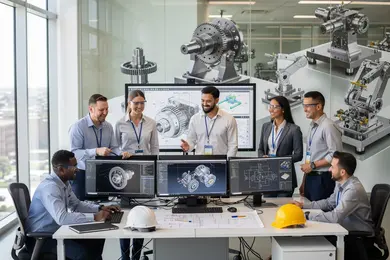
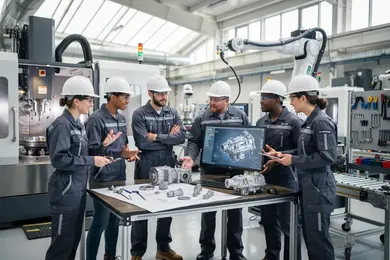
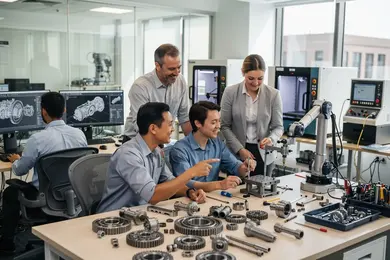
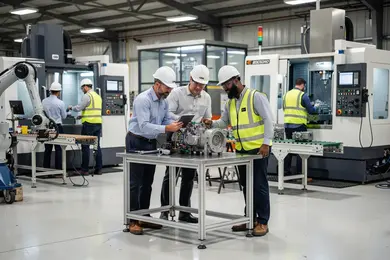
2027 Online Mechanical Engineering Degrees With Low Total Student Debt Potential

Co-Founder and Chief Data Scientist
Choosing an online mechanical engineering degree is a cost-versus-career decision, not just a tuition search. Mechanical engineers had a median annual wage of $99,510 in May 2024, according to the U.S. Bureau of Labor Statistics, but degree costs, lab requirements, and accreditation can vary widely.
This guide is for students comparing affordable online or hybrid mechanical engineering options, especially those trying to limit borrowing. You will learn how to evaluate total cost, debt risk, accreditation, program fit, and career outcomes before committing to a school.
Key Things You Should Know
- The lowest-debt online mechanical engineering path is usually an ABET-accredited public university program combined with transfer credits, in-state or reduced online tuition, scholarships, and paid engineering work experience.
- Mechanical engineers had a $99,510 median annual wage in May 2024, but salary outcomes vary by industry, region, experience, internship history, and whether the graduate enters design, manufacturing, energy, aerospace, robotics, or related technical roles.
- Debt risk depends on total cost, not tuition alone; students should include fees, software, travel for labs, lost work hours, loan interest, and the federal undergraduate direct loan rate of 6.53% for the 2024-2025 award year.
What is an online mechanical engineering degree and how does it differ from campus programs?
An online mechanical engineering degree is a bachelor's or graduate program that teaches the design, analysis, testing, and improvement of mechanical systems through remote coursework. Students study subjects such as statics, dynamics, thermodynamics, fluid mechanics, materials, machine design, manufacturing, controls, and computer-aided engineering.
Because mechanical engineering is hands-on, many online programs are actually hybrid: lectures may be online, while labs, design projects, exams, or capstone activities may require campus visits or approved local arrangements.
The biggest difference from a campus program is not the academic content; it is the delivery model. A credible online mechanical engineering program should still require rigorous math, physics, engineering design, laboratory work, and team projects. The best fit depends on whether you need scheduling flexibility or full access to physical labs, student clubs, undergraduate research, and local employer recruiting.
The comparison below shows where online and campus formats typically differ. Use it to identify which format supports your budget, schedule, and career goals.
| Program feature | Online or hybrid mechanical engineering | Campus mechanical engineering | Decision impact |
| Course delivery | Online lectures, recorded modules, live sessions, or mixed formats | In-person lectures and labs | Online can be better for working students; campus may be easier for students who want daily structure. |
| Lab access | May require short residencies, simulation labs, home kits, or local proctored labs | Regular access to institutional labs and equipment | Students should verify lab requirements before enrolling because travel can raise the total cost. |
| Networking | Virtual teams, online advising, remote career services, local internships | In-person clubs, career fairs, faculty access, research labs | Online students need to be more intentional about building employer connections. |
| Cost structure | May reduce relocation and commuting costs but can include distance fees | May include housing, transportation, campus fees, and meal costs | Online is not automatically cheaper; the total cost must be calculated. |
| Best fit | Working adults, transfer students, military learners, and students far from campus | Traditional students, lab-heavy learners, and students seeking a residential experience | The better format is the one that supports completion without unnecessary borrowing. |
Students interested in adjacent engineering fields should compare degree outcomes before enrolling. For example, environmental engineering degrees online may fit learners who want engineering work focused on water, air quality, sustainability, and infrastructure compliance rather than mechanical systems.
Which online mechanical engineering degrees offer the lowest total student debt potential?
The online mechanical engineering degrees with the lowest total student debt potential are usually not the programs with the flashiest marketing or fastest timelines. They are programs that combine recognized accreditation, reasonable tuition, transfer-friendly policies, low residency costs, and strong access to internships or employer tuition support.
Because institutional prices and financial aid packages change, students should compare debt potential instead of assuming a single school is always the cheapest. The strongest low-debt candidates generally fall into the categories below:
| Degree option | Why it may lower debt | Main trade-off | Best fit |
| Public university online or hybrid bachelor's degree | Public institutions often have lower published tuition than private colleges, especially for residents or students eligible for online-rate discounts. | Admission may be competitive, and lab visits may still be required. | Students seeking a full engineering bachelor's degree with a traditional employer-recognized pathway. |
| Community college engineering transfer pathway plus university completion | Lower-division math, physics, chemistry, and general education courses may cost less before transfer. | Credits must map cleanly to the engineering school's requirements. | Cost-conscious students who can plan to transfer early and maintain strong grades. |
| Online bachelor's completion program for working technicians | Students with prior credits or technical experience may reduce time in school. | Some programs may be engineering technology rather than mechanical engineering. | Working adults in manufacturing, maintenance, CAD, quality, or technical operations. |
| Employer-supported graduate mechanical engineering degree | Tuition assistance can reduce or eliminate new borrowing for master's students. | Usually requires an engineering or closely related bachelor's background. | Engineers advancing into specialized design, systems, thermal, robotics, or leadership roles. |
| Military-affiliated or veteran-supportive online program | GI Bill benefits, Yellow Ribbon participation, and military tuition assistance may reduce out-of-pocket costs. | Benefit rules and residency requirements must be checked carefully. | Active-duty service members, veterans, and military families. |
For students comparing multiple STEM options, debt potential should be weighed against the type of work they actually want to do. If you prefer software systems, algorithms, or computing infrastructure, affordable computer science degrees may offer a more direct path than mechanical engineering.
Be careful with programs that use similar-sounding names. Mechanical engineering, mechanical engineering technology, industrial technology, and manufacturing management can lead to useful careers, but they may not be treated the same by employers, graduate schools, or licensing boards.
If your goal is to become a licensed professional engineer, ask whether the program is ABET-accredited under the appropriate engineering criteria.
How can students estimate the true total cost of an online mechanical engineering degree?
The true cost of an online mechanical engineering degree includes more than tuition. According to the College Board's 2024 pricing data, average published tuition and fees for public four-year in-state students were $11,610 for the 2024-2025 academic year. That figure is useful as a benchmark, but it does not tell you what an online engineering student will actually pay after fees, transfer credits, aid, and program-specific expenses.
To estimate total cost accurately, build a full degree budget before applying. This process helps you compare schools on the amount you may need to borrow, not just the advertised price per credit:
- List the required credits remaining after transfer evaluation, not the total credits shown in the catalog.
- Multiply remaining credits by the exact online tuition rate that applies to your residency, program level, and enrollment status.
- Add mandatory fees, engineering course fees, proctoring fees, graduation fees, and technology fees.
- Include travel, lodging, meals, and missed work hours for required campus labs, orientations, residencies, or exams.
- Budget for a capable computer, calculator, CAD or simulation software, lab kits, textbooks, safety equipment, and reliable internet.
- Subtract grants, scholarships, employer tuition assistance, veterans benefits, tuition waivers, and cash payments you can make without high-interest debt.
- Estimate loan interest while enrolled and after graduation so you understand the repayment burden, not just the amount borrowed.
One common mistake is comparing only the per-credit tuition rate. A program with slightly higher tuition but generous transfer credit, no residency travel, and strong scholarship access can cost less than a lower-tuition program with extra terms and required campus trips.
Students should also separate direct costs from opportunity costs. Direct costs are charges you pay to the school or vendors. Opportunity costs include reduced work hours, delayed full-time employment, childcare, commuting, and the time needed to complete demanding engineering labs and projects.
How does accreditation affect online mechanical engineering degrees and future employment?
Accreditation is one of the most important filters when choosing an online mechanical engineering degree. Institutional accreditation shows that a college or university meets broad academic and administrative standards. Programmatic accreditation, especially from ABET for engineering programs, is often the key signal that the mechanical engineering curriculum meets recognized professional expectations.
ABET accreditation matters because mechanical engineering is tied to safety-critical systems, professional licensure, and technical competency. Many employers understand ABET as a quality marker, and many state engineering boards use ABET-accredited engineering degrees as the most straightforward education path toward the Fundamentals of Engineering exam, Engineer in Training status, and eventual Professional Engineer licensure.
Requirements vary by state, so students should confirm rules with the licensing board where they plan to work.
Before enrolling, verify accreditation directly rather than relying only on marketing language. The following checks can help prevent a costly mistake:
- Confirm that the institution is accredited by a recognized institutional accreditor.
- Search the ABET program database for the exact program name, degree level, delivery site, and accreditation dates.
- Ask whether online, hybrid, and campus students receive the same accredited degree designation.
- Check whether the program is mechanical engineering or mechanical engineering technology, because these may have different licensure and employer implications.
- Ask admissions staff to explain how laboratory outcomes are met for online students.
- Contact your target state engineering board if professional licensure is part of your long-term plan.
A major red flag is vague wording such as "aligned with ABET standards" or "designed around accredited curriculum." Those phrases are not the same as accreditation. If the school cannot clearly document accreditation status, treat that as a serious risk.
What admission requirements and prior preparation are needed for online mechanical engineering programs?
Online mechanical engineering programs are academically demanding because they build on calculus, physics, chemistry, and analytical problem-solving. Admissions standards vary, but bachelor's programs commonly expect college-ready math skills, strong science preparation, and transcripts showing readiness for engineering coursework. Transfer and completion programs may require prior college credits in calculus, physics, engineering graphics, programming, or general education.
Graduate programs usually require a bachelor's degree in mechanical engineering or a closely related engineering discipline. Applicants from physics, mathematics, engineering technology, or another STEM field may need bridge coursework before taking advanced mechanical engineering classes.
Students should review prerequisites early because missing math or science courses can extend the timeline and increase cost. Common requirements include the following:
- High school diploma, GED, or equivalent credential for undergraduate admission.
- Algebra, trigonometry, pre-calculus, or calculus readiness depending on program level.
- Physics and chemistry preparation, especially for ABET-oriented bachelor's programs.
- Prior college transcripts for transfer applicants and degree-completion students.
- Minimum GPA requirements that may be higher for engineering than for general university admission.
- Placement tests, prerequisite verification, or advisor approval before enrolling in engineering courses.
- For graduate programs, an engineering bachelor's degree, statement of purpose, recommendation letters, and possibly GRE scores if required by the school.
Not every student who likes science needs mechanical engineering. If your interests are more focused on health, food systems, wellness, or community nutrition than machines and energy systems, a best online nutrition degree comparison may help you evaluate a different science-centered route with a different math and licensure profile.
The smartest preparation step is to complete calculus and calculus-based physics as early and affordably as possible, but only if those credits are confirmed transferable. Taking cheap courses that do not apply to the engineering degree can waste both time and money.
What core courses and technical skills do online mechanical engineering curricula typically include?
Mechanical engineering curricula are designed to help students move from scientific principles to engineered solutions. A typical program starts with mathematics and basic sciences, then adds engineering mechanics, design, thermal-fluid systems, materials, controls, manufacturing, and a capstone design experience. Online students should expect the same intellectual difficulty as campus students.
The table below summarizes common curriculum areas and why they matter in the workplace. Use it to compare whether a program matches your target field, such as aerospace, manufacturing, automotive, robotics, energy, HVAC, or product development.
| Curriculum area | Typical courses | Workplace relevance |
| Mathematics and science | Calculus, differential equations, physics, chemistry, statistics | Supports modeling, analysis, testing, and engineering judgment. |
| Engineering mechanics | Statics, dynamics, mechanics of materials, vibrations | Used to analyze forces, motion, stress, deformation, and structural behavior. |
| Thermal-fluid systems | Thermodynamics, heat transfer, fluid mechanics, energy systems | Important for engines, HVAC, turbines, pumps, thermal management, and energy systems. |
| Design and manufacturing | Machine design, CAD, manufacturing processes, materials selection | Prepares students to create, evaluate, prototype, and improve mechanical products. |
| Controls and mechatronics | System dynamics, control systems, sensors, instrumentation | Useful in robotics, automation, vehicles, manufacturing equipment, and smart systems. |
| Professional practice | Engineering ethics, economics, communication, capstone design | Builds the teamwork and decision-making skills employers expect from entry-level engineers. |
Technology trends are changing what mechanical engineers need to know. AI-assisted design, digital twins, additive manufacturing, robotics, simulation-driven testing, and data-informed maintenance are increasingly relevant in engineering teams. Students do not need to become software engineers, but they should be comfortable learning technical tools and interpreting data.
Mechanical engineering students can strengthen their job readiness by building a portfolio of technical projects. Useful skills to document include CAD modeling, finite element analysis, MATLAB or Python, lab data analysis, 3D printing, GD&T, technical writing, and design-for-manufacturing decisions.
Students who discover that they prefer analytics-heavy work may eventually compare engineering roles with a data science master online, especially if they want to move into predictive maintenance, simulation analytics, or industrial data roles.
How long do online mechanical engineering degrees take and what flexible formats exist?
A full bachelor's degree in mechanical engineering typically requires about four years of full-time study, but online students often take longer if they work, transfer credits, or attend part-time. Mechanical engineering courses are sequential, so falling behind in calculus, physics, statics, or thermodynamics can delay later courses and push graduation into an extra term or year.
Program format affects both completion time and debt. Accelerated study may reduce time to graduation but can make it harder to work enough hours to avoid borrowing. Part-time study may reduce annual cost and preserve income, but it can extend the time before a student reaches full engineering employment.
| Format | Typical pace | Cost and debt implications | Best fit |
| Full-time online or hybrid bachelor's | About four academic years for first-time students | Faster completion can reduce years of fees, but students may borrow more if they cannot work. | Students who can prioritize school and complete labs on schedule. |
| Part-time online bachelor's | Often five or more years depending on course load | May allow pay-as-you-go enrollment, but delayed graduation can affect earnings timeline. | Working adults, parents, and military learners. |
| Transfer or degree-completion pathway | Often two to three years after prerequisites | Can lower cost if credits transfer efficiently. | Students with completed general education, calculus, physics, or engineering fundamentals. |
| Online master's in mechanical engineering | Often one to three years depending on course load | Employer tuition assistance can significantly reduce borrowing. | Practicing engineers seeking specialization or advancement. |
| Hybrid residency model | Varies by required campus sessions | Travel and lodging can add costs that are easy to overlook. | Students who need online flexibility but can attend occasional in-person labs. |
Before choosing a faster program, ask whether courses are offered every term or only once per year. A single missed prerequisite can create a hidden delay. Also ask whether online students have guaranteed access to required classes, since limited course availability can raise total cost by extending enrollment.
What strategies can mechanical engineering majors use to minimize loans and graduate with low debt?
Mechanical engineering students can lower debt by planning the degree like a project: define the endpoint, map requirements, control scope, and avoid expensive rework. The most effective strategies usually happen before enrollment, when students still have the most flexibility to compare schools and transfer options.
Use the steps below to reduce borrowing without weakening your academic or career preparation:
- Start with ABET and state licensure requirements, then eliminate programs that do not support your target outcome.
- Complete transferable general education, calculus, chemistry, and physics courses at a lower-cost institution only after written confirmation that they apply to the engineering degree.
- Apply for engineering-specific scholarships from the university, professional societies, employers, local foundations, and state programs.
- Choose paid internships, co-ops, undergraduate research roles, or technician jobs that build experience while offsetting living costs.
- Ask employers about tuition reimbursement, especially if you already work in manufacturing, maintenance, aerospace, utilities, defense, or technical operations.
- Limit course withdrawals by taking a realistic load in calculus-heavy terms.
- Borrow federal loans before considering private loans, and borrow only what is needed after grants, scholarships, earnings, and family contributions.
- Recalculate total cost every term so you can adjust work hours, course loads, and scholarship applications before debt grows.
Common mistakes include choosing the first online program that appears affordable, ignoring lab travel costs, taking nontransferable credits, assuming all engineering degrees lead to licensure, and overloading on difficult courses while working full time. A lower-debt plan is not always the shortest plan; it is the plan with the best chance of completion at a manageable cost.
Students should also ask schools direct financial questions before enrolling. Ask for the total program cost after transfer credit, the average time to completion for online engineering students, the percentage of students using scholarships or employer assistance, and whether required courses are available often enough to graduate on schedule.
What entry-level jobs, industries, and career paths are available to online mechanical engineering graduates?
Graduates of online mechanical engineering programs can pursue many of the same entry-level roles as campus graduates, provided the program is credible, rigorous, and aligned with employer expectations. Employers usually care about degree quality, technical skills, internships, projects, communication ability, and whether the applicant can contribute to engineering work with limited ramp-up time.
Entry-level titles vary by industry, but the responsibilities often involve design, testing, documentation, troubleshooting, analysis, and coordination with manufacturing or operations teams.
| Entry-level role | Typical responsibilities | Industries where it appears |
| Mechanical design engineer | Create CAD models, evaluate components, support prototypes, revise designs | Product development, aerospace, automotive, consumer goods, industrial equipment |
| Manufacturing engineer | Improve production processes, reduce defects, support tooling and automation | Manufacturing, electronics, medical devices, automotive, machinery |
| Test engineer | Design tests, collect data, analyze performance, document results | Aerospace, defense, energy, vehicles, consumer products |
| Quality engineer | Investigate failures, support standards, improve inspection and process controls | Manufacturing, medical devices, aerospace, automotive |
| HVAC or energy systems engineer | Analyze thermal systems, support building systems, improve energy performance | Construction, consulting, utilities, facilities, energy services |
| Robotics or automation engineer | Support mechanical systems, actuators, sensors, controls, and production automation | Advanced manufacturing, logistics, robotics, industrial automation |
Career paths often move from entry-level technical contributor to project engineer, senior engineer, systems engineer, engineering manager, product development lead, or technical specialist.
Some graduates later pursue a master's degree, MBA, professional engineering licensure, Six Sigma credentials, project management training, or specialized certifications in quality, reliability, additive manufacturing, or energy systems.
Online students should not wait until graduation to build a career profile. Paid internships, co-ops, capstone projects, CAD portfolios, design competition experience, and documented lab or simulation work can help employers evaluate skills that are harder to see from transcripts alone.
What salary ranges and job outlook can graduates of online mechanical engineering programs expect?
The U.S. Bureau of Labor Statistics reported a median annual wage of $99,510 for mechanical engineers in May 2024. This is a national median, not a starting salary guarantee. Entry-level pay can be lower, while experienced engineers in high-demand industries or high-cost regions may earn more. Salary also depends on internship experience, industry, security clearance eligibility, graduate education, software skills, licensure, and the complexity of the work.
The job outlook is favorable compared with many occupations. BLS projects mechanical engineer employment to grow 11% from 2023 to 2033, which suggests continued demand across manufacturing, automation, energy, transportation, and product development.
For students, this means the degree can support a broad labor-market strategy, but it does not remove the need to choose an accredited program and build practical experience.
The table below explains how major factors can influence salary and job opportunities. Use it as a planning tool, not as a promise of individual outcomes.
| Factor | How it may affect outcomes | What students can do |
| Industry | Aerospace, energy, defense, automation, and advanced manufacturing may value different skill sets. | Choose electives, projects, and internships tied to target industries. |
| Location | Pay and openings vary by regional industry clusters and cost of living. | Research employers near your location or target relocation market. |
| Experience | Internships and co-ops can improve competitiveness for entry-level roles. | Apply early and treat project work as portfolio evidence. |
| Technical tools | CAD, simulation, programming, data analysis, and manufacturing tools can strengthen applications. | Build documented projects using tools commonly listed in job postings. |
| Licensure path | Professional Engineer licensure may matter more in consulting, public infrastructure, energy, and regulated work. | Check ABET status and state board requirements before enrolling. |
| Graduate study | A master's degree may support specialization, research-oriented roles, or advancement in some organizations. | Consider graduate study after clarifying whether your employer or target role values it. |
To evaluate return on investment, compare expected borrowing with realistic early-career earnings in your target market. A program with modest debt, accredited coursework, and strong internship access may offer better financial flexibility than a higher-cost program with similar career outcomes.
Other Things You Should Know About Mechanical Engineering
Many students can pursue the Fundamentals of Engineering exam if their education meets state board rules, but requirements vary. An ABET-accredited engineering degree is often the clearest path, so students should verify eligibility with the state where they plan to seek licensure.
Most students need a reliable computer capable of running engineering software, a scientific or graphing calculator, stable internet, and sometimes lab kits or proctoring tools. Requirements vary by school, so students should request a technology list before enrolling.
Sometimes, but not always. Engineering technology programs can lead to strong applied technical careers, especially in manufacturing and operations, but they may not be treated the same as mechanical engineering degrees for licensure, graduate school, or some design engineering roles.
References
- 2025 Most Affordable Bachelor's in Engineering Online https://www.onlineu.com/most-affordable-colleges/engineering-degrees
- How to Become a Mechanical Engineer - Degree & Steps https://www.onlineengineeringprograms.com/faq/how-to-become-a-mechanical-engineer
- Estimate your college cost | USAGov https://www.usa.gov/estimate-college-cost
- What Classes Do Mechanical Engineers Take In College? https://www.grace.edu/what-classes-do-mechanical-engineers-take-in-college/
- Debt Overload https://www.nspe.org/career-growth/pe-magazine/september-2013/debt-overload
- Cost Estimation - Mechanical Engineering https://hecoengineers.com/mechanical-engineering-service/cost-estimation-in-mechanical-engineering-empowering-project-success/
- Cost of an Online Degree: Calculate the Cost of Your Higher Education https://www.edumed.org/articles/cost-of-an-online-degree/
- Online Mechanical Engineering Degrees 2026: Costs & Salary Compared https://www.fernstudi.net/en/onlinestudies/technology/mechanical-engineering
- Mechanical Engineering Careers, Degrees And Vocational Qualifications — Born To Engineer https://www.borntoengineer.com/resources/mechanical-engineering-careers-degrees-and-vocational-qualifications
- Fastest Online Engineering Degree Programs - Educating Engineers https://educatingengineers.com/degrees/fastest-online-engineering-degree-programs/