2027 Online Mechanical Engineering Degrees for Students Who Want Robotics and Automation Paths

Co-Founder and Chief Data Scientist
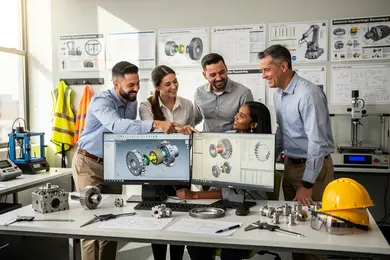
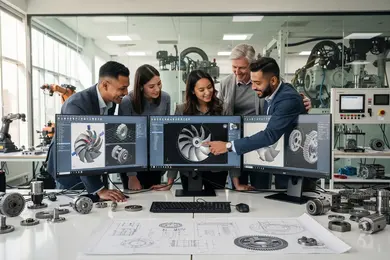
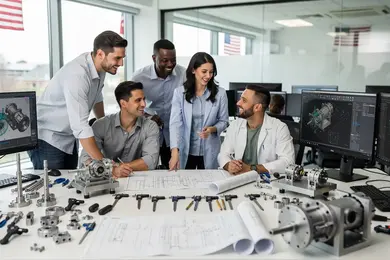
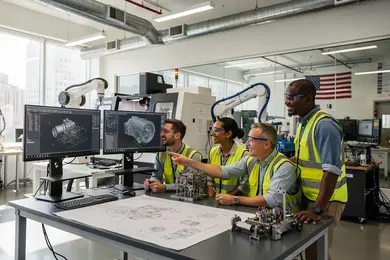
Choosing an online mechanical engineering degree for robotics or automation means balancing flexibility, lab access, accreditation, cost, and career fit. The decision matters because U.S. manufacturers, logistics firms, energy companies, and medical-device employers increasingly rely on automation systems.
The U.S. Bureau of Labor Statistics reported a May 2024 median wage of $102,320 for mechanical engineers, making program quality and specialization especially important. This guide helps prospective students compare degree types, online formats, admissions, costs, technical skills, and career outcomes before enrolling.
Key Things You Should Know
- For robotics and automation careers, prioritize ABET-accredited mechanical engineering bachelor's programs or regionally accredited graduate programs with controls, mechatronics, robotics, manufacturing automation, CAD/CAE, and embedded systems coursework.
- Online mechanical engineering programs can work well for working adults, but students should verify how labs, design projects, proctored exams, internships, and hands-on robotics experience are delivered before committing.
- College Board's 2024-25 tuition averages show public in-state four-year tuition and fees at $11,610, while BLS May 2024 data places mechanical engineers' median wage at $102,320.
What is an online mechanical engineering degree with a focus on robotics and automation?
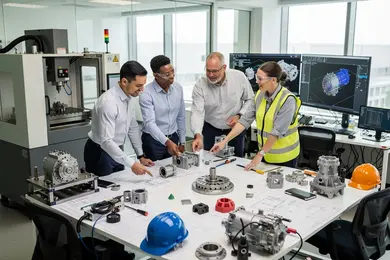
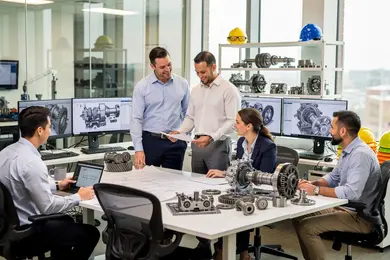
An online mechanical engineering degree with a robotics and automation focus is a mechanical engineering program that teaches core engineering principles while adding coursework in automated systems, control theory, sensors, actuators, robotics, manufacturing systems, and computer-aided engineering. The "online" label usually refers to lectures, assignments, exams, simulations, and advising being delivered remotely, while labs may be completed through mailed kits, virtual labs, intensive campus visits, partner facilities, or employer-based projects.
Mechanical engineering is broader than robotics. It covers mechanics, thermodynamics, materials, fluid systems, machine design, and engineering analysis. Robotics and automation build on that foundation by applying mechanical design to machines that sense, move, make decisions, or improve industrial processes. A student interested in robotic arms, automated production lines, autonomous equipment, machine vision integration, or smart manufacturing should look for programs that connect mechanical design with controls and computing.
The degree can fit several types of learners: first-time college students seeking an engineering bachelor's degree, working technicians moving into engineering roles, engineers returning for a master's specialization, and professionals in manufacturing who need automation expertise. It may not be the best fit for students who mainly want software development, artificial intelligence research, or electrical hardware design unless the curriculum includes enough programming, electronics, and systems integration.
Robotics is interdisciplinary, so students often compare mechanical engineering with related options. Mechanical engineering is usually the stronger route for students who want to design mechanisms, end effectors, thermal systems, structures, manufacturing equipment, or electromechanical products. Computer science, electrical engineering, and mechatronics may be better fits when the desired work centers on algorithms, circuits, firmware, or control electronics.
How do online mechanical engineering programs compare to campus-based options for robotics and automation?
Online and campus-based mechanical engineering programs can lead to similar academic credentials, but they differ in how students access labs, faculty, equipment, peers, and career opportunities. For robotics and automation, the key question is not whether a program is online; it is whether the program gives students enough applied design, testing, and troubleshooting experience.
The table below compares major decision factors. Use it to identify which format better matches your schedule, learning style, and need for hands-on robotics exposure.
| Factor | Online mechanical engineering program | Campus-based mechanical engineering program | Best fit |
| Schedule flexibility | Often stronger for working adults, military students, and students with family responsibilities | Usually more fixed around daytime classes and lab schedules | Online if you need flexibility; campus if you can attend full time |
| Robotics labs | May use simulations, remote labs, take-home kits, short residencies, or employer-based projects | Usually easier access to robotics labs, machine shops, and supervised equipment | Campus if you need frequent equipment access |
| Networking | Depends heavily on virtual project teams, faculty access, and industry partnerships | Often stronger for informal peer networks, clubs, and lab assistant roles | Campus for club-heavy robotics ecosystems; online for employer-connected learners |
| Cost control | Can reduce relocation, commuting, and housing costs, though tuition varies by school | May include more facility fees and living costs if relocation is needed | Online if total cost is a priority |
| Career preparation | Strong when the program requires capstones, internships, portfolio projects, and industry software | Strong when students use labs, design teams, internships, and faculty research opportunities | Either format if applied experience is built in |
Online study is often worth considering when you already work in manufacturing, maintenance, CAD, quality, or industrial technology and can connect class projects to real equipment. It is less ideal when a student has no access to labs, no local internship options, and no plan to build a portfolio through robotics clubs, open-source projects, or employer-sponsored automation work.
Students comparing online engineering degrees should look beyond tuition and confirm whether the delivery model supports engineering design practice, not just lecture-based theory.
What accreditation should online mechanical engineering degrees have for robotics and automation careers?
Accreditation is one of the most important quality checks for an online mechanical engineering degree. In the United States, students should first confirm that the institution has regional or recognized institutional accreditation. For a bachelor's degree in mechanical engineering, ABET accreditation is especially important because many employers, graduate schools, and state licensing boards treat it as the standard signal that the engineering curriculum meets professional expectations.
ABET accreditation matters most for undergraduate engineering programs. If you plan to pursue the Fundamentals of Engineering exam, Professional Engineer licensure, government engineering roles, or traditional mechanical engineering positions, an ABET-accredited bachelor's degree is usually the safer choice. Requirements vary by state licensing board, so students interested in licensure should verify rules before enrolling.
Graduate programs are evaluated differently. Many online master's degrees in mechanical engineering are not individually ABET-accredited because ABET primarily accredits undergraduate engineering programs. For a master's program, students should check institutional accreditation, faculty expertise, course rigor, research or project opportunities, employer recognition, and whether the degree title clearly aligns with mechanical engineering, robotics, mechatronics, or automation.
Before applying, students should verify these accreditation and recognition points with the school and with any licensing board or employer requirements that apply to their goals:
- Confirm the institution is accredited by a recognized institutional accreditor listed by the U.S. Department of Education or the Council for Higher Education Accreditation.
- For bachelor's programs, confirm the exact mechanical engineering program is ABET-accredited, not merely that the university has other ABET-accredited programs.
- Check whether online students earn the same degree title and transcript wording as campus students.
- Ask whether the program supports FE exam preparation if professional engineering licensure may matter later.
- For robotics-focused graduate programs, review faculty backgrounds, lab partnerships, capstone options, and industry software access.
A common mistake is assuming that "nationally ranked," "STEM-focused," or "career-oriented" means accredited in the way engineering employers expect. Rankings can help with discovery, but accreditation is the baseline quality screen.
Which types of online mechanical engineering degrees best support robotics and industrial automation pathways?
The best degree type depends on where you are starting and which robotics or automation role you want. A bachelor's degree is typically the standard entry route for mechanical engineering roles, while a master's degree can help engineers specialize in controls, robotics, advanced manufacturing, or systems engineering.
The table below summarizes common degree options and how they align with robotics and automation goals. It is especially useful if you are deciding between a full engineering degree, a specialization, or a shorter credential.
| Credential | Typical student | Robotics and automation value | Limitations to check |
| Online bachelor's in mechanical engineering | Students seeking entry-level engineering roles | Builds the strongest foundation in mechanics, design, materials, thermodynamics, and engineering analysis | Should ideally be ABET-accredited and include real lab and design experiences |
| Online bachelor's in mechanical engineering technology | Hands-on learners, technicians, and applied manufacturing professionals | Can support applied automation, testing, manufacturing, and production roles | May not qualify for all engineering roles or licensure pathways |
| Online master's in mechanical engineering | Engineers who already hold a technical bachelor's degree | Supports specialization in robotics, controls, dynamics, design optimization, or advanced manufacturing | Often requires prerequisite engineering coursework |
| Online master's in robotics, mechatronics, or systems engineering | Engineers seeking interdisciplinary automation roles | Can connect mechanical systems with electronics, software, controls, and sensing | May be less suitable if you need a traditional mechanical engineering degree title |
| Graduate certificate in robotics or automation | Working engineers who need targeted upskilling | Useful for adding controls, PLCs, robotics, or manufacturing automation skills without a full degree | Usually not a substitute for an engineering degree in degree-required roles |
A bachelor's degree generally makes the most sense if you do not already have an engineering credential. A master's degree is usually more efficient if you already hold a mechanical, electrical, computer, aerospace, or industrial engineering degree and want to move toward robotics or automation leadership. A certificate can be practical when an employer wants targeted skills rather than a new degree.
Students who discover they are more interested in software, autonomous systems algorithms, or robotics programming than mechanical design may also compare a fast track computer science degree with engineering programs before choosing a path.
What courses and technical skills do online mechanical engineering programs teach for robotics work?
Robotics and automation work requires more than one skill set. Mechanical engineers in this field need to understand physical systems, motion, forces, materials, thermal effects, sensors, control loops, manufacturing constraints, and the software tools used to model and validate designs.
Most programs begin with core mechanical engineering subjects and then add electives or projects related to automation. The strongest robotics-oriented programs usually include a mix of the following areas:
- Engineering fundamentals: calculus, differential equations, physics, statics, dynamics, mechanics of materials, thermodynamics, fluid mechanics, and materials science.
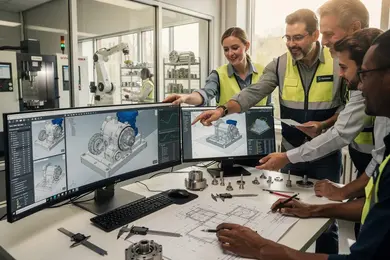
- Design and simulation: CAD, computer-aided engineering, finite element analysis, kinematics, machine design, design for manufacturability, and product lifecycle tools.
- Controls and automation: feedback control systems, dynamic systems modeling, sensors, actuators, programmable logic controllers, industrial automation, and system identification.
- Robotics topics: robot kinematics, motion planning, robotic manipulators, mobile robots, mechatronics, human-robot interaction, and robotic system integration.
- Programming and data skills: MATLAB, Python, C or C++, numerical methods, data acquisition, embedded systems basics, and simulation environments.
- Professional skills: technical writing, engineering ethics, project management, teamwork, safety, documentation, and design reviews.
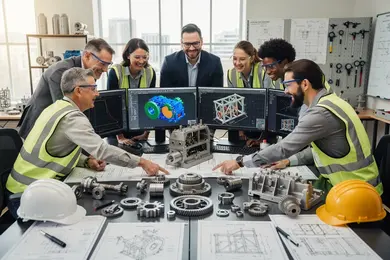
The most valuable programs do not treat these subjects as isolated classes. They connect them through design projects, such as building a controlled mechanism, modeling a robotic joint, designing an automated fixture, programming a sensor-driven device, or improving a production process with automation.
AI is also changing expectations. Mechanical engineers do not necessarily need to become machine learning researchers, but robotics teams increasingly value engineers who can work with data, simulation, perception systems, predictive maintenance models, and digital twins. Students aiming for advanced autonomous systems or robotics analytics may eventually compare engineering graduate study with an online doctorate data science pathway if their goals shift toward research, modeling, or AI leadership.
What are typical admission requirements for online mechanical engineering programs specializing in automation?
Admission requirements vary by degree level, school selectivity, and whether the program is designed for first-time students, transfer students, or working engineers. Mechanical engineering is math-intensive, so schools often pay close attention to calculus readiness, physics preparation, and prior technical coursework.
Applicants should expect different requirements depending on the credential. The table below outlines common expectations, though individual schools may require additional prerequisites or placement testing.
| Program level | Common admission requirements | What robotics-focused applicants should emphasize |
| Bachelor's degree | High school diploma or equivalent, transcripts, math and science preparation, possible placement tests, and sometimes standardized test scores | Calculus readiness, physics background, robotics club work, CAD experience, programming exposure, or technical projects |
| Transfer bachelor's degree | College transcripts, minimum GPA, completed calculus or physics courses, and transferable general education credits | Prior engineering, engineering technology, manufacturing, electronics, or computer science coursework |
| Master's degree | ABET or equivalent engineering bachelor's degree, transcripts, resume, statement of purpose, recommendations, and sometimes GRE scores | Controls, design, dynamics, programming, manufacturing, or robotics-related professional experience |
| Graduate certificate | Bachelor's degree or technical background, transcripts, and prerequisite coursework | Clear goals tied to automation, controls, PLCs, robotics integration, or manufacturing improvement |
Students who do not meet the math or science prerequisites should not assume they are excluded. Many schools allow applicants to complete bridge courses, community college prerequisites, or nondegree coursework before full admission. This can be a smart way to reduce cost and prove readiness.
Before applying, take these steps to strengthen your application and avoid delays:
- Review the program's calculus, physics, and programming prerequisites before submitting an application.
- Ask whether transfer credits are evaluated before enrollment deposits are due.
- Prepare a short project portfolio if you have robotics, CAD, 3D printing, programming, maintenance, or automation experience.
- Clarify whether online students must attend campus labs or complete proctored exams at approved testing centers.
- For graduate programs, contact an advisor about prerequisite gaps if your bachelor's degree is in engineering technology, physics, math, or computer science rather than mechanical engineering.
How long do online mechanical engineering degrees take and what do they usually cost?
Completion time depends on degree level, transfer credits, course load, prerequisite gaps, and whether the program uses semesters, quarters, or accelerated terms. A first-time bachelor's student typically needs about four years of full-time study, while transfer students may finish faster if prior credits apply. Online master's programs often take about one to three years, depending on whether the student studies full time or part time.
Cost is harder to compare because tuition is only one part of the total expense. College Board's 2024-25 data lists average published tuition and fees at $11,610 for in-state students at public four-year institutions and $43,350 at private nonprofit four-year institutions. Those figures are not engineering-specific and do not include every online fee, but they show why students should compare total cost rather than assuming one format is automatically cheaper.
The table below summarizes common timeline and cost drivers. Use it to ask better questions when comparing programs.
| Degree path | Typical completion time | Main cost factors | Cost-control strategy |
| Online bachelor's for first-time students | About four years full time; longer part time | Tuition, engineering fees, lab materials, software, textbooks, proctoring, and possible campus visits | Use transfer-friendly general education courses and confirm ABET status before enrolling |
| Online bachelor's completion path | Often two to three years after transfer, depending on accepted credits | Upper-division engineering tuition, prerequisite repeats, and lab requirements | Get a written transfer evaluation before committing |
| Online master's degree | About one to three years | Graduate tuition, software, project fees, and employer reimbursement limits | Choose a program aligned with employer tuition assistance and career goals |
| Graduate certificate | Often several months to one year | Per-credit tuition and specialized software or lab fees | Confirm whether certificate credits can later apply to a master's degree |
Students should also consider opportunity cost. A lower-tuition program that delays graduation because credits do not transfer may cost more in the long run than a slightly more expensive program with a clear path to completion. Conversely, an accelerated program can be a poor fit if it compresses difficult courses like dynamics, controls, and thermodynamics beyond what your schedule can support.
To estimate your real cost, ask each school for a full program cost worksheet that includes tuition, fees, expected transfer credits, lab requirements, software, books, residency travel, and graduation fees. Then compare net cost after grants, scholarships, employer tuition assistance, military benefits, or federal aid.
What careers in robotics and automation can graduates of online mechanical engineering programs pursue?
Graduates of online mechanical engineering programs can pursue robotics and automation roles across manufacturing, aerospace, automotive, logistics, defense, energy, medical devices, consumer products, and industrial equipment. The exact role depends on degree level, experience, portfolio strength, and how much the program covered controls, programming, electronics, and manufacturing systems.
The table below connects common job paths with typical responsibilities. Job titles vary by employer, so students should read postings carefully rather than relying only on title names.
| Career path | Typical responsibilities | Helpful preparation |
| Mechanical design engineer | Designs components, mechanisms, housings, fixtures, or moving assemblies for automated systems | CAD, finite element analysis, machine design, materials, and design for manufacturing |
| Robotics engineer | Develops or integrates robotic systems, end effectors, motion systems, sensors, and control elements | Robotics, kinematics, controls, programming, mechatronics, and testing experience |
| Automation engineer | Improves production systems through automated equipment, sensors, PLCs, and process controls | Controls, manufacturing systems, PLCs, troubleshooting, and industrial safety |
| Manufacturing engineer | Optimizes production processes, tooling, quality, layout, and equipment performance | Lean manufacturing, CAD, process improvement, automation, and materials knowledge |
| Controls engineer | Designs and tunes control systems for machines, motion systems, and automated equipment | Control theory, MATLAB, programming, sensors, actuators, and dynamic systems |
| Test or validation engineer | Plans experiments, validates equipment, analyzes failures, and documents performance | Data acquisition, statistics, instrumentation, technical writing, and mechanical testing |
Entry-level applicants are usually stronger when they can show applied evidence of skill. That may include a senior design project, robotics competition, internship, co-op, GitHub repository, CAD portfolio, manufacturing improvement project, or documented automation work completed for an employer.
Robotics also overlaps with healthcare and human performance through prosthetics, exoskeletons, rehabilitation devices, and assistive technologies. Students who are more interested in biomechanics, rehabilitation, or movement science than machine design may want to compare engineering with online exercise science programs before choosing a degree path.
What salary ranges and advancement opportunities exist for mechanical engineers in robotics and automation?
Salary depends on role, industry, region, education, experience, security clearance, software skills, and whether the job involves design, manufacturing, controls, field support, or leadership. The U.S. Bureau of Labor Statistics reported a May 2024 median annual wage of $102,320 for mechanical engineers. That figure is a broad national benchmark, not a robotics-specific promise, but it helps students evaluate whether the time and cost of an engineering degree are reasonable for their goals.
Robotics and automation roles can fall under several occupational categories, so salary comparisons should be interpreted carefully. A mechanical design engineer, controls engineer, manufacturing engineer, and robotics software engineer may work on the same automation project but be classified differently by employers and labor datasets.
The table below gives a practical view of advancement stages rather than guaranteeing income. Use it to understand how responsibilities typically expand over time.
| Career stage | Common roles | Typical advancement focus |
| Entry level | Mechanical engineer, design engineer, manufacturing engineer, test engineer | Build CAD, analysis, documentation, lab testing, troubleshooting, and safety habits |
| Early career | Automation engineer, robotics integration engineer, controls-focused mechanical engineer | Own subsystems, support commissioning, improve equipment, and work across mechanical, electrical, and software teams |
| Midcareer | Senior mechanical engineer, senior automation engineer, project engineer | Lead design reviews, mentor junior engineers, manage suppliers, and make architecture-level decisions |
| Advanced | Engineering manager, robotics systems lead, principal engineer, product development lead | Set technical direction, manage budgets, lead cross-functional teams, and influence product or factory strategy |
Advancement often depends on becoming more interdisciplinary. Mechanical engineers who understand controls, software, industrial networks, safety standards, simulation, and data analysis can be more competitive for robotics systems roles than those who only specialize in static mechanical design. Leadership roles may also require project management, communication, supplier coordination, and business judgment.
Students should avoid choosing a program based on salary claims from a single school or advertisement. Better evidence includes graduate employment reports, employer partnerships, internship pipelines, alumni job titles, capstone sponsors, and whether coursework maps to skills found in current robotics and automation job postings.
How can students evaluate and choose a reputable online mechanical engineering program in robotics?
A reputable online mechanical engineering program should combine accreditation, engineering rigor, hands-on learning, transparent cost information, and credible career support. The right choice is not always the highest-ranked or fastest program; it is the program that best fits your career goal, preparation level, schedule, and budget.
Start by identifying your target role. A student aiming for mechanical design in robotic hardware needs different electives than a student aiming for factory automation, controls, or manufacturing systems. Once the goal is clear, compare programs using a consistent checklist.
Use the following steps to evaluate programs before enrolling:
- Verify institutional accreditation and, for bachelor's mechanical engineering programs, confirm ABET accreditation for the exact program.
- Review the curriculum for controls, robotics, mechatronics, CAD/CAE, manufacturing automation, programming, and capstone design.
- Ask how online labs work and whether students must travel for residencies, use lab kits, access remote equipment, or complete employer-based projects.
- Request a written transfer credit review and a total cost estimate before paying a deposit.
- Check whether online students receive the same faculty access, advising, tutoring, software licenses, library access, and career services as campus students.
- Look for evidence of applied outcomes, such as senior projects, internship support, employer partnerships, student design teams, and alumni roles in robotics or automation.
- Compare pacing honestly against your work schedule, especially for difficult courses such as dynamics, thermodynamics, controls, and machine design.
Red flags include vague accreditation language, no clear lab plan, pressure to enroll before transfer credits are reviewed, limited engineering faculty information, unrealistic salary promises, and curricula that use robotics marketing language without technical coursework to support it.
A good final test is to collect three current job postings you would want after graduation and compare their required skills with each program's courses and projects. If the overlap is weak, ask the school how students build those skills or consider a different program.
Other Things You Should Know About Mechanical Engineering
Yes, at least at a practical level. Mechanical engineers often use MATLAB, Python, or similar tools for modeling, data analysis, controls, automation, and simulation. Robotics-focused students benefit from additional exposure to C, C++, embedded systems, or robot operating environments.
Students pursuing a mechanical engineering degree with a focus on robotics and automation in 2027 face challenges like integrating interdisciplinary knowledge, mastering advanced programming, and staying updated with rapidly evolving automation technologies. Embracing these challenges equips them with versatile skills for future-proof careers.
Yes. Mechanical engineering is broad enough to support roles in aerospace structures, vehicle systems, thermal design, product development, prosthetics, medical devices, and manufacturing equipment. Students should choose electives, internships, and projects that match the target industry.
Certifications can help, but they usually supplement rather than replace a degree. Useful options may include CAD certifications, Six Sigma, project management, safety training, manufacturing credentials, or vendor-specific automation training, depending on the role and employer.
References
- The 11 Best Degrees in Robotics for 2026 (Expert Picks) - AI Degree Center https://aidegreecenter.org/degrees-in-robotics/
- 2025 Best Online Mechanical Engineering Degrees https://www.onlineu.com/degrees/mechanical-engineering
- Automation Engineering Degrees: Associate, Bachelor's & Online Class Info https://learningpath.org/articles/Automation_Engineering_Degrees_Associate_Bachelors_Online_Class_Info.html
- How Long to Become a Mechanical Engineer? | University of Bridgeport https://www.bridgeport.edu/news/time-to-become-a-mechanical-engineer/
- Robotics and Automation Engineering Salary in India https://blog.madeeasy.in/robotics-and-automation-engineering-salary-in-india
- The Best Robotics Degrees & Certifications to Launch Your Career | Robotics Jobs https://roboticsjobs.co.uk/career-advice/the-best-robotics-degrees-certifications-to-launch-your-career
- Robotics in Mechanical Engineering https://skill-lync.com/blogs/chapter-6-robotics
- Top 10 Highest Paying Jobs in Mechanical Engineering | CADD https://caddcentre.com/blog/top-10-high-paying-jobs-in-mechanical-engineering/
- News and Events https://www.roboticscareer.org/news-and-events/news/27855
- Accredited Online Engineering Schools in California (CA) https://www.onlineengineeringprograms.com/usa/california