2027 Online Mechanical Engineering Degrees That Prepare Students for Industry, Licensure, or Graduate Study

Co-Founder and Chief Data Scientist
Choosing an online mechanical engineering degree is a high-stakes decision because it can affect licensure eligibility, transfer options, graduate school admission, and career mobility. The Bureau of Labor Statistics reports a May 2024 median annual wage of $102,320 for mechanical engineers, making program quality and accreditation especially important. This guide is for working adults, transfer students, military learners, and future engineers comparing online options. You will learn how online programs work, what to verify before enrolling, and how to choose a degree that supports industry work, PE licensure, or graduate study.
Key Things You Should Know
- For PE licensure, an online bachelor's degree in mechanical engineering is strongest when it is ABET EAC-accredited; state boards may impose extra requirements for non-ABET or engineering technology programs.
- Online mechanical engineering programs usually take about four years for first-time bachelor's students, two to three years for transfer students, and one to two years for master's students, depending on credits, pacing, and lab requirements.
- BLS data places the May 2024 median annual wage for mechanical engineers at $102,320, while employment is projected to grow 11% from 2023 to 2033, but outcomes still vary by industry, location, experience, and technical specialization.
What is an online mechanical engineering degree and how does it compare to campus programs?
An online mechanical engineering degree is a college program that teaches the design, analysis, testing, and improvement of mechanical systems through remote coursework. Students study topics such as statics, dynamics, thermodynamics, fluid mechanics, heat transfer, materials, machine design, controls, and computer-aided engineering. The degree may be offered as a Bachelor of Science, Bachelor of Engineering, Master of Science, Master of Engineering, or, less commonly, an engineering technology degree.
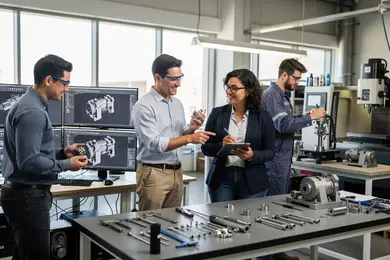
The key question is not simply can you get an engineering degree online, but whether the specific program has the accreditation, labs, faculty support, and curriculum depth needed for your goal. Mechanical engineering is hands-on by nature, so reputable online programs usually combine asynchronous lectures, live sessions, simulation tools, remote labs, mailed lab kits, local proctoring, campus intensives, or employer-based projects.
The comparison below shows where online and campus programs tend to differ. Use it to decide whether flexibility is worth the trade-offs for your situation.
| Feature | Online mechanical engineering degree | Campus mechanical engineering degree |
| Best fit | Working adults, transfer students, military learners, and students who cannot relocate | Students who want daily in-person labs, clubs, research groups, and campus recruiting |
| Course delivery | Recorded lectures, live webinars, learning platforms, simulations, and online exams | In-person lectures, labs, studios, and campus-based exams |
| Hands-on work | Remote labs, at-home kits, virtual instrumentation, short residencies, or approved local facilities | Campus labs, machine shops, wind tunnels, materials testing labs, and student project spaces |
| Networking | More self-directed; often depends on virtual teams, faculty outreach, internships, and professional societies | More spontaneous through labs, student organizations, research assistantships, and campus events |
| Transcript and diploma | Often the same degree name as the campus program, but students should confirm this with the school | Traditional campus credential with in-person delivery |
Online study makes the most sense if you are disciplined, comfortable with math-heavy self-study, and able to schedule lab or project work around employment. A campus program may be better if you need frequent in-person tutoring, want access to specialized facilities every week, or plan to join competitive engineering design teams that rely on physical prototyping.
Are online mechanical engineering degrees accredited and recognized for professional licensure?
Some online mechanical engineering degrees are accredited, but accreditation must be checked program by program. Institutional accreditation tells you the college is recognized as a legitimate higher education provider. Programmatic accreditation, especially from the ABET Engineering Accreditation Commission, is the more important signal for mechanical engineering licensure and employer recognition.
ABET EAC accreditation matters because many state engineering boards use it as the standard education pathway for the Fundamentals of Engineering exam, Engineer in Training status, and later Professional Engineer licensure.
An online format does not automatically reduce recognition if the program is properly accredited and the curriculum meets engineering standards. The risk comes from assuming that any "engineering" or "engineering technology" degree leads to the same licensure path.
These terms are easy to confuse, but they can lead to different outcomes:
- Mechanical engineering, ABET EAC-accredited: Usually the strongest bachelor's-level route for students who may pursue PE licensure, design engineering roles, or graduate engineering study.
- Mechanical engineering technology, ABET ETAC-accredited: Often more applied and implementation-focused; it may be accepted by some employers and some licensing boards, but PE pathways can be more limited or require additional experience depending on the state.
- Non-ABET engineering degree: May still support some industry jobs or graduate admission, but students should verify state board rules, employer expectations, and transferability before enrolling.
The most common mistake is checking only the college's overall accreditation and not the mechanical engineering program's specific accreditation status. Before applying, search the ABET public database, confirm the exact program name, and verify whether online students are included under the same accreditation record as campus students.
How can an online mechanical engineering degree prepare me for PE licensure or graduate school?
An online mechanical engineering degree can support PE licensure or graduate school when it builds the same engineering fundamentals expected in a campus program. For licensure, the typical path includes an ABET-accredited engineering bachelor's degree, passing the FE exam, gaining qualifying supervised engineering experience, and passing the PE exam. Exact rules vary by state, so students should check the licensing board in the state where they expect to practice.
If PE licensure is your long-term goal, choose a program that helps you document the right academic and professional milestones. The following steps can reduce surprises later:
- Confirm whether the bachelor's program is ABET EAC-accredited under the exact name listed on your transcript.
- Ask whether the curriculum maps to FE Mechanical exam topics such as thermodynamics, fluid mechanics, heat transfer, mechanics of materials, controls, and machine design.
- Keep syllabi, lab descriptions, project records, and official transcripts in case a state board asks for education documentation.
- Seek internships, co-ops, or full-time roles under licensed engineers if PE licensure is important in your target industry.
- Review state board rules before changing states, because experience and education requirements are not identical nationwide.
For graduate school, the same degree can prepare you if it includes rigorous math, science, and upper-division engineering design. Research-oriented master's or doctoral programs may expect evidence of strong grades in core mechanical engineering courses, faculty recommendations, and prior project or research experience. Practice-oriented master's programs may focus more on professional experience and technical readiness.
Students considering graduate study should look for undergraduate programs with senior design projects, technical electives, faculty-led research opportunities, and strong preparation in computational tools. If you already hold a related degree, a master's program may require prerequisite coursework in areas such as dynamics, thermodynamics, or fluid mechanics before you can take advanced classes.
What are the typical admission requirements for online mechanical engineering bachelor's and master's programs?
Admission requirements vary by school and degree level, but mechanical engineering programs are usually more structured than many online majors because the curriculum is sequential. Calculus, physics, chemistry, and foundational engineering courses often must be completed in a specific order.
The table below summarizes common requirements so you can compare your current academic record with likely expectations before speaking with admissions.
| Program level | Typical applicants | Common admission requirements | What to check carefully |
| Online bachelor's degree | First-time college students, transfer students, military students, and adults returning to college | High school diploma or GED, transcripts, placement or prior coursework in algebra and precalculus, standardized tests if required, and prerequisite science readiness | Whether lower-division labs and calculus courses are available online or must be completed locally |
| Online bachelor's completion program | Students with prior college credits or an associate degree | Transferable calculus, physics, chemistry, general education, and introductory engineering credits | How many credits transfer into the major rather than only into electives |
| Online master's degree | Engineering graduates or professionals in related technical fields | Bachelor's degree, transcripts, minimum GPA, resume, statement of purpose, recommendations, and sometimes GRE scores | Whether non-mechanical engineering majors need bridge courses before graduate study |
For bachelor's applicants, transfer credit policy can make or break the timeline. A student with community college calculus and physics may move faster, but only if those courses match the receiving school's requirements. For master's applicants, the biggest issue is academic fit: a bachelor's in physics, engineering technology, or another engineering discipline may be acceptable at some schools but may trigger additional prerequisite requirements.
Applicants should also ask how exams are proctored, whether labs require travel, and whether international transcripts or military credits need separate evaluation. These details affect cost and completion time even when the admissions page looks straightforward.
How long do online mechanical engineering degrees take and what do they cost?
Most online bachelor's degrees in mechanical engineering require roughly the same credit load as campus programs, often around 120 to 130 credits. First-time students commonly need about four years of full-time study, while transfer students may finish faster depending on accepted credits. Online master's programs commonly take one to two years full time or two to three years part time.
Cost varies widely by institution type, residency rules, transfer credits, lab fees, software, and whether the program charges a flat online rate. As a benchmark, College Board's 2024 Trends in College Pricing and Student Aid reported average published tuition and fees of $11,610 for in-state students at public four-year institutions and $43,350 at private nonprofit four-year institutions for 2024-25. Those figures are not mechanical-engineering-specific, but they show why residency status and institution type can strongly affect total price.
The table below outlines major cost factors that online mechanical engineering students should include when comparing programs. Tuition alone rarely tells the full story.
| Cost factor | Why it matters | Questions to ask |
| Tuition model | Schools may charge per credit, per term, in-state, out-of-state, or online-specific rates | Is the online rate different from campus tuition, and does residency matter? |
| Transfer credits | Accepted credits can reduce both tuition and time to graduation | Will calculus, physics, chemistry, and engineering courses transfer into the major? |
| Lab and residency costs | Some programs require travel, housing, equipment kits, or local lab fees | Are any campus visits required, and how often? |
| Software and hardware | CAD, simulation, programming, and data tools may require a capable computer | Are software licenses included, discounted, or paid separately? |
| Time away from work | Accelerated study can reduce calendar time but may affect income or work performance | Can I realistically take the recommended course load while working? |
Students comparing online STEM degrees should also recognize that costs differ by discipline. For example, a lab-intensive engineering program may have different expenses than an online geoscience degree, even when both are offered by the same type of institution.
To control costs, start with transfer planning. Complete lower-division general education, calculus, and science courses at a regionally accredited community college only after confirming transfer equivalency. Also compare employer tuition assistance, military education benefits, scholarships, and whether part-time enrollment preserves your income while extending the timeline.
What core courses and specializations are offered in online mechanical engineering programs?
Mechanical engineering is broad because it connects energy, motion, materials, manufacturing, robotics, vehicles, aerospace systems, medical devices, and consumer products. Online programs usually begin with math and science foundations before moving into analysis, design, and applied engineering electives.
Most reputable programs include a core sequence similar to the following. These subjects matter because employers and graduate schools expect mechanical engineering graduates to understand how physical systems behave, fail, and can be improved.
- Mathematics and science: Calculus, differential equations, linear algebra, physics, chemistry, and sometimes statistics.
- Engineering mechanics: Statics, dynamics, mechanics of materials, vibrations, and system modeling.
- Thermal-fluid systems: Thermodynamics, fluid mechanics, heat transfer, energy systems, and HVAC-related applications.
- Design and manufacturing: CAD, machine design, manufacturing processes, materials science, tolerancing, and product development.
- Controls and computation: Programming, numerical methods, instrumentation, mechatronics, automation, and simulation.
Specializations help students align the degree with a target industry. Not every online program offers every concentration, so compare electives carefully instead of relying only on the major name.
| Specialization area | Common topics | Best fit for students interested in |
| Robotics and mechatronics | Controls, sensors, actuators, embedded systems, automation, and machine vision | Manufacturing automation, robotics, product systems, and smart devices |
| Aerospace and vehicles | Fluid dynamics, propulsion, structures, vibrations, and lightweight materials | Aerospace suppliers, automotive engineering, defense, and mobility systems |
| Energy and thermal systems | Heat transfer, power systems, renewable energy, HVAC, and combustion | Energy, utilities, building systems, sustainability, and industrial facilities |
| Manufacturing and materials | Additive manufacturing, materials selection, quality systems, machining, and production design | Advanced manufacturing, product development, operations, and process improvement |
| Biomechanical engineering | Biomechanics, medical devices, materials, and human-centered design | Medical technology, rehabilitation devices, and health-related product design |
Current industry trends are also shaping course choices. Artificial intelligence is increasingly used in simulation, predictive maintenance, generative design, and manufacturing quality control, but it does not replace the need to understand mechanics, materials, and safety. Students who pair core engineering knowledge with data analysis and modeling skills may have more flexibility across industries.
What kinds of labs, projects, and hands-on experiences do online mechanical engineering students complete?
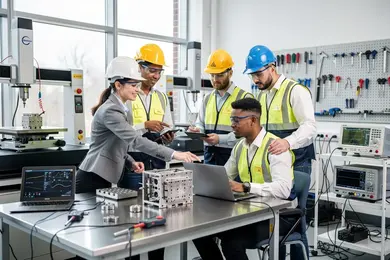
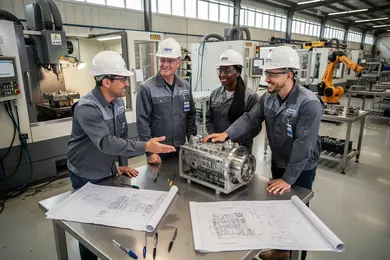
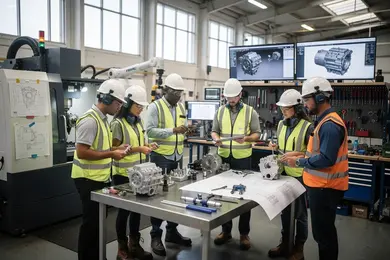
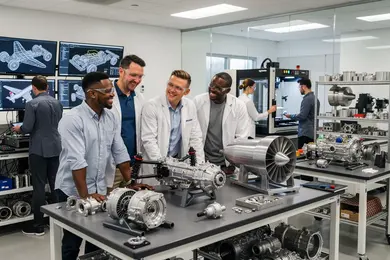
Hands-on experience is one of the most important quality indicators in an online mechanical engineering program. A strong program should not rely only on recorded lectures and quizzes. Students need opportunities to measure, build, test, troubleshoot, and document real or simulated systems.
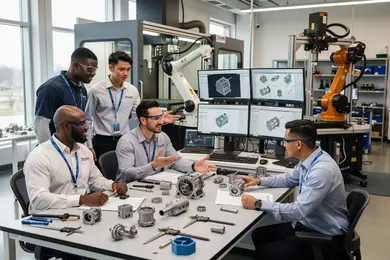
Online programs typically use several methods to deliver lab and project experiences. Ask schools exactly which methods they use and whether any of them require travel or special equipment.
- Remote labs: Students control real lab equipment online, collect data, and analyze results from a distance.
- At-home lab kits: Programs may ship sensors, circuits, materials, or measurement tools for experiments in mechanics, controls, or thermal systems.
- Simulation-based labs: Students use CAD, finite element analysis, computational fluid dynamics, or system modeling software to test engineering decisions.
- Short campus residencies: Some programs require weekend or summer visits for machine shop work, materials testing, senior design, or intensive labs.
- Local or employer-based projects: Working students may complete approved projects using workplace equipment, local facilities, or industry-sponsored problems.
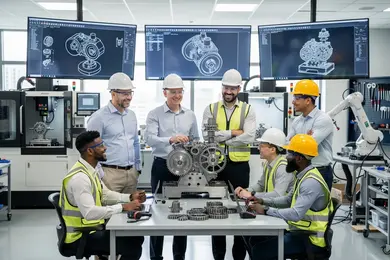
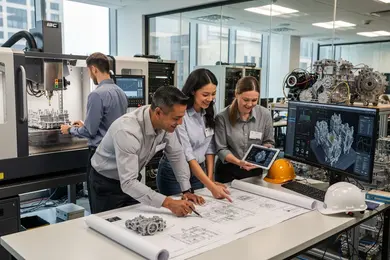
Senior design is especially important. It shows whether students can move from theory to a documented engineering solution under constraints such as budget, manufacturability, safety, performance, and teamwork. A strong capstone should include design reviews, calculations, prototypes or simulations, testing, failure analysis, and a final technical report.
Red flags include programs that cannot clearly explain how labs work, require students to find their own lab access without support, or offer few opportunities for team-based design. If you are preparing for industry, licensure, or graduate school, lab quality should weigh almost as heavily as tuition.
What mechanical engineering careers can I pursue after earning an online degree?
An online mechanical engineering degree can lead to many of the same career paths as a campus degree when the program is rigorous, accredited, and aligned with employer expectations. Mechanical engineers work across manufacturing, aerospace, automotive, energy, robotics, HVAC, medical devices, defense, construction systems, consumer products, and consulting.
The career options below show how mechanical engineering roles differ by responsibility. Use this table to connect your preferred coursework and projects with realistic job targets.
| Career path | Typical responsibilities | Helpful preparation |
| Mechanical design engineer | Design parts, assemblies, and systems; create CAD models; evaluate manufacturability and performance | Machine design, CAD, materials, tolerancing, and senior design projects |
| Manufacturing engineer | Improve production processes, reduce defects, select equipment, and support quality systems | Manufacturing processes, automation, statistics, lean methods, and materials |
| Thermal or fluids engineer | Analyze heat transfer, fluid flow, HVAC systems, energy systems, pumps, turbines, or cooling systems | Thermodynamics, fluid mechanics, heat transfer, energy systems, and simulation tools |
| Robotics or controls engineer | Work with sensors, actuators, automation equipment, motion control, and mechatronic systems | Controls, programming, electronics, mechatronics, and lab-based projects |
| Test engineer | Develop test plans, collect data, validate prototypes, analyze failures, and document performance | Instrumentation, statistics, mechanics, data analysis, and technical writing |
| Product development engineer | Move products from concept to prototype to production while balancing cost, usability, and performance | Design, materials, project management, manufacturing, and cross-functional teamwork |
Entry-level titles may include mechanical engineer, associate engineer, design engineer, manufacturing engineer, field engineer, test engineer, quality engineer, or applications engineer. Advanced roles may require experience, PE licensure, a master's degree, management skills, or expertise in a specialized industry.
This degree is usually a strong fit for people who enjoy applied math, problem-solving, physical systems, design trade-offs, and iterative testing. It may not be the best fit if you strongly dislike calculus, physics, technical documentation, or open-ended problems where the first design rarely works perfectly.
What is the salary potential and job outlook for mechanical engineers in the United States?
Mechanical engineering has solid earning potential, but salaries vary by industry, location, education level, experience, and technical specialization. The Bureau of Labor Statistics reported a May 2024 median annual wage of $102,320 for mechanical engineers. This median is a useful benchmark, not a promise; new graduates, senior engineers, managers, and specialized professionals can fall above or below it.
The labor market outlook is also favorable compared with many occupations. BLS projections released in 2024 show employment for mechanical engineers growing 11% from 2023 to 2033. For students, this suggests broad demand, but it does not remove the need to build software skills, design experience, internship history, and industry-specific knowledge.
The table below summarizes how salary and outlook information should be interpreted when evaluating the return on an online degree.
| Factor | How it affects outcomes | What students can do |
| Industry | Aerospace, energy, technology, manufacturing, consulting, and defense may value different skill sets | Choose electives and projects tied to a target industry |
| Location | Pay and job availability often reflect regional industry clusters and cost of living | Research employers in your state or target metro area before choosing a specialization |
| Experience | Internships, co-ops, military technical work, and full-time engineering experience can affect competitiveness | Prioritize programs with career support and flexible scheduling for internships |
| Licensure | PE licensure can matter more in consulting, public infrastructure, HVAC, and safety-critical work | Choose an ABET-aligned path if signing and sealing engineering work is a possible goal |
| Technical tools | Employers often expect CAD, simulation, programming, data analysis, and documentation skills | Build a portfolio of projects that demonstrates tools and engineering judgment |
Technology is changing the work, not eliminating the need for engineers. AI-assisted design, digital twins, cheapest data science masters in USA, additive manufacturing, automation, and predictive maintenance are increasing the value of engineers who can connect software outputs to physical reality. Employers still need people who can ask whether a design is safe, buildable, cost-effective, and compliant with standards.
How do I choose a reputable online mechanical engineering program that fits my goals?
The best online mechanical engineering program is not always the cheapest, fastest, or highest ranked. It is the program that matches your career goal, academic background, budget, schedule, and licensure needs. Start by deciding whether you want industry employment, PE licensure, graduate school, a career change, or advancement in a current technical role.
Use the following steps to compare programs in a practical order. This sequence helps you avoid wasting time on schools that cannot support your intended outcome.
- Identify your goal first: entry-level engineering work, PE licensure, graduate school, career advancement, or a specialized technical role.
- Verify programmatic accreditation, especially ABET EAC accreditation for bachelor's programs if licensure may matter.
- Compare the curriculum against your target industry, including labs, design projects, software, and technical electives.
- Ask for a written transfer credit evaluation before assuming previous coursework will shorten the degree.
- Calculate total cost, including tuition, fees, software, equipment, travel, and possible time away from work.
- Review student support, including tutoring, advising, faculty access, career services, internship help, and disability accommodations.
- Ask how online students complete labs, exams, team projects, and senior design requirements.
- Check graduation requirements, course rotation, and whether required courses are offered often enough for part-time students.
Students exploring different online professional degrees should compare how each field handles accreditation, practical training, and career outcomes. A nutritionist degree online, for example, has different credentialing considerations than engineering, while a library science degree may depend more heavily on graduate-level professional accreditation.
Common mistakes include choosing a program without checking ABET status, focusing only on tuition, ignoring lab logistics, assuming all online engineering degrees qualify for PE licensure, and enrolling before understanding transfer policies. Another mistake is choosing a specialization because it sounds exciting without checking whether employers in your region actually hire for that skill set.
A good admissions conversation should produce clear answers, not vague reassurance. Ask whether the diploma differs from the campus version, how many campus visits are required, what software is used, whether FE exam preparation is built into the curriculum, and what recent graduates typically do after completion. If the school cannot answer these questions directly, keep comparing options.
Other Things You Should Know About Mechanical Engineering
Many employers focus more on accreditation, skills, projects, internships, and interview performance than on delivery format. Still, some employers may ask about lab experience, so be ready to explain your design projects, tools, and hands-on work clearly.
Students often need a reliable high-speed internet connection and a computer capable of running CAD, simulation, programming, and data analysis software. Requirements vary by program, so confirm processor, memory, graphics, and operating system expectations before buying equipment.
Yes, many students do, but the workload is demanding. Part-time enrollment is often more realistic for working adults because courses such as calculus, thermodynamics, fluids, and machine design require consistent weekly study time.
An online mechanical engineering degree typically includes courses like thermodynamics, fluid mechanics, and materials science, combining theoretical knowledge with practical application. Programs often integrate hands-on labs and projects to ensure students meet industry standards and are prepared for licensure or advanced study.
References
- PE Exam Prep Courses | School of PE https://schoolofpe.com/collections/pe-exam-prep
- Licensure, Registration & Certification - ABET https://www.abet.org/accreditation/what-is-accreditation/licensure-registration-certification/
- Experiences https://neonfutures.org.uk/experiences/
- Top Career Options After Mechanical Engineering in 2026: Salaries, Skills, Companies & FAQs https://www.nit.ac.in/blog/top-career-options-after-mechanical-engineering-in-2026-salaries-skills-companies-faqs
- Career By Design https://collaborate.asce.org/careerbydesign/discussion/pe-licensure-your-experience
- Free Mechanical Project Ideas for Engineering Students https://www.skyfilabs.com/blog/free-mechanical-project-ideas-for-engineering-students
- Online Mechanical Engineering Degrees 2025 https://www.affordablecollegesonline.org/degrees/engineering-programs/mechanical-engineering/