2027 AI Doctorate Degrees in Texas: Best Options

Co-Founder and Chief Data Scientist
Many professionals with undergraduate degrees in unrelated fields face challenges when seeking advanced education to enter the artificial intelligence industry. The complexity of finding flexible, accredited doctorate programs in Texas that accommodate career pivots adds to the difficulty. Traditional paths may not fit the needs of working adults aiming to specialize in artificial intelligence at a doctoral level.
This article examines the top doctorate degree options in Texas tailored for those transitioning into artificial intelligence. It provides clear guidance on accessible programs that combine academic rigor with flexibility, helping readers make informed decisions for their career advancement.
Key Things You Should Know
- Texas offers several accredited AI doctorate programs with strong emphasis on machine learning, robotics, and data sciences, reflecting industry demand projected to grow 19% by 2030.
- Top institutions provide interdisciplinary research opportunities, combining AI with healthcare, engineering, and business to enhance career prospects in diverse fields.
- Funding options include competitive assistantships and scholarships, with many programs facilitating collaborations with tech companies based in Texas' innovation hubs.
What are AI doctorate degrees in Texas, and what careers do they prepare you for?
AI doctorate programs in Texas universities offer advanced technical training and research in key areas such as machine learning, data analytics, robotics, and natural language processing. These programs typically grant a PhD in computer science with an AI focus or a PhD in data science emphasizing AI methodologies.
Graduates with a doctorate in artificial intelligence in Texas are well-positioned for diverse careers, including:
- AI research scientists developing innovative algorithms and models
- Machine learning engineers creating automated systems
- Data scientists deriving predictive insights from large datasets
- AI consultants guiding organizations on AI integration
- Robotics engineers designing intelligent autonomous devices
- Professors and academic researchers advancing AI knowledge
Texas shows strong demand for AI professionals, with over 15,000 AI-related job openings reported recently. This demand spans multiple sectors like technology, healthcare, finance, and energy, reflecting the versatility of skills gained from AI doctorate programs.
Programs often provide interdisciplinary research opportunities by combining AI with areas such as bioinformatics or cybersecurity. Prospective students should seek those that offer industry partnerships, access to large datasets, and active faculty research to tailor their expertise.
Choosing a Texas AI doctorate prepares candidates for leadership roles addressing technical innovation and societal challenges, including AI ethics, algorithmic fairness, and explainability. For insight into a typical AI career path, students can explore various professional trajectories supported by these degrees.
Which Texas universities offer accredited AI-focused doctoral programs?
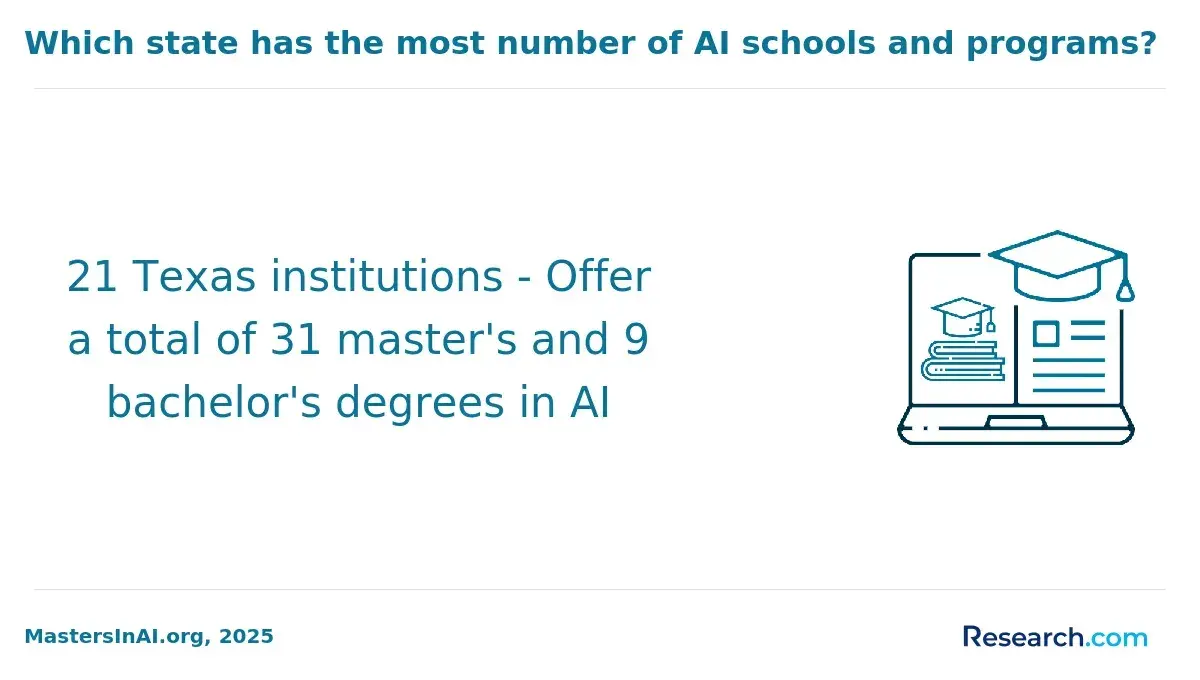
Texas universities provide multiple accredited doctoral programs in AI, attracting research-focused candidates nationwide. Among 36 doctoral-degree-granting institutions classified by the 2024 Carnegie Classification, prominent schools offering ai doctorate programs at Texas universities include the University of Texas at Austin, Texas A&M University, and Rice University.
The University of Texas at Austin offers a PhD in computer science with specializations in artificial intelligence, machine learning, and robotics. Students have access to cutting-edge research labs and partnerships with the Texas Advanced Computing Center. Similarly, Texas A&M's PhD in computer science emphasizes AI through research in machine learning and data analytics. Rice University's PhD in computational and applied mathematics also integrates artificial intelligence techniques vital to data science and algorithm development.
The University of Texas at Dallas provides interdisciplinary doctoral training by embedding AI topics in their electrical engineering and computer science PhD programs, focusing on smart systems and data engineering applications. Prospective students pursuing accredited doctoral degrees in AI in Texas should confirm accreditation through the Southern Association of Colleges and Schools Commission on Colleges (SACSCOC) and consider faculty expertise, research funding, and lab resources.
Preparation in foundational AI fields such as natural language processing, computer vision, and machine learning is crucial due to competitive admissions and strong industry demand. Those looking for cost-effective options related to engineering technologies may find value in exploring the cheapest online mechanical engineering degree, which can complement AI skill sets.
This academic environment positions Texas as a strategic choice for advanced artificial intelligence education and research.
What admission requirements do AI doctoral programs in Texas typically have?
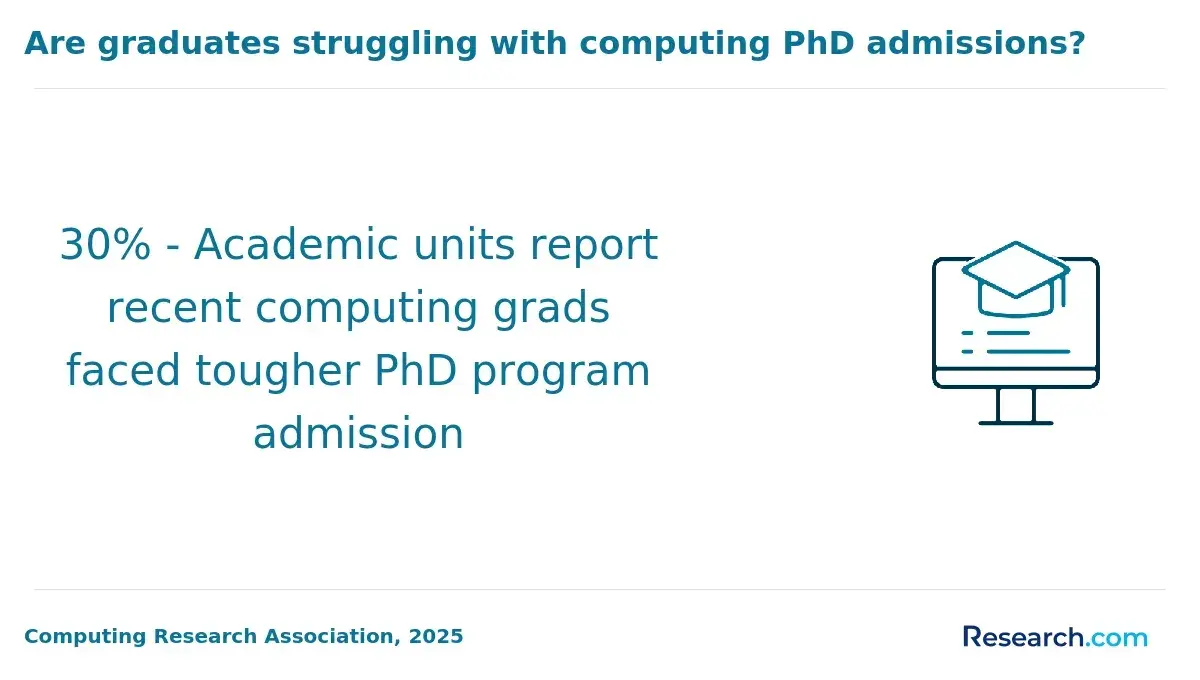
Admission requirements for AI doctorate programs in Texas universities emphasize strong academic credentials, relevant research experience, and standardized test scores. Applicants typically need a bachelor's or master's degree in computer science, engineering, mathematics, or a closely related field.
Evidence of rigorous coursework in algorithms, machine learning, and statistics is often necessary to demonstrate preparedness for advanced study. These are typical prerequisites for applying to Texas AI doctoral degrees.
Competitive GRE scores are crucial. For instance, the University of Texas at Austin's recent computer science PhD cohort reported a middle 50% GRE Quantitative score range of 168-170, indicating the high standard prospective students should meet to remain competitive at top-tier programs.
Strong letters of recommendation that highlight research potential and technical skills are essential. Admissions committees look for candidates capable of contributing to cutting-edge AI research. Submitting a detailed statement of purpose outlining specific research interests, career goals, and desired faculty collaborations is also standard.
Proof of programming proficiency, familiarity with AI frameworks, and related publications or project work further strengthen applications. Some programs require interviews to assess technical understanding and motivation. International applicants must submit TOEFL or IELTS scores to demonstrate English proficiency.
Applicants preparing for AI doctoral degrees in Texas should focus on high GRE quantitative scores, a solid academic background, persuasive research statements, and strong recommendations. Those exploring options might also consider degrees in AI online for additional pathways.
Can you earn an AI doctorate in Texas online or in hybrid formats?
Several Texas universities offer PhD programs that provide significant remote coursework, accommodating working professionals and out-of-state students through hybrid Artificial Intelligence PhD options in Texas. These programs typically combine online studies with required campus visits for seminars, research collaboration, or residencies, balancing flexibility with the intensive research demands of AI doctoral study.
Examples include institutions within the University of Texas System that offer interdisciplinary doctoral degrees focusing on artificial intelligence, enabling remote participation in coursework and research meetings. Texas A&M University also provides hybrid AI research tracks that combine virtual classes with local lab engagements. Purely online AI doctorate degree programs in Texas with no on-campus requirements remain rare due to the need for hands-on research and faculty interaction.
Prospective students should verify online accessibility and residency expectations for specific programs since these vary significantly. Challenges often involve access to AI research labs, faculty availability, and collaboration on large-scale projects, which usually require some in-person presence periodically.
Nationally, about 12% of U.S. doctoral students enroll exclusively in distance education, reflecting growing but still limited acceptance of fully remote doctoral study in AI fields. Texas programs follow this trend by offering flexible formats while maintaining essential campus components. Considering personal circumstances, employer support, and research interests is vital for students choosing between hybrid and traditional pathways.
For those interested in related fields, exploring the best online cybersecurity degree programs of 2025 can provide additional options.
What coursework and research areas are common in Texas AI PhD programs?
Texas AI PhD programs combine rigorous coursework with advanced research across core areas such as machine learning algorithms, statistical methods, natural language processing, computer vision, robotics, and data mining. Essential mathematics like linear algebra, optimization, and probability theory support model development, while electives cover reinforcement learning, explainable AI, and AI ethics to keep pace with rapid advances.
Common research fields include deep learning architectures, autonomous systems, human-computer interaction, and AI applications in healthcare or cybersecurity. Projects often focus on creating innovative neural networks for pattern recognition or AI-driven diagnostic tools benefiting from Texas's leading medical research institutions. Many students participate in interdisciplinary collaborations involving bioinformatics or smart city technologies.
Texas ranks #2 in the U.S. for AI-related patents granted, reflecting a vibrant innovation ecosystem. PhD candidates gain valuable experience through collaborations with industry leaders and access to extensive patent portfolios. Selecting programs with active partnerships and sponsored research enhances hands-on learning and technology transfer opportunities.
Prospective students should prioritize programs balancing theoretical foundations and practical applications. Evaluating faculty expertise and current labs aligns research interests with career goals, while involvement in patented technologies strengthens prospects in Texas's competitive AI environment.
How long does an AI doctorate in Texas take, and what affects completion time?
An AI doctorate in Texas generally requires about six years, aligning with the median completion time for U.S. research doctorates in computer and information sciences reported by the National Center for Science and Engineering Statistics. This duration varies due to several important factors.
Program structure plays a major role: some universities focus on structured coursework and comprehensive exams in the first few years, then intensive research; others encourage early research participation, which can either shorten or lengthen the process. Students concentrating on specialized AI areas within broader computer science departments often face extra coursework demands.
The complexity of research significantly affects how long the degree takes. Advanced topics like deep learning, reinforcement learning, or AI ethics usually require extended experimentation, data validation, and publication efforts, potentially adding months or years.
Funding and personal circumstances also matter. Fellowships and assistantships provide focused research time, possibly reducing the timeline, while part-time study or outside work commitments generally extend it.
Advisor availability and departmental resources influence progress, too. High faculty mentorship loads or limited lab facilities can slow completion. Prospective students should carefully evaluate faculty expertise and support before enrolling to set realistic expectations.
What are typical tuition costs and funding options for AI doctorates in Texas?
Tuition for Artificial Intelligence doctorate programs in Texas generally aligns with graduate STEM tuition rates at major universities. For instance, full-time Texas residents at The University of Texas at Austin pay approximately $10,858 annually in graduate tuition and fees. Non-resident students face significantly higher costs, often two to three times more, typically ranging from $25,000 to $35,000 per year. Private institutions usually charge above these amounts.
Given that doctoral programs span three to six years, careful financial planning is essential. Students can often reduce their expenses through various funding sources, including:
- Research assistantships funded by faculty grants offering tuition waivers and stipends;
- Teaching assistantships providing tuition reductions and monthly income;
- Fellowships from universities, government agencies, or industry partners;
- External scholarships focused on STEM doctoral research;
- Part-time internships or cooperative education positions with Texas technology companies.
Securing funding typically requires early application and strong academic records. Prospective students should reach out to AI research faculty or program coordinators to explore available assistantships and fellowships. Many programs provide full tuition waivers combined with living stipends, significantly lowering out-of-pocket costs.
Using The University of Texas at Austin's resident tuition as a financial benchmark is helpful, but costs and funding opportunities vary by institution. It is advisable to verify specific tuition figures and available funding for each AI doctorate program considered.
What AI jobs can you get after a doctorate, and which industries hire in Texas?
Doctorate holders in AI can pursue advanced roles such as research scientist, machine learning engineer, data scientist, AI ethics specialist, and AI systems architect in Texas. These positions require expertise in developing complex algorithms, conducting original research, and designing scalable AI models.
Texas hosts key industries that actively recruit AI PhDs, including technology, healthcare, energy, finance, and aerospace. The Austin-Round Rock-San Marcos area boasts a large tech workforce, with 118,790 tech professionals, supporting jobs in software AI development, autonomous systems, and cloud-based AI solutions.
- Healthcare organizations apply AI expertise to medical imaging analysis, personalized treatment models, and bioinformatics research.
- Energy companies use AI for optimizing renewable resources, predictive maintenance, and smart grid technologies.
- Financial institutions leverage AI in risk modeling, fraud detection, and algorithmic trading.
- The aerospace sector integrates AI in autonomous flight systems, robotic control, and advanced simulation environments.
Additionally, AI doctorates find opportunities at research universities and private labs working on federally funded projects in natural language processing, computer vision, and reinforcement learning. Prospective students should align their research focus with regional industry demands and build applied skills in areas like deep learning or human-centered AI.
Networking within Texas' robust tech ecosystem, especially metropolitan centers such as Austin, is essential for securing specialized AI roles.
What salary ranges can AI doctorate graduates expect in Texas?
AI doctorate graduates in Texas benefit from competitive salaries, especially in tech hubs like Austin and Dallas. In the Austin-Round Rock-San Marcos metro area, Computer and Information Research Scientists, many holding advanced AI degrees, earn an average annual wage of $161,660. Entry-level roles typically start around $110,000, while senior researchers and specialists in finance, healthcare, or autonomous systems can exceed $200,000.
Salary ranges vary by sector, role, and company size. Those in academia or government research usually start between $90,000 and $140,000. Private sector positions, particularly in large tech firms and AI startups, often include bonuses that boost total compensation by 10-20% above base pay.
Professionals specializing in applied AI fields such as robotics, natural language processing, or data science often command higher salaries due to strong demand. Geographic location within Texas influences pay scales, with Austin and Dallas offering the highest wages because of their dense tech ecosystems.
To enhance earning potential, doctorate holders should focus on cutting-edge AI subfields, publish impactful research, and pursue leadership or interdisciplinary roles. Active networking in professional AI organizations and staying updated on industry trends also contribute to advancing salary prospects in Texas's evolving AI job market.
How can you choose a reputable AI doctoral program in Texas?
Evaluating a doctoral program in Artificial Intelligence in Texas involves several key factors that shape educational quality and research opportunities. University rankings provide an initial benchmark; for instance, the University of Texas at Austin's Computer Science PhD program was ranked #7 nationally by U.S. News "Best Computer Science Graduate Programs" in 2025, reflecting strong faculty expertise and research output in AI-related fields.
Faculty profiles are essential to review, focusing on their active involvement in AI subfields such as machine learning, natural language processing, and computer vision. Look for professors engaged in federally funded projects or with robust industry partnerships, as these enhance resources and networking potential for doctoral candidates.
Access to specialized AI labs, research centers, and interdisciplinary initiatives fosters a collaborative learning environment. Programs offering coursework on core AI concepts, ethics, and advanced algorithms better prepare students for evolving challenges. Consider alumni placement records, especially graduates employed in academia, research institutions, or leading tech companies specializing in AI.
Funding is critical to support doctoral study. Opportunities like assistantships, fellowships, or grants can significantly ease financial burdens and allow full dedication to research. Reaching out to current students or recent alumni can provide valuable insights into program culture, mentorship, and career support.
Other Things You Should Know About Artificial Intelligence
Internships and industry experience are highly valuable for AI doctoral students as they provide practical applications of theoretical knowledge. Many Texas AI doctoral programs encourage or require internships, which can enhance research relevance, build professional networks, and improve job prospects post-graduation.
The average duration to complete an AI doctorate in Texas is typically 4 to 6 years. This timeframe can vary depending on the program structure, research requirements, and whether the student is attending full-time or part-time.
Most AI doctoral programs in Texas require GRE scores for admission. However, some institutions may waive this requirement for students with a strong academic record or relevant professional experience. Always check specific program criteria for detailed information.
Texas universities are accredited by the Southern Association of Colleges and Schools Commission on Colleges, while individual engineering and computing programs may also seek ABET or similar programmatic review. For doctoral study, candidates should confirm both institutional accreditation and the graduate college’s approval before enrolling in 2027.
References
- Top Online Applied AI Degree in Texas | Amberton University http://amberton.edu/2025/09/22/online-applied-ai-degree/
- AI Degree Programs in Texas 2026 — Rankings & Costs | AiDegreeOnline https://aidegreeonline.com/texas/
- Fully-Funded PhD Position in Use-Inspired AI at University of Texas at Austin https://www.applykite.com/positions/fully-funded-phd-position-in-use-inspired-ai-at-university-of-texas-at-austin-f6b87edc39
- PhD in Information Technology – Earn a Doctorate in Information Technology at UT San Antonio https://future.utsa.edu/programs/doctoral/information-technology/
- Best Artificial Intelligence Degree Programs in Texas — 2026 Rankings https://hakia.com/degrees/artificial-intelligence/texas/
- Online PhD Courses in Texas https://kodakco.com/blog/top-10-online-phd-courses-in-texas/
- AI Education Programs in Texas Schools https://www.theschoolhouse.org/post/ai-education-programs-texas-schools
- Degree Programs: Hybrid | East Texas A&M https://www.etamu.edu/hybrid/
- AI Education Programs in Texas Schools https://www.tshanywhere.org/post/ai-education-programs-texas-schools
- Landing Your Dream Job: Career Paths for AI & ML Doctorate Graduates https://snatika.com/single-blog/landing-your-dream-job%3A-career-paths-for-ai-%26-ml-doctorate-graduates