2027 How to Become a Pediatric Medical Assistant: Salary & Career Paths

Co-Founder and Chief Data Scientist
Becoming a pediatric medical assistant can be a practical way to enter healthcare without spending four years in college first. The role sits at the intersection of clinical support, family communication, child-centered care, and front-office coordination—skills that pediatric clinics, hospitals, and outpatient practices rely on every day.
This guide is for readers who want to know whether pediatric medical assisting is a realistic career move in 2026. It explains what the job involves, what training is usually required, how certification works, how much medical assistants earn, which states report higher wages, and how this role can lead to nursing, physician assistant, healthcare administration, or medical school pathways.
The opportunity is real, but the trade-offs matter. Medical assistant employment in the United States is projected to grow much faster than the average for all occupations from 2023 to 2033 [US Bureau of Labor Statistics (BLS), 2024]. At the same time, the 2023 median hourly wage for medical assistants was $20.19, below the $23.11 median hourly wage for all US occupations in that year (US BLS, 2024). For many students, the appeal is speed: a certificate or associate degree can lead to entry-level healthcare work sooner than a 4-year degree, while experience, certification, and further education can improve long-term options.
Quick Answer: Is becoming a pediatric medical assistant worth it?
Becoming a pediatric medical assistant can be worth it if you want a faster, lower-barrier route into healthcare and enjoy working with children and families. The role typically requires a high school diploma or GED plus medical assistant training, with certificate programs often taking about 9 to 12 months and associate degree programs taking up to 2 years. Medical assistants earned a 2024 median annual wage of $44,200 and a 2024 mean annual wage of $44,720 (US BLS, 2025), while pediatric medical assistants had an average annual salary of $38,376 nationwide (ZipRecruiter, 2025).
The best candidates are patient, organized, comfortable with routine clinical tasks, and willing to keep learning. The role may not be the best fit for people who want to diagnose, prescribe, or perform advanced clinical care without pursuing additional education and licensure.
What are the main benefits of becoming a pediatric medical assistant?
- You can enter healthcare relatively quickly. Medical assistant programs are commonly shorter than bachelor’s degree pathways, which may help students begin earning sooner.
- You can build experience in a specialty setting. After completing medical assisting training, graduates may pursue work in areas such as pediatrics, cardiology, dermatology, endocrinology, and gynecology.
- The broader medical assistant occupation has strong projected demand. Employment for medical assistants is expected to grow by 15% from 2023 to 2033, a rate that is much faster than the average for all US occupations (US BLS, 2024).
- The role can become a stepping stone. Pediatric medical assisting can help you test your interest in nursing, physician assistant studies, healthcare administration, or medicine before committing to a longer degree.
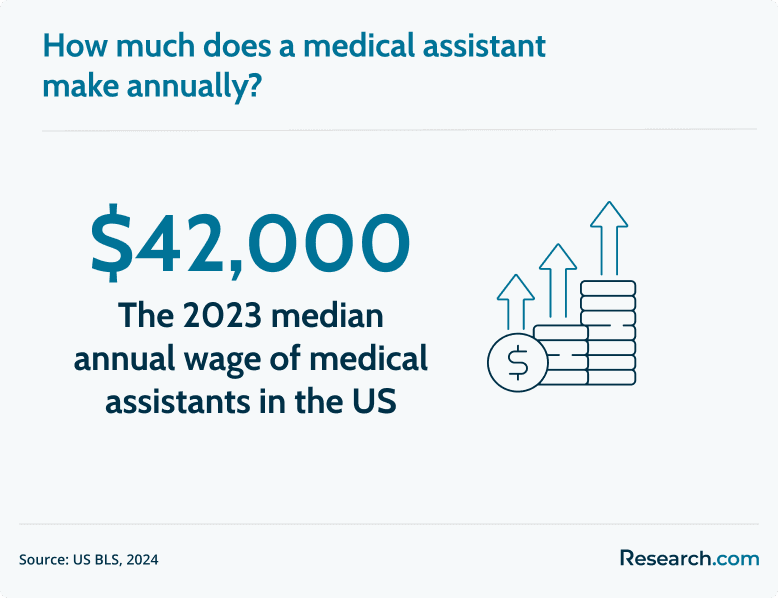
- Wages have increased in recent BLS data. Medical assistants earned a 2023 median annual wage of $42,000 and a 2024 median annual wage of $44,200 (US BLS, 2024, 2025).
- What pediatric medical assistants do
- Skills needed for pediatric medical assisting
- Education requirements for pediatric medical assistants
- Online pediatric medical assistant training options
- Useful certifications for pediatric medical assistants
- Pediatric medical assistant salary
- Average medical assistant salary by state
- How training costs affect career value
- Common challenges in pediatric medical assisting
- Moving from pediatric medical assisting into healthcare administration
- How management training can support advancement
- Technology trends changing the job
- Salary comparison with related healthcare roles
- Career advancement paths
- Job outlook for pediatric medical assistants
What is a pediatric medical assistant and what do they do?
A pediatric medical assistant is a medical assistant who works with infants, children, adolescents, parents, guardians, pediatricians, nurses, and other healthcare staff. The job combines routine clinical duties with administrative support and requires a communication style that helps children feel safe during visits.
Someone exploring this path may also want to understand how to become a National Certified Medical Assistant, since certification can help demonstrate readiness for clinical and administrative medical assistant responsibilities.
In a pediatric clinic, a medical assistant’s work may include:
- Preparing children for appointments. Pediatric medical assistants often measure height and weight, take vital signs, review basic patient information, and help children understand what will happen during the visit in age-appropriate language.
- Supporting providers during exams and procedures. They may assist pediatricians with examinations, vaccinations, specimen collection, minor treatments, and room setup while helping anxious children stay calm.
- Maintaining accurate records. Pediatric care depends heavily on documentation, including immunization histories, growth measurements, allergies, medications, and follow-up instructions.
- Coordinating with families. They may help schedule appointments, relay provider instructions, prepare forms, and guide parents through routine clinic processes.
- Keeping the care environment organized. Pediatric medical assistants may clean and prepare exam rooms, stock supplies, handle patient flow, and support infection-control procedures.
| Area of work | What it looks like in pediatrics | Why it matters |
| Clinical support | Taking vital signs, measuring growth, preparing rooms, assisting with immunizations | Helps pediatricians and nurses work efficiently and safely |
| Family communication | Explaining basic steps, answering routine process questions, helping parents prepare paperwork | Reduces confusion and improves the patient experience |
| Documentation | Updating charts, immunization records, medication lists, and follow-up notes | Protects continuity of care and supports clinical decision-making |
| Patient comfort | Using child-friendly explanations, distraction techniques, and calm reassurance | Helps children cooperate and makes visits less stressful |
What skills are required to work in pediatric healthcare?
Pediatric medical assistants need more than technical training. They must be able to work with children who may be scared, sick, restless, nonverbal, or unable to describe symptoms clearly. They also interact closely with parents and guardians, who may be worried or frustrated.
It can also help to compare medical assistant duties with nursing assistant duties. Research.com’s guide on the difference between MA and CNA explains how medical assistants often combine administrative and clinical work, while CNAs generally focus more on direct basic patient care.
- Clear communication: Pediatric medical assistants must explain routine steps in simple language for children while also communicating professionally with parents, providers, and coworkers.
- Patience and empathy: Children may cry, resist, hide symptoms, or refuse to cooperate. A calm tone and steady approach are essential.
- Accuracy: Immunization records, medication information, growth data, and clinical notes must be documented carefully because small errors can create safety issues.
- Comfort with multitasking: Pediatric practices can move quickly, especially during school physicals, vaccination visits, flu season, and sick visits.
- Professional boundaries: Medical assistants need to be warm and supportive while understanding what they can and cannot say or do within their role.
- Administrative confidence: Billing, coding, insurance, scheduling, and documentation often affect clinic operations. Students who want stronger back-office skills may look at medical billing schools online accredited by recognized agencies.
What education is needed to become a pediatric medical assistant?
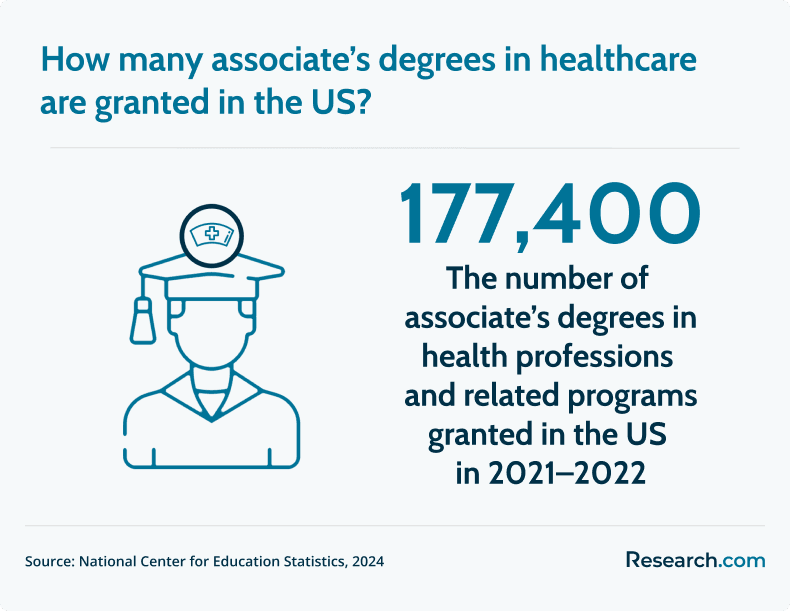
The usual starting point is a high school diploma or GED, followed by a formal medical assisting program. These programs are offered by community colleges, vocational schools, technical colleges, and some universities. A certificate program commonly takes about 9 to 12 months, while an associate degree can take up to 2 years.
Pediatric-specific medical assistant programs are not common. Instead, students usually complete general medical assistant training and then seek pediatric electives, externships, clinical placements, or entry-level jobs in pediatric offices. This makes the role one of the healthcare jobs that may not require a bachelor’s degree, while still offering direct exposure to patient care.
If you are also considering front-office healthcare work, the medical office assistant career path can help you compare clinical medical assisting with administrative healthcare roles.
Typical coursework may include medical terminology, anatomy and physiology, pharmacology basics, clinical procedures, infection control, medical law and ethics, electronic health records, insurance processes, and office administration. Many programs include an externship, which is especially valuable for students who want pediatric experience before applying for jobs.
| Training option | Typical length | Best for | Important consideration |
| Medical assistant certificate | About 9 to 12 months | Students who want the fastest route into entry-level work | Check whether the program supports certification eligibility and includes hands-on practice |
| Associate degree in medical assisting | Up to 2 years | Students who want broader coursework and possible transfer value | Usually takes longer and may cost more than a certificate |
| On-the-job training | Varies by employer | Applicants hired by clinics willing to train beginners | May limit certification options if the training does not meet exam requirements |
| Medical assisting plus pediatric externship | Depends on program | Students specifically targeting pediatric offices or clinics | Pediatric placement is not guaranteed; ask the school before enrolling |
Are there online programs for pediatric medical assistant training?
Yes, online medical assistant programs are available, although they usually train students for general medical assisting rather than pediatrics only. Online coursework can be useful for students who need flexibility because of work, caregiving, transportation, or location constraints.
Students should be careful, however. Medical assisting is hands-on work, so a fully online program may not provide enough clinical practice unless it includes labs, simulations, or an externship. If your goal is pediatrics, ask whether the school can help arrange a clinical placement in a pediatric clinic, family medicine office, urgent care center, or children’s healthcare setting.
Students who want to strengthen administrative skills alongside medical assisting may also compare options such as a low-cost medical coding and billing online program.
When reviewing online programs, focus on accreditation, certification eligibility, externship support, total cost, technology requirements, and student support. Do not assume that “online” means cheaper, easier, or automatically accepted by employers.
The following institutions were identified as offering online medical assisting programs:
- Davenport University Online Global Campus
- Barton County Community College
- University of the District of Columbia
- University of Houston
- Minnesota State College Southeast
| Question to ask before enrolling | Why it matters |
| Is the program accredited by an organization recognized for medical assisting education? | Accreditation can affect certification eligibility and employer confidence. |
| Does the program include an externship or clinical placement? | Pediatric employers often value hands-on experience with patients. |
| Can the school help students find pediatric placements? | General medical assistant training may not automatically include pediatric exposure. |
| What is included in tuition? | Books, exam fees, uniforms, background checks, supplies, and technology costs may add to the total price. |
| Which certification exams are graduates prepared to take? | Certification can improve job competitiveness, but eligibility rules vary by credential. |
What certifications are best for pediatric medical assistants?
Certification is not always legally required for medical assistants, but many employers prefer or value it because it signals that the applicant has met an external standard. For pediatric settings, certification can be especially useful because clinics want staff who can perform clinical tasks accurately, document carefully, and interact professionally with families.
- Certified Medical Assistant (CMA) (AAMA)®: The Certified Medical Assistant (CMA) credential is offered by the American Association of Medical Assistants (AAMA). It evaluates knowledge of general, clinical, and administrative medical assisting responsibilities. Applicants must be current students or graduates of medical assisting programs accredited by the Commission on Accreditation of Allied Health Education Programs (CAAHEP) or the Accrediting Bureau of Health Education Schools (ABHES). The certification exam is accredited by the National Commission for Certifying Agencies (NCCA).
- Registered Medical Assistant (RMA) Credential of the American Registry of Medical Assistants (ARMA): The American Registry of Medical Assistants also offers the national RMA credential. Applicants must have a high school diploma or equivalent and may need to provide a diploma or certificate of completion from an accredited medical assisting school.
| Certification factor | What to verify | Why it matters for pediatric roles |
| Eligibility rules | Required education, program accreditation, and documentation | You do not want to complete a program and later discover you cannot sit for the exam. |
| Exam content | Clinical procedures, administrative tasks, legal and ethical topics | Pediatric clinics need staff who can support both exam-room and office workflows. |
| Employer preference | Job postings in your area | Some local employers may prefer one credential over another. |
| Renewal requirements | Continuing education, fees, and recertification timelines | Maintaining certification can support long-term employability. |
How much does a pediatric medical assistant make?
Medical assistants in the United States earned a 2024 median annual wage of $44,200 and a 2024 mean annual wage of $44,720 (US BLS, 2025). These figures were higher than the 2023 median annual wage of $42,000 and the 2023 mean annual wage of $ 43,350 reported for the role (US BLS, 2024).
For pediatric medical assistants specifically, the national average annual salary was $38,376 (ZipRecruiter, 2025). That figure should be read as an estimate, not a guaranteed income. Actual pay depends on location, employer type, experience, credentials, shift structure, and local labor demand.
- Experience: Medical assistants who can work independently, manage busy clinic flow, and handle pediatric patients confidently may become more competitive for higher-paying roles.
- Certification and education: Credentials such as CMA or RMA can strengthen applications. Those interested in administrative advancement may also compare this role with the medical administrative assistant career.
- Location: Wages often differ across states and metro areas because of cost of living, employer concentration, and healthcare demand.
- Employer setting: Hospitals, outpatient care centers, specialty practices, and private pediatric offices may offer different pay structures and benefits.
- Schedule and benefits: Hourly wage is only part of compensation. Health insurance, paid time off, retirement benefits, tuition assistance, and predictable hours can change the overall value of a job offer.
What is the average salary of a pediatric medical assistant by state?
State wage differences matter because a salary that looks strong in one region may not stretch as far in another. In 2024, medical assistants nationwide earned a median annual wage of $44,200 and a mean annual wage of $44,720 (US BLS, 2025), but state-level medians varied.
Common reasons for wage differences include:
- Cost of living: Higher-cost states may offer higher wages, although the extra pay may be offset by housing, transportation, and taxes.
- Healthcare demand: Areas with more clinics, hospitals, pediatric practices, and outpatient centers may create stronger competition for trained staff.
- Healthcare infrastructure: Regions with larger healthcare systems or better-funded facilities may offer more competitive pay and benefits.
Students comparing pediatric medical assisting with other options may also review the highest paying medical assistant jobs to understand how specialty, employer, and geography can affect earnings.
The following states and district reported the highest 2024 median annual wages for medical assistants (US BLS, 2025):
| State or district | 2024 median annual wage |
| Washington | $55,120 |
| Alaska | $51,860 |
| Oregon | $49,900 |
| District of Columbia | $49,740 |
| Minnesota | $49,380 |
| Hawaii | $48,820 |
| Massachusetts | $48,540 |
| California | $48,050 |
| New Hampshire | $48,040 |
| Wisconsin | $47,610 |
The chart below visualizes 2024 median annual wages for medical assistants in top-paying states based on 2025 US BLS data.
How do training costs impact the career prospects of pediatric medical assistants?
Training cost affects the value of this career path because entry-level medical assistant wages are modest compared with roles that require advanced degrees. A lower-cost, accredited program that leads to certification eligibility and includes hands-on experience may offer a better return than a more expensive option with weak placement support.
Before enrolling, compare the full price rather than tuition alone. Students may need to pay for textbooks, uniforms, immunizations, background checks, drug screening, CPR training, exam fees, technology, transportation, and externship-related expenses. If you are trying to limit debt, Research.com’s guide to the cost of medical assistant program options can help you identify lower-cost training routes.
| Cost factor | What to look for | Better decision |
| Tuition and fees | Published tuition plus mandatory fees | Compare total program cost, not just per-credit price. |
| Certification preparation | Whether exam prep and eligibility are built into the curriculum | Choose a program aligned with the credential employers in your area request. |
| Externship access | School-arranged clinical placements versus student-arranged placements | Prefer programs with documented externship support, especially for pediatrics. |
| Financial aid | Scholarships, grants, payment plans, and aid eligibility | Borrow only what makes sense for expected entry-level wages. |
| Career services | Resume help, interview preparation, employer partnerships | Look for programs that help graduates move into real jobs, not just finish coursework. |
What challenges do pediatric medical assistants typically encounter?
Pediatric medical assisting can be rewarding, but it is not always easy. The work often involves crying children, anxious parents, packed schedules, documentation pressure, and frequent task-switching. Assistants must stay professional even when appointments run behind or families are upset.
Common challenges include:
- Emotionally intense visits: Sick children, worried parents, vaccination anxiety, and developmental concerns can make routine visits stressful.
- Communication differences by age: A toddler, a school-age child, and a teenager require different approaches.
- Administrative overload: Scheduling, documentation, insurance-related tasks, and record updates can compete with clinical duties.
- Burnout risk: Repetitive tasks, high patient volume, and limited advancement without more education can become frustrating.
- Need for ongoing learning: Pediatric offices must follow current clinical protocols, privacy rules, documentation standards, and safety procedures.
For medical assistants who enjoy healthcare but want to move away from direct daily clinical support, an online degree in healthcare may help build administrative, compliance, and leadership skills.
Can pediatric medical assistants transition to healthcare administration?
Yes. Pediatric medical assistants can move into healthcare administration, especially if they develop strengths in scheduling, patient flow, compliance, staff coordination, billing processes, and electronic health records. Their clinic experience can be valuable because administrators who understand front-line workflows often make better operational decisions.
However, experience alone may not be enough for management roles. Many administrative positions prefer or require additional education in healthcare administration, business, finance, human resources, quality improvement, or regulatory compliance. Students who want a faster bachelor’s pathway can compare options such as the fastest bachelors in healthcare administration degree.
| If you like... | Consider moving toward... | Helpful preparation |
| Organizing clinic schedules and patient flow | Practice coordinator or clinic operations role | Training in healthcare administration and EHR systems |
| Improving documentation and workflows | Quality improvement or compliance support | Knowledge of regulations, audits, and process improvement |
| Helping families understand office processes | Patient services supervisor | Customer service, conflict resolution, and team leadership skills |
| Working with insurance and billing | Revenue cycle or medical office administration | Billing, coding, payer rules, and data accuracy training |
Can advanced management training boost career growth for pediatric medical assistants?
Advanced management training can help pediatric medical assistants who want to leave entry-level clinical support and pursue leadership or administrative work. Management programs may build knowledge in budgeting, healthcare finance, compliance, human resources, operations, data reporting, and organizational leadership.
This path makes the most sense for medical assistants who enjoy solving workflow problems, leading teams, improving patient experience, or managing healthcare operations. It may be less useful for those who want advanced clinical authority; nursing, physician assistant, or medical school pathways may be more appropriate for that goal.
For professionals with long-term leadership goals, an accelerated MBA in healthcare management online may provide business-focused training that complements clinical experience.
How is technology reshaping the role of pediatric medical assistants?
Technology is changing pediatric medical assisting in practical ways. Electronic health records, patient portals, online scheduling, telehealth visits, digital intake forms, automated reminders, and remote communication tools have become part of many healthcare workflows.
For pediatric medical assistants, this means strong computer skills are no longer optional in many settings. They may need to document accurately in EHR systems, confirm immunization histories, help families use portals, prepare telehealth visits, manage digital forms, and follow privacy and data-security rules.
Medical assistants who become comfortable with technology may have an advantage when applying for roles that involve care coordination, office operations, health informatics support, or administrative leadership. Business and management training, including programs like an MBA for sports management, can also build transferable skills in operations, leadership, and organizational decision-making, although healthcare-specific management training is usually more directly aligned with medical administration roles.
How does the average salary of a pediatric medical assistant compare to related roles?
Pediatric medical assistant pay is generally lower than salaries for licensed and advanced healthcare roles because the education requirements, legal scope of practice, and clinical responsibility are different. This does not make the role unimportant; it means students should understand where the job sits in the healthcare career ladder.
- Education level matters: Physician assistants, pediatricians, and many managers complete substantially more education than medical assistants, which is reflected in wage data.
- Scope of practice affects pay: Roles that diagnose, prescribe, perform advanced procedures, or supervise departments generally command higher wages.
- Licensure changes responsibility: Licensed practical nurses and licensed vocational nurses have a regulated nursing scope that differs from medical assisting. Students considering a shorter patient-care pathway may also explore getting a CNA certificate and license.
The following figures show 2023 or 2024 mean annual wages for medical assistants and related US healthcare roles (US BLS, 2024, 2025):
| Role | Mean annual wage | Year |
| Medical Assistant | $44,720 | 2024 |
| Licensed Practical Nurse (LPN) or Licensed Vocational Nurse (LVN) | $64,150 | 2024 |
| Physician Assistant | $136,900 | 2024 |
| Medical and Health Services Manager | $137,730 | 2024 |
| Pediatrician | $205,860 | 2023 |
| Pediatric Surgeon | $449,320 | 2023 |
The chart below compares 2023 or 2024 mean annual wages for medical assisting and related healthcare careers using 2024 and 2025 US BLS data.
What are the career advancement options for pediatric medical assistants?
Pediatric medical assisting can be a first step rather than a final destination. The right next move depends on whether you want deeper clinical authority, higher pay, leadership responsibility, or a broader administrative role.
- Licensed Practical Nurse (LPN) or Licensed Vocational Nurse (LVN): With additional education and licensure, a medical assistant can move into nursing and potentially continue working with children. A comparison of licensed practical nurse vs medical assistant can help clarify the differences in scope, training, and compensation.
- Medical and Health Services Manager: Medical assistants who enjoy operations, staffing, compliance, and workflow improvement may pursue healthcare administration education and move toward management roles.
- Physician Assistant: This path requires a master’s degree and certification, but it offers a much broader clinical scope, including diagnosing and treating patients under physician supervision.
- Pediatrician: This is a long-term path requiring medical school and residency. Pediatric medical assisting can provide early patient-care exposure, help confirm interest in child health, and support future applications with practical experience.
| Advancement path | Best fit for | Additional preparation usually needed |
| LPN or LVN | Medical assistants who want a licensed nursing role | Nursing program completion and state licensure |
| Medical office supervisor | Assistants who are strong in scheduling, documentation, and team coordination | Leadership experience and administrative training |
| Healthcare administrator | Professionals interested in operations, compliance, and management | Healthcare administration or business education |
| Physician assistant | Students who want advanced clinical practice without becoming physicians | Prerequisite coursework, patient-care experience, master’s degree, and certification |
| Pediatrician | Students committed to becoming physicians for children and adolescents | Bachelor’s degree, medical school, residency, and physician licensure |
What is the career outlook for pediatric medical assistants?
The outlook for pediatric medical assistants is tied to the broader medical assistant occupation and the continuing need for outpatient healthcare services. Pediatric practices, family medicine offices, urgent care centers, hospitals, and community health clinics all rely on support staff to keep care moving efficiently.
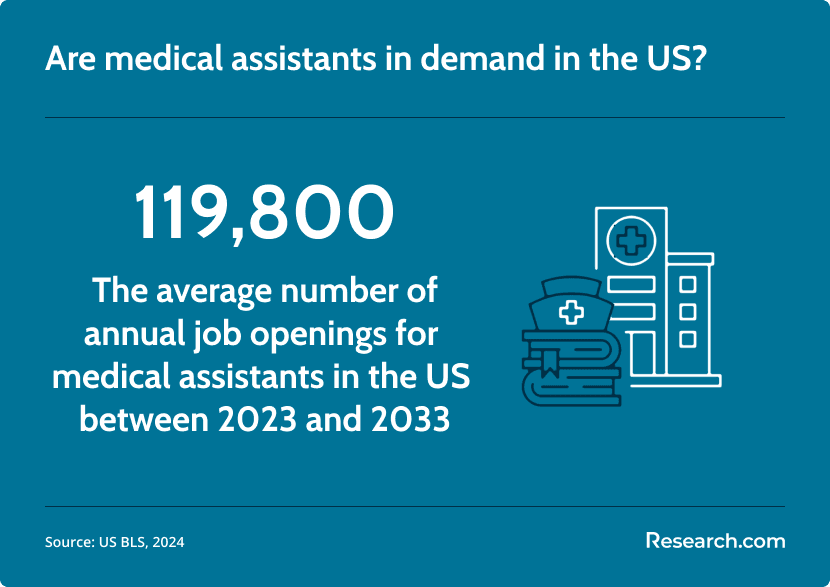
- Medical Assistant: Employment for medical assistants is projected to grow by 15% from 2023 to 2033, much faster than the average for all US occupations. The role is expected to have about 119,800 job openings per year on average during that decade (US BLS, 2024).
- Licensed Practical Nurse (LPN) or Licensed Vocational Nurse (LVN): Employment for LPNs and LVNs is projected to rise by 3% from 2023 to 2033, which is as fast as the average for all occupations in the US. The occupation is expected to have around 54,000 openings per year on average during that period (US BLS, 2024). Medical assistants considering nursing may compare MA to LPN bridge program online options for a more flexible transition.
- Medical and Health Services Manager: Employment for medical and health services managers is projected to grow by 29% from 2023 to 2033, significantly faster than the average for all US occupations. This equals about 61,400 openings per year on average during the decade (US BLS, 2024).
- Physician Assistant: Employment for physician assistants is expected to increase by 28% from 2023 to 2033, much faster than the average for all occupations in the country. The occupation is projected to have about 12,900 job openings per year on average during the decade (US BLS, 2024).
- Physician and Surgeon: Employment for physicians and surgeons is projected to grow by 4% from 2023 to 2033, which is as fast as the average for all US occupations. The role is expected to have about 23,600 openings per year on average during that period (US BLS, 2024).
Common mistakes to avoid when choosing this career path
- Choosing a program without checking accreditation: Accreditation can affect certification eligibility, employer acceptance, and educational quality.
- Looking only at tuition: Fees, supplies, transportation, exam costs, and unpaid externship time can change the real cost of a program.
- Assuming every online program includes clinical experience: Pediatric medical assisting requires hands-on skill development, so externship support matters.
- Expecting pediatric specialization immediately: Many graduates start in general medical assisting roles before moving into pediatric clinics.
- Ignoring local job postings: Employer preferences vary by region. Review postings near you to see which credentials, skills, and experience levels are requested.
- Assuming salaries are guaranteed: Published wage data are useful benchmarks, but individual pay depends on location, employer, certification, schedule, and experience.
- Not planning the next step: If your long-term goal is nursing, PA school, administration, or medical school, choose training and work experiences that support that goal early.
Questions to ask before enrolling in a medical assistant program
- Is the program accredited, and by which accrediting body?
- Does completing the program make graduates eligible for the certification exam I want?
- What percentage of the program is online, in person, lab-based, or externship-based?
- Can the school help place students in pediatric or family medicine settings?
- What is the total cost after fees, supplies, exam costs, and required checks?
- What career services are available before and after graduation?
- Do local pediatric clinics hire graduates from this program?
- Are credits transferable if I later pursue an associate or bachelor’s degree?
- What student support exists for working adults, parents, or online learners?
Here’s what professionals say about pediatric medical assisting
- “I chose pediatric medical assisting because I wanted direct patient care without waiting years to start. Working with children is unpredictable, but helping a nervous child get through a visit makes the hard days worthwhile.” —Beth
- “The job uses both clinical and people skills. One minute I am updating a chart, and the next I am helping a parent understand what will happen during a checkup. That variety keeps the work meaningful.” —Adam
- “My pediatric externship taught me how different it is to communicate with toddlers, teens, and parents. The experience gave me confidence and helped me decide that I wanted to stay in child-focused healthcare.” —Julie
Key Insights
- Pediatric medical assistants help pediatric providers by combining basic clinical tasks, documentation, scheduling support, and child-centered communication.
- The typical education path starts with a high school diploma or GED, followed by a medical assistant certificate that may take about 9 to 12 months or an associate degree that may take up to 2 years.
- Pediatric-specific programs are uncommon, so students should look for medical assistant programs with pediatric electives, externships, or clinical placement support.
- Certification is not always mandatory, but credentials such as CMA or RMA can improve credibility and may be preferred by employers.
- Medical assistants earned a 2024 median annual wage of $44,200 and a 2024 mean annual wage of $44,720 (US BLS, 2025), while pediatric medical assistants had an average annual salary of $38,376 (ZipRecruiter, 2025).
- Location strongly affects wages. Washington reported the highest listed 2024 median annual wage among the states shown at $55,120 (US BLS, 2025).
- The broader medical assistant occupation is projected to grow by 15% from 2023 to 2033, with about 119,800 openings per year on average during the decade (US BLS, 2024).
- This career is best for people who want a fast healthcare entry point, enjoy working with children, and are comfortable balancing clinical and administrative duties.
- Students should avoid programs that lack clear accreditation, certification alignment, hands-on training, transparent costs, or externship support.
- Long-term advancement may require additional education, especially for those targeting nursing, physician assistant roles, healthcare administration, or medical school.
References:
- National Center for Education Statistics. (2024, May). Undergraduate Degree Fields. https://nces.ed.gov/programs/coe/indicator/cta
- US Bureau of Labor Statistics. (2024, August 29). Licensed Practical and Licensed Vocational Nurses. Occupational Outlook Handbook. https://www.bls.gov/ooh/healthcare/licensed-practical-and-licensed-vocational-nurses.htm
- US Bureau of Labor Statistics. (2024, April 03). May 2023 National Occupational Employment and Wage Estimates, United States. Occupational Employment and Wage Statistics. https://www.bls.gov/oes/2023/may/oes_nat.htm
- US Bureau of Labor Statistics. (2024, August 29). Medical and Health Services Managers. Occupational Outlook Handbook. https://www.bls.gov/ooh/management/medical-and-health-services-managers.htm
- US Bureau of Labor Statistics. (2024, August 29). Medical Assistants. Occupational Outlook Handbook. https://www.bls.gov/ooh/healthcare/medical-assistants.htm
- US Bureau of Labor Statistics. (2024, April 03). Occupational Employment and Wages, May 2023, 11-9111 Medical and Health Services Managers. Occupational Employment and Wage Statistics. https://www.bls.gov/oes/2023/may/oes119111.htm
- US Bureau of Labor Statistics. (2024, April 03). Occupational Employment and Wages, May 2023, 31-9092 Medical Assistants. Occupational Employment and Wage Statistics. https://www.bls.gov/oes/2023/may/oes319092.htm
- US Bureau of Labor Statistics. (2025). May 2024 OEWS Profiles. Occupational Employment and Wage Statistics (OEWS) Profiles. https://data.bls.gov/oesprofile
- US Bureau of Labor Statistics. (2024, August 29). Physicians and Surgeons. Occupational Outlook Handbook. https://www.bls.gov/ooh/healthcare/physicians-and-surgeons.htm
- US Bureau of Labor Statistics. (2024, August 29). Physician Assistants. Occupational Outlook Handbook. https://www.bls.gov/ooh/healthcare/physician-assistants.htm
- ZipRecruiter. (2025, April 10). Pediatric Medical Assistant Salary. https://www.ziprecruiter.com/Salaries/Pediatric-Medical-Assistant-Salary#Yearly
Other Things You Should Know about How to Become a Pediatric Medical Assistant
Most pediatric medical assistant programs include about 160 to 240 hours of supervised clinical training. Students practice vital signs, immunization support, child-friendly patient communication, and electronic health record tasks before entering externships or entry-level work in pediatric offices.
To become a pediatric medical assistant in 2027, you typically need a high school diploma followed by completing a medical assistant certificate program. Some states may require additional certification. A focus on pediatric coursework can be beneficial for specialization.
To work as a pediatric medical assistant in 2027, obtaining certifications like the Certified Medical Assistant (CMA) credential from the American Association of Medical Assistants is common. Some employers may also require Pediatric Advanced Life Support (PALS) certification for roles involving direct pediatric patient care.