2027 How to Choose the Right Digital Photography Specialization Online

Co-Founder and Chief Data Scientist
Choosing a digital photography specialization is a career decision, not just a creative preference. The U.S. Bureau of Labor Statistics projects photographer employment to grow 4% from 2023 to 2033, about as fast as the average for all occupations, but opportunities vary widely by niche, portfolio, and business skills.
This guide is for students, career changers, freelancers, and working creatives comparing online photography programs. You will learn how specializations differ, what credentials cost, which skills matter, and how to choose a path that fits your creative goals and income expectations.
Key Things You Should Know
- Choose a specialization by matching your preferred subjects, work setting, income model, and portfolio style; commercial, product, portrait, event, documentary, and fine art photography lead to different clients and workflows.
- Online credentials range from short certificates to bachelor's degrees; College Board's 2024-25 published tuition data shows broad cost differences, from $4,050 at public two-year colleges to $43,350 at private nonprofit four-year institutions.
- Photography salaries vary more by client base, location, and business model than by credential alone; BLS reported a $42,520 median annual wage for photographers in May 2024.
What digital photography specializations can you study online, and what do they cover?
A digital photography specialization is a focused area of study within photography that builds technical, creative, and professional skills for a specific type of work. Online programs often combine asynchronous lectures, critique boards, editing assignments, portfolio reviews, and project-based shoots you complete where you live.
The right specialization depends on the images you want to make and the clients, publications, brands, or audiences you want to serve. The table below compares common online specializations and what each typically emphasizes:
| Specialization | What it covers | Best fit | Common portfolio evidence |
| Portrait and lifestyle photography | Lighting, posing, client direction, retouching, location work, studio setup | Students who enjoy working with people and building local or freelance client relationships | Headshots, senior portraits, family sessions, editorial portraits, personal branding images |
| Commercial and product photography | Studio lighting, brand briefs, e-commerce imagery, still life, color accuracy, compositing | Students interested in advertising, retail, product launches, and agency work | Product sets, packaging images, lookbooks, campaign mockups, before-and-after edits |
| Event and wedding photography | Low-light shooting, storytelling, client management, timelines, backup workflows, fast editing | Students who can handle pressure, moving subjects, and weekend or seasonal schedules | Full event narratives, detail shots, candid sequences, ceremony or conference coverage |
| Photojournalism and documentary photography | Visual reporting, ethics, captions, sequencing, community stories, editorial standards | Students drawn to news, nonprofits, social issues, travel, or long-form visual storytelling | Photo essays, captioned stories, documentary projects, editorial submissions |
| Fine art photography | Concept development, critique, exhibition practices, archival printing, artist statements | Students who want gallery, museum, grant, residency, or independent art practice pathways | Cohesive bodies of work, artist statements, exhibition proposals, print portfolios |
| Sports and action photography | Fast autofocus techniques, long lenses, timing, editorial delivery, metadata, safety | Students who enjoy unpredictable environments and fast-paced assignment work | Game coverage, action sequences, athlete portraits, publication-ready selects |
| Real estate and architectural photography | Interior lighting, perspective correction, HDR workflows, drone basics, client delivery | Students interested in real estate, hospitality, design, and local service businesses | Interior sets, exterior images, twilight shots, listing galleries, virtual-tour assets |
| Digital imaging and post-production | Color correction, retouching, compositing, asset management, workflow automation | Students who like editing, image finishing, and supporting photographers or creative teams | Retouched portraits, composites, color-grading samples, workflow case studies |
Most beginners do not need to choose a narrow niche immediately. A smart approach is to start with core photography, lighting, composition, editing, and visual storytelling, then use elective projects to test two or three specializations before committing your portfolio to one direction.
How do you decide which digital photography specialization fits your creative and career goals?
The best specialization is the one that aligns three things: what you like to photograph, how you want to work, and what buyers or employers need. A beautiful portfolio in the wrong niche can still lead to frustration if the schedule, business model, or client expectations do not fit your life.
Use the following process to narrow your options before you enroll or declare a concentration:
- Identify your preferred subjects: people, products, places, events, news, art concepts, sports, interiors, or digital image manipulation.
- Choose your preferred work model: freelance client work, agency employment, in-house brand work, editorial assignments, gallery practice, or a hybrid creative business.
- Compare your tolerance for pressure: weddings, sports, and news require fast decisions, while product, architectural, and fine art work usually allow more controlled production time.
- Review local and remote demand: look at job posts, local business needs, creative agencies, real estate markets, e-commerce brands, and publication opportunities in your area.
- Match the specialization to portfolio requirements: if employers or clients need complete galleries, campaign concepts, captioned stories, or technical retouching samples, your program should require those deliverables.
- Test the niche with one small project before committing: complete a mock campaign, portrait session, documentary essay, product set, or event story and ask for critique from instructors or working photographers.
A common mistake is choosing the specialization that looks most exciting online without checking how people actually earn money in that niche. Fine art photography may be creatively rewarding but often requires grant writing, exhibitions, teaching, or related income streams; event photography may produce faster local revenue but requires client service, weekend availability, contracts, and backup equipment.
Another red flag is selecting a program that teaches many techniques but does not help you build a coherent portfolio. Employers and clients rarely hire based on course titles alone; they look for finished work that proves you can solve a specific visual problem.
What types of online digital photography programs and credentials are available?
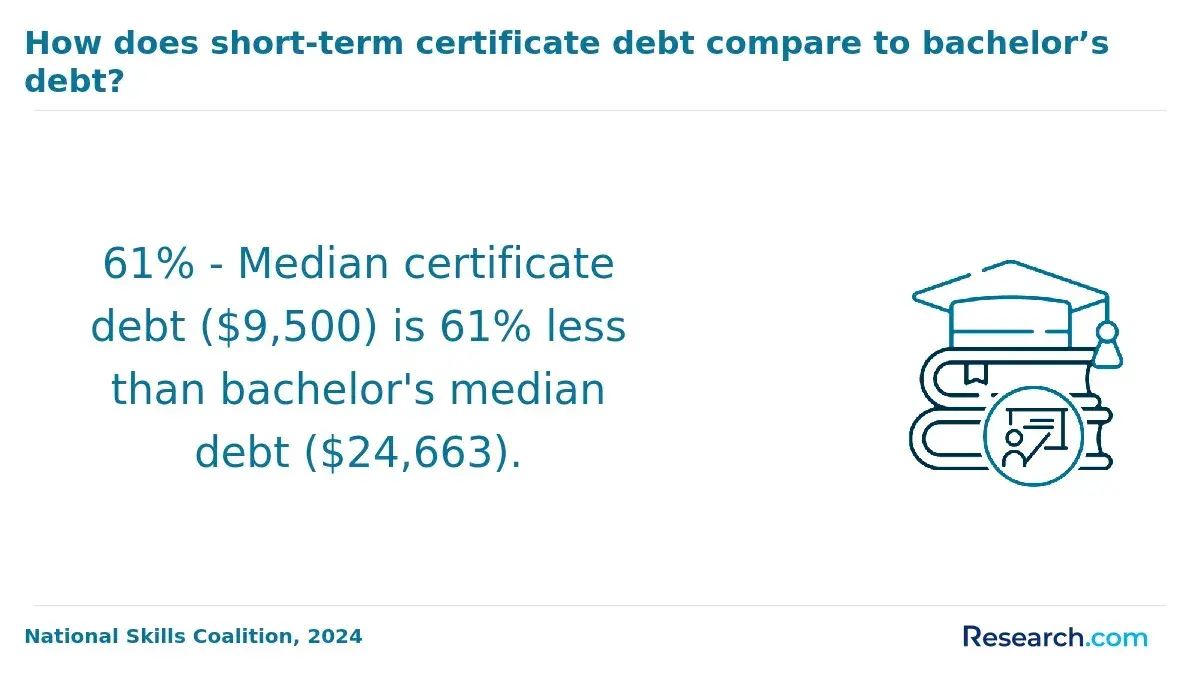
Online photography education can mean anything from a weekend workshop to a full bachelor's degree. The credential you choose should match your career goal, prior education, budget, and need for academic credit.
The table below compares the main credential types so you can decide how much structure, time, and academic recognition you need:
| Credential type | Typical focus | Who it makes sense for | Limitations to check |
| Noncredit course or workshop | Specific skills such as lighting, Lightroom, posing, or editing | Hobbyists, working photographers adding one skill, or beginners testing interest | Usually not eligible for federal financial aid and may not transfer for credit |
| Certificate | Foundational photography, editing, portfolio development, and one or more niche skills | Career changers, freelancers, or students who want a shorter credential | Quality varies; check instructor feedback, portfolio expectations, and employer relevance |
| Associate degree | Photography fundamentals plus general education and broader visual communication skills | Students seeking a lower-cost academic path or transfer foundation | May not go deep enough for competitive commercial or fine art portfolios without extra projects |
| Bachelor's degree | Advanced studio practice, art history, visual culture, business, portfolio, and capstone work | Students seeking a broader creative career, graduate study preparation, or structured portfolio development | Higher total cost and longer timeline; ROI depends heavily on career plan and portfolio quality |
| Graduate certificate or master's degree | Advanced artistic practice, research, teaching preparation, or specialized visual production | Experienced creatives pursuing higher-level practice, teaching, or leadership roles | Usually not necessary for entry-level freelance photography or basic client work |
Military-connected students should also compare credit for prior learning, tuition assistance, Yellow Ribbon participation, and flexible deployment policies. A dedicated guide to an online photography degree for military veterans can help veterans and service members evaluate benefits alongside program fit.
As a decision rule, choose a certificate if you need practical skills quickly, an associate degree if you want affordability and transfer options, and a bachelor's degree if you want a deeper portfolio, broader design education, and access to roles that prefer a degree.
How does an online digital photography specialization compare with campus-based study?
Online photography study can work well because much of photography depends on practice, critique, editing, and portfolio development rather than being physically present in one studio every day. However, campus programs may offer equipment cages, lighting studios, print labs, galleries, and in-person collaboration that some students value.
The table below summarizes the practical differences that matter most when comparing online and campus-based photography programs:
| Factor | Online specialization | Campus-based specialization | Decision takeaway |
| Schedule flexibility | Often stronger for working adults, parents, freelancers, and students outside major art markets | Often structured around fixed class, studio, and critique times | Choose online if schedule control is essential |
| Equipment access | You may need to buy, rent, or borrow more gear locally | May include access to studios, lighting kits, printers, scanners, and camera equipment | Choose campus if you need costly shared facilities |
| Critique experience | Usually delivered through video, discussion boards, annotated uploads, and live sessions | Often includes in-person critique walls, print reviews, and studio conversations | Choose the format that will keep you engaged and accountable |
| Networking | Can connect you with national classmates and remote instructors | May provide stronger local creative community and regional industry access | Choose based on the market where you want to work |
| Portfolio production | Requires self-direction, local subjects, and disciplined production planning | May provide easier access to models, studios, labs, and peer crews | Online students should confirm how the school supports location-based assignments |
Online is usually a better fit if you are self-directed, already have basic equipment, and can create assignments in your local environment. Campus study may be better if you need daily structure, access to specialized gear, or hands-on instruction in studio lighting and print production.
Before choosing, ask whether online students receive live critique, instructor demonstrations, portfolio reviews, library and software access, career services, and technical support. The format matters less than whether the program consistently pushes you to produce, revise, and present professional-level work.
What should you look for in accreditation and program quality for photography schools?
Accreditation is one of the first quality checks for any degree-granting photography program. In the U.S., institutional accreditation matters for federal financial aid eligibility, transfer credit, graduate school consideration, and basic academic credibility. Specialized art or design accreditation can also be useful, but it does not replace the need to verify the institution itself.
Program quality goes beyond accreditation. A strong online photography specialization should show evidence that students receive meaningful critique, build a portfolio, learn current software, and understand the business and ethical realities of image-making.
Use these checks before applying or paying a deposit:
- Confirm institutional accreditation through official school materials and recognized accreditation databases, not only advertising copy.
- Review faculty portfolios to see whether instructors have current experience in the specialization you want to study.
- Ask how critiques work online, including whether feedback is written, recorded, live, peer-based, instructor-led, or a combination.
- Check whether the program requires a final portfolio, capstone, exhibition, client-style project, or professional presentation.
- Verify software access, file storage expectations, color management support, and technology requirements before enrolling.
- Ask about transfer credits, prior learning credit, refund policies, course availability, and whether online students receive the same career support as campus students.
- Look for transparent student work samples, graduate outcomes, course descriptions, and realistic statements about freelance income.
Red flags include vague accreditation claims, no visible student work, no portfolio requirement, instructors with no relevant professional background, pressure to enroll immediately, unclear total cost, or promises of guaranteed freelance income.
If a program teaches client image storage, cloud workflows, or digital asset security, it should also address privacy and file protection; students interested in that side of creative technology may find useful comparisons in guides to online cybersecurity degrees for veterans.
What courses and software skills are typically included in each photography specialization?
Most online digital photography programs begin with fundamentals, then move into specialization-specific assignments. The most valuable programs connect technical skills to finished images, not just camera settings or software tutorials.
The table below shows common coursework and software skills by specialization so you can compare a curriculum against your intended career path:
| Specialization | Common courses | Software and technical skills | Portfolio outcome |
| Portrait and lifestyle | Studio lighting, environmental portraiture, posing, client workflow, retouching | Lightroom, Photoshop, skin retouching, tethered capture, color correction | Client-ready portrait sets with consistent lighting and editing |
| Commercial and product | Advertising photography, product lighting, visual branding, still life, campaign development | Photoshop compositing, Capture One or Lightroom workflows, color calibration, clipping paths | Product images, mock campaigns, and e-commerce-ready assets |
| Event and wedding | Event storytelling, low-light photography, business practices, client communication | Batch editing, culling, backup systems, gallery delivery platforms | Complete event narratives with fast, consistent delivery |
| Photojournalism and documentary | Visual reporting, media ethics, caption writing, editing for publication, documentary projects | Metadata, file transmission, basic audio or video, nondestructive editing | Captioned photo essays and publication-style submissions |
| Fine art | Concept development, photographic history, critique, exhibition planning, printmaking | High-resolution scanning, archival printing, color management, sequencing tools | Cohesive body of work with artist statement and exhibition plan |
| Real estate and architecture | Interior photography, architectural composition, lighting, business operations | HDR blending, perspective correction, drone image workflow, virtual-tour preparation | Property galleries and architectural case studies |
| Post-production and digital imaging | Retouching, compositing, digital asset management, color grading, workflow design | Advanced Photoshop, Lightroom, Capture One, AI-assisted masking, file naming systems | Before-and-after retouching, composites, and production workflow examples |
AI-assisted tools are now part of many editing workflows, especially for masking, noise reduction, background extension, culling, keywording, and image search. That does not remove the need for photographic judgment; it increases the value of knowing what an image should communicate and how to edit ethically.
Students who want to move deeper into machine learning, computer vision, or creative automation may also compare photography training with the best online AI degree programs.
When reviewing a curriculum, look for assignments that require original shooting, file organization, critique-based revision, and final delivery. A program that only teaches software commands may improve your editing speed but may not build the visual judgment needed for professional photography.
What are typical admission requirements for online digital photography specialization programs?
Admission requirements vary by school and credential level. Short noncredit courses may require only registration and payment, while degree programs usually require academic records and, for more selective art programs, a portfolio.
Expect requirements such as the following, depending on the program level:
- High school diploma, GED, or equivalent for undergraduate certificates, associate degrees, and bachelor's degrees.
- Official transcripts from high school and any colleges attended, especially if you want transfer credit.
- Application form, personal statement, or short creative goals essay explaining why you want to study photography.
- Portfolio submission for some bachelor's, transfer, graduate, or advanced certificate programs.
- Minimum technology requirements, including a digital camera, reliable internet, editing-capable computer, and current software access.
- English placement, general education prerequisites, or college readiness requirements for some degree programs.
- Bachelor's degree, resume, artist statement, and advanced portfolio for graduate-level study.
If a portfolio is required, it usually does not need to be perfect. Schools often want to see curiosity, visual awareness, consistency, and willingness to revise. For a beginner portfolio, include your strongest images across several subjects, avoid repeating nearly identical shots, and add brief captions explaining your intent or process when requested.
Before applying, ask whether the specialization has separate admission requirements after general admission. Some programs admit students to the institution first, then require a portfolio review before advanced studio courses, capstones, or concentration-level work.
How long do online digital photography programs take, and what do they cost?
Program length depends on the credential, course load, transfer credits, and whether courses are self-paced or semester-based. A short certificate may take a few months, while a bachelor's degree often takes about four years of full-time study if you enter without transfer credits.
For cost context, College Board's 2024-25 published tuition and fee averages show how widely prices can differ by institution type. These figures are not photography-specific, but they help you benchmark whether a school's published price is unusually low, moderate, or high.
- Public two-year college, in-district average published tuition and fees: $4,050.
- Public four-year college, in-state average published tuition and fees: $11,610.
- Private nonprofit four-year college average published tuition and fees: $43,350.
The table below summarizes typical timelines and cost considerations for online photography credentials. Use it to compare total investment, not just the advertised per-course price.
| Program type | Typical completion time | Main cost drivers | Best value when |
| Workshop or short course | Days to a few weeks | Course fee, software, optional gear | You need one targeted skill and do not need academic credit |
| Certificate | Several months to about one year | Tuition, software subscriptions, camera gear, portfolio materials | You want practical training quickly and can build a portfolio alongside coursework |
| Associate degree | About two years full time | Tuition, general education courses, equipment, printing, fees | You want a lower-cost academic foundation or plan to transfer |
| Bachelor's degree | About four years full time | Tuition, fees, software, equipment, electives, capstone or exhibition costs | You want broad visual education, structured critique, and a degree for career flexibility |
| Graduate credential | One to three years, depending on format | Graduate tuition, advanced production costs, exhibition or thesis expenses | You already have strong foundations and need advanced practice, teaching preparation, or research depth |
To estimate your real cost, add tuition, mandatory fees, camera body and lenses, lighting, storage drives, cloud backup, software, printing, portfolio website costs, travel to shoots, and any residency or campus intensive fees. Then subtract grants, scholarships, employer support, military benefits, transfer credits, and equipment you already own.
A lower-cost program is not always the best value if it lacks critique, portfolio development, or current software instruction. An expensive program is not automatically a better investment either. The strongest value comes from a program that produces a market-ready portfolio for the exact specialization you plan to pursue.
What careers, roles, and industries can each digital photography specialization lead to?
Photography careers are often portfolio-driven and may combine employment, freelance assignments, retouching, teaching, content creation, and small business ownership. Your specialization affects your client base, day-to-day work, equipment needs, and income stability.
The table below connects common specializations to possible roles and industries. Use it to check whether your chosen path matches the type of work environment you actually want.
| Specialization | Possible roles | Industries and clients | Typical responsibilities |
| Portrait and lifestyle | Portrait photographer, branding photographer, studio assistant, school photographer | Families, professionals, schools, agencies, small businesses | Plan sessions, direct subjects, manage lighting, retouch images, deliver galleries |
| Commercial and product | Product photographer, commercial photographer, digital imaging assistant, studio producer | E-commerce, retail, advertising, consumer goods, agencies | Interpret briefs, light products, maintain color accuracy, create campaign assets |
| Event and wedding | Wedding photographer, event photographer, second shooter, conference photographer | Couples, venues, corporate events, nonprofits, associations | Capture key moments, manage timelines, back up files, edit large galleries quickly |
| Photojournalism and documentary | Photojournalist, documentary photographer, visual reporter, nonprofit storyteller | Newsrooms, magazines, nonprofits, NGOs, community organizations | Research stories, photograph ethically, write captions, meet editorial deadlines |
| Fine art | Fine art photographer, exhibiting artist, teaching artist, gallery assistant | Galleries, museums, schools, residencies, arts nonprofits | Create bodies of work, write artist statements, produce prints, apply for grants or exhibitions |
| Real estate and architecture | Real estate photographer, architectural photographer, drone imaging contractor | Real estate agents, builders, architects, hotels, property managers | Photograph interiors and exteriors, correct perspective, deliver listing-ready images |
| Post-production and digital imaging | Retoucher, digital asset technician, photo editor, imaging specialist | Studios, agencies, publishers, brands, archives | Edit images, manage files, composite assets, maintain quality and consistency |
Many photographers advance by adding business, marketing, or management skills. For example, commercial photographers who want to lead creative campaigns, manage brand strategy, or move into marketing leadership may eventually compare photography experience with a masters degree in marketing.
Some niches also require additional credentials or legal awareness. Drone work for paid real estate, construction, inspection, or marketing projects generally requires FAA Part 107 certification.
Wedding and portrait photographers need contracts and model releases. Photojournalists need strong ethics training. Fine art photographers need copyright literacy and an understanding of editioning, licensing, and exhibition agreements.
What salary ranges and job outlook can you expect in specialized digital photography fields?
Photography income varies because many photographers are self-employed, part time, project based, or employed in adjacent creative roles. A specialization can influence earning potential, but portfolio strength, location, client base, marketing ability, turnaround speed, and repeat business often matter just as much as formal education.
The U.S. Bureau of Labor Statistics reported a $42,520 median annual wage for photographers in May 2024 and projected 4% employment growth from 2023 to 2033. For students, this means photography can be a viable creative path, but it should be approached with realistic expectations and a plan for business development, not just technical training.
The table below summarizes how salary context often differs by specialization without implying guaranteed outcomes:
| Specialization | Income pattern | Outlook considerations | What can improve competitiveness |
| Portrait and lifestyle | Often local service-based income with seasonal variation | Demand depends on local client base, referrals, branding, and repeat customers | Strong client experience, consistent editing style, packages, reviews, and referral systems |
| Commercial and product | Can include project fees, day rates, retouching fees, and repeat brand work | E-commerce and content needs create opportunities, but competition is strong | Technical lighting, color accuracy, business professionalism, and agency-ready portfolios |
| Event and wedding | Often project-based with peak seasons and high weekend demand | Local market saturation, reputation, and reliability affect bookings | Backup workflows, second-shooter experience, contracts, fast delivery, and client communication |
| Photojournalism and documentary | May involve staff roles, freelance assignments, grants, nonprofit contracts, or editorial fees | Traditional newsroom jobs are competitive; documentary skills can transfer to nonprofits and digital media | Ethics, caption accuracy, story research, multimedia skills, and publication credits |
| Fine art | Often mixed income from sales, grants, teaching, commissions, and related creative work | Gallery and grant pathways are competitive and may take years to develop | Cohesive projects, exhibition history, artist statements, networking, and grant writing |
| Real estate and architecture | Often assignment-based with local repeat clients | Real estate cycles and housing market activity can affect demand | Fast turnaround, drone certification when needed, perspective correction, and reliable scheduling |
| Post-production and digital imaging | May be hourly, salaried, freelance, or project-based | AI tools may automate simple edits but increase demand for higher-level judgment and complex finishing | Advanced retouching, color management, compositing, asset organization, and ethical AI use |
To evaluate return on investment, compare expected program cost with the type of work you plan to pursue. A freelancer may need startup funds for gear, insurance, contracts, website hosting, and marketing. A student seeking employment should examine job postings to see whether employers ask for a degree, portfolio, software skills, video ability, or related design experience.
A practical goal is to graduate with a specialization-specific portfolio, a basic business plan, a network of references, and evidence of real assignments or simulated client briefs. Those assets usually matter more in hiring and client decisions than the name of the specialization alone.
Other Things You Should Know About Digital Photography
It can, especially for composition, documentary work, social media content, and visual storytelling. However, many academic and professional programs expect you to demonstrate control over exposure, lenses, file formats, lighting, and editing, so smartphone work may need to be paired with camera-based projects.
An expensive camera is not necessary. Many online photography programs emphasize skills and techniques over equipment. Beginners can start with a basic DSLR, mirrorless camera, or even a smartphone. As you progress, you can assess whether upgrading your equipment is needed based on your specialization.
Most programs ask for a digital portfolio of 10 to 20 images, submitted as JPEG or PDF files through a learning portal. Some also require short captions, shooting settings, and a statement explaining your specialization goals, such as portrait, landscape, or commercial photography.
References
- Top 5 reasons to study a photography degree online https://www.falmouth.ac.uk/news/top-5-reasons-study-photography-degree-online
- Photography School, Degree, and Career Guide | All Art Schools https://www.allartschools.com/photography/
- Learn Photography Online: Top Digital Courses https://proedu.com/blogs/photography-fundamentals/can-i-learn-photography-online-discover-effective-digital-courses
- Tips For Choosing a Photography School - Apogee Photo Magazine https://www.apogeephoto.com/tips-for-choosing-a-photography-school/
- 14 days to try NYIP risk-free https://www.nyip.edu/
- Photography Course Toronto: Online Training vs In-Person School Comparison https://www.canadianphotographyschool.ca/blog/photography-course-toronto-online-vs-inperson-comparison/
- Should you Study Photography at College or are There Better Options Now? https://digital-photography-school.com/should-you-study-photography-at-college-or-are-there-better-options-now/
- What Can You Do With a Photography Degree? https://pnca.willamette.edu/academics/bfa/photography/career-options
- How to Choose the Right Photography Program https://nossi.edu/how-to-choose-the-right-photography-program/
- Best Online Photography Degrees https://www.onlineu.com/degrees/photography