2027 Online Digital Photography Degrees That Prepare Students for Editorial and Brand Photography Roles

Co-Founder and Chief Data Scientist
Choosing an online digital photography degree is a career investment, not just a creative decision. Editorial and brand photographers now need lighting, visual storytelling, post-production, client strategy, and business skills. The U. S. Bureau of Labor Statistics projects photographer employment to grow 4% from 2023 to 2033, about as fast as average, which makes program choice especially important. This guide explains degree types, accreditation, costs, timelines, courses, salaries, and career paths so aspiring photographers can compare options and choose a program that fits their goals.
Key Things You Should Know
- An online digital photography degree can fit editorial, commercial, e-commerce, content studio, and brand storytelling goals, but the strongest programs require portfolio development, image editing, lighting, business practices, and visual communication coursework.
- For cost planning, College Board data for 2024-25 shows average published tuition and fees of $11,610 at public four-year in-state colleges and $43,350 at private nonprofit four-year colleges before aid, so transfer credits and total program fees can change ROI substantially.
- BLS data lists the 2024 median annual wage for photographers at $42,520, but editorial and brand income varies widely by market, client base, freelance workload, technical specialization, and whether graduates move into roles such as photo editor, content producer, or art director support.
What is an online digital photography degree?
An online digital photography degree is a college program that teaches students how to create, edit, publish, and manage photographic work using digital tools. For editorial and brand photography, the degree should go beyond camera operation. It should help students learn how images support a story, a magazine feature, a marketing campaign, a product launch, a social media strategy, or a brand identity.
Common degree levels include associate, bachelor's, and master's programs. An associate degree can prepare students for assistant roles, entry-level studio work, or transfer into a four-year program. A bachelor's degree is usually the better fit for students who want a deeper portfolio, business training, and broader visual communication skills. Graduate degrees are less common for commercial photography roles, but they can help students who want to teach, build a conceptual fine-art practice, or move into creative leadership.
The best fit depends on the student's goal. A student who wants to shoot local portraits or freelance events may not need a full degree. A student aiming for editorial assignments, branded content, advertising production, in-house content studios, or photo editing roles may benefit from the structured critique, portfolio sequencing, visual strategy, and professional workflow that a degree can provide.
Students should understand how degree types differ before enrolling. The comparison below summarizes common options and when each path makes sense.
| Program type | Typical focus | Best fit | Important limitation |
| Certificate | Camera basics, editing software, lighting, or a focused technical skill | Career changers, hobbyists, or working creatives who need targeted upskilling | Usually does not carry the same academic depth or transfer value as a degree |
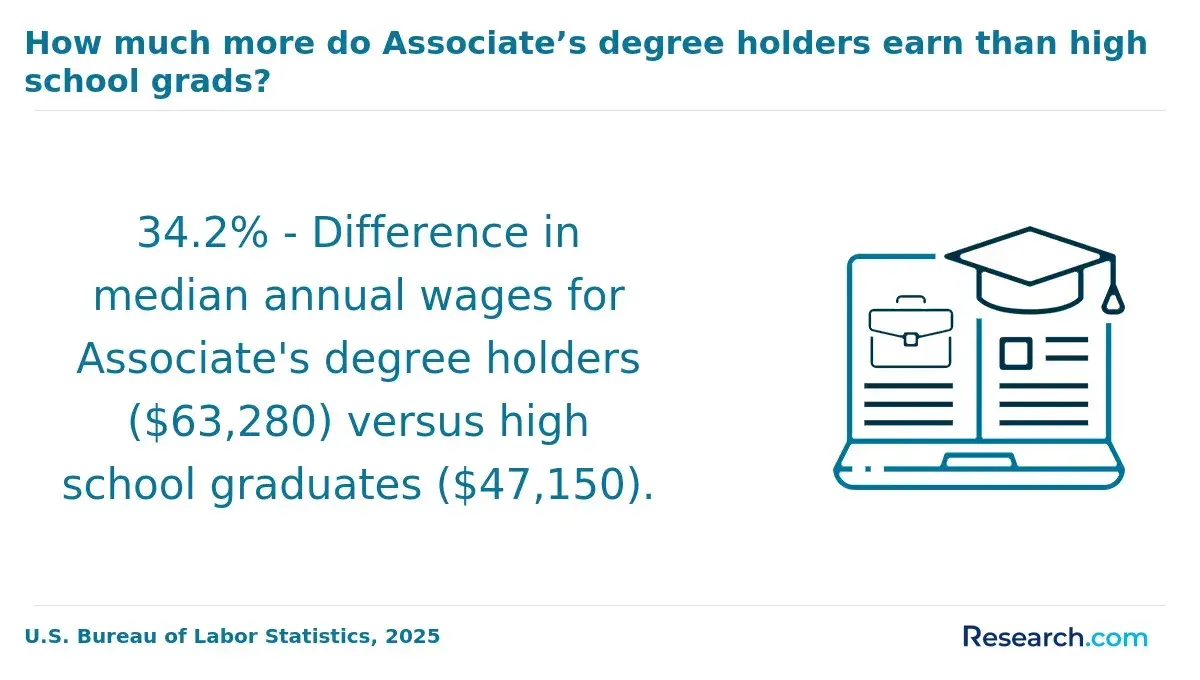
| Associate degree | Foundational photography, digital imaging, composition, and general education | Students seeking a lower-cost start or a transfer pathway | May not provide enough advanced portfolio development for competitive editorial work |
| Bachelor's degree | Advanced lighting, storytelling, visual culture, branding, business, editing, and portfolio production | Students pursuing editorial, commercial, brand, studio, or creative production roles | Takes longer and costs more, so students should verify outcomes and portfolio expectations |
| Master's degree | Advanced creative practice, research, critique, teaching preparation, or interdisciplinary visual work | Artists, educators, and photographers seeking advanced conceptual development | Not required for most client-based photography jobs |
Online delivery works best when the program is built around critique, project submissions, faculty feedback, and portfolio milestones rather than passive video lessons alone. Students should also confirm whether they must buy camera bodies, lenses, lights, color-calibrated monitors, Adobe software, storage drives, or printing materials.
Which accreditation should a digital photography program have?
Accreditation matters because it affects financial aid eligibility, transfer credit, graduate school access, and employer confidence. At minimum, students should look for institutional accreditation from an agency recognized by the U.S. Department of Education or the Council for Higher Education Accreditation. This is more important than whether the program has a photography-specific label.
Some art and design schools may also hold programmatic or specialized accreditation, but photography is not licensed like nursing or teaching. That means the key question is not whether a specific photography accreditor is required. The key question is whether the college itself is properly accredited and whether the curriculum, faculty, facilities, and portfolio outcomes support the student's target career.
Before applying, students should use a simple accreditation and quality check. This step helps avoid schools that market attractive creative programs but offer weak credit transfer, unclear costs, or limited career support.
- Confirm the institution appears in the U.S. Department of Education's accreditation database or another recognized accreditation source.
- Ask whether online photography students qualify for the same federal financial aid options as on-campus students.
- Review transfer credit policies, especially if starting with community college credits or prior art coursework.
- Look for public portfolio examples, capstone requirements, faculty biographies, and alumni career outcomes.
- Ask how critiques work online, including whether feedback is written, live, recorded, peer-based, or one-on-one with faculty.
A common mistake is choosing a program because the sample images look impressive without checking accreditation or credit transfer. Strong creative branding does not replace academic quality, transparent pricing, or student support.
How do online and campus photography programs compare?
Online and campus photography programs can both prepare students for editorial and brand photography, but they create different learning environments. The right choice depends on access to equipment, learning style, schedule, budget, and the kind of feedback a student needs.
Online programs are often attractive to working adults, military-connected students, parents, and students who do not live near an art school. Students comparing military benefits, flexible scheduling, and portfolio-based online study may also want to review photography programs online for veterans when evaluating support services and tuition assistance options.
The table below compares the practical differences that matter most for students preparing for editorial and brand roles.
| Factor | Online photography degree | Campus photography degree |
| Schedule | Often better for students balancing work, family, freelancing, or military obligations | Better for students who want fixed studio time and in-person class structure |
| Equipment access | Students may need to buy or rent more gear independently | Students may have access to studios, lighting kits, printers, darkrooms, or media labs |
| Critique experience | Can be strong if the program uses live reviews, detailed faculty notes, and portfolio checkpoints | Often more immediate because students review prints, lighting setups, and shoots in person |
| Networking | Depends heavily on virtual events, alumni access, internships, and student initiative | May provide local gallery events, studio assistant opportunities, and campus media connections |
| Portfolio development | Works well for self-directed students who can plan shoots and recruit subjects locally | Works well for students who need regular access to models, classmates, studio sets, and faculty presence |
An online program makes sense if the student is disciplined, has access to subjects and locations, and can create assignments outside a campus studio. A campus program may be better if the student needs hands-on lighting demonstrations, equipment labs, local industry events, or frequent in-person critique.
Students should not assume online means easier. In a strong online photography program, students still plan shoots, solve lighting problems, meet deadlines, revise work after critique, and present a cohesive portfolio. The difference is that much of the production happens in the student's own community rather than in a campus studio.
What courses are in an editorial and brand photography curriculum?
An editorial and brand photography curriculum should combine technical craft, storytelling, commercial awareness, and professional workflow. The goal is not simply to produce attractive images. The goal is to make images that serve a publication, client, campaign, audience, and deadline.
Students should look for courses that build both creative judgment and market-ready production skills. The strongest programs usually include a mix of the following subjects.
- Digital camera systems, exposure, optics, file formats, color management, and image capture workflows.
- Studio and location lighting for portraits, products, fashion, food, interiors, and environmental storytelling.
- Editorial photography, documentary practice, visual narrative, captioning, sequencing, and assignment-based shooting.
- Brand photography, content strategy, campaign concepts, product styling, e-commerce imagery, and social media image systems.
- Post-production using tools such as Lightroom, Photoshop, Capture One, and asset management platforms.
- History of photography, visual culture, ethics, representation, copyright, and media literacy.
- Business practices, estimating, contracts, licensing, client communication, invoicing, and freelance operations.
- Portfolio development, critique, capstone projects, internships, and professional presentation.
Current technology trends are also changing what students should learn. AI-assisted editing, generative image tools, automated masking, metadata management, and content authentication are becoming part of visual production. Photography students do not need to become software engineers, but they should understand how AI affects image ethics, disclosure, retouching, workflow speed, and client expectations.
Because editorial and brand work overlap with writing, concept development, and storytelling, students may also benefit from electives in journalism, marketing, copywriting, or creative writing. Those considering a more writing-centered graduate path can explore an online MFA creative writing program, but photography students should choose electives that strengthen visual narrative rather than distract from portfolio production.
A red flag is a curriculum that focuses only on camera settings and software tutorials. Those skills are necessary, but they are not enough for editorial and brand roles. Employers and clients often want photographers who can interpret a brief, collaborate with stylists and art directors, manage usage rights, deliver consistent files, and understand how images function across print, web, e-commerce, and social platforms.
What admission requirements do photography degree programs require?
Admission requirements vary by school and degree level, but most online photography programs evaluate academic readiness, creative potential, and fit with the program. Some programs are open to beginners, while others expect applicants to submit a portfolio that shows visual thinking, technical control, or creative commitment.
Applicants should expect some combination of the following requirements. The details matter because a program with a portfolio requirement may be more selective, while an open-admission program may place more responsibility on the student to build competitive work after enrollment.
- High school diploma, GED, or equivalent for undergraduate admission.
- Official transcripts from high school and any colleges previously attended.
- Application form and fee, though some schools waive fees during recruitment periods.
- Personal statement explaining creative interests, career goals, and reasons for choosing photography.
- Portfolio of images, especially for bachelor's completion, BFA, or graduate programs.
- Letters of recommendation for some selective or graduate-level programs.
- English proficiency documentation for applicants whose prior education was not in English.
Students applying without a strong portfolio can still prepare strategically. A portfolio does not need to show expensive equipment or celebrity subjects. It should show intentional image-making, control of light, consistent editing, and the ability to tell a visual story.
A practical preparation plan can help applicants avoid rushed submissions.
- Build one focused series, such as a neighborhood story, small business profile, product set, or portrait sequence.
- Edit tightly and include fewer stronger images rather than many repetitive ones.
- Write short captions or project notes explaining purpose, process, and audience.
- Ask a teacher, working photographer, designer, or editor for critique before submitting.
- Check file size, naming, format, and upload instructions carefully.
A common mistake is applying only to visually prestigious programs without asking whether the admissions level matches the student's current portfolio. Applicants should include a balanced list: programs that stretch them creatively, programs that fit their current preparation, and affordable options with strong transfer policies.
Students interested in the technical side of creative automation can compare this path with fields such as the cheapest online masters in artificial intelligence, although that route serves a very different career goal.
How long does an online photography degree take?
The timeline for an online photography degree depends on degree level, enrollment intensity, transfer credits, and whether the student chooses an accelerated or part-time format. A full-time associate degree commonly takes about two years, while a full-time bachelor's degree commonly takes about four years. Bachelor's completion programs may be shorter for students who already have general education or studio credits.
Time to completion is especially important for photography students because portfolio development takes real production time. A faster program can reduce living costs and help students enter the market sooner, but it can also compress critique cycles, reshoots, internships, and client-style projects.
The table below summarizes common timelines and the trade-offs students should consider.
| Path | Common timeline | Best for | Trade-off |
| Certificate | Several months to one year | Students who need a specific skill such as editing, lighting, or business basics | Limited depth and may not meet degree requirements for some roles |
| Associate degree | About two years full time | Students seeking a lower-cost foundation or transfer route | May require additional study for advanced brand or editorial work |
| Bachelor's degree | About four years full time | Students who want a broad portfolio, visual communication training, and career flexibility | Higher total cost and longer time away from full-time career growth |
| Bachelor's completion | Often one to three years depending on transfer credit | Students with prior college credits | Transfer evaluation can change the actual timeline significantly |
| Master's degree | Often two to three years | Students pursuing advanced creative practice, teaching, or research-oriented work | Usually unnecessary for most entry-level commercial photography roles |
Students choosing between full-time and part-time study should be realistic about weekly workload. Photography assignments are not limited to screen time. They require location scouting, scheduling subjects, setting up lighting, editing files, revising projects, and participating in critiques. A part-time format may be better for working freelancers because they can use real assignments to build portfolio material, as long as the program allows appropriate project flexibility.
How much does an online photography degree cost?
The cost of an online photography degree includes more than tuition. Students should budget for fees, software, camera gear, lenses, lighting, storage, printing, books, portfolio hosting, travel for optional residencies, and lost work time. Because photography is equipment-dependent, a low tuition price can still become expensive if the program requires substantial out-of-pocket gear purchases.
For a national benchmark, College Board reported the following average published tuition and fees for 2024-25 before grants and scholarships. These figures are not photography-specific, but they help students compare online program quotes against broader U.S. higher education pricing.
- $11,610 for public four-year in-state tuition and fees.
- $30,780 for public four-year out-of-state tuition and fees.
- $43,350 for private nonprofit four-year tuition and fees.
Students should use these figures as a starting point, not a final cost estimate. Online programs may charge different rates for in-state and out-of-state students, and some private institutions use flat online tuition. Net price after scholarships, transfer credits, military benefits, employer assistance, or federal aid may be much lower than the published price.
The table below identifies major cost factors that are easy to overlook when comparing photography programs.
| Cost factor | Why it matters | Question to ask |
| Tuition structure | Per-credit, per-term, and flat-rate tuition models can produce very different totals | What is the estimated total tuition for the exact number of credits I need? |
| Transfer credits | Accepted credits can shorten the degree and lower total tuition | Which prior credits apply to major requirements, not just electives? |
| Equipment requirements | Cameras, lenses, lights, monitors, and storage drives can add substantial costs | What gear is required in the first term, and what can be rented or borrowed? |
| Software and subscriptions | Editing and file management tools may require monthly or annual payments | Are software licenses included in tuition or billed separately? |
| Portfolio and printing | Professional presentation may require prints, books, web hosting, or submission fees | What portfolio costs should students expect before graduation? |
| Residency or travel | Some online creative programs include optional or required in-person components | Are there required campus visits, workshops, exhibitions, or intensives? |
To reduce cost, students can start with community college general education courses, buy used gear from reputable sources, rent specialty lenses only when needed, apply for departmental scholarships, and choose programs with transparent transfer policies. The biggest red flag is a school that will not provide a clear total-cost estimate before enrollment.
What jobs can graduates pursue in editorial and brand photography?
Graduates of online digital photography programs can pursue several editorial and brand-related roles. Some are full-time staff positions, while many are freelance, contract, project-based, or hybrid creative roles. The strongest candidates usually combine photography with editing, production coordination, writing, marketing, or design awareness.
The table below outlines common career options and how they connect to editorial and brand photography training.
| Role | Typical responsibilities | Degree value |
| Editorial photographer | Shoots portraits, features, documentary stories, events, and location-based assignments for publications or media brands | Portfolio sequencing, visual storytelling, captioning, ethics, and deadline-based production are especially useful |
| Brand photographer | Creates images for campaigns, websites, product launches, social media, and brand identity systems | Coursework in lighting, marketing, client briefs, and visual consistency can be directly relevant |
| Commercial studio photographer | Produces product, fashion, food, portrait, or e-commerce imagery in controlled environments | Studio lighting, color management, retouching, and file delivery standards matter heavily |
| Photo editor | Selects, sequences, licenses, captions, and prepares images for publications or campaigns | Visual literacy, ethics, editing software, rights management, and critique experience are valuable |
| Digital content producer | Plans and coordinates visual assets for web, social, email, advertising, or branded storytelling | Photography plus project management, writing, and marketing knowledge can increase flexibility |
| Creative production assistant | Supports shoots, books talent, manages shot lists, organizes files, and assists photographers or art directors | A degree portfolio can help candidates demonstrate professionalism and production readiness |
Editorial and brand photography also overlaps with sports media, analytics-driven content, journalism, and audience engagement. Students interested in sports imagery and media strategy may find it useful to compare photography pathways with guidance on how to become a sports analyst, especially if they are deciding between visual storytelling and data-centered sports media roles.
To improve career readiness before graduation, students should take practical steps that turn coursework into evidence of professional ability.
- Create portfolio sections for specific markets, such as editorial portraits, product stories, food, fashion, interiors, or branded lifestyle work.
- Complete at least one self-directed project that looks like a real assignment brief, including mood board, shot list, final selects, and delivery format.
- Assist working photographers to learn set etiquette, lighting workflow, client communication, and production pace.
- Build a simple website with clear categories, contact information, licensing language, and downloadable portfolio samples.
- Track usage rights, releases, invoices, and client communication from the beginning, even for small assignments.
Students should avoid assuming the degree alone will create a client base. In photography, the portfolio, network, reliability, and ability to solve visual problems often matter as much as the credential.
What salary can photography graduates expect in the U.S.?
Salary expectations in photography vary widely because the field includes salaried employees, freelancers, part-time creatives, studio owners, assistants, editors, and hybrid content professionals. Geography, client type, specialization, reputation, and business skill can all affect income.
For a baseline, the U.S. Bureau of Labor Statistics reported a 2024 median annual wage of $42,520 for photographers. This figure is useful for understanding the middle of the occupational wage distribution, but it does not predict what an individual graduate will earn. Freelancers may have uneven income, while in-house brand, e-commerce, or content roles may offer steadier pay but less creative independence.
The table below places photography-related roles in context. It is designed to help students think beyond one job title when evaluating return on investment.
| Career direction | Income context | What can influence earnings |
| Freelance editorial photographer | Often project-based and variable | Publication budgets, assignment frequency, licensing terms, travel, niche expertise, and reputation |
| Brand or commercial photographer | Can be freelance, contract, studio-based, or in-house | Client size, repeat contracts, usage rights, production scale, product category, and retouching skill |
| In-house content creator | May provide steadier employment than freelance-only paths | Marketing skills, video ability, social media production, file management, and cross-functional collaboration |
| Photo editor or digital asset specialist | Often tied to publishing, media, retail, or marketing teams | Rights knowledge, metadata, editing judgment, workflow systems, and communication with creatives |
| Creative lead pathway | Usually requires experience beyond entry-level photography | Campaign strategy, team leadership, art direction, client management, and a strong production record |
Students should evaluate salary potential by looking at local job postings, internship pipelines, alumni portfolios, and the kinds of employers that recruit from the program. A smart ROI question is not "What do photographers make?" but "Does this program help me build the portfolio, workflow, and professional network needed for the market I want to enter?"
Do photographers need licenses or certifications to work?
Photographers generally do not need a state license to work in the U.S. Unlike regulated professions, editorial and brand photography is usually governed by client contracts, copyright law, business registration rules, insurance requirements, and platform or employer expectations. Requirements can vary if the photographer operates a business, uses drones, works in schools, photographs restricted locations, or handles sensitive client data.
Certifications are optional, but they can help document skill in specific tools or workflows. They are usually most valuable when paired with a strong portfolio rather than used as a substitute for one.
Students considering credentials should focus on those that match their intended work. The examples below are common areas where training or certification can support professional credibility.
- Adobe or software credentials for students who want to demonstrate editing, retouching, layout, or digital asset skills.
- Drone certification through the FAA Part 107 pathway for photographers who plan to sell aerial photography or video services.
- Professional association training, workshops, or portfolio reviews for students who want critique, networking, and industry exposure.
- Business training in copyright, contracts, insurance, taxes, licensing, and client communication for freelance photographers.
- Safety or background requirements when working with schools, minors, hospitals, government facilities, or restricted venues.
The most important legal concept for editorial and brand photographers is usage. Clients may want web rights, print rights, social media rights, advertising rights, exclusivity, or buyout terms. Students should learn how licensing affects pricing and control. A common mistake is giving clients unlimited usage without understanding the long-term value of the images.
Before accepting paid work, new photographers should create a basic business checklist.
- Use written agreements that define deliverables, payment schedule, usage rights, cancellation terms, and revision limits.
- Collect model and property releases when the assignment requires commercial use.
- Back up original files and final exports using at least two storage locations.
- Clarify whether the client expects raw files, edited files, color grading, retouching, or web-ready exports.
- Consider liability insurance if shooting events, products, commercial sets, or client locations.
A degree program that includes business practices, copyright, contracts, and client communication can be especially helpful because technical skill alone does not protect a photographer from underpricing, unclear usage terms, or preventable workflow problems.
Other Things You Should Know About Digital Photography
Internships are valuable for online digital photography students aiming for editorial and brand photography roles in 2027. They provide practical experience, networking opportunities, and industry insights that are essential for transitioning academic knowledge into a professional setting.
A strong program should include Adobe Photoshop and Lightroom, plus basic Capture One training. Students should also practice color correction, retouching, file delivery, and asset organization, because editorial and brand clients often require consistent image processing and fast, professional workflow skills.
Internships are not always required, but they can be very valuable. Assisting photographers, working with campus media remotely, supporting local studios, or helping small businesses with content can provide experience that coursework alone may not offer.
Video is increasingly useful because many brands need short-form content, behind-the-scenes clips, reels, and campaign assets across multiple platforms. A photographer does not have to become a filmmaker, but basic motion, audio, lighting continuity, and editing skills can improve employability.
References
- Do you need a license to be a photographer? Key considerations https://www.gelato.com/blog/do-you-need-a-license-to-be-a-photographer
- Which Photography Certification is Best? https://blog.nobledesktop.com/learn/photography/photography-certifications-and-certificates
- College Certificate vs Online Photography School | Cameraderie https://cameraderie.org/threads/college-certificate-vs-online-photography-school.56322/
- Photography BA(Hons) (Online) https://www.falmouth.ac.uk/study/online/undergraduate/photography
- The Photography Institute https://www.thephotographyinstitute.com/us/en/blog-salary
- How To Get A Photography License - Learn How to Sell Art Online - Art Storefronts Blog https://blog.artstorefronts.com/how-to-get-a-photography-license/
- The Power of Creativity: Inside the Editorial Photography Workshop with Silvia Tortajada | Vogue College of Fashion https://www.voguecollege.com/articles/madrid/the-power-of-creativity-inside-the-editorial-photography-workshop-with-silvia-tortajada/
- Should you Study Photography at College or are There Better Options Now? https://digital-photography-school.com/should-you-study-photography-at-college-or-are-there-better-options-now/
- Licenses for Photographers: Start your business without getting sued! - Improve Photography https://improvephotography.com/10933/license-to-be-a-photographer/
- Certificate in Advertising and Editorial Photography https://www.griffith.ie/faculties/design/courses/certificate-advertising-and-editorial-photography