2027 How to Become a Security Guard

Co-Founder and Chief Data Scientist
Becoming a security guard is one of the more accessible ways to enter protective services, but the job is changing. Employers still need guards who can patrol buildings, verify access, and respond to incidents, yet many now also expect comfort with cameras, alarm systems, visitor management software, and basic cyber-physical security procedures.
This guide is for people considering security work for the first time, current guards who want better assignments, and workers comparing security with related careers in criminal justice, public safety, legal support, or technical protection. You will learn what security guards do, how licensing works, how much guards earn, which industries hire them, what training matters, and how technology is reshaping the field in 2027.
Quick Answer: How Do You Become a Security Guard in 2027?
To become a security guard, you typically need to meet your state’s minimum age requirement, have a high school diploma or equivalent, pass any required background checks, complete basic security guard training, and obtain the license or registration required in your state. Armed roles require additional firearms training, legal instruction, and licensing. A college degree is not usually required for entry-level guard jobs, but education in criminal justice, cybersecurity, legal studies, or security management can help with advancement into supervisory, corporate, investigative, or risk management roles.
Key Things to Know About Becoming a Security Guard in 2027
- The US security services market is projected to keep growing, with revenue expected to reach $47.11 billion in 2025.
- About 162,400 openings for security guards and gambling surveillance officers are expected each year.
- Basic entry requirements remain relatively accessible, but specialized training is becoming more important for guards who want better posts, supervisory roles, or armed assignments.
- Technology is changing the job. Remote monitoring centers, high-resolution cameras, access control systems, and virtual security guard models are expanding the work beyond traditional in-person patrols.
- What security guards do
- Whether security guard work is a good career choice in 2027
- How much security guards earn
- Qualifications, training, and licensing requirements
- Industries that employ the most security guards
- How further education can support advancement
- Alternative careers for experienced security guards
- Core skills security guards need
- Soft skills that improve performance on the job
- How advanced education can help security professionals move up
- Security guard training programs to compare
- Whether paralegal training can strengthen legal knowledge
- Certifications that may help security guards qualify for promotion
- How legal training can support career growth
- How security experience can connect to federal law enforcement careers
- How technology is changing security guard work
What does a security guard do?
Security guards protect people, property, equipment, information, and restricted areas. The exact job varies by site. A hospital security officer may handle visitor disputes and emergency calls, while a corporate security officer may focus on access control, surveillance systems, and incident documentation.
Most security guard duties fall into four practical categories:
- Patrol and observation: Guards walk assigned routes, inspect doors and equipment, monitor camera feeds, and watch for behavior or conditions that may signal risk.
- Access control: Guards verify identification, screen visitors, issue passes, manage entry logs, and help ensure only authorized people enter secure areas.
- Incident response: Security personnel are often among the first people to respond to medical emergencies, fires, disturbances, alarms, trespassing, theft, or facility lockdowns.
- Documentation and reporting: Guards write daily activity logs, prepare incident reports, preserve relevant details, and communicate with supervisors, clients, emergency responders, or law enforcement.
In 2027, security work increasingly combines physical security with digital tools. Guards may use video management systems, badge readers, access control dashboards, emergency notification systems, and mobile reporting apps. In higher-risk or technology-heavy settings, guards may also support cyber-physical security by protecting connected building systems, server rooms, data centers, or smart security infrastructure from unauthorized access.
If you are comparing security with skilled trade paths, it may also help to review training options outside protective services, such as online HVAC trade school and certification programs, especially if you want a hands-on career but are still deciding which field fits your goals.
| Work setting | Common duties | Best fit for |
| Office buildings and corporate sites | Access control, visitor screening, camera monitoring, incident reports | People who are detail-oriented and comfortable with technology |
| Retail stores and malls | Theft prevention, crowd control, customer assistance, emergency response | Guards with strong communication and de-escalation skills |
| Hospitals and healthcare facilities | Visitor management, patient-related incidents, emergency calls, patrols | People who can stay calm around stress, conflict, and urgent situations |
| Schools and universities | Campus patrol, entry monitoring, safety checks, coordination during emergencies | Guards who communicate well with students, staff, and families |
| Hotels and lodging | Guest safety, property patrol, disturbance response, coordination with management | People who combine customer service with security awareness |
Is being a security guard a good career in 2027?
Security guard work can be a good career for people who want a relatively direct entry point into protective services, steady demand across many industries, flexible schedules, and room to move into specialized or supervisory roles. It is less ideal for people who want predictable daytime hours, a low-stress desk job, or rapid salary growth without additional training or responsibility.
The US Bureau of Labor Statistics projects 2% employment growth for security guards from 2023 to 2033. LinkedIn’s Jobs on the Rise report also lists security guards among the top 25 fastest-growing jobs in the US. About 162,400 job openings are expected in the industry each year.
Several factors support ongoing demand. Many organizations outsource security rather than building internal teams, creating opportunities with large security firms. Employers also need guards who can work with surveillance systems, access control tools, and alarm response processes. At the same time, candidates should be realistic: pay, schedules, job conditions, and advancement opportunities vary widely by employer, location, licensing level, and assignment type.
| Security guard career advantage | Potential drawback | How to evaluate it before applying |
| Entry requirements are usually more accessible than many protective service careers. | Some roles involve nights, weekends, holidays, or long periods of standing. | Ask about shift patterns, overtime expectations, post conditions, and break policies. |
| Jobs exist in many sectors, including retail, healthcare, education, lodging, and private security. | Entry-level wages may be modest in some regions. | Compare local pay by assignment type, not just job title. |
| Experience can lead to supervisory, armed, corporate, or specialized security roles. | Promotion may require certifications, a clean record, strong reports, and leadership ability. | Ask whether the company has a formal promotion path and paid training options. |
| Technology skills can make candidates more competitive. | Some posts require constant monitoring of screens, alarms, or digital systems. | Look for roles that match your comfort with technology and attention to detail. |
How much do security guards make in 2027?
As of March 1, 2025, the average annual salary for a Security Guard I in the United States is $38,060. Pay differs by state, city, employer, site risk level, shift, union status, armed versus unarmed licensing, and experience. For example, security guards in California earn around $44,940 annually, while those in Nevada have average earnings of $36,940.
The highest-paying states for security guards as of 2023 are the District of Columbia, Alaska, Maryland, Minnesota, and Washington.
Salary figures should be treated as reference points, not promises. A new unarmed guard at a low-risk site may earn less than a trained armed guard, data center officer, supervisor, or corporate security specialist. Overtime, differential pay, and benefits can also change total compensation.
| Factor | How it can affect pay | What to ask before accepting a job |
| Location | Wages may be higher in states or cities with higher living costs or stronger demand. | “What is the starting rate for this exact post and shift?” |
| Armed vs. unarmed status | Armed roles often require more training and may pay more, but they carry greater responsibility and risk. | “Does this role require an armed license, and is firearms training paid?” |
| Industry | Healthcare, corporate, data center, and government-contracted sites may have different pay structures than basic patrol posts. | “What type of facility will I be assigned to, and can assignments change?” |
| Shift | Night, weekend, holiday, or high-coverage shifts may include differentials or overtime. | “Are shift differentials, overtime, or holiday rates offered?” |
| Certifications and experience | Supervisory, emergency response, access control, or specialized credentials may support higher-level roles. | “Which certifications does the company recognize for raises or promotion?” |
What qualifications do you need to become a security guard?
Security guard requirements are set mainly at the state level, so the exact process depends on where you plan to work. Most candidates should expect a combination of minimum age rules, education requirements, background screening, training, and licensing or registration.
Basic requirements
Most regions require security guards to be at least 18 years old and have a high school diploma or equivalent, such as a GED. A college degree is not typically required for entry-level security guard jobs.
Higher education can matter for specific career goals. Corporate security, security management, cyber-focused physical security, investigations, and risk management roles may prefer candidates with an associate or bachelor’s degree in criminal justice, security management, cybersecurity, or a related field. If your long-term goal involves protecting digital systems as well as physical assets, a cybersecurity degree may be relevant.
Training and licensing
Many states require applicants to complete Basic Security Guard training before employment or registration. This training typically introduces legal authority and limits, emergency procedures, communication, observation, reporting, ethics, and incident response.
After training, candidates usually apply for a security guard license, registration, or guard card, depending on state terminology. Requirements may include fingerprinting, a background check, application fees, continuing education, or employer sponsorship. Always verify rules through the official state licensing agency before paying for training.
If you are comparing security work with other entry-level career paths that offer flexible online training, you may also want to review the best online medical assistant programs to understand how healthcare support careers differ in training, scheduling, and work environment.
Specialized training
Armed security guards need additional instruction and authorization. Training may cover firearms safety, marksmanship, storage, legal limits on use of force, judgment under stress, and state-specific qualification standards. Some roles also require instruction in batons, tasers, pepper spray, handcuffing, emergency evacuation, first aid, CPR, or conflict de-escalation.
Technology-focused sites may value guards who understand networked security systems, access control platforms, and basic cybersecurity concepts. For candidates who want to strengthen technical awareness without immediately entering a degree program, online cybersecurity courses with certificates may be useful.
Step-by-step path to becoming a security guard
- Check your state rules first. Look up the official licensing or regulatory agency for security guards in your state.
- Confirm eligibility. Review age, education, background, citizenship or work authorization, and disqualifying offense rules.
- Complete approved training. Use a state-approved provider if your state requires one.
- Apply for licensing or registration. Submit fingerprints, forms, fees, and training documentation as required.
- Apply to employers. Compare security firms, in-house security departments, hospitals, schools, hotels, and retail employers.
- Build experience and records. Strong attendance, clear reports, calm conduct, and clean incident handling can support promotion.
- Add credentials strategically. Choose certifications based on your target role, such as supervisor, armed guard, lodging security, corporate security, or technology-focused security.
What industries hire the most security guards?
Security guards work wherever organizations need controlled access, visible deterrence, emergency support, or protection of people and property. The largest employers include private security firms, retail businesses, healthcare facilities, schools, universities, and lodging providers.
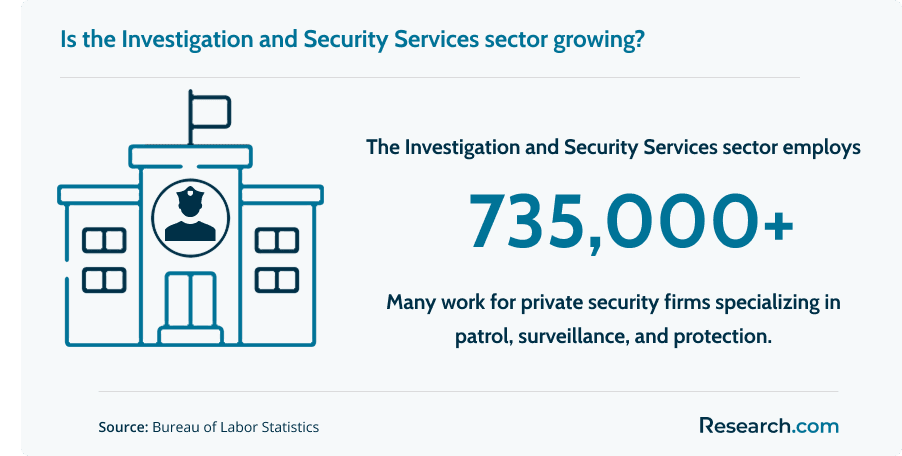
- Investigation and security services: This sector employs over 735,000 security guards. Many work for private firms that assign officers to patrol, surveillance, reception, access control, and protective service posts.
- Retail stores: Security guards account for 1.39% of the industry’s workforce. Their work may include theft prevention, customer safety, crowd management, and emergency support.
- Healthcare facilities: General medical and surgical hospitals employ approximately 44,460 security guards, representing 0.78% of US security guard employment.
- Schools and universities: Educational institutions use guards to monitor campuses, manage access, respond to emergencies, and support student and staff safety. More than 44,000 guards work in elementary and secondary institutions.
- Traveler accommodation: The traveler accommodation industry employed around 21,280 security guards as of 2023.
| Industry | Why guards are needed | Skills that matter most |
| Private security services | Clients outsource patrol, monitoring, access control, and protective duties. | Reliability, documentation, professionalism, adaptability |
| Retail | Stores need support with theft prevention, disturbances, emergencies, and crowd flow. | Observation, de-escalation, customer-facing communication |
| Healthcare | Hospitals manage visitors, emergencies, emotional situations, and restricted areas. | Calm response, empathy, restraint, teamwork |
| Education | Schools and campuses require entry monitoring, patrols, and emergency coordination. | Judgment, communication with young people, situational awareness |
| Hospitality | Hotels and lodging facilities need guest safety, property protection, and incident response. | Customer service, discretion, report writing, conflict management |
Can further education boost career advancement for security guards?
Further education is not required for many entry-level guard jobs, but it can help security professionals compete for supervisory, corporate, compliance, investigative, and risk management roles. The strongest educational choices are usually tied to a clear career target. Criminal justice can support public safety and supervisory goals, cybersecurity can help with technology-heavy security environments, and legal studies can strengthen documentation and compliance knowledge.
Guards who want to move into leadership without taking on excessive debt should compare tuition, transfer credits, accreditation, employer tuition assistance, and scheduling flexibility. For example, an affordable online criminal justice degree may make sense for working guards who want to prepare for supervisory or broader justice-sector roles while keeping costs manageable.
| Education path | When it may help | When it may not be necessary |
| Certificate or short course | You need job-specific skills quickly, such as report writing, de-escalation, CPR, or access control basics. | You are aiming for roles that require a degree or formal management preparation. |
| Associate degree | You want a broader foundation in criminal justice, security, or technology while keeping the timeline shorter. | Your employer promotes mainly based on experience and internal training. |
| Bachelor’s degree | You want to pursue corporate security, security management, investigations, or public-sector opportunities that value a degree. | You only want part-time entry-level security work and do not plan to advance. |
| Graduate degree | You are targeting senior policy, risk, legal, compliance, or management roles. | You do not yet have enough experience to know which advanced field is worth the investment. |
What alternative career paths can security guards pursue?
Security guard experience can transfer into several related careers, especially when combined with strong reports, clean professional conduct, leadership experience, and targeted training. Common next steps include lead officer, site supervisor, security manager, loss prevention specialist, emergency management coordinator, corporate security analyst, corrections officer, private investigator, or public safety roles.
People interested in broader justice-sector opportunities can compare security work with criminal justice careers to see which roles typically require degrees, academy training, certifications, or agency-specific hiring processes.
| Current security experience | Possible next role | What to build next |
| Strong patrol and incident response experience | Lead officer or site supervisor | Leadership, scheduling, client communication, policy enforcement |
| Retail theft prevention experience | Loss prevention specialist | Investigation basics, evidence handling, report quality, interview skills |
| Hospital or campus security experience | Emergency management or public safety support | Incident command awareness, emergency planning, communication protocols |
| Technology-heavy security post experience | Corporate security or access control specialist | Access control systems, video platforms, cybersecurity awareness |
| Armed or high-risk security experience | Protective services or law enforcement pathway | Fitness, legal standards, background readiness, agency-specific requirements |
What skills are essential for a successful security guard career?
Good security guards combine alertness, judgment, communication, professionalism, and physical readiness. The job is not just “watching.” It requires noticing small changes, responding appropriately, documenting facts, and knowing when to call for help.
- Physical readiness: Guards may need to stand for long periods, walk patrol routes, respond quickly to emergencies, or assist during evacuations.
- Observation: Effective guards notice unusual behavior, unsecured doors, safety hazards, suspicious packages, camera alerts, and policy violations.
- Critical thinking: Security incidents can change quickly. Guards must assess risk, choose a proportionate response, and follow site procedures.
- Integrity: Employers trust guards with keys, access credentials, confidential information, equipment, and incident records. Reliability and honesty are nonnegotiable.
- Report writing: Clear, factual reports protect the guard, employer, client, and anyone who may later investigate an incident.
- Communication: Guards need to give instructions, ask questions, calm tense people, coordinate with coworkers, and brief supervisors or police when needed.
Some security jobs are located in industries where environmental, field, or site-specific knowledge can be useful. For example, guards working near mining, energy, or environmental operations may benefit from understanding the setting; in that context, reviewing online geoscience and geology degree programs can help workers compare broader education paths connected to those sectors.
What soft skills are essential for security guard success?
Soft skills often determine whether a guard can prevent a minor problem from becoming a serious incident. The most valuable soft skills include patience, emotional control, active listening, cultural awareness, tact, confidence without aggression, and the ability to stay professional when someone is angry, frightened, intoxicated, confused, or uncooperative.
Legal awareness can also improve judgment. Guards are often asked to document incidents, preserve facts, and operate within strict limits. Workers who want a deeper understanding of legal terminology, documentation, and procedures may find that an affordable online paralegal certificate provides useful context, especially for roles connected to investigations, compliance, or corporate security.
| Soft skill | Why it matters on a security post | How to practice it |
| De-escalation | Reduces the chance that conflict becomes physical or legally complicated. | Use calm tone, distance, active listening, and clear options. |
| Emotional control | Helps guards stay professional when provoked or pressured. | Pause before responding, follow policy, and avoid personal arguments. |
| Customer service | Many guards are the first person visitors meet at a site. | Give clear directions, remain respectful, and know when to escalate. |
| Judgment | Security decisions can affect safety, liability, and trust. | Study procedures, ask supervisors for feedback, and learn from past incidents. |
| Attention to detail | Small details in logs, cameras, badges, or behavior may be important later. | Write timely notes and verify names, times, locations, and actions. |
Can advanced education accelerate career growth for security guards?
Advanced education can support career growth when it aligns with a specific promotion path. A guard who wants to become a site supervisor may benefit more from leadership training and security management coursework than from an unrelated degree. A guard aiming for corporate risk, compliance, legal operations, or policy-heavy work may benefit from legal studies or related graduate education.
Before enrolling, compare the likely career benefit with tuition, time, employer requirements, transfer credit, and whether the program is accredited. A degree should not be treated as a guaranteed promotion. It works best when paired with strong job performance, documented experience, references, and targeted certifications. For security professionals pursuing roles that require deeper legal and policy knowledge, affordable online master’s in legal studies programs may be worth comparing.
What are the best security guard training programs?
The best training program depends on your state requirements, whether you want armed or unarmed work, the industry you plan to enter, and your advancement goals. Start with state-approved basic training if licensing requires it. After that, compare professional organizations, employer academies, and specialized certification programs.
International Foundation for Protection Officers
The International Foundation for Protection Officers offers training and credentials for security professionals who want to strengthen practical knowledge and improve career mobility. Its programs cover topics relevant to professional security work, including risk, legal responsibilities, emergency response, and officer conduct. In 2024, IFPO received the Association of the Year award at the Security Buyer Awards for its industry contributions.
Security professionals who want to add technical awareness can also compare IFPO-style training with broader options such as cybersecurity certificate courses online, particularly if they work around access control systems, cameras, networks, or data-sensitive facilities.
Securitas Training Academy
Securitas offers training for entry-level guards and more specialized security assignments. Its data center training program has received global recognition through accreditation by the Holistic Information Security Practitioner Institute. Employer-based academies can be useful because training is often tied directly to the post, procedures, and client expectations.
Working adults who need flexible study options may also want to compare security training with accelerated online degree programs for busy people, especially if they are planning a longer-term move into management or a related field.
The American Society for Industrial Security
ASIS International is widely recognized in the security field for professional standards, education, and certifications. Its Certified Protection Professional credential is especially associated with higher-level security management and leadership responsibilities. ASIS credentials are generally more relevant after a guard has built experience and is preparing for management, consulting, or strategic security roles.
| Training option | Best for | Key question to ask |
| State-approved basic guard training | New guards who need licensing or registration | “Is this provider approved by my state licensing agency?” |
| Employer academy | Guards hired by large security firms or assigned to specialized sites | “Will this training qualify me for better posts or pay?” |
| Professional certification provider | Experienced guards seeking credibility or promotion | “Do employers in my target role recognize this credential?” |
| Armed guard training | Guards pursuing armed posts | “What are the legal, renewal, and qualification requirements?” |
| Technology or cybersecurity training | Guards working with cameras, access control, data centers, or cyber-physical systems | “Will this help me qualify for security operations or corporate roles?” |
Can a paralegal certification program enhance a security guard's legal acumen?
Paralegal training is not required to work as a security guard, but it can be useful for guards who want to improve legal vocabulary, documentation accuracy, evidence awareness, and understanding of procedures. This can matter in roles involving investigations, corporate compliance, incident review, loss prevention, or coordination with attorneys and law enforcement.
A paralegal certificate program online may be most useful for security professionals who already know they want to move toward legal support, compliance, investigations, or risk management. It is less necessary for guards who only want standard patrol or access control work.
What certifications help security guards get promoted?
Certifications can help security guards stand out when they are relevant to the role. They are most valuable when employers recognize them, when they meet licensing or client requirements, or when they build skills needed for a specific advancement path. Before paying for any credential, ask whether it is required, preferred, or simply optional for the job you want.
1. Certified Protection Officer
The Certified Protection Officer credential from IFPO is designed to strengthen professional security knowledge. It covers areas such as security risk management, legal issues, emergency response, and officer responsibilities.
2. Professional Security Officer Program
The Professional Security Officer Program, also associated with IFPO, focuses on foundational security topics, including duties, asset protection, evacuation procedures, professional ethics, and report writing. A passing score of 70% is required to earn the certification.
As with other fields, targeted credentials can open new options when they match employer needs. For comparison, workers in healthcare documentation may evaluate online medical transcription programs when seeking a more specialized administrative path.
3. Certified Lodging Security Officer
The Certified Lodging Security Officer credential was developed in partnership with the US Department of Homeland Security and is intended for security professionals in hospitality settings. It focuses on protecting guests, employees, and lodging facilities.
Hospitality security increasingly includes protecting guest information and connected systems. Guards who want stronger technical preparation may compare this credential with options such as an affordable online cybersecurity degree.
4. Security Supervisor Certification
Security Supervisor Certification can help guards prepare for leadership responsibilities, including team coordination, post orders, scheduling, communication with clients, and standard operating procedures. These programs can be especially useful for guards who already perform lead duties but need formal preparation for promotion.
Like accredited online degrees, many security-related programs offer flexible formats. Flexibility matters for guards working rotating shifts, overtime, or overnight assignments.
| Certification type | Best suited for | Promotion value |
| Foundational officer certification | New or early-career guards | Shows commitment and strengthens core knowledge. |
| Supervisor certification | Experienced guards seeking lead or site supervisor roles | Builds leadership, scheduling, reporting, and team management skills. |
| Industry-specific certification | Guards in lodging, healthcare, retail, or specialized facilities | Signals knowledge of risks and procedures in a specific work setting. |
| Armed security credential | Guards pursuing armed assignments where legal | May qualify candidates for higher-responsibility posts, subject to state rules. |
| Technology or cybersecurity credential | Guards working in data centers, corporate sites, or access-controlled facilities | Can support movement into security operations, monitoring, or cyber-physical security roles. |
How can specialized legal training benefit security guard career advancement?
Legal training can help security professionals understand boundaries, documentation standards, confidentiality, chain-of-custody concepts, and the importance of factual reporting. This matters because poor judgment or unclear reports can create problems for employers, clients, law enforcement, and the guard.
Security guards interested in legal operations, investigations, compliance, or corporate risk may benefit from a focused program such as a fast online paralegal certificate. The value is strongest when the training supports a defined career goal rather than being added randomly to a resume.
How can security guard experience lead to federal law enforcement careers?
Security guard experience can help build relevant habits for federal law enforcement pathways, including observation, documentation, professionalism, emergency response, and working within procedures. However, federal agencies have their own hiring standards, background checks, physical requirements, education preferences, training academies, and competitive selection processes.
Guards interested in federal roles should first research the exact agency and position. For example, those considering drug enforcement careers can review how to become a DEA agent to understand the additional qualifications, training, and selection expectations that go beyond private security experience.
How is technology changing the security guard industry?
Security guard work is becoming more technology-enabled. Guards may still patrol, check doors, and respond to people in person, but many now also monitor camera systems, verify access events, respond to alarms, use mobile reporting apps, and coordinate with remote security operations centers.
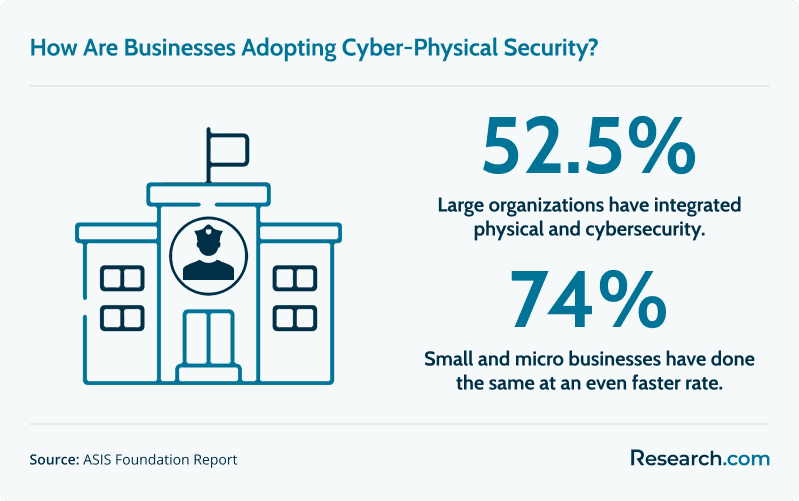
The shift is part of a broader convergence between physical security and cybersecurity. According to the 2022 ASIS Foundation report, about 52.5% of large organizations have fully or partially integrated physical security and cybersecurity functions. Smaller businesses are also moving in this direction, with nearly 74% of small and micro companies adopting this convergence.
This does not mean human guards are disappearing. Instead, the role is changing. Employers increasingly value guards who can combine visible presence, judgment, customer interaction, and technology awareness. Guards who resist technology may have fewer options over time, while those who learn surveillance systems, access control, incident software, and basic cybersecurity concepts may be better positioned for specialized assignments.
| Technology trend | Impact on security guards | How to prepare |
| Remote monitoring and virtual guarding | Some observation duties may move to centralized monitoring teams. | Learn camera monitoring, alarm response, and clear radio or dispatch communication. |
| Access control systems | Guards may manage badge readers, visitor systems, and entry logs. | Build comfort with software dashboards and identity verification procedures. |
| Mobile reporting apps | Incident logs and patrol records may be digital and time-stamped. | Practice concise, factual, and timely digital reporting. |
| Cyber-physical security convergence | Physical access to systems, server rooms, and connected devices becomes more important. | Understand why doors, badges, cameras, and networks are connected security risks. |
| Advanced surveillance tools | Guards may need to interpret alerts rather than simply watch screens. | Develop attention to detail and learn site-specific escalation procedures. |
Common Mistakes to Avoid When Starting a Security Guard Career
- Choosing training before checking state rules: Not every course satisfies licensing requirements. Confirm approval with the official state agency first.
- Assuming all security jobs are the same: A mall post, hospital post, data center post, and armed patrol job can involve very different risks, schedules, pay, and expectations.
- Looking only at hourly pay: Benefits, overtime, commute, shift differential, equipment costs, uniforms, training fees, and promotion paths also affect the value of a job.
- Ignoring report writing: Clear documentation is one of the fastest ways to build credibility and one of the easiest areas to underestimate.
- Overlooking technology: Guards who can use cameras, access systems, and digital reports may have an advantage in modern security environments.
- Assuming a certification guarantees promotion: Credentials help most when paired with strong performance, experience, employer recognition, and available openings.
- Taking an armed role without understanding the responsibility: Armed security requires legal knowledge, judgment, regular qualification, and comfort with higher-risk situations.
Questions to Ask Before Choosing a Security Guard Job or Training Program
| Question | Why it matters |
| Is this training approved for licensing in my state? | Unapproved training may not help you qualify for a guard card or license. |
| Will the employer pay for licensing, uniforms, or required equipment? | Upfront costs can reduce the value of a job offer. |
| What type of site will I work at? | Risk level, duties, pace, and required skills vary by assignment. |
| What are the normal shifts? | Security work may include nights, weekends, holidays, or rotating schedules. |
| Is there a path to lead officer or supervisor? | A clear advancement structure can make the job more valuable long term. |
| Which certifications does the employer recognize? | Not all credentials affect pay or promotion. |
| How are incidents reported and reviewed? | Good reporting systems help protect guards and improve professionalism. |
| Does the role require technology skills? | Modern posts may involve cameras, alarms, access control systems, and digital logs. |
What Security Guards Say About the Work
Security guards often describe the job as practical, active, and responsibility-driven. A guard working in a busy Chicago shopping mall might say that the role requires constant awareness because situations can change quickly, but that training and steady work make the responsibility manageable.
Others value the flexibility. Some shifts may be quiet, but guards still need to remain ready, communicate clearly, and respond when something unexpected happens. Experience can also help workers qualify for better posts or higher pay.
Technology is now a major part of many assignments. Guards who once expected mostly foot patrol may now use surveillance cameras, keycard systems, alerts, and digital logs every shift. For some, that makes the job more engaging; for others, it means building new skills to stay competitive.
Key Insights
- Security guard work remains one of the more accessible entry points into protective services, but licensing rules vary by state and should be checked before enrolling in training.
- The field offers steady openings, with about 162,400 annual openings expected for security guards and gambling surveillance officers, but pay and advancement depend heavily on location, assignment type, training, and employer.
- Entry-level guards usually do not need a college degree, while supervisory, corporate, cyber-physical, legal, or risk-focused roles may benefit from education in criminal justice, cybersecurity, legal studies, or security management.
- Technology is changing the job. Guards who can use surveillance systems, access control tools, alarm platforms, and digital reporting systems may be more competitive.
- Certifications are most useful when they match a specific goal, such as supervision, lodging security, armed work, or technology-focused security.
- The best next step is practical: verify your state’s licensing rules, choose approved training, compare employers carefully, and build a record of reliability, clear reporting, sound judgment, and professional conduct.
References:
- Belfry Software. (n.d.). Security guard license requirements by state. Belfry Software. https://www.belfrysoftware.com/blog/security-guard-license-requirements-by-state
- LinkedIn News. (2025). LinkedIn jobs on the rise 2025: 25 fastest-growing jobs in the US. LinkedIn. https://www.linkedin.com/pulse/linkedin-jobs-rise-2025-25-fastest-growing-us-linkedin-news-gryie/
- Mangione, L. (2025, January 9). Security guards among LinkedIn’s fastest-growing jobs amid CEO shooting. Fortune. https://fortune.com/2025/01/09/security-guards-linkedin-fastest-growing-jobs-ceo-shooting-luigi-mangione/
- Market Research Intellect. (n.d.). Global security guard market size and forecast. Market Research Intellect. https://www.marketresearchintellect.com/product/global-security-guard-market-size-and-forecast/
- Statista. (n.d.). Security services market in the United States - outlook and forecast. Statista. https://www.statista.com/outlook/tmo/cybersecurity/security-services/united-states
- U.S. Bureau of Labor Statistics. (n.d.). Security guards. Occupational Outlook Handbook. https://www.bls.gov/ooh/protective-service/security-guards.htm#tab-6
Other Things You Should Know About Becoming a Security Guard
To become a security guard in 2027, you typically need to be at least 18 years old, have a high school diploma or equivalent, and pass a background check. States may require specific training programs, an exam, and a valid security guard license.
Yes, it is possible to become a security guard without prior experience. Many entry-level security guard positions require only a high school diploma or equivalent. Basic Security Guard (BSG) training typically covers topics such as surveillance techniques, emergency response, and legal regulations. Earning certifications, such as the Security Officer Certification (SOC) or First Aid, can also improve job prospects for those without prior experience.
In 2027, aspiring security guards can access various online training programs covering essential topics such as legal regulations, emergency protocols, and communication skills. These programs offer flexible schedules, allowing participants to learn at their own pace. Many are accredited and provide certification upon completion, aligning with state requirements.