2027 How to Become a School Counselor in Nevada

Co-Founder and Chief Data Scientist
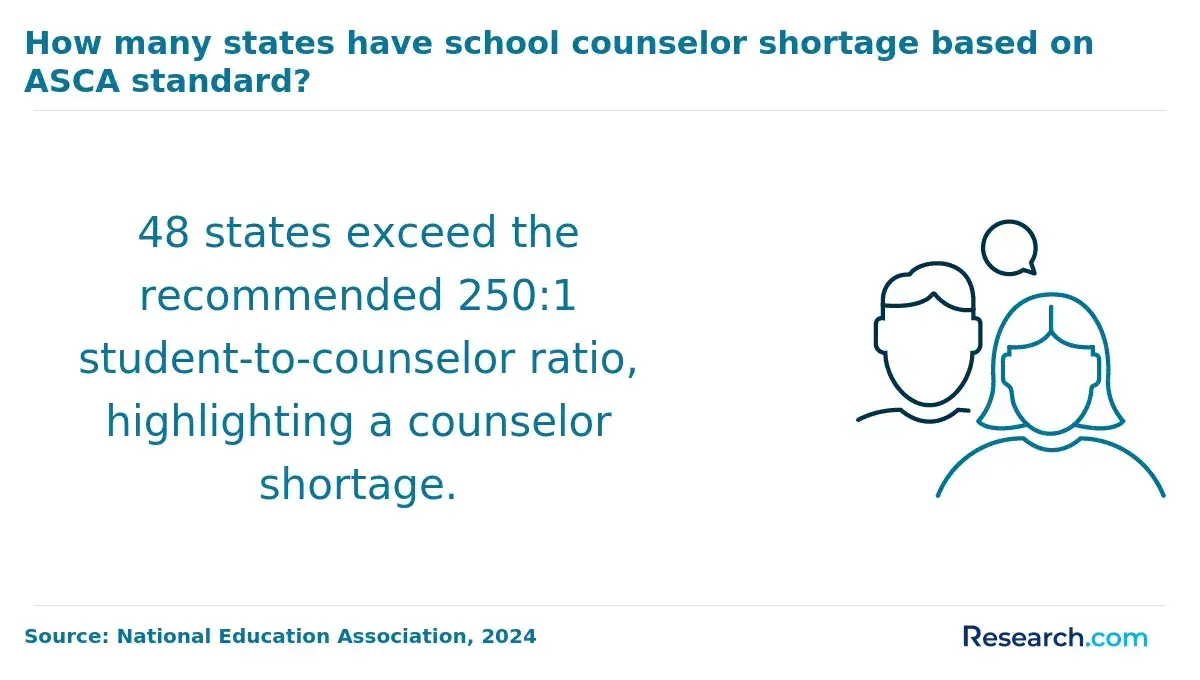
Becoming a school counselor in Nevada is a graduate-level licensing path for people who want to help K–12 students with academic planning, mental health concerns, career readiness, crisis support, and family-school coordination. The need is visible in the state’s staffing numbers: Nevada serves 484,192 students with 1,061 school counselors, or about 456 students per counselor. That ratio means many counselors work with large caseloads and must be prepared to handle both preventive programming and urgent student needs.
This guide explains how to qualify for school counselor certification in Nevada, what degree and internship experience you need, how long the process may take, how renewal works, what salary and job outlook data suggest, and how this credential differs from clinical counseling licensure. It is designed for prospective graduate students, career changers, teachers considering counseling roles, and current counselors evaluating whether Nevada is a good place to build a school-based counseling career.
Quick answer: How do you become a school counselor in Nevada?
To become a school counselor in Nevada, you generally need a graduate degree from a regionally accredited institution, at least 36 semester hours of school counseling coursework, a supervised internship of at least 280 clock hours with school-aged students, required testing such as the Praxis Professional School Counselor exam, fingerprinting, a background check, and approval for the Nevada School Counselor Endorsement through the Nevada Department of Education. Credentials must be renewed every five years.
Key facts about school counseling in Nevada
- Nevada employed 1,850 school counselors across educational settings.
- The average annual salary for school counselors in Nevada is $61,515.
- Nevada’s 484,192 students are served by 1,061 school counselors, producing an average ratio of 456 students per counselor.
- What degree do I need to become a school counselor in Nevada?
- Are there school counseling specializations in Nevada?
- How long does it take to complete a school counseling degree in Nevada?
- What certification is required to work as a school counselor in Nevada?
- Can I transfer my Nevada school counseling license between states?
- How often do Nevada school counselors need to renew their credentials?
- What are the day-to-day responsibilities of a school counselor in Nevada?
- What challenges do school counselors face in Nevada?
- What distinguishes LPC licensure requirements from school counseling certification in Nevada?
- What are the alternative pathways to become a school counselor in Nevada?
- What is the average salary of school counselors in Nevada?
- What is the job outlook for school counselors in Nevada?
- What are the career advancement opportunities for school counselors in Nevada?
What degree do I need to become a school counselor in Nevada?
Nevada school counselor candidates need graduate-level preparation that includes school counseling coursework and supervised experience with K–12 students. The degree must be from a regionally accredited college or university, and the coursework must prepare candidates for the school-based scope of practice rather than only general counseling or clinical therapy.
| Education path | Who it fits | Nevada requirement to watch |
| Master’s degree in school counseling | Students who know they want to work in K–12 schools | Must include at least 36 semester hours in school counseling coursework from a regionally accredited institution |
| Master’s degree in counseling with school counseling coursework | Counseling graduates who want to qualify specifically for school settings | Must include a minimum of 36 graduate semester hours focused on school counseling |
| Master’s degree in another field plus additional preparation | Career changers or educators whose graduate degree is not in counseling | Requires 36 semester hours of school counseling coursework and at least two years of teaching experience |
Every qualifying route must include at least 280 clock hours of supervised internship experience with school-aged students. This fieldwork matters because Nevada school counselors are expected to work with students, teachers, families, and administrators in real school environments, not only in classroom-based simulations.
If you are comparing school counseling with broader counseling careers, be careful not to assume that the fast way to become a licensed counselor is the same as the fastest way to become a school counselor. School counseling certification is tied to educator credentialing rules, school-based internship requirements, and K–12 student support competencies.
How to choose the right degree path
- Choose a school counseling master’s degree if you are starting fresh and want the cleanest route to Nevada school counselor eligibility.
- Choose a counseling master’s with school counseling coursework if you want some flexibility between school-based and counseling-related roles, but verify that the program includes the required school counseling content.
- Choose a post-master’s or additional coursework route only if you already hold a graduate degree and can document the extra coursework, internship, and teaching-experience requirements Nevada expects.
Are there school counseling specializations in Nevada?
School counseling programs in Nevada may structure their coursework around different emphasis areas, but students should treat any specialization as secondary to licensure eligibility. The most important question is not whether a program has an appealing concentration title; it is whether the curriculum, internship, accreditation status, and state-aligned coursework prepare you for the Nevada School Counselor Endorsement.
| Specialization or emphasis | What it prepares you to do | Best fit |
| Comprehensive School Counseling | Build schoolwide academic, career, and social-emotional support systems while collaborating with educators and families | Students who want a broad K–12 counseling foundation |
| ASCA National Model Emphasis | Use structured program planning, data-informed decision-making, and advocacy practices tied to the American School Counselor Association model | Candidates interested in program design and measurable student support outcomes |
| Culturally Responsive Counseling | Adapt counseling strategies to diverse cultural, linguistic, family, and community contexts | Future counselors working in Nevada’s diverse urban, suburban, and rural districts |
| Advanced Graduate Certificate in School Counseling | Add targeted school counseling preparation after a prior master’s degree | Graduate degree holders seeking additional licensure-related coursework |
| Elementary and Secondary School Counseling | Prepare for student needs that differ by developmental stage, school level, and transition point | Candidates who want to work with a specific K–12 age group |
| Leadership and Advocacy in Counseling | Develop supervision, systems leadership, and multicultural advocacy skills at an advanced level | Experienced counselors considering doctoral study or leadership roles |
Students comparing Nevada programs can also review the best rated online counseling degree programs, especially if they need flexible scheduling. However, online convenience should never replace a careful check of field placement support, Nevada coursework alignment, and whether the program can help you complete school-based internship hours.
Questions to ask before choosing a specialization
- Does this program meet Nevada school counselor endorsement requirements?
- Will I receive help finding a practicum or internship placement in a K–12 school?
- Is the program designed for people with no teaching license, or does it assume prior classroom experience?
- Does the specialization prepare me for the grade level or district setting where I want to work?
- Will the coursework support future goals such as leadership, college counseling, or clinical licensure?
How long does it take to complete a school counseling degree in Nevada?
A Nevada school counseling master’s program commonly requires 60 semester credits. Full-time students typically complete this level of graduate study in two to three years, while part-time students may need up to four years depending on course sequencing, internship timing, and personal work or family commitments. The University of Nevada, Las Vegas (UNLV), for example, offers late afternoon, evening, and some online or hybrid courses to support working adults.
The internship portion is one of the biggest scheduling factors. Because candidates must complete supervised school-based experience, your timeline may depend on district calendars, site availability, background clearance timing, and whether your program allows you to complete fieldwork while employed.
| Timeline factor | How it affects completion | Planning advice |
| Credit requirements | Many programs require 60 semester credits, which usually cannot be compressed too aggressively because courses build on one another | Ask for a term-by-term degree plan before enrolling |
| Practicum and internship | A practicum and one-year internship can shape the final year of the program | Start discussing placement requirements early, especially if you work full time |
| Licensing paperwork | Testing, transcript review, internship verification, and state processing can add weeks or months after graduation | Track deadlines and gather documents before your final term ends |
| Course format | Evening, hybrid, and online courses may improve access but may not remove in-person fieldwork obligations | Confirm which requirements must be completed on-site in schools |
Students who want to finish efficiently should avoid waiting until the final semester to understand internship rules. A well-planned program schedule can prevent delays, especially for candidates who need to coordinate graduate courses, school placements, employment, and state licensing steps.
This chart from the Bureau of Labor Statistics shows the largest employers of school and career counselors and advisors in 2023.
What certification is required to work as a school counselor in Nevada?
To work as a school counselor in Nevada public schools, candidates must obtain the Nevada School Counselor Endorsement through the Nevada Department of Education. This endorsement confirms that you have the graduate education, field experience, examination results, and background clearance required to serve students in school settings.
Steps to school counselor certification in Nevada
- Complete a qualifying graduate program. Finish a master’s or specialist-level program that includes the required school counseling coursework.
- Document supervised field experience. Provide verification of practicum or internship experience tied to school counseling practice.
- Pass the required exam. Complete the Praxis Professional School Counselor exam, test code 5421 or its successor.
- Prepare official transcripts. Submit records showing completion of your graduate degree and relevant coursework.
- Complete fingerprinting and a background check. Nevada requires this step to support student safety and educator eligibility standards.
- Apply through the state licensing portal. Submit the endorsement application, required documents, test scores, and applicable non-refundable fee.
- Maintain the credential after approval. Renew on the required cycle and complete professional development obligations.
Certification checklist for applicants
- Official graduate transcripts
- Proof of school counseling coursework
- Internship or practicum verification
- Praxis Professional School Counselor exam results
- Fingerprinting and background check documentation
- Completed Nevada Department of Education application
- Required application fee
Can I transfer my Nevada school counseling license between states?
A Nevada school counseling credential does not automatically convert into a license in every other state. If you move, the receiving state will usually review your education, testing, internship, background clearance, and current Nevada credential before deciding whether you qualify for licensure by endorsement, a provisional credential, or additional requirements.
When applying outside Nevada, expect the new state to ask for some or all of the following:
- An application for licensure by endorsement or a comparable out-of-state credential review process
- Official transcripts and proof of your Nevada school counseling license
- A review of your degree and coursework against that state’s school counselor standards
- Exam scores, which may include the Praxis School Counselor Exam or a state-specific ethics or jurisprudence test
- A criminal background check
- Additional coursework if the new state requires topics not covered in your Nevada preparation
- A temporary or provisional license if the state allows you to work while completing remaining requirements
The practical lesson is simple: do not assume portability. If you plan to relocate, contact the licensing agency in the target state before enrolling in a program or accepting a job offer. Small differences in coursework, exams, or state-mandated training can delay your start date.
A Nevada-trained counselor may be able to begin work under a provisional credential while completing extra steps, but this depends entirely on the state. Because school counselor shortages and high caseloads vary by location, states still protect their own certification standards even when they need qualified applicants.
How often do Nevada school counselors need to renew their credentials?
Nevada school counselors must renew their credentials every five years. Renewal is more than an administrative task; it is how counselors demonstrate that they remain current with professional expectations, state rules, student support practices, and required training.
| Renewal requirement | What Nevada counselors should know |
| Renewal cycle | Credentials are renewed every five years through the Nevada Department of Education’s OPAL system |
| Continuing education | Counselors must complete 90 clock hours of professional development or 6 semester credits within the five-year period; a combination is allowed |
| Submission window | Renewal applications can be started up to nine months before the license expiration date |
| Renewal fee | A $150 fee is required when the renewal application is submitted |
| Background check | A criminal background check is part of the renewal process |
| Professional development proof | Counselors must provide documentation showing completion of required hours or credits |
| Retiree provisions | Retired counselors with a Retiree License or 15+ years of Nevada service are exempt from continuing education but still must submit renewal paperwork |
| Additional endorsements | Counselors with other endorsements must provide current licensure proof from the relevant Nevada boards |
| Cultural competency training | At least one hour of diversity, equity, and inclusion training is required annually within the renewal period |
How to avoid renewal problems
- Save certificates and transcripts as soon as you complete professional development.
- Track annual cultural competency training instead of trying to reconstruct it near renewal time.
- Start the OPAL renewal process early, especially if you need a background check or board verification.
- Confirm whether any additional endorsements have separate documentation requirements.
What are the day-to-day responsibilities of a school counselor in Nevada?
School counselors in Nevada support students across academic, career, social, and emotional domains. Their work can include direct counseling, crisis response, classroom lessons, referral coordination, college and career planning, consultation with teachers, meetings with families, and documentation. In districts with high student-to-counselor ratios, counselors often have to prioritize urgent needs while still building preventive programs that help many students at once.
| Responsibility area | Examples of daily work |
| Academic support | Monitor student progress, help with course planning, identify barriers to graduation, and coordinate interventions |
| Social-emotional counseling | Provide individual or group support for stress, peer conflict, grief, family concerns, or adjustment issues |
| Crisis response | Support students during safety concerns, emotional crises, bullying incidents, or schoolwide emergencies |
| College and career readiness | Guide students through career exploration, applications, financial aid conversations, and postsecondary planning |
| Family and staff collaboration | Coordinate with parents, teachers, administrators, community agencies, and support teams |
| Records and ethics | Maintain confidential documentation, follow mandated reporting rules, and apply ethical decision-making |
If you are trying to enter this field as efficiently as possible, compare the school counseling pathway with the fastest way to become a counselor in Nevada. The right route depends on whether your goal is K–12 school certification, clinical counseling, community-based counseling, or another student support role.
What challenges do school counselors face in Nevada?
Many Nevada school counselors work under pressure from large caseloads, limited time, and competing administrative demands. The student-to-counselor ratio of 456:1 indicates that counselors may have to serve hundreds of students while still responding to urgent mental health, academic, attendance, and family concerns.
Common challenges in Nevada school counseling
- High caseloads: Large student populations can make it difficult to provide frequent one-on-one support.
- Resource gaps: Some schools have limited access to outside mental health providers, community agencies, or specialized services.
- Administrative workload: Paperwork, compliance tasks, scheduling duties, and testing responsibilities can reduce time for direct counseling.
- Diverse student needs: Counselors may support students across different languages, cultures, family structures, economic situations, and educational backgrounds.
- Crisis intensity: Student mental health concerns require careful triage, referral networks, and collaboration with families and school teams.
Professionals who want a role with a deeper focus on assessment, special education evaluation, and school-based psychological services may also compare this path with how to become a school psychologist in Nevada. The two careers overlap in student support but differ in training, credentialing, and scope of practice.
What distinguishes LPC licensure requirements from school counseling certification in Nevada?
School counseling certification and Licensed Professional Counselor licensure serve different professional purposes in Nevada. A school counselor credential authorizes practice in K–12 educational settings, while LPC licensure is designed for broader clinical counseling practice, including settings outside schools and potential private practice pathways.
| Credential | Primary setting | Main focus | Key difference |
| Nevada School Counselor Endorsement | K–12 schools | Academic, career, social-emotional, and school-based student support | Built around educator credentialing and school counseling preparation |
| LPC licensure | Clinical, community, agency, and possible private practice settings | Diagnosis-informed counseling, therapy, treatment planning, and broader clinical services | Requires additional supervised clinical hours, targeted exams, and ongoing professional education beyond school certification |
If your long-term goal includes independent clinical practice, review the LPC licensure requirements in Nevada before choosing a graduate program. A school counseling degree may not automatically satisfy all clinical licensure requirements, and completing the wrong program can add time and cost later.
What are the alternative pathways to become a school counselor in Nevada?
Nevada has options for candidates who did not begin in a traditional school counseling program, but alternative pathways still require graduate-level coursework, field experience, testing, and state approval. These routes can help career changers, teachers, and graduate degree holders move toward school counseling without restarting their entire education.
| Alternative route | Who should consider it | Important caution |
| Alternative Route to Licensure (ARL) programs | Candidates with a bachelor’s degree who do not already hold a teaching license | Conditional licensure does not remove coursework, testing, or internship obligations |
| Post-baccalaureate certificate programs | Students who need targeted school counseling coursework after earlier study | Confirm the certificate aligns with Nevada endorsement requirements |
| Provisional or conditional licensure | Candidates close to meeting requirements who need to work while completing remaining steps | These options are usually time-limited and may require completion within three years |
| Graduate coursework plus relevant experience | Professionals with related counseling, education, youth work, or human services backgrounds | Experience alone is not enough if required graduate coursework and internship hours are missing |
| Alternative certification programs | Applicants seeking flexible or self-paced preparation, including options such as Teachers of Tomorrow | Always verify state approval and school counseling eligibility before enrolling |
Alternative pathways can be useful, but they are not shortcuts around professional preparation. Before committing, ask the provider to show how its courses, supervised experience, and exam preparation connect directly to Nevada school counselor certification. You can also compare related careers with counseling degree options if you are still deciding between school counseling, mental health counseling, career counseling, or another specialization.
Common mistakes to avoid when choosing a pathway
- Choosing a program before checking Nevada requirements: A counseling program may be reputable but still not include the right school counseling coursework.
- Assuming online means fully remote: Even online programs usually require in-person fieldwork with students.
- Focusing only on tuition: Fees, travel to internship sites, exam costs, and lost work hours can affect total cost.
- Ignoring accreditation and regional approval: Nevada requires the degree to come from a regionally accredited institution.
- Waiting too long to plan internships: School placements may depend on district calendars and availability.
- Confusing school counseling with LPC licensure: The credentials differ, and one may not fully satisfy the other.
What is the average salary of school counselors in Nevada?
The average annual salary for school counselors in Nevada is $61,515. Actual pay can vary by district, school level, years of experience, education level, collective bargaining agreements, local funding, and whether the position is in an urban, suburban, rural, or nonmetropolitan area.
Factors that can affect salary
- Location within Nevada: Pay may differ between major metro areas such as Las Vegas or Reno and nonmetropolitan regions such as Elko and rural northern areas.
- Experience level: Counselors with more years in the field often move higher on district salary schedules.
- Education and credentials: Advanced degrees, endorsements, and approved professional development can influence compensation depending on district policy.
- School level and assignment: Elementary, middle, and high school roles can involve different responsibilities and district priorities.
- District funding: Salary schedules and benefits depend heavily on local district budgets and negotiated agreements.
- Labor demand: Areas with staffing shortages may use compensation, benefits, or hiring incentives to compete for qualified candidates.
Salary should be evaluated alongside workload. A higher-paying role with an extremely high caseload may not feel sustainable, while a slightly lower-paying district with stronger counseling support, supervision, and manageable expectations may offer better long-term fit.
What is the job outlook for school counselors in Nevada?
The employment outlook for Nevada school counselors is positive based on the available projection data. Employment is expected to grow by 10% between 2022 and 2032. Nevada had about 1,850 school counselors in 2022, with projected employment rising to 2,040 by 2032. The state also expects about 150 job openings each year.
Several conditions support continued demand for school counselors in Nevada:
- Student enrollment pressure: Growing communities in areas such as Las Vegas and Reno increase the need for student support staff.
- Mental health awareness: Schools are paying closer attention to student anxiety, stress, crisis response, and referral coordination.
- College and career readiness: Students need help navigating graduation requirements, postsecondary options, workforce pathways, and financial planning.
- Equity and access needs: Counselors help identify barriers that affect attendance, academic progress, family engagement, and student belonging.
- Ongoing vacancies and turnover: The projected 150 job openings each year suggest steady replacement and growth opportunities.
For students who need a lower-cost route into the profession, reviewing affordable online colleges for counseling degree options can be a practical starting point. Just make sure any program you consider can support Nevada’s school counseling coursework and fieldwork requirements.
Current trends affecting Nevada school counselors
- More complex student needs: Counselors are increasingly expected to support academic planning and student well-being at the same time.
- Data-informed counseling programs: Schools often expect counselors to use attendance, achievement, behavior, and graduation data to identify students who need support.
- Digital tools and AI: Technology may help with scheduling, documentation, college search tools, and communication, but it does not replace ethical judgment, relationship-building, crisis response, or student advocacy.
- Greater focus on career pathways: Counselors are helping students connect high school planning with college, training, military, apprenticeship, and workforce options.
- Demand for culturally responsive practice: Nevada’s diverse student population requires counselors who can work effectively across languages, cultures, and family systems.
What are the career advancement opportunities for school counselors in Nevada?
School counseling can lead to leadership, specialization, and adjacent education roles. With 1,061 school counselors serving 484,192 students at an average of 456 students per counselor, experienced professionals may find opportunities to improve counseling systems, supervise programs, support district initiatives, or move into broader student services leadership.
| Advancement option | What the role may involve | Preparation that helps |
| Lead or head school counselor | Coordinate counseling services, mentor counselors, and manage schoolwide counseling priorities | Strong school counseling experience and leadership skills |
| District counseling coordinator or director | Oversee counseling programs across multiple schools and align services with district goals | Master’s degree, experience, and possible administrative credentials |
| School administrator | Move into assistant principal, principal, or other school leadership roles | Nevada administrative credentials and leadership-focused graduate study |
| Specialized counselor | Focus on college readiness, equity initiatives, crisis response, mental health coordination, or career pathways | Targeted professional development and relevant certifications |
| Professional association leader | Participate in advocacy, policy work, mentoring, and professional learning through organizations such as NvSCA | Professional involvement and commitment to statewide counseling issues |
| Postsecondary or community college counselor | Support students in higher education advising, transfer planning, career development, or student services | Additional experience and coursework aligned with college student populations |
| Workforce development specialist | Connect students with career pathways, employers, training programs, and community partners | Knowledge of education-to-career systems and local labor needs |
Counselors who want to strengthen their qualifications or shift into leadership may compare a list of most affordable online masters in counseling degree programs. If you already hold a qualifying master’s degree, ask whether additional certificates, administrative credentials, or doctoral study would be more useful than earning a second master’s.
What do school counselors in Nevada say about their careers?
- My school counseling training at the University of Nevada, Reno prepared me for the realities of working with Nevada students. Once I started in a local school, I saw how academic support, personal counseling, and future planning all connect. The stability of the profession matters to me, but the most meaningful part is helping students build confidence and picture options they may not have considered before. - Adie
- Starting my counseling career in a Nevada school showed me how different students’ needs can be across urban and rural communities. Ongoing workshops and professional learning have helped me keep improving, and collaboration with teachers and administrators is a major part of the work. I value being able to advocate for mental health, academic progress, and student belonging in a state with such a varied population. - Jinu
- After graduating from the counseling program at Nevada State College, I grew quickly because the work required me to listen closely to students whose lives were shaped by culture, economics, family responsibilities, and school access. That experience made me more committed to inclusive counseling systems. I also see room to keep advancing professionally while staying connected to student support. Lita
How to decide if becoming a school counselor in Nevada is worth it
This career can be worth pursuing if you want a student-centered role with meaningful impact, steady projected demand, and a clear graduate-level credentialing pathway. It may not be the best fit if you want a low-caseload counseling role, quick entry without graduate study, or independent clinical practice without additional LPC preparation.
| Choose this path if... | Consider another path if... |
| You want to work directly with K–12 students in schools | You primarily want to provide long-term clinical therapy in private practice |
| You are comfortable balancing counseling, documentation, collaboration, and crisis response | You want a role with minimal administrative responsibilities |
| You can commit to graduate study, internship hours, testing, and licensure steps | You need a career that does not require a master’s-level credential |
| You are motivated by academic, career, and social-emotional student development | You prefer adult counseling, organizational work, or healthcare-based mental health practice |
| You can manage high caseload pressures while advocating for students | You need predictable one-on-one caseloads with limited schoolwide responsibilities |
Practical next steps for future Nevada school counselors
- Confirm the credential you want. Decide whether your goal is the Nevada School Counselor Endorsement, LPC licensure, school psychology, or another counseling-related path.
- Review program requirements carefully. Look for regional accreditation, required school counseling coursework, internship structure, exam preparation, and Nevada alignment.
- Ask about field placement support. A strong program should explain how students secure supervised experience with school-aged students.
- Compare total cost, not only tuition. Include books, fees, background checks, testing, transportation, technology, and possible reduced work hours.
- Plan for the Praxis exam early. Build exam preparation into your program timeline instead of treating it as a last-minute step.
- Keep documentation organized. Save syllabi, transcripts, internship logs, supervisor forms, background check records, and professional development certificates.
- Talk to Nevada districts before graduation. Ask about caseloads, supervision, salary schedules, benefits, school assignments, and support for new counselors.
Key Insights
- Becoming a school counselor in Nevada requires graduate education, school counseling coursework, supervised K–12 internship experience, testing, background clearance, and state endorsement.
- The most direct academic route is a master’s degree in school counseling, but candidates with other graduate degrees may qualify if they complete 36 semester hours of school counseling coursework and meet additional requirements.
- Nevada school counselors must complete at least 280 clock hours of supervised internship experience with school-aged students.
- Credentials renew every five years, with 90 clock hours of professional development or 6 semester credits required during the renewal period, along with other renewal steps.
- The average annual salary is $61,515, but actual earnings depend on district, location, experience, education, and funding.
- Employment is projected to grow by 10% between 2022 and 2032, rising from around 1,850 school counselors in 2022 to 2,040 by 2032, with about 150 openings each year.
- School counseling certification is not the same as LPC licensure. If you want independent clinical practice, review LPC requirements before choosing a program.
- Because Nevada’s student-to-counselor ratio is about 456:1, future counselors should prepare for high caseloads, strong collaboration demands, and the need for efficient, data-informed student support systems.
Related Articles for Nearby States
- 2027 How to Become a School Counselor in California
- 2027 How to Become a School Counselor in Oregon
- 2027 How to Become a School Counselor in Idaho
- 2027 How to Become a School Counselor in Arizona
- 2027 How to Become a School Counselor in Utah
- 2027 How to Become a School Counselor in Washington
- 2027 How to Become a School Counselor in Montana
- 2027 How to Become a School Counselor in Wyoming
- 2027 How to Become a School Counselor in Colorado
- 2027 How to Become a School Counselor in New Mexico
References:
- American School Counselor Association (2023). Student-to-School-Counselor Ratio 2022–2023. Retrieved from https://www.schoolcounselor.org/getmedia/a988972b-1faa-4b5f-8b9e-a73b5ac44476/ratios-22-23-alpha.pdf
- CACREP (2023). CACREP Vital Statistics 2022. Retrieved from https://www.cacrep.org/wp-content/uploads/2023/09/2022-Vital-Statistics-Report.pdf
- O*Net OnLine (n.d.). Nevada Employment Trends 21-1012.00 - Educational, Guidance, and Career Counselors and Advisors. Retrieved from https://www.onetonline.org/link/localtrends/21-1012.00?st=NV
- US BLS (2025). School and Career Counselors and Advisors. Retrieved from https://www.bls.gov/ooh/community-and-social-service/school-and-career-counselors.htm#tab-3
- ZipRecruiter (2025). What Is the Average School Counselor Salary by State. Retrieved from https://www.ziprecruiter.com/Salaries/What-Is-the-Average-School-Counselor-Salary-by-State
Other Things You Should Know About Being a School Counselor in Nevada
To become a licensed school counselor in Nevada in 2027, you must pass the Praxis Professional School Counselor exam with a qualifying score. This exam assesses knowledge crucial for school counseling roles, ensuring candidates meet the state's professional standards.
The Nevada Department of Education issues school counselor licensure through the Office of Educator Licensure. Applicants submit graduate transcripts, a fingerprint-based background check, and proof of the required school counseling preparation before a license can be issued.