2027 AI Bachelor's Degree Programs With Introductory Coding Bootcamps

Co-Founder and Chief Data Scientist
Many professionals with degrees in unrelated fields find themselves eager to enter the artificial intelligence sector but face steep barriers due to limited coding experience and lack of formal AI education. Traditional bachelor's degree programs often require extensive prior knowledge and offer inflexible schedules, making it difficult for working adults to transition smoothly.
AI bachelor's degrees combined with introductory coding bootcamps present a viable pathway for these learners, blending foundational programming skills with specialized AI coursework. This article outlines available programs designed for career changers seeking flexible, accredited routes to move confidently into artificial intelligence roles.
Key Things You Should Know
- AI bachelor's programs integrate foundational theory with practical coding bootcamps, enhancing job readiness by teaching both concepts and hands-on skills in languages like Python and R.
- By 2026, over 60% of U.S. institutions offering AI degrees include introductory coding bootcamps, reflecting demand for graduates proficient in programming and data analysis.
- Students completing combined AI degrees and coding bootcamps report 25% higher employment rates within six months compared to those without bootcamp experience.
What is an AI bachelor's degree program with an introductory coding bootcamp?
An AI bachelor's degree program with an introductory coding bootcamp combines a four-year undergraduate curriculum in artificial intelligence fundamentals with an accelerated coding training module. This bootcamp typically occurs at the start of the program or is integrated into coursework to help students with little to no programming experience gain essential skills quickly.
It focuses on core programming languages like Python, Java, and R, and essential coding techniques that support AI studies, such as machine learning and data analysis. Such undergraduate artificial intelligence degrees with coding bootcamp components help close a significant gap in computer science education.
Bootcamps often last 6 to 12 weeks and emphasize hands-on projects and real-world coding challenges. This approach ensures students are prepared for demanding AI courses, which require proficiency in scripting, data manipulation, and software frameworks. Employers increasingly expect graduates to possess practical AI and coding skills immediately upon entering the workforce.
Supporting this, 78% of learners in Coursera's Global Skills Report expressed a desire for GenAI training from employers. Programs vary and may offer online or hybrid bootcamp formats or embed coding modules within semester courses. It is important for prospective students to review bootcamp durations, programming languages taught, and curriculum alignment with AI subfields of interest.
Candidates new to coding benefit most, while experienced programmers may focus on advanced AI theory. For more insight into 'What jobs can you get with an AI degree?' students can explore career options aligned with these educational paths.
Which accredited colleges offer AI bachelor's programs that include coding bootcamps?
Top accredited universities with AI bachelor's degrees and integrated coding bootcamp options in the US include Northeastern University, Carnegie Mellon University, and the University of Florida. These programs blend comprehensive AI studies with hands-on bootcamps teaching essential software development skills like Python, TensorFlow, and Java. Carnegie Mellon's curriculum uniquely integrates coding sprints alongside AI theory.
Integrated coding bootcamps address common challenges students face transitioning theoretical AI knowledge into practical programming ability, which is crucial for immediate employment. These bootcamps typically last 8 to 12 weeks and focus on industry-standard languages such as Python and C++. Students build portfolios by developing machine learning models, neural networks, and automation scripts.
The Integrated Postsecondary Education Data System (IPEDS) 2024-2025 indicates a rapid increase in U.S. colleges offering AI-related degrees with embedded coding bootcamps. This reflects growing demand for graduates proficient in both AI concepts and software engineering. Prospective students should verify accreditation through regional agencies and investigate if degree programs include coding bootcamp components and partnerships with tech companies.
For those looking to compare costs, researching an affordable data science degree can be a helpful step alongside selecting AI bachelor's programs with coding bootcamps.
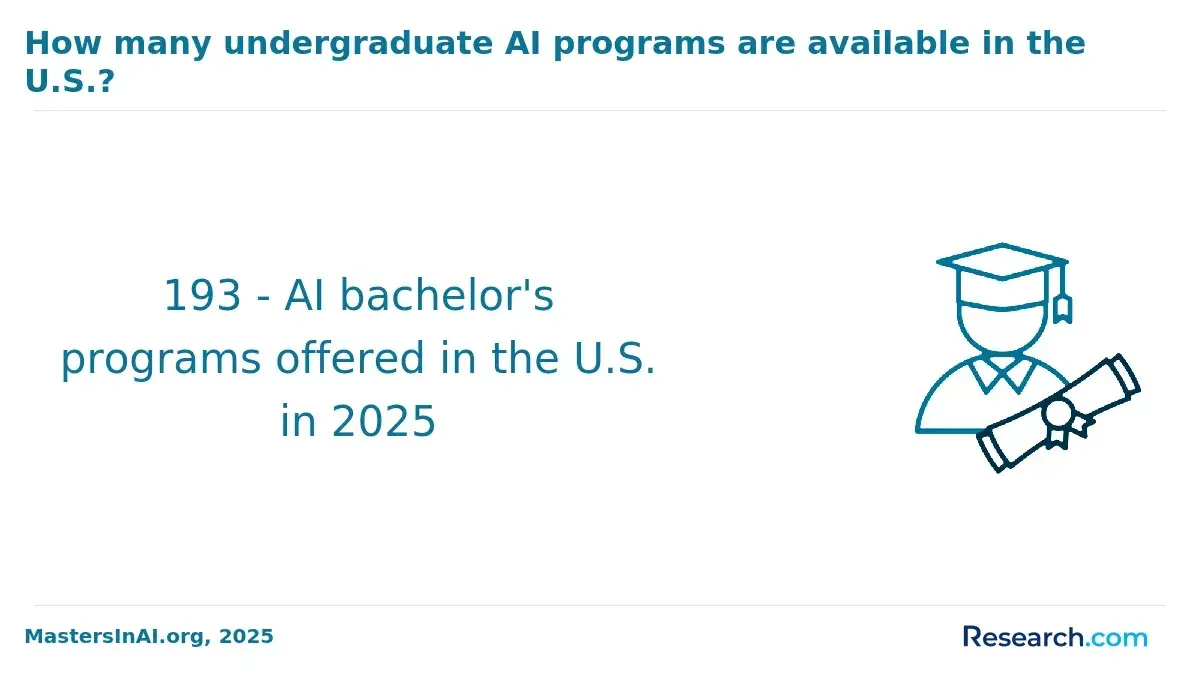
How do these AI programs compare for online vs on-campus learning?
Online vs on-campus artificial intelligence bachelor's degree comparisons highlight key differences in flexibility, learning environments, and access to resources. Online programs offer adaptable schedules ideal for working professionals and students in remote locations, supporting a broad range of learner needs.
In contrast, on-campus programs provide structured settings with face-to-face interactions and immediate access to campus facilities. Hybrid learning in artificial intelligence programs often integrates coding bootcamps that focus on essential languages like Python and R. Many online courses use interactive modules and real-time coding exercises.
Meanwhile, on-campus bootcamps may provide dedicated labs and immediate instructor feedback, facilitating deeper mastery of complex topics. Research indicates strong student demand for programs offering flexible AI-related skills training. Wiley's report shows 60% of students are more inclined to choose universities with such options.
Prospective students should align their preferences and career goals; immersive research and lab work often favor on-campus tracks, while self-paced, cost-effective online degrees benefit those seeking flexibility. Both online and on-campus degrees gain employer recognition when they include rigorous coding and AI tools training.
Accreditation and curriculum rigor remain critical. For those interested in exploring various options, consulting online degrees in AI can provide valuable guidance.
What coursework and projects are typical in AI degrees with bootcamp-style coding?
AI bachelor's degree programs with an introductory coding bootcamp curriculum in AI programs focus heavily on practical coursework and hands-on coding projects. Students cover foundational programming, including Python, data structures, and algorithms, accelerated through intensive bootcamps tailored for rapid skill development in software engineering essentials applicable to AI.
Hands-on projects often involve end-to-end machine learning pipelines with real-world datasets, such as image recognition and natural language processing. Students build and deploy deep learning models using frameworks like TensorFlow and PyTorch, reflecting trends seen in professional practice.
Coursework integrates crucial mathematics-linear algebra, calculus, probability, and statistics-to design algorithms like convolutional and recurrent neural networks, as well as reinforcement learning agents. Capstone projects and hackathon-style challenges foster collaboration and simulate workplace agility, emphasizing version control, documentation, and debugging.
Ethics, data privacy, and responsible AI development are also key topics, ensuring graduates balance theory with strong programming skills to be job-ready in AI and machine learning roles. Prospective students should ensure programs provide a balanced AI degree coursework and hands-on coding projects approach to maximize career readiness.
For those considering advanced study, exploring online master's in data science can further enhance expertise and opportunities.
What programming languages and tools do students learn in the coding bootcamp?
Coding bootcamps linked to AI bachelor's degree programs prioritize Python due to its dominance and versatility in the field. Python remains the most popular language among developers. Students learn Python fundamentals such as syntax, control flow, and data types, alongside libraries like NumPy, pandas, and Matplotlib for data processing and visualization.
Further instruction includes Python frameworks like TensorFlow and PyTorch, which are essential for building machine learning models. In addition to Python, students gain familiarity with web technologies like HTML, CSS, and JavaScript to create user interfaces and deploy AI-powered web applications.
Version control systems, including Git and platforms like GitHub or GitLab, are integral to collaborative workflows. They help students manage code changes and contribute to open-source AI projects effectively. Some programs expand their curriculum with languages such as R, particularly for statistical analysis, and include both SQL and NoSQL databases for handling extensive AI datasets.
Training in popular IDEs like Jupyter Notebooks, VS Code, or PyCharm further supports coding, debugging, and project management. This blend of languages, tools, and frameworks prepares students with the technical skills demanded by entry-level AI roles, improving job readiness right after graduation.
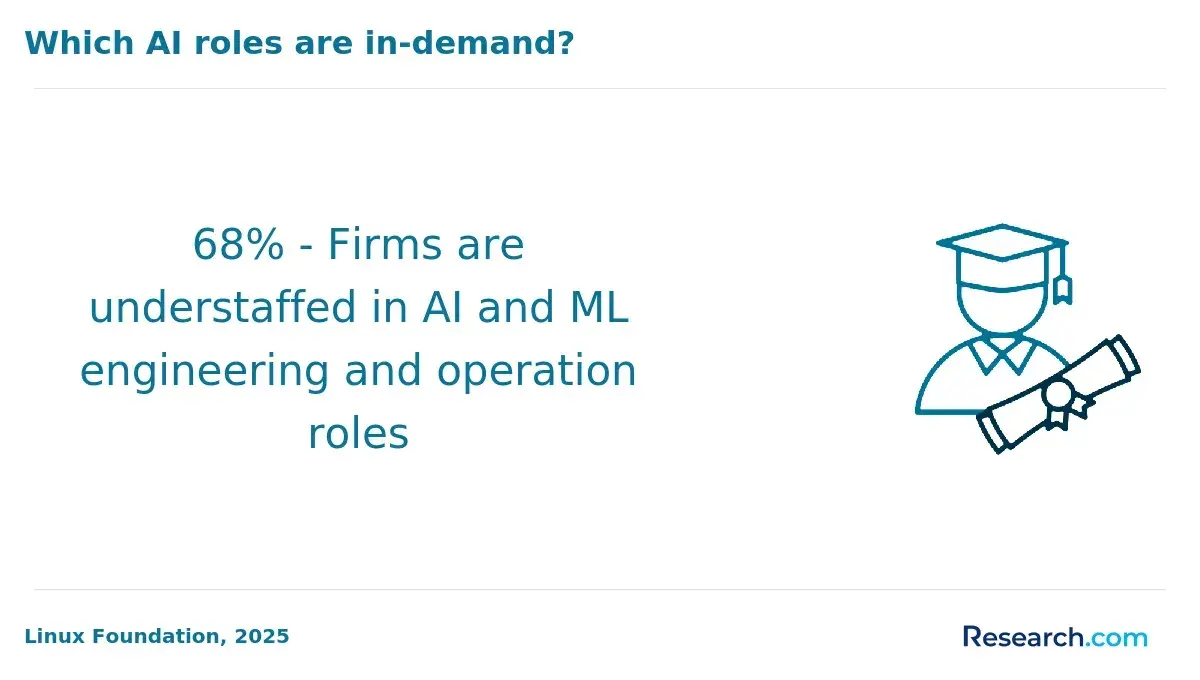
What admissions requirements and prerequisites do AI bachelor's programs usually have?
AI bachelor's degree programs usually expect a strong background in mathematics and science. Applicants generally need high school courses in algebra, geometry, calculus, and one or more science subjects like physics or chemistry. Programming experience is recommended but often not mandatory, with skills in languages such as Python or Java improving admission chances.
Academic performance plays a key role in the admissions process, even as standardized test scores are less emphasized due to growing test-optional policies. Many schools look for a minimum 3.0 GPA on a 4.0 scale. Applicants should check if the specific program requires SAT or ACT results.
Additional requirements may include personal statements focused on technical interests, letters of recommendation from math or science teachers, interviews, or portfolios showcasing coding projects. Prerequisites vary by program:
- Some demand strong math and science preparation with calculus readiness before enrollment.
- Others provide integrated coding bootcamps for applicants with minimal coding experience but stress eagerness to learn.
- Conditional admission options may require completing foundational courses during the first year.
Prospective students should review each program's admissions criteria carefully and build skills in math and programming to improve their chances and facilitate a smooth transition into the AI curriculum.
How long do AI bachelor's programs take, and what do they cost?
AI bachelor's degree programs in the U.S. usually take four years of full-time study. This includes core courses in computer science, mathematics, and statistics, as well as specialized topics like machine learning, natural language processing, and robotics. Some schools offer accelerated tracks that allow students to finish in three years by taking extra credits or summer sessions.
Part-time options are available for working students, potentially extending the timeline beyond four years. Tuition costs vary widely based on institution type and residency. Public four-year in-state universities generally charge about $11,000 per year in tuition and fees. Out-of-state students often pay two to three times that amount, while private institutions typically exceed $30,000 annually.
Additional expenses include textbooks, housing, and supplies, which should be factored into overall costs. Introductory coding bootcamps focused on essential programming skills for AI, such as Python and data structures, usually last 8 to 12 weeks. These bootcamps can cost between $7,000 and $15,000 if taken separately
Students interested in more affordable options might consider public universities with AI concentrations or online degrees. Combining an AI bachelor's degree with intensive coding bootcamp training enhances practical skills and improves employability in AI-related roles that require both theoretical knowledge and hands-on experience.
What careers can you get with an AI bachelor's degree plus coding bootcamp?
An AI bachelor's degree combined with an introductory coding bootcamp equips graduates for diverse tech careers. According to the World Economic Forum's Future of Jobs Report 2025, AI and machine learning specialists are among the fastest-growing roles through 2030.
Typical career options include machine learning engineer, data scientist, AI software developer, and automation specialist. Machine learning engineers create algorithms that enable systems to learn from data, while data scientists analyze complex datasets to provide actionable insights.
AI software developers embed AI models into applications across healthcare, finance, and robotics. Automation specialists use AI to streamline repetitive tasks and improve efficiency. Other roles include natural language processing (NLP) engineer, computer vision engineer, AI product manager, and AI ethics analyst.
Python, R, or JavaScript proficiency is essential, skills often developed in coding bootcamps. Certifications and portfolio projects from bootcamps offer credible proof of applied expertise. Entry-level salaries range from $70,000 to $90,000, with rapid growth fueled by AI's expanding impact in automotive, cybersecurity, and marketing analytics industries.
What salaries can AI bachelor's graduates expect in common entry-level roles?
The median annual wage for software developers with a bachelor's in artificial intelligence and coding bootcamp experience is about $130,000, according to the U.S. Bureau of Labor Statistics. Entry-level roles such as machine learning engineer, data analyst, or AI software developer typically earn between $90,000 and $130,000, with higher salaries in tech hubs like San Francisco or New York ranging from $120,000 to $130,000.
Positions like AI research assistants or junior data scientists usually start around $80,000 to $110,000, with salary growth linked to skills in Python, TensorFlow, and cloud services-key areas emphasized in many bootcamp programs. Combining a bachelor's degree with a coding bootcamp can strengthen practical expertise and justify salaries at the upper end of the entry-level spectrum.
Targeting companies engaged in AI innovation, especially in finance or healthcare sectors, often results in better compensation. Remote or contract AI development roles may offer varied salaries but allow for negotiation based on in-demand skills. Practical experience in model deployment is highly valued across these positions.
Which certifications complement an AI bachelor's degree and coding bootcamp training?
Certifications play a crucial role in bridging the gap between theoretical knowledge from an AI bachelor's degree and practical skills gained through coding bootcamps. Industry-recognized credentials include the Microsoft Certified: Azure AI Engineer Associate, Google Professional Machine Learning Engineer, and IBM AI Engineering Professional Certificate. These validate real-world capabilities in areas like natural language processing, computer vision, and deploying machine learning pipelines.
Vendor-neutral certifications like the Certified Artificial Intelligence Practitioner (CAIP) and TensorFlow Developer Certificate complement formal education by emphasizing hands-on coding skills across different AI frameworks. These certifications demonstrate proficiency in industry-standard tools such as Python, TensorFlow, and PyTorch, which are essential for roles that demand technical implementation beyond academic theory.
According to LinkedIn's 2024 Workplace Learning Report, AI skill development remains the top priority for global learning and development. Combining a bachelor's degree and bootcamp experience with these targeted certifications significantly enhances employability in competitive fields like AI engineering, data science, and research institutions.
Other Things You Should Know About Artificial Intelligence
Prospective students should have a solid grasp of mathematics, particularly linear algebra, calculus, and statistics, as these are essential for understanding AI algorithms. Basic programming experience, especially in languages like Python, can also help students adapt more quickly to the bootcamp's coding components.
Coding bootcamps provide immersive, hands-on coding practice that complements theoretical coursework, allowing students to develop real-world programming skills quickly. They emphasize practical problem-solving, project development, and the use of industry-standard tools, which better prepare students for AI roles after graduation.
In 2027, AI bachelor's programs with coding bootcamps often offer a range of support services including tutoring, career counseling, and access to alumni networks. These services are designed to assist students academically and professionally, enhancing their learning experience and career readiness in the competitive AI field.
Graduates can explore diverse career paths, including AI engineering, data science, and machine learning research. Additionally, roles in AI applications within specific sectors like healthcare are growing. The skills gained may also complement advanced studies like an MSc healthcare artificial intelligence.
References
- Top AI Certifications for 2026: A Guide to Advancing Your Tech Career | DataCamp https://www.datacamp.com/blog/top-ai-certifications
- Prepare for the Future of Tech with a Bachelor’s in AI | UMGC https://www.umgc.edu/blog/umgc-bachelors-degree-artificial-intelligence
- What Do You Learn at a Coding Bootcamp? A Graduate's Experience - ComputerScience.org https://www.computerscience.org/bootcamps/resources/what-do-you-learn-coding-bootcamp/
- B.Sc. in Artificial Intelligence https://www.studyinpoland.pl/en/programme
- Online AI Degrees vs On-Campus: Which Is Right for You in 2026? https://aidegreeonline.com/online-ai-degrees-vs-on-campus-which-is-right-for-you-in-2026/
- Artificial Intelligence Jobs + Career Path for Bootcampers https://www.coursereport.com/blog/artificial-intelligence-jobs-career-path-for-bootcampers
- International Bachelor of Science in AI https://psl.eu/en/education/international-bachelor-science-ai
- Best AI Programming and Developer Courses and Certifications https://learnprompting.org/blog/ai-programming-and-developer-courses-certifications
- Best Online AI Degrees: 2025 Rankings & Program Directory - MastersInAI.org https://www.mastersinai.org/degrees/online-artificial-intelligence-degrees/
- Google AI Professional Certificate - Grow with Google https://grow.google/ai-professional-control/