2027 Best On-Campus Master's Degrees in Artificial Intelligence

Co-Founder and Chief Data Scientist
Many professionals with unrelated undergraduate degrees face a daunting challenge when seeking to enter the artificial intelligence field. The rapid tech evolution demands specialized skills not covered in their previous studies, creating a barrier to career pivoting. Additionally, finding on-campus programs that offer flexible, accredited learning while balancing work commitments complicates the pursuit.
Without strategic guidance, applicants risk enrolling in programs that misalign with career goals or lack industry recognition. This article outlines the best on-campus master's degrees in artificial intelligence for 2027, focusing on quality, flexibility, and accreditation to help prospective students make informed choices.
Key Things You Should Know
- The demand for on-campus master's degrees in artificial intelligence surged by 22% from 2024 to 2025, reflecting growing industry needs for AI professionals.
- Top programs emphasize interdisciplinary skills, combining AI theory with practical applications in data science, machine learning, and robotics.
- The median salary for graduates within a year of earning these degrees rose to $115,000 in 2025, highlighting strong career prospects in the U.S. market.
What are the top-ranked on-campus master's programs in artificial intelligence offered by accredited U.S. universities?
Top-ranked on-campus master's degrees in artificial intelligence in the U.S. are offered by universities known for rigorous curricula and pioneering research. Carnegie Mellon University stands out with its Master of Science in Artificial Intelligence and Innovation, integrating machine learning, robotics, and natural language processing, alongside practical experience in AI labs and collaborations with industry leaders.
Stanford University offers a selective Master's in Computer Science with an AI specialization, leveraging Silicon Valley's ecosystem. Its curriculum includes deep learning, computer vision, and ethical AI, preparing graduates for both academic and technology careers. The University of California, Berkeley's Master of Engineering focuses on artificial intelligence and data science, combining strong theoretical foundations with hands-on projects.
Georgia Institute of Technology's Master of Science in Computer Science with an AI thread is recognized for affordable tuition and flexible part-time, in-person options. The program covers critical AI topics such as reinforcement learning and applications in healthcare and cybersecurity. These offerings are part of the best accredited U.S. universities offering master's programs in artificial intelligence, noted for faculty expertise, research funding, and graduate success.
Program length, research opportunities, and industry connections should be key considerations for prospective students. Carnegie Mellon's program usually takes 16 months full-time, while Georgia Tech supports flexible pacing. For those exploring options beyond on-campus programs, accelerated computer science programs provide alternative pathways to advanced AI education.
What are the typical admission requirements and prerequisites for on-campus AI master's degree programs?
Admission requirements for on-campus master's degrees in artificial intelligence typically include a bachelor's degree in a related field such as computer science, engineering, mathematics, or statistics. Many programs look for foundational coursework in programming, data structures, algorithms, linear algebra, and calculus. Some universities may accept applicants from different disciplines if they demonstrate strong quantitative and technical skills through additional courses or work experience. This is an important consideration for those researching typical admission requirements for on-campus artificial intelligence master's programs.
Standardized tests like the GRE remain required by many institutions, though an increasing number waive this for applicants with relevant research, professional experience, or exceptional academic records. Competitive GRE quantitative scores often improve admission chances. Letters of recommendation, a statement of purpose detailing interest and goals in AI, and sometimes a resume highlighting relevant projects or internships are commonly requested.
Prerequisites for on-campus master's degrees in artificial intelligence in the United States vary widely. Some top-tier programs require prior exposure to machine learning or AI concepts, while others provide foundational courses during the master's curriculum. International students generally must prove English proficiency through TOEFL or IELTS exams. Admissions committees emphasize a strong academic background, quantitative skills, and proven motivation to thrive in rigorous AI coursework.
Enrollment in AI-focused master's degrees surged 74% from 2020 to 2023 across leading U.S. universities, reflecting growing interest. Prospective students should carefully review specific program prerequisites and tailor their preparation to enhance admission prospects. For those seeking affordable options, the cheapest data science masters in usa rankings may offer valuable guidance.
How long do on-campus master's degrees in artificial intelligence take to complete, and what is the average total cost?
On-campus master's degrees in artificial intelligence in the United States typically require 18 to 24 months for full-time students, with part-time options extending to three or more years depending on course load and research commitments. Programs generally mandate completion of 30 to 36 credit hours, covering core topics like machine learning, natural language processing, robotics, alongside electives and a thesis or capstone project. The duration of on-campus master's degrees in artificial intelligence varies based on these factors.
The average total tuition cost for on-campus artificial intelligence master's programs in the US ranges widely. Public universities usually charge between $20,000 and $40,000 for in-state students, while out-of-state and private institutions may cost from $40,000 up to $70,000 or more, excluding living expenses and materials. Prestigious programs at institutions such as Carnegie Mellon and Stanford tend to be at the higher end of this scale.
Admission typically requires a bachelor's degree in computer science, engineering, mathematics, or a related field, with proficiency in programming languages like Python or Java. Foundational knowledge in calculus, linear algebra, and probability is important. GRE scores may be optional but relevant work experience or research strengthens applications. A competitive application often includes a GPA above 3.0 and strong recommendation letters, plus a statement of purpose outlining research interests and career goals.
Students exploring options may benefit from researching a cheap online engineering degree as an alternative or supplement to traditional on-campus programs.
What core coursework and specializations are included in on-campus AI master's curricula?
Core curriculum for on-campus artificial intelligence master's programs typically includes machine learning, neural networks, natural language processing, computer vision, and data mining. Advanced courses often cover algorithms, probability and statistics for AI, as well as programming in languages like Python or R. These foundational classes equip students with essential mathematical and technical skills needed to develop AI models and systems.
Specializations offered in on-campus AI master's degrees allow students to focus on areas such as robotics, healthcare AI, autonomous systems, or ethical AI. A healthcare AI track may involve bioinformatics and medical imaging coursework, while robotics emphasizes control systems and sensor integration. Ethics concentrations explore fairness, accountability, and the societal impacts of technology, providing a well-rounded understanding of AI's role in society.
Practical experience is a key component, with programs requiring projects, internships, or thesis work that address real-world challenges. Capstone projects might include AI applications in finance, cybersecurity, or natural language understanding, helping students develop hands-on expertise. Admission standards are competitive, with many accepted students boasting GPAs above 3.5 and GRE Quantitative scores of 165-170, reflecting the academic rigor of these master's programs.
Prospective students should consider program offerings carefully to find a curriculum and specialization that align with their career goals while ensuring they gain access to faculty expertise and resources. Selecting programs with strong lab facilities and industry connections can boost learning and employment opportunities. For those also exploring related fields, consider affordable cybersecurity programs through affordable cybersecurity programs as a complementary path.
What is the job outlook and employment demand for graduates with on-campus AI master's degrees?
The job outlook for graduates holding on-campus master's degrees in artificial intelligence remains robust. Employment in computer and information research science, which includes AI specialists, is expected to grow 22% from 2020 to 2030, according to the U.S. Bureau of Labor Statistics. This rapid growth is fueled by the broad adoption of AI technologies in industries such as healthcare, finance, automotive, and cybersecurity.
Graduates can pursue roles like machine learning engineer, data scientist, AI research scientist, and AI software developer. On-campus programs often emphasize hands-on experience, allowing students to engage with real-world projects or collaborate with research labs. Federal agencies and major technology firms also actively recruit AI graduates for positions in research, development, and implementation.
Typically, on-campus master's programs in artificial intelligence take two years to complete. Tuition and fees generally range from $30,000 to $70,000, varying by institution and location, though financial aid and assistantships can help reduce costs. This investment aligns with competitive starting salaries, often between $90,000 and $130,000 annually. Prospective students should carefully evaluate program curricula, especially the availability of specialized tracks such as natural language processing or computer vision, to align their education with career objectives and market needs.
What are the average starting salaries and long-term earning potential for AI master's degree holders?
Master's degree holders in artificial intelligence typically start with salaries ranging from $90,000 to $120,000 annually in the United States, influenced by region, industry, and employer size. Entry-level roles in major tech hubs such as San Francisco and New York often exceed $110,000, while smaller markets offer starting salaries closer to $85,000 to $95,000. Specialized roles like machine learning engineers or data scientists with AI expertise usually earn toward the top of this range.
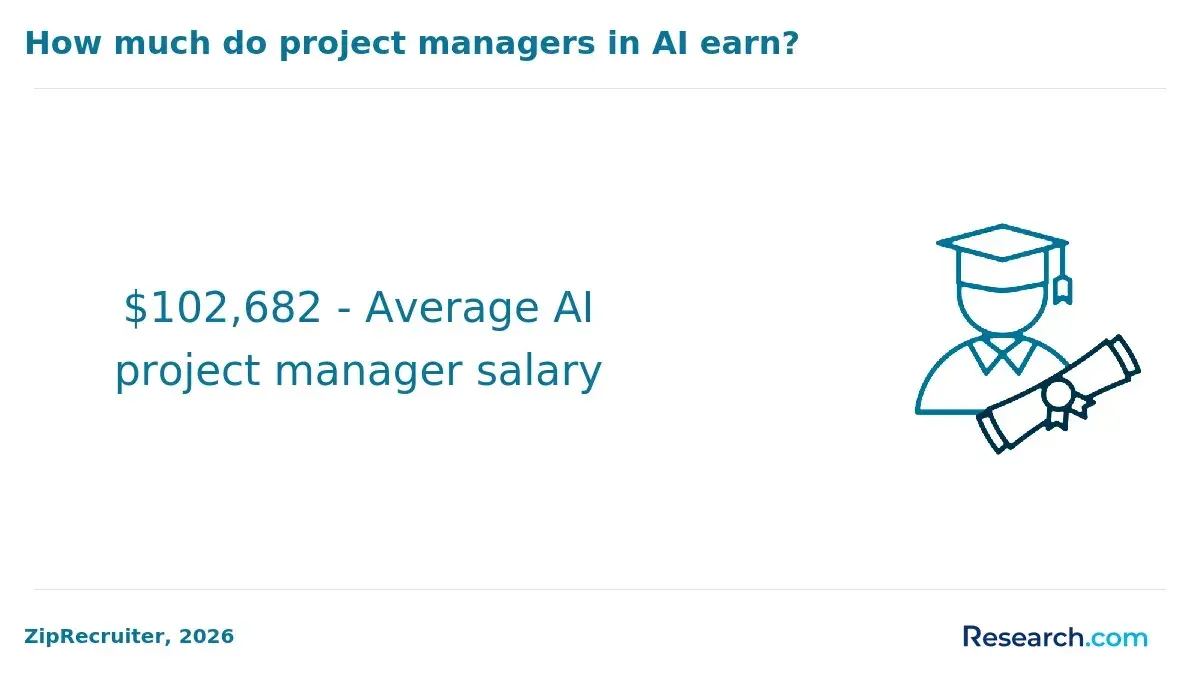
With five to ten years of experience, AI professionals can expect median salaries between $150,000 and $200,000. Leadership positions, including AI project managers or research directors at leading companies, may earn over $250,000 annually. This growth reflects the robust demand for advanced AI skills and the scarcity of qualified candidates.
When considering these salaries, it's important to weigh educational costs. According to the College Board's 2024-2025 tuition survey, private universities' two-year on-campus tuition averages between $120,000 and $150,000, while public universities offer significantly lower averages from $40,000 to $60,000. Prospective students should factor in these differences in evaluating their return on investment.
Industries such as finance and healthcare tend to offer higher compensation for AI skills compared to academia or nonprofits. Combining a master's degree with internships or relevant certifications can further enhance starting salaries and career trajectories.
What professional certifications or credentials complement an on-campus AI master's degree?
Professional certifications add substantial value to an on-campus master's degree in Artificial Intelligence by validating specialized skills and boosting employability. Notable certifications include the Certified Artificial Intelligence Practitioner (CAIP), which emphasizes practical AI application and deployment, and the Microsoft Certified: Azure AI Engineer Associate, suitable for students targeting cloud-based AI services. For students interested in security, the Certified Information Systems Security Professional (CISSP) complements AI expertise with cybersecurity knowledge tailored to AI systems.
These credentials align closely with typical core courses in AI master's programs, such as machine learning, natural language processing, computer vision, and robotics. Specialized paths often cover data science, AI ethics, and system design. For instance, students focused on machine learning can benefit from earning the TensorFlow Developer Certificate, a recognized credential demonstrating proficiency in an industry-standard framework.
Certifications also suit diverse career goals. AI research roles may emphasize credentials related to statistics and algorithms, while roles in AI product management often require leadership certifications like Project Management Professional (PMP) or Certified ScrumMaster (CSM) to pair AI knowledge with project leadership. According to the AI Education Council's 2025 Graduate AI Employment Report, 67% of employers favor candidates holding relevant certifications alongside a master's degree.
Planning to acquire these certifications during the on-campus master's program helps candidates align their studies with career aspirations and industry demands, enhancing their professional profiles and readiness.
How do on-campus AI master's programs differ from online and hybrid program formats?
On-campus AI master's programs offer advantages that online and hybrid formats often cannot match, especially in direct faculty interaction, hands-on experiences, and immersive research. Students benefit from face-to-face mentorship that enables immediate feedback and collaborative problem-solving. Physical access to specialized AI labs and hardware enhances learning in areas like deep learning and computer vision.
These programs usually include extensive project-based coursework requiring teamwork and in-person presentations, which develop communication and real-time troubleshooting skills. Hybrid programs may provide some lab access but often limit opportunities to work with advanced equipment and live datasets.
According to the 2024 ACM Computing Curricula recommendations, 96% of accredited AI master's programs cover machine learning and deep learning, while 78% address computer vision and 72% natural language processing. On-campus formats better support mastery of these technical fields through synchronous lectures and lab workshops that emphasize practical competence beyond theory.
Students seeking faster career advancement also gain valuable networking benefits in on-campus settings, including connections with peers, industry experts, and career services. Many programs provide research assistant roles vital for those pursuing PhD or R&D positions. Balancing flexibility with experiential learning is key when choosing a format, but applied AI skills and research experience tend to favor on-campus study.
What career roles and industries actively hire graduates from on-campus AI master's programs?
Graduates from on-campus master's programs in artificial intelligence enter a wide range of industries, reflecting the technology's broad impact. Career paths include machine learning engineer, data scientist, AI research scientist, robotics engineer, and AI product manager. These roles require expertise in algorithm development, data analysis, natural language processing, and computer vision. Employment opportunities span technology firms, healthcare, finance, automotive, manufacturing, and government sectors.
Technology companies seek AI graduates to build intelligent systems, predictive analytics, and automation tools. In healthcare, AI professionals develop diagnostic algorithms, medical imaging analysis, and personalized treatments. The finance sector applies AI for fraud detection, risk modeling, and algorithmic trading, while manufacturing uses it to optimize supply chains, improve predictive maintenance, and enhance quality control.
The U.S. Bureau of Labor Statistics forecasts a 19% growth in computer and information research scientist jobs, including AI roles, from 2022 to 2032, outpacing many other occupations. This reflects growing demand for AI talent capable of strategic data use and automation. Specializing in AI subfields such as reinforcement learning, computer vision, or ethical AI boosts employability amid increased regulatory focus. Networking through campus career services and industry partnerships is valuable for internships and job leads.
Proficiency in programming languages like Python, experience with AI frameworks such as TensorFlow or PyTorch, and familiarity with cloud platforms remain essential for graduates seeking competitive positions in this evolving field.
How should prospective students evaluate and compare the quality and reputation of on-campus AI master's programs?
Evaluating on-campus master's degrees in artificial intelligence requires careful attention to the program curriculum, faculty expertise, research opportunities, and industry ties. Strong programs balance foundational subjects like machine learning, neural networks, and data ethics with emerging areas such as reinforcement learning and AI for robotics. Practical, project-based courses are essential for building real-world skills.
Faculty qualifications significantly impact program quality. Look for professors with relevant publications, patents, or industry experience in AI specialties. Programs connected to research centers or endorsed by groups such as the Association for the Advancement of Artificial Intelligence (AAAI) often provide access to advanced labs and funding.
Research involvement is a key differentiator-check for availability of assistantships and opportunities to participate in peer-reviewed work or AI conferences. Such experience enhances critical thinking and prepares students for advanced roles.
Industry connections matter for career development. Seek programs offering internships, corporate partnerships, and strong placement services. AI specialist jobs are projected to grow by 35% through 2032, according to the U.S. Bureau of Labor Statistics Occupational Outlook Handbook, emphasizing the value of practical experience and networking.
Accreditation ensures educational quality, while alumni success reveals program value. Comparing these elements through official rankings and data can help prospective students make informed choices in artificial intelligence education.
Other Things You Should Know About Artificial Intelligence
Applicants typically need a bachelor's degree in computer science or a related field, alongside a solid foundation in mathematics and programming. Some programs may require GRE scores and letters of recommendation, emphasizing prior coursework in AI or machine learning.
Many programs include coursework or seminars focusing on ethical issues such as bias, privacy, and transparency in AI systems. Students explore frameworks for responsible AI development and deployment, learning how to balance innovation with societal impacts. This emphasis prepares graduates to anticipate and mitigate ethical challenges in real-world applications.
Interdisciplinary opportunities are often encouraged in on-campus AI master's degrees. Students may take electives or minors in related fields such as computer science, cognitive science, data science, or engineering. This broadens their expertise and fosters a more comprehensive understanding of AI's applications across diverse sectors.
Many 2027 on-campus AI master’s programs do not require the GRE, but some still request it or make it optional. The GMAT is uncommon for AI degrees. Applicants should check each university’s graduate admissions page for test policies, score-report deadlines, and waiver rules.
References
- AI in Higher Education: A Meta Summary of Recent Surveys of Students and Faculty https://sites.campbell.edu/academictechnology/2025/03/06/ai-in-higher-education-a-summary-of-recent-surveys-of-students-and-faculty/
- 25 Best Master's in AI Programs - MastersInAI.org https://www.mastersinai.org/degrees/best-masters-in-artificial-intelligence/
- Masters in Artificial Intelligence Salary: Earning The Degree & The Dollars https://aifwd.com/career/masters-in-artificial-intelligence-salary/
- Best Artificial Intelligence Degree Programs 2026 https://hakia.com/degrees/artificial-intelligence/
- How an Online Master’s in AI Can Prepare You for the Future of Tech https://www.ucumberlands.edu/blog/how-online-masters-ai-can-prepare-you-future-tech
- Master’s in Artificial Intelligence Salary | University of Bridgeport https://www.bridgeport.edu/news/masters-in-artificial-intelligence-salary-expectations/
- Top AI Graduate Programs To Kickstart Your Career in Artificial Intelligence Today https://www.investopedia.com/top-ai-graduate-programs-to-kickstart-your-career-in-artificial-intelligence-today-11916749
- Best AI Masters Online & On-Campus - AIDegreePrograms.org https://aidegreeprograms.org/rankings/best-ai-masters-programs/
- Application and admission - Master Artificial Intelligence https://www.uva.nl/shared-content/programmas/en/masters/artificial-intelligence/application-and-admission/international-prior-education/international-prior-education-foldout-menu.html
- Careers in AI: Opportunities and Pathways - ACS https://www.acs-college.com/careers-in-ai-opportunities-and-pathways