2027 What You Learn in an AI Degree Program

Co-Founder and Chief Data Scientist
Many professionals with unrelated undergraduate degrees face challenges breaking into the AI field due to its technical demands and rapidly evolving nature. Without structured training, understanding key concepts like machine learning, data science, and neural networks can seem overwhelming. This gap hinders career transitions into roles that require proficiency in programming, algorithms, and ethical AI use.
Graduate AI degree programs address these challenges by offering foundational knowledge along with practical skills in a flexible, accredited format. This article explores the core components of AI degrees in 2027, guiding prospective students on what to expect and how these programs prepare them for successful career pivots.
Key Things You Should Know
- AI degree programs in 2026 emphasize machine learning, natural language processing, and robotics, equipping students to develop advanced algorithms used across industries.
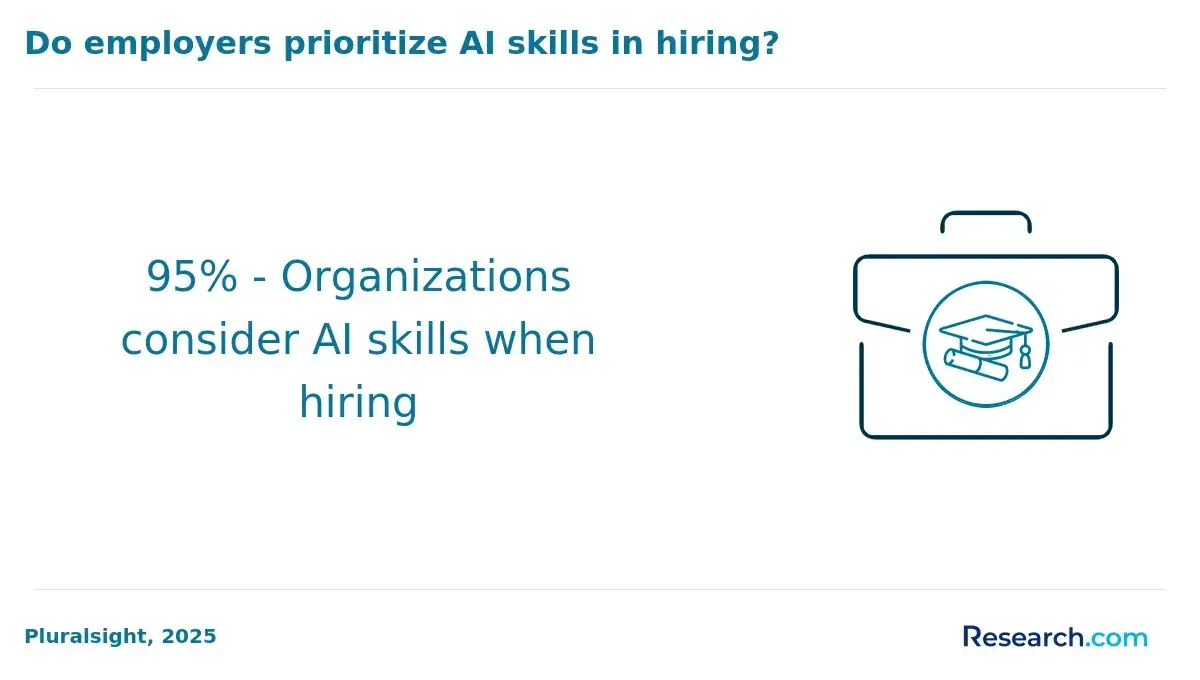
- Curricula integrate ethics and data privacy, addressing growing concerns and regulations as 85% of firms adopt AI technologies by 2025.
- Hands-on experience through projects and internships is crucial, with graduates achieving an average starting salary of $95,000 in AI-related roles.
What is an artificial intelligence degree and what core competencies will you develop?
An artificial intelligence degree equips students with core skills including programming in Python and R, mathematical foundations such as linear algebra and probability, and data analytics essential for training sophisticated models. These programs stress algorithm development and optimization, enabling students to build AI systems that improve through experience and large datasets.
Hands-on projects often involve neural networks, deep learning architectures, and the use of AI frameworks and cloud platforms. This practical exposure develops proficiency in deploying real-world solutions across industries like healthcare and finance. Understanding what you learn in an artificial intelligence program also includes ethical considerations such as bias mitigation and privacy, preparing graduates to design responsible systems that comply with evolving regulations.
The demand for AI professionals has surged, with AI-related jobs growing 74% between 2015 and 2023, compared to 5.8% growth in the overall job market. These figures underscore the critical need for expertise that blends technical skill with ethical awareness. A degree in this field provides a rigorous curriculum blending computer science, data science, and domain-specific knowledge to prepare candidates for roles as AI engineers, data scientists, and research scientists.
For those exploring opportunities, it helps to review the AI career path to align education with market demands. Practical experience and continuous skill updates remain essential in this rapidly evolving area.
What specific courses and technical skills are taught in an AI degree program?
AI degree programs cover a broad range of courses in artificial intelligence programming and development, emphasizing skills crucial for this rapidly advancing field. Core subjects often include machine learning, natural language processing, robotics, and computer vision, alongside foundational studies in linear algebra, statistics, and probability theory. Programming, especially in Python, is heavily prioritized; the 2024 Stack Overflow Developer Survey reports that 63% of AI/ML professionals use Python.
Students gain technical skills learned in an artificial intelligence degree that encompass model evaluation, optimization, and ethical AI deployment. Hands-on projects include neural networks, clustering algorithms, and reinforcement learning applied to real-world datasets. Data science fundamentals such as data wrangling, feature engineering, and database management are also integral to mastering the AI pipeline.
Courses frequently incorporate frameworks like TensorFlow, PyTorch, and Scikit-learn, while knowledge of cloud platforms such as AWS or Google Cloud supports managing large-scale AI experiments. Specialized tracks may focus on autonomous systems, AI for healthcare, or conversational agents, allowing learners to tailor their expertise. Working professionals benefit from modules on AI systems architecture and deployment, linking research with production environments.
For those exploring options in the U.S., consulting the data science master degree ranking can help identify affordable programs that offer strong curricula in AI programming and development.
What are the admission requirements and prerequisites for AI degree programs?
Admission requirements for artificial intelligence degree programs generally emphasize a strong foundation in mathematics, computer science, and programming skills. Applicants typically need coursework in calculus, linear algebra, probability, and statistics. Some programs expect knowledge of discrete mathematics or introductory algorithms to handle the quantitative challenges AI study demands. Undergraduate admissions often require a high school diploma with competitive grades in math and science, while graduate programs prefer a bachelor's degree in computer science, engineering, mathematics, or related fields.
Prerequisites needed to enroll in an artificial intelligence degree vary; some master's programs accept students from diverse backgrounds but require prerequisite bridge courses in statistics or programming. Standardized tests such as the SAT or GRE may be required with a focus on quantitative scores. Strong applications usually include letters of recommendation, personal statements, and relevant research or project experience. Demonstrated coding proficiency in languages like Python or Java reflects the programming-centric nature of AI.
Applicants with weaker math skills face challenges. Data from the National Center for Education Statistics shows students with strong mathematics backgrounds are 2.3 times more likely to finish their AI degree on time. Prospective students should check their program's specific prerequisites and consider supplementary courses to avoid delays and improve success.
For those interested in related fields, exploring options like a video game development degree can provide alternative paths in technology and programming.
How do online AI degree programs compare to campus-based options in terms of learning outcomes?
Online AI degree programs deliver learning outcomes closely matching those of campus-based options. Data from recent graduate outcome surveys shows online AI degree graduates achieve an 89% job placement rate within six months, while campus-based graduates place at 91%. This parity highlights that online programs provide comparable skills and career readiness. Such online AI degree programs learning outcomes comparison demonstrates that students can expect similar value regardless of learning format.
Both online and campus formats maintain curriculum rigor, offering core courses in machine learning, neural networks, data science, and AI ethics. Online students access quality lectures, assignments, and projects through multimedia platforms and virtual labs, simulating real-world AI problems similar to on-campus experiences. However, campus-based versus online AI degree program effectiveness is notable in hands-on collaboration and networking: campus students enjoy face-to-face interaction for group work and mentorship, while online learners must seek virtual peer groups or hybrid workshops to build those connections.
Flexibility stands as an advantage of online degrees, especially for working professionals or those with family commitments. This accessibility supports skill acquisition, provided students manage their time well and engage proactively. Employers value accreditation and program reputation more than delivery mode, so verifying the online program's credentials is essential. Students interested in related fields may also explore cyber security schools online for further opportunities.
How long does it take to complete an AI degree and what is the typical cost?
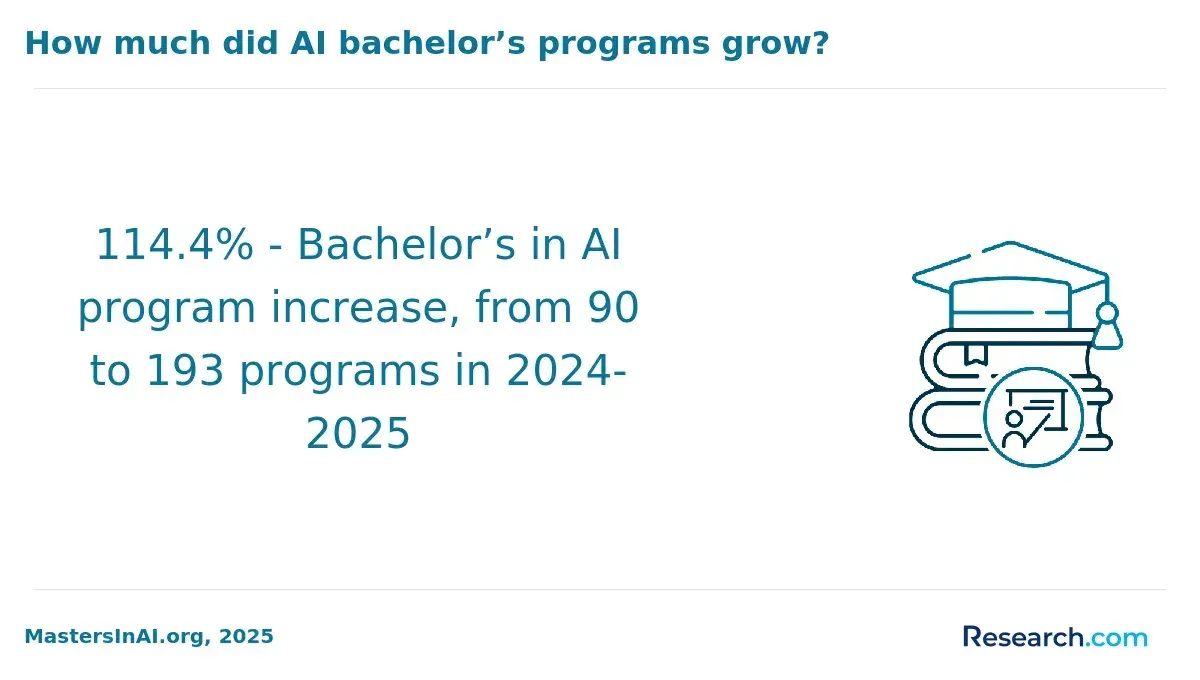
The time required to complete an Artificial Intelligence degree varies by program type and study format. A master's degree generally takes 1.5 to 2 years of full-time study, while part-time or online formats can extend to 3 or more years, providing flexibility for working individuals. Bachelor's degrees with AI specializations usually require four years of full-time study, whereas doctoral programs often span 4 to 6 years depending on research demands.
Tuition costs vary significantly. According to data from U.S. News & World Report, master's programs range from $30,000 to $120,000, reflecting differences in institution type, location, and prestige. Online options tend to offer around 40% cost savings compared to campus-based programs, making them more accessible for many students. For example, a traditional $100,000 program may cost roughly $60,000 if taken online.
Many prospective students value programs that combine affordability with strong industry connections or practical experience, which employers often prioritize. Additional expenses like books, software, and living costs should also be factored into the overall investment. Balancing time, cost, program format, and career objectives is essential. Fast-track options are available but can demand an intense workload, while slower-paced programs support deeper specialization or concurrent employment. Exploring scholarships and employer tuition assistance opportunities can help manage expenses.
What accreditation and professional certifications should you verify when choosing an AI program?
Choosing an AI degree program requires careful attention to accreditation and professional certifications. The most widely recognized accreditation for computer science and engineering programs in the U.S. is ABET. According to the 2024 ABET Outcomes and Assessment Report, programs accredited by ABET enjoy a 94% employer recognition rate, compared to only 67% for non-accredited programs. This accreditation signals that a program meets high standards in curriculum, faculty qualifications, and available resources.
Students should verify if the AI program is offered within an ABET-accredited computer science or engineering department. For AI programs outside traditional disciplines, confirmation of relevant STEM accreditation or academic quality certification is essential. These factors greatly influence employability and career prospects.
Professional certifications complement academic degrees by validating expertise. Credentials such as the Certified Artificial Intelligence Practitioner (CAIP) and Microsoft Certified: Azure AI Engineer Associate serve as valuable industry benchmarks. Programs that integrate preparation for these certifications or offer electives aligned with their standards provide a stronger professional foundation.
Reviewing program curricula for core topics like machine learning, data ethics, and systems engineering can help identify alignment with industry expectations. Affiliations with organizations like the Association for the Advancement of Artificial Intelligence (AAAI) may offer further networking and certification benefits.
Verifying ABET accreditation or equivalent academic recognition alongside professional AI certifications remains a key factor in building a successful career in Artificial Intelligence.
What career paths and job roles are available to AI degree graduates?
Graduates with degrees in artificial intelligence can pursue a variety of careers across several industries. Machine learning engineer positions comprise the largest share, making up 31% of AI-related job openings according to LinkedIn's 2024 Jobs Report. These professionals design, build, and deploy machine learning models, often collaborating with data and software engineering teams to develop scalable AI solutions. Common employers include technology companies, healthcare providers, and financial institutions.
AI research scientists account for 18% of openings and work on advancing AI technologies through theoretical and applied research. Their roles are prevalent in academia, corporate research labs, and government agencies, requiring strong expertise in algorithms and frequently involving publishing scientific papers or creating innovative AI frameworks.
Data scientists, representing 16% of job openings, utilize AI tools to generate insights from complex data sets. They often apply natural language processing, computer vision, or predictive analytics to solve business challenges in sectors like marketing, e-commerce, and logistics.
Other key roles include AI product managers who integrate technical development with business strategy, AI consultants who implement AI solutions for organizations, and AI ethics specialists who focus on responsible AI practices. Gaining experience in software development, cloud computing, and domain-specific areas can improve employability and help tailor the job search effectively.
What is the job outlook and salary potential for AI degree holders in the United States?
Job prospects for AI degree holders in the United States are exceptionally strong. Positions for AI specialists are expected to grow by 35% through 2032, far exceeding typical occupational growth rates. This surge is driven by demand across industries such as healthcare, finance, technology, and manufacturing. Common roles include machine learning engineer, data scientist, AI researcher, and robotics specialist.
Salary potential is substantial, with median annual wages around $136,620-more than triple the national median. Entry-level salaries often start near $90,000, while experienced professionals at leading tech firms may earn well into six figures. High-demand regions like Silicon Valley and New York City frequently offer enhanced packages including bonuses and stock options.
AI degree programs usually combine computer science, statistics, and domain expertise, preparing graduates to solve practical challenges like natural language processing and predictive analytics. Proficiency in programming languages such as Python and frameworks like TensorFlow is essential for competitive roles.
Employers highly value hands-on experience from internships, projects, or research. Certifications in cloud computing or data engineering can boost marketability. For career changers, targeted AI graduate certificates or boot camps provide a faster pathway into the field.
What are the differences between a bachelor's, master's, and certificate program in artificial intelligence?
Bachelor's, master's, and certificate programs in artificial intelligence vary widely in depth, duration, and impact on career opportunities. A bachelor's degree generally takes four years, covering foundational topics such as programming languages like Python, TensorFlow, and core AI principles including machine learning and data analysis. This level prepares students for entry-level roles or graduate study.
Master's programs, lasting about two years, emphasize advanced AI theories, algorithms, and specialized fields like natural language processing or computer vision. These programs usually include research projects or internships and cultivate the expertise necessary for leadership or research positions. According to 2024 Glassdoor data, master's degree holders earn roughly $165,000 annually, about 47% more than the $112,000 average for bachelor's degree holders, highlighting the value of advanced skills in the job market.
Certificate programs are shorter, typically a few months to a year, focused on practical skills to quickly upskill professionals in areas such as AI programming or data engineering. Although convenient, certificate holders earn approximately 23% less than bachelor's graduates, signaling a more limited effect on long-term career advancement or salary growth.
Choosing the right AI education depends on career goals: bachelor's degrees build a solid foundation, master's degrees advance specialization and leadership prospects, and certificates offer rapid skill enhancement without a full degree commitment.
How do you evaluate and select a reputable AI degree program that matches your career goals?
Choosing an AI degree program that aligns with your career goals is crucial. Focus on programs with strong industry ties, as they often offer internships and job pathways. The 2024 National Association of Colleges and Employers survey highlights that 73% of hiring managers value real-world project experience, so look for programs requiring capstone projects or practical simulations.
Examine whether the curriculum covers foundational topics like machine learning, neural networks, and ethical AI, alongside emerging technologies. Specialized tracks such as natural language processing or robotics can help tailor your education to your career aspirations. Faculty expertise is another key factor; instructors engaged in AI research and industry consulting bring updated knowledge and relevant insights.
Balance between theory and hands-on learning matters. Programs with labs, datasets, and company collaboration enhance skill development. Confirm the institution holds regional accreditation and recognized AI degree credentials. Consider program length, format, and flexibility to fit your lifestyle, especially if balancing work or family.
Review post-graduation employment rates and alumni success to assess effectiveness. Request syllabi and connect with current students or alumni to gain honest feedback about mentorship and career support. This information often reveals strengths and gaps beyond official materials.
Other Things You Should Know About Artificial Intelligence
AI degree programs in 2027 integrate coursework on the socio-economic impacts of AI, including employment. They explore the potential for job displacement and creation, equipping students with the knowledge to develop AI technologies that contribute positively to the workforce and society.
Ethical considerations in artificial intelligence degree programs focus on topics such as algorithmic bias, data privacy, and the social impact of AI deployment. Students learn about responsible AI design to prevent misuse and ensure fairness in AI systems. These discussions are increasingly emphasized as AI technologies affect many aspects of society.
Many AI degree programs integrate internships, co-op opportunities, or project-based learning to provide hands-on experience. These practical components help students apply theoretical knowledge to real-world problems. Engaging with industry projects also enhances employment prospects after graduation.
Mathematics is fundamental to artificial intelligence, especially linear algebra, calculus, probability, and statistics. These subjects underpin algorithms in machine learning and neural networks. A strong math foundation enables students to understand and develop complex AI models effectively.
References
- A Complete 4-Year Course Plan for an Artificial Intelligence Undergraduate Degree https://www.mihaileric.com/posts/complete-artificial-intelligence-undergraduate-course-plan/
- What Are the Career Paths After a Bachelor of Science in AI https://tetr.com/blog/what-are-the-career-paths-after-a-bachelor-of-science-in-ai
- Artificial Intelligence Course Eligibility: Requirements & Prerequisites https://www.mygreatlearning.com/artificial-intelligence/courses/eligibility
- What Degree Do You Need to Work in Artificial Intelligence? https://www.nec.edu/news/what-degree-do-you-need-to-work-in-artificial-intelligence
- What Do You Learn In an Artificial Intelligence Course? | CompSci https://www.computerscience.org/resources/artificial-intelligence/
- Choosing an AI Certification: A Quick Guide - IABAC https://iabac.org/blog/choosing-an-ai-certification
- Top AI Certifications for 2026: A Guide to Advancing Your Tech Career | DataCamp https://www.datacamp.com/blog/top-ai-certifications
- How Long Does It Take to Learn AI? - MMC Learning https://mmclearning.com/ai-course/how-long-does-it-take-to-learn-ai/
- Artificial Intelligence Course Duration Guide for 2025 Beginners | Your Blog https://mammothclub.com/blog/artificial-intelligence-course-duration
- Artificial Intelligence Course Syllabus: Topics and Modules https://futurense.com/blog/artificial-intelligence-course-syllabus