2027 Highest-Paying Jobs for AI Degree Graduates

Co-Founder and Chief Data Scientist
Graduates with a background outside technology often face uncertainty when pursuing a career in artificial intelligence. Identifying roles that offer both high salaries and career growth is challenging without clear guidance. This uncertainty can delay decisions about further education or skill development, complicating the transition into the AI workforce.
Navigating the evolving job market requires up-to-date insights on where demand and compensation align. This article explores the highest-paying jobs for AI degree graduates in 2027, providing actionable information to help prospective students and professionals strategically plan their entry into the artificial intelligence industry.
Key Things You Should Know
- AI degree graduates in 2026 can expect median starting salaries of $95,000 to $130,000, with roles in machine learning engineering and data science leading highest pay scales.
- Demand for AI skills is projected to grow over 40% by 2030, driven by sectors like healthcare, finance, and autonomous systems requiring advanced AI expertise.
- Top-paying AI jobs often require proficiency in programming languages such as Python and experience with cloud platforms, emphasizing continuous skill development.
What are the highest-paying job titles available to AI degree graduates in 2027?
In 2026, the highest-paying job titles for artificial intelligence graduates include machine learning engineer, data scientist, AI research scientist, and AI software developer. Machine learning engineers lead these roles with a median annual salary of $208,000 in the U.S., based on Levels.fyi's 2024 compensation data. Their work involves designing and implementing algorithms that enable computers to learn from data, a key skill in AI applications.
Data scientists follow closely, applying statistical analysis and machine learning techniques to interpret complex datasets, often earning six-figure salaries depending on experience and industry. AI research scientists contribute to advancing theoretical models and developing novel AI methods, typically employed by tech companies and research institutions. Their compensation can rival that of machine learning engineers, especially at senior levels. These roles showcase top career opportunities in artificial intelligence fields.
AI software developers create applications and infrastructure leveraging AI capabilities. Though their salaries are generally lower than those of specialized research roles, they remain competitive due to high demand in sectors like healthcare, finance, and autonomous vehicles. Specialized positions such as computer vision engineer and natural language processing (NLP) engineer also offer lucrative prospects, earning between $120,000 and $180,000 annually.
Graduates aiming for these jobs should consider industry, geographic location, and technical skills. Proficiency in programming languages like Python, experience with cloud platforms, and knowledge of AI frameworks such as TensorFlow or PyTorch significantly boost salary potential and employability. Earning an applied artificial intelligence degree can provide a strong foundation for these roles.
What is the average salary range for AI professionals across different career roles and experience levels?
AI professionals' average salary range by role varies widely depending on experience and specialization. Entry-level workers, generally with less than two years of experience, earn median salaries near $98,000 annually. As professionals advance, salaries grow significantly-those with five to nine years experience often see a 68% increase, reaching median salaries around $165,000, according to the U.S. Bureau of Labor Statistics 2024 Occupational Outlook Handbook.
Salary differences for AI graduates with experience levels also depend on specific roles. AI engineers and data scientists focused on AI models typically begin near entry-level salaries but can surpass $170,000 mid-career. Machine learning specialists and research scientists often command higher pay due to niche expertise, especially in technology firms or research institutions. AI professionals in product management or ethics roles may start with lower pay but benefit from broader managerial salary scales over time.
Salary growth is closely tied to expanding skillsets in areas such as deep learning frameworks, natural language processing, or computer vision. Location and employer type also influence compensation. Graduates targeting high-paying AI careers should plan continuous skills development and focus on industries with advanced AI adoption like finance, healthcare, or autonomous systems.
Prospective students seeking the best universities for data science undergraduate programs can explore options through best universities for data science undergraduate resources to align education with career goals.
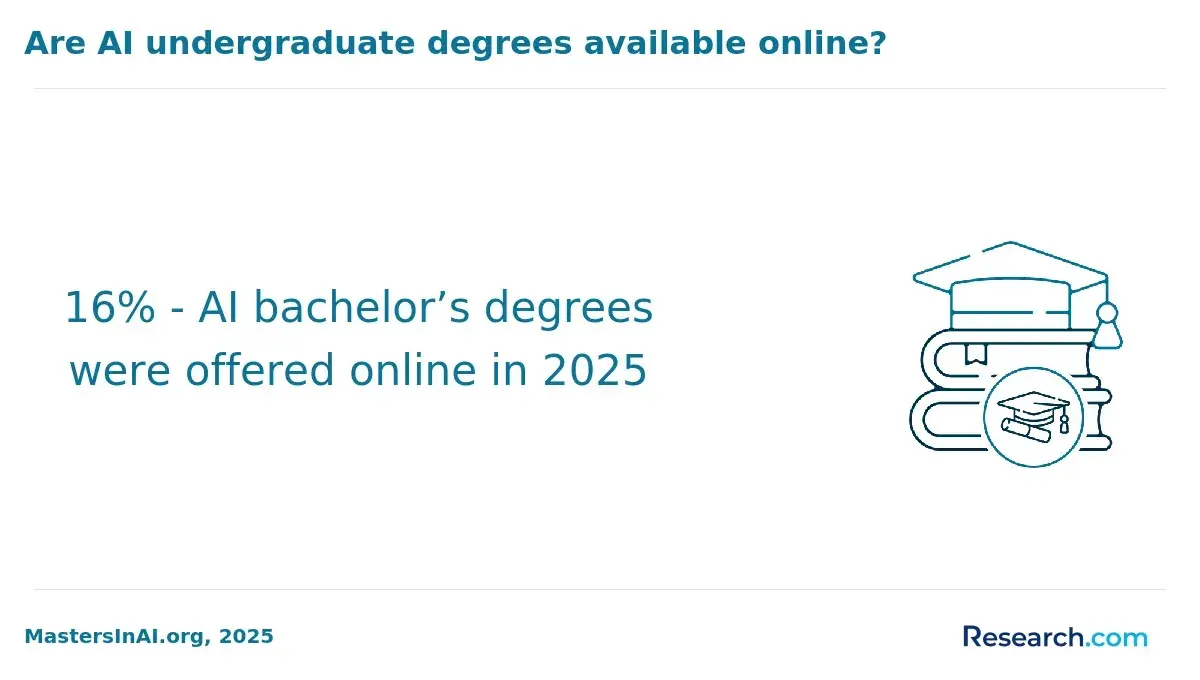
Which industries and sectors are hiring AI degree graduates at the fastest rate?
Technology and software companies dominate demand for artificial intelligence degree graduates, representing 42% of AI-related job postings globally. This sector encompasses cloud computing, machine learning platforms, software development, and AI-driven automation. Roles often involve building AI models, natural language processing applications, and developing data infrastructure, driven by rapid innovation and a high volume of openings. These companies are core players in the fastest growing industries hiring artificial intelligence graduates.
Financial services follow as the second-largest employer with 18% of AI opportunities. Banks, investment firms, and insurance companies use AI for fraud detection, risk evaluation, algorithmic trading, and automating customer support. Such roles require both technical expertise and a strong grasp of finance regulations and data privacy, making them attractive for graduates focused on combining AI knowledge with industry insight.
Healthcare, retail, and manufacturing are additional top sectors employing artificial intelligence degree holders. Healthcare applies AI in medical imaging and predictive diagnostics, retail uses it to personalize marketing and improve supply chains, while manufacturing relies on AI for predictive maintenance and quality control. Practical experience in these fields is highly valued.
Students aiming to enter expanding job markets should pursue internships or projects with companies investing heavily in AI research and deployment. Developing skills in AI programming languages and tools is critical. For those considering further education, an online masters in AI. offers flexible training options aligned with industry demands.
Reliable data sources such as LinkedIn's 2024 Jobs on the Rise report support career planning for AI graduates seeking to join leading sectors that are transforming the future of work.
What degree level-bachelor's, master's, or PhD-do employers prefer for AI positions, and how does education affect earning potential?
Employers in AI predominantly prefer candidates with a master's degree over those holding only a bachelor's. A master's degree holder in AI earns approximately 32% more than those with a bachelor's, with median salaries around $142,000 compared to $107,000. This wage gap reflects the advanced skills and deeper specialization provided by master's programs, which align well with complex AI roles such as machine learning engineer, data scientist, and AI researcher. This illustrates the bachelor's vs master's degree for AI job salaries and how education level impacts earnings.
PhD holders are essential for cutting-edge research and leadership roles in AI development, often commanding salaries exceeding $160,000, particularly in research labs, academia, or AI-driven R&D departments. However, most industry jobs do not require a PhD. The decision between pursuing a master's or a PhD usually depends on the career path: practical implementation roles favor master's degrees, while theoretical research and innovation generally require a PhD. This highlights the impact of higher education on AI career earnings.
Graduates with only a bachelor's degree may qualify for entry-level positions but often face limited salary growth and advancement. Investing in a master's degree deepens expertise in specialized areas like neural networks, natural language processing, and computer vision, improving competitiveness. Additionally, certifications or interdisciplinary knowledge in data engineering or software development enhance earning potential. Exploring online data science programs can be a flexible way to gain this advanced expertise.
Education level strongly correlates with earning potential in AI careers. A master's degree offers a balanced investment of time and salary uplift for most roles, while a PhD fits those targeting top-tier research and innovation positions.
What core technical skills and certifications do employers require or prefer when hiring AI graduates?
Employers seeking AI graduates prioritize strong technical skills proven through proficiency and certifications. According to Burning Glass Technologies' 2024 labor market analysis, 89% of AI job postings require Python expertise, highlighting Python's status as the core programming language for AI development. Mastery of Python libraries such as TensorFlow, PyTorch, and scikit-learn is crucial for demonstrating ability in machine learning implementation.
Machine learning frameworks appear in 78% of job ads. Familiarity with Keras, MXNet, and frameworks for computer vision and natural language processing is highly valued, allowing candidates to build, train, and optimize models effectively for real-world applications.
Data engineering skills, featured in 71% of postings, are essential for managing the large datasets AI systems depend on. Proficiency in SQL, NoSQL databases, Apache Spark, and Hadoop, alongside certifications like Google Cloud Professional Data Engineer or AWS Certified Data Analytics, boosts credibility in data pipeline development.
Additional certifications such as the TensorFlow Developer Certificate and Microsoft Certified: Azure AI Engineer Associate showcase hands-on expertise with mainstream AI tools and cloud-based services. Employers also expect knowledge of software development practices including Git, Docker, and CI/CD to support scalable, maintainable AI solutions.
Candidates should tailor their skills to specific job requirements like reinforcement learning or ethical AI. Practical experience through internships, projects, or competitions complements certifications and enhances employability in the competitive AI market.
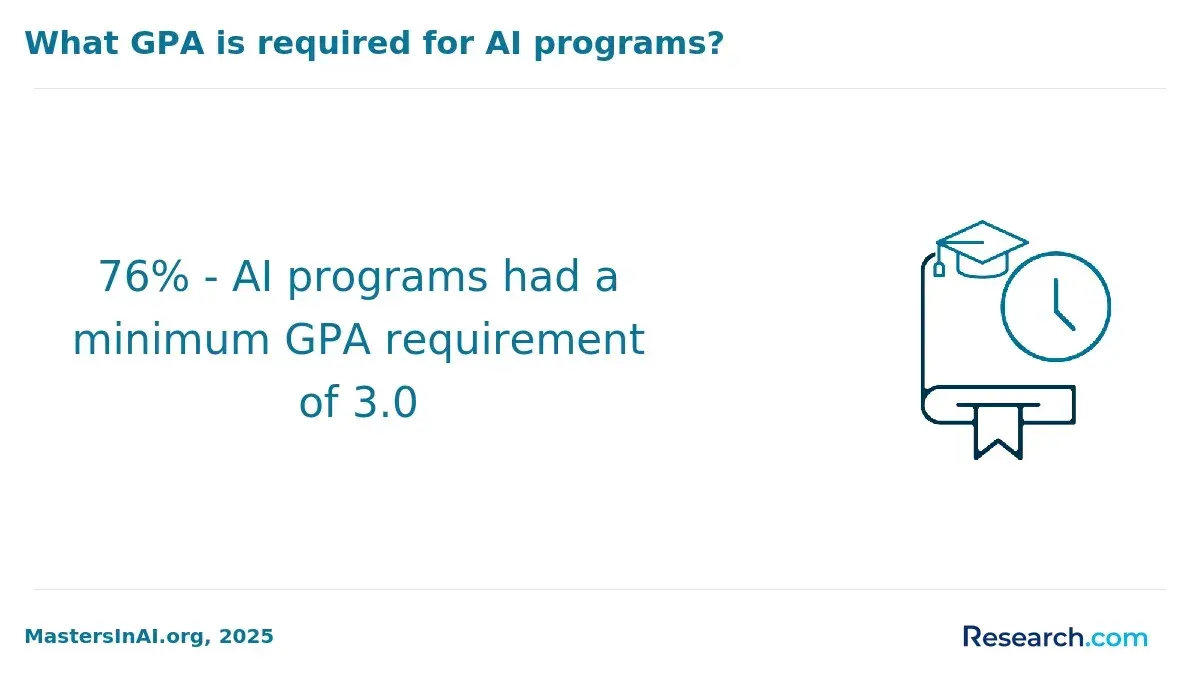
How do online AI degree programs compare to campus-based programs in terms of job placement and salary outcomes?
Graduates of online AI degree programs experience job placement rates nearly identical to those from campus-based programs. According to a National Association for College Admission Counseling study, 94% of online AI graduates secure employment within six months, closely matching the 96% rate of on-campus alumni. This demonstrates that employers regard online credentials as equally valuable when hiring for AI roles.
Starting salaries for positions such as machine learning engineers or data scientists are comparable for both online and in-person degree holders, consistent across various U.S. regions and industries. This salary parity confirms that earning an AI degree online does not limit income potential.
Online programs provide flexible learning options that help students balance work and study, reducing financial strain without sacrificing career growth. The quality of a program and its industry connections are crucial factors; accredited programs partnered with tech companies tend to boost job placement and internship opportunities regardless of delivery format.
While campus students benefit from face-to-face networking, online learners can leverage virtual job fairs, online communities, and professional platforms like LinkedIn to build strong networks. Selecting a reputable AI degree aligned with personal career goals is far more important than choosing between online or on-campus learning.
What is the job outlook and projected growth rate for AI careers over the next 5-10 years?
The job outlook for artificial intelligence careers shows remarkable growth, with a 35% projected increase for AI and machine learning engineer roles from 2024 to 2034, significantly surpassing the 3.5% average growth across all U.S. occupations, according to the U.S. Bureau of Labor Statistics 2024 Employment Projections. Industries such as healthcare, finance, automotive, and cybersecurity are driving this expansion by integrating AI technologies.
Graduates with AI degrees have diverse opportunities, from building machine learning models in tech firms to developing AI-based diagnostic tools in medical research. Demand is rising for specialists in natural language processing, computer vision, and data engineering as companies seek to enhance operational efficiency and innovation.
Key roles include AI research scientists, AI software engineers, and data scientists with AI expertise, all expected to see above-average demand. Employers prioritize candidates skilled in Python programming, TensorFlow frameworks, and strong analytical abilities. Postgraduate education and specialized certifications can provide an edge, especially for competitive research positions.
Location also matters: tech hubs in metropolitan areas offer more openings and better salaries. Staying up-to-date with evolving AI tools and ethical standards is vital for sustained success in this fast-changing field.
What are the admission requirements and prerequisite coursework needed to enter accredited AI degree programs?
Admission requirements for accredited AI degree programs commonly include a high school diploma or equivalent, emphasizing strong math and science skills. According to a 2024 analysis of curricula from leading universities, about 73% of top-ranked AI programs expect applicants to demonstrate proficiency in calculus and linear algebra before admission. These math skills are crucial because concepts such as matrix operations, derivatives, and vector spaces form the foundation of many AI algorithms.
Prerequisites usually involve at least one year of calculus covering limits, differentiation, and integration, alongside a semester of linear algebra focused on vector spaces and matrix theory. In addition to math, students must often have completed courses in computer science fundamentals, including programming languages like Python, Java, or C++, data structures, and algorithms. Some programs also require familiarity with statistics, since probability theory is key to machine learning and data analysis.
Applicants from engineering, physics, or related STEM backgrounds tend to meet requirements more easily, while those from humanities or social sciences may need prerequisite or bridge courses. Standardized tests such as the SAT or ACT remain important for undergraduate admission, with higher math scores improving chances. Graduate programs generally require a bachelor's degree in computer science, engineering, mathematics, or related fields and a competitive GPA, commonly 3.0 or above.
Letters of recommendation, personal statements, and sometimes coding assessments or interviews assess problem-solving abilities and motivation. Prospective students should carefully review admission guidelines on official school websites to confirm all prerequisites.
How much do AI degree programs cost, and what is the typical return on investment for graduates?
The cost of artificial intelligence degree programs varies widely depending on factors like institution type, program length, and delivery method. Master's degrees from public universities typically range between $20,000 and $50,000 in total tuition, while private institutions often charge from $40,000 up to $80,000. More affordable online programs can be found for under $15,000, offering flexibility to working professionals. Certificate programs, which are less comprehensive, usually cost between $2,000 and $10,000 and serve as valuable skill supplements.
The return on investment (ROI) for AI graduates is notable. According to the Georgetown University Center on Education and the Workforce 2024 report, holders of AI master's degrees see an average ROI of 287% over their lifetime earnings compared to high school graduates. This suggests degrees typically pay for themselves within about 3.2 years of full-time work. Starting salaries in AI-related roles often range from $90,000 to $120,000 annually, with significant growth potential.
Deciding between prestigious, costly programs and budget-friendly online options requires weighing tuition against projected salary gains and job placement rates. Taking on debt might be justified by the substantial lifetime earnings premium. Employers value specialized AI skills, driving competitive starting pay and faster career advancement. This financial upside offsets tuition costs and supports long-term economic growth for many pursuing careers in Artificial Intelligence.
What professional certifications and continuing education options can AI graduates pursue to increase their earning potential?
AI graduates can boost their earning potential by obtaining professional certifications and pursuing continuing education that align with industry needs. Certifications in cloud platforms like AWS Certified Solutions Architect, Google Cloud Professional Data Engineer, and Microsoft Azure AI Fundamentals are highly regarded. According to the Cloud Computing Jobs Report 2024 by CompTIA, AI professionals with cloud credentials earn on average 24% more-about $178,000 annually-than those without. These certifications validate the ability to deploy and manage AI solutions on cloud infrastructures, a critical skill as many companies migrate workloads to the cloud.
Specialized certifications such as Certified Machine Learning Professional (CMLP) and TensorFlow Developer Certificate demonstrate expertise in machine learning techniques and tools. For those targeting leadership positions, credentials like Certified Artificial Intelligence Practitioner (CAIP) or Certified Data Scientist combine technical AI skills with project management and data analysis capabilities.
Continuing education is available through advanced online courses and nano-degree programs focusing on deep learning, natural language processing, and AI ethics. Platforms such as Coursera, edX, and Udacity collaborate with universities to offer flexible learning paths that fit alongside professional commitments. Practical experience from internships or open-source AI projects further enhances skills and employability.
Aligning certifications with career goals and emerging industry trends helps graduates stay competitive. Employers increasingly value continuous learning and proficiency in current AI technologies, making professional development essential for maximizing salary and opportunities.
Other Things You Should Know About Artificial Intelligence
Programming experience is crucial for AI graduates, as many roles require writing code to develop and implement AI algorithms. Proficiency in languages such as Python, R, and Java, as well as familiarity with machine learning libraries and frameworks, is often expected. Strong programming skills enable graduates to handle data processing, model building, and deployment effectively.
Certifications like the Certified Artificial Intelligence Practitioner (CAIP) and the TensorFlow Developer Certificate can significantly boost earnings. These credentials demonstrate expertise in specialized areas, making graduates more attractive to employers seeking advanced skills in the AI field.
Yes, many defense and federal AI roles require at least a Secret clearance, and some classified research positions need Top Secret or TS/SCI access. Employers usually sponsor the clearance after hiring, but U.S. citizenship is often required before the investigation begins.
In 2027, valuable skills for AI graduates include critical thinking, adaptability, and communication. Employers also appreciate a strong understanding of business and ethical considerations. For non-technical students, pursuing the best AI master’s programs for non-technical students can enhance these competencies.
References
- AI Salaries - How Much AI Jobs Pay https://www.tractionkeys.com/post/ai-salaries---how-much-ai-jobs-pay
- Despite AI Cutting Entry-Level Roles, These Graduate Careers Remain in High Demand https://www.investopedia.com/despite-ai-cutting-entry-level-roles-these-graduate-careers-remain-in-high-demand-11913594
- Colleges are touting AI degree programs. Here's how to decide if it's worth the cost https://www.cnbc.com/2024/03/02/college-ai-degree-programs-are-booming-will-jobs-exist-for-graduates.html
- Key Skills Employers Seek in AI Developers https://blog.gptdevs.net/top-skills-and-qualities-employers-look-for-in-ai-developers
- The basic qualifications for a job in AI and how to stand out, according to recruiters https://www.businessinsider.com/ai-tech-jobs-basic-coding-programming-skills-education-needed-recruiters-2024-8
- 10 year outlook for IT workers looks solid - SmartBrief https://www.smartbrief.com/original/10-year-outlook-for-it-workers-looks-solid
- Best AI Certifications to Boost Your Career in 2026 – Dataquest https://www.dataquest.io/blog/best-ai-certifications/
- Artificial Intelligence Degree Admission Requirements: What You Need https://hakia.com/degrees/artificial-intelligence/admission-requirements/
- Artificial Intelligence admission requirements in detail https://www.srh-university.de/en/master/bls/information-technology-artificial-intelligence/artificial-intelligence-admission-requirements-in-detail/
- 10 jobs projected to grow the most in the next 5 years https://qz.com/fastest-growing-job-industries-2025-ai-engineering