2027 Cheapest Accredited Online Physical Education Degree Programs That Accept FAFSA

Co-Founder and Chief Data Scientist
Choosing an online physical education degree is really a cost-and-credential decision: the cheapest program is only useful if it is accredited, FAFSA-eligible, and aligned with your career goal. Federal Student Aid lists the maximum Pell Grant at $7,395 for the 2024-25 award year, which can materially reduce costs for eligible students. This guide is for future PE teachers, coaches, fitness professionals, and degree-completion students who want to compare low-cost online options, estimate true net price, avoid aid mistakes, and choose a program with stronger long-term value.
Key Things You Should Know
- FAFSA eligibility means the institution participates in federal student aid, but it does not guarantee a grant; aid depends on enrollment status, Student Aid Index, cost of attendance, and annual federal limits.
- The lowest advertised tuition is not always the lowest total cost; transfer credits, fees, residency rules, field placements, and licensure requirements can change the real price by thousands of dollars.
- For career ROI, compare total borrowing against likely outcomes: BLS reported a May 2024 median wage of $65,220 for high school teachers and $45,910 for coaches and scouts, but requirements vary by state and employer.
Which Are the Cheapest Accredited Online Physical Education Degree Programs That Accept FAFSA?
The cheapest FAFSA-eligible online physical education programs are usually offered by public universities with regional accreditation, online tuition rates, and generous transfer policies. Because fully online "physical education" degrees are less common than online kinesiology, health and physical education, sport coaching, or sport management degrees, students should match the program title to the career outcome they need, especially if teacher licensure is the goal.
The table below highlights affordable U.S. options that are institutionally accredited and commonly structured for online or mostly online study. Tuition changes frequently, so use these as comparison starting points and verify the current cost, federal aid participation, and program format with each school before applying.
| School | Online program fit | Approximate affordability signal | Accreditation and FAFSA status | Best for |
| Fort Hays State University | Online health and human performance-related bachelor's pathways | Known for low online undergraduate tuition among public universities | Institutionally accredited; participates in federal student aid | Degree-completion students seeking a low-cost public option |
| Eastern New Mexico University | Online physical education, sport, or health-related degree options depending on current catalog availability | Often among lower-cost regional public universities for online learners | Institutionally accredited; participates in federal student aid | Students prioritizing low tuition and transfer-friendly completion |
| University of Florida Online | Online sport management bachelor's degree | Very low in-state online tuition; higher out-of-state pricing | Institutionally accredited; participates in federal student aid | Florida residents or students targeting sport administration roles |
| University of Southern Mississippi | Online sport coaching education bachelor's degree | Moderate public-university online tuition | Institutionally accredited; participates in federal student aid | Future coaches, athletic program staff, and recreation professionals |
| University of Arkansas | Online graduate physical education or coaching-related education options, subject to current catalog | Competitive public graduate online tuition | Institutionally accredited; participates in federal student aid | Licensed or aspiring educators seeking graduate-level advancement |
| Emporia State University | Online health, physical education, recreation, or related graduate pathways | Often positioned as a lower-cost regional graduate option | Institutionally accredited; participates in federal student aid | Teachers and coaches seeking a practical master's pathway |
| University of West Alabama | Online physical education or teaching-related graduate options, subject to state rules | Moderate private/public-style online pricing depending on program | Institutionally accredited; participates in federal student aid | Educators comparing flexible online graduate programs |
A good shortlist should include at least three schools: one lowest-tuition option, one strongest transfer-credit option, and one best-fit licensure or career-alignment option. If you are still deciding whether online study is the right format, comparing broader lists of the best online degrees can help you understand how accreditation, support services, and flexibility differ across institutions.
How Does FAFSA Eligibility Work for Online Physical Education Degree Programs?
FAFSA eligibility starts with the school, not the program marketing page. To use federal grants, loans, or work-study, you generally need to enroll at an eligible institution, in an eligible degree or certificate program, and meet federal student aid rules for citizenship or eligible noncitizen status, satisfactory academic progress, enrollment level, and previous borrowing limits.
For online physical education students, the biggest misunderstanding is assuming that "accepts FAFSA" means the full cost will be covered. FAFSA is an application and eligibility gateway; your actual award depends on your financial profile, enrollment intensity, school cost of attendance, dependency status, and remaining lifetime or annual aid limits.
Use this verification sequence before treating any online PE program as affordable:
- Confirm the school appears in the Federal Student Aid school search and has a valid federal school code.
- Ask whether your exact online physical education, health and physical education, kinesiology, sport coaching, or sport management program is aid-eligible.
- Request the program's full cost of attendance, not just tuition per credit.
- Ask whether online students qualify for the same institutional scholarships as campus students.
- Check whether field placements, student teaching, labs, or campus visits create extra costs.
- Review satisfactory academic progress rules so you know how GPA, completion rate, and withdrawals can affect future aid.
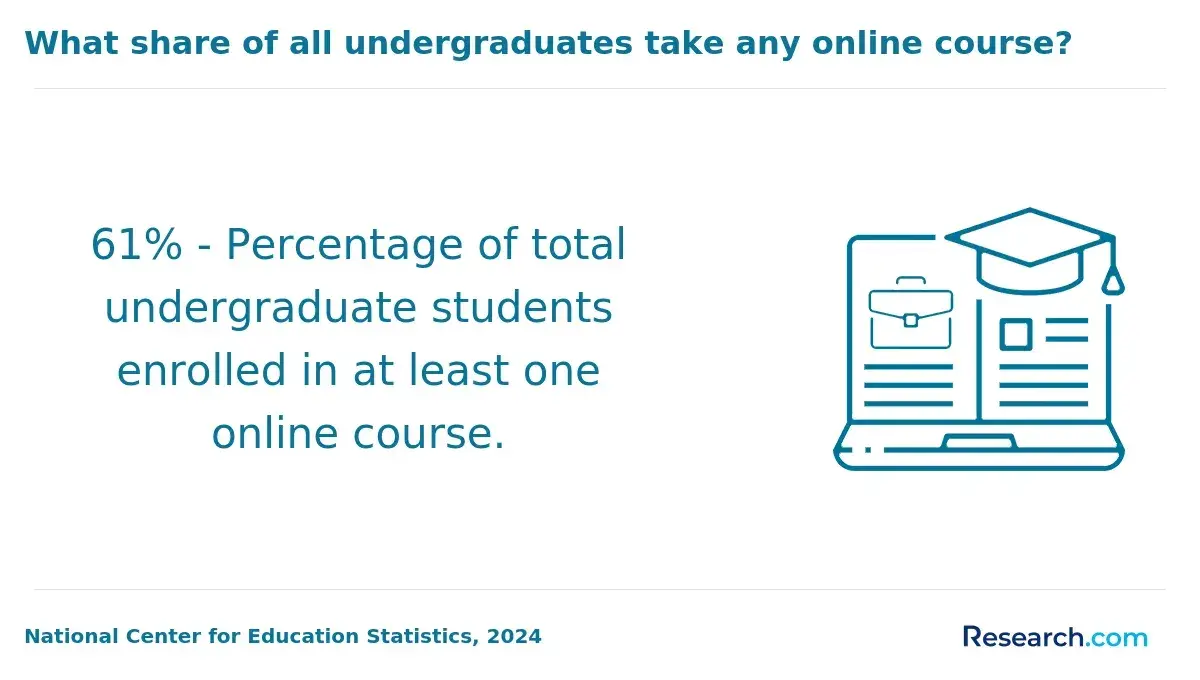
Online education has become more mainstream, but aid policies still depend on institutional and program-level rules. That is why two similar online PE degrees can produce very different aid packages even when both schools participate in federal student aid.
How Much Does an Online Physical Education Degree Cost After Financial Aid?
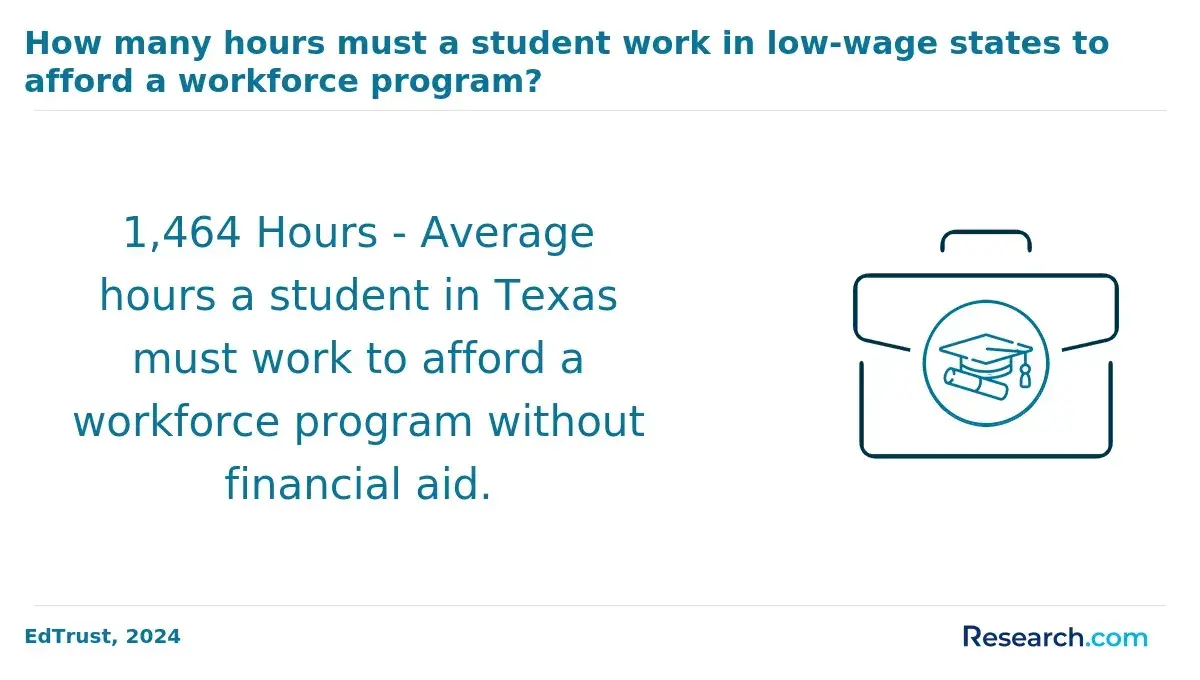
The real cost of an online physical education degree is the net price after grants and scholarships, plus any amount you borrow or pay out of pocket. Published tuition is only one part of the equation because online students may also pay technology fees, course fees, background check fees, liability insurance, exam fees, books, and travel costs for field experiences.
NCES reported in its 2024 education data that average net price varies sharply by institution type, which matters because online students often compare public, private nonprofit, and private for-profit programs side by side. Use that as a reminder to compare net cost rather than assuming one sector is always cheaper.
The table below shows how the same degree can look very different depending on transfer credits and aid. These are planning scenarios, not promises, because actual awards are determined by the school's financial aid office.
| Cost scenario | What changes the price | Typical student profile | Decision takeaway |
| Lowest tuition, limited transfer credit | Low per-credit rate but more credits remaining | First-time bachelor's student or student with few accepted credits | May still cost more overall if completion requires many credits |
| Moderate tuition, high transfer acceptance | Higher per-credit rate but fewer credits to complete | Community college graduate or returning adult learner | Can be the lowest total-cost pathway despite higher advertised tuition |
| Higher tuition, strong grant package | Institutional grants reduce net price | Student with strong financial need or merit profile | Worth comparing if grants do not require excessive borrowing |
| Low tuition, no licensure alignment | Degree is affordable but may not meet teaching requirements | Student who wants to become a licensed PE teacher | Cheap can become expensive if an additional licensure program is needed later |
A practical way to compare schools is to calculate the cost to finish, not the cost to start. Multiply remaining credits by tuition, add required fees, subtract grants and scholarships, then estimate how much would need to be borrowed.
Which Affordable Online Physical Education Degree Programs Offer the Best Value?
The best value is not always the lowest tuition. In physical education, value depends on whether the degree supports your intended outcome: teacher licensure, coaching advancement, recreation leadership, health education, athletic administration, or graduate study.
Use this framework to separate a genuinely affordable program from a merely cheap one:
- Choose the lowest net price when two accredited programs meet the same career requirement and offer similar student support.
- Choose the stronger licensure pathway when your goal is K-12 PE teaching and the cheaper program does not meet your state's educator preparation rules.
- Choose the more transfer-friendly school when you already have substantial credits and the higher tuition school accepts more of them.
- Choose the more flexible format when work schedules, student teaching, or coaching seasons could delay graduation at a cheaper but less flexible program.
- Choose stronger career services when you need help with field placements, school-district connections, coaching internships, or graduate applications.
Students who are comparing PE with other applied online fields should also look at career fit, not only affordability. For example, students drawn to athletics communication, brand promotion, or fan engagement may find that colleges for social media marketing align better with their preferred day-to-day work than a PE teaching or coaching pathway.
Are the Cheapest Online Physical Education Degree Programs Properly Accredited?
Accreditation is the main quality and aid safeguard for online physical education degrees. Institutional accreditation means an approved accreditor has reviewed the university as a whole; programmatic approval or educator-preparation recognition may also matter if the degree is designed for teacher licensure.
For FAFSA purposes, institutional accreditation and federal student aid participation are essential. For PE teacher licensure, state approval is just as important because every state controls educator licensing requirements. A low-cost online degree that is accredited institutionally may still fail to meet your state's PE teacher preparation rules.
Before enrolling, check these accreditation and approval items directly:
- Verify institutional accreditation through the U.S. Department of Education's accreditation database or the accreditor's own directory.
- Confirm the school participates in Title IV federal student aid programs.
- Ask whether the online PE program is state-approved for teacher preparation, if licensure is your goal.
- Ask which states the program is designed to serve, especially if you live outside the school's home state.
- Check whether student teaching, practicum, or field placements can be completed where you live.
- Request written confirmation before paying a deposit if licensure eligibility is a deciding factor.
Red flags include vague accreditation claims, pressure to enroll before aid is finalized, no published state authorization information, unclear student teaching requirements, and admissions staff who cannot explain whether the program leads to licensure.
What FAFSA Grants and Federal Aid Can Pay for an Online Physical Education Degree?
FAFSA can connect eligible online physical education students to several types of federal aid. Grants are usually the most valuable because they generally do not need to be repaid, while loans can make enrollment possible but affect long-term ROI.
The U.S. Department of Education lists the maximum Federal Pell Grant at $7,395 for the 2024-25 award year. For a student at a low-tuition public online program, that amount can cover a meaningful share of annual tuition; for a higher-cost private program, it may reduce the bill but still leave a large remaining balance.
The main aid categories to understand are:
- Federal Pell Grant: Need-based grant aid for eligible undergraduates who have not already earned a bachelor's degree, subject to federal rules and lifetime limits.
- Federal Supplemental Educational Opportunity Grant: Campus-based grant aid for students with exceptional financial need, available only at participating schools with limited funds.
- Federal Direct Subsidized Loans: Undergraduate loans for eligible students with financial need, with the federal government covering interest during certain in-school periods.
- Federal Direct Unsubsidized Loans: Loans available to eligible undergraduate and graduate students, with interest accruing according to federal loan rules.
- Federal Work-Study: Part-time employment aid at participating schools, though availability for fully online students depends on the institution and job options.
- Parent PLUS or Grad PLUS Loans: Credit-based federal loans that can help cover remaining costs but should be used carefully because balances can grow quickly.
Students should also compare federal aid with state grants, school scholarships, employer tuition assistance, military benefits, and local education foundation awards. The best aid package is usually the one that minimizes debt while still allowing you to complete the degree on time.
How Do Transfer Credits Lower the Cost of an Online Physical Education Degree?
Transfer credit is one of the most powerful cost reducers for an online physical education bachelor's degree. If a school charges per credit, every accepted transfer course can reduce tuition, shorten time to graduation, and lower the amount of aid or loans needed.
The transfer-credit decision is especially important for students coming from community colleges, military training, coaching certifications, prior universities, or associate degree programs. A program with slightly higher tuition can be cheaper overall if it accepts more credits toward major, general education, or elective requirements.
Ask each school for a degree audit before committing. The audit should show how many credits transfer, which requirements they satisfy, and exactly how many credits remain.
- Collect official transcripts from every college previously attended.
- Ask for a preliminary transfer evaluation before enrollment, not after classes begin.
- Confirm how many credits apply to the major rather than only to electives.
- Check whether there is a maximum transfer-credit cap.
- Ask whether prior learning, military training, certifications, or exams can count for credit.
- Compare remaining credits across schools and calculate the cost to finish at each one.
Students trying to finish faster sometimes look for accelerated online options, including 5 week college courses online. Short sessions can help motivated learners move quickly, but they require strong time management and may not be ideal during student teaching, coaching seasons, or full-time work periods.
Which Students Benefit Most From a Low-Cost Online Physical Education Degree With FAFSA?
A low-cost online physical education degree with FAFSA can be a strong fit for students who need flexibility, have transfer credits, and are realistic about career requirements. It is especially useful when the program's accreditation, state authorization, and course sequence match the student's goal.
The students most likely to benefit include:
- Community college graduates who can transfer a large block of credits into an online bachelor's completion program.
- Working adults who need asynchronous courses while working in schools, recreation centers, gyms, youth sports, or coaching roles.
- Paraprofessionals and assistant coaches who want a credential that supports advancement into teaching, coaching, or program leadership.
- Students with financial need who may qualify for grants and can keep borrowing low by choosing a public or transfer-friendly program.
- Licensed teachers who need an online graduate PE-related degree for salary advancement, endorsement, or professional development, subject to district and state rules.
Students should be more cautious if they need a very specific state licensure outcome, have few transfer credits, or are choosing PE mainly because it looks affordable. If income is the top priority, compare PE with other fields using resources on majors that make the most money, then weigh earnings potential against personal fit and licensure requirements.
How Does the Cost of an Online Physical Education Degree Affect Career ROI?
Career ROI depends on total cost, borrowing, completion time, and the role you pursue after graduation. Physical education degrees can lead to PE teaching, coaching, recreation management, wellness programming, athletic administration, or graduate study, but each path has different pay structures and credential requirements.
BLS reported a May 2024 median annual wage of $65,220 for high school teachers and $45,910 for coaches and scouts. Those figures are useful benchmarks, but they do not represent guaranteed earnings because salaries vary by state, district, sport level, contract length, certification, and experience.
Use this ROI lens before enrolling:
- For PE teaching: prioritize state-approved educator preparation, student teaching support, and total debt that is manageable on a teacher salary.
- For coaching: consider whether the degree includes sport pedagogy, strength and conditioning, leadership, and internship opportunities, since many coaching jobs are part-time or seasonal early on.
- For recreation or wellness roles: compare the PE curriculum with exercise science, health promotion, or sport management alternatives.
- For graduate school: choose an accredited bachelor's program with the prerequisites and GPA support needed for your intended master's pathway.
A more expensive program can be worth it if it prevents licensure delays, accepts more credits, offers stronger field placements, or reduces the risk of stopping out. Students considering other health and education graduate paths can compare cost expectations with programs such as an online speech pathology masters, where licensure alignment and clinical placement support also heavily influence value.
How Should Students Choose the Cheapest FAFSA-Eligible Online Physical Education Degree?
The best choice is the lowest net-cost accredited program that still meets your academic, licensure, schedule, and career requirements. Start with affordability, but do not stop there; the wrong low-cost program can lead to extra coursework, delayed licensure, or more borrowing later.
Use this decision process to compare programs consistently:
- Define your target outcome: PE teacher licensure, coaching, recreation, wellness, sport administration, or graduate study.
- Eliminate schools that are not institutionally accredited or do not participate in federal student aid.
- Confirm whether your exact online program is FAFSA-eligible.
- Request a full cost of attendance and estimated aid package from every school on your shortlist.
- Get a transfer-credit evaluation and calculate remaining credits.
- Ask about field placements, student teaching, internships, or any required in-person components.
- Compare net price, estimated borrowing, completion time, and career alignment side by side.
- Choose the program that gives you the best combination of low debt, valid credentialing, and realistic completion support.
Common mistakes include choosing based only on per-credit tuition, assuming FAFSA means free college, overlooking online fees, ignoring transfer limits, and failing to verify state licensure rules. A careful comparison may take more time upfront, but it can prevent the most expensive problem of all: paying for credits that do not move you toward your goal.
Other Things You Should Know About Physical Education
It can, but only if the program is approved for educator preparation in the state where you plan to seek licensure. Always confirm state approval, student teaching requirements, and out-of-state eligibility before enrolling.
Many do. Even if courses are online, PE teaching, coaching, and health education programs may require field observations, practicums, internships, student teaching, background checks, or local site approvals.
Often yes, but aid amounts may be reduced based on enrollment intensity. Students usually need to meet minimum enrollment rules and maintain satisfactory academic progress to keep receiving aid.
An associate degree may help with entry-level recreation, fitness, or transfer goals, but PE teaching roles usually require at least a bachelor's degree plus state licensure. Check employer and state requirements before choosing the shortest path.
References
- Guide to Financial Aid for Online Students https://www.onlineu.com/resources/financial-planning/financial-aid
- 9 Online Schools That Accept FAFSA (and How to Get Financial Aid) https://www.studentloanplanner.com/financial-aid-online-colleges/
- Online Physical Education Degree | Forest Trail Academy https://foresttrailacademy.com/exploring-an-online-physical-education-degree-and-its-benefits-for-high-school-students/
- Physical Education Master’s Programs Online: Compare Schools https://www.onlinemastersdegrees.org/best-programs/education/physical-education/
- Physical Education, BS - Elementary-Secondary Certification Kâ12 Option https://www.ucmo.edu/academics/programs/majors/coe/early-elementary-middle-and-physical-education/physical-education/physical-education-bs-elementary-secondary-cert-k-12/
- How to Become a Physical Education Teacher - Graduate Programs for Educators https://www.graduateprogram.org/blog/how-to-become-a-physical-education-teacher/
- How to Become a Physical Education Teacher: A 2026 Guide https://pioneer-healthcare.com/blog/what-it-takes-to-become-a-physical-education-teacher/
- Do Online Colleges Accept FAFSA? | Ascent Funding https://www.ascentfunding.com/blog/do-online-colleges-accept-fafsa/
- Can You Get Financial Aid for Online College? Finding Out https://beal.edu/can-you-get-financial-aid-for-online-college/
- Cost of College by Country [2025]: Average Tuition Fees https://educationdata.org/average-cost-of-college-by-country