2027 Fastest Accredited Online Physical Education Degree Programs That Accept Transfer Credits

Co-Founder and Chief Data Scientist
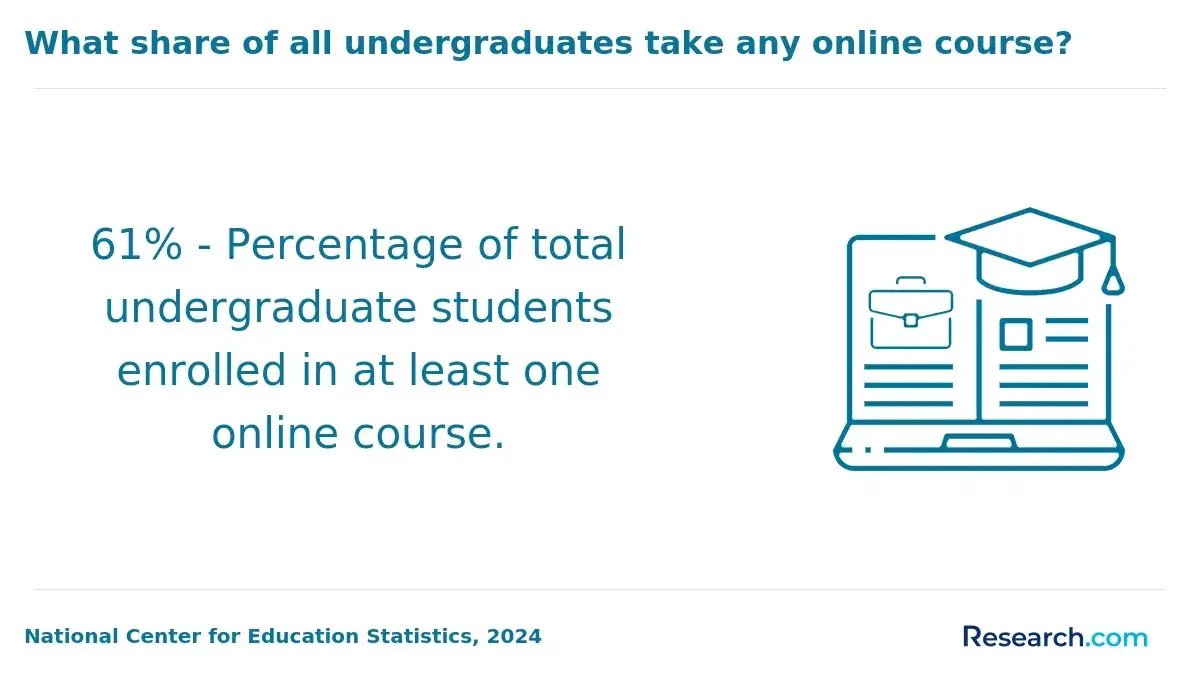
The fastest path to an accredited online Physical Education degree usually depends less on the school's advertised pace and more on how many of your previous credits actually apply. NCES distance education data published in 2024 shows that most undergraduates now take at least some online coursework, making transfer-friendly online completion paths more relevant for returning students.
This guide is for transfer students, adult learners, and degree completers who want the quickest legitimate route to graduation. You'll learn how to compare programs, verify accreditation, estimate realistic timelines, and avoid transfer-credit surprises.
Key Things You Should Know
- The fastest realistic route is usually a 120-credit accredited bachelor's program that accepts about 75% of the degree, often up to 90 transfer credits, leaving roughly 30 credits of residency and major coursework.
- Transfer-friendly options most likely to shorten time include online Physical Education, Physical Education and Health, kinesiology, exercise science, health education, and sport science programs with 8-week terms, year-round starts, and clear degree audits.
- A school's maximum transfer-credit policy is not the same as applied transfer credit; the fastest program is the one that accepts your prior credits into general education, electives, prerequisites, and major requirements with the fewest repeats.
What Are the Fastest Accredited Online Physical Education Degree Programs That Accept Transfer Credits?
The fastest accredited online Physical Education degree programs for transfer students are usually bachelor's-completion programs or PE-adjacent programs in physical education and health, kinesiology, exercise science, sport science, or health education. Fully online teacher-preparation programs in Physical Education are less common because K-12 licensure often requires supervised fieldwork, student teaching, or state-specific clinical placements.
For speed, prioritize programs with institutional accreditation, published transfer-credit limits, multiple start dates, short academic terms, and a degree audit before enrollment. If you are still comparing online school quality more broadly, Research.com's guide to the best online degrees can help you understand accreditation and online delivery standards before narrowing your PE options.
The table below summarizes common fast-track program types rather than promising that every student will finish in the same time. Your actual timeline depends on your transcript, GPA, prerequisites, state licensure goals, and whether transferred credits match the degree plan.
| Program type | Typical transfer-friendly feature | Fastest realistic fit | Main caution |
| Online BS in Physical Education and Health | May accept substantial lower-division general education and elective credits | Students who want PE, wellness, coaching, or health-related coursework | May not automatically meet teacher licensure requirements in every state |
| Online Physical Education teacher-preparation program | Can accept prior college credits while preserving professional education requirements | Students seeking K-12 PE teaching eligibility and willing to complete field placements | Student teaching may extend the timeline even when transfer credits are generous |
| Online kinesiology or exercise science bachelor's | Often accepts general education, science, and elective transfer credits | Students targeting fitness, wellness, coaching, recreation, or graduate study | May not be titled "Physical Education" and may not qualify for PE teacher licensure |
| Online health education or wellness degree | Usually flexible with electives and prior coursework | Students interested in school wellness, community health, corporate wellness, or prevention programs | Less focused on movement pedagogy and physical activity instruction |
| Adult degree-completion program with PE-related concentration | Designed around prior college credit and nontraditional students | Students with 60 to 90 credits who mainly need upper-division coursework | Major alignment must be checked carefully before enrolling |
Programs that are often faster for transfer students share a few traits. Before applying, ask admissions for a written unofficial transfer review so you can compare remaining requirements, not just transfer maximums.
- They accept up to 75% of the bachelor's degree from previous accredited college coursework, which commonly equals about 90 credits in a 120-credit program.
- They offer 8-week or similarly accelerated online terms, allowing motivated students to complete more courses across the year.
- They publish residency rules, upper-division requirements, minimum grade requirements, and transfer-equivalency policies.
- They allow some combination of general education, free electives, major prerequisites, and prior learning credits to reduce remaining coursework.
- They provide advisor-reviewed degree maps before the student commits financially.
A fast program is not always the best program. If your goal is K-12 PE teaching, a slightly slower accredited teacher-preparation pathway may be better than a faster sport science degree that does not meet your state's licensure rules.
How Fast Can You Complete an Online Physical Education Degree With Transfer Credits?
Most online bachelor's degrees in Physical Education or PE-adjacent fields require about 120 credits. If a program accepts 90 applicable transfer credits, the remaining 30 credits may be completed in about 10 courses, but the calendar time depends on term length, course load, course sequencing, and required field experiences.
Accelerated terms can help, but they do not remove academic workload. For example, schools that offer short sessions similar to 5 week college courses online can make year-round progress possible, yet students still need enough weekly study time to keep up with compressed assignments, exams, and projects.
The following table shows practical completion ranges for a 120-credit bachelor's degree. These are planning estimates, not guarantees, because schools may require specific upper-division major courses that cannot be transferred.
| Applicable transfer credits | Credits remaining | Typical remaining courses | Fast full-time estimate | Part-time estimate |
| 90 credits | 30 credits | About 10 courses | 9 to 12 months | 18 to 24 months |
| 75 credits | 45 credits | About 15 courses | 12 to 18 months | 24 to 30 months |
| 60 credits | 60 credits | About 20 courses | 18 to 24 months | 30 to 36 months |
| 30 credits | 90 credits | About 30 courses | 30 to 36 months | 4 years or more |
| 0 credits | 120 credits | About 40 courses | 3 to 4 years | 4 to 6 years |
To estimate your fastest credible timeline, follow a sequence that forces each school to show how your credits apply. This prevents the common mistake of choosing the school with the highest advertised transfer limit but the most leftover major requirements.
- Send unofficial transcripts to each school and request a preliminary degree audit, not just an admissions review.
- Ask how many credits apply to general education, free electives, major prerequisites, upper-division requirements, and the Physical Education core.
- Confirm whether required courses are offered every term or only once per year.
- Ask whether fieldwork, practicum, student teaching, CPR certification, or background checks affect the timeline.
- Compare the number of remaining credits, the number of required terms, and the total estimated cost before applying.
The fastest students usually enter with a completed associate degree, strong general education coverage, recent science or health courses, and enough flexibility to take two courses per accelerated term. Students balancing full-time work, caregiving, or athletic coaching schedules may be better served by a slower plan that protects GPA and financial aid eligibility.
How Many Transfer Credits Can You Apply Toward an Online Physical Education Degree?
Many accredited online bachelor's programs allow transfer students to bring in up to 75% of the total degree, commonly 90 credits in a 120-credit program. Some adult-completion institutions may accept slightly more in certain degree structures, but they still require institutional residency and usually require major coursework to be completed through the degree-granting school.
The key distinction is "accepted" versus "applied." A college may accept 90 credits on your transcript, but only 72 may apply if some courses duplicate requirements, are too old for science or education rules, were completed with grades below the minimum, or do not match the degree's Physical Education curriculum.
The table below explains how transfer credits are usually sorted during a degree audit. Understanding these categories helps you predict whether your prior coursework will actually reduce time to graduation.
| Credit category | How it can help | Why it may not apply |
| General education | Can clear writing, math, science, humanities, and social science requirements | Courses may not match the school's distribution rules |
| Free electives | Can absorb extra prior credits and reduce total remaining credits | Many degrees have limited elective space |
| Major prerequisites | Can shorten the path if prior anatomy, physiology, health, or education courses match | Schools may require recent grades or exact course equivalencies |
| Upper-division major credits | Can reduce advanced coursework if the school accepts comparable junior- or senior-level classes | Many programs require upper-division PE courses in residence |
| Professional education credits | Can help teacher-preparation students avoid repeating foundations courses | Licensure programs often restrict transfer into methods, practicum, and student teaching |
| Prior learning assessment | Can convert documented experience into elective or limited major credit | Usually requires portfolios, fees, faculty review, and strict documentation |
Before you assume you can transfer the maximum, check the policy details that most often change a student's timeline. These rules are especially important for students with older credits, multiple transcripts, military training, or credits from nationally accredited institutions.
- Minimum grade requirement, often a C or higher for transfer and sometimes higher for major or licensure courses.
- Source accreditation requirement, especially whether the school accepts credits from regionally accredited, nationally accredited, or specialized institutions.
- Age limits for science, health, technology, and professional education courses.
- Maximum community college transfer limit, which may differ from the total transfer limit.
- Upper-division credit requirement, which may require junior- and senior-level coursework at the new institution.
- Major-course residency rule, which can require the PE core, teaching methods, or capstone to be completed at the degree-granting school.
A transfer-friendly school should be willing to show you a remaining-course list. If the school only says "you can transfer up to 90 credits" without showing how your specific credits apply, keep comparing options.
How Can You Verify Accreditation for Fast Online Physical Education Degree Programs?
Accreditation is the first quality checkpoint for any fast online Physical Education degree. Institutional accreditation matters for federal financial aid, transferability, employer recognition, and graduate school admission. For teacher-preparation programs, state approval and educator-preparation accreditation may also matter, depending on where you plan to seek licensure.
A fast degree is only useful if the credential is recognized. Use the following steps before you enroll, especially if a program advertises unusually short timelines or very generous credit awards.
- Search the school in the U.S. Department of Education's recognized accreditation database or the accreditor's official institution directory.
- Confirm that the institution, not just a department or continuing education unit, is accredited by a recognized accrediting agency.
- Check whether the online campus, online division, or branch location is included under the institution's accreditation status.
- If you want to teach K-12 PE, verify state educator-preparation approval with the state licensing board where you plan to work.
- Ask whether the degree title, concentration, and delivery format appear on the transcript or diploma in a way that affects licensure or employment.
- Confirm whether the program includes required fieldwork, student teaching, background checks, or liability insurance for clinical placements.
The table below separates accreditation checks that apply to most online students from checks that matter specifically for future teachers. This distinction can prevent you from choosing a fast program that does not match your career goal.
| Accreditation or approval check | Why it matters | Who should pay closest attention |
| Institutional accreditation | Supports federal aid eligibility, credit transfer, graduate admission, and employer recognition | All students |
| State authorization for online learning | Confirms the school can enroll online students from your state | Out-of-state online students |
| Educator-preparation approval | May be required for initial PE teacher licensure | Students planning to teach in K-12 schools |
| Field-placement approval | Determines whether student teaching or practicum can be completed near you | Teacher-preparation and licensure students |
| Graduate-school acceptance | Helps if you plan to pursue athletic training, physical therapy, health education, or education graduate programs | Students planning advanced study |
Red flags include vague claims such as "fully accredited" without naming the accreditor, pressure to enroll before a credit evaluation, promises of a bachelor's degree in a few months, or unwillingness to explain licensure limitations. If a program sounds faster than the credit requirements allow, slow down and verify.
Which Types of Transfer Credits Can Count Toward an Online Physical Education Degree?
Physical Education degree plans often combine general education, movement science, pedagogy, health, coaching, fitness assessment, adapted physical education, and field-based learning. Because of that mix, a wide range of previous credits may help, but only if they match the program's curriculum.
Students with prior coursework in education, anatomy, physiology, biology, psychology, nutrition, health, wellness, coaching, or sport management may have an advantage. However, some PE programs require specific methods courses or teaching practica that are difficult to replace with transfer credit.
The following categories are the most likely to count toward a Physical Education or PE-related online bachelor's degree. Use them as a checklist when reviewing your transcript with an advisor.
- College writing, communication, math, humanities, natural science, and social science courses that satisfy general education requirements.
- Introductory health, wellness, nutrition, first aid, anatomy, physiology, exercise science, kinesiology, or motor development courses.
- Education foundations, child development, educational psychology, classroom management, or diversity in education courses.
- Coaching, sport management, recreation, adapted physical activity, or fitness assessment courses that may apply to electives or concentration requirements.
- Previously completed associate degree coursework, especially from public community colleges with articulation agreements.
- Military training or professional certifications reviewed through an approved credit-recommendation process.
The table below shows how common prior-credit backgrounds may translate into an online PE degree. It is meant to help you identify strengths and gaps before requesting official evaluations.
| Prior background | Credits most likely to apply | Possible gaps to expect |
| Associate of Arts or Associate of Science | General education and electives | Upper-division PE major courses |
| Associate degree in health, fitness, or exercise science | Science, wellness, anatomy, physiology, and fitness-related coursework | Teaching methods, adapted PE, and capstone requirements |
| Prior education major coursework | Foundations, psychology, diversity, and classroom-related courses | Movement science and PE-specific methods |
| Military training | Physical training, leadership, health, and elective credit when approved | Major-specific academic requirements |
| Coaching or fitness certifications | Possible prior learning or elective credit | Upper-division theory, assessment, and pedagogy courses |
The common mistake is assuming that work experience, coaching experience, or personal training experience automatically replaces academic coursework. Some schools award credit for documented prior learning, but most require formal review and may limit it to electives.
How Do Residency and Major Requirements Affect Transfer Credits for an Online Physical Education Degree?
Residency requirements determine how many credits you must complete through the school awarding your degree. Even if a college accepts 90 transfer credits, it may still require at least 30 credits in residence, a minimum number of upper-division credits, and a set of major courses completed through that institution.
For transfer students, residency is often the difference between "I have enough credits" and "I can graduate soon." A student with 95 previous credits may still need a full year if the remaining requirements include sequential PE methods courses, a practicum, or a capstone offered only in specific terms.
The table below shows the residency rules that most often affect accelerated completion. These policies vary by school, but the categories are common across accredited bachelor's programs.
| Requirement | Common rule | How it affects speed |
| Total institutional residency | Often about 25% of the degree, commonly 30 credits in a 120-credit bachelor's | Creates a minimum number of credits you must still take even with many transfer credits |
| Major residency | Some PE core or upper-division major courses must be taken at the school | Can prevent older or similar courses from replacing key major classes |
| Upper-division requirement | Programs may require a set number of junior- or senior-level credits | Community college credits may not satisfy advanced-course requirements |
| Capstone or senior seminar | Usually must be completed through the degree-granting school | Adds at least one final-term course |
| Fieldwork or student teaching | May require school-approved placements and supervision | Can add scheduling constraints even in online programs |
Ask direct questions about residency before choosing a program. These questions are more useful than asking only how many credits the school accepts.
- How many credits must I complete through your institution to graduate?
- How many upper-division credits are still required after my transfer evaluation?
- Which Physical Education major courses cannot be transferred?
- Are practicum, student teaching, internship, or capstone courses offered every term?
- Can I complete field placements in my home state, and who approves the site?
- Will any of my credits transfer as excess electives that do not reduce my remaining requirements?
Students who want the fastest route should compare remaining course sequences, not just remaining credit totals. Ten remaining courses can take two terms or five terms depending on prerequisites and course availability.
Can Prior Learning, CLEP, Military Training, or Certifications Help You Finish an Online Physical Education Degree Faster?
Yes, alternative credit can sometimes reduce the time and cost of an online Physical Education degree, especially for students who need general education or elective credits. The most useful options are prior learning assessment, CLEP or DSST exams, military training evaluations, and approved professional certifications.
Alternative credit is not automatic. Schools decide whether to award it, where it applies, how much can count toward the degree, and whether it can satisfy major requirements. Teacher-preparation programs may be especially cautious because licensure standards often require documented coursework and supervised practice.
The table below compares common nontraditional credit options. Use it to identify which options are worth discussing with an advisor before you pay for exams or portfolio reviews.
| Credit option | Best use | Speed advantage | Limitations |
| CLEP exams | General education subjects such as composition, social sciences, history, or math | Can clear requirements without taking a full course | Not all schools accept every exam or score |
| DSST exams | General education and applied subjects, often useful for adult and military students | Can fill lower-division gaps quickly | May apply only as electives |
| Military training | Leadership, health, physical training, and occupational learning evaluated for credit | Can reduce elective or applied-credit needs | Requires official military transcripts and school review |
| Prior learning assessment portfolio | Documented coaching, fitness, training, or instructional experience | Can convert experience into credit when approved | Usually requires fees, evidence, faculty evaluation, and time |
| Professional certifications | CPR, first aid, coaching, personal training, group fitness, or strength and conditioning credentials | May support elective or prior learning credit | Rarely replaces advanced PE methods or student teaching |
To use alternative credit strategically, confirm acceptance before you start. This avoids spending time on credits that do not apply to the PE degree plan.
- Ask the school for its CLEP, DSST, military, certification, and prior learning credit policies in writing.
- Request a list of remaining requirements after your traditional transfer credits are evaluated.
- Identify which remaining requirements can be met by exam or prior learning credit.
- Confirm maximum limits for alternative credit and whether those credits count toward residency.
- Complete the lowest-risk exams or documentation first, especially for general education gaps.
Alternative credit can be a strong accelerator for degree completers, but it is rarely a complete shortcut. In most accredited PE programs, advanced major courses, capstones, and supervised teaching experiences still must be completed through formal enrollment.
How Much Does a Fast Online Physical Education Degree Cost After Transfer Credits and Financial Aid?
The cost of a fast online Physical Education degree depends on tuition per credit, the number of credits remaining, fees, books, field-placement costs, exam fees, and financial aid eligibility. Transfer credits can lower total cost because you pay only for remaining coursework, but a faster schedule can also create cash-flow pressure if you take more credits per term.
NCES data published in 2024 continues to show a wide tuition gap between public and private nonprofit institutions, which means transfer students should compare total remaining cost rather than sticker price alone. This is the same affordability logic students use when comparing other professional online paths, such as an online speech pathology masters, where accreditation, clinical requirements, and total cost matter more than headline tuition.
When estimating price, list the costs that directly affect your remaining degree plan. The most useful numbers are the ones tied to your transfer evaluation.
- Remaining tuition: multiply the school's per-credit tuition by the number of credits left after your degree audit.
- Online fees: include technology, distance learning, course, assessment, and graduation fees.
- Books and materials: include digital access codes, lab materials, and fitness or assessment equipment if required.
- Fieldwork costs: include background checks, liability insurance, transportation, testing, uniforms, or placement-related expenses.
- Alternative credit costs: include CLEP, DSST, portfolio assessment, transcript, and certification-review fees.
- Net cost after aid: subtract grants, scholarships, employer tuition assistance, military benefits, and approved education benefits before comparing schools.
The table below shows how transfer credits can affect tuition exposure in a 120-credit bachelor's program. It uses a simple per-credit planning model so you can plug in each school's actual tuition rate.
| Applicable transfer credits | Credits remaining | Cost at $350 per credit | Cost at $500 per credit | Cost at $700 per credit |
| 90 credits | 30 credits | $10,500 | $15,000 | $21,000 |
| 75 credits | 45 credits | $15,750 | $22,500 | $31,500 |
| 60 credits | 60 credits | $21,000 | $30,000 | $42,000 |
| 30 credits | 90 credits | $31,500 | $45,000 | $63,000 |
Fastest and cheapest are not always the same. A lower-tuition program may take longer if it accepts fewer credits, while a higher-tuition program may cost less overall if it applies more of your prior coursework and reduces remaining terms.
Before enrolling, ask financial aid staff how accelerated enrollment affects aid disbursement, satisfactory academic progress, annual loan limits, and part-time versus full-time status. Students who already have many attempted credits should also confirm whether transfer credits count toward maximum timeframe rules for federal aid.
How Do Accelerated, Competency-Based, and Self-Paced Online Physical Education Degree Programs Compare?
Fast online degree programs do not all work the same way. Accelerated programs compress course length, competency-based programs let students progress by proving mastery, and self-paced programs offer flexible deadlines within a term or subscription period. In Physical Education, fully competency-based options are less common than in business or IT because PE often includes applied science, instruction, assessment, and sometimes field experiences.
Online education trends across many majors show growing demand for shorter terms and career-aligned formats, including programs outside education such as colleges for social media marketing. For PE students, however, the right format must still support hands-on learning, movement analysis, teaching practice, and any state-required field placements.
The table below compares the major formats from a transfer student's perspective. The fastest choice is the one that matches your schedule, remaining credits, and ability to handle concentrated coursework.
| Format | How it works | Best for | Speed advantage | Main trade-off |
| Accelerated online terms | Courses run in shorter sessions, often with multiple starts per year | Students who can manage weekly deadlines and steady assignments | Can complete more courses across a calendar year | Workload is compressed and can be intense |
| Competency-based education | Students advance by demonstrating mastery of defined competencies | Experienced learners with strong independent study habits | Can be faster when prior knowledge is strong | May be limited for PE majors with labs, fieldwork, or licensure requirements |
| Self-paced online courses | Students move through content with flexible pacing within school rules | Students with unpredictable work or coaching schedules | Can reduce waiting time between assignments | Requires discipline and may still have term deadlines |
| Traditional online semesters | Courses follow standard 15- or 16-week academic calendars | Students who need a manageable pace or stronger instructor interaction | Less risk of overload | Usually slower for degree completers |
| Hybrid or field-based online program | Academic courses are online, but clinical or teaching experiences happen in person | Students pursuing teacher licensure or applied PE roles | Online coursework saves commuting time | Placement scheduling can slow completion |
Choose the format by matching it to your life, not just the advertised completion time. A student with 90 applicable credits and flexible work hours may move quickly through accelerated terms, while a student with family obligations may finish faster in practice by taking a sustainable part-time load and avoiding withdrawals.
Use these decision rules when comparing formats.
- Choose accelerated terms if you have strong time management, predictable weekly study hours, and few remaining prerequisites.
- Choose competency-based options only if the program is accredited, the degree fits your goal, and the school explains how PE-related competencies map to graduation requirements.
- Choose self-paced options if your schedule changes often but you can stay motivated without frequent deadlines.
- Choose a traditional or slower online plan if you need higher grades for graduate school, licensure, or scholarships.
- Avoid any format that minimizes required fieldwork if your goal is K-12 teacher licensure.
Are Fast Accredited Online Physical Education Degrees Respected by Employers and Graduate Schools?
Fast accredited online Physical Education degrees can be respected when they come from a properly accredited institution, match the student's career goal, and include appropriate coursework or field experience. Employers and graduate schools generally focus on accreditation, degree relevance, GPA, experience, certifications, and whether the program meets licensure or prerequisite requirements.
For career planning, Physical Education students should separate teaching, coaching, fitness, wellness, and graduate-school pathways. BLS May 2024 wage data shows that education and fitness-related roles vary widely by setting, which is why students comparing PE to other fields often review broader resources on majors that make the most money before committing to a path.
The table below outlines common outcomes associated with PE-related bachelor's degrees. It does not guarantee employment or salary; it shows how degree fit and additional requirements can affect options.
| Path | How the degree may be used | Additional requirement to check |
| K-12 Physical Education teacher | Prepares for teaching movement, fitness, health, and physical literacy in schools | State-approved teacher preparation, exams, student teaching, and licensure |
| Coach or athletic program staff | Supports roles in school, youth, community, or recreational sports settings | Coaching certification, background checks, CPR, first aid, and sport-specific experience |
| Fitness or wellness professional | Supports work in gyms, community wellness, corporate wellness, or recreation programs | Industry certifications and practical experience |
| Graduate study in education or health fields | Can support admission to master's programs if prerequisites are met | GPA, prerequisite science courses, recommendation letters, and program-specific requirements |
| Recreation or community health roles | Applies health promotion, activity programming, and wellness education skills | Relevant internships, volunteer experience, and local employer expectations |
Respect depends heavily on alignment. A fast online exercise science degree may be well suited for wellness or graduate prerequisites but may not qualify someone for a PE teaching license. A slower licensure-track PE program may be more valuable for a student whose goal is public school teaching.
To strengthen the value of a fast online PE degree, build evidence of applied skill while you study. Employers and graduate programs are more likely to trust a fast pathway when the student can show field experience, certifications, and strong academic performance.
- Complete CPR, first aid, coaching, personal training, or fitness-related certifications that match your career goal.
- Document coaching, teaching, recreation, youth program, or wellness experience through a resume and portfolio.
- Ask about internships, practicums, school placements, or local field opportunities before enrolling.
- Maintain a strong GPA if you may apply to graduate school or teacher licensure programs.
- Confirm state licensure rules before choosing any program that is not explicitly approved for PE teacher preparation.
The most respected fast degree is not the one with the shortest advertisement. It is the accredited program that applies your transfer credits efficiently, preserves academic quality, and matches the credential requirements of the role you want.
Other Things You Should Know About Physical Education
No. Physical Education programs focus on movement science, teaching, fitness, health, assessment, and inclusive activity programming. Athletic experience can help in coaching or demonstration-heavy settings, but it is not a substitute for coursework, field experience, or professional skills.
Usually, the diploma does not state that the degree was completed online, but policies vary by institution. Ask the registrar how the degree title, concentration, and campus appear on transcripts and diplomas, especially if you plan to apply for licensure or graduate school.
Yes, many students do, but accelerated terms require consistent weekly study time. If you work full time, coach during evenings, or have caregiving responsibilities, a part-time accelerated plan may be more realistic than taking multiple compressed courses at once.
Send unofficial transcripts from every college attended, military transcripts if applicable, certification records, test-score reports, and course descriptions or syllabi for classes that may need review. A school can give a more accurate timeline only after seeing your actual credits.
References
- Most Popular Online Physical Education Degrees 2025 https://www.onlineu.com/degrees/physical-education
- Academic Outcomes of Associate Degree Transfer Students ... https://scholarsarchive.library.albany.edu/cgi/viewcontent.cgi
- K-12 Physical Education Licensure with MA in Education https://western.edu/undergraduate/accelerated-physical-education/
- Top Online Schools That Accept Transfer Credits https://www.edvisorly.com/student-guides/online-schools-that-accept-transfer-credits
- B.S.Ed. in Physical Education https://mayvillestate.edu/msu-online/programs/bsed-physical-education/
- Choosing an Online School as a Transfer Student | OEDb.org https://www.oedb.org/advice/choosing-an-online-school-for-transfer-students/
- New Pathways to a College Degree: How Transfer Credits Save Time https://www.uagrantham.edu/blog/transfer-college-credits-online-pathways-degree/
- StraighterLine Courses https://www.straighterline.com/online-college-courses/
- Best Online Physical Therapy Degrees Of 2025 | AffordableCollegesOnline.org https://www.affordablecollegesonline.org/degrees/physical-therapy-schools/
- Online Doctor of Physical Therapy (DPT) Programs | 2026 Guide https://onlinephysicaltherapyprograms.com/