2027 Moving From RBT to BCBA: Education, Cost and Timeline

Co-Founder and Chief Data Scientist
Moving from RBT to BCBA is not just a promotion. It is a shift from implementing behavior plans under supervision to designing, supervising, and evaluating applied behavior analysis services. For many RBTs, the main decision is whether the additional graduate education, supervised fieldwork, exam preparation, and cost make sense for their career goals.
This guide explains the RBT-to-BCBA pathway in practical terms: how the roles differ, what education and supervised experience are required, how long the transition can take, what costs to plan for, and how to compare online, hybrid, and campus programs. It is designed for working RBTs, career changers with non-ABA undergraduate degrees, and anyone trying to build a realistic plan for BCBA certification in 2026.
Key Things You Should Know
- The transition from RBT to BCBA in 2026 requires completion of a master's degree in behavior analysis or related fields and 1,500 supervised practicum hours, extending the typical timeline to 2-3 years.
- Cost estimates for education and supervision generally range from $15,000 to over $30,000, including graduate programs and exam fees, influencing financial planning for prospective students.
- Demand for BCBAs is projected to grow by 20% by 2030, emphasizing career advancement opportunities for RBTs pursuing certification upgrades in behavior analysis.
What is an RBT and how does it differ from a BCBA?
An RBT, or Registered Behavior Technician, is a paraprofessional role in applied behavior analysis. RBTs work directly with clients, collect data, follow behavior intervention protocols, and implement skill-acquisition or behavior-reduction procedures. They do not independently assess clients, design treatment plans, or make clinical decisions. Their work must be performed under appropriate supervision, usually by a BCBA.
A BCBA, or Board Certified Behavior Analyst, is a graduate-level practitioner who can assess behavior, develop treatment goals, write intervention plans, analyze data, supervise staff, and make clinical recommendations. In many service settings, the BCBA is responsible for determining why behavior occurs, choosing evidence-based interventions, and monitoring whether those interventions are working.
The practical difference is scope of responsibility. An RBT is primarily responsible for accurate implementation. A BCBA is responsible for assessment, clinical judgment, supervision, and outcomes. That difference affects daily work, liability, pay, and long-term career options.
| Category | RBT | BCBA |
| Role level | Paraprofessional | Graduate-level practitioner |
| Main function | Implements behavior-analytic services | Designs, supervises, and evaluates behavior-analytic services |
| Typical duties | Direct client sessions, data collection, protocol implementation | Assessment, treatment planning, supervision, data analysis |
| Education pathway | 40-hour training program and competency assessment | Master's degree, supervised fieldwork, and certification exam |
| Independence | Works under close supervision | Provides clinical direction and supervises others |
The move from RBT to BCBA is common because RBT work gives candidates direct exposure to ABA service delivery. However, RBT experience by itself does not replace graduate education, verified coursework, supervised fieldwork, or the BCBA exam.
The BCBA exam is also a serious milestone. According to BACB data reported by onlineabaprograms.org, first-time takers had a 54% pass rate, while retakers improved slightly to 25%. RBTs considering the transition should choose a program with strong exam preparation, qualified supervision support, and a structure they can realistically complete while working. Flexible BCBA certification online options may help candidates meet coursework requirements without relocating.
What education is required to transition from RBT to BCBA?
To transition from RBT to BCBA, candidates generally need graduate-level education in behavior analysis or an approved related field, behavior-analytic coursework, supervised fieldwork, and a passing score on the BCBA exam. The RBT credential is useful experience, but it is not a substitute for the BCBA education and fieldwork requirements.
BCBA certification requires over 315 hours of coursework covering behavior analytic principles, ethics, research methods, assessment, intervention design, and data analysis. This is a substantial step up from the 225 hours needed for BCABAs and reflects the broader clinical and supervisory responsibilities expected of BCBAs.
Candidates must also complete supervised fieldwork. One route requires at least 2,000 hours of supervised fieldwork involving the direct application of behavior-analytic techniques under qualified BCBA supervision. Another route allows 1,500 hours with at least 10% direct supervision. These requirements are more demanding than BCABA requirements, which call for 1,300 hours with less supervision.
Core education steps
- Confirm that your current degree background meets the entry requirements for a qualifying graduate program.
- Enroll in a graduate program or coursework sequence aligned with BCBA eligibility requirements.
- Complete the required ABA coursework, including ethics, assessment, measurement, intervention, and research design.
- Secure a qualified BCBA supervisor before counting fieldwork hours.
- Track fieldwork documentation carefully and consistently.
- Apply for the BCBA exam only after all coursework and fieldwork requirements are complete and documented.
RBTs with undergraduate degrees outside behavior analysis should pay close attention to admission rules. Many programs accept students from psychology, education, human services, or related fields, but prerequisites vary. Before enrolling, candidates should ask whether the program meets current BACB requirements, whether it includes the required coursework, and whether fieldwork support is included or must be arranged separately.
RBTs in Texas state requirements for BCBA certification from RBT should still follow BACB requirements while also checking any employer, payer, school district, or state-specific expectations that may affect practice. The safest approach is to choose a program that clearly explains eligibility, supervision documentation, and exam preparation.
The transition typically takes 1.5 to 3 years based on course load and fieldwork availability. RBTs comparing programs can use a reputable BCBA degree resource to evaluate curriculum format, supervision options, and overall fit before committing.
How long does it take to go from RBT to BCBA?
For candidates who already have a bachelor's degree, the timeframe for becoming a BCBA after RBT in the US typically ranges from 2 to 5 years. The exact timeline depends on graduate program length, whether the student studies full time or part time, how quickly supervised fieldwork hours can be completed, and how much time is needed for exam preparation.
A full-time master's program in applied behavior analysis generally takes about two years. Many students complete coursework and fieldwork at the same time, which can shorten the total path. However, students who work full time, change supervisors, have limited client access, or attend part time may need closer to 4 or 5 years.
Typical timeline by stage
| Stage | What happens | Planning note |
| Graduate coursework | Complete master's-level ABA coursework in assessment, intervention, ethics, measurement, and research methods | Often about two years of full-time study |
| Supervised fieldwork | Accumulate approximately 1,500 hours of supervised practical experience, depending on the fieldwork route | Can often be completed alongside coursework |
| Exam preparation | Review task-list content, practice applied scenarios, and prepare for the certification exam | Typically adds 3 to 6 months |
The fastest route is usually available to candidates who can attend an aligned program, maintain consistent employment in an ABA setting, and secure qualified supervision early. The slowest route often results from switching programs, delaying fieldwork, losing access to supervision, or underestimating documentation requirements.
Before enrolling, ask each program whether fieldwork can begin during coursework, whether the school helps identify supervisors, and whether classes are offered in a predictable sequence. Candidates seeking a shorter academic route can compare ABA masters programs designed for accelerated or flexible completion.
A realistic RBT-to-BCBA plan should include time for graduate admissions, coursework, supervision paperwork, fieldwork hour accumulation, exam study, and possible delays. Planning for the full process reduces the risk of paying for coursework before supervision is available.
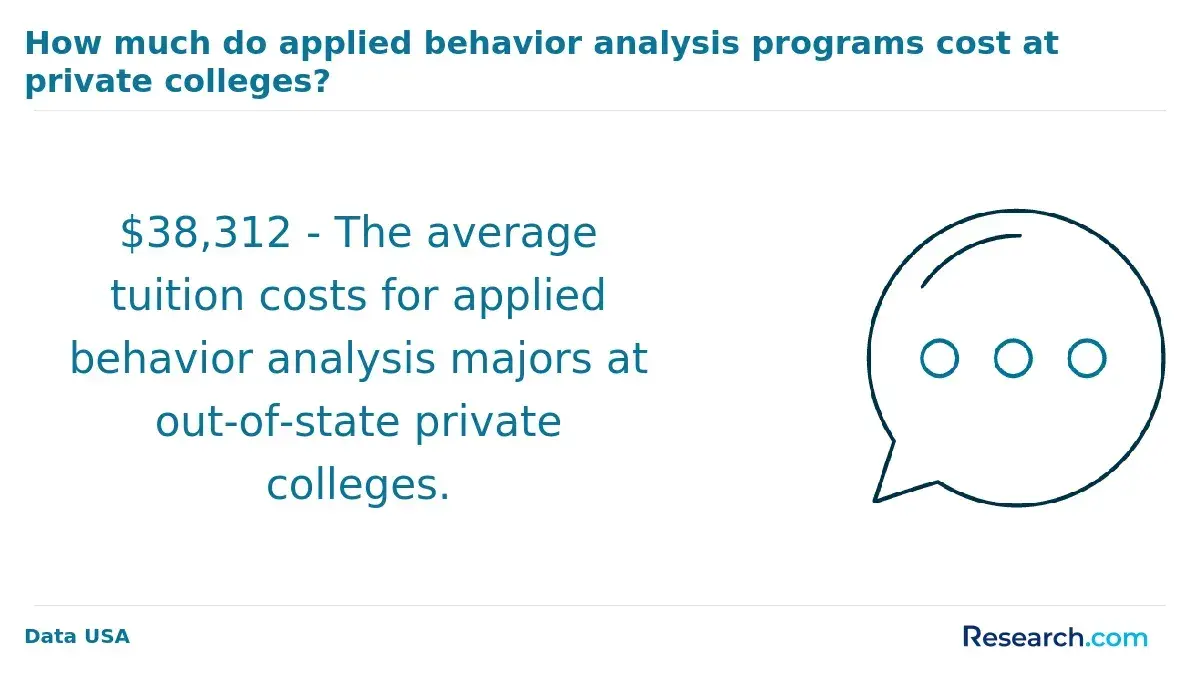
The cost of becoming a BCBA is usually driven by graduate tuition, but candidates should budget for more than classes. In the United States, master's degree programs required for BCBA eligibility range from $20,000 to over $60,000. According to LinkedIn/Certifyn ABA and Kids Club ABA, most candidates spend between $30,000 and $50,000 just on education expenses, including tuition, fees, and course requirements.
Additional costs can include exam fees, books, study resources, supervision, and continuing education after certification. These expenses vary widely by program and employer support, so the cheapest tuition rate is not always the lowest total cost.
- BCBA exam application fees, usually between $245 and $325
- Study materials such as textbooks and online courses costing from $200 to $1,000
- Potentially paid supervision for clinical hours if not included in the program or employer arrangement
- Renewal and continuing education expenses following certification
Cost questions to ask before enrolling
- Is tuition charged per credit, per course, or as a flat program rate?
- Are university fees, technology fees, textbooks, and assessments included?
- Does the program include supervised practicum, or must students find and pay for supervision separately?
- Can current employment count toward fieldwork if supervised by a qualified BCBA?
- Does the employer offer tuition reimbursement, paid supervision, or a promotion pathway after certification?
- What happens financially if a student must pause the program or retake a course?
Online and accelerated programs can reduce relocation, commuting, and scheduling costs, especially for working RBTs. However, an online format does not automatically make a program cheaper if students must pay separately for supervision or take longer to complete fieldwork.
Public universities may offer lower tuition than private schools, while some private or specialized programs may provide stronger ABA-specific advising, practicum coordination, or exam preparation. The best financial choice is the program with the strongest combination of eligibility alignment, affordable total cost, reliable supervision, and realistic completion time.
Students comparing options can review applied behavior analysis masters programs to understand how online ABA programs differ in format, tuition structure, and program design.
RBTs applying to BCBA-track programs in 2026 should expect graduate admission requirements plus certification-related requirements. Most applicants need a bachelor's degree, transcripts, a qualifying academic background, and admission to a master's program in behavior analysis, education, psychology, or a related field from an accredited institution. The degree must include coursework that satisfies BACB expectations, often through a Verified Course Sequence (VCS) approved by BACB.
Program admission and BCBA certification eligibility are related but not identical. A university may admit a student to a graduate program, but the student still must complete the required coursework, fieldwork, documentation, and certification exam process. RBTs should verify both the school’s admission standards and the certification pathway before enrolling.
Common requirements RBTs should prepare for
- Official undergraduate transcripts from an accredited institution
- A bachelor's degree that meets the graduate program’s entry criteria
- Prerequisite coursework, if required by the school
- Letters of recommendation or professional references
- A resume showing RBT, ABA, education, healthcare, or human services experience
- A statement of purpose explaining career goals and fit for ABA practice
- Completion of BACB-aligned coursework such as assessment, intervention, ethics, and research methods
- Completion of 1,500 to 2,000 hours of supervised independent applied behavior analysis experience at the BCBA level over 12 to 24 months
- Documentation of supervision and fieldwork hours under a qualified supervisor
- A passing score on the BCBA certification exam
RBT experience can strengthen an application because it shows direct exposure to ABA service delivery. It may also help students understand coursework faster because they have seen interventions, data collection, and supervision in practice. Still, RBT work does not waive the graduate degree, fieldwork, or exam requirements.
The career benefits can be meaningful. According to Certifyn ABA data via LinkedIn, transitioning from RBT to BCBA roles results in an average salary increase of about $24,000 annually, with BCBAs earning around $75,784 compared to RBTs' $35,000 to $45,000 range.
The strongest applicants plan early: they select programs aligned with BACB standards, secure qualified supervision before accumulating hours, and keep careful records from the beginning. Missing or poorly documented supervision hours can delay certification even when coursework is complete.
RBTs looking for a BCBA pathway should focus on accredited graduate institutions with coursework that meets BACB requirements and a clear plan for supervised fieldwork. Direct enrollment in a BACB-verified graduate program is important because RBT experience alone does not satisfy BCBA eligibility.
Universities such as the University of Cincinnati, Ball State University, and Simmons University offer BACB-approved curriculum that combines graduate-level applied behavior analysis coursework with preparation for supervised practice. Many programs are available online or in hybrid formats, which can help working RBTs continue earning income while completing graduate study.
Program names and formats can sound similar, so candidates should confirm the details rather than relying on marketing language. A strong RBT-to-BCBA pathway should explain the degree awarded, the verified coursework, supervision expectations, exam preparation, and whether students must find their own fieldwork sites.
How to compare RBT-to-BCBA programs
- Verify institutional accreditation and course approvals.
- Confirm whether the curriculum is designed for BCBA eligibility.
- Ask which RBT hours may count toward experience requirements, if any.
- Determine whether supervised fieldwork is built into the program or arranged separately.
- Review tuition, fees, financial aid, scholarships, and employer tuition benefits.
- Ask about exam preparation, faculty accessibility, and graduate outcomes.
- Check whether the schedule works for full-time employment, family obligations, and fieldwork.
Online programs can be a strong option for RBTs who already work in an ABA setting and can access qualified supervision through an employer. Campus or hybrid programs may be better for students who need closer faculty contact, local networking, or structured practicum support.
According to Kids Club ABA and Certifyn ABA, 64% of RBTs who become BCBAs recoup their full educational investment within 2 years, with many breaking even in as little as 16 months. That return depends heavily on tuition, supervision costs, salary after certification, and how quickly the candidate completes the pathway.
A typical BCBA curriculum teaches students how to assess behavior, design interventions, measure progress, supervise services, and make ethical clinical decisions. The goal is not only to pass an exam but to prepare candidates to evaluate real behavior-change needs and guide staff responsibly.
Coursework usually covers behavior-analytic concepts, measurement, single-subject research design, functional behavior assessment, intervention planning, data analysis, ethics, and supervision. Programs may also include specialized topics such as verbal behavior, autism spectrum disorder interventions, school-based consultation, or organizational behavior management.
Common BCBA coursework areas
- Foundations of Behavior Analysis: history, philosophy, terminology, and core principles
- Measurement and Data Analysis: accurate data collection, graphing, interpretation, and decision-making
- Single-Subject Research Designs: methods for evaluating whether an intervention is producing behavior change
- Behavioral Assessment: functional behavior assessment, preference assessment, and skill assessment
- Intervention Design: reinforcement, prompting, shaping, behavior-reduction strategies, and treatment planning
- Ethics and Professional Conduct: consent, scope of competence, documentation, supervision, and client welfare
- Supervision and Staff Training: performance feedback, treatment fidelity, and oversight of RBTs or other staff
Supervised practica or fieldwork are where students apply these concepts in actual service settings. This practical component is essential because BCBA-level work requires more than knowing definitions. Candidates must learn to interpret data, adjust interventions, communicate with families and teams, and supervise implementation with consistency.
A strong curriculum should also prepare students for the professional realities of BCBA practice: ethical dilemmas, interdisciplinary collaboration, payer documentation, caregiver training, and treatment decisions based on data rather than assumptions.
Completing this curriculum can affect earning potential. Salaries vary by region; for example, according to Links ABA Therapy, Washington, D.C. BCBAs earn on average 13.3% more than the national mean of $89,075. This makes curriculum quality and program fit important parts of the long-term return on investment.
The best BCBA training format depends on how you learn, where you can complete supervised fieldwork, and how much flexibility you need. Online programs often work well for RBTs who are already employed in ABA settings and can access supervision locally. Campus programs may be better for students who want in-person faculty contact, structured practicum support, and local professional networking.
The most important issue is not whether classes are online or on campus. It is whether the program meets coursework requirements, supports fieldwork planning, and fits your schedule well enough for you to finish.
| Format | Best for | Potential drawbacks |
| Online | Working RBTs, students outside major metro areas, and candidates who need flexible scheduling | May require more self-direction and separate supervision arrangements |
| Campus | Students who want face-to-face instruction, local networking, and structured practicum access | May require commuting, relocation, or less flexible scheduling |
| Hybrid | Students who want online convenience with some in-person learning or residency requirements | May still involve travel, scheduled meetings, or limited location options |
Employer-provided supervision can make a major difference in completion time. Data from Certifyn ABA via LinkedIn show RBTs with employer supervision complete fieldwork about eight months faster. For that reason, RBTs should talk with their employer before enrolling to ask whether BCBA supervision is available, whether hours can be accrued during paid work, and whether tuition support exists.
- If stable employer supervision is available, online training can be a practical and efficient route.
- Online programs connected to broader supervision networks may help students in areas with fewer local BCBAs.
- Campus programs can provide more direct mentorship but may add commuting, relocation, or schedule constraints.
- Hybrid formats can balance flexibility with in-person contact, but students should confirm travel expectations before enrolling.
Choose the format that gives you the highest chance of completing both coursework and fieldwork on schedule. A prestigious or low-cost program may still be the wrong choice if it does not support your supervision needs.
BCBA professionals can find opportunities in autism services, schools, behavioral health organizations, early intervention programs, residential settings, clinics, and private practice. Demand is shaped by growing use of applied behavior analysis in healthcare, education, and developmental disability services.
Entry-level salaries generally range between $60,000 and $75,000 annually, while experienced BCBAs in major metropolitan areas or specialized roles can earn from $90,000 up to $110,000 per year. Compensation depends on location, employer type, caseload expectations, supervision responsibilities, billable-hour models, and whether the role includes leadership or consulting duties.
Location can significantly influence pay. States like California, New York, and Massachusetts often offer higher salaries reflecting their larger populations and living costs. Higher pay, however, may come with higher living expenses, heavier caseloads, or more competitive hiring markets.
The U.S. Bureau of Labor Statistics forecasts a 22% growth in employment for behavior analysts through 2030, driven by expanded services in schools, healthcare, and private practice settings. Candidates should still evaluate local demand, payer environment, and employer reputation rather than assuming every market offers the same opportunities.
Graduates from master's programs with exam pass rates above 70% tend to have better access to top employers and competitive roles. This highlights why program quality matters. A lower-cost program may be attractive, but weak exam preparation or limited supervision support can delay certification and reduce the short-term financial benefit.
BCBAs can improve career mobility by developing skills in supervision, caregiver training, school consultation, interdisciplinary collaboration, documentation, and program leadership. Additional certifications related to special education or healthcare management may also support advancement in certain settings.
How to choose a reputable BCBA program?
A reputable BCBA program should do more than advertise flexibility. It should clearly show how its coursework, faculty, supervision structure, exam preparation, and student support align with BCBA certification goals. RBTs should evaluate programs like a professional investment, not just an academic credential.
Program quality checklist
- Confirm that the institution is properly accredited.
- Verify that the coursework is BACB-approved or otherwise aligned with current certification requirements.
- Ask whether the curriculum covers the 5th edition task list, including ethics, experimental design, and behavioral assessment.
- Review faculty qualifications, ABA practice experience, and accessibility.
- Check whether supervised fieldwork is included, supported, or entirely student-arranged.
- Ask for exam pass-rate information, if available.
- Compare total tuition, fees, books, supervision costs, and exam preparation expenses.
- Look for employer partnerships, tuition assistance options, and practicum relationships.
- Speak with current students or alumni about workload, support, and career outcomes.
Cost transparency is especially important. Some programs appear affordable until students add supervision fees, books, technology fees, or extra time caused by limited course availability. Others cost more upfront but provide stronger advising, fieldwork coordination, and exam preparation.
Employer partnerships can also affect return on investment. Kids Club ABA reports employer-supported graduates experienced up to 85% salary increases after certification, highlighting the value of aligned employer relationships. Candidates who can combine graduate study with paid ABA work and qualified supervision may finish faster and reduce out-of-pocket costs.
A strong final choice should meet four conditions: it satisfies certification coursework requirements, fits your schedule, gives you a realistic supervision plan, and has a total cost you can justify based on your career goals. If any of those pieces is unclear, ask for written clarification before enrolling.
Other Things You Should Know About Applied Behavior Analysis
BCBA certificants must follow the BACB Ethics Code for Behavior Analysts. The code covers professional conduct, client confidentiality, conflicts of interest, supervision, and documentation. Violations can lead to sanctions, including mandated retraining, suspension, or loss of certification by the Behavior Analyst Certification Board.
Yes, maintaining BCBA certification requires completing continuing education units (CEUs) regularly, typically a minimum of 32 hours every two years. These CEUs help professionals stay up to date with advances in applied behavior analysis and ethical standards. The Behavior Analyst Certification Board (BACB) oversees these requirements strictly.
During the transition from RBT to BCBA, candidates must receive supervised experience hours, which involve direct oversight by a qualified BCBA supervisor. This supervision ensures adherence to ethical and professional standards while developing competency in assessment and intervention design. The supervision process is essential for skill development and certification eligibility.
- Is Becoming a BCBA a Good Career in 2026? Salary, Growth, and What to Expect https://mindfulsproutsaba.com/blog/is-becoming-a-bcba-a-good-career-in-2026-salary-growth-and-what-to-expect/
- Board-Certified Behavior Analyst (BCBA) Salary Guide â Trusted Health https://www.trustedhealth.com/allied-career-guide/behavior-analyst/salary-guide
- 8 Key considerations when choosing an ABA service provider for your child with autism — Lake Ridge Community Support Services https://www.lrcss.com/blog/how-to-choose-an-aba-provider
- BCBA Job Outlook in 2026 Explained | Divine Steps ABA https://www.divinestepstherapy.com/blog/bcba-job-outlook
- Can An RBT Become A BCBA? https://kidsclubaba.com/can-an-rbt-become-a-bcba/
- Exploring the Path from RBT to BCBA | Step Ahead ABA https://www.stepaheadaba.com/blog/can-an-rbt-become-a-bcba
- Can an RBT Advance to a BCBA? | Advanced Autism Services https://www.advancedautism.com/post/can-an-rbt-become-a-bcba
- Transitioning from an RBT to a BCBA: A Comprehensive Guide | Regency ABA https://regencyaba.com/transitioning-from-an-rbt-to-a-bcba-a-comprehensive-guide/
- Steps to Become a BCBA from an RBT | Above and Beyond Therapy https://www.abtaba.com/blog/can-an-rbt-become-a-bcba
- ABA Certification Explained: RBT, BCaBA, BCBA, BCBA-D https://onlinecounselingprograms.com/mental-health-careers/how-to-become-behavior-analyst-bcba/aba-certification-explained/