2027 Accredited Online Patient Safety & Quality Degree Programs for Working Adults: Flexible, Part-Time, and Self-Paced Options

Co-Founder and Chief Data Scientist
Choosing an accredited online Patient Safety & Quality degree is really a scheduling, cost, and career-fit decision. Many working adults need part-time or asynchronous study, and NCES data published in 2024 shows distance education remains a major part of U. S. higher education after its pandemic-era expansion. This guide explains how online patient safety and quality programs work, who they fit, how accreditation affects value, what they cost, and how to compare flexible, part-time, and self-paced options before enrolling.
Key Things You Should Know
- Accreditation is the first filter: choose an institution recognized by the U.S. Department of Education or CHEA, then check whether the program aligns with healthcare quality, nursing, public health, or health administration standards relevant to your career goal.
- Most working adults do best with one 3-credit course at a time, which commonly means about 9 hours of weekly study under the federal credit-hour workload model; two courses can push the load closer to 18 hours per week.
- Cost and speed depend on credits, tuition, and transfer policy: a 30-credit program priced at $700 per credit is $21,000 before fees, while transfer credit, prior graduate work, or employer tuition assistance can reduce out-of-pocket cost and completion time.
What Is an Accredited Online Patient Safety & Quality Degree Program and Why Does Accreditation Matter?
An accredited online Patient Safety & Quality degree program prepares healthcare professionals to reduce preventable harm, improve care processes, analyze quality data, manage risk, lead improvement projects, and support regulatory compliance. These programs are often offered as master's degrees, graduate certificates, MSN concentrations, MHA tracks, MPH concentrations, or healthcare administration degrees with quality and safety coursework.
Accreditation matters because it affects financial aid eligibility, credit transfer, employer recognition, and the credibility of the credential. At minimum, the college or university should hold institutional accreditation from an agency recognized by the U.S. Department of Education or the Council for Higher Education Accreditation. Depending on the program type, you may also want to check specialized accreditation, such as CCNE or ACEN for nursing programs, CEPH for public health programs, or CAHME for healthcare management programs.
The distinction is important: institutional accreditation tells you the school meets broad academic and operational standards, while programmatic accreditation focuses on a specific field. Not every strong patient safety program has a patient-safety-specific accreditor, so the best approach is to match accreditation to the degree category and your intended career path. For example, nurses comparing quality and safety concentrations may also want to understand how accreditation works in online nursing programs for working adults, because employer expectations can differ between nursing, health administration, and public health roles.
This table summarizes the main types of online patient safety and quality credentials and how accreditation usually fits into each option. Use it to narrow your search before comparing tuition, format, and admissions requirements.
| Program type | Best fit | Accreditation to verify | Common outcome |
| Graduate certificate in patient safety or healthcare quality | Professionals who already have a degree and want focused training | Institutional accreditation; field alignment varies by host department | Quality improvement coordinator, risk analyst, patient safety specialist |
| Master's in patient safety and quality | Clinicians, administrators, and analysts seeking a specialized graduate credential | Institutional accreditation; review faculty, curriculum, and healthcare partnerships | Patient safety manager, quality improvement lead, healthcare quality consultant |
| MSN with quality, safety, or leadership focus | Licensed nurses pursuing leadership or quality roles | Institutional accreditation plus nursing accreditation such as CCNE or ACEN | Nurse quality manager, clinical quality leader, nursing performance improvement role |
| MHA or MPH with quality improvement coursework | Adults interested in health systems leadership, policy, population health, or operations | Institutional accreditation; CAHME or CEPH may matter depending on degree type | Healthcare administrator, population health quality analyst, compliance or operations leader |
A red flag is any school that avoids direct answers about accreditation or describes itself with vague terms such as "internationally recognized" without naming the accrediting agency. Verify the school in official accreditation databases before applying, especially if you plan to use federal financial aid or later transfer credits.
Which Flexible Patient Safety & Quality Degree Formats Are Best for Working Adults: Part-Time, Full-Time, or Self-Paced?
The best format depends on your weekly availability, deadline tolerance, clinical or administrative work schedule, and how quickly you need the credential. "Online" does not always mean self-paced, and "flexible" does not always mean you can submit work whenever you want. Many accredited programs still use weekly modules, group projects, live sessions, proctored exams, or fixed semester calendars.
Working adults should compare format before comparing course titles. The table below shows how the most common online formats affect time, predictability, and workload.
| Format | How it usually works | Best for | Trade-off |
| Part-time asynchronous | Weekly deadlines with no required live class at a fixed time | Full-time workers with predictable evenings or weekends | Flexible, but still deadline-driven |
| Part-time synchronous | Online courses include scheduled live meetings | Learners who want faculty interaction and class discussion | Harder for rotating shifts or caregivers |
| Full-time online | Multiple courses per term, often 9 or more graduate credits | Adults with reduced work hours, employer support, or urgency to finish | Higher weekly workload and less room for unexpected life events |
| Self-paced or competency-based | Progress depends on completing assessments or modules within term limits | Independent learners with prior healthcare knowledge and strong time management | Can be efficient, but easy to fall behind without external deadlines |
| Cohort-based online | Students move through the program together in a fixed sequence | Adults who value structure, peer relationships, and predictable course rotation | Less flexible if you need to stop out or accelerate |
A part-time asynchronous program is often the safest default for adults working full time because it offers flexibility without removing structure. A self-paced program can be a strong option if you already understand healthcare workflows, can study consistently, and know the maximum time allowed to complete each course or term.
Before choosing a format, ask admissions or the program director these practical questions. They reveal whether the program's version of flexibility matches your real life.
- Are there required live sessions, and are they recorded for students who work evenings, nights, weekends, or rotating shifts?
- Can I take one course at a time every term, or does the program require a fixed two-course sequence?
- How many hours per week do successful part-time students usually spend on readings, discussions, projects, and exams?
- Are group projects required, and how are teams scheduled across time zones and work shifts?
- If the program is self-paced, what are the minimum and maximum completion windows for each course and for the full degree?
- What happens if I need to pause enrollment because of a work assignment, family obligation, illness, or deployment?
The common mistake is assuming the most flexible program is automatically the best program. For some students, too much flexibility can create procrastination, while a weekly course rhythm may improve completion. Choose the least restrictive format that still gives you enough structure to finish.
What Are the Admission Requirements for Accredited Online Patient Safety & Quality Degree Programs?
Admission requirements vary by degree level and department, but most accredited online patient safety and quality programs are designed for adults who already have some healthcare, public health, analytics, operations, nursing, or administrative experience. Graduate programs usually require a bachelor's degree from an accredited institution, official transcripts, a resume, a statement of purpose, and sometimes letters of recommendation.
Some programs are clinically oriented and prefer or require a healthcare license, while others are open to applicants from health administration, informatics, social work, laboratory services, pharmacy, public health, or quality management. Nurses who are still building their academic foundation may compare an ASN program online before moving into bachelor's, master's, or quality leadership pathways.
This table shows common admission requirements and what they mean for working adults preparing an application.
| Requirement | What schools are evaluating | How working adults can prepare |
| Accredited prior degree | Academic readiness and eligibility for graduate-level work | Order transcripts early and confirm whether prior credits were earned at accredited schools |
| Minimum GPA | Evidence of academic consistency | Ask about conditional admission if your GPA is below the preferred threshold |
| Resume or CV | Healthcare, leadership, quality, safety, analytics, or operations experience | Highlight improvement projects, compliance work, patient-facing roles, audits, and data responsibilities |
| Professional license or certification | Clinical background for nursing or clinician-focused tracks | Confirm whether a license is required or simply preferred |
| Statement of purpose | Career fit and understanding of patient safety goals | Connect your work experience to measurable quality improvement or safety priorities |
| Statistics or research prerequisite | Readiness for data analysis and outcomes measurement | Ask whether you can complete missing prerequisites before or during the first term |
If you have been out of school for years, do not assume that makes you a weaker applicant. Many patient safety and quality programs value applied experience because students often draw from real workplace problems in root-cause analysis, process improvement, risk reduction, and capstone projects.
The most useful application strategy is to show that you understand both the human and systems side of healthcare quality. Your materials should connect your background to topics such as medication safety, infection prevention, readmission reduction, care coordination, clinical documentation, health equity, reporting systems, or operational reliability.
How Much Does an Online Patient Safety & Quality Degree Cost, and What Financial Aid Options Are Available?
Cost depends on degree level, public versus private institution, residency rules, per-credit tuition, technology fees, course materials, travel requirements, and whether you can transfer previous credits. College Board's 2024 tuition data shows that published prices continue to vary widely by institution type, which is why working adults should compare total program cost rather than relying on per-credit tuition alone.
When estimating affordability, start with the full cost of completion rather than the cost of one course. A lower per-credit price may not save money if the program requires more credits, charges high fees, or does not accept transfer credit.
- Tuition: Multiply the per-credit rate by the total number of required credits, then check whether online students pay the same rate as campus students.
- Fees: Ask about technology, distance learning, graduation, transcript, proctoring, clinical placement, or student services fees.
- Books and software: Quality improvement programs may require statistics tools, database access, simulation platforms, or project management software.
- Travel: Some online programs include an orientation, residency, practicum visit, or final presentation that may require travel.
- Lost income: Full-time or accelerated enrollment may reduce your work hours, while part-time enrollment may preserve income but extend the calendar timeline.
Graduate and professional students who qualify for federal aid may be eligible for Direct Unsubsidized Loans, with an annual limit of $20,500 for many graduate/professional borrowers. That number is useful as a planning boundary, not a recommendation to borrow the maximum. Borrow only after comparing grants, scholarships, employer benefits, payment plans, and lower-cost public options.
Working adults should review these aid options before committing to a program. The best funding package is usually a combination of school aid, employer support, and careful course pacing.
- Complete the FAFSA if the school participates in federal financial aid and you are seeking federal loans or need-based institutional aid.
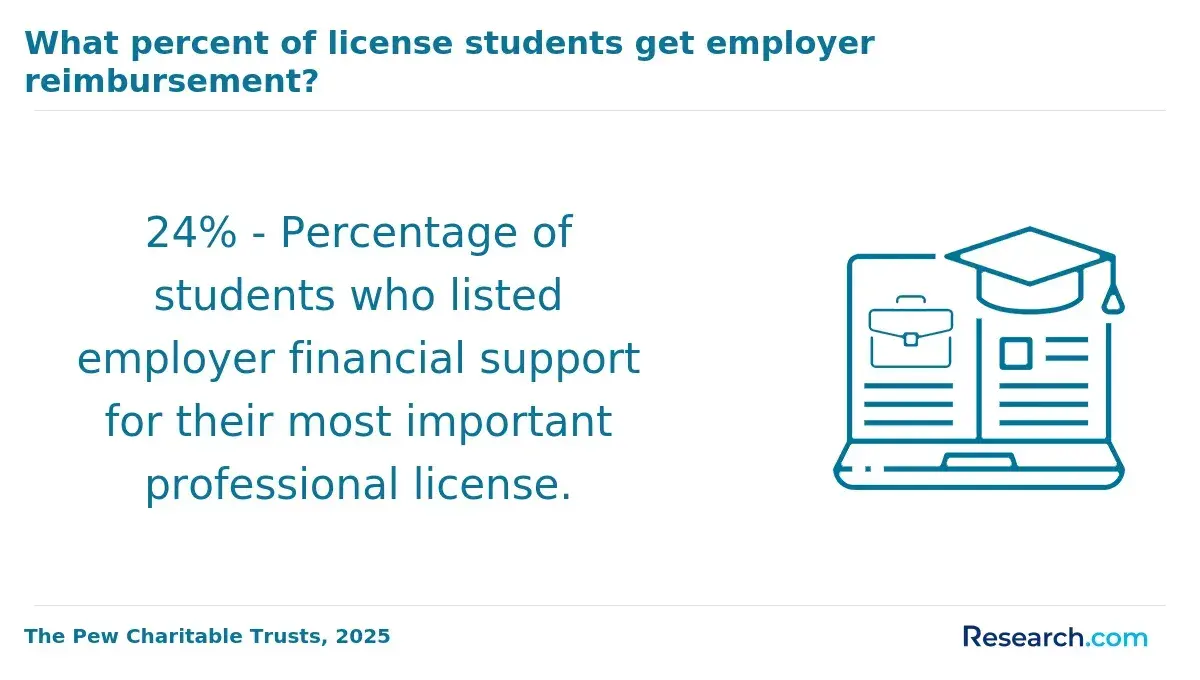
- Ask your employer about tuition reimbursement, professional development funds, union education benefits, or workforce training grants.
- Check whether the program offers scholarships for clinicians, public health workers, veterans, first-generation graduate students, or healthcare employees.
- Compare payment plans if you want to avoid or reduce borrowing while taking one course at a time.
- Ask whether certificate credits can later stack into a master's degree, which can lower risk if you are unsure about completing the full degree.
A common mistake is choosing the cheapest listed tuition without asking about fees, course availability, or total credits. A slightly higher-tuition program that accepts more transfer credits, offers employer-aligned scheduling, or allows certificate-to-degree stacking may be more practical for a working adult.
How Long Does It Take to Complete an Online Patient Safety & Quality Degree, and Can Transfer Credits Help You Graduate Faster?
Completion time depends on the number of credits, term length, course load, transfer credit, and whether the program follows a lockstep cohort. Many graduate certificates can be completed in less time than a full master's degree, while master's programs often take longer for students who enroll part time.
The key planning issue is weekly workload, not just months to graduation. Under the federal credit-hour model, one 3-credit course commonly represents about 9 hours of academic work per week across instruction, reading, assignments, projects, and exam preparation. That means part-time study can be manageable, but it still requires protected time.
This table gives a practical comparison of pacing options. Use it to estimate whether the timeline fits your work schedule before you apply.
| Enrollment pace | Typical course load | Estimated weekly academic workload | Best fit |
| One course at a time | 3 credits | About 9 hours | Full-time workers, caregivers, rotating-shift employees |
| Part-time two-course load | 6 credits | About 18 hours | Adults with predictable schedules and strong support at home |
| Full-time graduate load | 9 credits or more | About 27 hours or more | Students with reduced work hours or strong employer support |
| Self-paced competency model | Varies by completed assessments | Highly variable | Independent learners with prior knowledge and disciplined study routines |
Transfer credit can shorten the path, but policies vary. Some schools accept prior graduate coursework, relevant certificate credits, military training, professional learning, or continuing education only if it maps clearly to required outcomes. Others limit transfer credits to a small portion of the degree or require that credits were earned within a recent time window.
Before you rely on transfer credit, take these steps. They can prevent disappointment after enrollment.
- Request an unofficial transfer review before applying or before paying a deposit.
- Send syllabi, course descriptions, credit values, and transcripts for any previous graduate or healthcare quality coursework.
- Ask whether certificate credits from the same university automatically apply to the master's program.
- Confirm whether transferred credits reduce tuition, shorten time, or simply satisfy elective requirements.
- Get the evaluation in writing and verify whether it changes if you switch concentrations or degree tracks.
Nurses planning long-term academic leadership or research careers may eventually compare quality and safety master's pathways with PhD programs for nurses, but that decision should come after clarifying whether your immediate goal is operational improvement, advanced practice, teaching, or research.
What Should You Look for When Comparing Accredited Online Patient Safety & Quality Degree Programs?
Comparing accredited online patient safety and quality programs requires more than ranking tuition or choosing the fastest completion time. The best program is the one that matches your career target, schedule, learning style, budget, and existing education.
Use the following checklist when you speak with admissions advisors or program directors. It focuses on the factors that most often affect working adults after classes begin.
- Verify institutional accreditation in an official database, then check whether programmatic accreditation is relevant to the degree category.
- Review the curriculum for root-cause analysis, quality improvement methods, patient safety science, human factors, health data analytics, risk management, regulatory compliance, and leadership.
- Ask whether the program uses asynchronous modules, live sessions, group work, proctored exams, or fixed weekly deadlines.
- Confirm whether you can enroll part time every term without delaying required course sequences.
- Check whether the program includes a capstone, practicum, applied project, simulation, or employer-based project.
- Compare total cost, not just tuition, including fees, materials, travel, and the cost of taking longer to finish.
- Ask for examples of student support, including online tutoring, library access, writing help, career advising, and technical support outside standard business hours.
- Request recent information about graduate outcomes, employer partnerships, certification preparation, and alumni roles, while remembering that outcomes are not guaranteed.
Career changers should also consider whether they need a full degree immediately or whether a shorter healthcare credential is a better first step. For example, someone without healthcare experience may explore medical assistant certification before committing to a graduate pathway in quality and safety.
The table below highlights common red flags and better alternatives. Use it as a quick screen when a program sounds appealing but details are unclear.
| Red flag | Why it matters | Better approach |
| The school will not clearly name its accreditor | Financial aid, transfer, and employer recognition may be affected | Verify accreditation independently before applying |
| "Self-paced" has no clear completion policy | You may face hidden deadlines, retake fees, or expiration limits | Ask for minimum and maximum completion timelines in writing |
| Courses are online but require frequent live attendance | Shift workers and caregivers may struggle to participate | Request the synchronous schedule before enrolling |
| The program lists tuition but not fees | Total cost may be higher than expected | Ask for a full cost-of-attendance estimate |
| No applied project or portfolio option | You may have fewer work samples for quality roles | Look for capstones tied to real healthcare improvement problems |
Do not let speed override fit. An accelerated program can be valuable if you have the time and support to succeed, but a slower, accredited, transfer-friendly program may produce a better experience for adults managing full-time work and family obligations.
What Career Opportunities and Salary Potential Can You Expect With a Patient Safety & Quality Degree?
A Patient Safety & Quality degree can support roles that focus on safer care delivery, better clinical outcomes, regulatory readiness, process improvement, and healthcare operations. It is especially relevant for nurses, physicians, pharmacists, therapists, administrators, public health workers, analysts, and quality professionals who want to move into formal improvement or leadership responsibilities.
Salary potential depends on your prior license, degree level, employer type, geography, experience, and whether the role is clinical, administrative, or analytical. The U.S. Bureau of Labor Statistics reported a May 2024 median annual wage of $117,960 for medical and health services managers, a broad category that includes many healthcare leadership roles. That figure should be treated as context, not a promise, because patient safety roles may sit in nursing, compliance, operations, analytics, or administration pay structures.
This table outlines common career directions and how a patient safety and quality credential may apply.
| Career path | Typical responsibilities | How the degree helps |
| Patient safety specialist | Investigates safety events, supports reporting systems, coordinates prevention strategies | Builds knowledge of safety science, human factors, and systems thinking |
| Quality improvement coordinator | Tracks performance metrics, supports improvement teams, prepares reports | Strengthens skills in process improvement, data interpretation, and project management |
| Healthcare quality manager | Leads quality initiatives, supervises staff, aligns work with regulatory and organizational goals | Provides leadership, analytics, and compliance training |
| Risk management or compliance analyst | Reviews incidents, policies, audits, documentation, and regulatory requirements | Connects patient safety principles with organizational risk reduction |
| Clinical outcomes analyst | Analyzes quality metrics, readmissions, infections, patient experience, and care variation | Supports data-informed decision-making and performance measurement |
| Nurse quality leader | Improves nursing workflows, safety practices, documentation, and patient outcomes | Combines clinical credibility with formal improvement methods |
Current trends are making quality and safety knowledge more valuable. Health systems are under pressure to reduce preventable harm, improve patient experience, manage staffing constraints, use data responsibly, and prepare for value-based care models. AI and automation are also changing the field: quality teams increasingly need professionals who can evaluate dashboards, detect workflow risks, interpret predictive tools carefully, and prevent technology from creating new safety problems.
The degree may be worth it if it helps you qualify for roles you cannot access with experience alone, prepares you for internal promotion, or gives you applied project work you can show employers. It may not be the right investment if you are unsure about working in healthcare, need a license the program does not provide, or cannot identify a realistic job target after graduation.
Clinicians comparing adjacent pathways should think carefully about the role they want. A nurse aiming for system-level research, teaching, or policy may eventually consider doctoral education, while a dietitian, pharmacist, therapist, or public health worker may use quality training to move into outcomes, population health, or safety leadership roles.
How Can Working Adults Balance a Patient Safety & Quality Degree With Full-Time Work and Family Responsibilities?
Balancing a patient safety and quality degree with full-time work is possible, but it requires a realistic workload plan. The biggest risk is not academic ability; it is overcommitting during a busy clinical, administrative, or family season.
Start by building a weekly schedule before the term begins. Treat coursework like a recurring professional obligation rather than something you will fit in after everything else is done.
- Choose one primary study block for reading and one separate block for assignments or discussion posts.
- Use your work calendar to identify predictable high-demand weeks, such as audits, survey preparation, budget season, school breaks, or major family commitments.
- Tell your supervisor early if the program includes a project that could benefit your department, because employer-supported projects are often easier to sustain.
- Set a minimum weekly target rather than waiting for long weekend sessions, especially in accelerated or 7-week courses.
- Build a backup plan for illness, shift changes, childcare gaps, or overtime by finishing assignments before the final deadline whenever possible.
The table below compares common work-life-school situations and the enrollment pace that may fit best. Use it as a planning tool, not a rule.
| Your situation | Most practical pace | Why it may work |
| Full-time job with stable daytime hours | One or two courses per term | Predictable evenings and weekends may support steady progress |
| Rotating shifts, nights, or weekend clinical work | One asynchronous course at a time | Fewer live requirements reduce schedule conflict |
| Heavy caregiving responsibilities | Part-time with generous stop-out policy | Flexibility matters more than speed |
| Employer-funded education with promotion timeline | Structured part-time or accelerated option | Clear deadlines may align with workplace goals |
| Strong prior quality improvement experience | Self-paced or competency-based option | Existing knowledge may help you move faster through assessments |
One common mistake is enrolling full time because the program advertises a short completion timeline. If you are working full time, a full-time graduate load can feel like a second job. A slower pace is not a failure if it helps you finish without sacrificing work performance, health, or family stability.
What Student Support Services and Online Learning Resources Should You Expect From a Patient Safety & Quality Degree Program?
Online student support is not a bonus feature for working adults; it is a completion factor. The best accredited online programs make academic, technical, library, and career services available to students who may study outside traditional business hours.
Before enrolling, ask how support actually works for online students. A program may advertise services that are difficult to use if appointments are only available during your work shift.
- Academic advising that helps you plan part-time sequencing, leave policies, transfer credit, and graduation requirements.
- Faculty access through email, virtual office hours, discussion boards, or scheduled video meetings.
- Online library access with healthcare databases, citation help, evidence-based practice resources, and research support.
- Writing, statistics, and tutoring support for students returning to school after a long break.
- Technical support during evenings or weekends if courses rely on learning platforms, proctoring, simulations, or analytics software.
- Career services that understand healthcare quality roles, not just general resume writing.
- Accessibility services for students who need accommodations in online courses, exams, or learning platforms.
Student support also matters for professionals coming from allied health backgrounds. For example, learners comparing quality roles in nutrition services may also evaluate online registered dietitian programs if they need a credentialed clinical pathway before moving into quality improvement or population health work.
The most practical test is to contact support offices before applying. If you cannot get clear answers as a prospective student, it may be harder to get help once you are enrolled and facing deadlines.
Do Online Patient Safety & Quality Degree Programs Include Internships, Practicums, or Other Hands-On Learning Requirements?
Many online patient safety and quality programs include hands-on learning, but it may not look like a traditional internship. Instead, students often complete applied projects, capstones, simulations, case analyses, data projects, root-cause analyses, quality improvement plans, or workplace-based projects.
Hands-on requirements matter because patient safety is an applied field. Employers often want evidence that you can identify a systems problem, analyze data, work with stakeholders, test an intervention, and communicate results.
This table compares common experiential components and what to ask before enrolling.
| Requirement | What it involves | Question to ask |
| Capstone project | A final applied project focused on a quality or safety problem | Can I complete it at my current workplace? |
| Practicum | Supervised field experience, sometimes with required hours | Who arranges the site, and are remote or employer-based placements allowed? |
| Simulation | Online or virtual scenarios involving safety events, disclosure, teamwork, or systems analysis | Are simulations synchronous, and do they require special software? |
| Data analysis project | Use of quality metrics, dashboards, or de-identified datasets | What statistics or software skills are expected? |
| Portfolio | Collection of projects, reports, reflections, and improvement tools | Can the portfolio be used for job searches or internal promotion discussions? |
If you work in healthcare, an employer-based capstone can be ideal because it connects coursework to real operational needs. However, you must confirm privacy rules, data access, supervisor approval, and whether the school requires formal site agreements.
Students outside healthcare should ask whether the program helps identify practicum opportunities or whether they must find their own site. A fully online program may still require local fieldwork, and that requirement can affect your timeline if placements are competitive or limited.
Other Things You Should Know About Patient Safety & Quality
Yes, many programs accept applicants from health administration, public health, pharmacy, laboratory science, therapy, social work, informatics, and healthcare operations. Nursing-specific programs may require an RN license, so always check the degree type before applying.
Usually no. A certification can strengthen your background, but most degree programs teach quality improvement methods as part of the curriculum. Some students pursue certifications after gaining experience and completing relevant coursework.
Many accredited universities do not label the diploma as online, but policies vary. Ask the school directly how the credential, transcript, and diploma identify the program format.
It is both. Entry and specialist roles may emphasize data, reporting, audits, and improvement tools, while manager and director roles often require communication, team leadership, regulatory knowledge, and change management.
References
- Tuition Reimbursement Programs https://www.brighthorizons.com/employers/benefits/tuition-reimbursement-program
- Focused Certificate in Healthcare Quality & Safety | ISQua https://isqua.org/focused-certificate-qips/
- Tuition Reimbursement for MHA Programs https://www.mhaonline.com/blog/mha-tuition-reimbursement
- Flexible Adult Learning Provision: what it is, why it matters, and how to make it work https://www.aceaotearoa.org.nz/news-and-resources/news/flexible-adult-learning-provision-what-it-why-it-matters-and-how-make-it
- Self-Paced Online Degree Programs https://www.umassglobal.edu/why-umassglobal/flexible-ways-to-learn/self-paced
- Online Health Science Degrees with Financial Aid https://www.edumed.org/online-schools/health-science-degrees/financial-aid/
- Online Master’s in Patient Safety and Healthcare Quality (PSHQ) Programs https://www.onlineeducation.com/healthcare/masters-in-patient-safety-healthcare-quality-programs
- Quality and Patient Safety Training Programmes https://ieea.ch/accreditation-quality-and-patient-safety-training-programmes/
- How To Pay For Nursing School In The USA | Shiftmed Blog https://www.shiftmed.com/professionals/blog/how-to-pay-for-nursing-school/
- Paying for a Healthcare Graduate Degree: Your Options https://www.baypath.edu/news/bay-path-university-blogs/post/paying-for-a-healthcare-graduate-degree-your-options/