2027 Fastest Accredited Online Patient Safety & Quality Programs: Accelerated Degrees and Completion Times

Co-Founder and Chief Data Scientist
As healthcare organizations place greater emphasis on reducing medical errors and improving patient outcomes, demand for professionals specializing in patient safety and quality improvement continues to grow. Employment for medical and health services managers is projected to increase 29% through 2033, driving more accredited institutions to offer online programs focused on healthcare quality, risk management, and performance improvement.
Accelerated online programs provide working healthcare professionals with a faster path to earning specialized credentials through flexible scheduling and condensed coursework. This guide compares the fastest accredited online patient safety and quality programs, exploring completion times, tuition costs, and curriculum highlights to help you strengthen your leadership role in healthcare quality improvement.
Key Things You Should Know
- The fastest accredited online patient safety and quality options are usually graduate certificates completed in about 8 to 12 months, bachelor's-completion pathways that accept up to 90 transfer credits, and master's programs that can be finished in roughly 18 to 24 months with year-round enrollment.
- Accelerated does not mean easier: many fast programs use 7- or 8-week courses, heavier weekly workloads, or back-to-back terms, so students working full time should compare course load before assuming the shortest advertised timeline is realistic.
- Transfer credit is often the biggest time-saver; bachelor's programs commonly allow up to 90 transfer credits toward a 120-credit degree, while graduate programs usually accept fewer transfer credits and may require all core patient safety coursework to be completed in residence.
Which Colleges Offer the Fastest Accredited Online Patient Safety & Quality Programs?
The fastest accredited online patient safety and quality programs are not always labeled the same way. You may see degrees in healthcare quality, patient safety leadership, healthcare administration with a quality concentration, public health quality improvement, or quality, safety, and risk management.
The table below compares U.S. colleges that offer online or primarily online programs connected to patient safety and healthcare quality. Timelines should be treated as planning estimates because schools may change calendars, course sequencing, transfer rules, and enrollment intensity.
| College | Online patient safety and quality option | Credential level | Speed factors to verify | Fastest realistic fit |
| Southern New Hampshire University | BS in Healthcare Administration with Patient Safety and Quality concentration | Bachelor's | 8-week undergraduate terms and up to 90 transfer credits toward a 120-credit degree | Students with substantial prior college credit who need a bachelor's-completion route |
| George Washington University | MSHS in Health Care Quality or graduate certificate options | Master's or certificate | Online format, healthcare-focused curriculum, and shorter certificate pathway | Working clinicians or administrators seeking a graduate credential without a full master's timeline |
| Johns Hopkins University | Master of Applied Science in Patient Safety and Healthcare Quality | Master's | Online graduate format with structured public health and patient safety coursework | Professionals who want a rigorous graduate degree tied to healthcare quality systems |
| University of Illinois Chicago | MS in Patient Safety Leadership | Master's | Online delivery and a specialized patient safety leadership curriculum | Healthcare professionals targeting safety leadership, quality improvement, or risk reduction roles |
| Northwestern University | MS in Healthcare Quality and Patient Safety | Master's | Part-time professional format and health system improvement focus | Students who want a highly specialized master's and can follow a planned course sequence |
| Thomas Jefferson University | MS in Healthcare Quality and Safety | Master's | Online coursework and professional healthcare quality curriculum | Clinicians and administrators seeking a focused graduate degree while employed |
| Drexel University | MS in Quality, Safety, and Risk Management in Healthcare | Master's | Online graduate format and risk-management emphasis | Students interested in the intersection of patient safety, compliance, and healthcare risk |
If your goal is the shortest route into a healthcare support role rather than a degree in patient safety leadership, a fast medical assistant certification may be a more direct comparison point. For patient safety and quality leadership, however, employers often prefer experience plus a bachelor's or graduate-level credential.
How Long Does It Take to Complete an Accredited Online Patient Safety & Quality Degree?
In this field, "fastest" means the shortest credible time to finish an accredited credential while meeting required credits, sequencing, and academic standards. "Completion time" is the total calendar time from first enrolled course to graduation, not just the number of terms listed in a catalog.
The table below gives realistic time ranges for common accredited online patient safety and quality pathways. Use it to decide whether you are looking for a quick credential, a bachelor's-completion plan, or a full graduate degree.
| Program type | Typical credits | Common online format | Fastest realistic completion time | Who it fits best |
| Graduate certificate in healthcare quality or patient safety | 12 to 18 graduate credits | Accelerated or semester-based online courses | About 8 to 12 months | Professionals who already have a bachelor's degree and want targeted training |
| Bachelor's completion with patient safety or healthcare quality concentration | Usually 120 total credits with transfer credits applied | 8-week terms or year-round online courses | About 12 to 24 months with many transfer credits | Students who have an associate degree or substantial prior college coursework |
| Full bachelor's degree from little or no transfer credit | About 120 credits | Online terms, often 8 or 16 weeks | About 3.5 to 4 years full time | Students starting college for the first time |
| Master's degree in patient safety, healthcare quality, or quality leadership | Commonly 30 to 45 credits, depending on school | Online graduate courses, often part time | About 18 to 24 months full time or near full time | Clinicians, nurses, administrators, and public health professionals seeking leadership roles |
Students comparing healthcare education paths should also consider whether they need a clinical credential first. For example, online nursing programs for working adults may be more appropriate for readers whose long-term patient safety goals depend on RN experience or clinical licensure.
How Do Accelerated and Competency-Based Online Patient Safety & Quality Programs Work?
Accelerated online programs shorten calendar time by changing the academic structure, not by removing core learning outcomes. Patient safety and quality programs still cover topics such as quality improvement methods, systems thinking, healthcare data, human factors, risk management, patient-centered care, regulatory environments, and leadership.
These formats are the most common ways schools make completion faster. Each can reduce time to graduation, but each also changes the weekly workload and pacing.
- Short terms: Courses run in 7- or 8-week blocks instead of traditional 15- or 16-week semesters, allowing students to complete more courses across the year.
- Year-round enrollment: Programs with fall, spring, summer, and multiple subterm starts reduce waiting time between courses.
- Stackable certificates: Some graduate certificates apply directly toward a master's degree, letting students earn a shorter credential first and continue later.
- Prior learning assessment: Eligible professional training, certifications, military education, or portfolios may count for undergraduate credit at some institutions.
- Competency-based pacing: Students progress by demonstrating mastery, which can be faster for experienced professionals but demanding for those who need more faculty structure.
Competency-based education is less common in specialized patient safety graduate programs than in broad healthcare administration degrees, but it can be useful for experienced healthcare workers. The trade-off is that self-paced does not mean low-effort; students must be highly organized and ready to complete assessments without frequent deadline reminders.
What Accreditation Should an Online Patient Safety & Quality Program Have?
Accreditation is the main safeguard when choosing a fast online patient safety and quality program. At minimum, the institution should hold accreditation from an agency recognized by the U.S. Department of Education or the Council for Higher Education Accreditation.
Programmatic accreditation is more variable in this field than in nursing, medicine, or dietetics. A patient safety degree housed in a school of public health, health administration, nursing, or allied health may carry different specialized approvals, but not every legitimate healthcare quality program has a dedicated patient safety accreditor.
Before enrolling, verify the accreditation type and whether it matches your goal. These checks are especially important if you plan to pursue licensure, graduate school, employer tuition reimbursement, or federal financial aid.
- Confirm the college's institutional accreditation through the school's accreditation page and the U.S. Department of Education database.
- Ask whether the specific online program is included under that accreditation and whether online students receive the same transcript as campus students.
- Check whether the program is housed in a CAHME-accredited health administration school, a CEPH-accredited public health school, or a nursing school with relevant nursing accreditation when those credentials matter for your career path.
- Ask employers or graduate programs whether they prefer a degree, graduate certificate, clinical license, certification, or documented quality improvement experience.
A common mistake is assuming that "accredited university" and "professionally accredited program" mean the same thing. Institutional accreditation supports degree legitimacy and aid eligibility, while programmatic accreditation may matter for specific professional pathways.
How Can Transfer Credits and Prior Learning Shorten an Online Patient Safety & Quality Degree?
Transfer credit can make a bachelor's-completion program dramatically faster, but it rarely works the same way at the graduate level. The most accelerated path usually belongs to students who have already completed general education, science, statistics, communication, or healthcare-related coursework.
The table below shows how different credit sources may affect the time needed to complete an online patient safety and quality degree. Use it as a planning guide, not a guarantee, because each school sets its own limits and equivalency rules.
| Credit source | Where it helps most | Possible time effect | What to verify |
| Community college or prior university credits | Bachelor's completion | Can reduce a 120-credit degree to the remaining major and residency credits | Maximum transfer limit, minimum grade, age of credits, and course equivalencies |
| Associate degree | Bachelor's completion | May satisfy many lower-division requirements | Whether the associate degree transfers as a block or course by course |
| Military or workforce training | Undergraduate programs | May reduce elective requirements | ACE recommendations, portfolio rules, and documentation requirements |
| Professional certifications | Undergraduate healthcare administration pathways | May provide limited prior learning credit | Whether the school evaluates certifications for academic credit |
| Graduate transfer credit | Master's programs | Usually limited and may not shorten the program significantly | Maximum transferable graduate credits and whether core courses must be taken in residence |
If your prior education includes nursing coursework, compare degree maps carefully. Some students first complete an ASN program online or hybrid ASN pathway, gain clinical experience, and later move into patient safety, quality improvement, or nursing leadership roles.
What Are the Admission Requirements and Start Dates for Accelerated Online Patient Safety & Quality Programs?
Admission requirements depend heavily on credential level. Certificate and master's programs usually expect a completed bachelor's degree, while bachelor's-completion programs often require prior college credit but may admit students with fewer credits into a longer plan.
Accelerated programs can start quickly, but missing documents can delay admission by an entire term. Prepare these items early if your goal is the fastest possible start.
- Official transcripts: Needed for transfer review, prerequisite checks, GPA verification, and graduate admission decisions.
- Resume or CV: Common for graduate programs because patient safety and quality coursework often builds on healthcare, public health, administration, or clinical experience.
- Statement of purpose: May be required to explain your interest in quality improvement, safety culture, leadership, or systems change.
- Letters of recommendation: More common for master's programs than for bachelor's-completion options.
- Prerequisite coursework: Statistics, healthcare systems, biology, public health, or research methods may be required or strongly recommended.
- English proficiency documentation: Required by many schools for applicants whose prior education was not completed in English.
Start dates matter nearly as much as admission requirements. Programs with multiple annual starts, rolling admission, or 8-week sessions can save months compared with programs that admit only once or twice per year.
How Much Does a Fast Online Patient Safety & Quality Degree Cost, and Is Financial Aid Available?
The cost of a fast online patient safety and quality degree depends on tuition per credit, number of remaining credits, transfer acceptance, fees, textbooks, technology costs, and whether you can keep working while enrolled. Faster graduation can lower indirect costs, but it does not always reduce tuition if the same number of credits is required.
For cost context, the College Board's 2024 Trends in College Pricing and Student Aid reported average published tuition and fees of $11,610 for in-state students at public four-year colleges and $43,350 at private nonprofit four-year colleges for 2024-25. Online healthcare quality programs may price differently, but this benchmark helps you evaluate whether a quoted tuition figure is comparatively low, moderate, or high.
When estimating total cost, ask schools for a full program budget rather than only the per-credit rate. The most important cost items usually include the following:
- Tuition per credit multiplied by the number of credits you must complete after transfer review
- Online course fees, technology fees, graduation fees, and transcript fees
- Books, simulation tools, quality improvement software, database access, or required professional resources
- Travel costs if the program has any campus residency, practicum, conference, or presentation requirement
- Lost income or reduced hours if the accelerated course load is too heavy to manage with full-time work
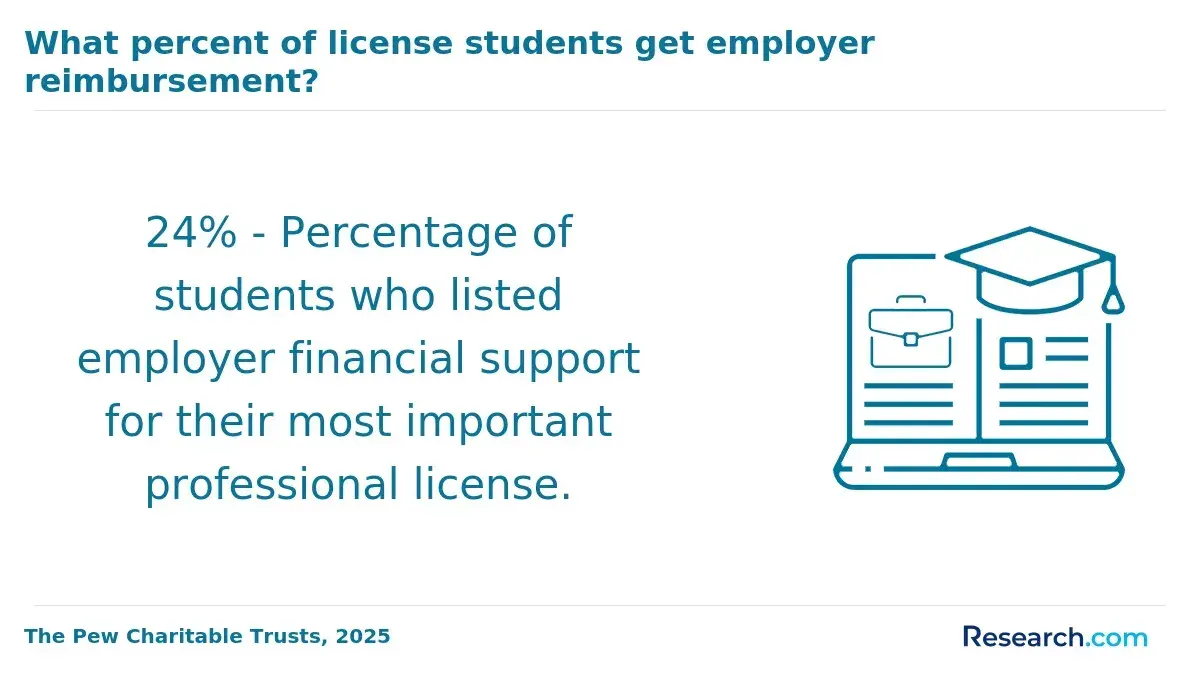
Accredited degree programs may qualify for federal financial aid if the school participates in Title IV aid programs and the student meets eligibility rules. Employer tuition assistance is also common in healthcare systems, especially when the coursework supports quality improvement, patient safety, compliance, or leadership development.
Can You Work Full Time While Completing an Accelerated Online Patient Safety & Quality Degree?
Yes, many students complete online patient safety and quality programs while working full time, but the fastest timeline may not be the best timeline for every working adult. Accelerated 8-week courses compress readings, projects, discussion posts, exams, and group work into a shorter period, so the weekly workload can feel heavier than a traditional semester.
The table below compares typical pacing choices for working students. It can help you decide whether speed, balance, or long-term persistence should drive your schedule.
| Enrollment pace | Typical course load | Time advantage | Main risk | Best fit |
| Aggressive accelerated pace | Two or more courses per short term | Fastest calendar completion | Burnout, missed deadlines, and lower-quality project work | Students with strong support, predictable schedules, and prior academic confidence |
| Balanced full-time pace | One to two courses per term, including summer | Still faster than part time | Limited flexibility during busy work periods | Working adults who can reserve consistent weekly study time |
| Part-time pace | One course per term | Slower but sustainable | Longer time to graduation and possible tuition changes over time | Students with rotating shifts, caregiving duties, or demanding clinical roles |
A practical rule is to review the syllabus style before committing to multiple short-term courses. Quality improvement classes often require applied projects, data interpretation, root-cause analysis, process mapping, or team-based work, which may be hard to rush during peak workweeks.
Are Accelerated Online Patient Safety & Quality Degrees Respected by Employers and Graduate Schools?
Employers and graduate schools generally respect accelerated online degrees when they come from accredited institutions, carry the same academic standards as campus programs, and produce relevant skills. The word "online" is usually less important than accreditation, curriculum quality, faculty expertise, applied projects, and your ability to explain what you learned.
Patient safety and quality roles often value a mix of education and experience. Common responsibilities include tracking quality metrics, leading improvement projects, analyzing adverse events, supporting regulatory readiness, improving care transitions, training teams, and building a culture of safety.
The salary context depends on role, setting, and experience. According to the May 2024 Occupational Employment and Wage Statistics from the U.S. Bureau of Labor Statistics, the median annual wage for medical and health services managers was $117,960. This figure is not a promise for patient safety graduates, but it shows why healthcare quality leadership can be economically meaningful for professionals moving from frontline or coordinator roles into management.
Some students later pursue advanced nursing, public health, health administration, or research degrees. Nurses considering long-term academic, executive, or research paths may also compare PhD programs for nurses after gaining quality improvement experience.
How Should You Compare the Fastest Accredited Online Patient Safety & Quality Programs?
The best fast program is the one you can complete quickly without losing accreditation value, career relevance, or academic fit. A shorter advertised timeline is only useful if your credits transfer, the course sequence is available, and the workload fits your life.
Use these steps before enrolling. They are designed to reveal the real completion time, not just the marketing timeline.
- Ask for an official transfer evaluation before you commit, including exactly how many credits apply to the degree and which requirements remain.
- Request a term-by-term degree plan showing the fastest available schedule and a more realistic working-adult schedule.
- Confirm whether courses are offered every term or only once per year, because limited sequencing can delay graduation.
- Verify institutional accreditation and any relevant programmatic accreditation or school-level accreditation tied to your career goal.
- Ask whether a practicum, capstone, applied project, internship, or field-based quality improvement project is required.
- Compare total program cost after transfer credits, not just tuition per credit.
- Check whether the program prepares students for quality improvement, risk management, compliance, healthcare analytics, patient safety leadership, or a specific certification goal.
- Speak with your employer about tuition assistance, schedule flexibility, project access, and whether the credential supports promotion requirements.
Watch for red flags: vague accreditation language, no clear course sequence, pressure to enroll before transfer review, unclear fees, unrealistic promises about completion time, or a curriculum that does not include healthcare quality methods. If you are comparing adjacent healthcare fields, such as nutrition quality, population health, or care coordination, online registered dietitian programs may help you understand how accreditation and supervised practice requirements can change timelines in other health professions.
Other Things You Should Know About Patient Safety & Quality
Yes. A graduate certificate is usually the fastest accredited option because it requires fewer credits than a master's degree. It may be enough for professional development, but a master's can carry more weight for leadership, teaching, or advanced administrative roles.
Possibly, but usually only if you choose a certificate or enter a bachelor's-completion program with many accepted transfer credits. Most full master's degrees take longer than one year unless the program is unusually intensive.
Most are not clinical licensure programs, so they usually do not require traditional clinical rotations. However, some programs require an applied capstone, practicum, portfolio, or workplace quality improvement project that can affect your completion timeline.
Common delays include rejected transfer credits, missing prerequisites, courses offered only once per year, taking fewer courses than planned, capstone project delays, employer schedule conflicts, and incomplete financial aid or admissions documents.
References
- JHU Online MAS in Patient Safety and Healthcare Quality https://www.mhaonline.com/school-profiles/jhu-bloomberg-online-mas-patient-safety-and-healthcare-quality
- Focused Certificate in Healthcare Quality & Safety | ISQua https://isqua.org/focused-certificate-qips/
- How Continuing Education Improves Patient Safety https://blog.methodistcollege.edu/continuing-ed-improves-patient-safety
- Quality and Patient Safety Training Programmes https://ieea.ch/accreditation-quality-and-patient-safety-training-programmes/
- Online Master’s in Patient Safety and Healthcare Quality (PSHQ) Programs https://www.onlineeducation.com/healthcare/masters-in-patient-safety-healthcare-quality-programs
- International Accreditation: Elevating Healthcare Quality to Global Standards https://hospitalsmagazine.com/iinternational-accreditation-elevating-healthcare-quality-to-global-standards/
- Essential Patient Safety Course (EPSC) - ESAIC https://esaic.org/professional-growth/educational-courses/epsc/
- Online Specialization in Healthcare Quality and Patient Safety | Colorado State University Global https://csuglobal.edu/academic-programs/undergraduate-specializations/undergraduate-specialization-in-healthcare-quality-and-patient-safety
- Home Accreditation Canada | Safer Care, a Healthier World https://accreditation.ca/