2026 Online Patient Safety & Quality Degree Programs With No Application Fee and Rolling Admissions

Co-Founder and Chief Data Scientist
Choosing an online patient safety and quality degree is often a cost, timing, and career-fit decision-not just an admissions decision. The field matters because hospitals, insurers, and health systems increasingly need professionals who can reduce preventable harm, improve care processes, and analyze quality data.
The U.S. Bureau of Labor Statistics reports a 2024 median wage of $117,960 for medical and health services managers, a category that includes many quality leadership roles. This guide helps working clinicians, healthcare administrators, and career changers compare no-fee, rolling-admission options without overlooking accreditation, total cost, or career value.
Key Things You Should Know
- No-application-fee programs can reduce upfront costs, but the real affordability test is total tuition, required fees, transfer-credit policy, and financial aid timing.
- Rolling admissions usually means applications are reviewed continuously, but seats, scholarships, clinical course availability, and start dates can still close before the term begins.
- Patient safety and quality roles often overlap with healthcare management; BLS data shows medical and health services managers had a 2024 median wage of $117,960, but outcomes vary by role, employer, experience, and credentials.
Which Online Patient Safety & Quality Degree Programs Have No Application Fee and Rolling Admissions?
Online patient safety and quality programs are usually offered as master's degrees, healthcare administration concentrations, nursing leadership tracks, or graduate certificates. Fully dedicated "patient safety and quality" degrees with both a permanent $0 application fee and rolling admissions are limited, so students should also compare closely related healthcare quality, health administration, and nursing quality-improvement pathways.
The table below summarizes program pathways that are commonly relevant to this search. Policies can change by term, so treat this as a starting point and confirm the application fee, admissions calendar, and start dates directly with the school before applying.
| School or pathway | Relevant online program type | No application fee status | Rolling or flexible admissions | Best fit |
| Southern New Hampshire University | Online master's-level healthcare administration pathway with patient safety and quality coursework or concentration options | School commonly advertises $0 application fee for online programs | Multiple online term starts and rolling-style review | Working adults seeking a broad healthcare administration degree with quality-focused coursework |
| Purdue Global | Online graduate certificate or healthcare quality and patient safety pathway that may complement a healthcare degree | School commonly advertises no application fee | Multiple start dates with continuous admissions processes | Students who already hold a degree and want targeted patient safety skills |
| National University | Online healthcare administration or healthcare leadership pathway with quality and safety-aligned coursework | School commonly advertises no application fee | Frequent starts, often monthly or rolling-style | Students who want accelerated course scheduling and frequent entry points |
| Other online MHA, MSN, DNP, or graduate certificate programs | Healthcare quality, patient safety, risk management, population health, or clinical quality improvement | Varies; some waive fees during promotions rather than permanently | Varies; some use rolling review with priority deadlines | Applicants comparing prestige, accreditation, tuition, and career alignment over fee savings alone |
Students already in clinical fields may also compare patient safety programs with broader online nursing programs for working adults, especially if their goal is nursing leadership, quality improvement, or care coordination rather than a standalone quality management role.
How Does Rolling Admission Work for Online Patient Safety & Quality Degree Programs?
Rolling admission means the school reviews applications as they arrive instead of waiting for one fixed deadline. In online healthcare programs, this often pairs with several start dates per year, which can help working adults begin sooner if their materials are ready.
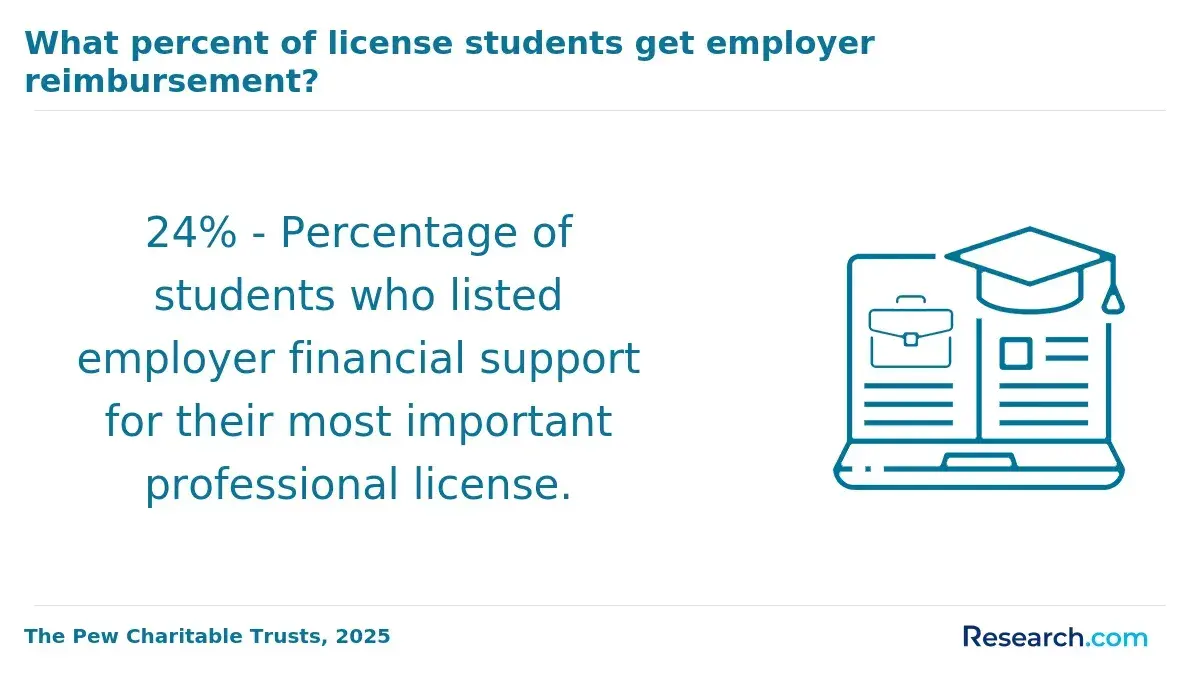
Rolling admission is not the same as "apply anytime with no consequences." Programs may stop accepting applicants once a cohort is full, and financial aid, employer reimbursement, and course registration may have separate deadlines. Use this sequence to understand how the process usually works:
- Submit the online application and any required fee waiver or $0-fee confirmation.
- Send official transcripts from all prior colleges, including transfer or graduate coursework.
- Upload required documents such as a resume, statement of purpose, professional license, or recommendation letters.
- Wait for admissions review, which may happen within days or weeks depending on the program and transcript processing time.
- Confirm enrollment, complete financial aid steps, and register before the desired start date fills or closes.
The main advantage is timing flexibility. The main risk is procrastination: students may assume rolling admissions means there is no real deadline, then miss a start date because transcript evaluation, financial aid verification, or employer tuition approval takes longer than expected.
How Much Can Students Save by Choosing an Online Patient Safety & Quality Degree With No Application Fee?
A no-application-fee program can save money upfront, but it rarely determines whether a degree is affordable overall. The direct savings equal the application fee the school would otherwise charge; the larger financial differences usually come from tuition per credit, number of required credits, technology fees, transfer credits, and whether the program allows part-time enrollment.
The comparison below shows why students should separate application savings from total program cost. A waived fee is helpful, especially when applying to multiple programs, but it should not outweigh tuition and completion requirements.
| Cost factor | Why it matters | How to evaluate it |
| Application fee | Reduces upfront cost before admission | Confirm whether the fee is permanently $0, waived by code, or limited to certain terms |
| Tuition per credit | Usually the largest cost driver | Multiply tuition by required credits and check whether online students pay a different rate |
| Mandatory fees | Can add technology, graduation, transcript, library, or program fees | Ask for a full cost sheet, not just tuition |
| Transfer credits | Can reduce time and total cost if accepted | Request an unofficial transfer review before enrolling when possible |
| Course load and pacing | Affects living costs, work schedule, and time to credential | Compare full-time, part-time, and accelerated formats |
Federal student loan costs also matter. For loans first disbursed in the 2024-25 academic year, the fixed interest rate for graduate Direct Unsubsidized Loans is 8.08%, which means borrowing even a modest additional amount can cost more over time than a waived application fee saves upfront.
What Are the Admission Requirements for No-Fee Online Patient Safety & Quality Degree Programs?
Admission requirements depend on whether the program is a bachelor's completion program, master's degree, nursing leadership program, healthcare administration degree, or graduate certificate. Most patient safety and quality pathways are designed for applicants with prior college credit, healthcare experience, or a completed bachelor's degree.
Students should expect requirements like the following, although each school sets its own standards:
- Official transcripts from every college attended, even if credits were not completed or transferred.
- A minimum GPA requirement or conditional admission process for applicants below the preferred GPA.
- A resume showing healthcare, administrative, clinical, public health, quality improvement, or leadership experience.
- A personal statement explaining interest in patient safety, quality improvement, risk reduction, healthcare operations, or population health.
- Professional license documentation when applying to nursing, clinical leadership, or advanced practice pathways.
- Prerequisite coursework for some programs, especially statistics, research methods, anatomy and physiology, or healthcare systems.
Applicants who are earlier in their healthcare education may need a clinical or allied health foundation before moving into quality and safety roles. For example, an ASN program online may be a better starting point for students whose long-term goal is nursing-based patient safety leadership.
When Should Students Apply to Online Patient Safety & Quality Degree Programs With Rolling Admissions?
The best time to apply is usually 8 to 12 weeks before the start date you want, even if the program reviews applications continuously. That window gives you time to gather transcripts, compare aid packages, ask transfer-credit questions, and avoid rushed enrollment decisions.
This timing is especially important for working adults. Employer tuition reimbursement, shift changes, military benefits, and family schedules may take longer to coordinate than the admissions review itself. A rolling-admission program gives you more entry points, but it does not eliminate planning.
Before choosing a start date, confirm these details with admissions and financial aid staff:
- The final date to submit all application materials for the next available term.
- Whether every start date offers the same patient safety or quality-focused courses.
- Whether scholarships, assistantships, tuition discounts, or employer partnership rates have priority deadlines.
- How long official transcript evaluation normally takes.
- Whether newly admitted students can defer admission if work or family circumstances change.
A common mistake is waiting because the school says applications are accepted year-round. In practice, applying earlier can give you more time to compare programs and avoid accepting the first offer simply because the next term is approaching.
How Can Students Strengthen an Online Patient Safety & Quality Degree Application?
Strong applications connect the applicant's experience to measurable healthcare improvement. Patient safety and quality programs often value applicants who understand systems thinking, communication across care teams, data-informed decisions, and the human impact of preventable harm.
Use the application to show readiness for graduate-level or upper-division healthcare coursework. These steps can make the file stronger:
- Describe a specific process improvement, safety concern, workflow problem, or patient-care challenge you have observed or helped address.
- Quantify your experience when possible, such as team size, patient population, reporting duties, audit work, or quality metrics used in your role.
- Highlight familiarity with electronic health records, incident reporting, root-cause analysis, Lean, Six Sigma, compliance, or clinical documentation.
- Ask recommenders who can speak to reliability, ethical judgment, communication, and ability to work across clinical and administrative teams.
- Explain why the specific program format fits your schedule, goals, and current responsibilities.
Applicants from allied health backgrounds can also build credibility by showing a clear progression plan. Someone beginning in an entry-level clinical role, for instance, might use medical assistant certification as an early step before later pursuing healthcare quality, safety, or administration credentials.
Are Online Patient Safety & Quality Degree Programs With No Application Fees Accredited and Legitimate?
Yes, a program can be legitimate, accredited, online, rolling-admission, and free to apply to-but none of those features proves quality by itself. Accreditation is the first legitimacy check because it affects financial aid eligibility, credit transfer, employer recognition, and admission to later degree programs.
For patient safety and quality degrees, students should look first for institutional accreditation from a recognized accreditor. Depending on the program, additional accreditation or recognition may also matter: CAHME can be relevant for healthcare administration programs, CCNE or ACEN for nursing programs, and CEPH for public health pathways.
Red flags deserve close attention. Be cautious if a school avoids naming its accreditor, pressures you to enroll immediately, refuses to provide a full cost breakdown, advertises unrealistic career outcomes, or claims rolling admission means acceptance is automatic. A legitimate program should clearly explain admissions standards, faculty qualifications, curriculum, learning format, complaint processes, and student support services.
Online format also matters. Ask whether courses are asynchronous, synchronous, or mixed; whether there are required campus visits; and whether exams, group projects, or presentations must be completed at specific times. A program can be "online" and still require scheduled attendance that may not fit shift work.
How Do Financial Aid and Total Costs Compare Among Online Patient Safety & Quality Degree Programs?
Financial aid and total cost can vary more than application policies. Some no-fee programs have higher tuition, while some programs with an application fee may offer stronger scholarships, employer partnerships, transfer-credit acceptance, or lower total credits required for completion.
The table below shows the major cost and aid categories to compare before deciding whether a no-fee, rolling-admission program is truly the better financial option.
| Category | What to compare | Why it affects ROI |
| Tuition structure | Per-credit tuition, flat-rate tuition, subscription model, or competency-based model | Different structures favor different pacing; accelerated students may benefit from flat-rate models while part-time students may not |
| Program length | Total credits and expected months to completion | More credits can increase cost even when tuition per credit looks competitive |
| Financial aid | Federal aid eligibility, scholarships, employer tuition benefits, military benefits, and payment plans | A lower net price may matter more than a lower sticker price |
| Transfer and prior learning credit | Graduate transfer limits, professional certification credit, military credit, and portfolio options | Accepted credit can reduce both cost and time to completion |
| Career alignment | Curriculum match with quality analyst, patient safety coordinator, risk manager, or healthcare operations roles | A cheaper program may be a poor investment if it lacks the skills employers expect |
Students should also consider labor-market context. BLS projects much faster-than-average growth for medical and health services managers through 2033, reflecting expansion in healthcare delivery, data reporting, compliance, and care coordination. That trend supports demand for quality-minded healthcare leaders, but it does not replace the need to compare local employer requirements and job postings.
Which Students Benefit Most From No-Fee, Rolling-Admission Online Patient Safety & Quality Degrees?
No-fee, rolling-admission programs are most useful for students who need flexibility but are still prepared to evaluate quality carefully. They are especially helpful when the student is applying to several programs, trying to start quickly, or balancing coursework with full-time healthcare work.
These programs are often a strong fit for the following students:
- Working clinicians who want to move into quality improvement, patient safety, compliance, risk management, or care coordination.
- Healthcare administrators who need formal training in safety science, process improvement, healthcare data, and regulatory expectations.
- Career changers with healthcare-adjacent experience who want an online pathway into healthcare operations or quality roles.
- Students comparing several schools who want to avoid paying multiple application fees before they understand net cost and fit.
- Applicants with unpredictable schedules who benefit from multiple annual start dates rather than one fall deadline.
These programs may be less ideal for students who need a highly specialized clinical credential, a state-licensed pathway, or a program with a very specific practicum placement. Students interested in nutrition, food safety, or clinical dietetics, for example, may need to compare online registered dietitian programs instead of a general patient safety and quality degree.
How Should Students Choose Among No-Fee Online Patient Safety & Quality Degree Programs?
The best choice is not simply the program with the fastest start date or the lowest upfront cost. Students should compare each option by academic fit, total price, accreditation, flexibility, student support, and whether the curriculum matches the roles they want.
A practical comparison process can prevent costly mistakes:
- Define the target role first, such as quality improvement specialist, patient safety coordinator, clinical quality analyst, risk manager, healthcare operations manager, or nursing quality leader.
- Confirm the program's exact credential, because a certificate, concentration, master's degree, and doctoral pathway carry different career value.
- Ask for total estimated program cost, including tuition, fees, books, technology charges, and graduation costs.
- Verify that the application fee is currently $0 and not dependent on a temporary waiver code that may expire.
- Confirm whether admissions are truly rolling or whether the program uses priority, cohort, scholarship, or registration deadlines.
- Review accreditation and any programmatic recognition relevant to healthcare administration, nursing, or public health.
- Compare curriculum against job postings to see whether the program teaches quality metrics, safety science, informatics, process improvement, leadership, and healthcare regulation.
- Ask whether credits can transfer into a higher degree if you plan to continue your education later.
Students with long-term academic goals should think beyond the immediate credential. Nurses who eventually want research, executive leadership, or faculty roles may want to compare patient safety master's options with PhD programs for nurses before committing to a pathway that may or may not transfer well into doctoral study.
Other Things You Should Know About Patient Safety & Quality
Not exactly. Healthcare administration is broader and may cover finance, operations, policy, human resources, and leadership. Patient safety and quality focuses more directly on reducing harm, improving care processes, analyzing outcomes, and building safer systems.
Not always. Many programs accept applicants from healthcare administration, public health, allied health, data analysis, compliance, or related backgrounds. However, some nursing-focused programs require an active RN license or prior clinical education.
Many are fully online, but format varies. Some programs include live class meetings, group projects, applied capstones, practicums, or employer-based projects. Always confirm attendance rules before enrolling, especially if you work shifts.
It can be enough for professionals who already have a healthcare degree and relevant experience. For leadership roles, some employers may prefer or require a master's degree, clinical license, management experience, or specialized quality improvement training.
References
- Online Master’s in Patient Safety and Healthcare Quality Programs https://www.mhaonline.com/programs/masters-in-patient-safety-healthcare-quality
- Online Master’s in Patient Safety and Healthcare Quality (PSHQ) Programs https://www.onlineeducation.com/healthcare/masters-in-patient-safety-healthcare-quality-programs
- Industry Insights - Legacy Education https://legacyed.com/industry-insights/
- Program Outcomes/Goals https://www.gannon.edu/academic-offerings/health-professions-and-sciences/graduate/physician-assistant-post-baccalaureate/program-outcomesgoals/
- ASSP Foundation https://foundation.assp.org/academic-scholarships/
- Cost of Medical Health Care Courses and Diplomas in Canada https://pharmamedical.ca/cost-of-medical-health-care-courses-and-diplomas-in-canada/
- Admission & Tuition Fees https://ed.wum.edu.pl/pl/admission-fees
- Online Undergraduate Certificate in Healthcare Quality and Patient Safety | CSU Global | Accredited https://csuglobal.edu/academic-programs/undergraduate-certificates/undergraduate-certificate-healthcare-quality-and-patient-safety
- Comparing The Costs of Studying Medicine: UK, USA, Europe, and the Caribbean https://www.medlinkstudents.com/blog/comparing-the-costs-of-studying-medicine-uk-usa-europe-and-the-caribbean/
- Apply for a Scholarship - Patient Advocate Foundation https://www.patientadvocate.org/connect-with-services/apply-for-a-scholarship/