
2027 Best Online MSN in Public Health Nursing

Co-Founder and Chief Data Scientist
You feel it in your work every day—that desire for your nursing career to have a bigger, more lasting impact. The world's most significant health challenges, from climate change to the rapid spread of misinformation, aren't distant problems. They are the next great career opportunities for nurses ready to lead.
An online MSN in public health nursing is the path to that leadership role. This guide was created by career planning experts with over 10 years of experience to provide you with a clear blueprint for this vital work. With 3 in 4 Americans rating nurses as the most trusted professionals, this degree leverages that unique credibility to protect the health of entire communities.
What are the benefits of getting an online MSN in public health nursing?
- You will gain the qualifications to step into leadership positions, allowing you to design and manage health programs that create systemic change.
- Your earning potential increases significantly, with public health nurse salaries averaging around $60,319 and the median for all nurse practitioners reaching $129,210.
- You can immediately apply new knowledge from your online courses, like program planning, to your current job and see the results in real time.
What can I expect from an online MSN in public health nursing?
The biggest thing to expect from this program is a fundamental shift in your professional mindset. You’ll move from focusing on the health of individual patients to designing systems that protect entire populations.
It’s essential to understand how this differs from a clinical Nurse Practitioner (NP) track. An NP program deepens your skills in diagnosing and treating individual patients. A public health nursing program, in contrast, equips you with strategic skills in epidemiology, health policy, and large-scale program management.
While your coursework is online, you will still complete essential, in-person clinical and practicum hours. Accredited online programs are just as rigorous as their on-campus counterparts, but they demand a higher level of self-direction. You have to be organized and proactive, especially when it comes to your hands-on training.
Where can I work with an online MSN in public health nursing?
While many graduates build successful careers in government health departments, the field is much broader and more dynamic than you might think. Your skills are in high demand across multiple sectors.
You’ll find leadership opportunities in non-profit organizations, managing community health initiatives, and in the private sector, where you can develop corporate wellness programs. Health tech companies also hire experts with an online MSN in public health nursing to help design systems that improve population-level outcomes.
One of the most critical emerging roles is in public education. In an era of rampant misinformation, society desperately needs trusted health leaders to provide clear, evidence-based guidance. This degree prepares you to be that credible voice, whether you work for a hospital system, a community agency, or a digital health platform.
How much can I make with an online MSN in public health nursing?
The average salary for a Public Health Nurse is around $60,319, which is a realistic starting point for many roles. However, this degree is your key to unlocking much higher long-term earnings. The median annual wage for all nurse practitioners is $129,210.
That difference highlights the career path you are stepping onto. As you advance into program management, policy development, and other leadership positions, your salary will grow to reflect that advanced expertise.
- List of the Best Online MSN in Public Health Nursing Programs for 2027 List of Programs
- How long does it take to complete an online MSN in public health nursing program? Completion Time
- How does an online MSN in public health nursing program compare to an on-campus program? How does an online MSN in public health nursing program compare to an on-campus program?
- What is the average cost of an online MSN in public health nursing program? Program Cost
- What are the financial aid options for students enrolling in an online MSN in public health nursing program? Financial Aid
- What are the prerequisites for enrolling in an online MSN in public health nursing program? What are the prerequisites for enrolling in an online MSN in public health nursing program?
- What courses are typically in an online MSN in public health nursing program? What courses are typically in an online MSN in public health nursing program?
- What types of specializations are available in an online MSN in public health nursing program? What types of specializations are available in an online MSN in public health nursing program?
- How to choose the best online MSN in public health nursing program? How to choose the best online MSN in public health nursing program?
- What career paths are available for graduates of an online MSN in public health nursing program? Career Paths
- What is the job market for graduates of an online MSN in public health nursing program? Job Market
- What student support services are available for online MSN in public health nursing programs? What student support services are available for online MSN in public health nursing programs?
- What are the technology requirements for online MSN in public health nursing programs? What are the technology requirements for online MSN in public health nursing programs?
Best Online MSN in Public Health Nursing Programs for 2027
An online Master of Science in Nursing (MSN) in public health nursing is designed for registered nurses who want to move from one-patient-at-a-time care into population-level leadership. Instead of focusing only on bedside treatment, this degree prepares nurses to design prevention programs, analyze community health needs, shape health policy, lead public health teams, and respond to large-scale health challenges.
This guide is for licensed nurses comparing online MSN public health nursing programs and trying to answer practical questions: Which programs are worth considering? How much do they cost? How long do they take? What should you ask about accreditation, practicum placement, financial aid, and career outcomes before enrolling?
Below, you will find a ranked program list, cost and timeline guidance, admissions expectations, curriculum details, career options, common mistakes to avoid, and decision-focused advice for choosing the right online MSN in public health nursing program.
Quick answer: What is the best online MSN in public health nursing program?
The best online MSN in public health nursing program is the one that is accredited, fits your budget and schedule, provides meaningful practicum support, and aligns with your target role in community health, population health, public health leadership, policy, education, or nonprofit health programming. For many working nurses, online programs offer the flexibility to keep working while earning the degree, but students should carefully verify practicum requirements and local placement support before enrolling.
How we rank schools
Our rankings are built from established education data sources rather than promotional claims from schools. We review information from the IPEDS database, Peterson's database, the College Scorecard, and the National Center for Education Statistics. These sources help us evaluate online MSN programs in public health nursing using comparable institutional and program-level information.
Readers should still use rankings as a starting point, not as the only decision factor. Your best-fit program may depend on your state, employer tuition benefits, practicum site access, preferred specialization, transfer credit options, and whether the program structure works with your nursing schedule. To understand the broader evaluation process, review our full methodology.
Online MSN in public health nursing programs at a glance
| School | Program | Program Length | Credits | Cost per Credit | Accreditation |
| University of North Carolina at Charlotte | M.S.N. in Community/Public Health Nursing | 2 years | 38 | $309.59 (in-state); $1,186.59 (out-of-state) | Commission on Collegiate Nursing Education (CCNE) |
| Worcester State University | M.S. in Nursing, Public & Population Health | 18 months | 35 | $504 | Commission on Collegiate Nursing Education (CCNE) |
| University of Massachusetts-Dartmouth | M.S.N. in Global Public Health | 2 years | 39 | $617 | Commission on Collegiate Nursing Education (CCNE) |
| Rhode Island College | M.S.N. in Population/Public Health Nursing | 2 years | 42 | $528 (in-state); $1,028 (out-of-state) | Commission on Collegiate Nursing Education (CCNE) |
| American Public University | M.S.N. with Community and Public Health Nursing Concentration | 2 years | 36 | $455 | Commission on Collegiate Nursing Education (CCNE) |
| University of Massachusetts-Amherst | M.S. in Public Health Nursing | 2 years | 33 | $825 | Commission on Collegiate Nursing Education (CCNE) |
| Grand Canyon University | M.S.N. with an Emphasis in Public Health Nursing | 2-3 years | 40 | $600 | Commission on Collegiate Nursing Education (CCNE) |
| Commonwealth University of Pennsylvania | M.S.N. in Public Health | 2 years | 36 | $730 (in-state); $1,009 (out-of-state) | Commission on Collegiate Nursing Education (CCNE) |
| University of Maryland | M.S.N. in Community/Public Health Nursing | 2-3 years | 38 | $926 (in-state); $1,643 (out-of-state) | Commission on Collegiate Nursing Education (CCNE) |
| Liberty University | M.S.N. in Community and Public Health | 2 years | 36 | $580 | Commission on Collegiate Nursing Education (CCNE) |
1. University of North Carolina at Charlotte – M.S.N. in Community/Public Health Nursing
The University of North Carolina at Charlotte offers an MSN pathway for nurses who want to lead community health assessment, prevention planning, and culturally responsive public health initiatives. The program is suited to nurses who want to work with community partners, identify risks among vulnerable groups, and build interventions that improve population outcomes rather than only individual care episodes.
- Program Length: 2 years
- Required Credits to Graduate: 38
- Cost per Credit: $309.59 (in-state); $1,186.59 (out-of-state)
- Accreditation: Commission on Collegiate Nursing Education (CCNE)
2. Worcester State University – M.S. in Nursing, Public & Population Health
Worcester State University provides a public and population health nursing program focused on evidence-informed decisions, community-based program design, and leadership across health systems. Students may tailor the degree through focus areas in Global and Cross-Cultural Health or Health Systems Transformation, making it a strong option for nurses who want a defined area of practice within population health.
- Program Length: 18 months
- Specializations: Global and Cross-Cultural Health; and Health Systems Transformation
- Required Credits to Graduate: 35
- Cost per Credit: $504
- Accreditation: Commission on Collegiate Nursing Education (CCNE)
3. University of Massachusetts-Dartmouth – M.S.N. in Global Public Health
The University of Massachusetts-Dartmouth structures its MSN around global public health and prepares nurses to work with diverse populations in U.S. and international contexts. Its asynchronous online format may appeal to working nurses who need schedule flexibility while studying illness prevention, policy, and advanced nursing concepts through a public health lens.
- Program Length: 2 years
- Required Credits to Graduate: 39
- Cost per Credit: $617
- Accreditation: Commission on Collegiate Nursing Education (CCNE)
4. Rhode Island College – M.S.N. in Population/Public Health Nursing
Rhode Island College prepares nurses for advanced public health leadership, community-based practice, and nurse educator responsibilities. The curriculum emphasizes public health science, evidence-based practice, and professional role development for nurses who want to meet workforce needs in healthcare, community organizations, and academic settings.
- Program Length: 2 years
- Required Credits to Graduate: 42
- Cost per Credit: $528 (in-state); $1,028 (out-of-state)
- Accreditation: Commission on Collegiate Nursing Education (CCNE)
5. American Public University – M.S.N. with Community and Public Health Nursing Concentration
American Public University offers an MSN concentration for nurses interested in health promotion, disease prevention, and improving access for vulnerable populations. The curriculum gives attention to social determinants of health and health policy, making it relevant for nurses who want to address inequities across communities and healthcare systems.
- Program Length: 2 years
- Required Credits to Graduate: 36
- Cost per Credit: $455
- Accreditation: Commission on Collegiate Nursing Education (CCNE)
6. University of Massachusetts-Amherst – M.S. in Public Health Nursing
The University of Massachusetts-Amherst focuses on preparing nurses for public health departments, community health organizations, and leadership roles serving underserved groups. Students study how to monitor health patterns, evaluate population needs, and create programs intended to improve community well-being.
- Program Length: 2 years
- Required Credits to Graduate: 33
- Cost per Credit: $825
- Accreditation: Commission on Collegiate Nursing Education (CCNE)
7. Grand Canyon University – M.S.N. with an Emphasis in Public Health Nursing
Grand Canyon University offers an MSN emphasis for nurses who want to coordinate community health services and support prevention-focused care. The program incorporates public health concepts with a faith-based perspective and prepares students to advocate for ethical policies and work toward reducing health disparities.
- Program Length: 2-3 years
- Required Credits to Graduate: 40
- Cost per Credit: $600
- Accreditation: Commission on Collegiate Nursing Education (CCNE)
8. Commonwealth University of Pennsylvania – M.S.N. in Public Health
Commonwealth University of Pennsylvania prepares nurses for public health responsibilities in community and school health environments. The program emphasizes creative problem-solving, population assessment, and program development using the nursing process to support wellness across groups rather than isolated clinical encounters.
- Program Length: 2 years
- Required Credits to Graduate: 36
- Cost per Credit: $730 (in-state); $1,009 (out-of-state)
- Accreditation: Commission on Collegiate Nursing Education (CCNE)
9. University of Maryland – M.S.N. in Community/Public Health Nursing
The University of Maryland's community/public health nursing program centers on population health, social justice, and evidence-based program design. Its blend of online and face-to-face coursework may work well for students who want online flexibility but are also prepared for required in-person components.
- Program Length: 2-3 years
- Required Credits to Graduate: 38
- Cost per Credit: $926 (in-state); $1,643 (out-of-state)
- Accreditation: Commission on Collegiate Nursing Education (CCNE)
10. Liberty University – M.S.N. in Community and Public Health
Liberty University's MSN in community and public health prepares nurses to apply biostatistics, epidemiology, and environmental health to community wellness challenges. The curriculum includes a Christian worldview and practicum requirements, giving students applied experience in public health nursing practice.
- Program Length: 2 years
- Required Credits to Graduate: 36
- Cost per Credit: $580
- Accreditation: Commission on Collegiate Nursing Education (CCNE)
How long does it take to complete an online MSN in public health nursing program?
Most full-time online MSN in public health nursing programs take about 18 to 24 months. Nurses who enroll part time while continuing to work should plan for a longer timeline, often closer to 36 months. Program length depends on required credits, practicum hours, course sequencing, whether classes are offered year-round, and how many courses you can realistically manage with your work schedule.
Speed should not be the only goal. Public health nursing requires comfort with epidemiology, policy, program evaluation, leadership, data interpretation, and community partnership work. A faster schedule can be useful if it is manageable, but a pace that allows you to build strong practicum relationships and absorb complex systems-level content may be more valuable in the long run.
Some students comparing graduate options also look at the shortest public policy masters programs online, especially if they are interested in government or advocacy work. The difference is that an MSN in public health nursing keeps the focus anchored in nursing practice, population health, and healthcare delivery.
Typical completion timelines
| Enrollment Path | Typical Timeline | Best For | Trade-Off |
| Full-time online MSN | 18 to 24 months | Nurses who can reduce work hours or manage a heavier course load | Faster completion, but less flexibility during practicum-heavy terms |
| Part-time online MSN | Closer to 36 months | Working nurses with family, shift, or financial obligations | More manageable pace, but a longer time before graduation |
| Hybrid or blended format | Often similar to online timelines | Students who can attend required campus or face-to-face sessions | More direct interaction, but less location flexibility |
A degree should connect to a realistic career outcome
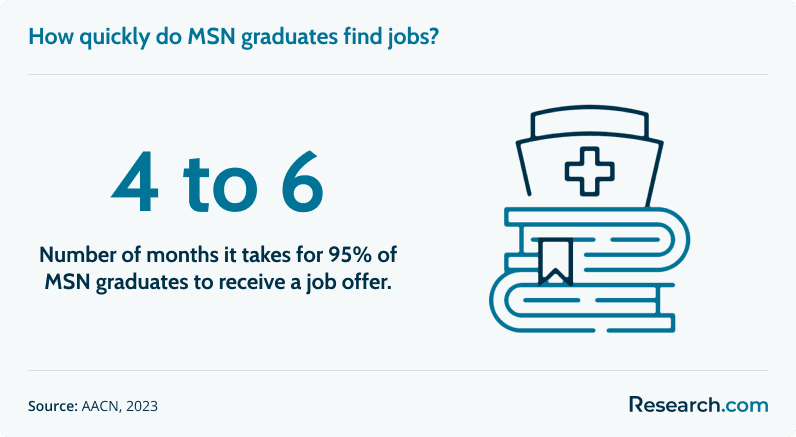
The time you spend in an MSN program should build skills that transfer into actual public health roles. Before enrolling, ask each school how graduates use the degree, what practicum settings are common, and whether alumni move into public health departments, nonprofit health organizations, community health leadership, school health, policy, or program management. Graduation alone is not the outcome; employable public health leadership experience is the goal.
How does an online MSN in public health nursing program compare to an on-campus program?
An accredited online MSN in public health nursing should provide the same degree credential and core graduate-level nursing expectations as a comparable campus program. The main differences are format, flexibility, student responsibility, and how practicum coordination works. Online learning can be an excellent fit for nurses who need to continue working, but it requires strong time management and proactive communication.
If you are comparing public health nursing with advanced clinical specialties, review how programs handle placement support. For example, students researching the best online MSN in psychiatric mental health nurse practitioner programs often place heavy weight on clinical coordination because direct patient care tracks depend on specialized preceptors. Public health nursing practicums are different, but placement quality still matters.
Online vs. on-campus MSN in public health nursing
| Factor | Online MSN | On-Campus MSN | Decision Tip |
| Schedule flexibility | Often better for working nurses, especially with asynchronous courses | More fixed meeting times and campus requirements | Choose online if you need flexibility, but confirm deadlines and synchronous sessions |
| Peer and faculty interaction | Usually through discussion boards, video meetings, email, and virtual projects | More frequent in-person interaction | Ask how faculty mentoring and group work are handled online |
| Practicum placement | May require more student initiative depending on the school | May have stronger local agency relationships near campus | Ask whether placements are guaranteed or only supported |
| Geographic access | Allows students to study from outside the campus area | Best for students near the institution or willing to relocate | Confirm the school is authorized to enroll students in your state |
| Technology demands | Requires reliable internet, suitable hardware, and comfort with online platforms | Still uses learning systems, but less dependent on remote access | Check technical requirements before paying a deposit |
The most important difference is practicum responsibility. Some online programs provide strong placement coordination; others expect students to identify and secure local sites with limited assistance. This can affect your learning experience, stress level, and ability to graduate on time.
Before choosing an online program, ask for precise answers. Which agencies have accepted students recently? Are there placement coordinators? What happens if your preferred site declines? Can students complete practicums in health departments, schools, community clinics, nonprofit agencies, or policy organizations? Vague answers are a warning sign.
What is the average cost of an online MSN in public health nursing program?
The online MSN in public health nursing programs listed here typically range from approximately $11,700 to $35,200 in total tuition for in-state students and from $16,400 to $62,400 for out-of-state students. Your actual cost may differ based on residency status, fees, course load, transfer credits, technology charges, practicum-related expenses, books, and whether tuition changes while you are enrolled.
Public universities often offer lower rates to in-state students, while private institutions may use one tuition rate regardless of location. However, tuition alone does not show the full financial picture. A program with higher tuition but strong employer reimbursement eligibility, scholarships, or efficient completion may be more affordable than it first appears. Conversely, a low per-credit price can become expensive if additional fees, travel, or delayed practicum placement extend your timeline.
Students comparing adjacent MSN pathways, such as MSN nursing education online, should make the same calculation: total program cost, not just advertised tuition per credit.
Cost factors to compare before enrolling
| Cost Factor | Why It Matters | Question to Ask |
| Tuition per credit | This is the largest visible cost, but not the only one | Is the rate different for in-state and out-of-state online students? |
| Required credits | More credits can raise the total price even when per-credit tuition is moderate | How many credits are required for graduation? |
| Fees | Online, technology, clinical, graduation, and student service fees can add up | Can you provide a full estimated cost of attendance? |
| Practicum costs | Students may pay for background checks, immunizations, travel, or site requirements | What practicum-related costs should online students expect? |
| Time to completion | Delayed placement or part-time enrollment can extend indirect costs | How often do students finish within the advertised timeline? |
| Employer benefits | Tuition reimbursement can reduce out-of-pocket cost | Does the program meet my employer’s reimbursement rules? |
The chart below shows the tuition range across the programs included in this guide and can help you set expectations before speaking with admissions or financial aid offices.
What are the financial aid options for students enrolling in an online MSN in public health nursing program?
Graduate nursing students may be able to use federal aid, scholarships, employer tuition assistance, payment plans, military or veteran benefits, and public service loan repayment options. The right mix depends on your employment status, loan history, school eligibility, and whether you plan to work in government or nonprofit public health after graduation.
- Federal Aid: Start with the Free Application for Federal Student Aid (FAFSA). Completing the FAFSA allows eligible students to be considered for federal student loan options and other aid administered through the school.
- Scholarships: Nursing associations, public health organizations, foundations, employers, and universities may offer scholarships for graduate nursing students. Review both national opportunities and awards tied to your state or specialty interests.
- Employer Reimbursement: Hospitals, healthcare systems, public agencies, and nonprofit employers may help pay for graduate education, often with grade, employment, or service requirements. Confirm the annual cap and whether online programs qualify.
- Payment Plans: Some schools allow students to divide tuition into scheduled payments. This may reduce short-term cash pressure but does not reduce the total cost.
- Service-Based Programs: Nurses planning to work in public service settings should review forgiveness or repayment programs before borrowing.
Public Service Loan Forgiveness can matter for public health nurses
The Public Service Loan Forgiveness (PSLF) program may be especially relevant for nurses who work full time for qualifying government or nonprofit employers. Under PSLF, eligible borrowers may have the remaining balance on qualifying federal student loans forgiven after making 120 qualifying monthly payments while meeting program rules.
Because many public health nursing roles are located in health departments, public agencies, schools, nonprofit organizations, and community health systems, PSLF may align with this career path. Do not assume eligibility automatically. Verify loan type, employer status, repayment plan, and documentation requirements directly through official federal student aid resources.
What are the prerequisites for enrolling in an online MSN in public health nursing program?
Most online MSN in public health nursing programs expect applicants to hold a Bachelor of Science in Nursing (BSN) from an accredited institution, maintain a current and unencumbered Registered Nurse (RN) license, and bring at least one to two years of direct clinical experience. Schools may also request transcripts, a minimum GPA, professional references, a resume, a personal statement, and proof of statistics or research coursework.
Applicants comparing other MSN specialties should review track-specific requirements. For example, a nurse midwifery MSN degree online may share baseline nursing admissions expectations but can include additional clinical or practice-related prerequisites tied to midwifery preparation.
How to strengthen your application
Admissions committees are not only checking whether you meet the minimum requirements. They want to see whether you understand the public health nursing mindset. Strong applicants can connect bedside experience to larger patterns: recurring barriers to care, preventable readmissions, chronic disease trends, vaccine access, maternal and child health gaps, environmental risk, health literacy, or inequities affecting specific populations.
Use your resume and personal statement to show how your nursing experience has prepared you to think beyond individual encounters. Examples may include participating in a quality improvement project, noticing a repeated discharge-planning issue, helping educate a patient group, working with underserved populations, or collaborating across disciplines. The goal is to demonstrate readiness for population-level problem solving.
Common admissions requirements
| Requirement | What Schools Usually Want to See | How to Prepare |
| BSN | A nursing bachelor’s degree from an accredited institution | Confirm your transcript clearly shows degree conferral |
| RN license | A current and unencumbered Registered Nurse license | Check state authorization and licensure requirements before applying |
| Clinical experience | Often at least one to two years of direct clinical experience | Highlight experience with underserved, high-risk, or community-based populations |
| Personal statement | A clear explanation of your goals and fit for public health nursing | Connect your nursing background to population health problems |
| References | Professional or academic recommendations | Choose people who can speak to leadership, communication, and judgment |
| Resume | Evidence of nursing practice, leadership, projects, or service | Include quality improvement, education, committee, or outreach experience |
What courses are typically in an online MSN in public health nursing program?
An online MSN in public health nursing usually blends advanced nursing coursework with public health science, leadership, research, and applied practice. The curriculum is meant to help nurses interpret community data, plan interventions, evaluate outcomes, and lead teams or programs that affect entire populations.
Common courses include:
- Epidemiology
- Biostatistics
- Environmental Health
- Health Policy and Management
- Program Planning and Evaluation
How these courses translate into public health practice
| Course Area | What You Learn | How Public Health Nurses Use It |
| Epidemiology | How diseases, injuries, and risk factors appear across populations | Identify patterns, monitor outbreaks, and target prevention efforts |
| Biostatistics | How to interpret quantitative health data | Evaluate program results and communicate evidence to decision-makers |
| Environmental Health | How surroundings, climate, housing, work, and exposure risks affect health | Support community preparedness and risk reduction strategies |
| Health Policy and Management | How policy, funding, regulation, and organizations shape care | Advocate for systemic changes and manage public health initiatives |
| Program Planning and Evaluation | How to design, implement, and measure interventions | Create community health programs and assess whether they work |
The curriculum is a toolkit for health equity
These subjects are not abstract requirements. They give nurses the tools to address the social determinants of health, evaluate barriers to care, and build programs that respond to real community needs. Environmental Health can help nurses support communities facing climate-related health risks, which the World Health Organization connects to a projected 250,000 additional deaths per year. Program Planning can support care models for an aging population, which grew by over 3% last year alone.
Health Policy coursework also overlaps with skills developed in public administration programs, including budgeting, governance, and systems change. Nurses interested in government or agency leadership may also compare related options such as the shortest master's of public administration online, but the MSN remains distinct because it applies those leadership tools through nursing practice and healthcare delivery.
What types of specializations are available in an online MSN in public health nursing program?
Public health nursing is often the specialization within the MSN. Some schools also offer focus areas or electives that let students shape the degree around a specific population, setting, or leadership goal. These focus areas generally do not change the degree into a separate credential, but they can influence practicum selection, projects, and career positioning.
Common focus areas include:
- Health Policy and Advocacy
- Global Public Health
- Health Education and Promotion
- Disaster Preparedness
Students who want administrative, public-sector, or nonprofit leadership may also compare public health nursing with options such as a fast-track public administration degree online. The key difference is professional identity: public administration programs focus broadly on managing public organizations, while MSN public health nursing programs prepare licensed nurses to apply leadership and policy skills to health systems and populations.
Which focus area fits your goal?
| Focus Area | Best Fit For | Possible Work Settings |
| Health Policy and Advocacy | Nurses who want to influence laws, regulations, funding, or organizational policy | Government agencies, advocacy groups, professional associations, health systems |
| Global Public Health | Nurses interested in cross-cultural health, international programs, or migrant health | Global health organizations, NGOs, public agencies, community programs |
| Health Education and Promotion | Nurses who want to design prevention, wellness, or patient education initiatives | Community clinics, schools, nonprofits, hospitals, local health departments |
| Disaster Preparedness | Nurses interested in emergency planning, crisis response, and community resilience | Public health departments, emergency management agencies, healthcare coalitions |
Earning potential depends on role, sector, and leadership level
An MSN in public health nursing can support advancement into leadership, program management, education, policy, and population health roles. However, it is important not to confuse public health nursing with nurse practitioner preparation unless the program specifically leads to an NP role. The chart below shows median wages for NPs, many of whom hold management positions. This can help illustrate the value employers place on advanced nursing preparation, but individual public health nursing salaries depend on employer, location, responsibilities, and experience.
How to choose the best online MSN in public health nursing program
The best online MSN in public health nursing program should meet four standards: it is properly accredited, affordable for your situation, realistic for your schedule, and strong in practicum support. Accreditation and curriculum quality matter, but the practicum experience often determines whether the program helps you build the relationships and applied skills needed for public health leadership.
Students evaluating other advanced nursing pathways see the same pattern. For instance, those comparing the best online MSN pediatric nurse practitioner programs often find that placement support is one of the most important differentiators. Public health nursing may not require the same clinical preceptor model as NP tracks, but students still need well-matched agencies, mentors, and field experiences.
Questions to ask every admissions counselor
- Accreditation: Is the nursing program accredited by a recognized nursing accreditor such as the Commission on Collegiate Nursing Education (CCNE)?
- State authorization: Can the school enroll online students from my state?
- Practicum support: Do you guarantee clinical or practicum placement for all students?
- Placement staffing: Do you have dedicated placement coordinators?
- Local relationships: What public health agencies, community organizations, schools, or health departments have hosted students in my area?
- Backup plan: What happens if I cannot find an appropriate practicum site independently?
- Format: Are courses asynchronous, synchronous, hybrid, or a mix?
- Costs: What is the full estimated cost, including fees and practicum expenses?
- Outcomes: What types of roles do graduates move into after completing the program?
Common mistakes when choosing an online MSN public health nursing program
| Mistake | Why It Can Hurt You | Better Approach |
| Choosing based only on tuition | Low tuition does not guarantee strong support, timely placement, or fit | Compare total cost, practicum support, accreditation, and completion expectations |
| Ignoring accreditation | Accreditation can affect employer recognition, financial aid, and future education options | Verify program and institutional accreditation before applying |
| Assuming online means fully remote | Some programs require in-person intensives, local practicums, or face-to-face components | Ask exactly when and where in-person participation is required |
| Waiting too long to plan practicum sites | Placement delays can postpone graduation | Start discussing site options before your first term |
| Relying only on rankings | A ranked school may not fit your state, budget, or career goal | Use rankings as a shortlist, then evaluate fit using your own criteria |
| Assuming salary outcomes are guaranteed | Pay varies by employer, location, role, and experience | Research local public health employers and compare job postings before enrolling |
What career paths are available for graduates of an online MSN in public health nursing program?
An online MSN in public health nursing can prepare nurses for leadership roles beyond traditional bedside care. Graduates may work in community health programs, health departments, school health systems, nonprofit organizations, healthcare systems, policy groups, public agencies, and population health departments.
Common career directions include:
- Public Health Nurse Leader: Oversees programs that address prevention, screening, education, and community health needs.
- Community Health Program Manager: Plans, implements, and evaluates initiatives for specific populations or health issues.
- Population Health Coordinator: Works within healthcare systems to reduce risk, improve outcomes, and coordinate care across groups.
- Policy Advisor or Analyst: Helps organizations understand how policies affect access, quality, equity, and health outcomes.
- Health Education or Promotion Specialist: Develops education campaigns and prevention programs for communities or patient groups.
- School or Community Health Director: Leads health services, prevention strategies, and wellness efforts in educational or community settings.
- Public Health Communications Specialist: Creates accurate, trusted communication strategies to counter medical misinformation and improve community understanding.
Some graduates also move into roles that combine nursing knowledge with coaching, prevention, and behavior change. If that direction interests you, it may be useful to explore what a nurse health coach does and how coaching-focused roles differ from public health program leadership.
How an MSN changes your professional options
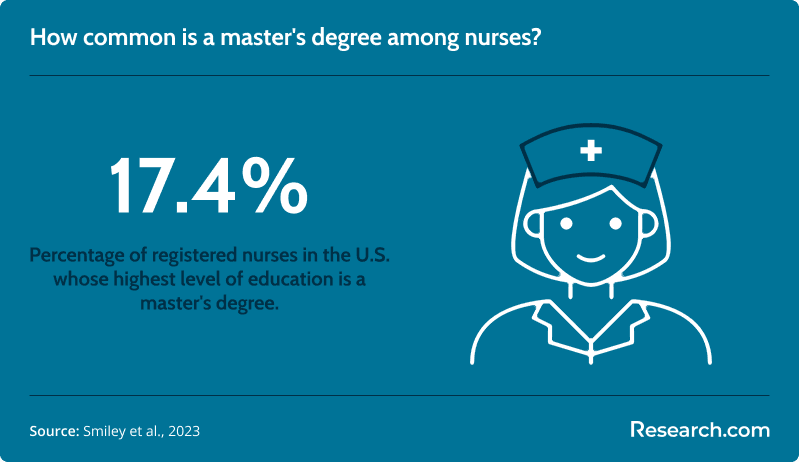
An MSN can help nurses qualify for roles that require graduate-level preparation, leadership capability, program evaluation skills, or advanced knowledge of health systems. It also signals that you can operate beyond task-based care and contribute to strategy, policy, education, and population health planning. The chart below provides context on graduate-level nursing education and how a master’s degree can distinguish nurses in the workforce.
What is the job market for graduates of an online MSN in public health nursing program?
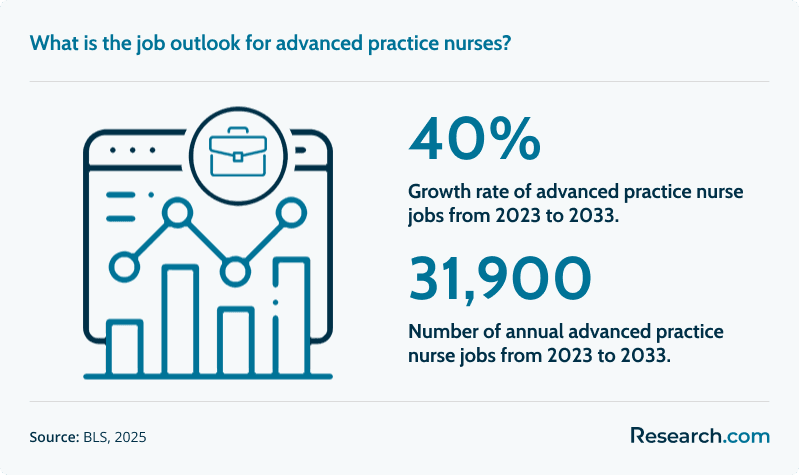
The job market for MSN-prepared nurses is influenced by demand for healthcare leadership, prevention, population health management, chronic disease response, emergency preparedness, health equity initiatives, and community-based care. The U.S. Bureau of Labor Statistics projects a 40% growth rate over the next decade for advanced practice nurses, but readers should interpret this carefully: that statistic applies to the advanced practice nursing group tracked by BLS, not exclusively to public health nursing roles.
Public health nursing careers often differ from direct clinical specialties. For example, asking what a wound care nurse does leads to a role centered on specialized treatment for individual patients. Public health nursing is more focused on prevention, systems improvement, community programs, and population-level outcomes.
Current trends affecting public health nursing
- Population health is becoming more important in healthcare systems: Hospitals, insurers, and public agencies are increasingly focused on prevention, chronic disease management, and reducing avoidable utilization.
- Public trust and health communication matter: Nurses remain highly visible messengers in healthcare, and public health programs need professionals who can communicate clearly with communities.
- Data skills are now essential: Public health nurses increasingly need to interpret dashboards, community assessments, outcome reports, and evaluation data.
- Emergency preparedness remains a priority: Communities need leaders who can plan for outbreaks, disasters, environmental health threats, and service disruptions.
- Technology is changing public health work: Telehealth, remote education, digital outreach, and analytics tools can expand public health reach, but they also require stronger digital literacy.
Future-proofing your nursing career
An MSN in public health nursing can make your career less dependent on one care setting. Instead of preparing only for bedside roles, it helps you build transferable skills in leadership, analysis, communication, prevention, and program design. Those skills can be useful across health departments, hospitals, schools, nonprofits, policy organizations, and community-based agencies.
What graduates say about online MSN in public health nursing programs
- Aoife: "After years on the floor, I could see the same problems showing up again and again, but I did not know how to address them beyond one patient at a time. My MSN program helped me understand epidemiology, policy, and community assessment, so I could look at root causes and build stronger solutions for the people I serve."
- Samira: "I wanted to move toward health policy, but I needed a clearer route from clinical nursing into that kind of work. The online format connected me with nurses from different regions, and those conversations helped me understand population health from a much broader perspective. By graduation, I could speak about policy and community health with confidence."
- Idris: "Nursing gave me credibility with patients, but the program showed me how to use that trust at the community level. I learned how to bring partners together, translate health needs into action plans, and lead work that reaches beyond the bedside."
What student support services are available for online MSN in public health nursing programs?
Strong online MSN programs support students academically, technically, professionally, and during practicum planning. At minimum, look for academic advising, faculty access, library and research support, technical help, writing assistance, career services, and clear practicum coordination. For working nurses, responsive support can be the difference between staying on track and falling behind.
Career services are especially important for nurses shifting from clinical work into public health leadership. Useful services may include resume reviews, interview preparation, networking events, alumni connections, employer partnerships, and guidance on translating nursing experience into program management, policy, education, or population health language.
If you are earlier in your nursing education path and still comparing routes into the profession, you may also want to review the best online accelerated BSN programs. Those programs serve a different student group, but they can be relevant for career changers planning a longer pathway toward graduate nursing.
Student support checklist
- Dedicated advisor for online graduate nursing students
- Clear practicum planning process and site approval guidance
- Faculty office hours that work for working nurses
- Technical support during evenings or weekends
- Access to online library databases and research help
- Writing, statistics, or research tutoring
- Career coaching for public health and leadership roles
- Active alumni network or professional mentoring opportunities
What are the technology requirements for online MSN in public health nursing programs?
Online MSN students need reliable technology because coursework, advising, group projects, research, presentations, and some assessments take place through digital platforms. Before enrolling, confirm the school’s hardware, software, internet, webcam, microphone, browser, and operating system requirements. Do not assume that a smartphone or outdated laptop will be enough for graduate-level online work.
Students should be comfortable using learning management systems, video conferencing, shared documents, academic databases, online discussion tools, and possibly remote proctoring or simulation platforms. Schools may also require secure logins, multifactor authentication, privacy-compliant communication tools, or specific software for statistics and research assignments.
For nurses exploring broader online nursing pathways, the easiest RN to BSN degree online guide can help compare earlier-stage online nursing programs, though MSN-level public health nursing coursework is more advanced and usually more research- and leadership-focused.
Technology questions to ask before enrolling
- What computer specifications are required?
- Are courses synchronous, asynchronous, or both?
- Does the program use remote proctoring?
- Are any software subscriptions required?
- Is technical support available outside regular business hours?
- Can students access library databases and statistical tools remotely?
- Are there required virtual simulations or live presentations?
References
- American Association of Colleges of Nursing. (2023, October). Employment of new nurse graduates: A survey of member institutions. Retrieved August 5, 2025, from AACN.
- Saad, L. (2025, January 22). Americans' ratings of professions stay historically low. Gallup. Retrieved August 5, 2025, from Gallup.
- Smiley, R. A., Allgeyer, R. L., Shobo, Y., Lyons, K. C., Letourneau, R., & Zhong, E. (2023). The 2022 national nursing workforce survey. Journal of Nursing Regulation, 14(1), S1-S96. Retrieved August 5, 2025, from the Journal of Nursing Regulation.
- U.S. Bureau of Labor Statistics. (2025). Occupational outlook handbook, nurse anesthetists, nurse midwives, and nurse practitioners. Retrieved August 5, 2025, from BLS.
- U.S. Census Bureau. (2025, June 25). Older adults outnumber children for first time in U.S. history. U.S. Census Bureau Newsroom. Retrieved August 5, 2025, from U.S. Census Bureau.
- World Health Organization. (n.d.). Climate change. Retrieved August 5, 2025, from WHO.
- Zippia. (2025, July). Public health nurse salary. Retrieved August 5, 2025, from Zippia.
Key Insights
- An online MSN in public health nursing is best for RNs who want population-level impact. It prepares nurses for leadership in prevention, community health, policy, program management, and health equity rather than only bedside care.
- Program fit matters more than rank alone. Compare accreditation, practicum support, state authorization, total cost, schedule format, and graduate outcomes before deciding.
- Most programs take about 18 to 24 months full time. Part-time students should expect a longer timeline, often closer to 36 months, especially while working as nurses.
- Costs vary widely. Programs on this list range from approximately $11,700 to $35,200 for in-state students and from $16,400 to $62,400 for out-of-state students, before considering aid, fees, and other expenses.
- Practicum support is a critical decision point. Ask whether placement is guaranteed, who coordinates it, and what happens if a local site is unavailable.
- Public health nursing is not the same as an NP track. The MSN can support advanced leadership, but it does not automatically prepare graduates for nurse practitioner practice unless the program specifically includes that pathway.
- Financial aid may align well with public service careers. Nurses planning to work for qualifying government or nonprofit employers should review PSLF rules before borrowing.
- The strongest applicants connect clinical experience to systems problems. Admissions committees want to see that you are ready to think about patterns, prevention, policy, and community-level solutions.
Other Things You Should Know About Online MSN in Public Health Nursing Programs
Admission requirements typically include a Bachelor of Science in Nursing (BSN), an active RN license, a minimum GPA, letters of recommendation, and a statement of purpose. Some programs may also require clinical experience and GRE scores.
Graduates from a top online MSN in Public Health Nursing in 2027 can pursue various career paths, including roles as public health advisors, nurse educators, health policy analysts, community health program directors, and epidemiologists. These positions allow nurses to impact public health policy and practice positively.
For a 2027 Best Online MSN in Public Health Nursing program, it's crucial the program is accredited by the Commission on Collegiate Nursing Education (CCNE) or the Accreditation Commission for Education in Nursing (ACEN). These accreditations ensure the program meets high standards of quality and rigor essential for public health nursing education.


