University of Maryland-Baltimore County
- Type:
- Public
- Programs:
- 4 years or more

Cost
- Cost / year
- $29,390
- Tuition & fees
- $13,679
- Avg. aid
- $10,538
- Receiving aid
- 93%
Admissions
- Acceptance rate
- 72%
- SAT range
- 1240–1420
- ACT range
- 25–31
Outcomes
- Graduation rate
- 70%
- Median salary
- $51,852
- 1 yr after graduation
What is the history of University of Maryland-Baltimore County?
University of Maryland, Baltimore County (UMBC) opened in 1966 as a public university serving the Baltimore region. Unlike some older Maryland institutions, it admitted students of all races from its founding.
UMBC developed from a primarily undergraduate institution into a research university offering bachelor's, master's, and doctoral degrees. Its history helps explain its combination of undergraduate teaching, graduate study, and research. UMBC is part of the University System of Maryland; it is distinct from the University of Maryland, Baltimore and the University of Maryland, College Park.
What are the faculties and departments at University of Maryland-Baltimore County?
UMBC organizes most of its academic programs within the College of Arts, Humanities, and Social Sciences; the College of Natural and Mathematical Sciences; and the College of Engineering and Information Technology. Its Graduate School oversees graduate study across academic fields.
Undergraduates can pursue subjects ranging from English, history, psychology, and social work to biology, mathematics, computer science, information systems, and engineering. Graduate offerings include research degrees and professionally oriented programs. The academic catalog is the appropriate place to check whether a particular major offers a bachelor's degree, a graduate degree, or both, and whether admission to a specialized program has additional requirements.
UMBC also offers undergraduate research opportunities. A prospective student should distinguish those opportunities from a guarantee of a research position: availability depends on the department, faculty projects, and the student's preparation.
What is the location of University of Maryland-Baltimore County?
UMBC's main campus is in Catonsville, Maryland, just outside Baltimore; its postal address uses Baltimore, MD 21250. The setting is suburban rather than in downtown Baltimore.
That location gives students access to Baltimore-area employers and cultural institutions while making transportation planning important. UMBC operates campus transit services, but routes and schedules may not fit every commute or internship. Students who drive should account for parking rules and permit costs. Baltimore/Washington International Thurgood Marshall Airport is the closest major airport and can be useful for students traveling farther from home.
Students considering a program offered at another instructional site should confirm where its classes actually meet. The main campus experience and commute may not apply to every program.
What is the mission and vision of University of Maryland-Baltimore County?
UMBC describes its mission in terms of teaching, research, and service as a public university. Its stated priorities include academic achievement, discovery, and broad participation in higher education.
In practical terms, the institution presents undergraduate education and faculty research as connected activities rather than separate missions. These are institutional goals, not a promise that every student will have the same access to a laboratory, mentor, or service project. Applicants can assess how those priorities appear in the curriculum and opportunities within their intended department.
University of Maryland-Baltimore County Rankings
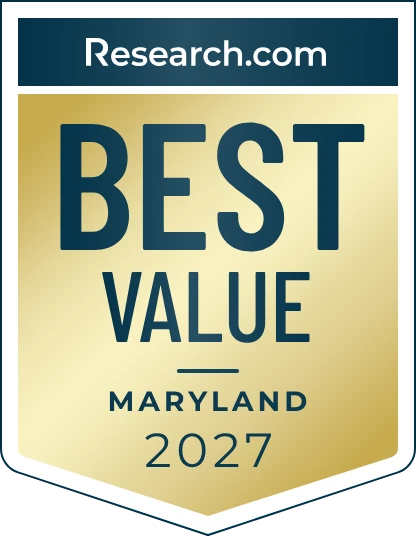
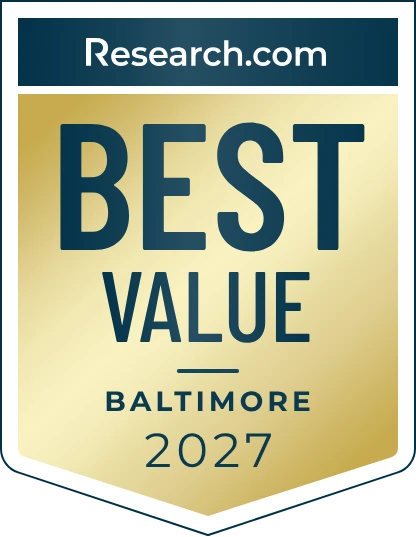
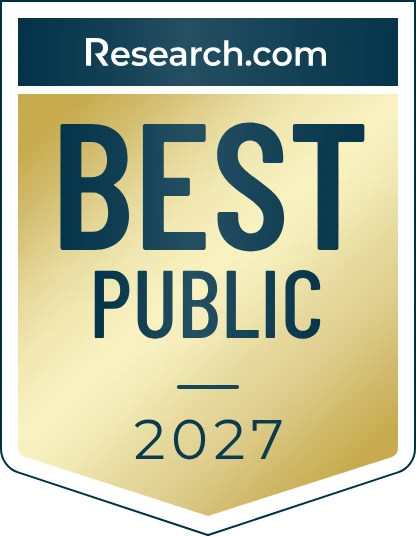
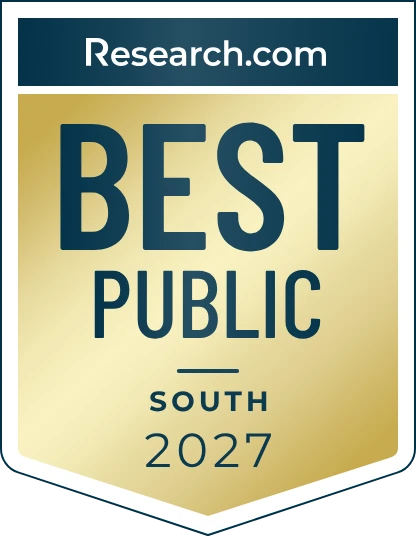
Research.com Awards
University of Maryland-Baltimore County Profile - Basic Information
Name of the institution
University of Maryland-Baltimore CountyLevel of institution
Four or more yearsControl of institution
PublicSetting type
Suburb: LargeInstitutional Category
Degree - granting, primarily baccalaureate or aboveInstitution size category
10,000 - 19,999School type
UniversityMain student body
CoeducationalCalendar system
4-1-4Foundation year
1963University of Maryland-Baltimore County Accreditation
University of Maryland-Baltimore County is institutionally accredited by the Middle States Commission on Higher Education, an accrediting agency recognized by the U.S. Department of Education. Accreditation confirms that the school meets quality standards and is required for students to receive federal financial aid.
University of Maryland-Baltimore County Programs and Degrees
 Certificate of less than 1 yearCertificate of at least 1 year, but less than 2 yearsCertificate of at least 2 years, but less than 4 yearsBachelor's degreePostbaccalaureate certificateMaster's degreePost-master's certificateDoctor's degree - research/scholarship
Data last updated on November 5, 2026
Data sources: IPEDS 2024-25, Peterson 2026, College Scorecard 10/2026, Clery 2024 (2023-24), OpenAlex 2026
Figures on this profile come from federal and third-party datasets in the editions listed above and are refreshed periodically, so they may differ from what the institution currently reports. Confirm costs, deadlines and requirements with the school before making decisions.