2027 Is an Online Speech Pathology Bachelor's Degree Worth It?

Co-Founder and Chief Data Scientist

Reviewed by Rhea Paul, PhD
SLP Education & Research Expert
Changing careers into speech pathology often starts with a practical question: can you earn a credible bachelor’s degree online without leaving your job, relocating, or taking on unnecessary debt? For many adult learners, transfer students, working parents, and military-affiliated students, an online speech pathology bachelor’s program can be a realistic first step toward roles in communication sciences, education support, rehabilitation, or graduate study.
The key is understanding what this degree can and cannot do. A bachelor’s degree may qualify graduates for assistant, aide, or related support roles depending on state rules and employer requirements, but becoming a licensed speech-language pathologist typically requires graduate education and licensure. According to the Bureau of Labor Statistics, employment of speech-language pathologists is projected to grow 17% from 2025 to 2035, much faster than average, which helps explain why more students are evaluating flexible pathways into the field.
This guide explains the costs, ROI, salary expectations, career options, accreditation standards, student support services, financial aid, admissions requirements, and program-selection criteria that matter most when deciding whether an online speech pathology bachelor’s degree fits your goals.
Key Things to Know About the Value of an Online Speech Pathology Bachelor's Degree
- An online speech pathology bachelor's degree supports life goals by offering flexible schedules ideal for working parents, veterans using transfer credits, and professionals balancing education with other responsibilities.
- Accredited programs often provide strong return on investment with median starting salaries around $60,000 and access to financial aid and military-friendly tuition benefits.
- Graduates gain recognized credentials that enhance career opportunities in healthcare and education, facilitating advancement or entry into competitive graduate speech pathology programs.
What Are the Real Costs of Earning an Online Speech Pathology Bachelor's Degree, and How Do They Compare to On-Campus Programs?
The real cost of an online speech pathology bachelor’s degree is more than tuition. Students should compare tuition, mandatory fees, technology requirements, books, transfer credits, lost work time, and any in-person requirements before deciding whether an online or on-campus program is more affordable.
According to IPEDS tuition data and the College Board's Trends in College Pricing report, online programs usually charge between $300 and $600 per credit hour, while on-campus tuition typically ranges from $400 to $800 per credit hour. Those figures make online study look less expensive in many cases, but the final cost depends on residency rules, institutional fees, financial aid, and how many credits you can transfer.
- Tuition per credit hour: Online programs often charge by credit hour or use flat-rate term pricing. On-campus programs may cost more, especially for out-of-state students, although some public universities offer reduced in-state tuition that online students may not receive.
- Fees: Online learners commonly pay technology and access fees ranging from $50 to $200 per semester. Campus students may pay facility, lab, transportation, student activity, and health service fees that can raise the total cost.
- Required technology: Online students need a dependable computer, high-speed internet, webcam, headset, and access to learning platforms. Specialized speech pathology software may add several hundred dollars annually, while campus programs may include some resources through institutional fees.
- Indirect costs: Online students often avoid relocation, campus housing, daily commuting, and meal-plan expenses. For working adults, the ability to keep a job while studying can be one of the biggest financial advantages.
- Transfer credits: A generous transfer policy can shorten the degree and reduce tuition. Before enrolling, ask how many credits the program accepts, whether credits expire, and whether prior coursework in biology, psychology, statistics, or communication can satisfy major or general education requirements.
Students should focus on net price, not sticker price. Sticker price is the published cost; net price reflects grants, scholarships, military education benefits, employer reimbursement, and institutional aid. A school with higher tuition may be cheaper after aid, while a low-tuition program may become expensive if few credits transfer or extra fees apply.
For students comparing speech pathology with other practical online degree options, Research.com’s guide to easy degrees to get online that pay well can provide broader context. If speech-language pathology remains your goal and graduate school is likely, it is also worth comparing most affordable online slp programs early so you understand the total education cost beyond the bachelor’s degree.
What Is the Return on Investment (ROI) of an Online Speech Pathology Bachelor's Degree Over a Career Lifetime?
The ROI of an online speech pathology bachelor’s degree depends on three variables: what you pay, how quickly you finish, and whether the degree helps you reach the job or graduate program you want. A lower-cost online program can produce a strong return when it is accredited, accepts transfer credits, supports graduate-school prerequisites, and allows students to keep earning income while enrolled.
Return on investment in higher education compares the total cost of the degree with the financial benefit it produces over time. For this field, that calculation should include tuition, fees, books, technology, loan interest, financial aid, and the opportunity cost of time spent in school. Data from the Georgetown University Center on Education and the Workforce and the PayScale College ROI Report provide credible benchmarks for evaluating education costs and earnings outcomes.
- Ten-year ROI: Graduates from affordable online speech pathology programs often recoup their investment within a decade due to stable demand and competitive starting pay.
- Twenty-year ROI: Estimated lifetime earnings significantly exceed the average for all bachelor's degree holders, strengthening ROI over two decades.
- Cost efficiency: Online programs can reduce commuting, relocation, housing, and schedule-disruption costs, improving net financial outcomes compared with some campus-based options.
- Comparative earnings: PayScale data indicate speech pathology roles typically yield salaries 10 to 20 percent above median bachelor's earnings, which can support stronger long-term returns.
ROI is not only a salary calculation. A speech pathology bachelor’s degree can also improve career mobility in schools, rehabilitation settings, healthcare support, and human services. It may also position students for graduate programs that lead to licensure as speech-language pathologists, where long-term earning potential may be higher.
Students should be cautious, however, about assuming that a bachelor’s degree alone leads directly to independent clinical practice. In most cases, licensed speech-language pathologist roles require graduate education, supervised clinical experience, and state licensure. A bachelor’s degree has the strongest ROI when it is intentionally chosen as either a workforce credential for assistant-level roles or a planned bridge to graduate study.
Professionals comparing different career-change degrees, such as a 1 year executive MBA online, should evaluate not just tuition but also licensure requirements, time to employment, debt load, and whether the credential is recognized in the target field.
How Do the Salary Outcomes for Online Speech Pathology Bachelor's Graduates Compare to Those With Traditional Degrees?
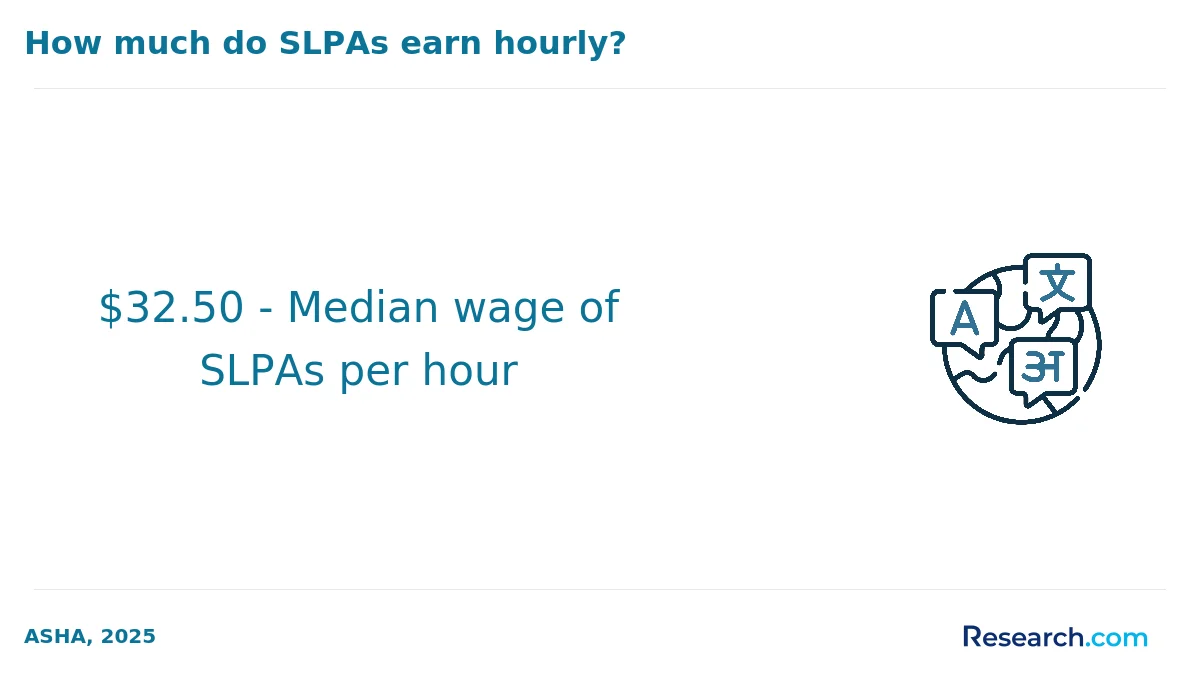
Salary outcomes for online speech pathology bachelor’s graduates are generally comparable to outcomes for graduates of traditional programs when the school is accredited and the curriculum is relevant to the role. Employers usually care more about accreditation, practical preparation, state requirements, experience, and graduate-school readiness than whether coursework was completed online or on campus.
Median starting salaries for online speech pathology bachelor's degree graduates align closely with those from traditional campus programs, typically ranging between $48,000 and $52,000. This parity reflects broader employer acceptance of accredited online credentials, especially when applicants can demonstrate strong communication skills, field knowledge, and readiness for supervised practice or support roles.
- Starting salary: Entry-level earnings for online graduates match comparable on-campus counterparts, supported by publicly available IPEDS data showing similar median salary ranges.
- Mid-career earnings: With five to ten years in the profession, salaries often rise above $70,000, particularly in high-demand regions or specialized clinical support environments.
- Salary influencers: Location, employer type, state assistant-level rules, graduate education, specialization, bilingual skills, and experience typically matter more than online versus campus delivery.
- Income projection: Graduates can usually expect salary growth during the first decade when they gain experience, pursue additional credentials, complete graduate education, or move into higher-responsibility roles.
The most important salary distinction is not online versus traditional. It is bachelor’s-level versus licensed professional practice. A bachelor’s degree may support entry-level or assistant roles, while the full speech-language pathologist pathway generally requires a master’s degree and licensure. Students who want maximum long-term salary potential should confirm that their bachelor’s program includes prerequisite coursework commonly expected by graduate programs.
What Career Paths and Job Opportunities Are Available to Online Speech Pathology Bachelor's Degree Graduates?
Graduates of online speech pathology bachelor’s degree programs can pursue communication, education, rehabilitation, and healthcare support roles. The degree is also a common foundation for graduate study in speech-language pathology. Exact job eligibility depends on state law, employer requirements, and whether the graduate has completed any required supervised experience or certification.
- Speech-language pathology assistants: Graduates may qualify for assistant roles in some states, supporting licensed speech-language pathologists by carrying out treatment plans, preparing materials, documenting progress, and helping clients practice communication skills. Many positions require state certification, registration, supervised practice, or employer-based training. Employment is expected to surge by about 17% through 2035, according to the Bureau of Labor Statistics, driven by demand in schools and healthcare settings.
- Rehabilitation aides: These workers assist therapists and clinical teams with patient care, scheduling, documentation, equipment preparation, and therapy-room support. A bachelor's degree is typically adequate for some entry-level roles, and a 9% growth projection reflects steady demand in healthcare facilities.
- Educational support roles: Graduates may work in special education classrooms, early intervention programs, developmental support services, or school-based communication programs. Speech pathology licensure may not be required for some support positions, but teaching credentials, paraprofessional requirements, or district-specific training may apply. This sector is predicted to grow around 17% through 2035 due to expanding inclusion initiatives.
- Healthcare and social assistance: Some graduates move into patient advocacy, care coordination, case management support, intake services, or disability services roles that use knowledge of communication, development, and client support.
- Graduate study preparation: Most clinical speech-language pathologist roles require a master's degree and licensure. A bachelor’s degree in speech pathology or communication sciences can provide the prerequisite foundation for that next step, in an occupation set to grow 17% by 2035.
Students should choose electives and field experiences based on their intended path. Pediatric communication, bilingual communication disorders, aging, autism support, literacy, or assistive communication can help students align coursework with local job markets and future graduate study goals.
Those considering other helping-profession graduate pathways may also compare options such as online masters MFT programs. The right choice depends on whether the student wants to work primarily in communication disorders, counseling, education, rehabilitation, or broader family and mental health services.
What Student Support Services Do Online Speech Pathology Bachelor's Programs Provide to Promote Success and Retention?
Strong online speech pathology bachelor’s programs provide more than recorded lectures. Because the major often includes science-heavy coursework, writing-intensive assignments, observation requirements, and graduate-school planning, students should look for support services designed specifically for online learners.
- Academic advising: Advisors help students choose courses, sequence prerequisites, understand transfer credits, and stay on track for graduation. This is especially important for students who plan to apply to graduate speech-language pathology programs.
- Tutoring and writing labs: Online tutoring, writing support, and subject-specific help can strengthen performance in anatomy, physiology, phonetics, language development, research methods, and scientific writing.
- Disability accommodations: Legitimate programs should provide accessible course materials, testing accommodations, assistive technology support, and a clear process for requesting services.
- Mental health counseling: Telehealth counseling and wellness resources can help students manage stress, workload, family responsibilities, military obligations, or employment while completing the degree.
- Career services: Useful services include resume review, interview preparation, job-search coaching, internship or observation guidance, and employer connections in schools, clinics, hospitals, and rehabilitation settings.
- Alumni mentorship networks: Alumni can help current students understand assistant-level job searches, graduate applications, certification pathways, and realistic workplace expectations.
- Technical support: Reliable help with learning platforms, proctoring tools, video assignments, and online library access can prevent small technical problems from becoming academic setbacks.
Research from the National Survey of Student Engagement and institutional retention statistics demonstrates that comprehensive support services are strongly associated with higher graduation rates and timely degree completion in online bachelor's programs. Before enrolling, students should ask whether these services are available during evenings or weekends, since many online learners study outside standard business hours.
Is an Online Speech Pathology Bachelor's Degree Respected by Employers and Recognized Across Industries?
An online speech pathology bachelor’s degree can be respected by employers when it comes from an accredited institution and prepares students for the roles they are seeking. In hiring, the strongest signals are institutional accreditation, relevant coursework, field experience, communication skills, recommendations, and eligibility for any required state credential.
Survey data from the Society for Human Resource Management (SHRM) reveals that around 85% of employers regard online degrees from accredited universities as equal to traditional campus credentials. This acceptance is especially relevant in healthcare and education support settings, where employers tend to focus on qualifications, supervision requirements, documentation skills, and readiness to work with clients or students.
Students should distinguish between recognition for bachelor’s-level jobs and eligibility for licensed speech-language pathologist practice. A bachelor’s degree may be respected for assistant, aide, educational support, or graduate-preparation purposes, but most independent clinical speech-language pathologist roles require graduate education, clinical training, and state licensure.
- Employer acceptance: Many healthcare and education employers view accredited online speech pathology degrees as comparable to campus credentials when applicants meet job-specific requirements.
- Accreditation matters: Employers and graduate schools are more likely to trust degrees from regionally accredited institutions. Accreditation also affects financial aid, credit transfer, and graduate admissions.
- Program reputation: A well-known university, strong faculty credentials, transparent outcomes, and relevant field experiences can strengthen employer confidence.
- Role differences: Some specialized, research-focused, or highly competitive roles may prefer candidates with extensive in-person experience, graduate credentials, or degrees from highly ranked programs.
- Regional rules: State requirements for speech-language pathology assistant roles vary. Students should check rules in the state where they intend to work before assuming a bachelor’s degree will qualify them for a specific job title.
The safest approach is to evaluate employer expectations in your target region before enrolling. Review job postings, ask programs about graduate outcomes, confirm accreditation status, and determine whether the curriculum aligns with either immediate employment or graduate-school admission.
What Accreditation Standards Should an Online Speech Pathology Bachelor's Program Meet to Be Considered Legitimate?
A legitimate online speech pathology bachelor’s program should be offered by an institution with recognized accreditation. Accreditation affects federal financial aid eligibility, credit transfer, graduate-school admission, employer trust, and the long-term value of the degree.
Two main types of institutional accreditation appear in U.S. higher education: regional and national accreditation. Regional accreditation generally carries greater value for credit transferability, employer acceptance, and admission to graduate programs in speech pathology. It is typically granted to nonprofit, degree-granting institutions and is widely treated as the gold standard. National accreditation often applies to for-profit or vocational institutions and may create limitations when transferring credits or applying to graduate school.
The U.S. Department of Education recognizes six regional accrediting bodies:
- HLC: Higher Learning Commission
- SACSCOC: Southern Association of Colleges and Schools Commission on Colleges
- NECHE: New England Commission of Higher Education
- MSCHE: Middle States Commission on Higher Education
- NWCCU: Northwest Commission on Colleges and Universities
- WSCUC: WASC Senior College and University Commission
Before enrolling, students should verify accreditation through the Council for Higher Education Accreditation (CHEA) or the U.S. Department of Education (ED) databases. Do not rely only on a program webpage, because accreditation status can change.
For speech pathology, students should also understand the role of the American Speech-Language-Hearing Association (ASHA) and its Council on Academic Accreditation (CAA). CAA accreditation is especially important for graduate-level programs that prepare students for certification and licensure. At the bachelor’s level, students should confirm that the curriculum includes prerequisite coursework commonly expected by CAA-accredited graduate programs.
Attending an unaccredited or lapsed-accreditation program carries serious risks. Students may be ineligible for federal financial aid, unable to transfer credits, less competitive for graduate admission, and limited in certification or employment options. Nearly 90% of employers now prefer candidates from regionally accredited programs, which makes accreditation one of the first items to verify.
How Long Does It Take to Complete an Online Speech Pathology Bachelor's Degree, and What Factors Affect the Timeline?
An online speech pathology bachelor’s degree generally requires around 120 credits and typically takes four years for full-time students. The timeline can be shorter for transfer students or longer for part-time learners balancing work, caregiving, military service, or other responsibilities.
A traditional full-time plan usually includes two semesters per year with approximately 15 credits each. Online programs may offer more flexible pacing, but students should make sure faster formats are realistic. Speech pathology coursework can be reading-heavy, science-based, and cumulative, so taking too many accelerated courses at once can affect performance.
- Credit requirements: Most speech pathology bachelor's programs require approximately 120 credits, including general education, major coursework, electives, and possible capstone or field-related requirements.
- Transfer credits: Students with prior college coursework, military training, or an associate degree may shorten the timeline if the program accepts those credits toward degree requirements.
- Accelerated courses: Eight-week classes can help students complete more coursework per year. Universities such as Eastern New Mexico University and Fort Hays State University offer these abbreviated courses, which may allow some students to finish in two to three years.
- Competency-based education: Competency-based education pathways, employed by institutions like Western Governors University, allow students to progress by demonstrating mastery rather than sitting through a fixed semester schedule. This format can benefit students with prior knowledge or strong independent-study skills.
- Year-round enrollment: Summer and intersession terms can reduce gaps and help students maintain momentum.
- Part-time pacing: Students taking fewer courses per term may need more than four years, but part-time enrollment can make the degree more manageable and reduce the risk of stopping out.
Faster completion can reduce tuition exposure and move students into the workforce or graduate school sooner. However, students planning to apply to competitive graduate programs should protect their GPA, build strong references, and leave time for observation, volunteer, or related work experience when possible.
What Financial Aid, Scholarships, and Tuition Assistance Are Available for Online Speech Pathology Bachelor's Students?
Online speech pathology bachelor’s students may qualify for federal aid, state grants, institutional scholarships, private scholarships, employer tuition assistance, military education benefits, and payment plans. The exact options depend on the student’s financial situation, enrollment status, school accreditation, and program eligibility.
The Free Application for Federal Student Aid (FAFSA) is the starting point for most aid. It determines eligibility for Federal Pell Grants, federal student loans, work-study, and some state or institutional aid. Students should submit the FAFSA early because some funds are limited and may be distributed on a first-come, first-served basis.
- Federal Pell Grants: These need-based grants do not have to be repaid and are determined through FAFSA information, including family income and other eligibility factors.
- Direct Subsidized and Unsubsidized Loans: Federal loans can help cover remaining costs. Subsidized loans do not accrue interest during enrollment, while unsubsidized loans begin accruing interest immediately.
- Speech pathology scholarships: The ASHA Foundation Scholarships provide up to $2,500 for speech pathology students at undergraduate and graduate levels. The National Black Association for Speech-Language and Hearing (NBASLH) Scholarship supports underrepresented minorities.
- State grants: Several states offer grants for residents pursuing health-related degrees online. The California State Grant Program supports low-income students attending accredited online programs.
- Employer tuition assistance: Students working in schools, hospitals, clinics, rehabilitation centers, or human services organizations should ask whether their employer reimburses tuition for job-related study.
- Military and veteran benefits: Military-affiliated students should ask schools about benefit certification, transfer credit for military training, and dedicated advising.
The strongest funding strategy is to combine multiple sources: grants first, scholarships next, employer or military benefits when available, and loans only for the remaining amount. Students should also compare net prices, not just tuition rates, because fees, transfer-credit limits, and required course loads can change the true cost.
Students who are concerned about admissions barriers and affordability may also review Research.com’s resource on online colleges that accept low GPA for additional planning context.
What Are the Admission Requirements for Online Speech Pathology Bachelor's Degree Programs?
Admission requirements for online speech pathology bachelor’s programs usually include a high school diploma or GED, an application, official transcripts, and proof that the applicant meets the school’s academic standards. Requirements vary by institution, especially for transfer students and degree-completion programs.
- High school diploma or GED: Nearly all programs require applicants to show proof of secondary completion before admission.
- Official transcripts: First-year applicants submit high school transcripts, while transfer students submit college transcripts from every institution attended.
- Minimum GPA: Competitive programs generally set a minimum GPA requirement around 3.0. Open-access or less-selective schools may accept lower GPAs or review applications individually.
- Standardized test policies: Many programs have become test-optional, but some selective schools still request SAT or ACT scores.
- Prerequisite coursework: Applicants may need or benefit from prior coursework in biology, psychology, statistics, English composition, or communication. Some programs allow students to complete prerequisites after admission.
- Personal statement or essay: Some schools ask applicants to explain their interest in speech pathology, career goals, and readiness for online study.
- Letters of recommendation: Recommendations may be required or optional, especially for selective programs or applicants with weaker academic records.
- Admission timeline: Many online programs use rolling or continuous admissions, allowing students to apply throughout the year. Others admit students by semester or cohort.
Applicants below the preferred GPA can improve their chances by completing relevant community college courses, earning strong grades in science or communication classes, gaining volunteer or work experience in education or healthcare, and submitting recommendations that speak to maturity, reliability, and communication skills.
How Should Prospective Students Evaluate and Choose the Right Online Speech Pathology Bachelor's Degree Program for Their Goals?
Prospective students should choose an online speech pathology bachelor’s program by matching the degree to their intended outcome: immediate employment in a support role, preparation for graduate school, or a broader career in education, healthcare, or human services. A low price is helpful, but it should not outweigh accreditation, curriculum quality, transfer policies, and student support.
- Accreditation: Confirm that the institution holds recognized regional accreditation. For students planning graduate study, check whether the bachelor’s curriculum aligns with prerequisites commonly expected by CAA-accredited graduate programs.
- Curriculum fit: Look for coursework in communication sciences, language development, phonetics, anatomy and physiology of speech and hearing, audiology, speech and language disorders, research methods, and statistics.
- Cost and ROI: Compare tuition, technology fees, textbooks, proctored exam costs, transfer-credit acceptance, and any in-person requirements. Use the U.S. Department of Education's College Scorecard, IPEDS Data Center, and school net price calculators to estimate real costs.
- Program format: Decide whether you need asynchronous classes, scheduled live sessions, hybrid requirements, accelerated terms, or part-time enrollment. The best format is the one you can complete consistently.
- Graduate-school preparation: If you plan to become a licensed speech-language pathologist, ask whether graduates are commonly admitted to relevant master’s programs and whether faculty advise students on applications.
- Career outcomes: Look for transparent information on graduate employment, further education, assistant-level job placement, and alumni pathways.
- Student support: Prioritize programs with online advising, tutoring, library access, disability services, technical support, and career coaching.
- Transfer credit policies: Ask for a written transfer evaluation before committing. A program that accepts more applicable credits may save significant time and money.
- State requirements: If you want to work as a speech-language pathology assistant, verify the rules in your state before enrolling. Job titles, supervision requirements, and certification standards vary.
A practical final step is to compare three to five programs side by side. List total estimated cost, time to completion, accepted transfer credits, course format, accreditation, graduate-school alignment, and support services. The right program should make your next career step clearer, not just offer the convenience of online classes.
What Graduates Say About the Value of Their Online Speech Pathology Bachelor's Degree
- : "I chose the online speech pathology program because it offered the flexibility I needed while working full-time. The cost was surprisingly reasonable compared to traditional programs, and I'm already seeing a great return on investment as I've been promoted within six months of graduating. This degree truly provided me the skills and credentials to advance my career confidently. — Esteban"
- : "Reflecting on my time in the online speech pathology degree program, I appreciate how the curriculum was designed to be challenging yet accessible. The convenience of learning from home saved me significant commuting and living expenses, which made the overall cost manageable. This program has opened doors for me professionally that I never thought possible. — Alexis"
- : "The structured approach of the online speech pathology program helped me balance my studies with family commitments seamlessly. Investing in this degree was one of the best decisions I've made-it's affordable and the career impact has been tangible with new job opportunities and confidence in my skills. The program's expert faculty prepared me well for real-world challenges in the field. — Eli"
Other Things You Should Know About Speech Pathology Degrees
Online speech pathology bachelor's programs typically deliver coursework through a combination of recorded lectures, live virtual classes, discussion forums, and interactive assignments. Students engage with faculty and peers via video conferencing tools and learning management systems. The experience requires strong time management and self-motivation, with many programs incorporating practical components such as simulated clinical exercises to develop communication skills despite the remote format.
Many online speech pathology bachelor's programs offer specializations such as pediatric communication disorders, audiology, or bilingual speech pathology. These concentrations allow students to tailor their studies toward specific client populations or practice settings. Selecting a specialization can enhance job market competitiveness and better prepare students for graduate study, which is typically required for certification and licensure in the field.
In 2027, many online speech pathology programs accept transfer credits from accredited institutions, generally up to 60 credits. Each program may have specific policies regarding prior learning assessments, so it's essential to consult the admissions office for exact requirements and limits.
An online speech pathology bachelor's degree from an accredited institution generally meets the prerequisites for entry into graduate programs in speech-language pathology. Graduate admissions committees focus on program accreditation, academic performance, and relevant clinical experience. While an online degree is accepted, students should ensure their program aligns with national accreditation standards such as those set by the Council on Academic Accreditation in Audiology and Speech-Language Pathology (CAA) to maintain graduate study eligibility.
References
- U.S. Bureau of Labor Statistics - Speech-Language Pathologists https://www.bls.gov/ooh/healthcare/speech-language-pathologists.htm
- ASHA EdFind - Accredited Speech-Language Pathology Programs https://find.asha.org/ed/
- ETS Praxis - Speech-Language Pathology (5331) https://praxis.ets.org/test/speech-language-pathology-5331.html
- University of Scranton - Master of Science (M.S.) in Speech-Language Pathology https://www.scranton.edu/academics/pcps/health-and-human-performance/programs/speech-language-pathology/index.shtml
- University of North Carolina at Greensboro - Speech-Language Pathology, M.A. (Online) https://csd.uncg.edu/graduate/masters-of-arts-online/
- California State University-San Marcos - Online MS in Speech-Language Pathology https://www.csusm.edu/slp/programs/mastersonline/index.html
- Abilene Christian University - Master of Science in Speech-Language Pathology (Online) https://acu.edu/academics/graduate/master-of-science-in-speech-language-pathology/
- Maryville University - Master of Science in Speech-Language Pathology https://www.maryville.edu/masters/speech-language-pathology/