
Pharmacy Fellowship Versus Residency: How to Choose

Co-Founder and Chief Data Scientist
A pharmacy residency and a pharmacy fellowship can both follow a Doctor of Pharmacy (Pharm.D.) degree, but they prepare pharmacists for different work. Choosing the wrong one can mean spending a year or more building skills that do not match the jobs you want. This guide is for Pharm.D. students and graduates weighing patient-care roles against research, industry, or other specialized careers. It compares what each pathway requires, what training looks like, and the financial trade-offs so you can decide which programs are worth pursuing.
Key Things You Should Know
- Choose a residency when your target job centers on direct patient care; choose a fellowship when its projects and mentors match a specific research or industry role.
- A postgraduate year one (PGY1) residency generally lasts 12 months; many fellowships last one to two years, but their scope and duration vary by program.
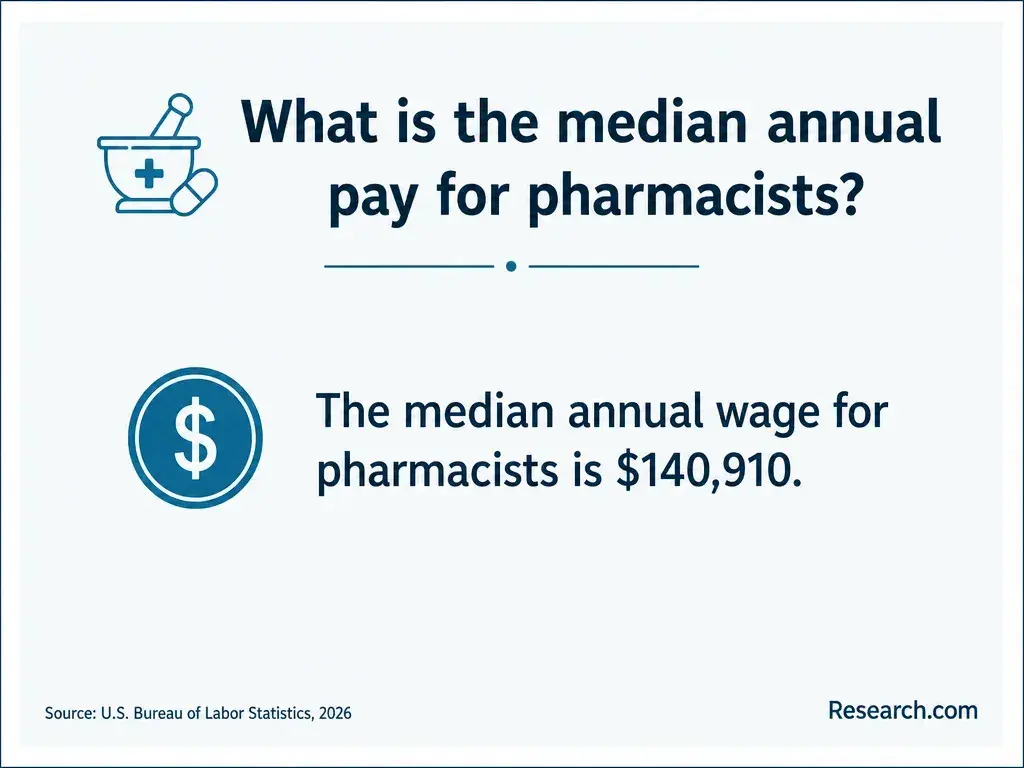
- Neither pathway grants a pharmacist license. The Bureau of Labor Statistics reports pharmacists' median annual pay at $140,910 in May 2025, but that figure does not describe resident or fellow stipends.
What is the difference between a pharmacy fellowship and residency?
A pharmacy residency is structured postgraduate training in pharmacy practice. A PGY1 residency develops broad practice skills; a postgraduate year two (PGY2) residency builds expertise in a focused area, such as oncology or ambulatory care.
A pharmacy fellowship is typically mentored, project-based training in research, drug development, medical affairs, regulatory work, or another defined field. Individual fellowships differ considerably.
This comparison shows which daily work each route is most likely to prepare you for. The program's actual duties matter more than its title.
| Decision factor | Residency | Fellowship |
| Main emphasis | Supervised pharmacy practice and patient-care decisions | Defined research or professional projects |
| Typical work | Clinical rotations, medication management, presentations, and practice improvement | Study or project design, analysis, deliverables, and collaboration with mentors |
| Best initial fit | Clinical practice roles that value intensive supervised experience | Roles requiring experience in the fellowship's specific field |
| Key limitation | May offer little exposure to a desired industry function | May offer limited direct patient-care practice |
If you have not yet entered a Pharm.D. program, postgraduate training is a later decision. First compare pharmacy education after undergraduate science coursework; pre-pharmacy courses are not a substitute for the professional degree.
Which pharmacy pathway is better for patient care or research careers?
For hospital clinical pharmacy or other patient-facing roles, a residency is usually the more directly relevant route. It provides repeated supervised opportunities to assess patients, recommend medication therapy, communicate with care teams, and respond to feedback. A PGY2 can be valuable when the intended role calls for concentrated specialty experience, although employers set their own hiring criteria.
For pharmaceutical research or industry, compare fellowships by function, not simply by sponsor. A medical affairs fellowship and a drug-development fellowship may lead toward very different jobs.
A research-focused academic position may also call for graduate research training or publications that a particular fellowship does not provide. Neither residency nor fellowship is universally required for all jobs carrying these titles; relevant employment experience may be another route.
For students still choosing how to earn the qualifying degree, Doctor of Pharmacy distance learning programs concern Pharm.D. delivery, not a remote substitute for clinical residency training. Online coursework can still involve in-person labs and rotations.
What are the requirements for pharmacy fellowships and residencies?
Start by separating education, licensure, and employer requirements. These pathways generally seek Pharm.D. graduates or candidates who will graduate before training starts. A Pharm.D. includes professional coursework and supervised experiences beyond undergraduate pre-pharmacy prerequisites.
Degree completion does not itself grant a pharmacist license: state boards determine licensure requirements, including applicable examinations and other conditions.
Residency programs commonly require residents to obtain pharmacist licensure in the program's state by a stated deadline. Fellowship licensure expectations depend on the work: a patient-care fellowship may require an active license, while a nonclinical industry fellowship may not.
Check the position description and the relevant state board rather than assuming either rule applies everywhere. Internationally educated applicants should confirm both program eligibility and any applicable U.S. licensure pathway.
If you are earlier in your education, pharmacy programs for students with varied academic backgrounds may help you investigate entry options. A school, not a residency or fellowship, decides which prior coursework satisfies its Pharm.D. admissions requirements.
The American Society of Health-System Pharmacists (ASHP) accredits pharmacy residency programs against published standards. Verify a residency's current status in ASHP's program directory; a program's claim that it plans to seek accreditation is not the same as being accredited. Accreditation is an important quality signal, but you should still examine supervision, workload, learning experiences, and graduate outcomes.
Do not assume every fellowship has an equivalent, universal accreditation designation. Fellowship structures and external review arrangements vary, so ask who evaluates the program, what standards apply, and how fellows' work is assessed. A university affiliation or well-known company name alone does not answer those questions.
These distinctions also apply before postgraduate training: the Accreditation Council for Pharmacy Education (ACPE) accredits professional Pharm.D. programs, not individual pharmacists.
If you are comparing pharmacy programs with faster completion options, check the professional program's current ACPE status separately from any later residency accreditation. Institutional accreditation and authorization to offer distance education are separate matters.
A residency usually combines scheduled practice experiences with longitudinal responsibilities such as staffing, teaching, presentations, and a practice or research project. Residents receive supervision and evaluations, but they also work within the demands of their practice site.
A fellowship is generally organized around projects, mentorship, and deliverables; depending on the position, these may include research outputs, regulatory documents, or medical communications.
Ask how much time is protected for projects, who provides day-to-day feedback, and what work previous trainees actually completed. A strong mentor on paper is less useful if that person has little time to supervise you. Likewise, a fellowship advertised as "clinical" may provide less sustained patient contact than you expect.
Be careful when comparing postgraduate training with pharmacy degree programs with accelerated schedules. A claimed degree timeline does not shorten a residency's or fellowship's separate training requirements, and an abbreviated pharmacy-related degree is not necessarily a Pharm.D. qualifying its holder for pharmacist licensure.
A PGY1 residency generally takes 12 months; a pharmacist who then completes a PGY2 undertakes another postgraduate training year. Many fellowships take one to two years, but confirm the exact contract term and whether extensions are possible. Time matters financially: both routes may mean postponing a higher-paid position, with no guarantee that training will lead to a particular job or salary.
Rather than comparing stipends alone, build a budget around the costs you would actually face. Include required licensure and examination expenses, relocation, local housing, transportation, professional travel, benefits, and any educational debt payments.
Ask whether the program covers conference attendance, provides health insurance, and offers paid time off. A higher stipend in a costly location may leave less room in your budget.
Prospective students researching how long it takes to reach this decision can compare online doctorate lengths, but should distinguish Pharm.D. study from postgraduate training. The shortest advertised degree route is not automatically the lowest-cost or most suitable path to a pharmacist career.
Program-specific requirements commonly include a CV, letters of recommendation, a statement of interest, an interview, and proof of graduation or expected graduation. Some programs request transcripts, writing samples, or evidence of relevant projects. A fellowship may place particular weight on your fit with its proposed work; a residency may probe your clinical reasoning and readiness for its practice setting.
Application systems and selection schedules differ. Many residencies use the Pharmacy Online Residency Centralized Application Service (PhORCAS) and participate in the ASHP Match, but verify each program's listing and current instructions. Fellowships may use their own portals and recruitment schedules. Do not treat an interview invitation, Match participation, or an offer as a license to practice.
Applicants who are still selecting a Pharm.D. school can review pharmacy program application requirements, but those are separate from postgraduate applications. Pharm.D. prerequisites and admissions policies vary by school; the retired Pharmacy College Admission Test (PCAT) is not a current exam to plan around.
Residency experience can support applications for hospital, ambulatory care, specialty, academic practice, and other clinically focused positions. Fellowship experience may support applications in pharmaceutical industry functions, research organizations, or academia, depending on its projects.
Employers may prefer particular training without making it a legal requirement. Relevant work completed - and your ability to explain its impact - matters more than the credential label alone.
Board certification is another distinction. The Board of Pharmacy Specialties (BPS) offers specialty credentials with their own eligibility and examination rules. A residency can be relevant to some eligibility pathways, but residency completion is not itself board certification; neither credential replaces state pharmacist licensure.
If you have not earned a Pharm.D., compare the educational route before budgeting for postgraduate training. Pharmacy programs balancing cost and time may be useful starting points, but confirm that any program leads to the credential your intended pharmacist role requires. Some pharmacy-adjacent research and industry jobs instead accept other scientific degrees.
Residents and fellows generally receive a program-specific salary or stipend, not a uniform national training wage. Request the current written offer and compare pay alongside benefits, location, expected hours, and funding for required activities.
Fellowship compensation can vary substantially with the employer and role, so a residency-versus-fellowship pay claim without named programs is not a reliable basis for choosing.
For longer-term context, the Bureau of Labor Statistics reports $140,910 in May 2025 as the median annual pay for pharmacists and projects 5% growth from 2025-2035, with about 12,500 openings per year. These occupation-wide figures do not predict a resident's stipend, a fellow's pay, or earnings in a specific specialty or industry position.
Students concerned about borrowing before they can pursue either route can explore affordable online Pharm.D. programs. Compare full education and travel costs rather than tuition alone, and check current federal aid rules: borrowing options changed for many new graduate and professional borrowers beginning July 1, 2026.
How can you choose a reputable pharmacy fellowship or residency?
Start with a job description you would want after training, then test each program against it. These checks help expose a mismatch before you accept an offer:
- Confirm the training: Request a current schedule, expected projects or rotations, staffing obligations, and examples of completed work.
- Verify oversight: Check ASHP accreditation status for a residency; for a fellowship, identify its review process, named mentors, evaluation criteria, and funding.
- Ask about outcomes: Find out what recent trainees did next, without treating a small group's results as a placement guarantee.
- Check practical terms: Get licensure deadlines, pay, benefits, leave, relocation expectations, and contract conditions in writing.
- Speak with current trainees: Ask whether supervision, workload, and project ownership match what was advertised.
A program that cannot explain its supervision or required work is a red flag, even if its sponsor is recognizable. If you are still completing your Pharm.D., review pharmacy programs for students with prior coursework separately: the receiving school decides whether credits apply, while a postgraduate program decides whether you meet its own entry criteria.
Other Things You Should Know About PharmD
Yes, if you meet each program's requirements. Track offer deadlines carefully and review any Match commitments before accepting another position; do not assume the two selection schedules will align.
Possibly. Eligibility varies by program, and a U.S. pharmacist license may require additional steps for an internationally educated applicant. Ask the program about degree eligibility and check the relevant state board's rules early.
No. Publication depends on the project, results, approvals, and time available. Ask which outputs are expected and what prior fellows completed.
Only if the program agrees. Start dates may be tied to orientation, funding, or a cohort schedule, so request a written decision before making other commitments.
- Role of Pharmacy Residency Training in Career Planning - PMC https://pmc.ncbi.nlm.nih.gov/articles/PMC4319808/
- VAGLAHS Pharmacy Residency Programs | Veterans Affairs https://www.va.gov/greater-los-angeles-health-care/work-with-us/internships-and-fellowships/pharmacy-residency-programs/
- Assessment and Evaluation: What Can Be Measured... - NCBI https://www.ncbi.nlm.nih.gov/books/NBK552763/
- Assess Mentoring Relationships | harvard.edu https://catalyst.harvard.edu/mentorship-in-clinical-and-translational-research/access-the-guide/assess-mentoring-relationships/
- Residencies and Fellowships - Application Process | Mayo Clinic College of Medicine and Science https://college.mayo.edu/academics/residencies-and-fellowships/admissions-and-benefits/application-process/
- Post-graduate pharmacy fellowships: The current state of affairs | wiley.com https://accpjournals.onlinelibrary.wiley.com/doi/10.1002/jac5.1746
- PGY2 Specialty Pharmacy Administration and Leadership | University of Illinois Chicago https://pharmacy.uic.edu/programs/residency-and-fellowship/pgy2-residency-programs/pgy2-specialty-pharmacy-administration-and-leadership/
- Fostering Physician Well-being Over the Career Life Cycle | sciencedirect.com https://www.sciencedirect.com/science/article/pii/S0025619625003040
- Comparison of Postdoctoral Pharmacy Training Programs | sagepub.com https://journals.sagepub.com/doi/10.1177/2168479018793375
- Tips on Residencies and Fellowships | AMCP.org https://www.amcp.org/resource/tips-residencies-and-fellowships


