Pharmacy Informatics Salary and Required Skills

Co-Founder and Chief Data Scientist
Pharmacy informatics may appeal to you if you want to improve medication systems rather than spend every shift dispensing or providing direct patient care. But job titles vary, and a pharmacy informatics position does not always require a pharmacist license - or pay a distinct, published "informatics salary."
This guide explains what the work involves, how to interpret salary data, which skills employers value, and when a Pharm.D., postgraduate training, or a shorter technology-focused credential makes sense. Use it to identify the qualifications you need before committing to a program.
Key Things You Should Know
- The Bureau of Labor Statistics reports pharmacists' median annual pay of $140,910 in May 2025; it does not publish a separate median for pharmacy informaticists.
- Pharmacist employment is projected to grow 5%, 2025-2035, but that projection covers all pharmacists - not pharmacy informatics jobs specifically.
- A Pharm.D. and pharmacist license are generally needed for positions that require pharmacist practice; technical or analyst roles may accept other credentials. Clinical workflow knowledge, medication safety, data skills, and communication matter in either route.
What is pharmacy informatics, and what does a pharmacy informaticist do?
Pharmacy informatics applies medication-use expertise, data, and technology to make prescribing, verification, dispensing, and monitoring safer and more effective. Depending on the employer, an informaticist may configure an electronic health record (EHR), test clinical decision-support alerts, maintain medication order sets, investigate system errors, or help staff adopt a new workflow.
The title can describe different jobs. A clinical informatics pharmacist may approve medication-related build decisions and evaluate their patient-safety implications. An informatics analyst may concentrate on configuration, reporting, testing, and support without practicing pharmacy. Hospital systems, health plans, vendors, and other employers define these responsibilities differently.
That distinction matters before you choose a degree. If you want authority to perform pharmacist duties, plan for the professional Pharm.D. and state licensure. If you want to build or analyze systems, compare job postings first: a different route may save substantial tuition and time. This is the central trade-off in pharmacy degree planning for cost and time.
How much do pharmacy informatics professionals earn?
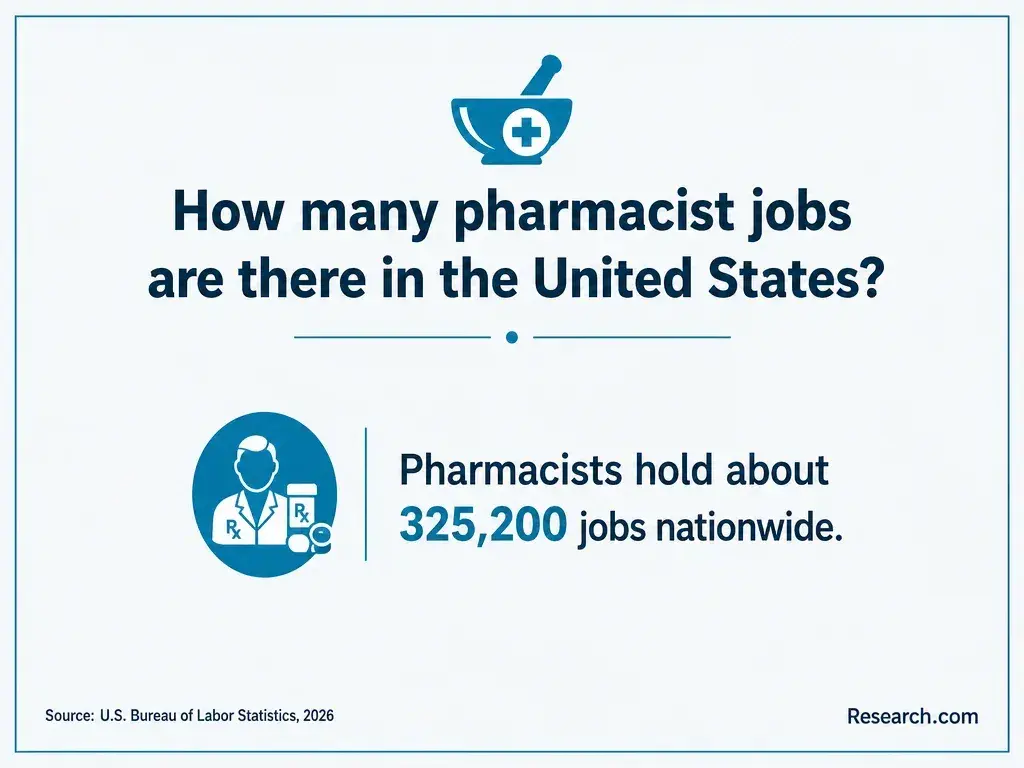
There is no single authoritative U.S. salary median for "pharmacy informaticist." For positions classified as pharmacists, the Bureau of Labor Statistics (BLS) reports median annual pay of $140,910 in May 2025. That is a benchmark for the broader pharmacist occupation, not an informatics-specific offer or a predicted salary for a new graduate.
BLS projects 5% growth for pharmacists, 2025-2035, with about 12,500 openings per year. Those figures do not show how many openings will be in informatics. Pay for an individual role can differ with pharmacist licensure, clinical responsibility, employer, location, experience, and on-call expectations; analyst positions should not be evaluated using the pharmacist median unless the job is actually classified and paid as pharmacist work.
Compare written offers by base pay, benefits, schedule, and advancement potential. If a Pharm.D. is your intended route, compare its full cost - not just advertised tuition - using an online Pharm.D. cost comparison. A higher salary target does not automatically offset years of tuition or reduced earnings while studying.
What education is required to become a pharmacy informaticist?
There is no universal pharmacy informatics degree requirement. Clinical informatics pharmacist postings commonly call for a Doctor of Pharmacy (Pharm.D.) degree and an active pharmacist license. Other positions may accept experience or education in health informatics, information systems, analytics, or pharmacy operations. Read the required qualifications for the specific job title rather than assuming every informatics position is a pharmacist position.
Pre-pharmacy coursework is preparation for applying to a Pharm.D. program; it is not the professional degree. Pharm.D. admission prerequisites vary by school, and a prior science bachelor's degree does not automatically satisfy them. Applicants moving from biology or chemistry can use online Pharm.D. options for science graduates as a starting point, then check each school's current prerequisites and in-person requirements.
A postgraduate year one (PGY1) pharmacy residency, a PGY2 residency with relevant informatics training, or employer-based experience can help a licensed pharmacist compete for certain positions. A residency is training, however - not a nationwide requirement for the job title. If your target postings primarily request software and data experience rather than pharmacist practice, compare those routes before pursuing a Pharm.D.
The strongest candidates can connect a medication-use problem to a reliable system change. The skills below apply across many roles, although the depth of clinical knowledge or technical access required depends on the position.
| Skill area | What it looks like at work |
| Medication-use workflow | Tracing how an order moves through prescribing, pharmacist review, dispensing, administration, and monitoring. |
| Medication safety | Recognizing how order sets, alerts, terminology, and system defaults could introduce or prevent errors. |
| Data and systems | Checking data quality, interpreting reports, testing changes, and documenting defects; some roles also require SQL or interface knowledge. |
| Implementation | Gathering requirements, coordinating testing, training users, and evaluating a change after launch. |
| Communication | Explaining trade-offs to pharmacists, technicians, clinicians, IT staff, and leaders without assuming they share the same vocabulary. |
Employer recognition depends on the role. The Healthcare Information and Management Systems Society's CAHIMS and CPHIMS credentials address health information and management systems; employers may value them for informatics or leadership positions. The American Medical Informatics Association's AHIC credential is another health informatics certification, subject to its own eligibility requirements. Check each credentialing organization's current rules before paying for preparation.
Do not confuse a certificate program, which documents completion of coursework or training, with a professional certification, which is awarded under a credentialing body's requirements. Neither replaces a pharmacist license. Likewise, Board of Pharmacy Specialties certification is separate from licensure and is not a general pharmacy informatics credential.
Start with target job postings: if they consistently prioritize EHR implementation experience over a named certification, hands-on projects may be a better first investment. A short certificate also should not be mistaken for an online pharmacy degree time to completion pathway that qualifies someone for pharmacist licensure.
Only if the position requires the person to practice as a pharmacist or the employer makes licensure a hiring condition. A pharmacist who verifies medication orders or carries out other regulated pharmacist responsibilities needs an appropriate state license. An analyst who does not perform those duties may not need one, even when working closely with pharmacy staff. Job duties and state law - not the word "informatics" in a title - control the distinction.
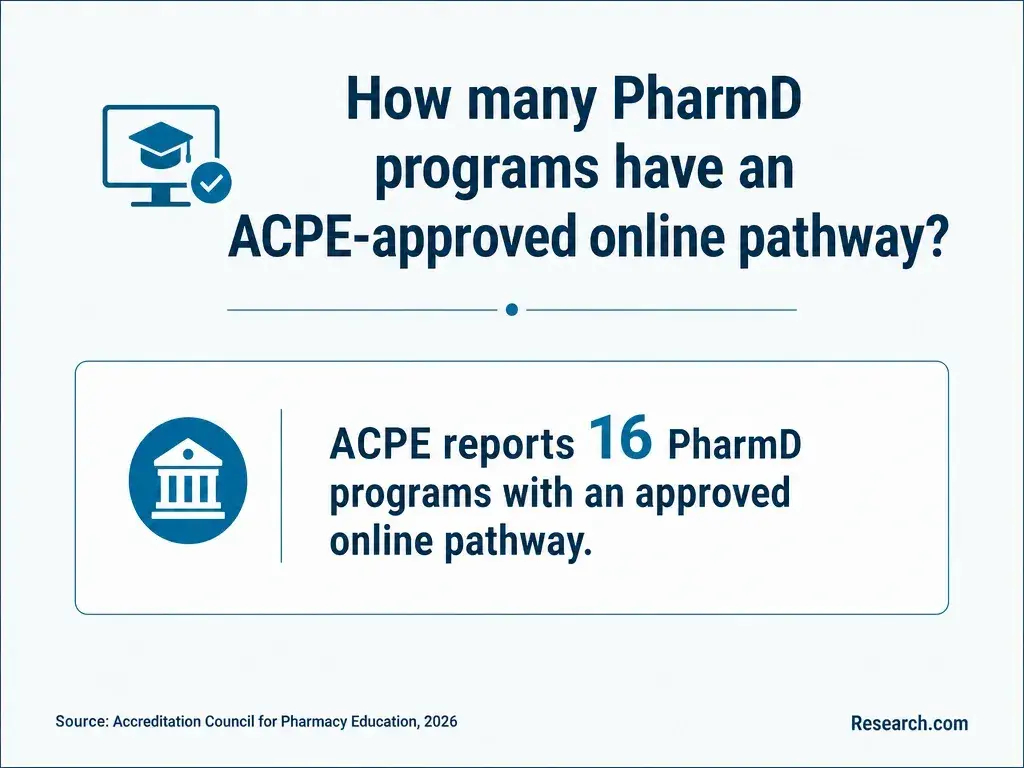
For a U.S.-educated candidate, completing a Pharm.D. from an Accreditation Council for Pharmacy Education (ACPE)-accredited professional program is part of the usual licensure pathway, not a license in itself. Applicants must meet their state board's requirements, which generally include examinations and may include other conditions. The NAPLEX is a pharmacist licensure examination; jurisprudence examination requirements vary by jurisdiction, including whether the MPJE, UMPJE, or another process applies. Internationally educated pharmacists follow additional eligibility procedures.
If licensure is your goal, check your state board's current rules before selecting among pharmacy schools and entry standards. An easier admissions pathway does not change licensure requirements.
Choose a credential by working backward from the duties you want. These routes prepare people for different levels of clinical responsibility and should not be treated as interchangeable.
| Route | Potential fit | Important limitation |
| Professional Pharm.D. | Someone seeking eligibility for pharmacist licensure and clinical informatics pharmacist roles. | Requires substantial professional study; graduation alone does not grant a license or an informatics job. |
| Health informatics or information systems degree | Someone targeting analysis, implementation, data, or technology leadership roles. | Does not independently qualify a graduate to practice as a pharmacist. |
| Graduate certificate or employer training | A working pharmacist or technology professional filling a defined skills gap. | Depth, hands-on access, and employer recognition vary by program. |
| Pharmacy residency with informatics experience | A pharmacist seeking structured postgraduate clinical and systems training. | Training opportunities and entry requirements vary; it is not a degree or license. |
Some students investigate doctoral programs with accelerated timelines, but a shorter doctorate in another field is not a substitute for the professional Pharm.D. when pharmacist licensure is the goal. Compare the exact credential awarded, total cost, and opportunities to work with medication systems before applying.
Coursework may cover EHR workflows, medication terminology, clinical decision support, data governance, privacy, quality improvement, and project management. A Pharm.D. program also teaches the broader scientific and patient-care curriculum needed for pharmacist preparation. An informatics certificate or degree may go deeper into systems and data while providing less clinical pharmacy training.
Do not assume a course title promises hands-on access to a live EHR or pharmacy system. Ask whether students configure a training environment, test medication orders, analyze realistic data, or complete a supervised project - and how their work is assessed. These details matter more for skill development than a list of software names.
Applicants still need to separate professional coursework from admission prerequisites. Pharmacy programs with flexible entry requirements may allow certain prerequisites to be in progress, but only the school can confirm what must be complete before enrollment.
An online program can be valuable when it provides rigorous projects, knowledgeable instructors, useful feedback, and access to relevant tools. A campus format may offer easier access to labs, local employers, or in-person collaboration. Neither format alone establishes educational quality or hiring value.
Distinguish an online informatics certificate from an online or hybrid professional Pharm.D. The latter can still require scheduled classes, hands-on activities, campus visits, and in-person introductory and advanced pharmacy practice experiences. Schools differ in how placements are coordinated, and students may face travel, schedule, or state-specific requirements. Review pharmacy schools offering online Pharm.D. study against those practical commitments rather than assuming "online" means fully remote or self-paced.
For an informatics-only program, ask whether projects can be completed remotely, whether meetings occur live, and whether software access continues outside class. For a Pharm.D., separately verify ACPE professional-program accreditation, the institution's accreditation, applicable distance-education state authorization, and clinical placement arrangements.
How can students choose an accredited pharmacy informatics program?
First, identify the credential your target role actually requires. ACPE accredits professional pharmacy degree programs; it does not accredit every informatics certificate or license graduates. For a non-Pharm.D. program, check the institution's recognized accreditation and assess the specific curriculum and outcomes on their own merits.
Use the following checks before committing tuition or leaving a job. They expose the differences most likely to affect your eligibility, costs, and ability to finish.
- Collect current job postings for your target title and separate required pharmacist licensure from preferred clinical or technical experience.
- If you need a Pharm.D., verify the program's current ACPE status and ask how its graduates pursue licensure in your intended state.
- Request the complete schedule, including live classes, campus activities, projects, and any clinical placements or travel.
- Compare total expected tuition and required expenses with your available funding; confirm current aid eligibility and borrowing rules with the school rather than relying on an old estimate.
- Ask to see assessed projects and confirm whether students receive hands-on system or data practice, not merely lectures about technology.
Speed alone is a poor selection rule. If you are considering Pharm.D. programs with an accelerated format, check whether their pace leaves room for required clinical experiences, work, and the informatics training you want. Choose the least extensive credible route that meets your target role's requirements - not the shortest route with a promising title.
Other Things You Should Know About PharmD
Yes. Experience with dispensing systems, inventory, and pharmacy workflows can support applications for technician informatics or analyst roles. It does not authorize pharmacist practice; employers may also expect additional data or systems skills.
Use work you are permitted to share, such as a de-identified workflow map, a mock medication-safety test plan, or a documented analysis of sample data. Never include patient information or proprietary system details without authorization.
Some do, particularly positions supporting hospital systems during upgrades or outages. Ask about evening launches, weekend coverage, and on-call frequency before accepting an offer.
AI may change how teams analyze data or build workflows, but medication-related changes still require testing, oversight, and accountability. Evaluate jobs and training for those durable skills rather than assuming every AI tool will become a standard employer requirement.
- Health Information Technology Knowledge and Skills Needed by HIT Employers | nih.gov https://pmc.ncbi.nlm.nih.gov/articles/PMC3613035/
- Pharmacist's Role in Medication Safety | PSNet https://psnet.ahrq.gov/primer/pharmacists-role-medication-safety
- Empowering pharmacists with data: Steps toward proactive medication safety and quality improvement | wiley.com https://accpjournals.onlinelibrary.wiley.com/doi/10.1002/jac5.2002
- What Do Pharmacists Do? Roles, Skills & Career Paths | MCPHS https://www.mcphs.edu/admission-and-aid/blog/what-do-pharmacists-do
- Pharmacy Informatics | bpsweb.org https://bpsweb.org/pharmacy-informatics/
- How to Hire a Pharmacy Informatics Pharmacist | accp.com https://careers.accp.com/career-resources/employer-4/how-to-hire-a-pharmacy-informatics-pharmacist-164
- A Health-System Pharmacy Career Path | ashp.org https://careers.ashp.org/career-resources/on-the-job-3/from-pharmacy-technician-to-pharmacy-informatics-technician-a-health-system-pharmacy-career-path-108