Pharm.D. Rotation Scheduling While Working Full-Time

Co-Founder and Chief Data Scientist
Keeping a full-time job through pharmacy school may seem manageable until clinical rotations begin. These supervised, in-person experiences can require daytime availability, travel, and schedules set by a practice site rather than the student.
If you are considering a Doctor of Pharmacy (Pharm.D.) program while employed, you need to know when that conflict arises, not just whether classes are online. This guide explains the rotation commitment, where flexibility may exist, and what to confirm with a school and your employer before you enroll.
Key Things You Should Know
- Most students cannot count on keeping an unchanged full-time work schedule during advanced Pharm.D. rotations, site hours and school requirements take priority.
- Accredited Pharm.D. programs require at least 300 hours of introductory pharmacy practice experiences and 1,440 hours of advanced pharmacy practice experiences. Online coursework does not remove those in-person commitments.
- Before enrolling, get the program's rotation calendar, placement policy, travel expectations, and rules on employment-site rotations in writing; compare them with the leave or schedule flexibility your employer will actually provide.
Can you complete PharmD rotations while working full-time?
Sometimes, but an unrestricted full-time job is usually difficult to maintain during advanced rotations. A Pharm.D. student must be available for the assigned site's hours, preparation, and evaluations. A hospital placement might include early starts or weekends; another site might follow a conventional weekday schedule. Neither arrangement necessarily leaves a reliable, separate full-time workweek.
Students making a career change may find the professional curriculum easier to plan around than the rotation calendar. If you are exploring Doctor of Pharmacy pathways for career transitions, ask when your current job would need to become part-time, flexible, or temporarily paused.
Working may be more feasible during selected classroom terms or introductory experiences. Do not build a financial plan on that possibility until the school confirms its attendance rules and your employer confirms leave or reduced-hours options. A pharmacy job does not automatically count as a rotation.
How are PharmD clinical rotations scheduled and structured?
Introductory pharmacy practice experiences (IPPEs) introduce students to supervised practice during the professional curriculum. Advanced pharmacy practice experiences (APPEs) are more intensive rotations, commonly concentrated later in the program. Both are distinct from undergraduate pre-pharmacy prerequisites.
The school's experiential education office typically coordinates or approves sites, qualified preceptors, assignments, and evaluations. Students may submit preferences, but a preferred location or schedule is not a guaranteed placement. They also may need intern registration where applicable, background checks, immunizations, and transportation or temporary housing.
A short program-duration claim can obscure the placement calendar. When considering how quickly can an online pharmacy degree be completed, check whether the credential is actually a licensure-qualifying Pharm.D. and how its required experiential work is scheduled.
Request a sample calendar showing the start and end of each rotation block, typical site hours, notice given before assignments, and the policy for changes. Those details are more useful for employment planning than the term "flexible."
Are PharmD rotations full-time or part-time commitments?
IPPE hours may be distributed across courses or terms, depending on the school. APPE blocks generally demand sustained, near-full-time availability at a practice site. Even when a site's scheduled hours leave some evenings free, preparation, commuting, and variable shifts make a second full-time schedule risky.
The distinction is program length versus weekly availability. Broad doctoral degree length comparisons cannot tell you whether a Pharm.D. rotation permits part-time attendance. The school must approve any alternative schedule while still meeting experiential and competency requirements.
If continued income is essential, plan for the less favorable schedule: limited paid work during APPEs, possible travel, and no control over every assigned shift. Then ask whether the school permits reduced work hours, an approved extended pathway, or a leave between terms, not whether you can simply make up clinical hours on your own.
Some programs offer flexibility in didactic delivery, while fewer can accommodate a substantially lighter experiential schedule. A longer pathway may spread coursework over more time without changing the intensity of each APPE block. An accelerated pathway may compress the calendar and leave even less room for paid work.
Use pharmacy doctorate program length as an initial comparison, not proof of rotation flexibility. A program is a plausible fit only if its current catalog and experiential office can explain how its sequence works for employed students.
Ask each school the same decision-critical questions:
- Can the professional curriculum be taken part-time, and does that option continue through APPEs?
- Are evening, weekend, or extended-length rotations permitted, or only occasional site-dependent exceptions?
- When are placements assigned, and how far from home might a student be required to travel?
- What happens to progression and tuition charges if employment forces a rotation delay?
Get answers for the pathway you would enter. A general university policy for part-time students may not apply to its Pharm.D. cohort.
Online or hybrid delivery may reduce commuting for lectures, but it does not make a professional Pharm.D. fully remote. Live classes, scheduled assessments, hands-on labs, campus visits, IPPEs, and APPEs may still require fixed times or travel. "Online" also does not necessarily mean asynchronous or self-paced.
When comparing leading online pharmacy degree programs, separate the class timetable from the experiential timetable. Ask whether the school arranges local placements, merely considers student-suggested sites, or may assign distant sites. A nearby rotation should not be assumed.
Also verify three separate matters: the Pharm.D. program's Accreditation Council for Pharmacy Education (ACPE) status, the institution's authorization to enroll you in your state, and whether your intended state of licensure accepts the educational pathway. One does not establish the others.
ACPE accredits professional pharmacy education programs, not individual pharmacists. Its experiential requirements include at least 300 IPPE hours and 1,440 APPE hours, with supervised learning across required practice settings. Schools must also assess whether students meet their educational outcomes; logging hours alone is not enough.
Admissions flexibility is different from flexibility in an accredited curriculum. Pharmacy application requirement flexibility should not be interpreted as permission to skip required rotations after matriculation. Ask the experiential office how its current curriculum satisfies ACPE requirements and check the program's current status in ACPE's official directory before committing.
Rotations are part of professional degree completion, but earning a Pharm.D. does not itself grant a pharmacist license. State boards set licensure conditions, including intern registration or experience rules and examinations. The North American Pharmacist Licensure Examination (NAPLEX) assesses pharmacy practice knowledge; a jurisdiction may also require a jurisprudence examination, which is not universally the MPJE. Some jurisdictions began transitioning to the UMPJE in 2026.
Prior coursework may help with admission without replacing supervised practice. If you are reviewing pharmacy programs for students with prior coursework, have the receiving school evaluate which credits apply. Separately, ask the school and the relevant state board whether a proposed rotation site requires intern registration and whether its hours meet applicable rules.
Passing an examination does not automatically issue a license. Confirm the current application, exam, and experience requirements with the board in the state where you intend to practice.
Schools set their own pre-professional prerequisite courses, grades, application materials, and deadlines. Some admit students after specified undergraduate coursework; others have additional degree expectations. A bachelor's degree is not a universal prerequisite. Pre-pharmacy courses prepare an applicant to enter the professional Pharm.D. curriculum - they are not the curriculum or its rotations.
Use pharmacy degree entry options to identify possibilities, then verify each school's current requirements directly. Check science labs, course-age rules, whether in-progress prerequisites are allowed, and whether the school uses PharmCAS or its own process. The Pharmacy College Admission Test was retired in 2024; it is not a current exam to schedule.
For someone working full-time, admission eligibility is only the first test. Before accepting an offer, compare the prerequisite courses you still need with the program's later rotation calendar.
The professional Pharm.D. commonly takes several academic years after prerequisites, but published lengths vary with program design and prior preparation. A longer or hybrid route may help with classroom scheduling without allowing part-time APPEs. Ask for the sequence covering your entire enrollment, including experiential terms.
Advertised tuition is only one part of the decision. The following costs are especially relevant if rotations could interrupt your earnings:
- Tuition and mandatory fees across the actual enrollment period, including any extended terms.
- Prerequisite coursework, supplies, technology, background checks, immunizations, and assessments.
- Travel or temporary housing for campus requirements and clinical placements.
- Lost earnings or reduced hours during rotations, plus later licensure application and examination costs.
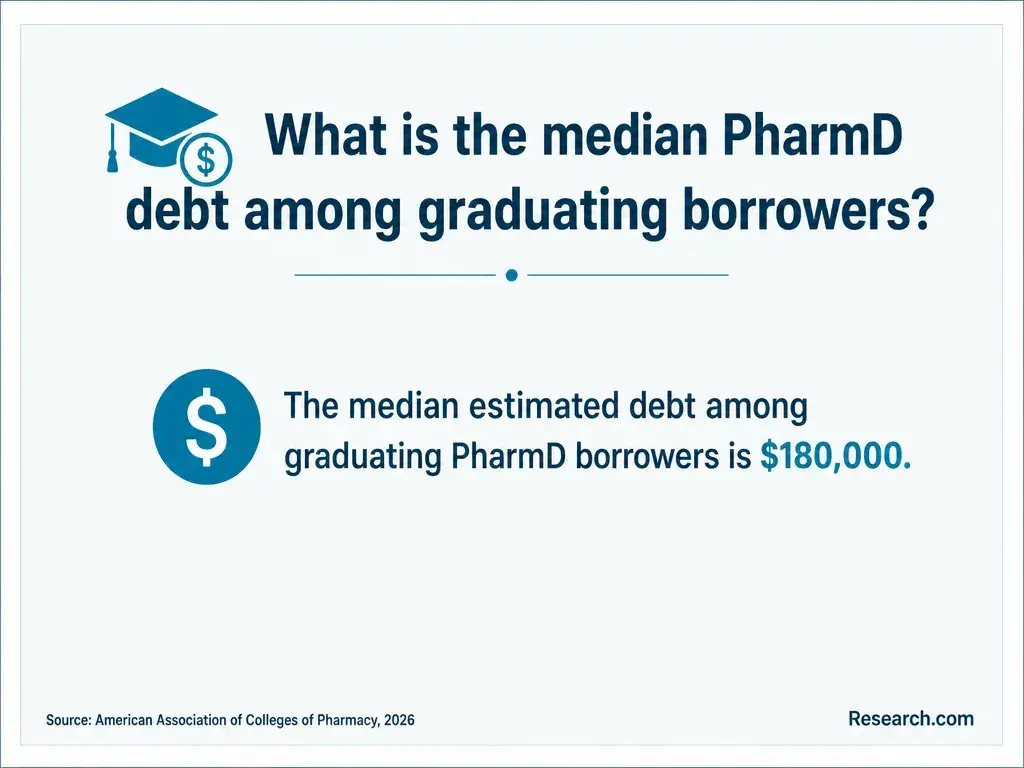
Compare a school's current cost-of-attendance estimate with your own employment plan. Guides to affordable pharmacy doctoral education can help frame the search, but a lower tuition figure may be offset by travel or time away from work. Federal borrowing rules changed for many new graduate and professional borrowers beginning July 1, 2026; confirm your classification, eligibility, and current loan options with each school's financial aid office rather than assuming past borrowing options remain available.
What careers and salaries can PharmD graduates expect?
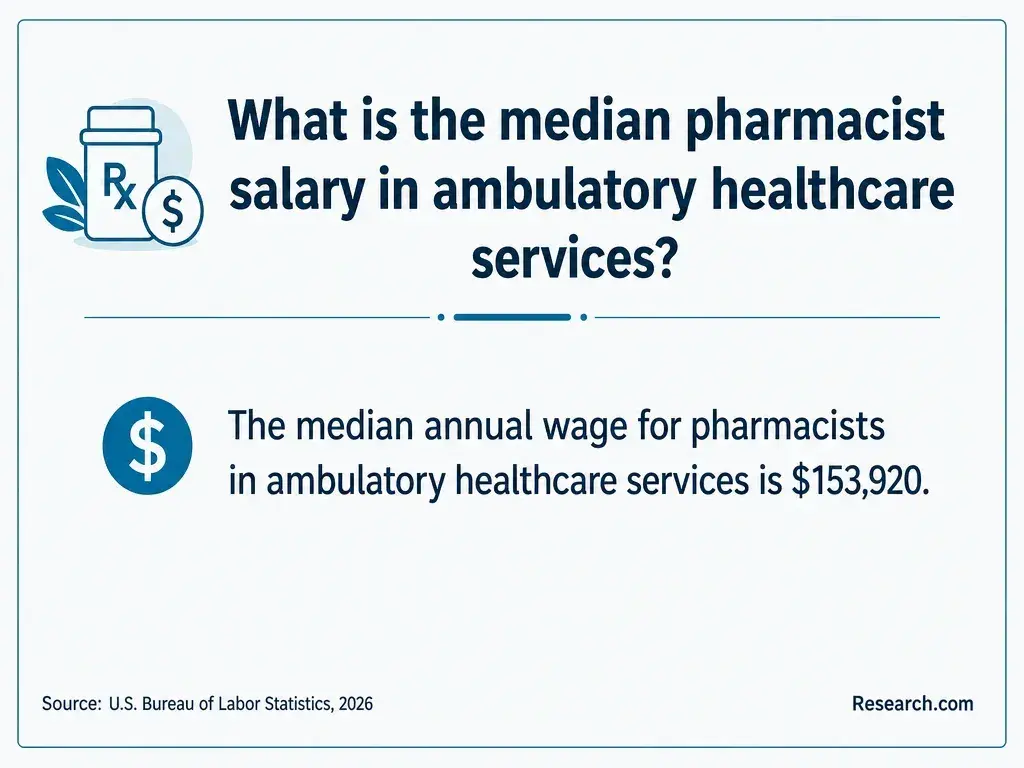
A licensed pharmacist may work in community, hospital, ambulatory care, or other practice settings, subject to employer requirements and state law. According to the Bureau of Labor Statistics, pharmacists had median annual pay of $140,910 in May 2025, with 5% projected job growth, 2025-2035 and about 12,500 openings per year projected. Those occupation-wide figures are not a starting-salary promise or a forecast for one specialty or location.
For a working applicant, potential pay must be weighed against tuition, borrowing, prerequisite time, and earnings forgone during rotations. In that sense, pharmacy programs that may offer strong value still require an individual cost-and-schedule check. If your goal is a pharmacy-adjacent role rather than pharmacist licensure, another credential may fit better; pharmacy technician work, for example, is a separate occupation that does not ordinarily require a Pharm.D.
Residency or fellowship training may matter for particular career goals, but it is distinct from state licensure and is not required for every pharmacist job. Board certification is another separate credential. Choose a Pharm.D. because the pharmacist role warrants its educational and employment trade-offs - not because a rotation schedule looks manageable only under ideal conditions.
Other Things You Should Know About PharmD
Do not assume they are. Ask the program whether any placement offers compensation and whether its policies restrict outside pay or employment at a rotation site.
Report the absence under both the school's and site's procedures. Required hours or activities may need to be made up, and the school decides whether a schedule change affects progression.
Yes. Contact the school's disability services office early to discuss the accommodation process. The school will assess reasonable accommodations alongside essential program and site requirements.
Raise safety, supervision, or learning concerns promptly with the school's experiential education office. The office - not the student alone - determines whether to intervene, change a preceptor, or arrange another placement.
- An Advanced Pharmacy Practice Experience in a University's Office of Experiential Education - PMC https://pmc.ncbi.nlm.nih.gov/articles/PMC10159452/
- Academic Years, Academic Calendars, Payment Periods, and Disbursements | 2025-2026 Federal Student Aid Handbook https://fsapartners.ed.gov/knowledge-center/fsa-handbook/2025-2026/vol3/ch1-academic-years-academic-calendars-payment-periods-and-disbursements
- Flexible Schedules | U.S. Department of Labor https://www.dol.gov/general/topic/workhours/flexibleschedules
- Experiential Education | Washington State University https://pharmacy.wsu.edu/pharmd/experiential-services/
- V. Students - E. Rotation Policies | Southwestern Oklahoma State University https://swosu.edu/pharmacy/current-students/experiential-program/students/rotation-policies.php
- APPE Rotation Procedures - R. Ken Coit College of Pharmacy https://www.pharmacy.arizona.edu/appe-rotation-procedures
- KU Pharmacy Student Handbook https://pharmacy.ku.edu/student-handbook
- Experiential Education - Albany College of Pharmacy and Health Sciences https://www.acphs.edu/pharmacy/doctor-of-pharmacy-pharmd/experiential-education/
- Pharmacy PharmD Students - Financial Aid | About the University of Cincinnati https://www.uc.edu/about/financial-aid/aid/scholarships/grad-aid/pharmd.html
- Scholarships and Financial Aid - UW School of Pharmacy https://sop.washington.edu/pharmd/student-affairs/financial-aid-scholarships-awards/