Online Versus Campus PharmD Cost Comparison

Co-Founder and Chief Data Scientist
An online Doctor of Pharmacy (Pharm.D.) program can spare you a move, but it may still require campus visits and in-person clinical rotations. A campus program may charge more for housing - or less in tuition. If you are comparing pharmacy schools, the useful number is not advertised tuition alone: it is what you would pay to complete the degree and meet licensure requirements.
This guide shows you which costs to request from schools, how to compare them fairly, and when each format may be the less expensive choice.
Key Things You Should Know
- There is no dependable online-versus-campus price rule: compare each school's full program cost, not tuition in isolation.
- Budget for in-person clinical rotations and any required campus visits even when a Pharm.D. program advertises online coursework.
- Before paying a deposit, confirm ACPE professional-program accreditation, your state's distance-education and licensure rules, and the financial aid terms that apply to your start date.
How much does an online PharmD cost compared with a campus-based PharmD?
Neither format is automatically cheaper. Pharm.D. tuition depends on the school, your residency classification, the number of credits or terms billed, and whether fees are included in the advertised rate. An online student may avoid relocating but incur travel and lodging costs; a campus student may face higher living costs but have easier access to required labs and rotations.
Start with each school's current tuition and fee schedule rather than treating an online Doctor of Pharmacy price range as a quote for your own enrollment. Ask for a written estimate covering every remaining term and identify which charges can change.
The table separates costs that often differ by format. It does not assign prices because each school - and each student's location - changes the calculation.
| Cost | Online or hybrid Pharm.D. | Campus Pharm.D. |
| Tuition and mandatory fees | May use a distance rate or the school's regular rate | May vary by residency status and enrollment load |
| Housing and commuting | Usually based at home, with possible temporary stays | May require relocation or regular commuting |
| In-person requirements | Travel may be needed for labs, immersions, and rotations | Campus access may reduce some travel, but rotations can still be distant |
| Time away from paid work | Scheduled classes and rotations can limit working hours | Classes and rotations can create similar conflicts |
The less expensive choice is the one with the lower realistic cost to completion, after accounting for costs that tuition pages omit.
What expenses should you include in a PharmD cost comparison?
Separate prerequisite undergraduate coursework from the professional Pharm.D. curriculum. If you still need prerequisites, include their tuition and the time needed to finish them; previously earned credits reduce costs only if the receiving school accepts and applies them. Check the school's policy on transfer credits for pharmacy school before subtracting any coursework from your estimate.
Request an itemized cost of attendance from both schools. The following expenses are easy to miss because they may be billed by different offices or paid directly to outside providers:
- Tuition, mandatory university and program fees, books, clinical references, software, a suitable computer, and required testing or lab supplies.
- Travel, lodging, meals, and lost work hours for campus immersions and introductory or advanced pharmacy practice experiences.
- Background checks, immunizations, required health coverage, intern registration where applicable, and any placement-related costs.
- Application and enrollment deposits, followed later by licensure examination, application, and state-board fees.
For each option, add expected living expenses and subtract only aid or employer assistance you have actually been offered. Keep one-time charges separate from recurring charges so a low first-term bill does not hide a more expensive degree.
Is an online PharmD as affordable as a campus-based program?
It can be, especially if staying home avoids a costly move and the program arranges feasible nearby clinical placements. It may cost more if travel for required visits is frequent, rotations require temporary housing, or its tuition exceeds a public campus program's applicable rate. Compare Doctor of Pharmacy programs with online coursework by their actual attendance requirements, not by the word "online."
Affordability also depends on borrowing. Federal student aid rules changed for many new graduate and professional borrowers beginning July 1, 2026, with possible transitional provisions. Do not assume an older loan limit or automatic Grad PLUS access applies. Ask each financial aid office which rules cover your entry date and circumstances, what it can include in your cost of attendance, and how you would fund any gap. A lower bill is valuable only if the schedule and placement requirements let you finish without unaffordable disruptions.
Schools may charge per credit, per term, or by a fixed professional-program schedule. A distance-learning rate is not necessarily a discount, and an advertised per-credit figure does not show how many credits the degree requires. Likewise, a campus rate may exclude required program fees. An online pharmacy degree cost comparison is useful for discovering options, but compare only like credentials and like billing units.
Ask both schools to price the same path: the professional curriculum you would enter, the expected enrollment sequence, all mandatory fees, and any available residency or scholarship rate. Confirm whether tuition can rise after enrollment and whether summer or rotation terms are billed differently. Do not compare the cost of prerequisite courses at one school with professional-year tuition at another.
For a U.S. professional Pharm.D., verify the program's current status in the Accreditation Council for Pharmacy Education (ACPE) directory. ACPE professional-program accreditation is different from a university's institutional accreditation. It is also different from state authorization to enroll you in distance education or permission to complete a clinical placement in a particular state.
Confirm the exact Pharm.D. pathway and campus or distance location with the school; do not assume another pharmacy-related doctorate has the same standing. Listings of short online doctorate programs may include credentials that do not prepare students for pharmacist licensure. Ask the program and your intended state board whether your planned pathway meets applicable educational and placement requirements before committing.
Students in an ACPE-accredited professional Pharm.D. complete supervised experiential education, including introductory pharmacy practice experiences (IPPEs) and advanced pharmacy practice experiences (APPEs). Online instruction does not make those patient-care experiences virtual. Programs can differ in when rotations occur, which sites are available, and how much travel students must undertake.
Prior science study can help you build on prior biology or chemistry coursework, but it does not automatically replace professional clinical rotations. Ask who finds and approves sites, whether placements near your home are possible, and whether your state requires intern registration. Also budget for site onboarding, schedule changes, and periods when rotation hours prevent full-time employment. Do not count on using your current workplace as a placement unless the school approves it.
Delivery format alone does not determine completion time. A traditional professional Pharm.D. curriculum commonly spans four academic years after required pre-professional coursework, but schools may use different calendars or offer accelerated sequences. Explore Doctor of Pharmacy accelerated tracks only after confirming their prerequisites, calendar, clinical schedule, and total price.
A shorter calendar can reduce some living expenses or bring forward your opportunity to seek pharmacist licensure. It can also compress coursework and limit paid work. Compare the date you could actually start and finish at each school - not just the length printed beside the program name.
Both formats require admission to the professional program. Prerequisite courses, laboratory rules, grades, minimum credits, degree requirements, interviews, and application procedures vary by school. A bachelor's degree is not universally required. Review each school's current pharmacy school prerequisite expectations alongside its official admissions requirements, and ask how your transcripts will be evaluated.
Some schools use PharmCAS, while others have additional or different application steps. The Pharmacy College Admission Test (PCAT) was retired in January 2024; do not budget for it as a routine current admissions exam. For cost planning, identify prerequisite gaps and application deadlines early: an extra course or missed intake can change both your expenses and completion date.
Graduation does not issue a pharmacist license. U.S.-educated applicants generally must meet their state board's education and other eligibility rules, pass the North American Pharmacist Licensure Examination (NAPLEX), satisfy any applicable jurisprudence examination requirement, and complete the board's application process. Jurisprudence rules vary: do not assume every jurisdiction uses the MPJE, particularly as some transition to the UMPJE. Check your intended board's current requirements and budget for its fees.
A shorter pharmacy-related credential is not a substitute for the professional degree required for the usual U.S.-educated pharmacist pathway. If you are considering pharmacy degree options with shorter study periods, check which occupation each credential prepares you for. Pharmacy technicians, for example, have a separate role and do not ordinarily need a Pharm.D. Internationally educated pharmacists may face a different eligibility process.
How should you choose a reputable online or campus PharmD program?
Choose the program whose verified total cost and required schedule you can sustain - not simply the one with the lowest advertised tuition. Online or hybrid study may favor a student who can remain at home and has workable placement options. Campus study may favor someone with a favorable tuition classification or who wants easier access to on-site teaching. Neither format by itself establishes educational quality or a return on investment.
Before paying a deposit, request written answers from both schools. If you have prior credits or unfinished prerequisites, use guidance on pharmacy admissions for students with prior credits to frame your questions, then obtain the school's own evaluation. This sequence helps prevent the costliest comparison mistakes:
- Verify the exact professional program's ACPE status, your state's authorization and placement rules, and licensure eligibility with the relevant authorities.
- Get a term-by-term tuition and mandatory-fee estimate, plus the school's stated campus-visit and clinical-placement expectations.
- Confirm which prerequisites or prior credits count and whether any gaps delay your entry.
- Compare realistic travel, housing, lost wages, available aid, and remaining funding gaps for each path.
- Review published NAPLEX outcomes in context, ask about academic and placement support, and get unclear promises clarified in writing.
Be cautious if a school cannot explain where hands-on training occurs, what charges are mandatory, or how its distance pathway serves students in your state.
Other Things You Should Know About PharmD
Possibly. Ask your employer which schools and courses qualify, whether there is a yearly cap, and whether you must repay assistance if you leave. Check whether reduced work hours during rotations would affect eligibility.
Do not assume so. Scholarship terms differ; some apply only to tuition. Ask the awarding organization and financial aid office whether funds can be used for travel or temporary housing.
Not automatically. A school may consider your completed college courses toward prerequisites, but technician training or work experience does not by itself replace professional Pharm.D. coursework or rotations.
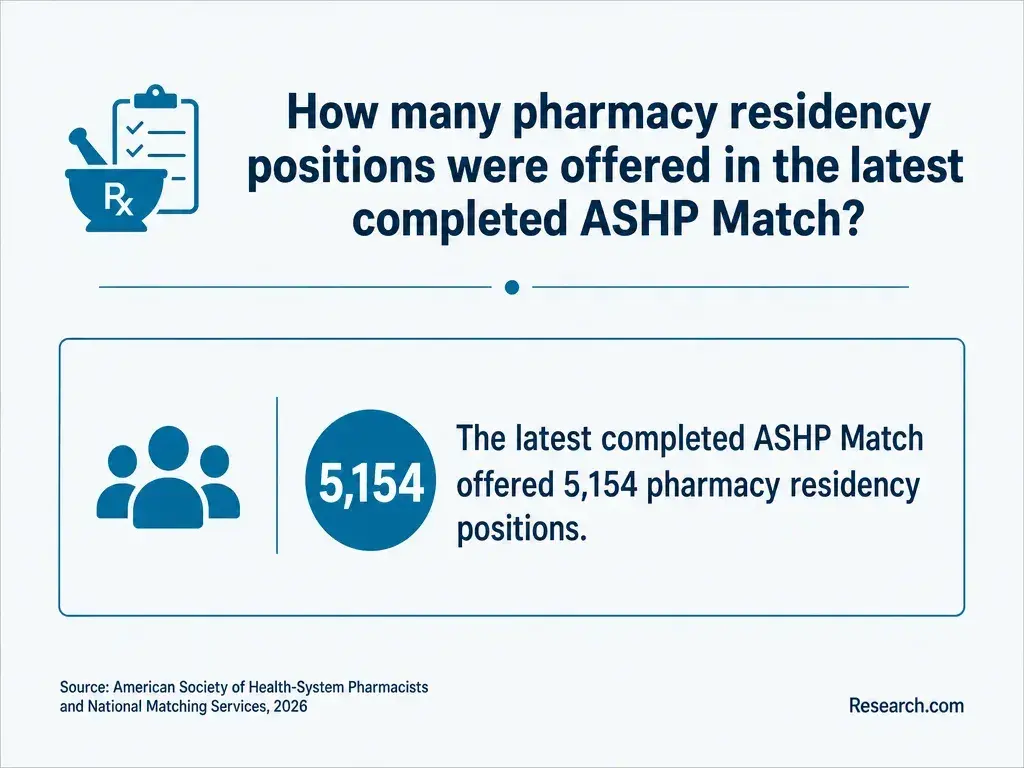
Include it in longer-term planning if you expect to pursue postgraduate training, but keep it separate from degree tuition. Residencies generally provide a stipend and are not required for every pharmacist job; availability and compensation vary by program.
- Cost of Attendance (Budget) | 2025-2026 Federal Student Aid Handbook https://fsapartners.ed.gov/knowledge-center/fsa-handbook/2025-2026/vol3/ch2-cost-attendance-budget
- Types of Financial Aid: Grants, Work-Study, and Loans | studentaid.gov https://studentaid.gov/understand-aid/types
- PharmD Remote Pathway | CU School of Pharmacy https://pharmacy.cuanschutz.edu/degreesandprograms/pharmd/remote-pharmd
- PharmD Online Frequently Asked Questions - Pharmacy | Extended & Distance Education https://www.su.edu/pharmacy/programs/pharmd-traditional-program/pharmd-online-frequently-asked-questions/
- Earn Your PharmD with Flexibility: Explore the Hybrid Program at West Coast University | West Coast University https://westcoastuniversity.edu/blog/earn-your-pharmd-with-flexibility-explore-the-hybrid-program-at-west-coast-university
- Can You Get Financial Aid for Online College? | Campus.edu https://campus.edu/blog/financial-aid/can-you-get-financial-aid-for-online-college
- Doctor of Pharmacy Key Program Outcomes | wvu.edu https://pharmacy.wvu.edu/student-services/pharmd-program/doctor-of-pharmacy-key-program-outcomes/
- Earn an Online Pharm.D. Degree at St. John Fisher University https://onlinepharmd.sjf.edu/
- Pharm.D. Tuition & Fees | University of Health Sciences and Pharmacy in St. Louis https://www.uhsp.edu/admissions/pharmd-tuition-fees/
- Tuition and Scholarships - College of Pharmacy | University of South Carolina https://sc.edu/study/colleges_schools/pharmacy/pharmacy_education/pharm_d_program/tuition_and_scholarships/