PharmD Cost per Semester for Full-Time Students

Co-Founder and Chief Data Scientist
A Pharm.D. tuition quote may not tell you what you will owe each semester - or what a clinical rotation could cost later. If you are comparing full-time Doctor of Pharmacy programs, you need a semester-by-semester budget that includes fees, living expenses, and changes in course load.
This guide shows you how to compare offers on the same basis, identify costs that are easy to miss, and check whether your financing plan can cover the entire program before you commit.
Key Things You Should Know
- There is no single U.S. Pharm.D. price per semester: schools may charge a flat professional-program rate, a per-credit rate, or different amounts for residents and nonresidents.
- Compare each school's full cost of attendance - not tuition alone - and ask for separate estimates for classroom semesters and clinical-rotation periods.
- Federal borrowing rules changed for many new graduate and professional students beginning July 1, 2026; confirm your own eligibility and borrowing limits before relying on loans to close a funding gap.
How much does PharmD tuition cost per semester for full-time students?
The dependable answer is the full-time rate published by the specific school for your entering academic year and residency status. Pharm.D. programs do not share a national semester price. One school may publish a flat rate, another may bill by credit, and either may charge differently during advanced clinical training.
If a school publishes only annual tuition, dividing it by two gives a useful estimate only when it bills two equally priced semesters. Confirm the actual payment schedule, required summer enrollment, and whether the quoted amount includes fees. When comparing Doctor of Pharmacy programs with manageable tuition, use the school's current professional-program bill rather than a university-wide undergraduate rate.
Request a term-by-term tuition and mandatory-fee schedule from each school. That is more useful than a single annual figure if credit loads, summer terms, or rotation charges change over time.
What fees and expenses increase the total cost of a PharmD program?
Tuition is only one part of the cost of attendance - the school's estimate of educational and living expenses used in financial aid planning. The table separates charges you may pay to the school from costs you may need to fund yourself.
| Cost category | Potential expenses | Why semester totals can differ |
| School charges | Mandatory professional, laboratory, technology, and student fees | Fees may be billed once, each term, or during particular courses. |
| Course materials | Books, clinical references, equipment, and compounding supplies | Requirements may change with the curriculum. |
| Placement preparation | Background checks, immunizations, and any required intern registration | Sites and states may have different requirements. |
| Clinical rotations | Travel, parking, temporary housing, and reduced work hours | Placements may not be near home. |
| After graduation | Licensure applications and examinations | These may fall outside the school's tuition quote. |
Also budget for any undergraduate prerequisites you still need; those courses are separate from the professional Pharm.D. curriculum. Before paying for them, evaluate credits for pharmacy prerequisites against each receiving school's policy. A less expensive course saves money only if the school accepts it for the required subject and laboratory work.
How much does a PharmD degree cost at public versus private schools?
Public schools may offer a lower rate to eligible state residents, while nonresident charges can narrow or reverse that advantage. Private schools generally do not use the same in-state tuition distinction, but their scholarships can change a student's net price. Neither school type is automatically the less expensive choice.
Compare pharmacy doctorate options using the same measure: projected tuition and mandatory fees across the full professional program, minus aid you do not have to repay, plus realistic living and rotation costs. Check whether a scholarship renews, whether residency status can change, and whether the school's estimate assumes a placement location you can afford. Treat future tuition increases as a risk rather than assuming today's rate will remain fixed.
A traditional professional Pharm.D. curriculum commonly takes four academic years after required pre-professional coursework. Some schools offer different calendars or accelerated pathways, so the number of billed terms - and their length - matters more to a budget than the advertised completion time alone.
A shorter calendar can reduce time away from full-time earnings, but it may also compress classes into summers and leave less room for paid work. If you are considering pharmacy degree programs with accelerated schedules, verify that the specific pathway awards a Pharm.D. and review its prerequisite, summer-term, and clinical-rotation requirements. Do not assume that a shorter pharmacy credential qualifies you for pharmacist licensure.
Schools set their own pre-professional course, laboratory, grade, and application requirements. A completed bachelor's degree is not universally required. Prerequisite credits are undergraduate preparation; they are not the professional Pharm.D. courses for which you are estimating semester tuition.
Check the school's current admissions page and PharmCAS directory, where applicable, for accepted courses, application materials, deadlines, and rules for work still in progress. Not every school uses PharmCAS. The Pharmacy College Admission Test was retired in January 2024, so an old reference to a PCAT requirement is a reason to verify the page's currency. Listings of pharmacy programs with flexible entry requirements are a starting point, not a substitute for written confirmation that you can complete any outstanding courses before matriculation.
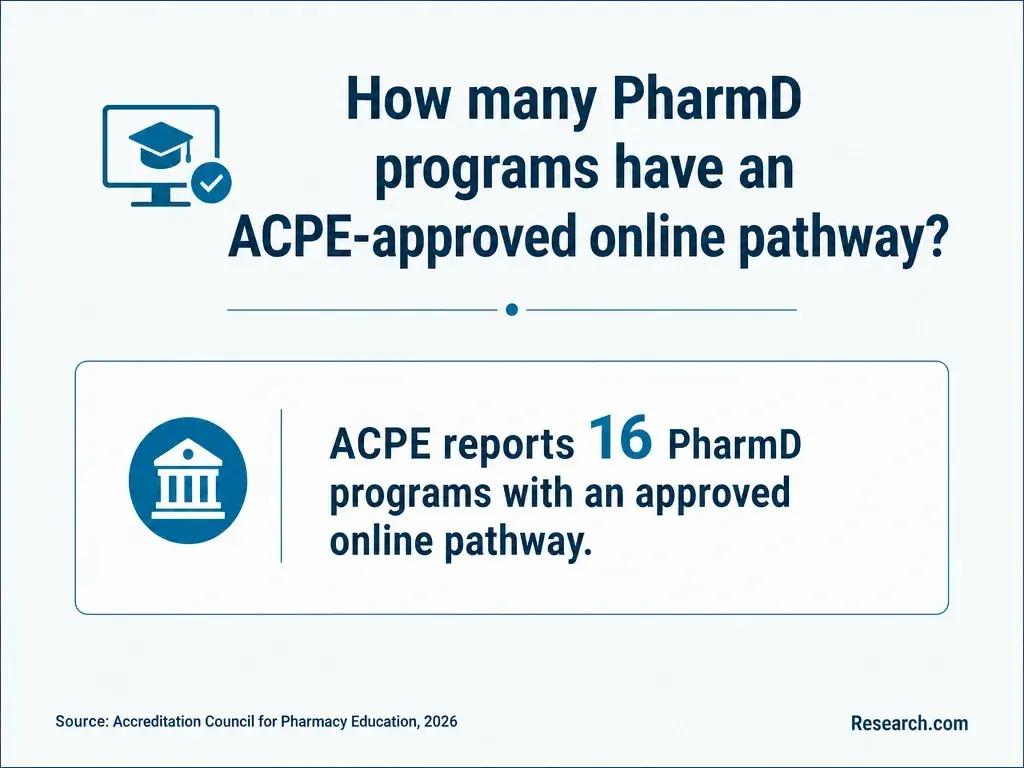
The Accreditation Council for Pharmacy Education (ACPE) accredits professional pharmacy programs. Before paying a deposit, check the program's current status in ACPE's official directory and confirm how its status relates to the licensing requirements of the state where you intend to practice. Institutional accreditation and permission to enroll an online student in a particular state are separate matters.
Accreditation is an essential screening criterion, not a promise of low tuition, strong examination results, or a license. Use it alongside the school's published outcomes, fees, and rotation arrangements when comparing pharmacy schools and entry standards. A school that appears easier to enter still needs to meet your professional and financial requirements.
Professional coursework typically develops knowledge of medicines, therapeutics, patient assessment, medication safety, and communication. Supervised introductory pharmacy practice experiences (IPPEs) introduce practice settings; advanced pharmacy practice experiences (APPEs) are more intensive rotations later in the program. This training is distinct from undergraduate pre-pharmacy science courses.
For students entering with a science background, Pharm.D. programs for students with a pre-pharmacy background should be compared on both curriculum sequence and placement logistics. Ask who arranges or approves rotations, whether distant placements are possible, and what students must pay for travel, housing, site clearances, and required registration. Prior science credits do not automatically shorten the professional curriculum.
Some Pharm.D. pathways deliver part of their instruction online or in a hybrid format, but online classes do not eliminate in-person skills training and supervised clinical rotations. Scheduled live classes, campus visits, and placement hours can also limit full-time employment, even when lectures are accessible from home.
When reviewing online doctoral degree options, confirm that a listing is specifically a professional Pharm.D. rather than a different doctorate. Ask the school for its required campus dates, rotation-location policies, technology fees, and authorization to enroll students in your state. State authorization for online education is separate from clinical-placement approval and pharmacist licensure eligibility.
Graduation does not itself grant a pharmacist license. A U.S.-educated graduate generally must meet the relevant state board's requirements, which include the North American Pharmacist Licensure Examination (NAPLEX) and may include a jurisprudence examination or other state-specific steps. Do not assume every jurisdiction uses the MPJE: some began transitioning to the UMPJE in 2026. Check the current board and National Association of Boards of Pharmacy instructions for your intended state.
Before choosing among Pharm.D. completion pathways, confirm the precise credential, ACPE status, and intended state's licensure rules. Budget separately for applications and examinations, and allow for the time between graduation, exam eligibility, and license issuance. A residency, fellowship, or specialty board certification is distinct from a state pharmacist license.
What salary and job outlook can PharmD graduates expect?
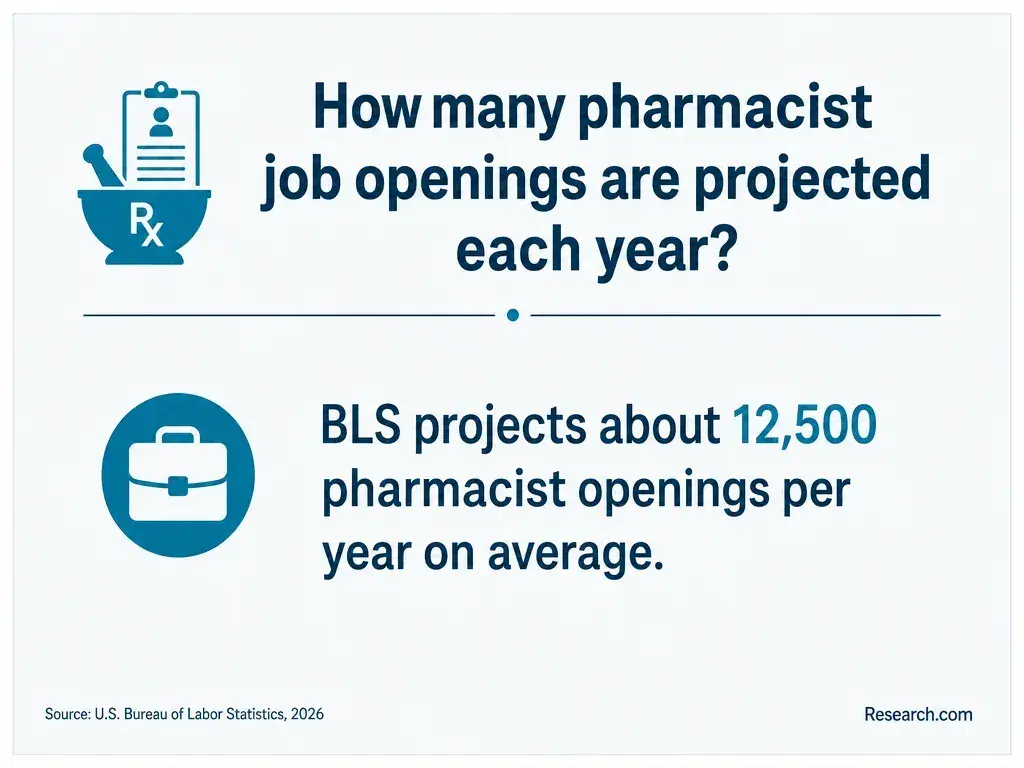
The Bureau of Labor Statistics reports median annual pay of $140,910 in May 2025 for pharmacists and projects 5% job growth for 2025-2035, with about 12,500 openings per year. These occupation-wide figures provide context for a borrowing decision; they do not predict a new graduate's offer, location, hours, or ability to repay a particular loan balance.
Compare a proposed debt payment with a conservative take-home-pay estimate, not the national median alone. If your goal is a pharmacy-adjacent job rather than pharmacist licensure, investigate shorter pharmacy programs with career potential before committing to Pharm.D. costs. A pharmacy technician role, for example, is a separate occupation that does not ordinarily require a Pharm.D. and does not confer pharmacist licensure.
Other Things You Should Know About PharmD
Policies vary. Read the offer's deposit terms before paying, including whether the amount is refundable or credited toward your first bill.
Not necessarily. Some programs charge flat tuition or require a fixed course sequence. Ask whether part-time study is permitted and how it affects billing and aid eligibility.
Interest treatment depends on the loan. Review each loan's current terms and estimate the balance at repayment, not just the amount initially borrowed.
Contact the financial aid office promptly. Ask whether its cost-of-attendance estimate can be reviewed for documented required expenses; an adjustment does not guarantee additional aid or loan eligibility.
- Tuition and Fees Data - Texas Higher Education Coordinating Board https://www.highered.texas.gov/legislative-appropriations-overviews/tuition-and-fees-data/
- Cost of Attendance (Budget) | 2025-2026 Federal Student Aid Handbook https://fsapartners.ed.gov/knowledge-center/fsa-handbook/2025-2026/vol3/ch2-cost-attendance-budget
- Understanding College Costs | studentaid.gov https://studentaid.gov/resources/prepare-for-college/students/choosing-schools/consider-costs
- Fast Facts: Tuition costs of colleges and universities (76) | ed.gov https://nces.ed.gov/fastfacts/display.asp
- Program: Pharmacy (PharmD) - University of Southern California https://catalogue.usc.edu/preview_program.php
- Student Costs & Budgeting | Washington State University https://pharmacy.wsu.edu/pharmd/resources/costs-budgeting/
- Doctor of Pharmacy (PharmD) | Financial Aid https://www.westernu.edu/financial/student-budgets/pharmd/
- Pharmacy Tuition and Fees - KU Financial Aid https://financialaid.ku.edu/calculate-costs/tuition-and-fees/pharmacy
- School of Pharmacy Cost of Attendance | pitt.edu https://www.tuition.pitt.edu/undergraduate/tuition/pittsburgh/school-pharmacy
- Pharmacy, PharmD | Loma Linda University https://llu.edu/academics/programs/school-pharmacy/pharmacy-pharmd