
PharmD Aid Eligibility After Reaching 90 College Credits

Co-Founder and Chief Data Scientist
Reaching 90 college credits can put a Pharm.D. applicant close to completing pre-pharmacy coursework, but it does not automatically determine financial aid eligibility. The distinction matters more now that federal borrowing rules have changed for many new graduate and professional students.
If you are applying to pharmacy school or finishing prerequisites, this guide explains how schools classify your enrollment, which aid may be available, and what to confirm before accepting an offer. You can use it to compare your remaining coursework, borrowing options, and total cost rather than assuming a credit milestone settles the decision.
Key Things You Should Know
- 90 credits are not an automatic aid threshold. Your school must determine whether your coursework equals three years of full-time study and whether you are enrolled as an undergraduate or professional student.
- Admission and aid are separate decisions. A Pharm.D. program may accept your credits yet require specific prerequisites; your aid package also depends on your enrollment stage and federal eligibility.
- Aid Eligibility After Reaching 90 College Credits Federal Grad PLUS access changed for many new professional borrowers beginning July 1, 2026, so a previous student's funding plan may not work for you.
Can you qualify for PharmD financial aid after earning 90 college credits?
Yes, potentially. Earning 90 college credits does not disqualify you from federal student aid, and you do not necessarily need a bachelor's degree to enter a Doctor of Pharmacy (Pharm.D.) program. But credits alone do not establish admission, professional-student status, or a particular loan amount.
Start by separating Pharm.D. admission after pre-pharmacy coursework from aid eligibility. The admissions office decides how your courses satisfy its requirements. The financial aid office determines your eligible program and enrollment level for each aid period. Ask both offices to evaluate the same transcripts before you rely on a projected award.
How do federal student aid rules classify PharmD students with 90 credits?
Federal aid rules distinguish undergraduate enrollment from graduate or professional enrollment. For a student pursuing a professional degree such as the Pharm.D., the graduate or professional classification includes a requirement to have completed the equivalent of at least three years of full-time study, either before entering the program or within it. A count of 90 semester credits may represent that much study, but the school must evaluate the record; transferred credits and its academic structure matter.
The distinction changes which federal aid programs the school can consider. This table shows why an admissions offer is not enough to predict an aid package.
| Enrollment situation | Likely aid question | What the school must establish |
| Finishing undergraduate prerequisites | Whether undergraduate aid remains available | Whether the courses belong to an eligible program and meet applicable aid rules |
| Entering the professional Pharm.D. curriculum | When professional-student loan rules apply | Whether the student meets the three-years-of-study requirement and the program's classification |
| Moving credits from another college | Whether prior study counts toward the milestone | How the institution evaluates the credits and prior full-time study |
Explore transfer-friendly pharmacy education options if you have coursework from multiple colleges, but do not equate accepted admission credits with an automatic change in federal aid classification.
Which financial aid options are available for PharmD students?
Possible funding includes institutional scholarships, outside scholarships, employer assistance, federal student loans, and, where available, state or school-based aid. Federal Pell Grants generally serve eligible undergraduates rather than students classified as graduate or professional. Aid for prerequisite coursework depends on how the school classifies that enrollment; taking a course does not by itself make it aid-eligible.
Professional students may be eligible for Direct Unsubsidized Loans, subject to federal limits and other requirements. For many students who begin graduate or professional borrowing on or after July 1, 2026, new federal rules eliminate Grad PLUS access and change borrowing limits; limited transitional provisions may apply to qualifying existing borrowers. Do not use an older Pharm.D. aid example as your budget. Your aid office can identify the rules that apply to your borrowing history and start date.
When assessing online pharmacy degree affordability, compare the school's full cost-of-attendance estimate with your confirmed aid - not just its tuition. A funding gap may require savings, additional scholarships, work that fits the curriculum, or a private loan whose terms deserve careful comparison.
Not necessarily. Schools set their own minimum credit totals, required subjects, laboratory courses, grades, and policies on coursework completed before matriculation. Some accept applicants without a bachelor's degree; others have different pathways or expectations. Even if you exceed a school's credit minimum, a missing required lab can prevent admission.
Use each school's current admissions page and PharmCAS directory entry, when the school participates in PharmCAS, to check pharmacy program application requirements. Confirm whether your courses count toward prerequisites, whether in-progress courses are allowed, and when final transcripts are due. Meeting a published minimum does not guarantee an offer. The Pharmacy College Admission Test (PCAT) was retired in January 2024, so it is not a current exam to schedule.
Prerequisites are undergraduate courses that prepare you to apply; they are not automatically credits toward the professional Pharm.D. curriculum. A school may accept a course as prior college credit but reject it for a particular prerequisite because of its content, lab format, grade, or age. The receiving program makes that determination.
Before paying for another term, request a written prerequisite evaluation as part of your pharmacy program admission planning. Then ask the aid office whether those remaining courses are part of an aid-eligible program and how enrollment would be classified. This avoids a costly assumption: needing a prerequisite for admission does not mean federal aid will cover it as a stand-alone course.
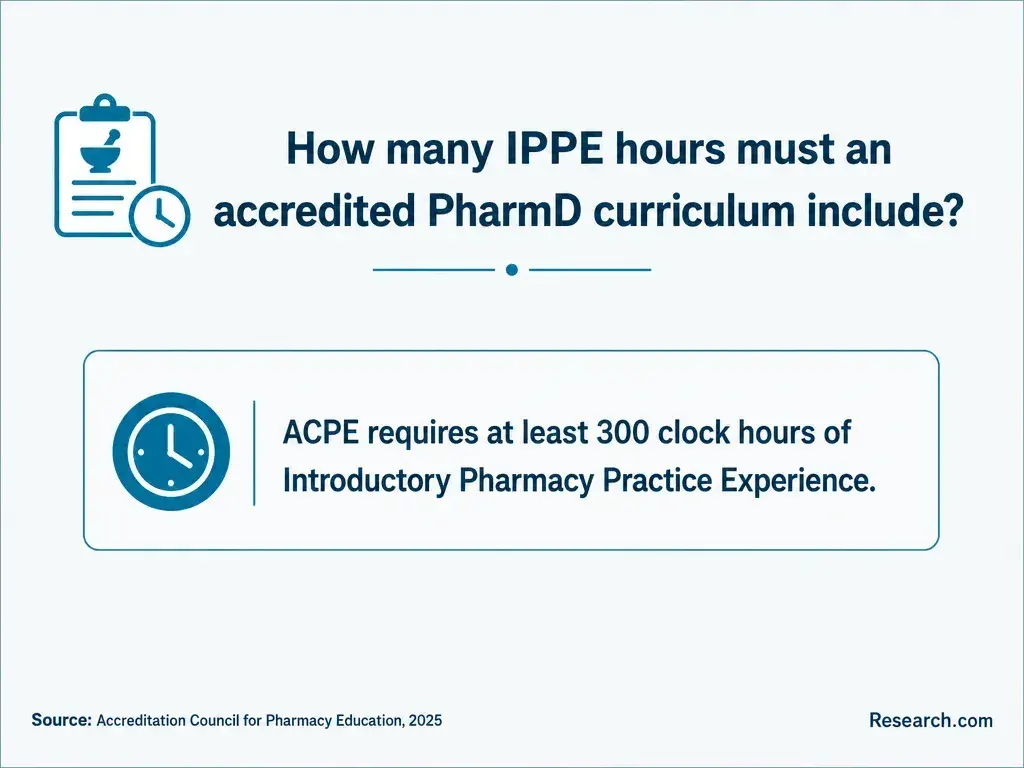
At many schools, the professional Pharm.D. curriculum takes four academic years after prerequisites; some offer accelerated schedules of about three years. Your 90 pre-professional credits ordinarily do not remove professional courses or supervised practice experiences from that curriculum. Transfer into an advanced professional year, if available, is a separate, school-specific decision.
You can complete a Pharm.D. on an accelerated schedule only if you enter a program offering that format and can meet its sequencing and experiential requirements. Compare the actual calendar, breaks, ability to work, and time to licensure - not just the number of years in an advertisement.
There is no single national Pharm.D. price. Tuition and mandatory fees vary by school, residency status, and academic year. Compare current published charges with the program's cost-of-attendance estimate, which should help reveal expenses that tuition alone misses. Verify that the professional Pharm.D. program holds the appropriate Accreditation Council for Pharmacy Education (ACPE) accreditation status; institutional accreditation is a different designation.
The categories below make competing school estimates easier to compare on the same basis. Some costs occur before admission or after graduation, so ask which are included in a quoted total.
| Cost category | Potential expense to check |
| Before enrollment | Remaining prerequisites, applications, and any required travel |
| During the program | Tuition, mandatory fees, books, clinical resources, technology, and supplies |
| Experiential education | Background checks, immunizations, transportation, and possible temporary housing |
| After graduation | Licensure applications and required examinations |
Compare lower-cost pharmacy degree pathways carefully: a less expensive pharmacy-related degree may support a different career but will not substitute for an eligible Pharm.D. if your goal is U.S. pharmacist licensure. Borrowing also depends on your individual aid eligibility, not the advertised price.
They can, but "online" describes instructional delivery, not automatic aid or licensure eligibility. Verify the program's ACPE professional accreditation status, the school's eligibility to participate in federal aid programs, and whether it can enroll you in your state. Separately, ask the state board where you intend to practice whether the education meets its licensure requirements.
When you compare online Doctor of Pharmacy programs, examine scheduled classes, campus labs or immersions, and in-person introductory and advanced pharmacy practice experiences (IPPEs and APPEs). Ask who approves clinical sites, whether placements near home are possible, and what travel, intern registration, or time away from work you must arrange. Online lectures do not make a professional Pharm.D. fully remote or necessarily compatible with full-time employment.
Graduating from an eligible Pharm.D. program is a major step, not a pharmacist license. State boards set requirements that typically include an application, the North American Pharmacist Licensure Examination (NAPLEX), and any required state-law examination or other assessment. Depending on the jurisdiction, a law exam may be the MPJE, the newer UMPJE, or another process; intern-hour and background-check rules also vary. Check the board where you plan to practice before scheduling exams.
Be cautious with claims about pharmacy programs with a fast timeline. A short pharmacy-related credential is not necessarily a professional Pharm.D. and cannot be assumed to satisfy pharmacist licensing requirements. Passing an exam, like completing the degree, does not itself issue a license.
What careers, salaries, and job outlook can PharmD graduates expect?
Once licensed, pharmacists may work in community pharmacies, hospitals, clinics, and other medication-focused settings. The Bureau of Labor Statistics reports median annual pay of $140,910 in May 2025 for pharmacists. That occupational median is not a starting-salary offer or a forecast of what a particular graduate will earn.
BLS projects 5% pharmacist employment growth from 2025 to 2035, with about 12,500 openings per year. These national figures do not predict hiring in a particular city or practice setting. Some clinical positions favor postgraduate residency training; a residency or fellowship is distinct from optional specialty board certification, and none replaces state licensure.
If your intended work does not require pharmacist licensure, shorter online doctorate pathways or a non-doctoral credential might deserve comparison - but check the actual hiring requirement first. Pharmacy technician work, for example, is a separate occupation that does not ordinarily require a Pharm.D. The best financial decision depends on the role you want, the education it requires, and the debt you would take on to reach it.
Other Things You Should Know About PharmD
Yes. Submit the Free Application for Federal Student Aid for each academic year you seek federal aid, and meet your school's priority deadlines.
Possibly. Tell the financial aid office about a significant change and ask whether it can review your circumstances; an adjustment is not automatic.
They may. Schools must account for other assistance when building an aid package, but a scholarship can reduce the amount you need to finance. Ask how an award affects your specific package.
Eligible enrollment may allow in-school deferment, depending on the loan and your status. Interest can still accrue on unsubsidized loans, so check your loan servicer's records and terms.
- Staying Eligible | Federal Student Aid https://studentaid.gov/understand-aid/eligibility/staying-eligible
- Student Eligibility for Pell Grants | 2025-2026 Federal Student Aid Handbook https://fsapartners.ed.gov/knowledge-center/fsa-handbook/2025-2026/vol7/ch1-student-eligibility-pell-grants
- What Is a PharmD Degree? Doctor of Pharmacy Guide | West Coast University https://westcoastuniversity.edu/blog/what-is-a-pharmd-degree-and-how-to-transfer-in
- FAQ | OSU College of Pharmacy - Oregon State University https://pharmacy.oregonstate.edu/programs-admissions/pharm-d/faq
- Financial Aid Policies | Cuesta College https://www.cuesta.edu/become-student/finaid/fa-policies.html
- Enrollment status and eligible classes - Inside Delta https://students.delta.edu/financial-aid/eligibility.html


