Medication Therapy Management Pharmacist Career Path

Co-Founder and Chief Data Scientist
Medication therapy management (MTM) appeals to people who want to help patients use medications safely and effectively, but the path is more involved than earning an MTM certificate.
This guide is for prospective pharmacy students, career changers, and pharmacists considering a move into patient-centered medication reviews. It explains what the work involves, which education and licenses are necessary, when postgraduate training helps, and how to weigh the cost against the roles you want. Use it to decide whether becoming a licensed pharmacist is the right route - or whether a different medication-support role better matches your goals.
Key Things You Should Know
- To provide MTM as a pharmacist, the usual U.S. path is an accredited Doctor of Pharmacy (Pharm.D.) program followed by state licensure; an MTM certificate alone does not qualify someone to practice as a pharmacist.
- Residency and specialty certification can strengthen an application for clinical roles, but neither is universally required for MTM jobs. Employers differ in how much patient-care experience they expect.
- The Bureau of Labor Statistics reports median annual pay of $140,910 in May 2025 for pharmacists and projects 5% growth from 2025-2035, with about 12,500 openings per year. These figures cover pharmacists broadly, not MTM positions specifically.
What does a medication therapy management pharmacist do?
An MTM pharmacist reviews a patient's complete medication regimen - including prescriptions, nonprescription products, and supplements - to identify problems and help the patient follow an appropriate treatment plan. A comprehensive medication review may lead to a medication list, an action plan for the patient, and recommendations sent to a prescriber. Pharmacists also conduct targeted follow-ups when a particular medication issue needs attention.
The work combines clinical judgment with conversation: asking how a patient actually takes medicines, checking for interactions or duplication, explaining a regimen in understandable terms, documenting findings, and coordinating with the care team. A pharmacist cannot independently change every prescription; authority depends on state law, the practice setting, and any applicable collaborative practice agreement.
For a career changer, communication or healthcare experience may transfer, but it does not replace pharmacy education. Compare Doctor of Pharmacy pathways for career transitions against your completed coursework before committing to prerequisites. The role is a strong fit if you enjoy sustained patient conversations and careful documentation, not just drug science.
What education is required to become a medication therapy management pharmacist?
The standard route for a U.S.-educated applicant is to complete a Doctor of Pharmacy program accredited by the Accreditation Council for Pharmacy Education (ACPE), then meet the licensing requirements of the state where they intend to practice. Pre-pharmacy undergraduate courses prepare an applicant for admission; they are not the professional Pharm.D. curriculum. A completed bachelor's degree is not required by every pharmacy school.
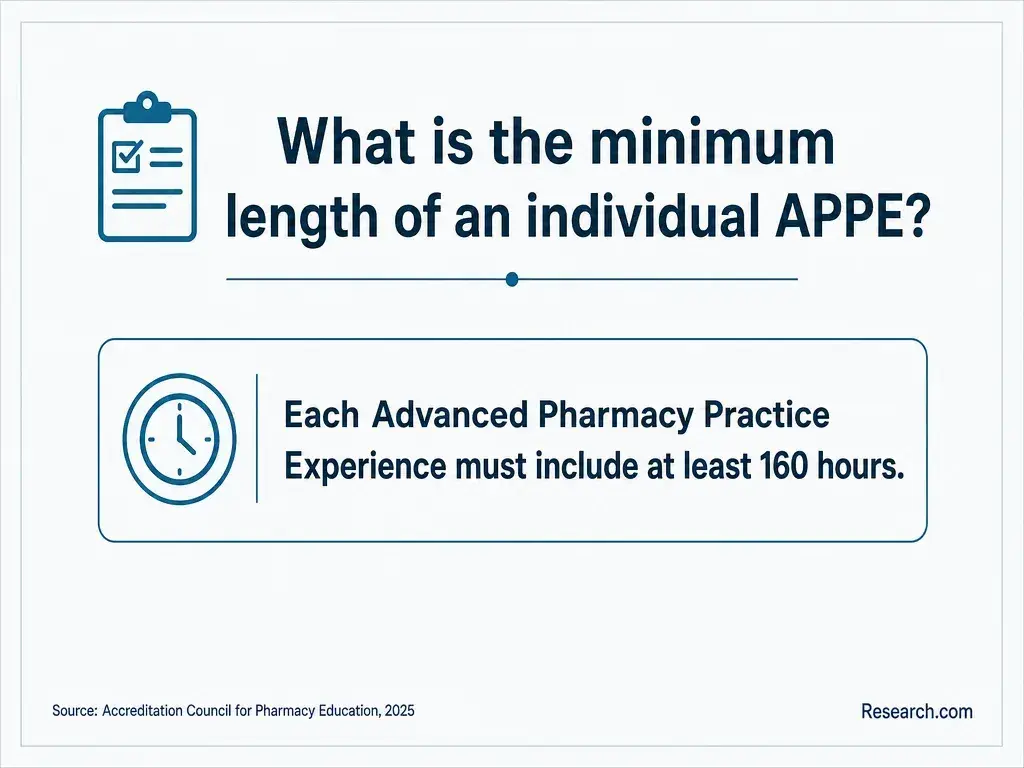
The Pharm.D. includes classroom and laboratory learning plus supervised introductory pharmacy practice experiences (IPPEs) and advanced pharmacy practice experiences (APPEs). Those experiences help students develop patient-assessment, counseling, and team-based care skills relevant to MTM. Completing the degree does not itself grant a pharmacist license.
A typical professional curriculum takes four academic years, while some schools offer a more compressed sequence. Compare accelerated pharmacist education with a conventional schedule based on its prerequisite rules, rotation calendar, and time available to work - not the advertised completion date alone. An internationally educated pharmacist may face a different credential-evaluation and licensing route.
What licenses and certifications do medication therapy management pharmacists need?
A pharmacist must hold an active license in each jurisdiction where their practice requires one. For U.S. graduates, the process generally involves the Pharm.D., the North American Pharmacist Licensure Examination (NAPLEX), and any additional state-board requirements, such as intern hours, background checks, or a jurisprudence assessment. Jurisdictions do not all use the same law exam: applicants should check whether their board requires the MPJE, the UMPJE, another assessment, or no separate jurisprudence exam. Passing an exam alone does not issue a license.
There is no single nationwide MTM certification required for every MTM pharmacist position. An employer may value MTM training, a certificate, or a Board of Pharmacy Specialties credential relevant to its patient population. Board certification has its own eligibility rules and is distinct from state licensure; a residency is training, not a license or certification.
If you are still deciding whether you qualify to enter pharmacy school, pharmacy degree eligibility options address an earlier decision than licensing. Before accepting an MTM job - particularly one serving patients remotely - confirm the boards' licensing rules for every relevant jurisdiction and the employer's credential requirements.
An ACPE-accredited professional Pharm.D. program is the degree route for someone who intends to practice MTM as a pharmacist. A pharmaceutical sciences, pharmacology, public health, or pharmacy technician program can support other medication-related careers, but it does not substitute for the professional degree and pharmacist license.
The comparison below separates routes that can lead to pharmacist practice from options better suited to other goals. It also shows where additional training may be useful rather than mandatory.
| Route | Best fit | Key limitation |
| ACPE-accredited Pharm.D. | Prospective pharmacists seeking MTM and other pharmacy practice roles | Graduates must still meet state licensure requirements |
| Pharm.D. followed by clinical residency | Pharmacists targeting clinical positions that prefer intensive supervised training | Adds time and is not required for every MTM job |
| Pharmacy technician or other medication-related program | People seeking a support, research, or operations role rather than pharmacist practice | Does not qualify a graduate to practice as a pharmacist |
When comparing Pharm.D. schools, check ACPE professional-program accreditation, clinical placement opportunities, and how prior coursework will apply. Institutional accreditation and authorization to enroll online students are separate questions. The receiving school decides whether previous courses satisfy prerequisites or transfer into its curriculum; use pharmacy school prior learning credits as a starting point for questions, not as a promise of credit.
MTM is usually a practice focus within pharmacy education, not a separate degree required for licensure. Pharm.D. students study pharmacotherapy, therapeutics, patient assessment, drug information, medication safety, communication, and the legal and ethical responsibilities of practice. In supervised clinical experiences, they apply that knowledge to real medication histories, counseling, documentation, and recommendations to other clinicians.
For an MTM goal, look beyond a course title. Ask whether students practice complete medication reviews, receive feedback on written care plans, and encounter patients managing multiple conditions during IPPEs and APPEs. Rotation availability and assignments vary by school; a listed ambulatory care opportunity does not necessarily mean every student will receive that placement.
Short courses may teach a useful MTM workflow, but they do not replace professional education or licensure. If you are comparing online pharmacy course completion timelines, check the credential awarded first: a brief program may serve an existing pharmacist or prepare someone for a different role without qualifying a new pharmacist.
Some Pharm.D. pathways deliver portions of the academic curriculum online, and licensed pharmacists may find remote MTM continuing education. Neither option means the pharmacist pathway is entirely remote. Pharm.D. students still need supervised, in-person practice experiences; a program may also require campus labs, immersions, live classes, or in-person assessments.
Compare online Pharm.D. pathways for future pharmacists by their actual calendars and placement policies. Ask who arranges and approves IPPE and APPE sites, whether a placement can be near home, and how the school handles travel, intern registration, and schedule conflicts. State authorization to enroll online is separate from ACPE accreditation, clinical-placement approval, and eligibility for licensure in your intended state.
For a working applicant, the main constraint may be rotations rather than lectures. Do not assume that current employment can replace a rotation or that an online format permits a full-time work schedule throughout the program.
Pharm.D. applicants generally need specified undergraduate prerequisites before matriculation, but course lists, laboratory rules, minimum grades, GPA thresholds, and policies on courses in progress differ by school. Some programs admit students without a completed bachelor's degree. Schools also set their own rules for repeated, older, community-college, online, and international coursework.
Many schools use the Pharmacy College Application Service (PharmCAS), while application routes and supplemental requirements vary. Expect to check each program's current instructions for transcripts, recommendations, interviews, deadlines, and any deposit. The Pharmacy College Admission Test (PCAT) was retired in January 2024 and is not a currently available admissions exam.
Applicants returning to school should request a course-by-course prerequisite review rather than assuming an older degree satisfies current requirements. pharmacy programs for nontraditional applicants can help frame a search, but a published minimum is an eligibility threshold, not a prediction of admission. Confirm remaining courses and their timing directly with each school before applying.
The timeline depends on the prerequisites you already have and the Pharm.D. format you choose. A conventional professional curriculum commonly takes four academic years after required pre-professional study; accelerated programs use a tighter schedule. State licensing follows graduation, and an optional postgraduate year one (PGY1) residency - or subsequent PGY2 specialty residency - extends the training path. A fellowship is a different postgraduate route, generally oriented toward a particular industry or research role rather than a substitute for clinical licensure.
Compare total cost of attendance, not tuition alone: prerequisites, required fees, books and clinical resources, immunizations and background checks, rotation travel or housing, and licensing expenses can change the decision. Use pharmacy doctorate financial planning to organize the comparison, then obtain each school's current cost estimate and aid offer. Federal borrowing rules changed for many new graduate and professional borrowers beginning July 1, 2026; confirm your own eligibility and limits with the financial aid office rather than relying on an older Grad PLUS assumption.
The opportunity cost matters, too. An accelerated calendar may reduce time before licensure but leave less room for paid work; a lower-tuition school may require more travel for rotations. If your target job does not require pharmacist practice, compare its shorter qualifying route before taking on Pharm.D. costs.
MTM pharmacists may work for health plans, community pharmacies, health systems, ambulatory care clinics, or organizations that deliver medication-review services under contract. Some roles are remote, while others combine patient visits with phone or video follow-up. Responsibilities differ: a clinic position may involve close collaboration with prescribers, whereas a plan-based role may place greater emphasis on outreach, documentation, and defined service criteria.
Read job descriptions for the patient population, expected call or visit volume, documentation standards, licensure locations, and whether clinical experience or residency is preferred. Those details reveal more about daily work than the MTM title alone. A pharmacy technician may assist with scheduling or gathering information within the limits of state law and employer policy, but technician work is a separate occupation from pharmacist clinical judgment.
If your interest is medication-use research or operations rather than licensed patient care, doctoral study with a shorter time commitment may be worth comparing for that different goal. No alternative doctorate substitutes for a Pharm.D. and pharmacist licensure when the job requires a pharmacist.
How much do medication therapy management pharmacists earn and what is the job outlook?
The Bureau of Labor Statistics reports median annual pay of $140,910 in May 2025 for pharmacists. It projects 5% employment growth from 2025-2035 and about 12,500 openings per year. These occupation-wide figures are useful context, not an MTM-specific salary or a forecast of openings in remote medication-review jobs. Pay can vary with setting, location, schedule, experience, and responsibilities.
For a return-on-investment decision, compare realistic jobs you would seek after licensure with the full cost and duration of your chosen route. pharmacy program value and duration can inform that comparison, but a shorter or cheaper program is not automatically the better choice if its credential, clinical experiences, or licensing eligibility do not match your goal.
A practical next step is to review several current MTM postings in your intended location and separate required qualifications from preferred ones. If most suitable openings accept licensed pharmacists without residency, gaining relevant patient-care experience may be more useful initially than assuming another credential is necessary.
Other Things You Should Know About PharmD
A comprehensive medication review examines the patient's medication regimen as a whole. A targeted review focuses on a particular medication issue, such as a therapy concern identified after an earlier review. The service details depend on the program providing MTM.
No. Patients can generally decline an offered review. Pharmacists should explain what the service involves and document the interaction according to the organization's procedures.
No. Medicare Part D plans operate MTM programs for beneficiaries who meet applicable eligibility criteria. A beneficiary can ask their plan whether they qualify and what services are available.
Some employers offer those arrangements, but availability varies. Before accepting one, check how patient calls are scheduled, how documentation time is paid, what equipment is supplied, and which licenses the employer expects you to maintain.
- Medication Therapy Management | cms.gov https://www.cms.gov/medicare/coverage/prescription-drug-coverage-contracting/medication-therapy-management
- Medication therapy management (MTM) | HealthPartners https://www.healthpartners.com/insurance/members/pharmacy/pharmacy-services/medication-therapy-management/
- What Do Managed Care Pharmacists Do? | AMCP.org https://www.amcp.org/about/managed-care-pharmacy/what-do-managed-care-pharmacists-do
- Medication Therapy Management Certificate | PTCB https://ptcb.org/credentials/certificate/medication-therapy-management/
- MTM Certification | National Board of Medication Therapy Management https://www.nbmtm.org/about/mtm-certification/
- The Impact of Remote Pharmacists in MTM | Aspen RxHealth https://resources.aspenrxhealth.com/blog/remote-pharmacists-in-mtm
- Medication Management Services - American Pharmacists Association https://www.pharmacist.com/Education/Certificate-Training-Programs/Medication-Management-Services
- What to Expect in a Medication Therapy Management (MTM) Session | Essentia Health https://www.essentiahealth.org/health-and-news/blog/pharmacy-how-medication-therapy-management-works