How to budget for an online PharmD while working

Co-Founder and Chief Data Scientist
An online Doctor of Pharmacy (Pharm.D.) may let you keep working during parts of pharmacy school, but tuition is only one piece of the decision. In-person training, travel, and reduced work hours can change what the degree actually costs. This guide helps prospective U.S. students compare program expenses with take-home pay, identify when employment may become difficult, and check financial aid before committing. You will leave with a budget you can build around your own schedule - not an advertised tuition figure.
Key Things You Should Know
- Budget for tuition, required fees, travel, and lost wages; an online Pharm.D. still includes in-person clinical training that may conflict with full-time work.
- Federal borrowing rules changed for many new graduate and professional students beginning July 1, 2026. Confirm your program's classification and your personal eligibility before relying on loans.
- Compare the cost of finishing the degree with the income you can realistically retain during rotations, not the income you earn before enrollment.
How much does an online PharmD cost while working?
There is no reliable nationwide price for an online Pharm.D. Tuition may be charged by credit, term, or year, and programs differ in required fees and in-person attendance. Your total cost also depends on whether you need undergraduate prerequisite courses before entering the professional curriculum.
The categories below separate advertised tuition from expenses that can strain a working student's cash flow. Request a program-specific cost-of-attendance breakdown and clinical calendar before comparing budget-friendly pharmacy degree programs.
| Cost category | What may be included | Why work status matters |
| Academic charges | Tuition, mandatory fees, course materials, technology, and required references | Charges may come due before aid or employer reimbursement arrives. |
| In-person requirements | Campus visits, labs, travel, lodging, and clinical-placement expenses | Time away can reduce earnings as well as increase spending. |
| Entry and completion | Prerequisites, screening, immunizations, exam applications, and licensing expenses | Some costs fall outside the terms covered by a quoted tuition price. |
Ask each school for the charges applicable to your entry term, residency status, and expected course load. A lower tuition quote is not necessarily cheaper if it requires more travel or a longer period of reduced work.
Can you complete an online PharmD while working full time?
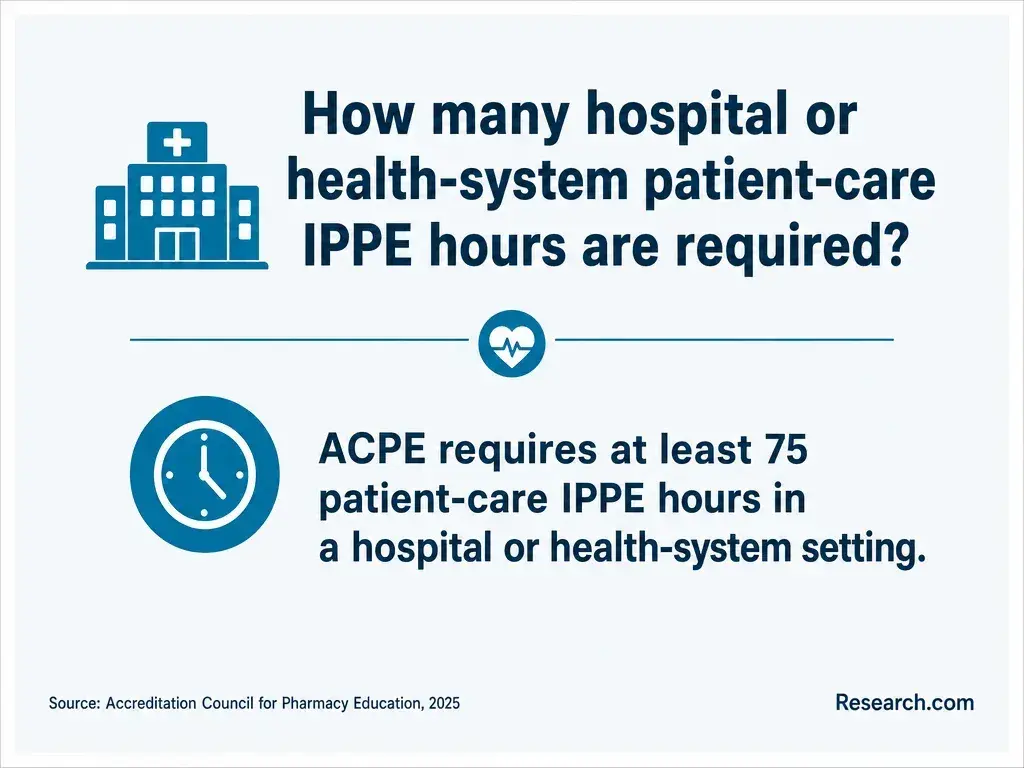
Possibly during some terms, but do not plan on uninterrupted full-time employment. "Online" describes where some instruction occurs; it does not mean classes are self-paced or that labs and patient-care training happen remotely. Live sessions, campus immersions, and scheduled assessments can affect shifts. Introductory pharmacy practice experiences (IPPEs) and advanced pharmacy practice experiences (APPEs) require supervised practice at approved sites.
When comparing best online Doctor of Pharmacy programs, ask for a term-by-term calendar showing live attendance, campus dates, and rotation weeks. Then ask your employer which shifts, leave options, or part-time arrangements are genuinely available. If your budget only works with your current full-time pay throughout the degree, treat it as a high-risk plan until the school confirms the schedule.
How do you budget for tuition and living expenses during an online PharmD?
Build a term-by-term cash-flow budget rather than multiplying annual tuition by program length. Use your after-tax earnings, actual household expenses, and the school's payment dates. For the lowest-income term, calculate available cash = take-home pay + confirmed aid or support − living costs − school costs. Treat an unresolved shortfall as a decision point, not as money a future loan will necessarily cover.
Use this worksheet for each term, with a separate version for rotations. The blank fields make it easier to compare your ordinary work schedule with a reduced-hours scenario.
| Budget field | Regular academic term | Rotation term |
| Expected take-home work pay | _____ | _____ |
| Confirmed aid, savings, or household contribution | _____ | _____ |
| Tuition, fees, and materials due | _____ | _____ |
| Housing, food, insurance, and existing debt payments | _____ | _____ |
| Travel, lodging, and placement expenses | _____ | _____ |
| Cash remaining or shortfall | _____ | _____ |
Before paying a deposit, stress-test the budget. These steps identify costs that an annual tuition comparison can hide:
- Price the terms in which your work hours may fall, using the employer's actual leave and scheduling policies.
- Set aside a separate amount for placement travel, unexpected schedule changes, and licensing-related expenses.
- Compare any shortfall with confirmed funding, not a hoped-for scholarship or unapproved loan.
If your goal is a pharmacy-adjacent job rather than pharmacist licensure, compare pharmacy degree options with shorter study periods before taking on a professional-degree budget. Those options do not substitute for a Pharm.D. when the goal is to become a licensed pharmacist.
For a U.S. professional Pharm.D. pathway, verify the program's current Accreditation Council for Pharmacy Education (ACPE) status in ACPE's official directory. ACPE accredits professional pharmacy education programs, not individual pharmacists. Also check the institution's accreditation and whether it is authorized to enroll students in your state. These are separate questions; distance-education authorization does not establish eligibility for a clinical placement or a pharmacist license in your state.
Do not assume that every listing among doctoral programs with flexible timelines leads to pharmacist licensure. Confirm the exact credential, professional-program accreditation, and applicable state-board requirements before using any program's tuition in your budget.
Potential funding includes institutional scholarships, eligible employer assistance, and federal aid for qualifying students and programs. Availability depends on your enrollment, program classification, prior borrowing, and aid year. Submit the Free Application for Federal Student Aid (FAFSA), then request an individualized award estimate from each school's financial aid office.
Federal loan rules changed for many new graduate and professional borrowers beginning July 1, 2026, including access to Grad PLUS; transitional exceptions may apply. Do not build a budget around an old borrowing limit or assume that a Pharm.D. student automatically qualifies for a particular loan. Ask the aid office to identify your classification, applicable limits, existing-loan implications, and any uncovered balance in writing. Students entering through pharmacy programs for students with varied academic backgrounds should also ask whether prerequisite coursework is covered under the same aid arrangement as the professional program.
Employer tuition assistance can help, but check grade conditions, payment timing, work-commitment terms, and whether required rotations will let you remain eligible for the benefit.
Completion time depends on the program's course sequence, your remaining prerequisites, and when required clinical experiences occur. An online delivery format does not necessarily shorten the professional curriculum. Taking fewer courses to maintain employment may extend the time you pay living expenses and delay entry into pharmacist roles.
Compare published online Pharm.D. program timelines against your own starting point, then ask whether a reduced course load is permitted and what it does to tuition, aid eligibility, and rotation dates. A faster schedule is not automatically less expensive if it forces you to give up more paid work at once.
Professional Pharm.D. students complete supervised IPPEs and APPEs in practice settings under program requirements. Ask the school when rotations occur, how many weeks require daytime availability, who secures and approves sites, and whether placements near your home are possible. Do not assume your current pharmacy job can replace a required experience.
Placements may also require intern registration where applicable, background checks, immunizations, approved preceptors, and travel. Requirements vary by program, site, and state. If you are considering pharmacy school transfer admission, have the receiving school evaluate prior professional coursework and experiences; previous employment or enrollment does not automatically satisfy its rotations. Budget for a less convenient placement if a local site is not guaranteed.
Schools set their own undergraduate prerequisite courses, laboratory rules, grade standards, application materials, and interview requirements. Some applicants enter after required pre-pharmacy coursework without a completed bachelor's degree; others already hold one. Undergraduate prerequisites are distinct from the professional Pharm.D. curriculum, so budget for any missing courses before estimating your completion date.
Check each school's current admissions page and, where applicable, its PharmCAS listing for pharmacy school application eligibility. Confirm whether the school uses PharmCAS, accepts your existing credits, permits courses in progress, and requires a supplemental application. The Pharmacy College Admission Test (PCAT) was retired in January 2024; do not budget for it as a current standard admissions exam.
After meeting the applicable eligibility rules, U.S. Pharm.D. graduates generally pursue the North American Pharmacist Licensure Examination (NAPLEX) and their jurisdiction's other licensing requirements. Depending on the jurisdiction, those may include the Multistate Pharmacy Jurisprudence Examination (MPJE), the Uniform Multistate Pharmacy Jurisprudence Examination (UMPJE), or a different law-assessment process. Confirm the current requirements and fees with the state board and the National Association of Boards of Pharmacy before budgeting. Passing an exam - or earning the degree - does not itself issue a license.
Be wary of substituting pharmacy education with shorter completion time if your objective is pharmacist licensure. A pharmacy technician or pharmaceutical sciences credential may serve another career goal, but it does not replace the required pharmacist education and state licensing process.
What pharmacist jobs and salary can an online PharmD lead to?
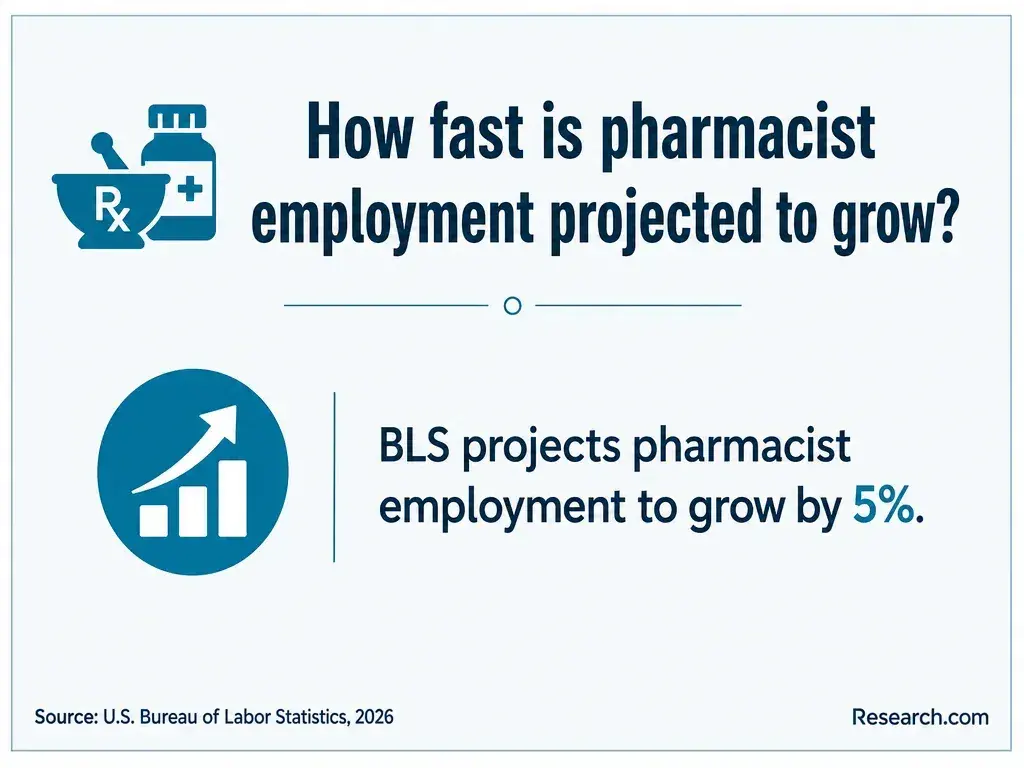
Licensed pharmacists work in settings that can include community pharmacies, hospitals, ambulatory care, and other medication-focused services; hiring qualifications and schedules differ by employer. The Bureau of Labor Statistics reports median annual pay for pharmacists of $140,910 in May 2025 and projects 5% growth for 2025-2035, with about 12,500 openings per year. Those occupation-wide figures are not a starting-salary promise or a return-on-investment estimate for one degree program.
Compare that career goal with your current role and the income you would forgo during school. A Pharm.D. can be a necessary educational step toward pharmacist licensure, but it is not required for every pharmacy-related job. For readers coming from science coursework or pre-pharmacy study, Doctor of Pharmacy pathways after pre-pharmacy study are worth comparing only after confirming which prerequisites remain and whether the resulting work schedule fits the budget.
Other Things You Should Know About PharmD
Do not assume so. Ask the relevant state board and your program whether your duties, supervision, registration, and documented hours meet their rules.
Refunds, aid adjustments, and loan repayment timing depend on when you leave and on school and federal policies. Ask the registrar and financial aid office for a written estimate before withdrawing.
Eligible enrollment may allow deferment on qualifying loans, but interest can still accrue depending on the loan. Confirm your enrollment status and options with your servicer.
It may be under applicable tax rules, subject to eligibility and limits. Ask your benefits team how the assistance is administered and consult a qualified tax professional about your circumstances.
- Types of Financial Aid: Grants, Work-Study, and Loans | studentaid.gov https://studentaid.gov/understand-aid/types
- Cost of Attendance (Budget) | 2025-2026 Federal Student Aid Handbook https://fsapartners.ed.gov/knowledge-center/fsa-handbook/2025-2026/vol3/ch2-cost-attendance-budget
- An Advanced Pharmacy Practice Experience in a University's Office of Experiential Education - PMC https://pmc.ncbi.nlm.nih.gov/articles/PMC10159452/
- Pharmacy Practice Experiences | Midwestern University https://catalog.il.midwestern.edu/pharmacy-practice-experiences
- Experiential Education | Washington State University https://pharmacy.wsu.edu/pharmd/experiential-services/
- PharmD Remote Pathway | CU School of Pharmacy https://pharmacy.cuanschutz.edu/degreesandprograms/pharmd/remote-pharmd
- Changes to 2026-2027 Federal Student Loans | columbia.edu https://sfs.columbia.edu/content/changes-2026-2027-federal-student-loans
- Distance Doctor of Pharmacy | University of Findlay https://pharmdonline.findlay.edu/programs/online-pharm-d
- Earn an Online Pharm.D. Degree at St. John Fisher University https://onlinepharmd.sjf.edu/
- Pharm.D. Directory | PharmCAS https://www.pharmcas.org/school-directory/pharmd-directory