Clinical Pharmacist Career Path After a PharmD

Co-Founder and Chief Data Scientist
A Doctor of Pharmacy (Pharm.D.) can lead to clinical work, but the degree alone does not determine which patient-care jobs you can enter. Licensure is required to practice as a pharmacist, while residency training and specialty credentials depend on the role and employer.
This guide is for prospective students and Pharm.D. graduates weighing those choices. It explains the routes into clinical practice, what each adds, and how to judge whether its time and cost serve your career goal.
Key Things You Should Know
- The usual starting point is an accredited Pharm.D. followed by state pharmacist licensure; clinical residency training is common for competitive hospital roles but is not a universal legal requirement.
- A postgraduate year one (PGY1) residency builds broad practice skills; a postgraduate year two (PGY2) residency focuses on a specialty. Direct employment and some fellowship paths serve different goals.
- The Bureau of Labor Statistics reports $140,910 in median annual pay for pharmacists in May 2025, not specifically for clinical pharmacists; compare a potential job offer with the cost and time of additional training.
What can you do after earning a PharmD?
A Pharm.D. graduate can pursue pharmacist licensure and seek work in community pharmacies, hospitals, ambulatory clinics, health systems, managed care, or other medication-focused settings. Clinical pharmacists typically evaluate medication therapy, recommend changes to a care team, monitor outcomes, counsel patients, and address medication safety. Their responsibilities and authority depend on the employer, practice setting, and state law.
The first decision is whether you want a patient-facing clinical role or a different use of pharmacy training. Someone targeting hospital rounds or a specialty clinic may benefit from residency training. Someone seeking a community-based clinical role may find an employer that provides structured development after licensure. A person primarily interested in pharmaceutical research or industry should examine those job requirements rather than assume a clinical residency is the best route. If you have not yet entered pharmacy school, compare Doctor of Pharmacy pathways after pre-pharmacy study with the work you ultimately want to do.
How do you become a clinical pharmacist after completing a PharmD?
The practical sequence is to finish the professional degree, meet the requirements of the state where you intend to practice, obtain a pharmacist license, and apply for roles whose clinical responsibilities match your preparation. Additional training can strengthen an application, but it does not replace licensure.
These steps turn a broad career goal into decisions you can check before graduation:
- Identify target jobs and record whether their postings require or prefer PGY1 training, PGY2 training, or prior clinical experience.
- Confirm licensure requirements with the relevant state board of pharmacy, including examinations, applications, and any supervised experience requirements.
- Use advanced pharmacy practice experiences, mentors, and projects to test your interest in the patient populations and settings you are considering.
- Compare direct-entry jobs with residency opportunities by their supervision, clinical duties, location, compensation, and future eligibility for your target roles.
For a prospective student, accelerated pharmacy education options may change how quickly you reach graduation. They do not remove licensure requirements, and a faster academic schedule may leave less flexibility for work or other commitments.
What education and licensing requirements apply to clinical pharmacists?
U.S.-educated applicants generally complete a professional Pharm.D. program accredited by the Accreditation Council for Pharmacy Education (ACPE), then satisfy the requirements of the state board where they seek licensure. Pre-pharmacy undergraduate coursework is preparation for admission, not a substitute for the professional degree. A pharmaceutical sciences degree or pharmacy technician credential likewise does not, by itself, qualify someone for pharmacist licensure.
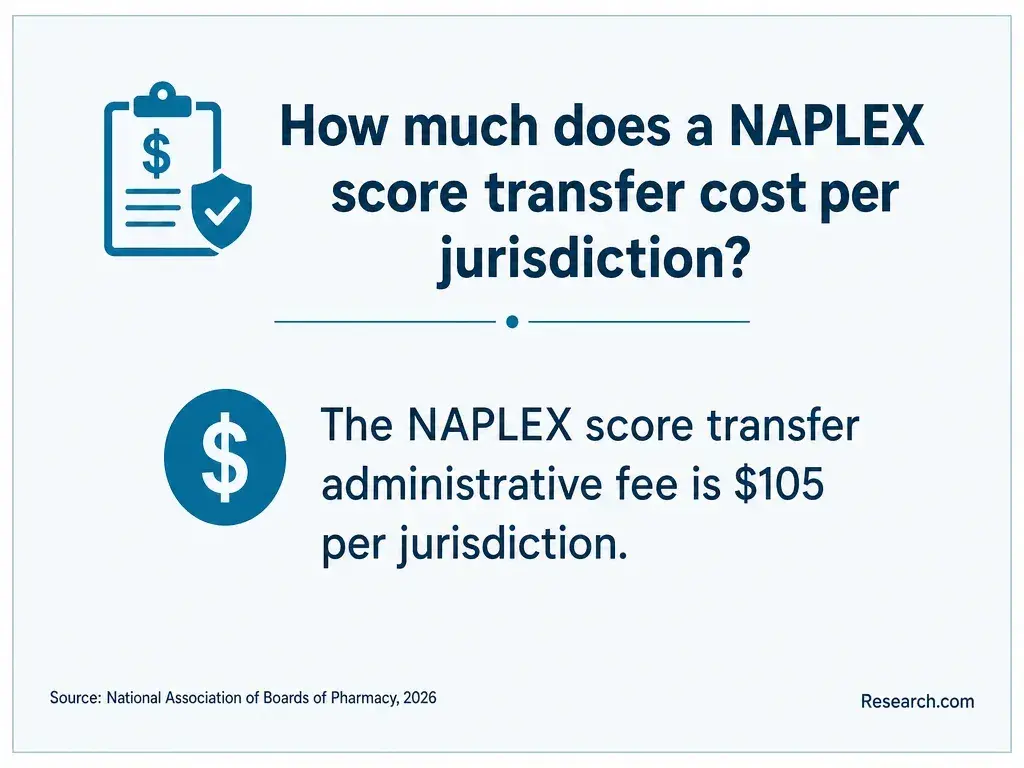
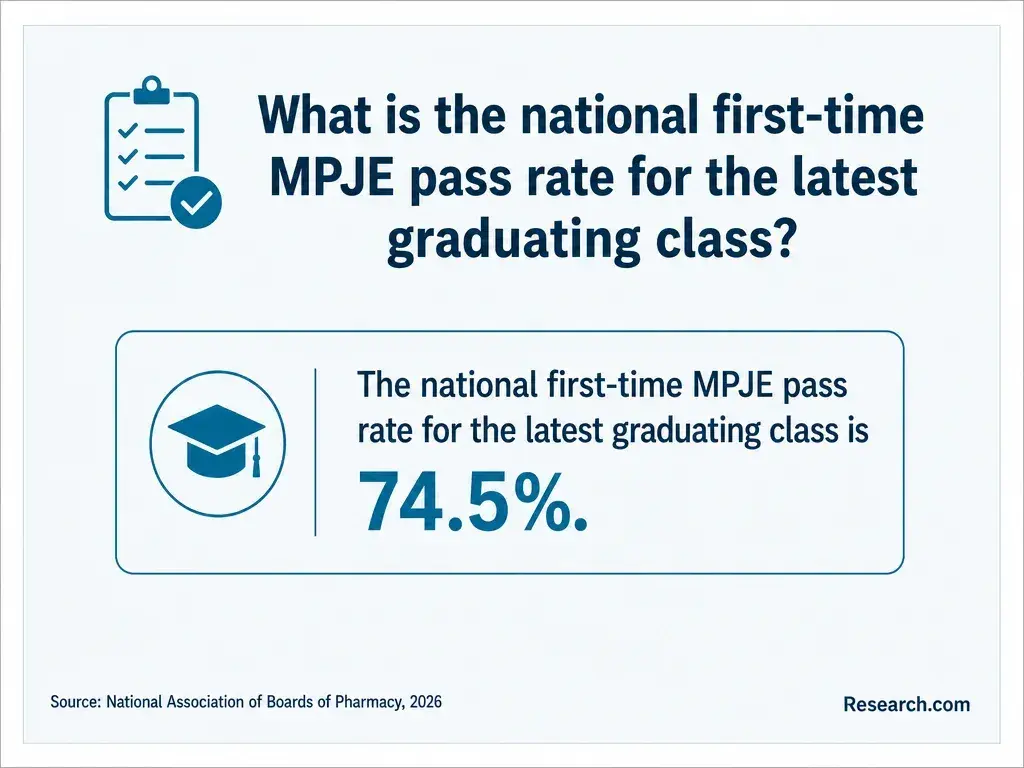
Licensure commonly involves the North American Pharmacist Licensure Examination (NAPLEX), a state application, and other jurisdiction-specific requirements. Jurisprudence testing is not identical everywhere: depending on the jurisdiction, an applicant may encounter the Multistate Pharmacy Jurisprudence Examination (MPJE), the Uniform Multistate Pharmacy Jurisprudence Examination (UMPJE), or another process. Passing an examination alone does not issue a license. Internationally educated pharmacists should check the separate eligibility and credential-evaluation requirements that may apply before using the U.S.-educated route as a plan.
Admission to pharmacy school and permission to practice are separate decisions. Pharmacy schools with accessible admissions may be worth exploring, but a school's admissions profile does not establish licensure eligibility or the quality of its clinical training. Confirm its current ACPE professional-program status and the rules of your intended licensing state.
The professional Pharm.D. curriculum develops the scientific and patient-care judgment used in clinical practice. Pharmacology explains drug effects; pharmacotherapy applies evidence to treatment decisions; pharmacokinetics helps students assess dosing and drug exposure. Courses and exercises in patient assessment, drug information, communication, and medication safety connect those foundations to recommendations a pharmacist can explain and monitor.
Classroom learning should be considered alongside supervised practice. Introductory pharmacy practice experiences (IPPEs) introduce practice settings, while advanced pharmacy practice experiences (APPEs) provide more sustained rotations later in the professional program. Schools differ in their electives, rotation sites, scheduling, and placement policies. Ask where students can obtain inpatient and ambulatory experience if either setting is central to your goal.
Previous science coursework may satisfy admission prerequisites without replacing professional clinical courses. Review a school's pharmacy degree credit transfer policies directly: the receiving program decides whether prior credits apply and where they fit.
No residency or fellowship is universally required to hold a pharmacist license or a job with clinical duties. Hiring standards are a separate matter: many specialized hospital positions require or prefer residency training or comparable experience. A PGY1 residency provides broad postgraduate practice development; PGY2 training concentrates on a clinical area and generally builds on prior postgraduate preparation. An ASHP-accredited residency is structured training, not a professional degree or a state license.
These routes serve different objectives. Compare them against actual postings for the work you want rather than treating every postgraduate opportunity as interchangeable.
| Route | Primary purpose | Key limitation |
| Direct employment | Begin paid pharmacist practice and develop skills within an employer's role | May not meet the preferences of competitive specialty positions |
| PGY1 residency | Develop broad clinical practice skills through supervised postgraduate training | Requires a substantial time commitment and may mean foregoing a different job offer |
| PGY2 residency | Gain concentrated experience in a clinical specialty | Useful chiefly when it aligns with the positions you intend to pursue |
| Fellowship | Pursue a program's defined research, industry, or other focused objectives | May not provide the same practice preparation as a clinical residency |
Residency application and Match participation depend on the program; check current ASHP, PhORCAS, Match, and individual program instructions before planning deadlines. Board certification is another distinct step, with specialty-specific eligibility set by the Board of Pharmacy Specialties. Be cautious when comparing fast online pharmacy program choices: a short pharmacy-related course or credential does not substitute for a Pharm.D., pharmacist licensure, or residency training.
Clinical pharmacists may focus on areas such as ambulatory care, critical care, oncology, infectious diseases, pediatrics, psychiatry, or solid organ transplantation. The best choice depends less on a specialty's title than on the patients you want to serve, the care setting, and whether employers in that setting expect focused training.
Specialty practice, PGY2 training, and board certification are related but not identical. A pharmacist may work with a patient population without holding a matching board credential; an employer may still require particular experience or training. Board of Pharmacy Specialties credentials have their own eligibility and examination rules, and they do not grant state practice authority. Review current specialty requirements and job postings before paying for preparation or committing to additional training.
If your main interest is laboratory research rather than medication decisions in patient care, doctoral programs with accelerated timelines may warrant a separate comparison. They are not substitutes for pharmacist licensure or a clinical specialty pathway.
Health systems employ pharmacists in roles ranging from broad inpatient coverage to focused work with particular teams or patient groups. Titles are not standardized: read the duties and minimum qualifications, not just the words "clinical pharmacist."
These common role types illustrate how the work and likely preparation can differ across employers.
| Role type | Typical clinical focus | What to check in a posting |
| Inpatient clinical pharmacist | Medication review, dosing, monitoring, and consultation across hospital services | Coverage schedule, patient-care responsibilities, and residency or experience requirements |
| Specialist pharmacist | Medication therapy for a defined service, such as critical care or oncology | Required specialty experience, PGY2 preference, and certification expectations |
| Ambulatory care pharmacist | Longitudinal medication management in outpatient clinics | Patient access model, collaborative practice arrangements, and state-specific authority |
| Medication safety pharmacist | Review of medication-use systems, errors, and improvement efforts | Balance of direct patient care, analysis, and systems work |
Some programs offer online coursework, but hospital practice and pharmacy-school rotations still require appropriate supervised, in-person experience. When considering best online Doctor of Pharmacy programs, verify required labs, campus visits, and who arranges or approves clinical placements. Do not assume rotations can be completed remotely or at a current workplace.
The Bureau of Labor Statistics reports median annual pay of $140,910 in May 2025 for pharmacists. That figure covers the broader pharmacist occupation, not clinical pharmacists as a separate salary category. A hospital or clinic offer can differ with location, schedule, responsibilities, experience, and employer; the national median is a reference point, not a salary promise.
Compare compensation across the full route to your target job. A residency offers concentrated training but also delays entry into some direct-employment roles. Pharmacy-school tuition, required fees, living costs, and potential borrowing matter before that decision even arises. Use compare pharmacy degree costs and duration as a starting point, then obtain each school's current full cost of attendance and each employer's actual compensation terms. A shorter or cheaper program is not automatically the better value if its clinical placements do not support your goal.
The Bureau of Labor Statistics projects 5% growth for pharmacists from 2025 to 2035, with about 12,500 openings per year. These projections cover pharmacists across practice settings; they do not predict the number of openings in a particular clinical specialty or local hospital. For your decision, regional postings and their stated training requirements are more informative than the national projection alone.
Financial flexibility can also affect whether you can pursue postgraduate training or relocate for a first clinical job. Compare pharmacy program tuition options against total attendance costs, rotation travel, and expected borrowing - not tuition alone. If you expect federal loans, confirm your eligibility under the rules that apply to your enrollment period; federal borrowing rules changed for many new graduate and professional borrowers beginning July 1, 2026.
How should you choose an accredited PharmD program for clinical pharmacy?
Start with eligibility, then test the strength and affordability of the clinical pathway. Verify the program's current ACPE professional-program accreditation through ACPE. Institutional accreditation and authorization to enroll a student in an online program are separate matters; neither replaces ACPE review or a state board's licensure rules.
Ask each school for comparable answers to the questions that will affect your preparation and costs:
- Which hospital and ambulatory APPE opportunities are available, and how are sites assigned or approved?
- What campus visits, hands-on labs, intern registrations, travel, or housing might the program require?
- What is the full estimated cost of attendance, and what current NAPLEX outcomes and postgraduate placement information does the school publish?
- Which prerequisite courses must be complete before application or enrollment, and how does the school evaluate prior credit?
If prerequisites are still in progress, review pharmacy schools and prerequisite completion, then confirm the policy with each admissions office. A school's permission to apply with courses pending is not a waiver of conditions for enrollment. Favor the program whose verified clinical opportunities, scheduling, licensure preparation, and total cost support the roles you intend to seek - not the one with the most appealing specialty label.
Other Things You Should Know About PharmD
Yes. Experience in counseling, immunizations, medication review, and collaboration may transfer, but an employer may seek inpatient or specialty experience that the pharmacist still needs to develop. Compare the target posting with your current skills before choosing additional training.
Yes, if you meet each jurisdiction's requirements. License transfer processes and additional examinations or applications vary, so check each state board before accepting a role that crosses state lines.
Ask what they do during a typical shift, which decisions they make independently, how they entered the role, and what qualifications their employer now expects of new applicants. Those answers can reveal differences a job title obscures.
Use supervised rotations or approved shadowing to observe patient-care discussions, documentation, interruptions, and team communication. Consider whether you enjoy weighing incomplete information and explaining recommendations as much as learning about medications.
- The New Era of Pharmacists in Ambulatory Patient Care - PMC https://pmc.ncbi.nlm.nih.gov/articles/PMC7643699/
- PGY1 Pharmacy Residency | VA St Louis Health Care https://www.va.gov/st-louis-health-care/work-with-us/internships-and-fellowships/st-louis-va-pharmacy-practice-residencies/pgy1-pharmacy-practice-residency/
- Postgraduate Year One (PGY1) Pharmacy Residencies | utexas.edu https://pharmacy.utexas.edu/programs/residencies/pgy1
- Rewards, recognition, and advancement for clinical pharmacists | wiley.com https://accpjournals.onlinelibrary.wiley.com/doi/10.1002/jac5.1775
- How Much Do Pharmacists Make? | MCPHS https://www.mcphs.edu/admission-and-aid/blog/how-much-do-pharmacists-make
- Pharmacy Residency Programs - What Is a Residency? | PCOM https://www.pcom.edu/pharmacy/news/pharmacy-residency-programs.html
- What's the Difference Between a PharmD and an RPh? | University of Findlay https://pharmdonline.findlay.edu/blog/rph-vs-pharmd
- Demystifying the Work of Clinical Pharmacists | Touro University California https://tu.edu/news--events/stories/all-stories/demystifying-the-work-of-clinical-pharmacists.php
- 20 Types of Pharmacists [+ Required Skills & Salary] | Marshall University https://www.marshall.edu/blog/types-of-pharmacists/
- 4 types of pharmacists you may not know about | creighton.edu https://www.creighton.edu/blog/4-types-pharmacists-you-may-not-know-about