Questions to Ask Before Accepting a PharmD Tuition Quote

Co-Founder and Chief Data Scientist
A PharmD tuition quote can look manageable until required fees, prerequisite courses, clinical rotations, and living expenses enter the calculation. For prospective U.S. pharmacy students, the decision is not simply whether the quoted price fits this year's budget; it is whether the entire path to a Doctor of Pharmacy (Pharm.D.) degree is financially workable.
This guide gives you questions to put to admissions and financial aid offices, a comparison worksheet, and criteria for deciding whether to accept a quote or ask for more information.
Key Things You Should Know
- Ask for a written estimate covering every term through graduation - not just this year's tuition - and separate required charges from variable travel, housing, and living costs.
- Confirm the professional program's ACPE accreditation status and your likely licensure pathway before comparing prices; a lower quote cannot compensate for an unsuitable program.
- Compare net costs after renewable aid, not headline scholarships. Federal borrowing rules changed for many new graduate and professional borrowers beginning July 1, 2026, so confirm your individual eligibility rather than assuming an older loan limit applies.
What does a PharmD tuition quote typically include?
A quote may show tuition per term, per credit, or for an academic year. It might include mandatory university fees - or leave them in a separate schedule. Ask the school to identify the tuition unit, the number of credits or terms it covers, your residency classification, and whether the quoted rate is locked or can increase. For a closer look at how advertised pharmacy doctorate tuition and fees can differ across programs, compare the underlying charges rather than the headline figures.
Request an itemized, dated estimate from the bursar or financial aid office. It should distinguish the school's direct charges, such as tuition and required fees, from its cost of attendance, an aid-planning estimate that can also include books, housing, transportation, and other allowable expenses. Neither figure necessarily predicts what you personally will spend. Ask whether summer enrollment, clinical terms, or a different credit load changes the rate.
Which PharmD costs are excluded from the tuition estimate?
The largest omissions depend on the program and your circumstances. Ask separately about prerequisite courses; textbooks and clinical-reference subscriptions; technology, testing, laboratory, and compounding supplies; background checks, drug screens, and immunizations; and travel or temporary housing for required campus sessions and clinical placements. After graduation, budget separately for licensure applications and examinations. If previously earned coursework might satisfy prerequisites, ask the receiving school to evaluate credits for pharmacy prerequisites before counting on that saving.
Two clinical terms may have identical tuition but very different travel costs. Introductory pharmacy practice experiences (IPPEs) and advanced pharmacy practice experiences (APPEs) are supervised, in-person components of professional training. Ask who secures and approves sites, whether local placement is possible, and whether you must pay for travel, housing, or an intern registration. Do not assume your current job can replace a rotation.
Is the PharmD program accredited by ACPE?
Check the specific professional program's current status in the Accreditation Council for Pharmacy Education (ACPE) program directory, including any status details. ACPE professional-program accreditation is distinct from the university's institutional accreditation. It is also distinct from a school's authorization to enroll online students in your state or arrange clinical placements there. These are separate questions even when comparing pharmacy doctorate programs with distance learning.
Ask the school to confirm the status that will apply to your entering cohort and explain any disclosed changes. Then check the pharmacy board in the state where you intend to seek licensure for its education and intern requirements. An accredited degree supports the educational pathway; accreditation does not license an individual pharmacist.
Ask each school for a term-by-term projection through the expected graduation date, including planned tuition increases and any extra summer or clinical terms. Compare it with accelerated Pharm.D. degree options only after accounting for their actual calendars: fewer years of enrollment can still mean intensive terms, added summer charges, or less time to earn wages.
Use the same fields for each offer. Enter school-supplied figures where available, and mark unconfirmed items as unknown rather than treating them as $0.
| Comparison field | Program A | Program B |
| Expected terms through graduation | _____ | _____ |
| Projected tuition and mandatory fees | _____ | _____ |
| Required supplies, technology, and checks | _____ | _____ |
| Campus and rotation travel or housing | _____ | _____ |
| Renewable grants and scholarships | _____ | _____ |
| Estimated borrowing and interest | _____ | _____ |
| Likely time away from paid work | _____ | _____ |
Compare the resulting net educational cost and likely borrowing, not just a tuition subtotal. Keep living expenses and foregone earnings visible as separate estimates so you can see which assumptions drive the difference. If a school cannot explain how its published price applies to every required term, the quote is not yet ready to accept.
Ask the financial aid office to separate grants and scholarships, which generally do not require repayment, from loans and work earnings. For each scholarship, request the amount, covered terms, renewal conditions, and whether it reduces other aid. A large first-year award may be less valuable than a smaller award confirmed for the full program.
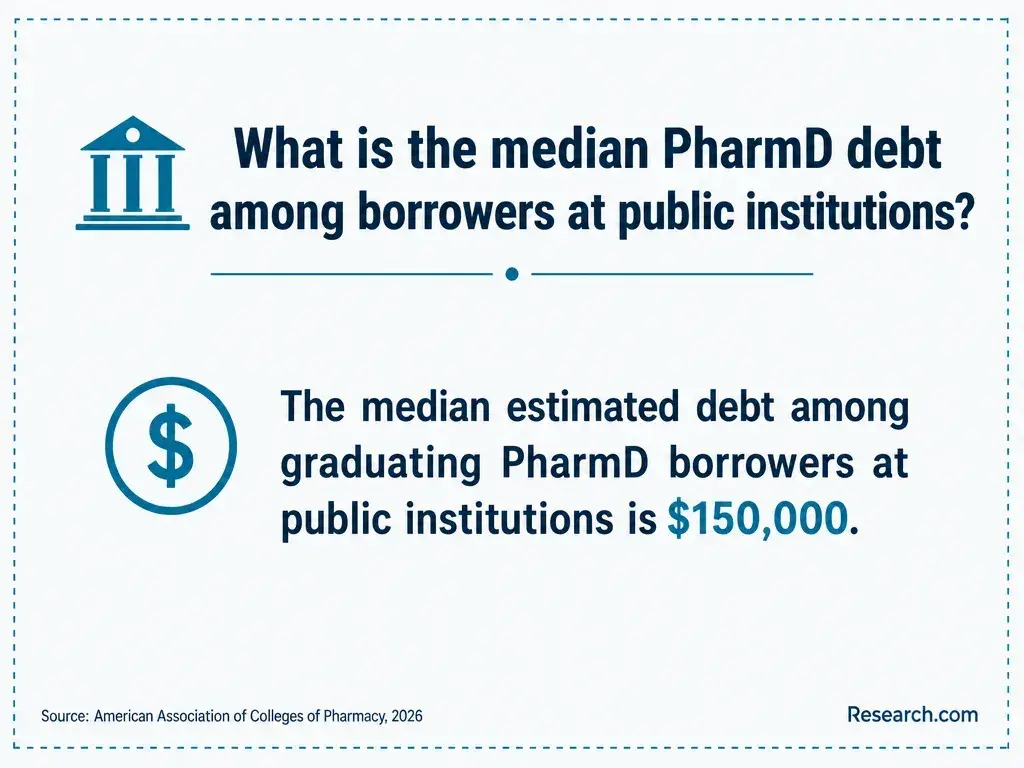
Confirm your aid classification and eligibility for the specific academic year, particularly if you must finish undergraduate prerequisites before entering the professional curriculum. Programs for applicants still completing requirements may have different enrollment sequences; admission with coursework outstanding does not mean every expense falls under the same aid package. Federal loan rules changed for many new graduate and professional borrowers beginning July 1, 2026. Ask the aid office which rules and any transitional provisions apply to you, what you could borrow each year, and what gap remains after aid. Do not treat loan proceeds as a price reduction.
Compare total required spending, not delivery labels. An online or hybrid program may reduce commuting or relocation costs while adding technology charges, scheduled campus immersions, and travel to clinical sites. A campus program may cost more in housing but make labs or placements easier to reach. General comparisons of online doctoral study duration do not establish the calendar or cost of a professional Pharm.D.; use the pharmacy program's own schedule.
Ask for the frequency and location of in-person labs, assessments, IPPEs, and APPEs. Confirm whether online classes have live meeting times, who coordinates placements, and whether your state permits enrollment and proposed clinical activities. Online instruction is not a promise that the degree can be completed remotely, asynchronously, or alongside unrestricted full-time work.
Pre-pharmacy prerequisites are undergraduate courses completed before the professional Pharm.D. curriculum; they are not automatically included in a professional-program tuition quote. Schools differ on required subjects and labs, grades, course age, and whether a bachelor's degree is needed. Review the school's current pharmacy school prerequisites and eligibility rules, then request a written review of your own transcripts. The receiving school decides whether earlier credit applies.
Ask about application and supplemental fees, interview travel, enrollment deposits, and the cost of any missing courses. Confirm whether your school uses the Pharmacy College Application Service (PharmCAS), its deadlines, and whether unfinished prerequisites may be completed after applying but before matriculation. The Pharmacy College Admission Test (PCAT) was retired in 2024; it should not appear as a current exam cost. A stated minimum for admission is not a guarantee of acceptance.
Ask for the program's published sequence from your expected entry point - not an estimate based on another student's credits. Clarify prerequisite completion, required professional terms, summer study, clinical rotation dates, and the consequences of a missed or repeated course. Discussions of how quickly can an online pharmacy degree be completed may include credentials other than the professional Pharm.D.; verify the exact degree before using a timeline in your cost comparison.
Time matters financially because another term can add tuition and living costs or delay full-time employment. A faster schedule may reduce those costs but leave less room for paid work. Ask whether courses are offered every term and what happens to tuition and scholarships if graduation takes longer than planned.
Ask how the curriculum and supervised experiences prepare students for the North American Pharmacist Licensure Examination (NAPLEX), and request recent, clearly labeled graduate exam outcomes if the school publishes them. Compare cohorts and reporting periods rather than assuming one pass-rate figure predicts your result. Pharm.D. admission after pre-pharmacy coursework is only the start of this pathway: prerequisite study, professional degree completion, and state licensure are distinct steps.
Ask your intended state board about intern registration, examination eligibility, and any jurisprudence examination or other requirements. Do not assume every jurisdiction uses the Multistate Pharmacy Jurisprudence Examination (MPJE); some began using the Uniform Multistate Pharmacy Jurisprudence Examination (UMPJE) in 2026. Passing the NAPLEX does not itself issue a license. If the school advertises residency preparation, remember that postgraduate residency or fellowship training and optional specialty board certification are separate from the state license.
What career outcomes and salary expectations justify the PharmD cost?
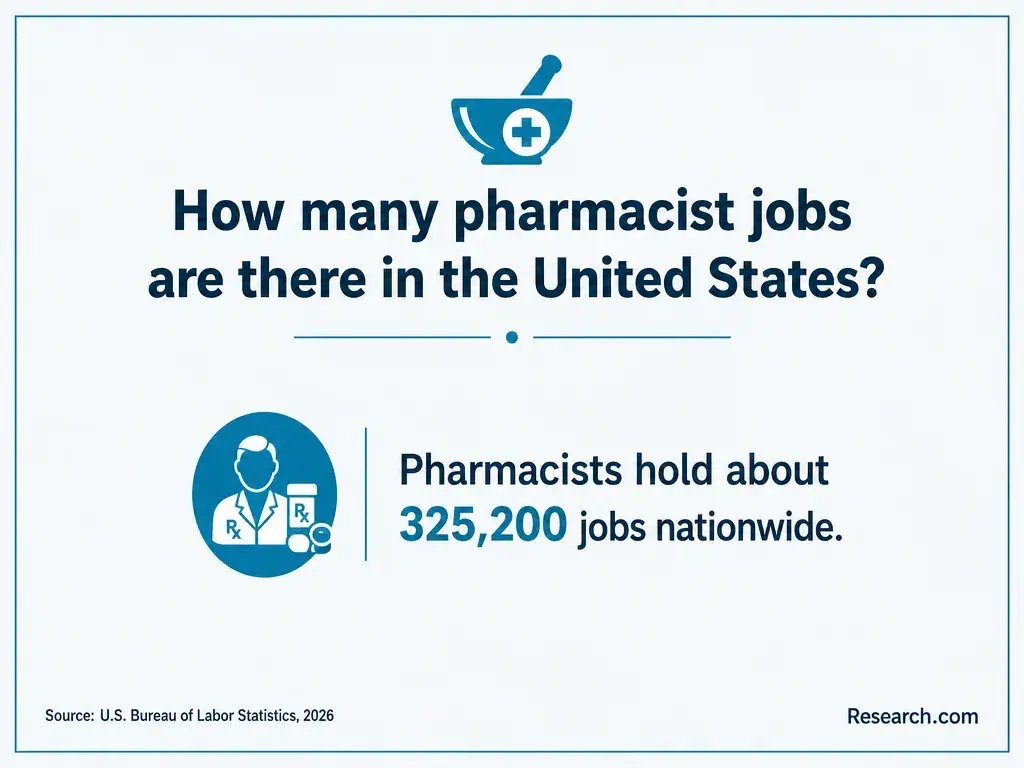
The Bureau of Labor Statistics reports median annual pay of $140,910 in May 2025 for pharmacists and projects 5% growth, 2025-2035, with about 12,500 openings per year. Those national occupation figures are useful context, not a starting-salary estimate or a promised return for graduates of a particular school. Compare them with your likely debt payments, preferred practice setting, location, and time away from work.
Ask each program for recent, clearly defined outcomes: graduation, licensure-exam performance, employment reporting, and, if relevant, residency placement. Check who was counted and whether the results describe all graduates. A pharmacist role ordinarily requires the professional education and state licensure pathway; a pharmacy technician is a separate occupation that does not ordinarily require a Pharm.D. If your goal is a pharmacy-adjacent role rather than pharmacist licensure, compare budget-friendly pharmacy education options before taking on the longer degree's cost. Accept a quote only when the full cost, financing gap, licensing fit, and career goal make sense together.
Other Things You Should Know About PharmD
That depends on the school's written policy and the date you withdraw. Ask whether the deposit is credited toward tuition and get the refund deadline before paying.
Schools set tuition-refund schedules, while financial aid may be recalculated under separate rules. Request both policies and ask what balance you could still owe.
Possibly. Check eligible courses, annual limits, grade requirements, work commitments, and whether clinical schedules can coexist with your job before including assistance in your budget.
Usually it changes when you pay, not the underlying charges. Ask about enrollment fees, missed-payment penalties, and whether the plan covers summer and clinical terms.
- Federal Student Loans | studentaid.gov https://studentaid.gov/understand-aid/types/loans
- Cost of Attendance (Budget) | 2025-2026 Federal Student Aid Handbook https://fsapartners.ed.gov/knowledge-center/fsa-handbook/2025-2026/vol3/ch2-cost-attendance-budget
- Accreditation in the U.S. | ed.gov http://www.ed.gov/laws-and-policy/higher-education-laws-and-policy/college-accreditation/accreditation-in-the-us
- Pharmacy Schools Costs | Presbyterian College https://www.presby.edu/graduate-programs/pharmacy/admissions/tuition-aid/
- Tuition and Fees | School of Pharmacy and Pharmaceutical Sciences | Binghamton University https://www.binghamton.edu/pharmacy-and-pharmaceutical-sciences/admissions/pharmd/future/tuition.html
- PharmD Tuition & Scholarships | R. Ken Coit College of Pharmacy https://www.pharmacy.arizona.edu/academics/pharmd/tuition-scholarships
- Costs for Doctor of Pharmacy - Glendale | Midwestern University https://www.midwestern.edu/admissions/paying-college/cost-attendance/glendale-campus-budgets/costs-doctor-pharmacy-glendale
- Cost of Attendance " Pharm.D. Admissions " | ufl.edu https://admissions.pharmacy.ufl.edu/financial-aid/anticipated-expenses/
- Pharm.D. Tuition & Fees | University of Health Sciences and Pharmacy in St. Louis https://www.uhsp.edu/admissions/pharmd-tuition-fees/
- Professional Schools: College of Pharmacy | The University of Utah https://financialaid.utah.edu/tuition-and-fees/cost-of-attendance-professional-schools-college-of-pharmacy.php