PharmD degree requirements versus pharmacist licensure requirements

Co-Founder and Chief Data Scientist
Finishing pharmacy school and becoming a licensed pharmacist are separate milestones. That distinction matters when you compare programs, budget for training, or plan where you want to practice. This guide is for prospective PharmD students and career changers who need to understand what a school requires to award the degree - and what a state board requires before they can work as pharmacists. It also shows which requirements to verify early, so an admissions or program-format decision does not create an avoidable licensing obstacle later.
Key Things You Should Know
- A Doctor of Pharmacy (PharmD) is the professional degree; a state-issued pharmacist license is the legal authorization to practice. Graduation alone does not provide that authorization.
- U.S. licensure generally requires an eligible pharmacy education, board approval, the North American Pharmacist Licensure Examination (NAPLEX), and any other requirements imposed by the jurisdiction, which may include a law exam and specified intern hours.
- The Bureau of Labor Statistics reports pharmacists' median annual pay of $140,910 in May 2025 and projects 5% job growth for 2025-2035. Neither figure guarantees an individual graduate a job or salary.
What is the difference between PharmD degree requirements and pharmacist licensure requirements?
A pharmacy school awards the PharmD after a student completes its academic, clinical, and graduation requirements. A state board of pharmacy issues a pharmacist license after an applicant meets that jurisdiction's education, examination, experience, and other eligibility rules. The school evaluates your degree progress; the board determines whether you may practice.
The comparison below identifies who makes each decision. It is useful when reviewing a program's claim that it prepares students for licensure: preparation is not the same as board approval.
| Decision point | PharmD degree | Pharmacist license |
| Decision-maker | Pharmacy school | State or other jurisdictional board of pharmacy |
| Core requirements | Required courses, assessments, and supervised practice experiences | Eligible education, examinations, and jurisdiction-specific conditions |
| Result | Professional degree | Legal authority to practice within the issuing jurisdiction |
| Where requirements apply | Enrolled program's policies | Rules of the jurisdiction where licensure is sought |
Even when considering online doctorate program length, do not equate a faster academic schedule with a faster licensing process. Board eligibility and application timing remain separate decisions.
What education is required to earn a Doctor of Pharmacy degree?
Students first complete a program's pre-professional prerequisites, which are undergraduate courses required for admission. They then complete the professional PharmD curriculum. Some schools admit applicants without a bachelor's degree; others have different degree, credit, or course requirements. Pre-pharmacy coursework is not itself a PharmD, and a pharmaceutical sciences or pharmacology degree does not automatically replace one for pharmacist licensure.
Before choosing where to complete prerequisites, obtain the pharmacy school's current course-equivalency decision. Its admissions office determines whether earlier credits satisfy entry requirements, while its separate policies govern whether any work can count toward the professional curriculum. Applicants bringing biology, chemistry, or pre-pharmacy coursework can use pharmacy programs for students with science credits as a starting point for comparison, then confirm each school's current credit evaluation.
What are the requirements to become a licensed pharmacist?
For a U.S.-educated applicant, the usual sequence is to graduate from an eligible professional pharmacy program, satisfy the intended jurisdiction's intern or experiential requirements, obtain board approval to test, pass the required examinations, and meet any remaining application conditions. Boards may also require an application, fees, identity verification, or a background check. Exact rules and timing vary by jurisdiction.
Admission flexibility does not carry over automatically to licensure. If you are comparing pharmacy application eligibility pathways, ask the school and your intended board whether the completed degree - not just your admission route - will meet educational eligibility rules. Internationally educated pharmacists may face a different process, including foreign-graduate credential requirements; they should obtain instructions from the relevant board and the National Association of Boards of Pharmacy (NABP) rather than assuming the U.S.-graduate sequence applies.
The Accreditation Council for Pharmacy Education (ACPE) accredits professional pharmacy programs, not individual pharmacists. Its recognition is a critical program-selection check because state boards generally base the U.S.-educated licensing pathway on graduation from an eligible accredited professional program. Check the specific program's current status in ACPE's official records and confirm the intended board's educational rules, especially if a program has a developing or changing status.
ACPE professional-program accreditation is distinct from a university's institutional accreditation. Both are distinct from a school's authorization to enroll distance-learning students in a particular state. None means that an applicant has a license, that a clinical placement is approved, or that another school must accept previous credit. The receiving school decides how pharmacy programs review transfer credits; ask for a written evaluation before relying on those credits in your timeline.
Professional coursework commonly covers the science of medications, therapeutics, calculations, medication safety, pharmacy law, and patient communication. Skills labs and assessments help students apply that knowledge under supervision. Each school sets its curriculum and progression standards within applicable accreditation requirements.
Students also complete introductory pharmacy practice experiences (IPPEs) and advanced pharmacy practice experiences (APPEs). IPPEs introduce supervised practice; APPEs involve more advanced, scheduled rotations in practice settings. A school coordinates or approves sites and preceptors, but students may still need intern registration, health documentation, background checks, transportation, or temporary housing. Ask where placements can occur and whether relocation is possible.
Some quickest online pharmacy study routes lead to other pharmacy-related credentials. They should not be mistaken for completion of the professional PharmD curriculum and its required clinical experiences.
Requirements vary by school and may include specified prerequisite courses and labs, minimum grades or GPA, recommendations, an interview, and an application through PharmCAS or a school-specific process. A minimum threshold means an application can be considered; it does not promise admission. The Pharmacy College Admission Test (PCAT) was retired in January 2024, so applicants should not plan around taking it.
Review the current PharmCAS school directory and each program's admissions page together. Confirm whether unfinished prerequisites are allowed when applying, when they must be completed, and how the school treats community-college, online-lab, repeated, or older courses. Lists of pharmacy schools that may be easier to enter cannot substitute for checking eligibility and recent program-specific admissions policies.
Time to graduation depends on how many prerequisites you still need and the professional program's calendar. Accelerated options may compress the academic schedule, but they do not remove required coursework or supervised practice. Your licensing timeline also depends on board processing, exam scheduling, and any remaining jurisdictional requirements.
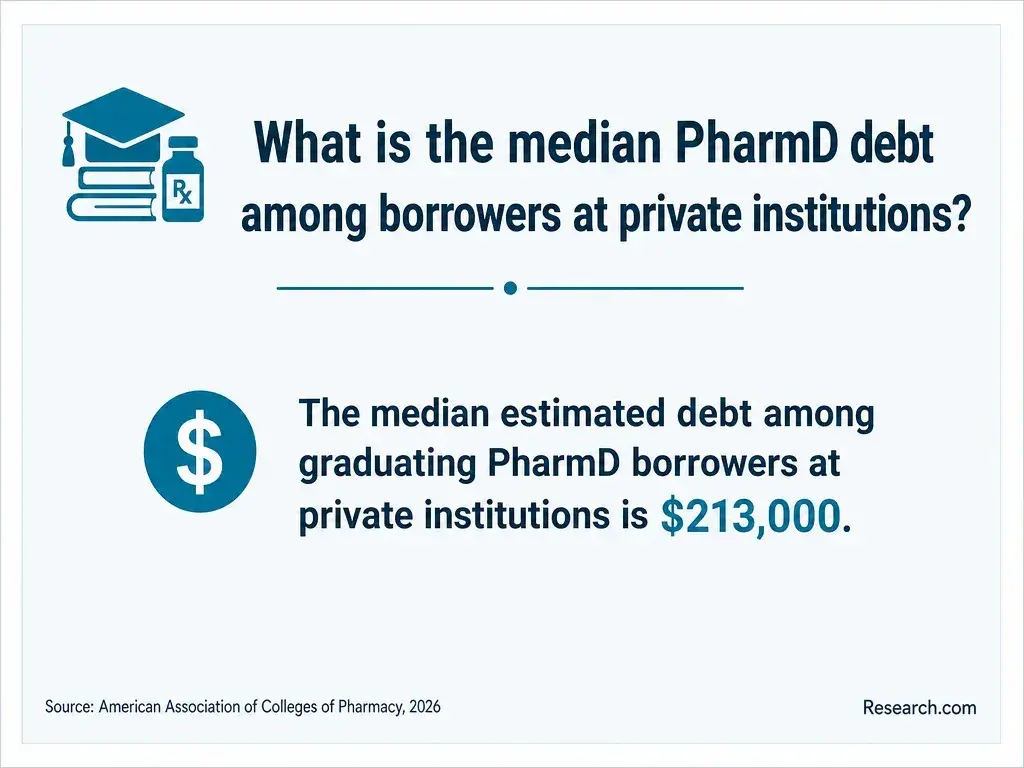
Compare published pharmacy doctorate tuition and fees using the same unit - such as an academic year or the full program - and request a current, student-specific cost estimate. Tuition alone omits potential prerequisite courses, mandatory fees, equipment, immunizations, rotation travel or housing, and licensure expenses. Ask the financial aid office which rules apply to your entry date and borrowing category: federal loan rules changed for many new graduate and professional borrowers beginning July 1, 2026, so older borrowing examples may not apply.
Some programs deliver part of their instruction online, but a PharmD should not be assumed to be fully remote or self-paced. Live classes, assessments, hands-on labs, campus visits, and in-person IPPEs and APPEs may still be required. Compare Doctor of Pharmacy programs with online coursework by their actual attendance and rotation schedules, not the word "online" alone.
Before enrolling from another state, confirm the school's authorization to enroll you, its arrangements for clinical placements where you live, and your intended board's licensure-eligibility rules. Ask who secures or approves rotation sites, whether you may have to travel, and whether placements can coexist with your work schedule. State authorization, placement approval, and pharmacist licensing eligibility are separate questions.
The NAPLEX assesses knowledge and skills used in pharmacy practice, but passing it does not issue a license. Your jurisdiction may also require a pharmacy law examination, such as the Multistate Pharmacy Jurisprudence Examination (MPJE), the Uniform Multistate Pharmacy Jurisprudence Examination (UMPJE), or another assessment. Jurisdictions do not all use the same exam, and some transitioned to the UMPJE beginning in 2026.
Boards also differ in how they count supervised intern experience and whether program-based experiences satisfy their rules. This is particularly important when weighing faster Doctor of Pharmacy routes: a compressed curriculum does not waive a board's experience or examination requirements.
To avoid a delayed application, check these items with the board where you intend to practice before your final year:
- Confirm the board's eligible-degree and intern-registration rules.
- Ask how it counts IPPE, APPE, and any additional supervised hours.
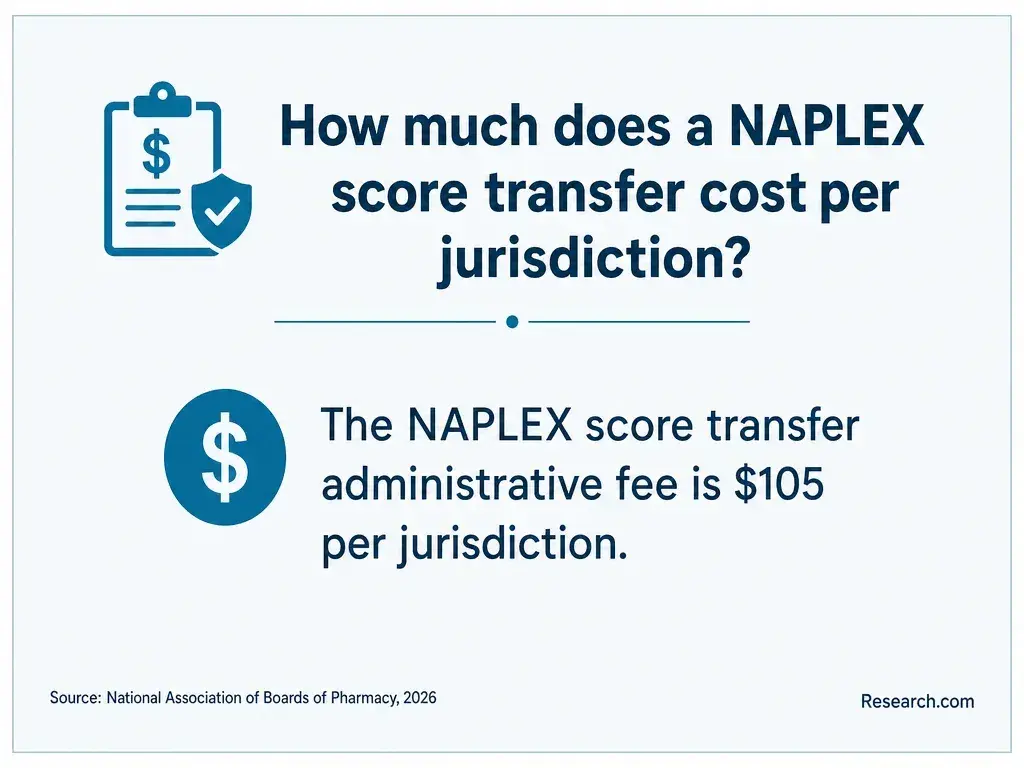
- Verify its current NAPLEX and jurisprudence-exam requirements, approval process, and deadlines.
What are pharmacist salaries, career options, and job outlook after graduation?
Licensed pharmacists work in community pharmacies, hospitals, health systems, ambulatory care, and other settings. The Bureau of Labor Statistics reports median annual pay of $140,910 in May 2025 for pharmacists and projects 5% growth for 2025-2035, with about 12,500 openings per year. Those are occupation-wide figures, not a forecast for a new graduate, a particular specialty, or a local job market.
Some roles favor postgraduate training. A pharmacy residency provides structured practice training; a fellowship generally emphasizes a particular professional or research area. Specialty board certification is a separate credential with its own eligibility rules. None replaces state licensure, and none is universally required for pharmacist jobs.
If your goal is a different pharmacy-related role, compare its actual hiring and credential requirements before paying for a PharmD. For example, a pharmacy technician is a separate occupation that does not ordinarily require the degree. Reviewing cost-effective pharmacy degree options may help you identify an alternative, but confirm that it qualifies you for the specific work you want to do.
Other Things You Should Know About PharmD
No. Licensure is jurisdiction-specific. If you plan to move or practice in multiple states, check each board's application and license-transfer rules before accepting a position.
Yes. Renewal schedules and continuing education requirements vary by jurisdiction. Keep track of the rules issued by every board that licenses you.
It may. Boards review disclosures under their own rules. Read the intended board's application instructions and seek a board determination when available rather than assuming admission to school resolves the issue.
Not necessarily. Foreign-educated applicants may need additional credential evaluation or certification before board approval. Start with the intended board's current foreign-graduate instructions.
- Pharmacists - Texas State Board of Pharmacy https://www.pharmacy.texas.gov/consumer/broch5.asp
- NYS Pharmacy: Continuing Education - Office of the Professions https://www.op.nysed.gov/professions/pharmacist/continuing-education
- Pharmacists - Oklahoma.gov https://oklahoma.gov/pharmacy/licensees-applications/forms-applications/pharmacists.html
- Pharmacist - Florida Board of Pharmacy https://floridaspharmacy.gov/pharmacist/
- The NAPLEX: Evolution, Purpose, Scope, and Educational Implications - PMC https://pmc.ncbi.nlm.nih.gov/articles/PMC2384208/
- GA R&R - GAC - Chapter 480-3 RENEWALS, INACTIVE LICENSES, AND CONTINUING EDUCATION https://rules.sos.ga.gov/gac/480-3
- 49 Pa. Code § 27.26. Pharmacy internship. | pacodeandbulletin.gov https://www.pacodeandbulletin.gov/secure/pacode/data/049/chapter27/s27.26.html
- Pages - Frequently Asked Questions https://www.njconsumeraffairs.gov/phar/Pages/FAQ.aspx
- Pharmacists | Kansas Board of Pharmacy https://www.pharmacy.ks.gov/licensing-registration/pharmacists
- Accreditation in the U.S. | ed.gov http://www.ed.gov/laws-and-policy/higher-education-laws-and-policy/college-accreditation/accreditation-in-the-us