
How to compare PharmD programs by scholarship availability

Co-Founder and Chief Data Scientist
A large Pharm.D. scholarship can make one offer look better than another - until you discover that it lasts only one year or excludes required fees. For prospective pharmacy students comparing offers, scholarship availability matters less than the amount you can realistically keep throughout the professional program. This guide shows you how to compare awards on equal terms, calculate the remaining cost, and check the accreditation, enrollment, and aid rules that could change your decision.
Key Things You Should Know
- Compare renewable scholarship value, not the largest first-year award; check academic conditions and whether funding continues during clinical rotations.
- Calculate the amount left after scholarships against tuition, required fees, living costs, and rotation travel - not advertised tuition alone.
- Confirm Accreditation Council for Pharmacy Education (ACPE) program status and your aid eligibility before committing; federal borrowing rules changed for many new professional students beginning July 1, 2026.
How can you compare PharmD programs by scholarship availability?
Compare written aid offers for the same period and enrollment assumptions. A Doctor of Pharmacy (Pharm.D.) program may advertise scholarships without showing how many students receive them, whether awards renew, or whether recipients can combine them. Ask each school for the terms applicable to your admission cycle and record the answers in one worksheet.
This worksheet keeps the most important offer details side by side. Fill it using each school's official award notice and published cost of attendance, leaving a field blank until the school confirms it.
| Comparable field | Program A | Program B |
| Professional-program ACPE status | _____ | _____ |
| Tuition and mandatory fees by academic year | _____ | _____ |
| Scholarship offered for the first year | _____ | _____ |
| Additional years covered and renewal conditions | _____ | _____ |
| Other grants or scholarships that can be combined | _____ | _____ |
| Estimated rotation, travel, and living costs | _____ | _____ |
| Amount remaining after gift aid | _____ | _____ |
Once both columns are complete, make the decision in this order:
- Exclude awards for which you do not meet the stated eligibility rules.
- Compare the total scholarship you can reasonably expect to retain, accounting for renewal and whether professional-year tuition changes.
- Compare the remaining cost and likely borrowing need, including any extra prerequisite coursework or time before graduation.
- If costs are close, weigh placement logistics, program outcomes, and the risk of losing a conditional award.
Prior coursework can change both your timeline and cost, but it does not automatically transfer into the professional curriculum. If that affects your comparison, review pharmacy programs for students with prior coursework and obtain each receiving school's credit evaluation.
What types of scholarships are available to PharmD students?
Pharm.D. funding may come from the school, its donors, employers, professional associations, community organizations, or service-based programs. Awards can be based on academic achievement, financial need, leadership, community service, an intended practice area, or eligibility for a particular donor fund. An award described as a scholarship is generally gift aid, unlike a loan, but its permitted uses and renewal terms still matter.
Separate automatic admissions awards from scholarships requiring a later application. Also ask whether an outside award reduces institutional aid under the school's packaging policy. Students moving from undergraduate biology or chemistry study into pharmacy can compare Pharm.D. programs for biology majors, then check whether their academic background qualifies them for each school's awards; a relevant major does not itself establish eligibility.
How much do PharmD programs cost after scholarships and financial aid?
Use the school's cost-of-attendance estimate for the relevant academic year as a starting point, then adjust expenses that depend on where you live or complete rotations. A lower tuition price may be offset by limited gift aid or substantial travel; lower-cost pharmacy degree pathways are worth comparing only after you confirm that each option is the professional Pharm.D. pathway you need.
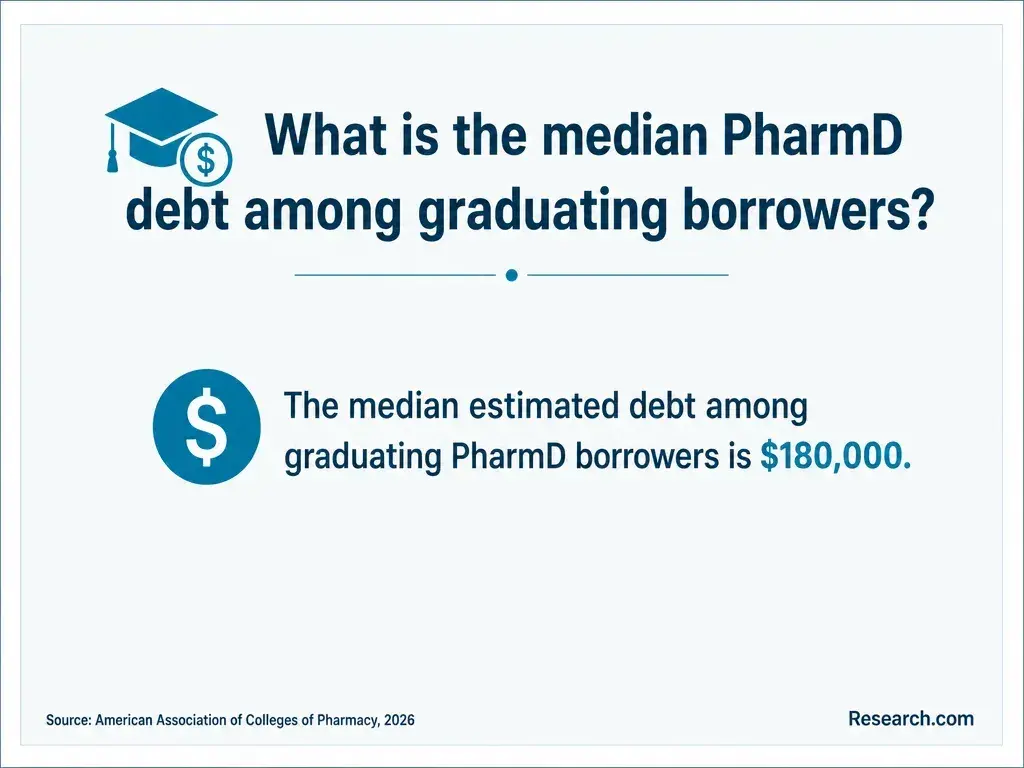
Ask the financial aid office for an individualized borrowing estimate. Eligibility and limits depend on the student, program classification, and aid year. Federal rules changed for many new graduate and professional borrowers beginning July 1, 2026, including restrictions affecting Grad PLUS access; do not build a budget around an older loan-limit description or assume that loans will cover every expense.
Check the specific professional Pharm.D. program in ACPE's official program records, including its current status and location or pathway details. ACPE professional-program accreditation is different from an institution's accreditation. Neither one, by itself, confirms that a distance-learning student may enroll from a particular state or complete a clinical placement there.
Next, read the scholarship's official terms and ask whether it applies to your campus or distance pathway, entry year, enrollment status, and citizenship or other stated eligibility category. For pharmacy doctorate programs with distance learning, confirm state authorization, required in-person activities, and the school's clinical-placement arrangements separately. Get any answer that materially affects your award or enrollment in writing.
Requirements vary by award. Common conditions include maintaining a specified grade-point average, completing a minimum course load, making satisfactory academic progress, submitting financial information, or participating in a stated service or leadership activity. Some awards require a separate application or interview; others are considered during admission. A scholarship minimum is not necessarily the program's admission minimum.
Look especially for conditions that could be difficult during a demanding professional curriculum: annual reapplication, a limited number of funded semesters, exclusions during advanced rotations, or loss of the award after a course is repeated. If you are also considering pharmacy programs with flexible entry requirements, assess admission criteria and scholarship criteria independently. Ask whether an award can be reinstated after a temporary loss and how a leave of absence affects it.
Delivery format does not establish scholarship eligibility. A school may offer the same institutional awards across pathways, restrict a donor-funded award to one campus, or calculate aid differently for students with different enrollment patterns. Compare the written award rules rather than assuming that online tuition produces a better net price.
Online instruction also does not mean a fully remote Pharm.D. Required labs, campus immersions, and introductory and advanced pharmacy practice experiences - supervised clinical rotations commonly called IPPEs and APPEs - can create travel and time-away-from-work costs. When weighing affordable online Pharm.D. programs, ask who arranges or approves placements, whether nearby sites are possible, and which in-person expenses the scholarship can cover.
Program length, course sequencing, and rotation scheduling affect how long an award must last. A scholarship covering a fixed number of terms may be worth less if a student needs an additional term; an award tied to continuous full-time enrollment may be harder to retain after a schedule interruption. Review whether funding applies during APPEs, when students may have less control over location and paid-work hours.
Accelerated pharmacist education may reduce time out of the workforce for some students, but a shorter calendar does not prove a lower price or a lighter workload. Compare the program's actual curriculum and scholarship term limits before assigning a financial advantage to its pace. Professional coursework and rotations are distinct from the undergraduate prerequisites completed before Pharm.D. admission.
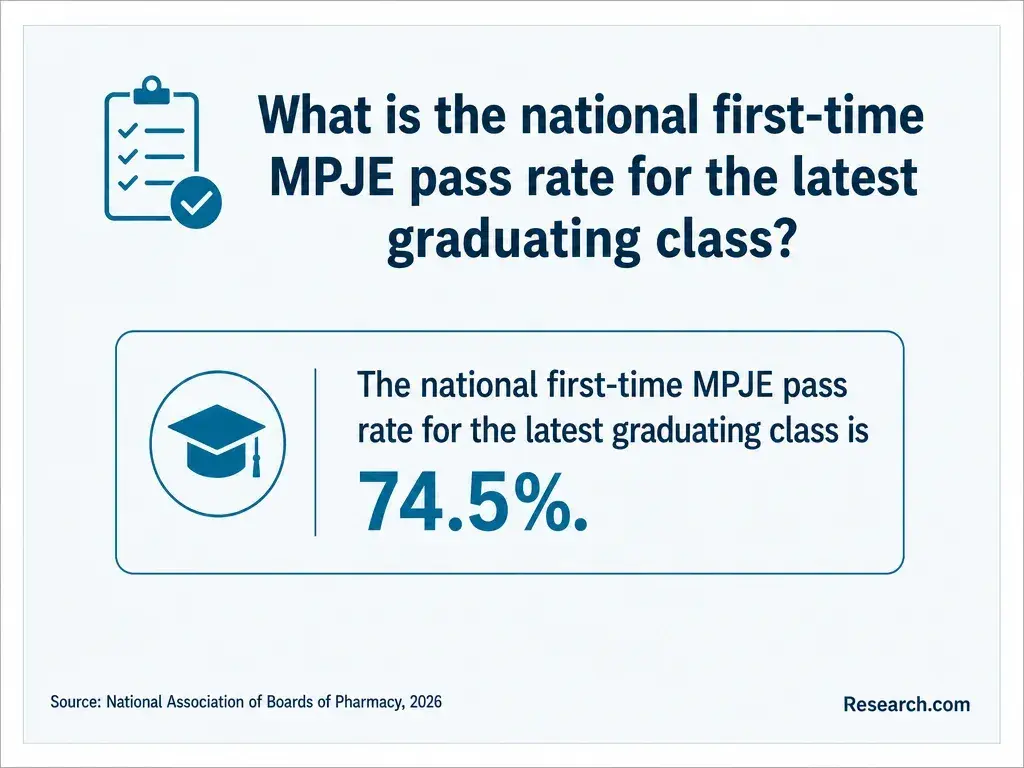
Graduating from a Pharm.D. program does not itself grant a pharmacist license. State boards set licensure requirements, which generally include qualifying education, the North American Pharmacist Licensure Examination (NAPLEX), and any jurisdiction-specific law examination or other requirements. Do not assume every jurisdiction uses the Multistate Pharmacy Jurisprudence Examination (MPJE): requirements differ, and some jurisdictions began transitioning to the Uniform Multistate Pharmacy Jurisprudence Examination (UMPJE) in 2026. Check the board where you intend to practice.
Budget for application and examination expenses separately from tuition unless an award expressly covers them. A short online doctorate program in another subject is not a substitute for a qualifying Pharm.D. when your goal is pharmacist licensure. Likewise, pharmacy technician and pharmaceutical sciences credentials do not automatically qualify their holders for that license.
How do PharmD scholarships affect pharmacist career outcomes and earnings?
A scholarship can reduce borrowing and give you more financial flexibility when choosing a first job or considering postgraduate training. It does not change licensing requirements, guarantee a residency, or establish a salary. The Bureau of Labor Statistics reports pharmacist median annual pay of $140,910 in May 2025 and projects 5% employment growth for 2025-2035, with about 12,500 openings per year. Those occupation-wide figures are useful context, not an earnings forecast for an individual graduate or a reason to disregard debt.
If you expect to pursue a residency, fellowship, or specialty role, compare the likely borrowing burden alongside your training plans. Residencies and fellowships are postgraduate training routes, while specialty board certification is a separate credential; none replaces state licensure, and none is required for every pharmacist job. Pharmacy programs with shorter completion times may appear to reduce opportunity cost, but verify the credential and licensure pathway before treating speed as a career advantage.
Other Things You Should Know About PharmD
Yes. Ask whether the school has a formal reconsideration process and what documentation it accepts, such as a changed financial situation or another written offer. Additional funding is not assured.
Only if its terms allow it. Awards for enrolled professional students may not cover undergraduate prerequisite courses taken before Pharm.D. matriculation; confirm coverage before registering.
It depends on how the funds are used and the recipient's circumstances. Under IRS rules, amounts used for qualified tuition and required educational expenses may receive different tax treatment from amounts used for living expenses. Keep the award terms and expense records, and consult applicable IRS guidance or a tax professional.
A withdrawal can trigger school refund rules, federal aid recalculation, and scholarship repayment or cancellation terms. Ask the financial aid office for a written estimate of what you would owe before making a withdrawal decision.
- Eligibility Requirements | Federal Student Aid https://studentaid.gov/understand-aid/eligibility/requirements
- Tuition, Financial Aid and Scholarships | umich.edu https://pharmacy.umich.edu/admissions/tuition-financial-aid-scholarships/
- Scholarships & Financial Aid | UUH https://pharmacy.utah.edu/student-information/pharmd-applicant/financial-aid
- Costs & Aid - College of Pharmacy - University of Minnesota https://www.pharmacy.umn.edu/doctor-pharmacy/admissions/costs-aid
- PharmD Tuition and Financial Aid | University of the Pacific https://www.pacific.edu/pharmacy/pharmd/tuition-financial-aid
- Cost of Attendance " Pharm.D. Admissions " | ufl.edu https://admissions.pharmacy.ufl.edu/financial-aid/anticipated-expenses/
- Tuition, Fees, Scholarships - OSU College of Pharmacy https://pharmacy.oregonstate.edu/programs-admissions/pharm-d/tuition-fees-scholarships
- PharmD Tuition & Scholarships | R. Ken Coit College of Pharmacy https://www.pharmacy.arizona.edu/academics/pharmd/tuition-scholarships
- Scholarship Conditions | Towson University https://www.towson.edu/admissions/financialaid/guide/requirements/scholarship-conditions.html
- Financial Aid and Cost | ucsf.edu https://pharmd.ucsf.edu/admissions/financial-aid-cost


