
Time Management for Online PharmD Students

Co-Founder and Chief Data Scientist
An online Doctor of Pharmacy (Pharm.D.) program may reduce commuting to class, but it does not remove scheduled instruction, hands-on training, or clinical rotations. For students balancing school with work or caregiving, those fixed commitments can determine whether a program is manageable. This guide shows how to build a weekly plan, prepare for rotation-heavy terms, and check a program's actual schedule before enrolling. Use it to decide not just whether you can fit classes into your calendar, but whether you can protect enough time to learn and practice safely.
Key Things You Should Know
- Plan around fixed live classes, assessments, campus visits, and in-person rotations first; "online" does not necessarily mean self-paced or fully remote.
- Use a weekly calendar with protected study blocks, advance preparation for deadlines, and a buffer for schedule changes - not just a list of assignments.
- Ask about the timing and location of introductory and advanced rotations before committing; clinical terms may make full-time employment impractical.
How can online PharmD students manage time effectively?
Start with a term calendar for major exams, labs, campus visits, and placement deadlines. Then make a weekly calendar that reserves time for live sessions, preparation, review, work, travel, meals, and sleep. The distinction matters: a deadline list tells you what is due, while a calendar reveals whether the work can actually fit.
Use this sequence at the start of each week:
- Place immovable commitments on the calendar, including synchronous classes, exams, shifts, and family responsibilities.
- Break each upcoming assignment into reading, practice, drafting, and submission blocks; begin longer tasks before their due week.
- Schedule active study - such as recalling material from memory and working through patient cases - instead of relying only on rereading.
- Reserve an unscheduled buffer for difficult topics, placement paperwork, technology problems, or a changed work shift.
- Review the calendar midweek and move lower-priority tasks before they displace preparation for a fixed assessment.
Keep one calendar and one task list rather than tracking deadlines across multiple course platforms. When comparing online Pharm.D. program options, request a sample term schedule: it will show whether the program's version of flexibility matches the hours you can reliably protect.
What does an online PharmD program involve?
An online or hybrid Pharm.D. typically combines digital coursework with scheduled interaction, assessments, hands-on learning, and supervised in-person pharmacy practice.
Delivery varies by school: recorded lectures may be flexible, while live discussions, examinations, campus immersions, and clinical experiences may occur at set times. Do not assume that a current pharmacy job can replace a required rotation.
Before enrolling, ask for a term-by-term list of mandatory live meetings, on-campus dates, assessment windows, and expected travel. This is particularly important when evaluating fast online pharmacy program choices: a short pharmacy-related degree is not necessarily a professional Pharm.D. that meets the educational requirements for pharmacist licensure.
How do online PharmD students balance coursework and clinical rotations?
Introductory pharmacy practice experiences (IPPEs) expose students to supervised practice earlier in the program. Advanced pharmacy practice experiences (APPEs) are more intensive rotations later in the professional curriculum. Both involve site and preceptor requirements; APPE periods, in particular, can leave much less control over daytime hours than an online classroom term.
Plan rotations as a change in availability, not as another course to squeeze into evenings. Well before placement begins, confirm who finds and approves sites, whether a nearby site is possible, when schedules become final, and which intern registration, background checks, immunizations, or other clearances apply. School policies and state rules vary, and travel or temporary housing may be necessary.
If you work, discuss reduced hours or leave with your employer before relying on either option. Some pharmacy programs before all requirements are complete may allow specified admission requirements to remain in progress, but that does not mean a student can begin clinical work without required clearances or school-approved placements.
The professional Pharm.D. curriculum develops knowledge of medications and disease treatment alongside patient assessment, communication, medication safety, calculations, and practice in supervised settings. Programs may teach portions of this material online, but students must also demonstrate practical skills and complete experiential education.
Exact courses, lab formats, and sequencing depend on the school. Prerequisite biology or chemistry courses are pre-professional preparation, not substitutes for professional pharmacy coursework.
Applicants considering pharmacy school for biology and chemistry graduates should compare their transcripts with each school's prerequisite list and ask how prior coursework will be evaluated. Once enrolled, schedule regular case practice and review across the term; material needed for patient care is harder to master through last-minute exam preparation alone.
There is no single completion time for every online or hybrid Pharm.D. A student's timeline depends on completed prerequisites, the school's professional curriculum, course sequencing, and when required rotations are offered. An accelerated calendar may shorten the time to graduation while increasing the intensity of each term; it does not eliminate required professional education or supervised practice.
Request the program's published plan of study and mark every term in which you could not maintain your present work hours. When you compare online doctorate lengths, compare credentials as well as calendars: a shorter doctorate in another subject does not qualify someone for pharmacist licensure. Treat advertised completion times as pathways to check against your own prerequisite and placement situation, not promises.
Requirements vary by school and may include specific undergraduate prerequisite courses and labs, minimum grades, transcripts, recommendations, an interview, and a completed application through PharmCAS or a school-specific process.
Not every program requires a completed bachelor's degree. The Pharmacy College Admission Test (PCAT) was retired in January 2024, so it should not appear in a current study plan as an exam to take.
For time management, the crucial question is what must be finished before application versus before enrollment. Ask whether courses in progress are allowed, when final transcripts are due, and whether prerequisite classes will overlap with work or other obligations.
If you hope to transfer courses into a pharmacy degree, get a school-specific evaluation; acceptance of prerequisite credit does not mean credit will transfer into the professional Pharm.D. curriculum.
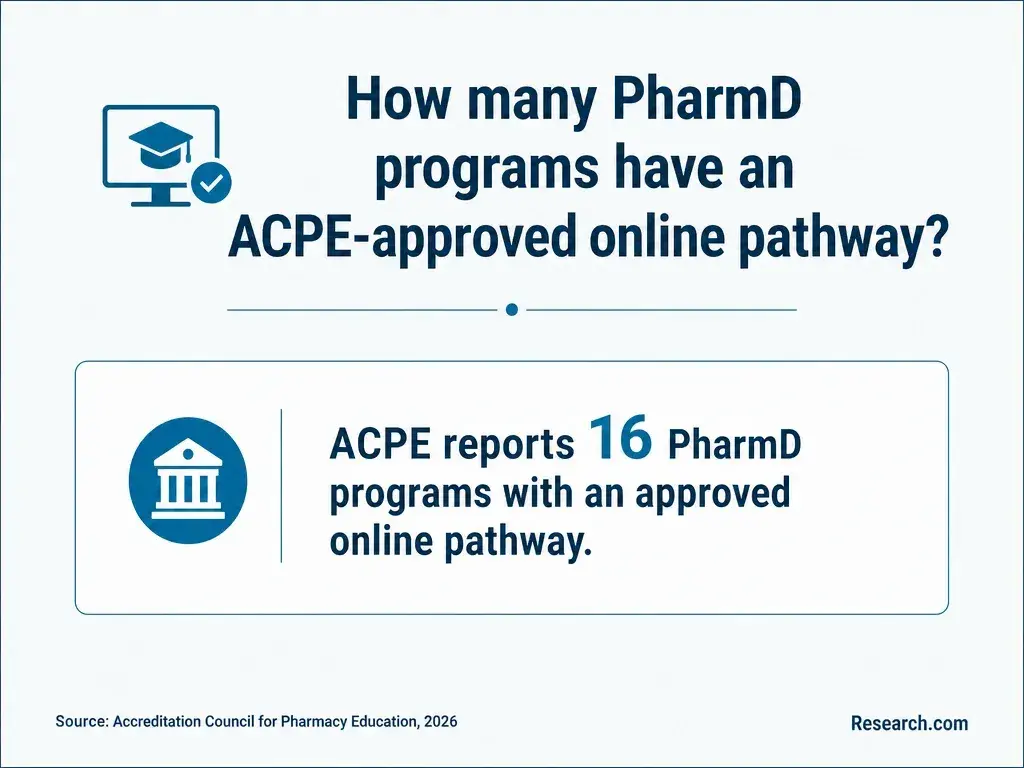
Verify the professional Pharm.D. program's current status in the Accreditation Council for Pharmacy Education (ACPE) program records. Then separately check the institution's accreditation, whether the school may enroll a student in your state, and whether it can arrange appropriate clinical experiences where you expect to train. These are distinct questions; none should be inferred from an "online" label.
Compare the schools on the commitments most likely to disrupt your calendar: live-session times, campus attendance, rotation timing, placement support, and notice given before schedule changes.
Published outcomes, including licensure-exam results where available, can add context but cannot predict an individual result. Review pharmacy program application requirements alongside these scheduling facts so that an attractive delivery format does not distract from eligibility or program quality.
Advertised tuition is only part of the cost. Build a term-by-term budget that includes required fees, books and clinical resources, technology, campus travel, placement-related travel or housing, and any reduction in earnings during intensive training. These expenses vary enough by student and program that a generic "online Pharm.D. price" would be misleading.
Compare Doctor of Pharmacy programs with manageable tuition using the same cost categories and the same expected enrollment period. Ask each financial aid office for a current cost-of-attendance estimate and aid assessment for your eligibility.
Federal borrowing rules changed for many new graduate and professional borrowers beginning July 1, 2026; do not base a plan on older loan limits or assume unrestricted Grad PLUS access. A lower tuition bill may not offset extensive travel or time away from paid work.
A Pharm.D. is an educational credential, not a pharmacist license. Graduates seeking U.S. pharmacist licensure generally must meet their jurisdiction's education and experiential requirements, pass the North American Pharmacist Licensure Examination (NAPLEX), and satisfy any applicable law-exam and other board requirements.
Jurisprudence requirements vary: do not assume every jurisdiction uses the Multistate Pharmacy Jurisprudence Examination (MPJE), particularly as some have moved to the Uniform MPJE (UMPJE). The state board determines eligibility and issues the license.
Reserve postgraduation time for applications, examinations, and possible delays rather than assuming paid pharmacist work can begin immediately after commencement.
The same distinction applies to fast-track Doctor of Pharmacy programs: completing the curriculum sooner does not waive licensure requirements. Check the board rules for the state where you intend to practice, including any intern registration needed during school.
What careers, salaries, and job outlook await PharmD graduates?
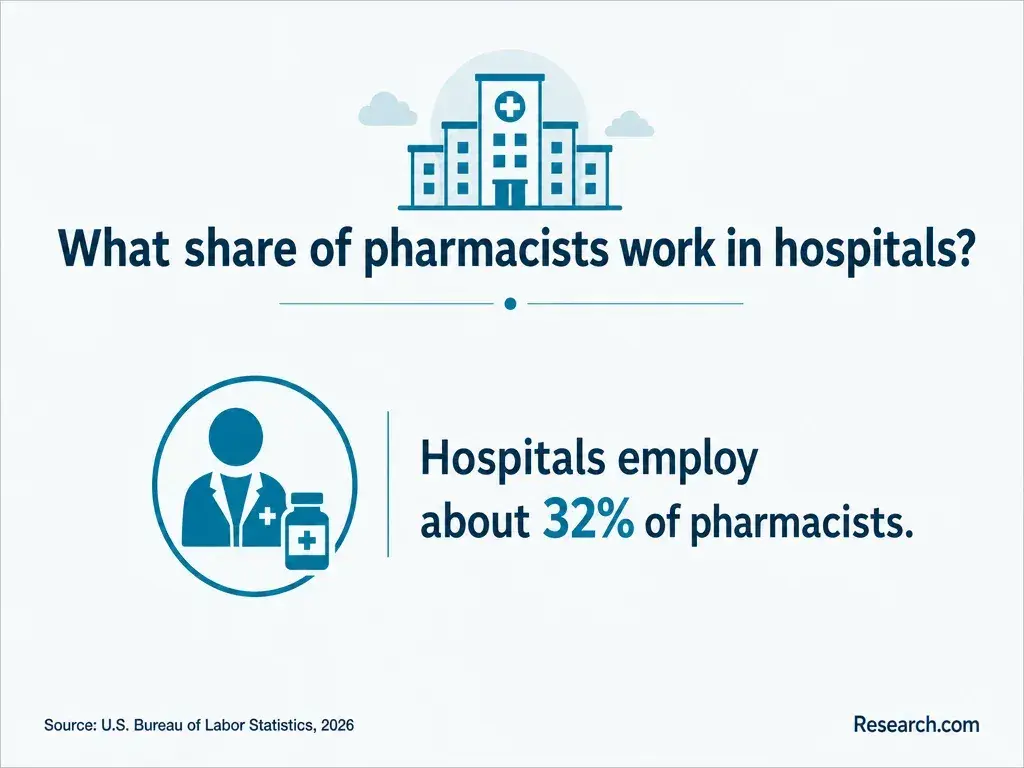
Licensed pharmacists work in settings that can include community pharmacies, hospitals, clinics, and specialty services. According to the Bureau of Labor Statistics, median annual pay for pharmacists was $140,910 in May 2025, with 5% projected job growth, 2025-2035 and about 12,500 openings per year projected.
Those occupation-wide figures are useful context, not a starting-salary or job-placement promise for online Pharm.D. graduates.
Compare pharmacy programs balancing cost and time against the work you actually want to do. A pharmacist role requires licensure; a pharmacy technician role is a separate occupation that does not ordinarily require a Pharm.D.
Some pharmacists pursue residency, fellowship, or specialty board certification for particular career goals, but these are distinct from state licensure and are not universal requirements. If your target role does not require pharmacist licensure, weigh a less extensive pathway against the Pharm.D.'s tuition and time away from work.
Other Things You Should Know About PharmD
Yes, if it helps you practice explaining concepts or working through cases. Agree on a recurring time that does not conflict with required classes, and use shared questions between meetings so the group remains useful when schedules do not align.
Contact the instructor and your academic adviser as soon as possible. Ask which deadlines or attendance requirements can be adjusted under school policy, and get the revised plan in writing rather than assuming recorded material replaces a required activity.
Students who need disability-related accommodations should contact the school's accessibility office early, ideally before assessments begin. Documentation procedures and available arrangements depend on school policy and the assessment setting.
Repeatedly missing preparation time, cutting sleep to meet routine deadlines, or having no capacity for unexpected changes are signs to reassess. Speak with an adviser about course load and support options before missed work accumulates; during clinical training, raise concerns promptly through the school's established channels.
- Exploring Student Pharmacists' Time Management and... - PMC https://pmc.ncbi.nlm.nih.gov/articles/PMC12415658/
- How Many Hours of Work Per Online Course Credit | ASU Online https://asuonline.asu.edu/newsroom/online-learning-tips/discover-weekly-number-hours-online-students-study/
- Can I complete the program and keep my full-time job? | CU School of Pharmacy https://pharmacy.cuanschutz.edu/degreesandprograms/online-programs/itpd/itpd-program/can-i-complete-the-program-and-keep-my-full-time-job
- FAQ | OSU College of Pharmacy - Oregon State University https://pharmacy.oregonstate.edu/programs-admissions/pharm-d/faq
- FAQ - Fisher Pharm.D. Online | SJF-PHA https://onlinepharmd.sjf.edu/admissions/faq/
- Doctor of Pharmacy (PharmD) - Prospective Students https://www.pharmacy.umaryland.edu/academics/pharmd/prospective-students/
- Doctor of Pharmacy Extended Online (XO) | hawaii.edu https://pharmacy.uhh.hawaii.edu/extendedonline-curriculum/
- Experiential Education | University of Saint Joseph CT https://www.usj.edu/academics/sppas/pharmacy/experiential-education/
- Do All Pharmacy Programs Offer Experiential Education? | Belmont University https://www.belmont.edu/stories/articles/2024/pharmacy-program-experiential-education.html
- Can You Really Earn a Pharm.D. Online? Here's What to Expect - Lake Erie College of Osteopathic Medicine https://lecom.edu/can-you-really-earn-a-pharm-d-online-heres-what-to-expect/


