How to become a board-certified psychiatric pharmacist

Co-Founder and Chief Data Scientist
Becoming a board-certified psychiatric pharmacist takes more than an interest in mental health medications. You must qualify as a pharmacist, develop substantial psychiatric pharmacy experience, and meet the Board of Pharmacy Specialties' requirements for the Board Certified Psychiatric Pharmacist (BCPP) credential. This guide separates required steps from optional training, explains the residency and practice routes, and helps you judge the time, cost, and career value before committing.
Key Things You Should Know
- The usual sequence is an accredited professional Doctor of Pharmacy (Pharm.D.) program, state pharmacist licensure, qualifying psychiatric practice or residency training, and the BCPP examination.
- A psychiatric pharmacy residency is a focused route to eligibility, but BPS also provides practice-based pathways; a residency or specialty job title alone does not award BCPP certification.
- The Bureau of Labor Statistics reports $140,910 in median annual pay for pharmacists in May 2025, but it does not publish a separate BCPP salary figure.
What Does a Board-Certified Psychiatric Pharmacist Do?
A BCPP is a licensed pharmacist with specialty certification in psychiatric pharmacy. These pharmacists assess medication regimens for people with mental health and substance use conditions, recommend treatment changes to care teams, monitor effectiveness and adverse effects, counsel patients, and help address medication access and safety. Their work may involve complex combinations of psychiatric medications, physical health conditions, and patient preferences.
Responsibilities depend on the setting and state law. A BCPP might work alongside prescribers on an inpatient team or provide follow-up in an outpatient clinic; certification does not independently grant prescribing authority. If your goal is a pharmacy-adjacent support role rather than pharmacist-level clinical decision-making, compare shorter pharmacy programs with career potential before taking on a Pharm.D. pathway. Those programs do not qualify graduates for pharmacist licensure or BCPP certification.
What Are the Requirements to Become a Board-Certified Psychiatric Pharmacist?
The Board of Pharmacy Specialties (BPS) awards the BCPP credential. Its eligibility requirements combine pharmacist licensure, psychiatric pharmacy experience or qualifying residency training, and a passing score on the specialty examination. Check the BPS candidate guide for the application period in which you intend to apply: the type, recency, and documentation of qualifying experience matter.
There are distinct stages between starting pharmacy school and applying for certification:
- Complete a professional Pharm.D. program accredited by the Accreditation Council for Pharmacy Education (ACPE), or establish eligibility for U.S. pharmacist licensure through the applicable foreign-graduate process.
- Meet a state board of pharmacy's licensure requirements, including required examinations and any state-specific conditions.
- Build qualifying psychiatric pharmacy experience through the BPS practice pathway or an eligible postgraduate residency pathway.
- Apply to BPS, document eligibility, and pass the BCPP examination.
BPS describes a practice route based on substantial psychiatric pharmacy work, as well as routes incorporating a postgraduate year one (PGY1) residency or a psychiatric pharmacy postgraduate year two (PGY2) residency. It applies specific experience and residency criteria; do not assume that occasional mental health consultations count. Pharmacy school entry is a separate decision: pharmacy admissions criteria vary by program and are not BPS eligibility rules.
Which Education Pathway Leads to Psychiatric Pharmacy Board Certification?
For a prospective U.S. pharmacist, the education route begins with a professional Pharm.D. program. Before entering it, applicants complete the school's required pre-pharmacy coursework; a completed bachelor's degree is not universally required. Pre-pharmacy science courses, a pharmaceutical sciences degree, and the professional Pharm.D. curriculum are different things. Only the appropriate pharmacist-licensure pathway puts you in a position to pursue BCPP certification.
Choose a Pharm.D. program by confirming its current ACPE professional program accreditation, admissions prerequisites, total cost, clinical placements, and preparation for pharmacist licensure. Institutional accreditation and authorization to offer online education are separate checks; neither substitutes for ACPE professional-program accreditation or state licensure eligibility. Students coming from another science field can compare Doctor of Pharmacy pathways for career transitions, then ask each school which previous courses actually satisfy its prerequisites.
After graduation and licensure, you can pursue psychiatric practice experience or postgraduate training. The best route depends on whether you can obtain sufficiently focused psychiatric responsibilities without a residency and whether the positions you want prefer PGY2 training. Neither the Pharm.D. nor a residency automatically confers board certification.
Pharm.D. study develops the broad skills a future psychiatric pharmacist needs: pharmacology and therapeutics, patient assessment, medication safety, evidence evaluation, and communication with patients and clinicians. Mental health coursework and clinical cases introduce psychiatric treatment, but the depth of exposure varies by school.
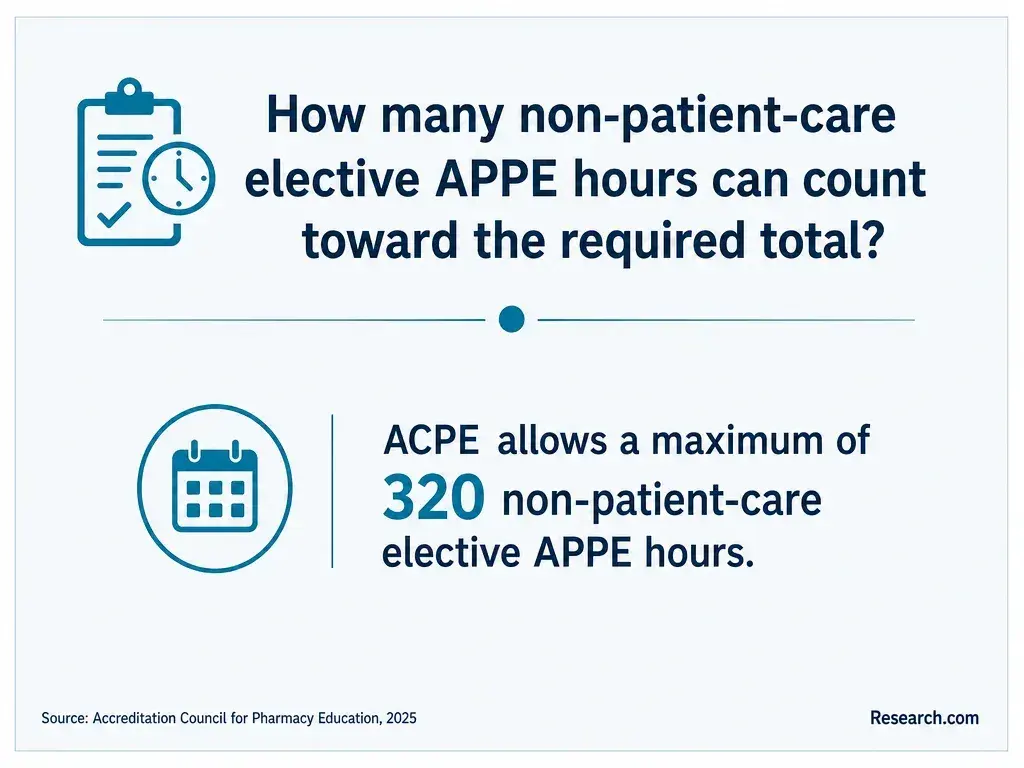
Experiential education also matters. Introductory pharmacy practice experiences (IPPEs) expose students to practice during the curriculum; advanced pharmacy practice experiences (APPEs) provide more intensive rotations later in the program. Ask whether psychiatric or substance use care APPEs are available, how students are selected, and whether a site requires travel. A psychiatric rotation can strengthen a residency application, but it is not a substitute for BPS-qualifying postgraduate experience.
Students considering pharmacy schools offering online Pharm.D. study should check scheduled classes, in-person labs, campus visits, and clinical placement arrangements. Online instruction does not mean that patient-care rotations can be completed remotely or that students can necessarily keep an unrestricted full-time work schedule.
A PGY1 pharmacy residency builds broad clinical practice skills after the Pharm.D. A PGY2 psychiatric pharmacy residency provides more concentrated specialty training and generally follows PGY1 training or a program-approved equivalent. Review each residency's current accreditation, prerequisites, patient populations, and application instructions; a fellowship is a different form of postgraduate training and should not be assumed to satisfy BPS residency criteria.
The routes have different trade-offs. A PGY2 can offer concentrated supervision and a clearer transition into specialty roles, but securing a position is competitive and adds time in training. A practice-based route may suit an already licensed pharmacist whose documented work substantially involves psychiatric care. It requires careful attention to BPS experience rules, rather than simply accumulating years in a general pharmacy position.
When estimating your timeline, separate pharmacy doctorate program length from postgraduate training. A shorter Pharm.D. schedule does not shorten an individual residency or waive BCPP eligibility requirements. ASHP program listings, individual residency pages, and the current PhORCAS and Match instructions can help you confirm which positions use those application systems and their deadlines.
The BCPP examination tests specialty-level knowledge, not just recall of drug names. BPS publishes the current examination content outline, which candidates should use to identify the tested areas and their weighting. Major topics include psychiatric and substance use disorders, medication selection and monitoring, patient-specific care, evidence-based practice, and professional responsibilities.
Study should connect diagnosis and treatment evidence to clinical decisions: evaluating a regimen, recognizing a safety concern, monitoring outcomes, and communicating a recommendation. Use the current BPS outline rather than an older study guide as the final authority on exam scope and policies.
If you hope to finish an online pharmacy degree sooner, check exactly which credential a program awards. A fast degree or certificate cannot replace pharmacist licensure, qualifying psychiatric experience, or the BCPP examination.
There is no single reliable total: tuition depends on the Pharm.D. school and student circumstances, while licensure, residency applications, and BPS fees arise at different stages. Residency positions generally pay a stipend, but postgraduate training may still entail an opportunity cost compared with taking a pharmacist job. Compare the complete pathway, not just advertised tuition.
Use these cost categories when building a personal estimate:
- Pharm.D. prerequisites, tuition, mandatory fees, books, and clinical resources.
- Campus travel, required labs, and rotation-related travel or housing.
- State licensure applications and examinations, plus any required background checks.
- Residency applications, interviews, and possible relocation.
- BPS application and examination charges, followed by ongoing certification maintenance costs.
For each school, obtain its current cost of attendance and ask which rotation expenses it excludes. An online pharmacy degree affordability comparison is useful only if it includes required in-person travel and placements. If borrowing is part of your plan, request aid guidance for your start date: federal loan rules changed for many new graduate and professional borrowers beginning July 1, 2026, so older descriptions of Grad PLUS access or borrowing limits may not apply to you.
State pharmacist licensure is required to practice as a pharmacist; BCPP is an additional specialty credential. U.S. Pharm.D. graduates must satisfy their state board's requirements, including the North American Pharmacist Licensure Examination (NAPLEX) and the jurisdiction's applicable law-examination rules, if any. Do not assume every jurisdiction uses the Multistate Pharmacy Jurisprudence Examination (MPJE): requirements differ, and some jurisdictions began transitioning to the Uniform MPJE (UMPJE) in 2026. Passing an examination does not itself issue a license.
A psychiatric pharmacist may also hold employer-required training or state-specific practice authorizations. Prescribing, collaborative practice, and other clinical activities depend on applicable law and the practice arrangement—not on BCPP certification alone. Check the relevant state board before relying on a job description's account of permitted duties.
If you are still planning your education, transfer credits for pharmacy school can affect your time and tuition, but the receiving school decides how prior courses apply. Transferred coursework is not a transfer of pharmacist licensure or a shortcut to BPS eligibility.
BCPPs may work in psychiatric hospitals, general hospitals, Veterans Affairs facilities, outpatient mental health clinics, integrated primary care, and academic settings. The setting shapes the role: inpatient work may emphasize acute medication changes and transitions of care, while outpatient work may emphasize follow-up, adherence, and coordination over time.
The Bureau of Labor Statistics reports $140,910 in median annual pay for pharmacists in May 2025. That figure covers pharmacists broadly, not BCPPs specifically; it cannot tell you what a particular psychiatric pharmacy position pays. Compare actual postings by location, employer, schedule, and required experience rather than assuming certification produces a fixed salary increase.
If earnings are driving your education decision, compare online doctorate lengths only after checking the occupation each degree qualifies you to enter. A doctorate in another field does not qualify its holder for pharmacist licensure, however short its schedule may be.
What Is the Job Outlook for Psychiatric Pharmacists?
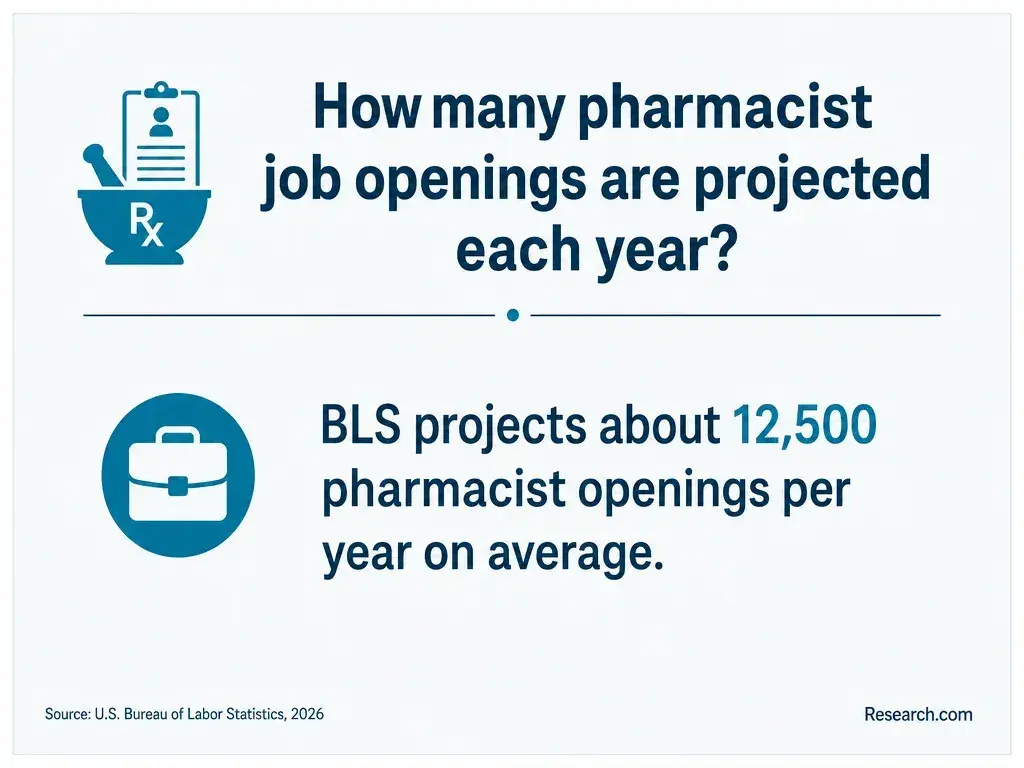
The Bureau of Labor Statistics projects 5% growth for pharmacists from 2025 to 2035, with about 12,500 openings per year. Those projections describe the broader pharmacist occupation, not a separately measured market for psychiatric pharmacists or BCPPs. They suggest opportunities across pharmacy practice but cannot predict the number of specialty openings in your preferred city.
To assess demand more precisely, review current psychiatric pharmacist postings and note whether employers require BCPP, prefer it, or accept candidates who will become eligible later. Compare that demand with the availability of qualifying work or residencies where you can realistically live. A broad pharmacist opening is not necessarily a route to the psychiatric experience BPS requires.
For readers who have not yet applied to pharmacy school, pharmacy application eligibility pathways can help frame the first decision. Verify each school's actual prerequisite and matriculation rules before committing; admission flexibility does not change the later licensure and specialty-certification steps.
Other Things You Should Know About PharmD
Yes. BPS certification has ongoing maintenance and recertification requirements. Check the current BPS rules before applying so you can plan for continuing education, assessments, and fees.
Potentially, but an overseas pharmacy degree alone is not enough. The pharmacist must first meet applicable U.S. pharmacist-licensure requirements, which may include NABP's foreign-graduate certification process, and then meet BPS eligibility rules.
Possibly, but the care arrangement must comply with the laws and licensing rules that apply to the pharmacist, patient, and services provided. BCPP certification does not replace any required state license or authorization.
Both are BPS credentials. Board Certified Pharmacotherapy Specialist (BCPS) recognizes broader pharmacotherapy expertise; BCPP focuses on psychiatric pharmacy. Compare each credential's current eligibility rules and exam outline against the work you actually perform.
- CE FAQ | Pharmacists - Texas State Board of Pharmacy https://www.pharmacy.texas.gov/licensees/ce-pharmacist-faq.asp
- Passing rates and domain-level scores - PMC https://pmc.ncbi.nlm.nih.gov/articles/PMC8582766/
- Examination Content Outlines | bpsweb.org https://bpsweb.org/examination-content-outlines/
- BPS Exam Fees | zendesk.com https://bpsweb.zendesk.com/hc/en-us/articles/53483902604571-BPS-Exam-Fees
- Your BCPP Examination Preparation Journey | American Association of Psychiatric Pharmacists (AAPP) https://aapp.org/bcpp/certification/pathway
- BCPP - Board Certified Psychiatric Pharmacist https://careers.accp.com/career-resources/on-the-job-3/bcpp-board-certified-psychiatric-pharmacist-a-practical-guide-for-clinical-pharmacy-professionals-144