Questions to Ask Before Pursuing a Pharmacy Specialty

Co-Founder and Chief Data Scientist
Specializing can move a pharmacist toward a preferred patient population or practice setting, but postgraduate training may also mean another application cycle, a lower-paid training year, and less flexibility about where to work. This guide is for prospective Pharm.D. students and licensed pharmacists deciding whether to specialize, which route to consider, and when to commit. Use the questions in each section to test a specialty against the work you want, the qualifications employers seek, and the time and cost you can realistically take on.
Key Things You Should Know
- Start with the job, not the credential. ask employers whether your target role requires a residency or certification, prefers one, or accepts relevant practice experience.
- Keep the credentials separate. a Pharm.D. supports the path to pharmacist licensure; a postgraduate year one (PGY1) residency, a postgraduate year two (PGY2) residency, and specialty board certification serve different purposes.
- Test the financial case. the Bureau of Labor Statistics reports $140,910 in May 2025 as the median annual pay for pharmacists overall - not a salary promise or a specialty-specific figure.
What is a pharmacy specialty, and which specialty areas can pharmacists pursue?
A pharmacy specialty is a focused area of pharmacist practice, such as oncology, ambulatory care, critical care, psychiatric pharmacy, or infectious diseases. Other roles focus on populations or systems - for example, pediatric patients, older adults, medication safety, or health-system operations. A specialty job title describes the work; it does not necessarily mean its holder completed a particular residency or holds board certification.
Ask: What patients, decisions, and daily tasks do I want to work with? Then compare actual job postings and arrange supervised observation where possible. An interest in drug discovery or laboratory research may point toward pharmaceutical sciences rather than patient-facing pharmacist practice. For someone entering pharmacy from another field, Doctor of Pharmacy pathways for career transitions are a separate decision from choosing a later specialty.
What education and training are required to become a pharmacy specialist?
The usual U.S.-educated pharmacist pathway starts with required undergraduate pre-pharmacy coursework, followed by a professional Doctor of Pharmacy (Pharm.D.) program and state licensure. Pre-pharmacy coursework is not itself a Pharm.D. After graduation, pharmacists may pursue direct employment, a residency, or - in research and industry careers - a fellowship. These routes develop different skills, and no single route is mandatory for every specialty-related job.
This comparison separates common training routes so you can ask employers which one matters for your target position.
| Route | What it primarily provides | Decision point |
| Direct practice | Experience in a pharmacist role, sometimes with employer-led specialty training | Will the employer support the clinical exposure and progression you need? |
| PGY1 residency | Broad, structured postgraduate pharmacy practice training | Do target jobs prefer residency-trained applicants? |
| PGY2 residency | Focused training in a defined practice area, generally after PGY1 or an accepted equivalent | Is this depth of training relevant to your intended role? |
| Fellowship | Often project-focused research or industry experience | Does its work match your goal better than a clinical residency? |
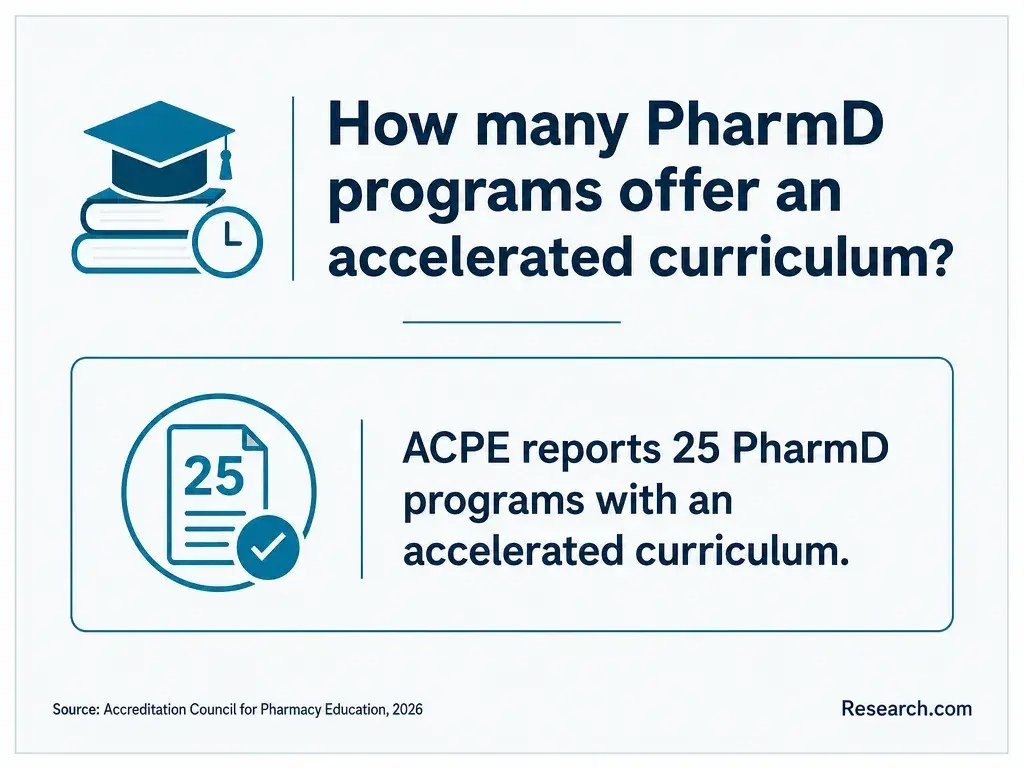
PGY1 and PGY2 residencies are commonly one year each; fellowships and employer training vary. Shortening the initial degree pathway through how accelerated Pharm.D. programs work does not eliminate later licensure requirements or make specialty training automatic.
What licenses and certifications are required for pharmacy specialties?
To practice as a pharmacist, you need a license from the jurisdiction where you work. Pharm.D. completion alone does not issue one. State boards set eligibility and practice rules; the licensing process generally involves the North American Pharmacist Licensure Examination (NAPLEX) and any applicable state-law examination or other state requirements. Do not assume your jurisdiction requires the MPJE: examination arrangements, including use of the UMPJE, vary.
Board of Pharmacy Specialties (BPS) certification is a separate credential, not a pharmacist license or permission to exceed state scope-of-practice rules. BPS eligibility varies by specialty and may recognize qualifying practice experience or postgraduate training.
Ask: Is certification legally required, required by this employer, preferred for promotion, or simply useful evidence of expertise? Confirm the current eligibility and maintenance rules with BPS and the hiring criteria with employers. Likewise, pharmacy school requirements and exceptions concern admission; they cannot waive licensing rules.
An Accreditation Council for Pharmacy Education (ACPE)-accredited professional Pharm.D. program builds broad pharmacist knowledge through classroom work, introductory pharmacy practice experiences (IPPEs), and advanced pharmacy practice experiences (APPEs). Electives and APPE choices can help students explore a specialty, but their availability, placement rules, and timing differ by school. A residency adds supervised postgraduate responsibilities, feedback, and progressively focused practice; PGY2 training is more specialized than PGY1.
Ask: Can I access relevant rotations, preceptors, and projects, or is the specialty merely listed as an interest area? Also ask who arranges placements and whether travel is likely. If earlier college study may shorten your route into pharmacy school, investigate how to apply prior college credits to pharmacy programs; the receiving school decides which credits satisfy prerequisites or, separately, professional-curriculum requirements.
Look for coursework tied to the decisions the intended role makes - not simply a specialty name in a catalog. For oncology, that might mean interpreting treatment plans, monitoring toxicities, and counseling under appropriate supervision. For ambulatory care, it might mean longitudinal medication management, documentation, and communication with a care team. The curriculum should connect these concepts to supervised cases, feedback, and assessment.
Ask: How many relevant rotations or experiences can a learner actually complete? Who approves sites and preceptors? What patient contact, documentation, research, and interprofessional work are available? If scheduling is a constraint, doctoral programs with flexible timelines may offer a comparison point, but a flexible doctorate outside an accredited professional Pharm.D. pathway is not a substitute for pharmacist education or required in-person experiences.
Some specialty-related coursework and continuing education can be completed online. A Pharm.D. advertised as online or hybrid may still require scheduled live classes, campus-based labs, in-person IPPEs and APPEs, and travel. Clinical residencies typically depend on on-site practice; an online seminar does not turn a residency into a remote program.
Ask: Which sessions are synchronous, where must I attend in person, and can clinical sites be approved near home? Confirm work-schedule compatibility rather than inferring it from an "online" label. When comparing online Doctor of Pharmacy degree options, check ACPE professional-program accreditation, institutional accreditation, distance-education state authorization, and placement arrangements separately. State authorization to enroll does not itself establish eligibility for pharmacist licensure or approve a clinical site.
Requirements depend on the stage and program. Pharm.D. applicants must meet each school's undergraduate prerequisite and application rules; a completed bachelor's degree is not universally required. The PCAT is retired and should not be treated as a current admissions test.
Residency applicants should check each program's graduate and licensure timing requirements, application materials, and whether it uses PhORCAS and participates in the ASHP Match. PGY2 applicants should verify the program's PGY1 or equivalent-training rules. Fellowships set their own selection criteria.
Ask: Am I eligible by the start date, including any required pharmacist license, and what evidence of specialty interest does the program value? Prospective students returning from another career can compare pharmacy programs for nontraditional applicants, but should verify current prerequisites and deadlines directly rather than treating an easier admission route as a shortcut to residency selection.
The timeline depends on your starting point: Pharm.D. study follows school-specific prerequisites, while a PGY1 residency and a subsequent PGY2 residency commonly add one year each. Direct employment may let a licensed pharmacist develop expertise without that sequence, although it may not satisfy a particular employer's hiring preference. A fellowship's length and pay depend on the program.
Compare the full financial commitment, not just advertised tuition. These are the costs and income trade-offs to put in your budget before applying:
- Pharm.D. tuition and required fees, prerequisite coursework, supplies, and any campus or rotation travel and housing.
- Residency or fellowship compensation and benefits compared with the pay you could reasonably pursue in direct employment.
- Application, examination, licensure, certification, and relocation expenses that apply to your route.
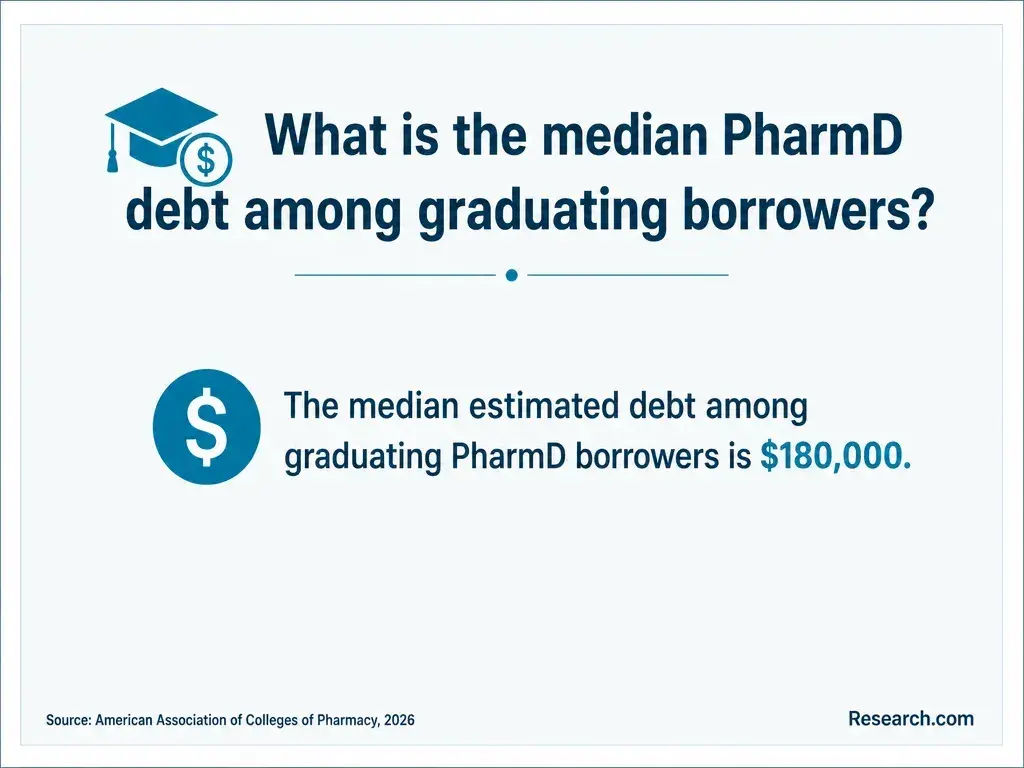
For prospective students, Doctor of Pharmacy programs with manageable tuition are worth comparing on total required costs, not tuition alone. Ask each school's aid office how the July 2026 federal borrowing changes and any applicable transitional provisions affect your individual eligibility; do not assume previous graduate-loan options remain available to every new borrower.
Specialty-focused pharmacists may work in hospitals, outpatient clinics, health systems, community-based services, or other settings, depending on their training, license, and employer requirements. Search for the duties as well as the title: two "clinical pharmacist" openings may expect substantially different experience.
The Bureau of Labor Statistics projects 5% pharmacist employment growth for 2025-2035, with about 12,500 openings per year. Those figures cover pharmacists as an occupation; they do not predict openings, pay, or advancement in a particular specialty or location. Compare actual postings and compensation with the time and earnings you would forgo during postgraduate training.
If your goal is to work in pharmacy but not to practice as a pharmacist, affordable short pharmacy programs may be relevant alternatives. Check the occupation they prepare you for: a pharmacy technician role is distinct from a pharmacist role and does not ordinarily require a Pharm.D.
How can you evaluate an accredited pharmacy specialty program's quality and outcomes?
First, identify what is being accredited. ACPE accredits professional Pharm.D. programs; ASHP accredits qualifying pharmacy residency programs. Institutional accreditation is separate, and neither a school's reputation nor a certificate label establishes residency accreditation or BPS eligibility. Check current status in the appropriate accreditor's directory, then request outcomes that match your goal. Pharm.D. NAPLEX results can inform your assessment of initial licensure preparation, but they are not a measure of a specialty track's job placement.
Use the following questions with each program and record its answer before committing:
- Which accreditation applies to this exact program, and what credential will I receive?
- How many relevant supervised experiences are available, and how are students or residents selected for them?
- What recent, clearly defined outcomes can you share for completion, licensure, residency placement, or employment as applicable?
- What are the total required costs, compensation if applicable, location commitments, and consequences if a preferred placement is unavailable?
- Can I speak with recent participants about supervision, workload, and where they worked afterward?
Be wary of a program that cannot distinguish its credential from pharmacist licensure, will not explain placement limitations, or implies guaranteed specialty employment. Claims about online pharmacy degree time to completion also need credential-specific scrutiny: a shorter pharmacy-related program does not automatically qualify its graduates for pharmacist licensure.
Other Things You Should Know About PharmD
Yes. Pharmacists can move into a different practice area, but the transition may require new supervised experience, employer training, or credentials. Review job requirements before paying for another program.
Ask a pharmacist in that setting to describe a typical week, arrange observation where permitted, and compare several current job descriptions. Focus on recurring tasks, not only the most interesting cases.
Potentially, if the pharmacist independently meets each credential's eligibility and maintenance rules. Check BPS requirements and whether another credential would materially help with the work you want.
Maintain accurate records of roles, dates, practice activities, training, and professional development. Before applying for certification, check the credentialing body's current documentation instructions rather than assuming a job title alone proves eligibility.
- Update on Pharmacist Workforce Data and Thoughts... - PMC https://pmc.ncbi.nlm.nih.gov/articles/PMC7596609/
- Should You Become a Pharmacist? 5 Questions to Consider | Bouvé College of Health Sciences https://bouve.northeastern.edu/news/should-you-become-a-pharmacist-5-questions-to-consider/
- Pharmacy Career Outlook: Is a Career in Pharmacy Worth It? | Roseman University https://www.roseman.edu/student-experience/news/pharmacy-career-outlook-is-a-career-in-pharmacy-worth-it/
- Traditional and Non-Traditional Career Pathways in Pharmacy | University of Health Sciences and Pharmacy in St. Louis https://www.uhsp.edu/traditional-and-non-traditional-career-pathways-in-pharmacy/
- Pharmacist - Explore Healthcare Careers | Mayo Clinic College of Medicine and Science https://college.mayo.edu/academics/explore-health-care-careers/careers-a-z/pharmacist/
- How to Become a Pharmacist | School of Pharmacy https://pharmacy.llu.edu/about-us/school-news/how-become-pharmacist
- 20 Types of Pharmacists [+ Required Skills & Salary] | Marshall University https://www.marshall.edu/blog/types-of-pharmacists/
- Ambulatory Care Pharmacy | bpsweb.org https://bpsweb.org/ambulatory-care-pharmacy/