PharmD Course Load and Weekly Study Expectations

Co-Founder and Chief Data Scientist
A Pharm.D. schedule can look manageable on a course list and still leave little room for work, commuting, or family responsibilities. If you are considering pharmacy school, the useful question is not just how many courses you will take, but when you must attend, prepare, and complete clinical training.
This guide shows you how to estimate a weekly workload, where that workload changes during the degree, and which questions to ask before choosing a program.
Key Things You Should Know
- There is no national weekly study-hour requirement for Pharm.D. students. As a planning exercise, not a national average, 16 hours of scheduled instruction plus 24 hours of preparation and review would fill a 40-hour week before commuting or paid work.
- A typical professional Pharm.D. pathway spans four academic years after required pre-pharmacy coursework, but program calendars and course loads vary. Advanced clinical rotations replace much of the classroom schedule later in the degree.
- Compare the actual weekly timetable, exam calendar, lab attendance, and rotation locations - not credit totals alone - before deciding whether a program fits your available time.
How many hours per week does a PharmD student study?
There is no reliable single number for every Pharm.D. student. Study time changes with prior science preparation, course difficulty, exam timing, and whether the week includes labs or clinical experiences. Credits are not a complete measure of time: reading, calculations practice, patient cases, and exam review may happen outside scheduled instruction.
Build a trial calendar using a program's current timetable. For example, a week with 16 hours of class and lab and 24 hours reserved for preparation and review totals 40 hours. Those figures are an illustrative budgeting choice, not a reported student average or a promise that 24 study hours will be sufficient. Add commuting, meals, employment, and caregiving separately. The same approach can inform pharmacy degree planning for cost and time.
During advanced pharmacy practice experiences (APPEs), assigned site shifts and patient-care preparation may dictate the week more than lectures do. Ask a program for sample didactic and rotation calendars, including whether preparation or assignments continue outside site hours.
What is the typical PharmD course load each semester?
Most students take a sequenced group of professional courses rather than choosing a light or heavy schedule each term. The mix commonly includes therapeutics, pharmaceutical sciences, skills labs, and experiential education. Schools differ in credits, term lengths, summer requirements, and how many courses run simultaneously.
The distinction below matters when you compare schedules: similar credit totals can create very different demands on your week.
| Part of the program | Typical scheduling demand | Potential pressure point |
| Classroom and online coursework | Scheduled teaching plus independent preparation | Several exams or cases due in one week |
| Skills and compounding labs | Required practice or assessment times | Attendance and preparation that cannot be moved freely |
| Introductory pharmacy practice experiences (IPPEs) | Supervised practice alongside earlier coursework | Site schedules, travel, and compliance tasks |
| APPEs | Substantial supervised time at assigned practice sites | Less control over daily hours and location |
If you have completed related coursework, do not assume it will shorten this schedule. The receiving school decides how prior credit applies, particularly within its professional sequence. Review how pharmacy programs review transfer credits, then request a written evaluation from each school you are considering.
What subjects and courses are included in a PharmD curriculum?
Professional Pharm.D. coursework builds from how medicines work toward deciding how they should be used for particular patients. Typical subjects include pharmacology, medicinal chemistry, pharmaceutics, pharmacokinetics, pharmacotherapy, pharmacy law, drug information, and medication safety. Skills work develops patient interviewing, calculations, counseling, and communication with other clinicians under appropriate supervision.
Pre-pharmacy chemistry or biology courses are admission prerequisites, not substitutes for the professional curriculum. A strong background may make some material more familiar, but it does not remove a school's required labs, assessments, or rotations. Students comparing pharmacy doctorate options after chemistry should examine each program's course sequence rather than assume prior science study will reduce the weekly load.
There is no meaningful universal difficulty ranking across health degrees. A Pharm.D. combines a substantial science load with frequent application: students must interpret medication information, perform calculations, explain recommendations, and demonstrate safe decisions in supervised settings. The challenge is often sustaining that work across overlapping courses and placements, not mastering one subject in isolation.
Compare programs by the demands that affect your capacity: mandatory attendance, assessment frequency, opportunities to remediate a failed course, and flexibility during rotations. A shorter-looking doctorate is not automatically an easier route - or a route to pharmacist licensure. If you are considering doctoral programs with accelerated timelines, verify the credential and professional outcome before comparing their schedules with a Pharm.D.
Online delivery can reduce routine travel to lectures, but it does not make the professional degree self-paced or fully remote. An online or hybrid program may have live class meetings, fixed exams, campus visits for hands-on work, and in-person IPPEs and APPEs. A campus-based program may place more teaching on site while still requiring travel to rotation locations.
Before you choose an online Pharm.D. program, ask for a term-by-term list of live sessions, required campus dates, and clinical placements. Confirm who coordinates or approves sites, whether a placement near home is possible, and what happens if one is unavailable. Students may also need intern registration, background checks, immunizations, or travel; school and state requirements vary.
Check the program's Accreditation Council for Pharmacy Education (ACPE) professional accreditation, institutional accreditation, and authorization to enroll you in your state separately. None of those checks alone establishes your eventual eligibility for a state pharmacist license.
Schools set their own prerequisite courses, minimum grades or GPA rules, application materials, and interview policies. Applicants generally need specified undergraduate pre-pharmacy coursework, but a completed bachelor's degree is not required by every program. These prerequisites come before the professional Pharm.D. course load. The Pharmacy College Admission Test (PCAT) was retired in 2024; it is not a current exam applicants can plan to take.
Use each school's current admissions page and, where applicable, its PharmCAS listing to check science labs, accepted transfer coursework, deadlines, and whether unfinished prerequisites may be completed before enrollment. A published minimum is an eligibility threshold, not an admission guarantee. Comparing pharmacy school prerequisites and eligibility is most useful when you map your transcript against each school's actual rules.
A common route is prerequisite undergraduate study followed by four academic years in the professional Pharm.D. program. The prerequisite period depends on what you have already completed; some schools offer different calendars or accelerated professional sequences. A shorter calendar can mean denser terms or fewer long breaks, rather than less work.
When considering Pharm.D. completion pathways, compare the time from your current starting point to graduation, including missing prerequisites and any summer study. Ask when IPPEs and APPEs occur and whether the sequence permits part-time enrollment. Graduation is a separate milestone from obtaining a pharmacist license.
There is no useful single price for a Pharm.D.: tuition depends on the school, residency classification, and program length. Published tuition also leaves out expenses that can affect whether a demanding schedule is financially workable, including fees, prerequisite courses, books and clinical resources, immunizations, background checks, rotation travel or housing, and licensure expenses.
Compare each school's current total cost of attendance and its likely out-of-pocket costs for your circumstances. A lower tuition figure may not offset repeated campus trips or a distant rotation. Listings of low-cost online pharmacy doctorate options are a starting point, not a substitute for an individual cost estimate.
Ask the financial aid office which federal loan rules apply to your entry date and classification. Federal borrowing rules changed for many new graduate and professional borrowers beginning July 1, 2026, so older descriptions of loan limits or Grad PLUS availability may not apply. Also budget for reduced earnings if the timetable limits paid work.
Completing an ACPE-accredited professional Pharm.D. program is an educational step, not a license. U.S.-educated applicants generally must meet their state board's requirements and pass the North American Pharmacist Licensure Examination (NAPLEX). Boards also impose jurisdiction-specific law, experience, application, and other requirements. Depending on the jurisdiction, a law assessment may involve the MPJE, the UMPJE, another process, or no separate jurisprudence exam; confirm the current rule with the board where you intend to practice.
This distinction matters when comparing pharmacy degree entry requirements: eligibility to begin a program does not establish eligibility to practice afterward. Internationally educated pharmacists may face a different certification and licensure pathway. Passing an exam alone does not issue a license.
What careers, salaries, and job outlook follow a PharmD degree?
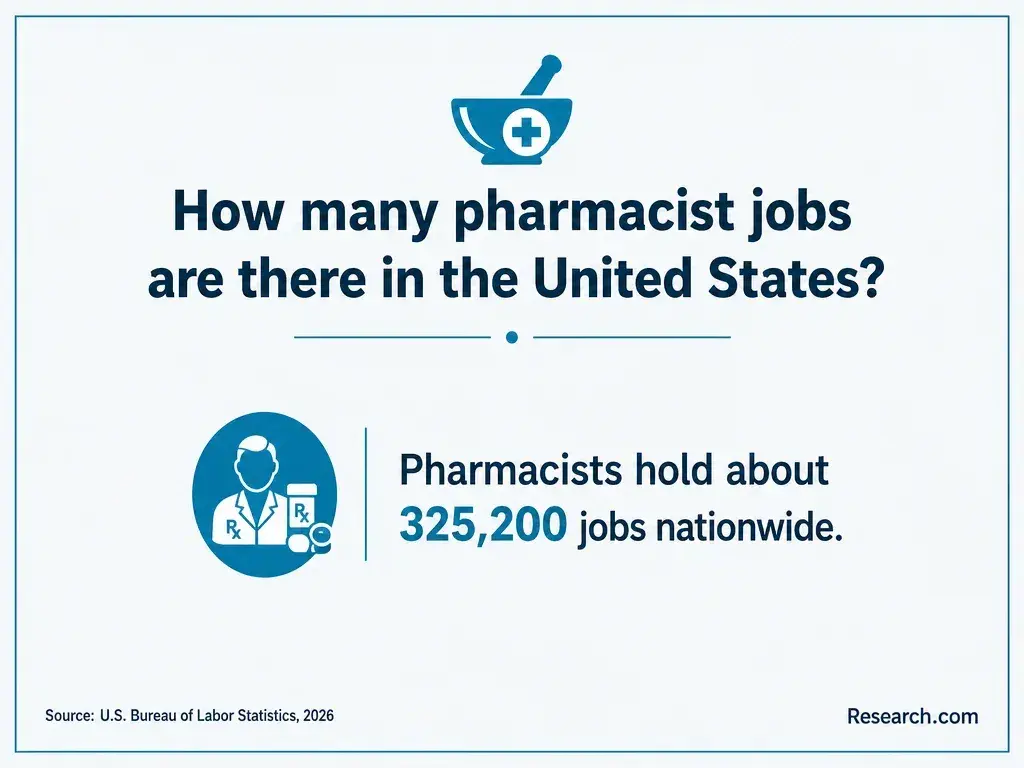
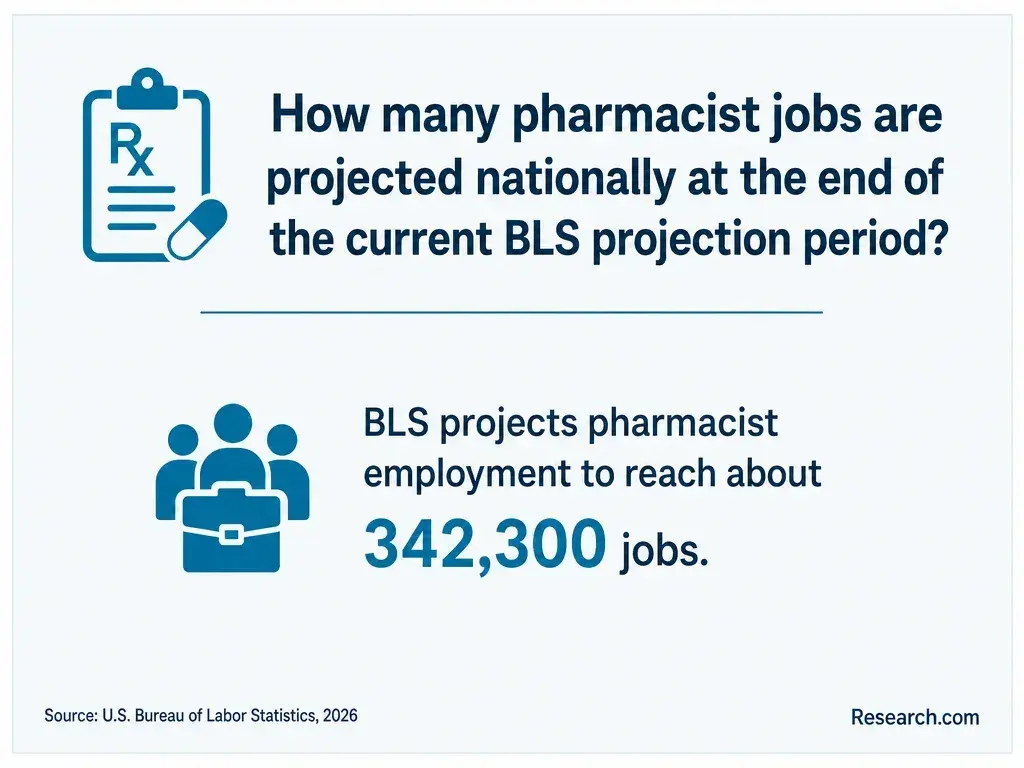
A licensed pharmacist may work in community, hospital, ambulatory care, or other practice settings; particular positions can require additional experience or training. The Bureau of Labor Statistics reports pharmacist median annual pay of $140,910 in May 2025, with 5% projected job growth, 2025-2035 and about 12,500 openings per year. Those are occupation-wide U.S. figures, not a starting-salary forecast for a new graduate or a guarantee of an opening in a preferred location.
A residency provides postgraduate practice training; a fellowship generally serves a different, often research- or industry-focused purpose. Specialty board certification is another credential, not a substitute for state licensure. None is universally required for pharmacist employment, though particular employers may prefer additional training.
If your goal is a pharmacy-adjacent job rather than licensed pharmacist practice, compare the duties before committing to the Pharm.D. workload and cost. Some pharmacy degree programs with accelerated schedules lead to other credentials; a short program should not be assumed to qualify you for pharmacist licensure. Pharmacy technician work is a separate occupation that does not ordinarily require a Pharm.D.
Other Things You Should Know About PharmD
Possibly, but first compare the job's fixed hours with required classes, labs, exams, and placements. Ask whether the school permits schedule changes when a rotation conflicts with work; do not count on that flexibility.
Progression rules vary. A failed prerequisite within the professional sequence may delay later courses or rotations, so read the school's remediation, repeat, and dismissal policies before enrolling.
It may make workflow and medication terminology more familiar. It does not replace professional coursework, supervised experiences, or assessments unless the school explicitly awards applicable credit.
Ask how students access tutoring, faculty help, academic accommodations, and support during off-campus rotations. Find out when help is available - not just whether the school lists the service.
- Program Integrity Questions and Answers - Credit Hour http://www.ed.gov/laws-and-policy/higher-education-laws-and-policy/program-integrity-information-questions-and-12
- An Advanced Pharmacy Practice Experience in a University's Office of Experiential Education - PMC https://pmc.ncbi.nlm.nih.gov/articles/PMC10159452/
- Undergraduate/PharmD Pharmacy Programs FAQs | Purdue University College of Pharmacy https://pharmacy.purdue.edu/undergraduate-pharmd-pharmacy-programs-faqs/
- Experiential Education | University of Saint Joseph CT https://www.usj.edu/academics/sppas/pharmacy/experiential-education/
- FAQ | OSU College of Pharmacy - Oregon State University https://pharmacy.oregonstate.edu/programs-admissions/pharm-d/faq
- Academic Course Load | UNC Eshelman School of Pharmacy https://pharmdstudenthandbook.web.unc.edu/academic-guidelines/academic-course-load/
- APPE Rotation Procedures - R. Ken Coit College of Pharmacy https://www.pharmacy.arizona.edu/appe-rotation-procedures
- Introductory Pharmacy Practice Experiences Curriculum (IPPE) | wvu.edu https://pharmacy.hsc.wvu.edu/explearning/introductory-pharmacy-practice-experiences-curriculum-ippe/
- Pharmacy Program Experiential Learning | Saint Joseph's University https://www.sju.edu/departments/philadelphia-college-pharmacy/experiential-learning
- Curriculum - UW School of Pharmacy https://sop.washington.edu/pharmd/curriculum/