How Many Campus Visits Does an Online PharmD Require?

Co-Founder and Chief Data Scientist
An online Doctor of Pharmacy (Pharm.D.) can reduce time spent in a classroom without eliminating travel. Required campus sessions, hands-on assessments, and clinical rotations can make two seemingly similar programs very different commitments.
If you are comparing programs around work, family, or distance from campus, you need a count of required trips - not just an "online" label. This guide shows you what to count, what to ask about the schedule, and how to decide whether a program's in-person requirements are workable.
Key Things You Should Know
- There is no standard number of campus visits for an online Pharm.D.; obtain the program's required in-person calendar for every year of enrollment.
- Campus immersions are only part of the commitment. Introductory and advanced pharmacy practice experiences (IPPEs and APPEs) generally take place at approved, in-person practice sites.
- Count trips, days away, and travel costs separately. Confirm whether required sessions can be made up and whether clinical placements near home are available - not merely possible.
How many campus visits does an online PharmD require?
There is no universal visit count. An online or hybrid Pharm.D. may schedule required campus immersions for laboratory work, simulations, skills assessments, or orientation. Another may organize in-person requirements differently. Even within one program, the number and length of visits can vary by year. A program's current academic calendar and student handbook - not its description as "online" - are the sources to use when planning travel.
Ask the school for a year-by-year schedule before paying a deposit. To turn that schedule into a realistic travel plan, count these commitments separately:
- Campus trips: Each required arrival at the school, including orientation, laboratory blocks, assessments, and any mandatory return visits.
- Days on site: The length of each visit, plus travel days and any required preparation or check-in time.
- Practice-site attendance: IPPEs and APPEs, which may require regular in-person attendance without being campus visits.
- Unconfirmed dates: Sessions the school has not yet scheduled, along with its policy for changes and missed attendance.
A multi-day immersion is one trip but several days away from home or work. Conversely, a nearby rotation might involve no overnight travel but still require a substantial daytime commitment. When reviewing best online Doctor of Pharmacy programs, request the same schedule details from each school so the comparison is meaningful.
What is an online PharmD program?
An online Pharm.D. delivers some professional pharmacy coursework remotely while retaining supervised, hands-on education. Depending on the program, remote classes may include live meetings, recorded material, scheduled examinations, or group work. "Online" does not mean self-paced, fully remote, or compatible with unrestricted full-time employment.
The professional Pharm.D. curriculum is distinct from undergraduate pre-pharmacy prerequisites. Shorter pharmacy-related credentials may prepare students for different roles, but they are not substitutes for the professional degree used in the U.S.-educated pharmacist licensure pathway. Treat lists of pharmacy degree programs with shorter timelines as a starting point for checking the exact credential, rather than assuming each option leads to pharmacist licensure.
Is an online PharmD accredited and valid for pharmacist licensure?
Online delivery does not, by itself, make a Pharm.D. valid or invalid for licensure. Check the specific professional program's current status with the Accreditation Council for Pharmacy Education (ACPE). ACPE professional-program accreditation is different from the university's institutional accreditation and from state authorization to enroll a distance-learning student where you live.
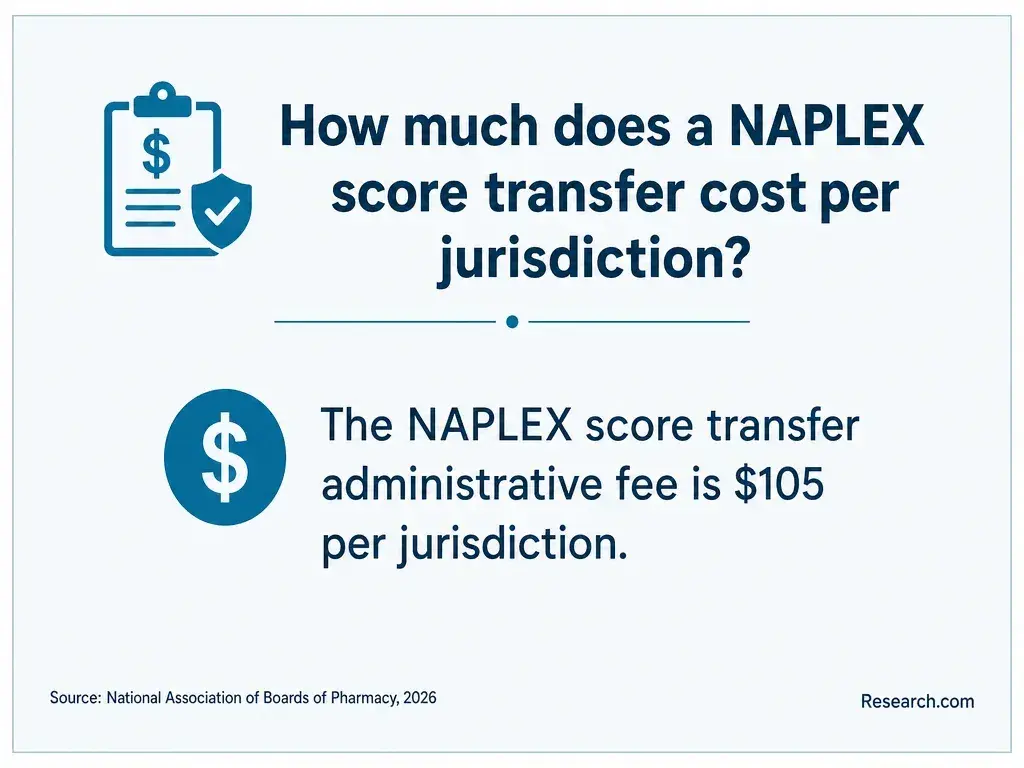
Before enrolling, confirm that the school can enroll you in your state, arrange or approve required experiential education there, and explain how its program meets the educational requirements of the state where you intend to seek a license. After graduation, applicants must satisfy their licensing board's requirements, which can include the North American Pharmacist Licensure Examination (NAPLEX), a jurisdiction-specific law examination or other law requirement, and additional conditions. Jurisdictions do not all use the same law exam. Neither graduation nor passing an exam automatically issues a license.
This check matters even when comparing pharmacy degree entry options: ease of entry does not establish that a credential is an accredited professional Pharm.D. or meets your intended state's rules.
The useful comparison is not "online versus in person" alone. Compare where you must be, when you must be there, and who coordinates clinical training. This table separates typical delivery differences from requirements that both pathways retain.
| Decision factor | Online or hybrid Pharm.D. | Campus-based Pharm.D. |
| Class attendance | Some instruction is remote; live sessions may still have fixed times. | Regular travel to campus is generally part of coursework. |
| Hands-on learning | May require scheduled campus immersions or other approved in-person sessions. | Typically built into the on-campus timetable. |
| Clinical experiences | In-person approved sites are still required; nearby placement is not automatic. | In-person approved sites are also required and may involve travel. |
| Travel planning | Fewer routine commutes may be offset by longer trips or temporary lodging. | Routine commuting or relocation may cost more, depending on location. |
A hybrid option may favor someone who lives far from a school but can attend scheduled immersions and rotations. A campus pathway may favor someone who needs frequent access to labs or cannot accommodate blocks of travel. Fast-track Doctor of Pharmacy programs raise a separate question: a shorter calendar does not necessarily mean fewer required in-person days or a lighter weekly schedule.
Professional Pharm.D. study develops the knowledge and supervised skills used to evaluate medications, counsel patients, identify safety problems, and work with other healthcare professionals. Coursework commonly addresses pharmaceutical sciences, pharmacotherapy, calculations, evidence evaluation, and professional responsibilities. Programs use labs, simulations, and practice experiences to assess skills that cannot be established through recorded lectures alone.
Prior undergraduate coursework can satisfy admission prerequisites without replacing professional training. If you hope to apply prior college credits to pharmacy programs, ask the receiving school which credits meet prerequisites and whether it separately permits transfer into the Pharm.D. curriculum. Acceptance of one does not establish acceptance of the other.
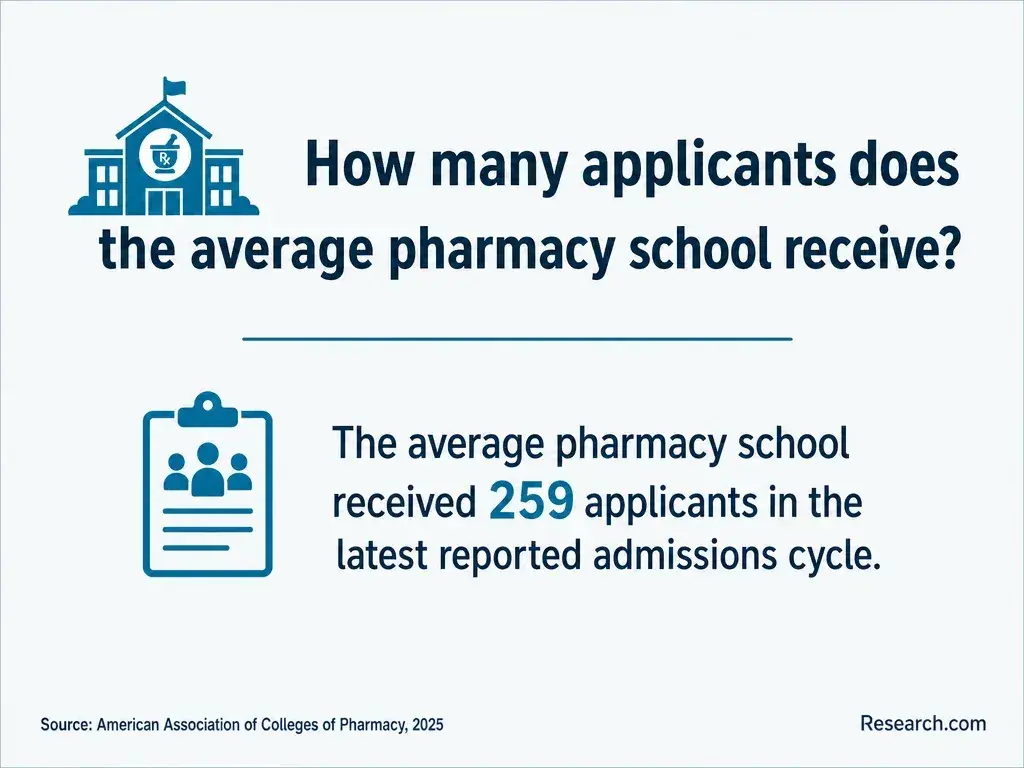
Requirements vary by school. Applicants typically need specified undergraduate prerequisite courses, which may include science courses with laboratories, plus transcripts and school-required application materials. A completed bachelor's degree is not universally required. Schools set their own rules for grades, course age, in-progress prerequisites, interviews, recommendations, and whether to apply through PharmCAS or another process.
If you are seeking Pharm.D. admission after pre-pharmacy coursework, request a written prerequisite review before assuming that earlier classes, online labs, or transfer work qualify. The Pharmacy College Admission Test (PCAT) was retired in 2024; do not plan around taking it as a current admissions exam. Meeting minimum admission requirements does not guarantee an offer.
The timeline depends on completed prerequisites, the program's professional-course sequence, and its rotation schedule. Remote instruction does not automatically shorten the degree or allow students to move through courses at their own pace. Ask for a term-by-term plan that identifies when full-time clinical attendance begins and whether prerequisites add time before entry.
Compare the full cost of attendance, not tuition alone. An online Pharm.D. cost comparison is most useful when you add mandatory fees, equipment, campus travel and lodging, possible rotation travel or housing, and the income you may forgo during required attendance. Request the school's current cost-of-attendance estimate and an itemized list of expenses it does not cover.
If you expect to borrow, have the financial aid office explain your eligibility under the rules that apply to your entry date and circumstances. Federal borrowing rules changed for many new graduate and professional borrowers beginning July 1, 2026; older descriptions of loan limits or Grad PLUS availability may not fit a new applicant.
Students complete IPPEs and APPEs at practice sites approved under their program's experiential-education process. Sites can include community pharmacies, hospitals, and other patient-care settings. These are supervised, in-person educational experiences, not remote replacements for campus visits. Their locations and schedules depend on school arrangements, site availability, and applicable state rules.
Ask the experiential-education office who finds sites, who approves preceptors, how far students may be assigned from home, and when placements become final. Also confirm any intern registration, background check, immunization, or onboarding obligations. Do not assume your current pharmacy job can substitute for a rotation or that every required placement can be completed locally.
A list of online pharmacy education duration options cannot tell you how a professional Pharm.D. schedules clinical training. For this decision, obtain the program's actual rotation calendar and placement policy.
An accredited professional Pharm.D. can support an application for pharmacist licensure; the online format does not create a separate pharmacist occupation. Licensed pharmacists work in settings such as community pharmacies, hospitals, and other healthcare organizations. The Bureau of Labor Statistics reports median annual pay for pharmacists of $140,910 in May 2025, with 5% projected job growth, 2025-2035. That occupation-wide median is not a starting-salary estimate or a promise about graduates of any particular program.
Some pharmacists pursue postgraduate residencies or fellowships for particular career goals. Those are distinct from state licensure and from optional specialty board certification; none is universally required for every pharmacist job. If your goal is a pharmacy-adjacent role rather than licensed pharmacist practice, doctoral study with a shorter time commitment may be worth comparing, but a different doctorate does not replace Pharm.D. and licensure requirements for pharmacist work.
How do you choose a reputable online PharmD program?
Choose the program whose verified in-person schedule, licensure pathway, and total cost you can actually accommodate. A practical short list should include written answers to the following questions before you commit:
- What is the program's current ACPE professional accreditation status, and can it enroll and place a student in my state?
- What are the required campus dates and days on site for every year, and which dates are still subject to change?
- Which classes and assessments require live attendance, and what happens if I miss a required immersion?
- Who secures IPPE and APPE sites, what travel might be required, and when will I know my assignments?
- What will I pay beyond tuition, and how will attendance or rotation schedules affect my ability to work?
Be cautious if a school cannot clearly identify its professional credential, provide an in-person schedule, or explain site approval and intended-state licensure eligibility. Even pharmacy programs with alternative entry pathways warrant the same checks. Flexible admission does not make clinical, accreditation, or licensing requirements optional.
Other Things You Should Know About PharmD
Not necessarily. Ask which dates are confirmed, when later dates will be published, and how the school notifies students of changes before booking nonrefundable travel.
Only if the program expressly permits it. Confirm the approved location in writing; another campus or partner site may not offer the same required activities.
Usually, prior education is evaluated for admission or credit rather than treated as a waiver of required professional skills sessions. Ask the program whether it offers any specific exemption.
That depends on the school and application cycle. Check the current admissions instructions for interview format and any travel requirement separate from enrollment-related visits.
- Cost of Attendance (Budget) | 2025-2026 Federal Student Aid Handbook https://fsapartners.ed.gov/knowledge-center/fsa-handbook/2025-2026/vol3/ch2-cost-attendance-budget
- Distance Education Pathway | Lake Erie College of Osteopathic Medicine https://lecom.edu/pharmacy/sop-pathways/distance-education-pathway/
- PharmD Remote Pathway | CU School of Pharmacy https://pharmacy.cuanschutz.edu/degreesandprograms/pharmd/remote-pharmd
- Distance Doctor of Pharmacy | University of Findlay https://pharmdonline.findlay.edu/programs/online-pharm-d
- PharmD Distance Pathway | Western New England University https://wne.edu/pharmacy-and-health-sciences/academics/pharmd/distance-pathway.cfm
- How the BSN Online Clinical Experience Works | Chamberlain University https://www.chamberlain.edu/academic-resources/bsn-online-clinical-experience
- PharmD Online Frequently Asked Questions - Pharmacy | Extended & Distance Education https://www.su.edu/pharmacy/programs/pharmd-traditional-program/pharmd-online-frequently-asked-questions/
- Admission Requirements | ufl.edu https://admissions.pharmacy.ufl.edu/steps-to-apply/application-requirements/
- Experiential Rotation Manual | ufl.edu https://oep.pharmacy.ufl.edu/student-resources/experiential-policies-and-procedures/
- Earn an Online Pharm.D. Degree at St. John Fisher University https://onlinepharmd.sjf.edu/