
St. John Fisher Online PharmD Curriculum Overview

Co-Founder and Chief Data Scientist
St. John Fisher University's online Doctor of Pharmacy (Pharm.D.) pathway may let you complete much of pharmacy school from home, but it is not a fully remote or self-paced degree. Before applying, you need to understand how its professional courses, campus activities, and in-person clinical experiences fit your schedule and budget.
This guide separates those requirements from undergraduate prerequisites and later pharmacist licensure, so you can decide whether Fisher's online pathway - or a campus-based or shorter alternative - matches your goal.
Key Things You Should Know
- Fisher's online pathway leads to a professional Pharm.D.; online coursework does not eliminate hands-on training or in-person pharmacy practice experiences.
- Plan around a four-year professional curriculum, plus any undergraduate prerequisites you still need. Confirm the current cohort calendar and required campus visits before committing.
- Compare the full cost of tuition, fees, travel, and rotations - not tuition alone. Graduating from an accredited program is an education milestone, not a pharmacist license.
What is the St. John Fisher online Pharm.D. program?
St. John Fisher University's Wegmans School of Pharmacy offers an online pathway to its Doctor of Pharmacy. The Pharm.D. is the professional degree designed to prepare students for the educational component of U.S. pharmacist licensure. It is not an undergraduate pre-pharmacy major, a pharmacy technician credential, or a degree that can be completed entirely through remote study.
The distinction matters when comparing online pharmacy school programs: "online" describes how some instruction is delivered, not where every lab, assessment, or clinical experience takes place. Ask Fisher for the current pathway calendar, including scheduled class meetings and required in-person activities, before assuming it will fit around a job.
Is St. John Fisher's online Pharm.D. program ACPE accredited?
The Accreditation Council for Pharmacy Education (ACPE) accredits Fisher's professional Pharm.D. program; the online pathway is a way to pursue that degree, not a separate pharmacist credential. Before enrolling, confirm the program's current status in ACPE's official directory and ask Fisher how the online pathway is covered. ACPE program accreditation is distinct from the university's institutional accreditation and from its authorization to enroll a distance-education student in a particular state.
Also confirm that your intended state permits the required clinical placements and whether its pharmacy board has any additional licensure conditions. An easier admissions route does not resolve those questions: when reviewing pharmacy schools with accessible admissions, check accreditation and state eligibility separately from admission criteria.
What does the St. John Fisher online Pharm.D. curriculum include?
The professional curriculum combines pharmaceutical science with learning how to evaluate medications and care for patients. Students should expect instruction involving drug action and dosing, pharmacotherapy, medication safety, communication, pharmacy practice, and the legal and ethical responsibilities of pharmacists, alongside skills work and supervised practice. Undergraduate biology, chemistry, and other prerequisites prepare applicants to enter this curriculum; they are not its substitute.
To judge the curriculum rather than its marketing description, request Fisher's current term-by-term online course map. Check when science-heavy courses, live activities, hands-on work, and experiential education occur, and whether a missed or failed course delays progression to the next offering. A short-duration pharmacy program may suit someone seeking another pharmacy-related credential, but it should not be mistaken for a substitute for the professional Pharm.D. required on the usual U.S. pharmacist-licensure pathway.
The principal decision is where and how you can attend instruction, not whether pharmacists trained online can skip hands-on preparation. This comparison highlights the practical differences to verify with Fisher for the cohort you would enter.
| Decision factor | Online pathway | Campus pathway |
| Regular instruction | Online delivery; confirm live attendance times | Campus-based attendance; confirm the weekly timetable |
| Hands-on activities | Confirm required campus visits, dates, and travel | Confirm scheduled on-campus labs and assessments |
| Clinical education | In-person, approved practice sites; location requires planning | In-person, approved practice sites; location requires planning |
| Budget pressure | Technology and travel may add to published charges | Commuting or relocation may add to published charges |
Choose the online pathway if its scheduled instruction and required travel are workable; choose campus study if regular access to in-person classes better supports your learning. If prior professional coursework is part of your decision, review pharmacy school credit transfer options, then obtain Fisher's written evaluation. Admission to a pathway does not mean previous courses will replace its professional courses.
Applicants need the prerequisite undergraduate coursework and application materials required for their entry cycle; those prerequisites are separate from the four-year professional curriculum. Do not assume every applicant needs a completed bachelor's degree, or that meeting minimum academic requirements guarantees admission. The Pharmacy College Admission Test (PCAT) was retired in January 2024 and should not be treated as a current admissions step.
For Pharm.D. admission after pre-pharmacy coursework, compare your transcript against Fisher's current course-by-course requirements. Ask admissions to confirm acceptable labs, minimum grades, coursework completed elsewhere, courses still in progress, the application route and deadline, and any interview or enrollment conditions. Get a written assessment before paying for additional prerequisites or relying on a course substitution.
Plan for a four-year professional Pharm.D. sequence after completing the prerequisites needed for admission. Your personal timeline can be longer if you still need undergraduate courses, cannot follow the cohort's course sequence, or must repeat a course. "Online" does not mean that professional coursework or clinical rotations can be taken at any pace.
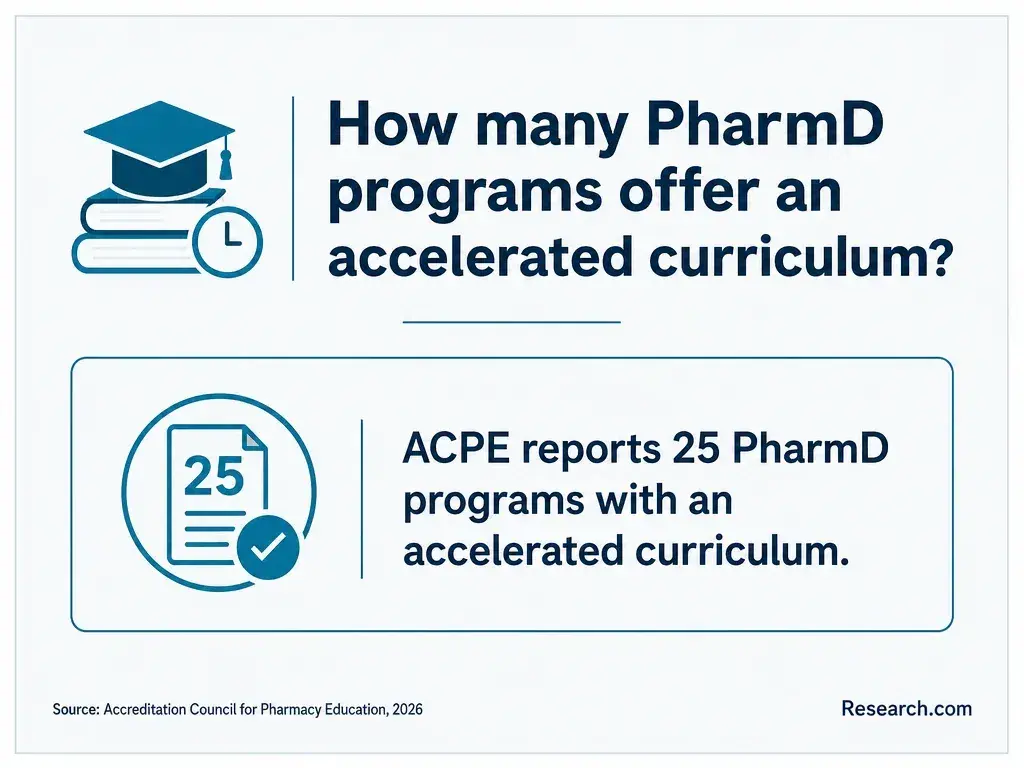
If finishing sooner is essential, compare verified calendars for accelerated pharmacy school options rather than assuming an online pathway is accelerated. Count the time needed for prerequisites, campus attendance, and full-time rotations - not just the number of academic terms advertised.
Do not rely on a tuition figure without its academic year and billing basis. Request Fisher's current online-pathway tuition and mandatory-fee schedule, then compare it with the campus pathway on the same basis. Your actual budget may also include prerequisite courses, textbooks and clinical resources, a suitable computer, campus-visit travel, immunizations and background checks, rotation travel or temporary housing, and eventual licensing expenses.
To assess an affordable route to a Pharm.D., ask for an individualized cost-of-attendance estimate and a financial-aid explanation for your entry year. Federal borrowing rules changed for many new graduate and professional borrowers beginning July 1, 2026; do not assume older loan limits or automatic access to Grad PLUS loans apply. Compare expected borrowing with time away from paid work as well as billed charges.
Pharm.D. training includes introductory pharmacy practice experiences (IPPEs), which introduce supervised practice, and advanced pharmacy practice experiences (APPEs), which provide more intensive rotations later in the program. Online classes cannot replace these in-person experiences. Obtain Fisher's current experiential schedule for the online pathway, including placement settings, timing, site approval, and any limits on completing rotations near home.
Ask the experiential education office which placements it coordinates and what you must arrange yourself. Requirements may include pharmacist-intern registration, background checks, immunizations, transportation, and compliance with a site's schedule. Do not assume a current pharmacy job can substitute for a rotation or that every placement will be local. Even pharmacy education with shorter completion time must be evaluated against its required hands-on training; clinical availability can affect a student's real-world schedule.
Earning the Pharm.D. does not issue a pharmacist license. Graduates must satisfy the requirements of the jurisdiction where they seek to practice, generally including board-approved eligibility, the North American Pharmacist Licensure Examination (NAPLEX), and any applicable pharmacy-law examination or other state conditions. Jurisprudence rules differ: do not assume every jurisdiction requires the Multistate Pharmacy Jurisprudence Examination (MPJE), particularly as some jurisdictions began transitioning to the Uniform MPJE (UMPJE) in 2026.
Check the relevant board of pharmacy and the National Association of Boards of Pharmacy for current application, examination, and intern-hour rules before graduation. An alternative route into pharmacy school is not an alternative to state licensing: pharmacy programs with alternative entry pathways still need to be evaluated against the education and licensing rules for the state where you intend to work.
What careers and salaries can graduates pursue after the Pharm.D.?
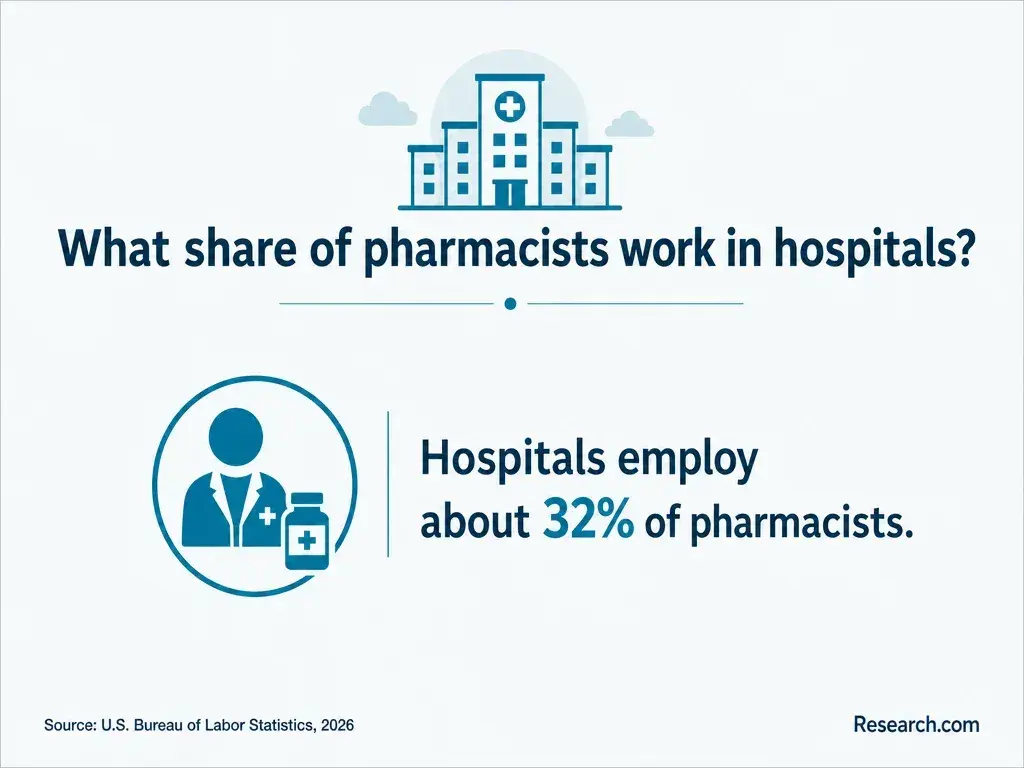
Once licensed, pharmacists may work in community pharmacies, hospitals, ambulatory care, specialty pharmacy, or other settings, subject to employer qualifications and state scope-of-practice rules. The U.S. Bureau of Labor Statistics reports median annual pay for pharmacists of $140,910 in May 2025, with 5% projected job growth, 2025-2035. Those figures describe the occupation nationally, not Fisher graduates' starting salaries or a promised return on tuition.
Some positions favor postgraduate year one (PGY1) or year two (PGY2) residency training; fellowships and optional specialty board certifications serve different purposes. None replaces state licensure, and none is required for every pharmacist job. If your goal is a pharmacy-adjacent role rather than pharmacist practice, compare its actual hiring requirements before investing in a Pharm.D.: accelerated online doctoral education in another subject will not, by itself, qualify you for pharmacist licensure.
Other Things You Should Know About PharmD
Not automatically. Technician training and experience can be useful background, but Fisher decides whether particular college courses satisfy its academic prerequisites.
No. A residency is separate training pursued after the Pharm.D.; admission to one is competitive and governed by the individual program's requirements.
Do not assume so. Fisher's online pathway is a professional degree program, while internationally educated pharmacists may have a separate certification and state-licensure route. Compare those routes with the board where you intend to practice.
Not by itself. Pharmacist prescribing and related clinical authority depend on state law, the practice setting, and any additional conditions that apply to the activity.
- An Advanced Pharmacy Practice Experience in a University's Office of Experiential Education - PMC https://pmc.ncbi.nlm.nih.gov/articles/PMC10159452/
- Advanced Pharmacy Practice Experiences (APPE) | Veterans Affairs https://www.va.gov/loma-linda-health-care/work-with-us/internships-and-fellowships/advanced-pharmacy-practice-experiences-appe/
- Program: Doctor of Pharmacy, PharmD - University of Pittsburgh https://catalog.upp.pitt.edu/preview_program.php
- Admissions - Fisher Pharm.D. Online | SJF-PHA https://onlinepharmd.sjf.edu/admissions/
- Prerequisite Coursework | School of Pharmacy https://www.pharmacy.pitt.edu/academics/doctor-pharmacy/apply-pharmd-program/prerequisite-coursework
- Graduate Programs | Doctor of Pharmacy (Pharm.D.) | St. John Fisher University https://www.sjf.edu/graduate-programs/doctor-of-pharmacy-pharmd/
- Program: Pharmacy, Pharm.D | purdue.edu https://catalog.purdue.edu/preview_program.php
- PharmD Core Curriculum Overview - College of Pharmacy https://www.pharmacy.umn.edu/doctor-pharmacy/curriculum/pharmd-core-curriculum/pharmd-core-curriculum-overview
- FAQ | OSU College of Pharmacy - Oregon State University https://pharmacy.oregonstate.edu/programs-admissions/pharm-d/faq
- Curriculum - UW School of Pharmacy https://sop.washington.edu/pharmd/curriculum/


