Emergency Medicine Pharmacist Career Path

Co-Founder and Chief Data Scientist
Emergency medicine pharmacy combines rapid clinical decisions with the long education and training path required to become a pharmacist. If you are considering the emergency department, the key decision is whether you want its pace and responsibilities enough to pursue a Pharm.D., licensure, and potentially specialized residency training. This guide explains what the work involves, which steps are required versus preferred, what they may cost, and how to assess your readiness before committing.
Key Things You Should Know
- The usual path is an accredited Doctor of Pharmacy (Pharm.D.) program, state pharmacist licensure, and often a postgraduate year one (PGY1) residency followed by a PGY2 emergency medicine residency; residency is not a universal legal requirement.
- Emergency medicine pharmacists work alongside care teams on urgent medication decisions, but the role can involve overnight shifts, high-stakes interruptions, and competitive specialized openings.
- The Bureau of Labor Statistics reports $140,910 in May 2025 as the median annual pay for pharmacists overall - not specifically emergency medicine pharmacists.
What does an emergency medicine pharmacist do?
An emergency medicine pharmacist helps clinicians select, prepare, dose, and monitor medications for patients whose conditions may change quickly. Depending on the hospital and shift, the pharmacist may participate in resuscitations, review orders, advise on antidotes and antibiotics, check medication histories, and help prevent errors during transfers or discharge. They also develop protocols and teach staff.
The role is more bedside-facing than many dispensing positions, but staffing models vary: some pharmacists are embedded in the emergency department, while others cover it from a central pharmacy. Ask employers how much time the position actually assigns to emergency care, whether pharmacist coverage includes nights, and which decisions require physician orders or other authorization under state law.
If your main goal is to enter a pharmacy workplace quickly rather than make clinical decisions as a licensed pharmacist, short-duration pharmacy programs may be worth comparing. Pharmacy technician work is a different occupation and does not ordinarily qualify someone to practice as a pharmacist.
How do you become an emergency medicine pharmacist?
The path has mandatory educational and licensing steps, followed by training choices shaped by the jobs you want. This comparison separates what permits pharmacist practice from what may make an applicant more competitive for an emergency department role.
| Stage | Purpose | Requirement status |
| Pre-pharmacy coursework | Meets a Pharm.D. program's admission prerequisites | School-specific; a bachelor's degree is not universally required |
| Accredited Pharm.D. | Provides professional pharmacy education and supervised rotations | Standard U.S.-educated route toward pharmacist licensure |
| State pharmacist licensure | Authorizes pharmacist practice in the relevant jurisdiction | Legally required for pharmacist work |
| PGY1, then PGY2 emergency medicine residency | Builds broad clinical skills, then focused emergency care experience | Often preferred for specialized jobs, not universally required by law |
A student typically completes prerequisite coursework before the professional Pharm.D. curriculum, then seeks licensure after graduation. Some pharmacists enter emergency care through hospital positions and substantial on-the-job experience rather than a PGY2 residency, but they should check actual hiring requirements: a preferred residency can be difficult to substitute for in a competitive search.
If time in school is a concern, compare whether you can complete a Pharm.D. on an accelerated schedule. A shorter academic calendar does not remove clinical training, licensing steps, or any residency an employer expects.
What degree and license do emergency medicine pharmacists need?
For someone educated in the United States, the usual qualifying degree is a Pharm.D. from a professional program accredited by the Accreditation Council for Pharmacy Education (ACPE). ACPE accredits programs, not individual pharmacists. Undergraduate pre-pharmacy credits - or a degree in biology, pharmacology, or pharmaceutical sciences - do not by themselves qualify someone for pharmacist licensure.
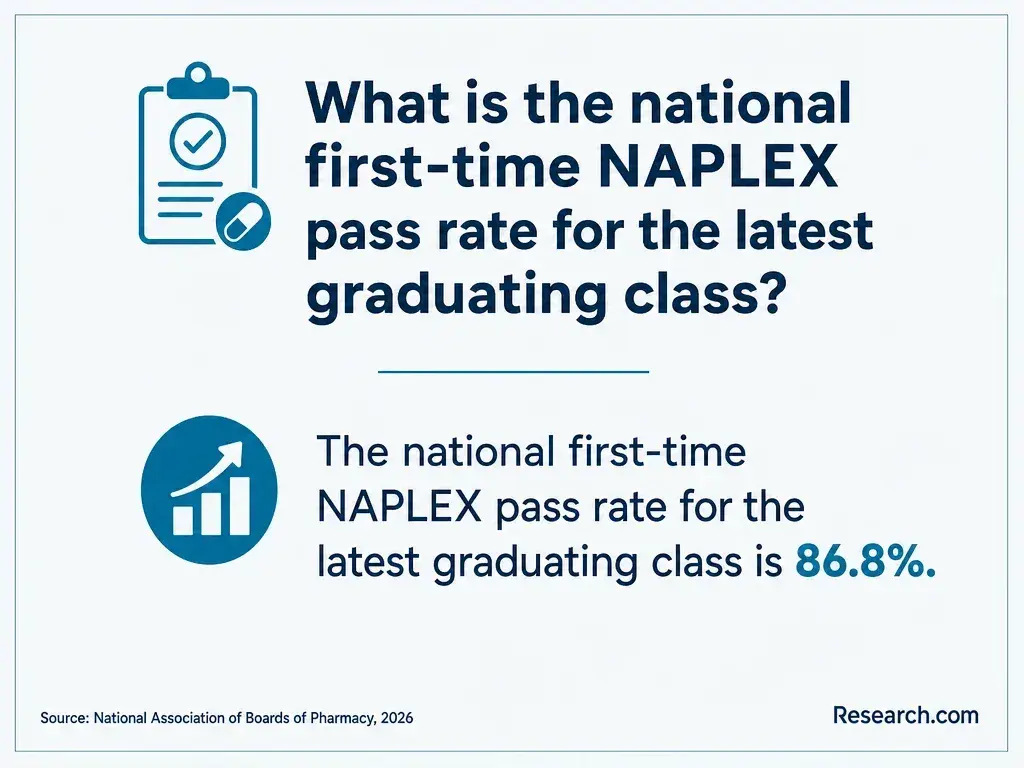
After graduation, applicants must satisfy the board of pharmacy in the state where they intend to practice. That generally includes the North American Pharmacist Licensure Examination (NAPLEX) and any applicable state law examination or other jurisdiction-specific requirements. Do not assume every state uses the Multistate Pharmacy Jurisprudence Examination (MPJE): requirements differ, and some jurisdictions have moved to the Uniform Multistate Pharmacy Jurisprudence Examination (UMPJE). Passing an exam alone does not issue a license.
If you already have substantial science coursework, pharmacy programs for students with science credits may help you compare entry routes. Have each school evaluate how your credits satisfy its prerequisites; do not assume they shorten the professional curriculum. Internationally educated pharmacists should check the separate certification and state-board pathway applicable to their credentials.
A postgraduate year one (PGY1) pharmacy residency develops broad patient-care and hospital-practice skills after graduation and licensure eligibility. A PGY2 emergency medicine residency builds on that foundation through supervised work with acutely ill patients, urgent medication decisions, interdisciplinary teams, teaching, and quality improvement. Program schedules, required rotations, and eligibility rules differ.
Residency is paid postgraduate training, not another degree or a substitute for a pharmacist license. Nor is it the same as a fellowship, which generally emphasizes research or another defined professional focus. An accelerated online doctoral education option is likewise not a substitute for supervised emergency department experience.
Before applying, review the current American Society of Health-System Pharmacists (ASHP) program directory and each residency's accreditation status, eligibility rules, rotations, staffing obligations, and stipend. Check whether it uses the Pharmacy Online Residency Centralized Application Service (PhORCAS) and participates in the ASHP Match; do not assume every opportunity follows the same process. Weigh the training against a year of full pharmacist earnings and the possibility of pursuing emergency care through direct hospital employment.
The Pharm.D. curriculum establishes the foundation: pharmacology, pharmacotherapy, patient assessment, drug information, medication safety, and communication, alongside supervised introductory and advanced pharmacy practice experiences. Prerequisite science courses prepare students for that professional curriculum; they are not its clinical equivalent.
Emergency-focused learning may include toxicology, infectious diseases, critical care, trauma, resuscitation medications, and pediatric or geriatric emergencies. A school might offer these as courses, electives, simulations, or rotations; a residency generally develops them through supervised practice and case-based teaching rather than a fixed national course list. Compare documented rotation opportunities and preceptor experience, not just elective titles.
Students comparing transfer-friendly pharmacy education options should ask the receiving school exactly where prior coursework applies. Even accepted academic credit does not replace required clinical experiences or automatically qualify a graduate for residency.
Pharm.D. admission requirements are set by each school. They can include specified prerequisite courses and labs, minimum grades, a GPA threshold, recommendations, an interview, and application deadlines. Some schools require a bachelor's degree; others admit students after sufficient prerequisite study. The Pharmacy College Admission Test (PCAT) was retired in 2024, so it is not a current exam to schedule.
Start with the school's current admissions page and, if it participates, its PharmCAS directory listing. Confirm whether outstanding prerequisites may be completed before matriculation, how repeated or transfer courses are evaluated, and whether a supplemental application is required. A published minimum is an eligibility threshold, not a promise of admission. A guide to pharmacy school prerequisites and eligibility can help frame those questions, but the school's current policy controls.
Residency applicants generally need a Pharm.D., eligibility for pharmacist licensure, and evidence of clinical readiness. PGY2 emergency medicine programs ordinarily expect PGY1 training or an accepted equivalent under applicable accreditation rules. Check each program's current criteria and licensing deadline before assuming you qualify.
Some Pharm.D. programs deliver academic instruction online or in hybrid formats, but hands-on requirements still matter. Programs may require campus sessions, scheduled live classes, labs, and in-person introductory and advanced practice rotations. An online format does not mean a self-paced degree or permission to complete clinical work remotely.
When comparing online Doctor of Pharmacy degree options, confirm ACPE professional-program accreditation, the institution's authority to enroll students in your state, where rotations can occur, who approves placements, and whether completion supports licensure in your intended jurisdiction. These are separate questions. Ask about travel, intern registration, immunizations, background checks, and time away from work before enrolling.
Emergency medicine residencies require substantial supervised patient-care work at practice sites; online teaching or conferences may supplement that work but cannot replace bedside training. A schedule that appears flexible on a program page may be incompatible with full-time outside employment.
There is no reliable single price for this career path. Your total depends on prerequisite coursework, the Pharm.D. program's tuition and mandatory fees, living expenses, required equipment and references, rotation travel or housing, licensing expenses, and whether you pursue residency. A residency stipend offsets some living costs but does not erase the opportunity cost of postponing a full pharmacist salary.
Compare schools using a written, same-period estimate of tuition, required fees, and likely clinical-placement expenses - not advertised tuition alone. Doctor of Pharmacy programs with manageable tuition may be a starting point, but a lower sticker price can lose its advantage if travel or housing costs are substantial.
Ask each financial aid office for an aid-year-specific borrowing estimate. Federal rules changed for many new graduate and professional borrowers beginning July 1, 2026; eligibility, limits, and any transitional provisions depend on the student's circumstances. Do not build a budget on an assumption of unrestricted graduate borrowing.
The Bureau of Labor Statistics reports median annual pay of $140,910 in May 2025 for pharmacists overall. It does not publish that figure specifically for emergency medicine pharmacists, so it should not be treated as an emergency department salary offer. Pay for a particular job depends on location, employer, experience, shifts, and responsibilities.
The same agency projects 5% growth in pharmacist employment from 2025-2035, with about 12,500 openings per year. Those occupation-wide projections include many practice settings; they do not predict how many emergency medicine positions will be available where you want to live.
To assess the financial trade-off, compare actual hospital job postings and residency stipends with your expected debt and time in training. An affordable route through pharmacy education is useful only if it meets licensure requirements and supports the clinical opportunities you intend to pursue.
What certifications and job opportunities are available in emergency medicine pharmacy?
Potential roles include emergency department clinical pharmacist, hospital pharmacist with emergency coverage, clinical specialist, residency preceptor, medication-safety pharmacist, and pharmacy leader. Employers may value residency training, documented emergency care experience, teaching, or research differently. A job title alone does not establish that a PGY2 residency is mandatory.
Board of Pharmacy Specialties (BPS) credentials are separate from state licensure and residency. A credential such as board certification in critical care pharmacy may be relevant to some emergency practitioners, but its eligibility criteria and exam must be checked directly with BPS; no certificate alone authorizes pharmacist practice. Short courses in resuscitation or emergency response can support job-specific skills without replacing a Pharm.D. or license.
For a realistic next step, compare several current emergency pharmacist postings: note their required license, residency language, shift pattern, and expected bedside duties. If those duties are not your goal, review pharmacy degree entry requirements while exploring technician or other pharmacy-adjacent paths. Those paths can offer healthcare work, but they do not confer pharmacist authority.
Other Things You Should Know About PharmD
If a hospital permits it, shadowing can reveal how often the pharmacist joins bedside decisions, handles interruptions, and works outside regular hours. Follow the hospital's privacy and access rules.
Potentially. A pharmacist license supports practice within its jurisdiction, but employers may expect setting-specific experience. Keep broader clinical and operational skills current if you want flexibility.
Consider hospital pharmacist roles that provide structured training and exposure to emergency coverage, while asking whether the experience will strengthen a future residency application. Reapplying is an option, not the only route.
It may not be. Coverage needs differ by hospital, but evenings, weekends, holidays, and urgent interruptions can be part of the work. Ask about the actual rotation and staffing schedule before accepting a position.
- Survey of Emergency Medicine Pharmacy Education... - PMC https://pmc.ncbi.nlm.nih.gov/articles/PMC4686475/
- Board Certified Emergency Medicine Pharmacist (BCEMP) | osd.mil https://www.cool.osd.mil/usn/credential/index.html
- Pharmacists - Texas State Board of Pharmacy https://www.pharmacy.texas.gov/consumer/broch5.asp
- How to Become a Pharmacist: A Step-by-Step Guide | MCPHS https://www.mcphs.edu/admission-and-aid/blog/how-to-become-a-pharmacist
- How to Become a Pharmacist | School of Pharmacy https://pharmacy.llu.edu/about-us/school-news/how-become-pharmacist
- PGY2 Emergency Medicine Pharmacy Residency | geisinger.edu https://www.geisinger.edu/gchs/education/residencies-fellowships/residencies/emergency-medicine-pharmacy
- Pharmacist - Explore Healthcare Careers | Mayo Clinic College of Medicine and Science https://college.mayo.edu/academics/explore-health-care-careers/careers-a-z/pharmacist/
- Emergency Medicine Pharmacy (PGY2) | Duke Department of Pharmacy https://pharmacy.duke.edu/residency-programs/emergency-medicine-pharmacy-pgy2
- Emergency Medicine Pharmacy | bpsweb.org https://bpsweb.org/emergency-medicine-pharmacy/
- Emergency Medicine Pharmacy - Health-System Pharmacy Jobs and Day-to-Day | American Society of Health-System Pharmacists https://careers.ashp.org/career-resources/find-the-job-1/emergency-medicine-pharmacy-health-system-pharmacy-jobs-and-day-to-day-72