
PharmD Group Study Strategies for Online Cohorts

Co-Founder and Chief Data Scientist
An online Doctor of Pharmacy (Pharm.D.) cohort may attend lectures from different locations, but its students still need to practice clinical reasoning, patient communication, and teamwork together. For students choosing a program or trying to improve an existing study group, the challenge is finding a routine that supports learning without adding meetings that consume scarce time.
This guide explains how to organize sessions, divide work fairly, prepare for assessments, and evaluate whether a program's schedule and resources will support collaboration.
Key Things You Should Know
- Use short, scheduled sessions built around individual preparation, case discussion, retrieval practice, and a documented plan for correcting mistakes.
- Keep every student responsible for the full curriculum: dividing preparation saves time, but dividing mastery creates gaps in clinical reasoning and exam readiness.
- Before joining a cohort, verify its live-class schedule, campus requirements, and in-person clinical placements; "online" does not mean fully remote or self-paced.
What are the best group study strategies for online PharmD cohorts?
The most useful group study produces something students cannot get by silently rereading the same slides: an explanation, a defensible treatment decision, or a corrected misconception. A Pharm.D. group should combine independent preparation with active practice in pharmacotherapy, calculations, drug information, and patient counseling.
Use this sequence for a recurring session. It makes participation visible while leaving time to resolve difficult material.
- Choose one learning objective and distribute a short case or question set before the meeting.
- Have everyone submit an initial answer independently, including the reasoning behind it.
- Compare answers aloud, asking a different member to explain each key choice and its alternatives.
- Check disputed points against assigned course materials and approved drug-information references.
- Record unresolved questions for faculty or a teaching assistant, then assign a date to revisit them.
Rotate who leads, challenges an answer, and summarizes the evidence. That prevents one confident student from becoming the group's unofficial answer key. Students comparing pharmacy degree options for science majors should also expect peers to arrive with different strengths; use those differences to explain concepts, not to exempt anyone from learning them.
How can online PharmD students organize effective virtual study groups?
Start with the program's actual timetable, not an assumption that online classes can be watched whenever convenient. Required live sessions, labs, assessments, and clinical experiences can leave little common availability. A dependable group needs a recurring meeting, a narrowly defined purpose, and a way for members to prepare asynchronously.
A short written agreement can prevent scheduling problems from turning into academic ones. Set these expectations before the first exam:
- Agree on a recurring meeting time, time zone, session length, and deadline for submitting questions.
- Set an agenda around specific learning objectives rather than an entire course unit.
- Specify how the group will handle missed meetings, incomplete preparation, and unresolved disagreements.
- Confirm which course materials may be shared and whether recording a session is permitted.
Reassess the schedule when courses or rotations change. An accelerated pathway may leave less room to reschedule, even if some instruction is online; compare the published calendar when considering faster Doctor of Pharmacy routes. If no reliable common time exists, paired case discussions or asynchronous question exchanges may work better than a standing full-group meeting.
How do online PharmD cohorts compare with campus-based programs?
Online and campus-based cohorts can both support strong peer learning. Their main study-group difference is how deliberately students must create shared practice time. Neither format removes the hands-on and supervised components of professional pharmacy education.
This comparison focuses on the logistics that affect group study; individual programs may organize each feature differently.
| Study factor | Online or hybrid cohort | Campus-based cohort |
| Meeting access | Virtual meetings can connect students across locations, but time zones and internet access matter. | Students may meet around classes, though commuting and work still constrain schedules. |
| Skills practice | Virtual role-play can supplement, not replace, required hands-on instruction or assessments. | On-campus facilities may be easier to access between scheduled classes. |
| Clinical experiences | In-person placement requirements can disrupt established virtual meeting times. | Placements can likewise change schedules and require travel. |
| Peer contact | Interaction often depends on planned meetings and program-supported channels. | Informal contact may be easier, but productive study still requires structure. |
Do not mistake a short program advertised among short online pharmacy degree timelines for a comparable professional Pharm.D. pathway. Check the credential, prerequisite expectations, required clinical experiences, and eligibility for the pharmacist licensure process before comparing timelines.
A workable setup needs video discussion, a shared agenda, a place to track questions, and access to the references required by the course. The best tool is one every member can use consistently and that complies with school rules - not the platform with the most features.
Use shared documents to capture learning objectives, citations, corrections, and questions for faculty. For case practice, separate each student's initial answer from the group's final reasoning so agreement does not hide uncertainty. Timed question banks or digital flashcards can support retrieval practice, but check whether course policies allow sharing their content or accounts.
Do not enter identifiable patient information from clinical placements into personal documents, recordings, or public AI tools. Ask a program which learning platforms and licensed references students actually receive before treating them as included benefits. When comparing top online pharmacy doctorate programs, distinguish advertised technology from student access, training, and technical support.
Divide the preparation, not responsibility for the material. A student who only reads a teammate's drug-class summary may struggle to apply it to a new patient case. The group's shared product should be an explanation everyone can defend independently.
For a complex unit, assign rotating preparation roles that make the next discussion more rigorous:
- One member identifies the learning objectives and prepares a patient case.
- Another checks drug information and records the references used.
- Another develops calculation or dosing questions where relevant to the course.
- Another prepares counseling or monitoring prompts and documents questions the group cannot settle.
At the meeting, each person should answer questions outside their assigned role. Keep undergraduate prerequisite planning separate from this professional-coursework system: transfer coursework toward pharmacy prerequisites is evaluated under a receiving school's policies and does not mean credit will transfer into its Pharm.D. curriculum.
Match practice to the assessment. Written exams call for independent recall and application; a counseling or clinical-skills assessment also requires speaking, listening, and responding to a changing scenario. Group work should expose weak reasoning before the assessment, not just produce a polished shared answer.
In the weeks before an assessment, use this practice cycle while following the course's collaboration rules:
- Complete permitted practice questions independently under realistic time limits.
- Discuss why each answer is right or wrong, prioritizing questions that split the group.
- Role-play a patient or clinician conversation, then give feedback using the course rubric.
- Repeat missed concepts individually before the next group session.
Use only cases and materials the school permits students to share; never circulate protected assessment content. Group preparation should also fit the budget: compare access to school-provided references and practice materials when reviewing lower-cost online pharmacy degree programs, rather than assuming the lowest advertised tuition covers every learning resource.
For a U.S. professional Pharm.D. pathway, check the program's current status with the Accreditation Council for Pharmacy Education (ACPE). ACPE professional-program accreditation is distinct from the institution's accreditation and from authorization to enroll distance-learning students in a particular state. Ask separately whether the program can support required clinical placements where you expect to live.
Online coursework does not eliminate supervised introductory pharmacy practice experiences (IPPEs), advanced pharmacy practice experiences (APPEs), or applicable hands-on requirements. The school must explain how sites and preceptors are arranged or approved; students may still face travel, schedule changes, background checks, immunization requirements, and state-specific intern registration rules.
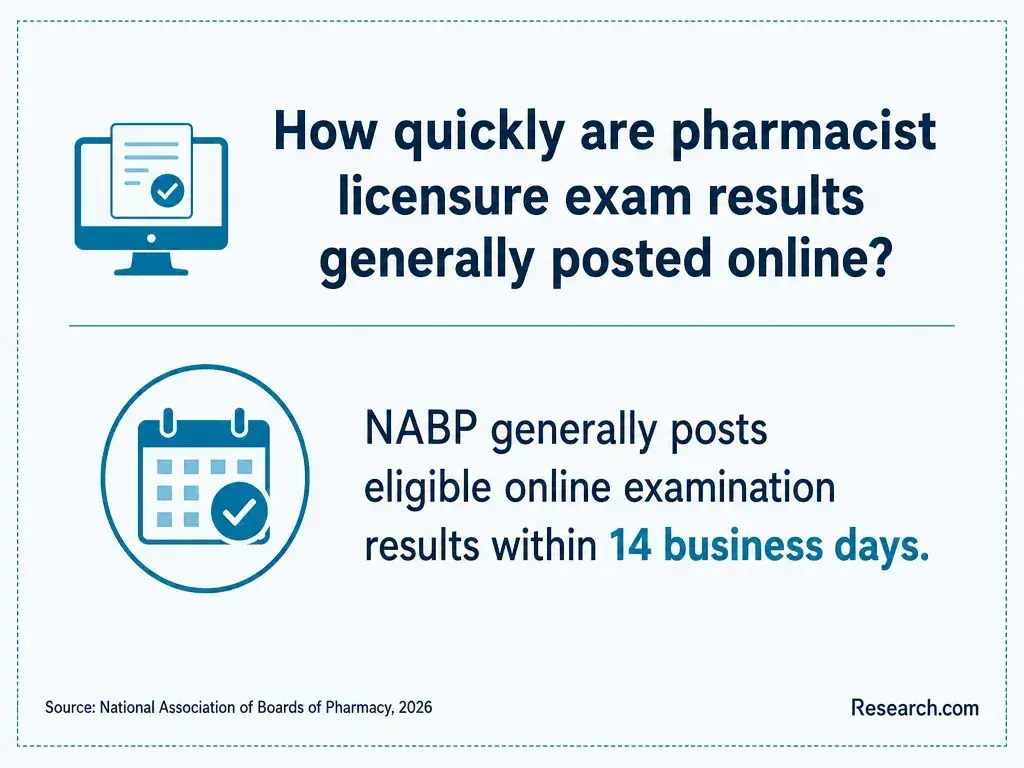
Graduating with a Pharm.D. does not itself grant a pharmacist license. Graduates must satisfy the relevant state board's requirements, which generally include the North American Pharmacist Licensure Examination (NAPLEX) and may include a jurisdiction-specific law examination. Do not assume every jurisdiction uses the MPJE: requirements differ, and some have moved to the UMPJE. Likewise, an pharmacy application eligibility pathway concerns entry to a program, not an exception to graduation or licensure requirements.
Admissions rules belong to the individual school, not to the delivery format. Applicants typically need specified undergraduate prerequisite coursework before entering the professional Pharm.D. curriculum, but required courses, labs, grades, deadlines, and whether a bachelor's degree is necessary vary. A prerequisite course still in progress at application may or may not be acceptable by matriculation.
Check the current program listing and admissions page for transcript rules, recommendations, interviews, supplemental requirements, and whether the school uses PharmCAS. PharmCAS participation is not universal. The Pharmacy College Admission Test (PCAT) was retired in January 2024, so it should not be treated as a current exam to schedule. Published minimums establish eligibility, not an admission guarantee.
If preparation gaps are a concern, compare admission pathways for pharmacy students against each school's actual prerequisite and selection policies. Ask admissions staff to evaluate unusual prior coursework rather than assuming an online class, community-college lab, or previously earned credit will count.
Completion time depends on prerequisites, the professional curriculum's sequencing, and the school's academic calendar - not simply on how lectures are delivered. Clinical rotations and scheduled skills requirements can limit both acceleration and the ability to maintain full-time employment. A comparison of how long online doctoral programs take is useful only when the programs lead to the same intended credential.
Build a personal cost estimate from the school's current tuition and mandatory fees, then add books or reference access, technology, campus travel, clinical-placement travel or housing, and required checks or immunizations. Ask whether the school coordinates nearby placements; do not budget as though a local site or current workplace substitution is guaranteed.
Before committing, obtain a school-specific aid estimate for your entry year. Federal borrowing rules changed for many new graduate and professional borrowers beginning July 1, 2026, so older descriptions of loan limits or Grad PLUS access may not apply to a new student. Compare the amount you may need to borrow with the time you may have to reduce work during rotations.
What careers, salaries, and job outlook follow an online PharmD degree?
An appropriately accredited Pharm.D. can form part of the educational route toward pharmacist licensure whether substantial classroom instruction occurs online or on campus. After meeting state licensing requirements, pharmacists may work in settings such as community, hospital, ambulatory, and specialty pharmacy. Employers may value different experience or postgraduate training for particular roles.
The Bureau of Labor Statistics reports pharmacist median annual pay of $140,910 in May 2025 and projects 5% growth for 2025-2035, with about 12,500 openings per year. Those occupation-wide figures do not predict a new graduate's offer, a particular practice setting's pay, or the return on one school's tuition.
A residency or fellowship may support certain career goals but is distinct from state licensure; optional specialty board certification is distinct from both. Pharmacy technician work is also a separate occupation and does not ordinarily require a Pharm.D. For a financial decision, compare the full cost and scheduling trade-offs behind online pharmacy degree affordability with the specific pharmacist roles you intend to pursue - not the occupation-wide median alone.
Other Things You Should Know About PharmD
Choose a group small enough for everyone to explain an answer during a case discussion. If some members regularly cannot contribute, split into smaller sessions rather than extending every meeting.
Discuss the agreed expectations privately and offer a narrower preparation task. If the pattern continues, change roles or group membership so others do not depend on missing work.
Usually the practical question is whether both groups use compatible course objectives and are allowed to share materials. Check course rules before exchanging slides, cases, or recordings.
Ask members what format helps them participate, share agendas in advance, and use institution-supported accessibility features where available. Direct questions about formal accommodations to the school's accessibility office.
- Online group projects in higher education - PMC https://pmc.ncbi.nlm.nih.gov/articles/PMC10038701/
- Evaluation of peer-led study groups in a PharmD program | nih.gov https://pubmed.ncbi.nlm.nih.gov/31171250/
- Retrieval-Oriented Learning Strategies | IES https://ies.ed.gov/use-work/awards/retrieval-oriented-learning-strategies
- Patient Confidentiality - StatPearls - NCBI Bookshelf - NIH https://www.ncbi.nlm.nih.gov/books/NBK519540/
- Retrieval Practice | ucsd.edu https://psychology.ucsd.edu/undergraduate-program/undergraduate-resources/academic-writing-resources/effective-studying/retrieval-practice.html
- Study Groups - UNC Learning Center https://learningcenter.unc.edu/tips-and-tools/study-partners/
- Help Students Retain, Organize and Integrate Knowledge | mit.edu https://tll.mit.edu/teaching-resources/how-to-teach/help-students-retain-organize-and-integrate-knowledge/
- Synchronous and Asynchronous Interactions - MEHP | UPenn https://improvinghealthcare.mehp.upenn.edu/resource/synchronous-and-asynchronous-interactions
- Learning Through Discussion | columbia.edu https://ctl.columbia.edu/resources-and-technology/resources/learning-through-discussion/


