Pharmacy Fellowship Versus Industry Employment

Co-Founder and Chief Data Scientist
A Pharm.D. graduate interested in the pharmaceutical industry may have two viable next steps: accept a structured fellowship or pursue an industry job directly. The choice affects how quickly you earn a full-time salary, which skills you develop, and how much support you have while entering a specialized field.
This guide compares the routes for students, recent graduates, and licensed pharmacists. It also shows what to check in a fellowship offer or job description so you can choose based on your target role - not on the assumption that postgraduate training is always necessary.
Key Things You Should Know
- A pharmacy fellowship is usually a paid, time-limited industry training position; direct employment offers an ongoing role without a built-in training curriculum.
- Choose a fellowship when structured rotations, mentorship, and access to a target function outweigh the earnings and job-security trade-offs. Choose direct employment when you qualify for a role that develops the same skills.
- The Bureau of Labor Statistics reports median annual pay of $140,910 in May 2025 for pharmacists, but that occupation-wide figure does not predict a fellow's stipend or the pay for a particular industry job.
What Is the Difference Between a Pharmacy Fellowship and Industry Employment?
A pharmacy fellowship is postgraduate training, commonly sponsored by a pharmaceutical company in partnership with an academic institution or professional organization. Fellows perform industry work while following a defined training plan. Direct industry employment means being hired into a position with its own responsibilities, performance expectations, and compensation structure. Neither route is the same as a pharmacy residency, which primarily provides supervised practice training.
The comparison below highlights the features that matter most when evaluating an actual offer. Fellowship terms and employee benefits vary by sponsor, so confirm each item in writing.
| Decision factor | Fellowship | Direct industry job |
| Primary purpose | Develop skills through a structured training plan | Deliver results in a defined position |
| Time horizon | Fixed training term | Ongoing employment, subject to the employer's terms |
| Learning support | Typically includes assigned mentors and planned projects | Depends on the team, manager, and onboarding |
| Compensation | Usually a stipend or salary with program-specific benefits | Role-specific salary and benefits |
| Next transition | Must secure a position after the term; conversion is not guaranteed | Can seek advancement or change teams while employed |
If your goal is an industry role that does not require pharmacist expertise, first check its stated qualifications. A different degree may be sufficient; even the shortest online doctoral programs should not be treated as substitutes for the professional Pharm.D. when a position specifically requires that degree.
What Are the Requirements for a Pharmacy Fellowship or Industry Pharmacy Job?
Most pharmacy fellowships target Pharm.D. graduates or students who will complete the degree before the fellowship starts. Individual programs set their own eligibility rules, application materials, interview process, and deadlines. Industry employers instead set requirements for each job: an entry-level medical information role may emphasize literature evaluation and communication, while a field-based medical affairs role may ask for relevant experience.
A Pharm.D. is a professional degree, not a pharmacist license. State licensure generally involves board eligibility requirements, the NAPLEX, and any applicable jurisdiction-specific law examination or other requirements. Some industry positions require an active pharmacist license; others do not. Check the posting rather than assuming licensure is either universal or irrelevant. Fellowship application procedures also differ from pharmacy residency processes, so do not assume every fellowship uses PhORCAS or participates in the ASHP Match.
Students still planning their degree should distinguish undergraduate prerequisites from admission to and completion of the professional Pharm.D. curriculum. Review each school's current pharmacy school application eligibility rules rather than assuming every program requires a bachelor's degree or the same prerequisite courses.
How Do Pharmacy Fellowships Prepare Graduates for Industry Careers?
Fellowships can make an unfamiliar industry function more accessible by pairing real deliverables with mentorship, feedback, and exposure to colleagues across teams. Depending on the program, a fellow might evaluate clinical evidence, help prepare scientific materials, support safety reporting, or learn how regulatory submissions are coordinated. Some programs include rotations; others keep fellows primarily within one function. Neither structure guarantees a job afterward.
The value of training depends on the work you will actually own. Ask prospective mentors what previous fellows produced, how performance is evaluated, how much time is protected for learning, and whether you will meet people outside your assigned team. Compare those answers with the onboarding and development offered by any direct-employment opportunity.
For applicants still completing prerequisites, pharmacy program admission planning comes before fellowship recruiting: confirm which courses must be finished before enrollment and build a realistic path through the Pharm.D. before relying on a postgraduate timeline.
No Pharm.D. program can promise a fellowship. A stronger pathway is one that lets you build relevant evidence of ability: industry-focused advanced pharmacy practice experiences (APPEs), faculty or employer projects, alumni contacts, and career advising that reaches beyond traditional practice settings. Ask whether industry rotations are available to students, how sites are assigned, and whether demand exceeds available placements. A published employer partnership does not mean every student receives an industry rotation or interview.
Check that the professional Pharm.D. program has appropriate Accreditation Council for Pharmacy Education (ACPE) accreditation, then judge its opportunities separately. Institutional accreditation and authorization to enroll distance-learning students answer different questions; neither establishes that a particular industry placement is available. Compare total attendance costs alongside access to projects and mentors rather than treating a school's name as a fellowship outcome.
Applicants with prior coursework in biology, chemistry, or pre-pharmacy can explore an online Pharm.D. for students with prior science study, but the receiving school decides how that coursework satisfies prerequisites or transfer policies.
Daily work is determined more by function than by the fellowship-versus-employee label. In medical information, work may involve answering evidence-based product questions and reviewing scientific responses. Pharmacovigilance teams evaluate and document safety information. Regulatory affairs staff help coordinate submissions and labeling work. Medical affairs roles may involve literature review, educational materials, and scientific exchange conducted within company rules.
A fellow may handle similar assignments while also attending mentor meetings, training sessions, and project reviews. An employee may have clearer ownership of continuing work but less protected learning time. Ask about expected deliverables, supervision, travel, and whether the role involves patient contact; "industry" alone does not answer those questions.
These positions should not be confused with pharmacy technician work. Shorter online pharmacy study options may serve different career goals, but they do not replace a Pharm.D. when a position requires professional pharmacist education.
Many industry pharmacy fellowships run for one or two years, but the offer letter - not a general timeline - controls the start date, end date, and renewal terms. Fellows are usually paid, so the main financial issue is often opportunity cost rather than fellowship tuition: you may earn less during training than you could in an available employee role. That difference only matters if the alternative job is one you can actually obtain.
Before accepting, compare the stipend or salary, health coverage, retirement benefits, paid time off, relocation support, travel expectations, and any academic fees. Add the cost of living in the required location and the risk of needing another job search when the term ends. If you are still choosing a Pharm.D. program, efforts to reduce the cost of pharmacy school can lower the debt that shapes your flexibility to accept a training salary. Check current financial-aid terms for your own enrollment period; federal borrowing rules changed for many new graduate and professional borrowers beginning July 1, 2026.
There is no single reliable salary figure for pharmacy fellows or for all Pharm.D. holders working in industry. Sponsors set fellowship compensation, and subsequent pay depends on function, location, experience, and the job obtained. Request the written compensation and benefits details for each offer; do not treat a possible post-fellowship position as part of guaranteed compensation.
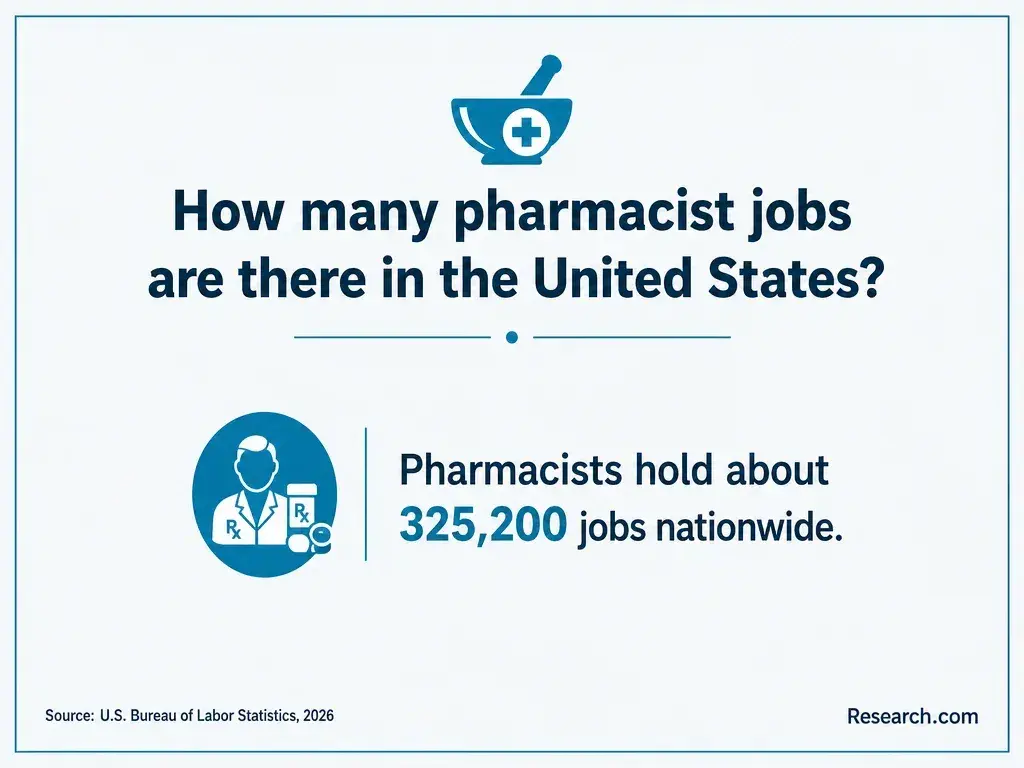
For broad context, the Bureau of Labor Statistics reports that pharmacists had median annual pay of $140,910 in May 2025. That figure covers the pharmacist occupation overall, not fellowship stipends or every pharmaceutical-company role. It is a useful reference for considering forgone earnings, but a comparison with a specific industry offer requires that offer's actual pay and benefits.
When comparing the return on different education routes, lower-cost online pharmacy degree programs warrant the same scrutiny as higher-priced options: verify the credential, required in-person training, and whether it meets the education requirement for your intended work.
Possible destinations include medical information, medical affairs, pharmacovigilance, regulatory affairs, clinical development, market access, and health outcomes research. Fellowship experience can strengthen an application when its projects match the target job, but employers may also hire directly from practice, residency training, research, or other relevant work. A postgraduate year one (PGY1) or postgraduate year two (PGY2) residency is distinct from a fellowship, and neither residency nor fellowship is a universal industry hiring requirement.
For workforce context, the Bureau of Labor Statistics projects 5% growth for pharmacists from 2025 to 2035, with about 12,500 openings per year. Those occupation-wide projections do not isolate pharmaceutical-industry positions or predict openings for fellows.
If you have not yet earned a Pharm.D., faster Doctor of Pharmacy routes may shorten the education stage where available. Compare their admission rules, workload, accreditation, and full costs; finishing school sooner does not by itself improve fellowship selection or industry hiring prospects.
Either format can support an industry career if the professional program is appropriately ACPE-accredited and offers ways to develop relevant skills. Online instruction does not mean a Pharm.D. can be completed entirely from home: programs may require scheduled live classes, campus labs or immersions, and in-person introductory and advanced pharmacy practice experiences (IPPEs and APPEs). Campus programs may make face-to-face networking easier, but proximity alone does not secure an industry placement.
Compare the best online Doctor of Pharmacy programs with campus options using the same questions: Who approves rotation sites? Can students request an industry APPE? What travel or time away from work is required? Does the school permit enrollment from your state, and will your planned training arrangements meet applicable state rules? State authorization for online education is separate from pharmacist licensure eligibility.
How Can You Choose a Reputable Pharmacy Fellowship or Industry Program?
Start with your target function and the offers you could realistically pursue. A fellowship is more compelling when it provides defined, supervised experience you cannot readily get through direct hiring. Employment is more compelling when the position already offers relevant work, strong onboarding, and compensation you value without a fixed training end date.
Use the following checks before committing to either path. They expose differences that a sponsor's reputation or job title may conceal.
- Verify the sponsor, work location, employment status, compensation, benefits, term, and any conditions for ending the arrangement.
- Ask for examples of assignments, the person who will supervise your work, and the criteria used to assess performance.
- Confirm whether pharmacist licensure is required at application, at the start date, or at any point during the role; check the relevant state board's rules if practice is involved.
- Ask about former fellows' types of roles after training, without treating reported outcomes as a promise of conversion or placement.
- Compare the offer with direct-job applications in the same function, including pay, mentoring, advancement, and the likelihood of having to relocate.
If you are choosing a Pharm.D. before making this career decision, check how pharmacy programs review transfer credits. Credit acceptance is decided by the receiving institution; a hoped-for transfer should not be the basis for a fellowship timeline until the school confirms it.
Other Things You Should Know About PharmD
Often, yes, if each program's rules permit it. Tailor each application to the function's work and be prepared to explain a consistent reason for your interest.
Not necessarily. Research output can help for some roles, but programs may also value clinical reasoning, writing, presentations, teamwork, and relevant projects. Check the specific selection criteria.
Eligibility varies by program. Confirm degree requirements, work authorization or sponsorship policies, and whether U.S. pharmacist licensure is required. Industry hiring eligibility and state licensure are separate issues.
Potentially, but you would need to maintain or obtain the required state license and demonstrate current skills for the position. Ask employers what recent practice experience they expect before planning a transition back.
- 11.2.9 Allowable and Unallowable Costs | nih.gov https://grants.nih.gov/grants/policy/nihgps/HTML5/section_11/11.2.9_allowable_and_unallowable_costs.htm
- Fact Sheet 13: Employment Relationship Under the Fair Labor Standards Act (FLSA) | U.S. Department of Labor https://www.dol.gov/agencies/whd/fact-sheets/13-flsa-employment-relationship
- Searching for the First Job: A Practical Guide for Fellows-in-Training - PMC https://pmc.ncbi.nlm.nih.gov/articles/PMC6859240/
- Pathways for Students and Graduates | Student Internships and Jobs | Working at CDC | Careers at CDC https://jobs.cdc.gov/working-at-cdc/student-intern-jobs/pathways.html
- Students & Recent Graduates | U.S. Office of Personnel Management https://www.opm.gov/policy-data-oversight/hiring-information/students-recent-graduates/
- Regulatory and Clinical Affairs Careers | ucsf.edu https://career.ucsf.edu/phds/career-paths/regulatory-clinical-affairs
- Post-Graduate Pharmacy Fellowships - ACCP Journals https://accpjournals.onlinelibrary.wiley.com/doi/pdf/10.1002/jac5.1746
- A day in the life of a pharmaceutical industry fellow | pharmacist.com https://www.pharmacist.com/Publications/Transitions/a-day-in-the-life-of-a-pharmaceutical-industry-fellow
- Fellowship vs Residency: Which Route Should You Take? | RxTeach https://www.rxteach.com/fellowship-or-residency/
- Direct-to-Industry Career Opportunities | Industry Pharmacists Organization https://www.industrypharmacist.org/dti.php