How PharmD coursework builds patient counseling skills

Co-Founder and Chief Data Scientist
Knowing how a medication works is different from helping a patient use it safely. If you are considering a Doctor of Pharmacy (Pharm.D.) degree, the quality of its counseling instruction should matter alongside cost and admission requirements. This guide shows how coursework, practice with simulated patients, and clinical rotations develop communication skills. It also gives you concrete ways to assess whether a program provides enough feedback and real patient experience for your goals.
Key Things You Should Know
- Pharm.D. counseling skills develop through a sequence: learn the medication, practice explaining it, receive feedback, and counsel patients under supervision.
- Compare programs on observed counseling assessments, introductory and advanced rotations, and placement support - not course titles alone.
- A Pharm.D. does not itself confer a license; the Bureau of Labor Statistics projects about 12,500 pharmacist openings per year in 2025-2035, but entering those roles requires meeting state licensure rules.
What is a PharmD, and how does it develop patient counseling skills?
A Pharm.D. is the professional degree designed to prepare students for pharmacist practice. It builds on undergraduate prerequisite study, such as science and general education courses, rather than treating those courses as the professional curriculum. Students then learn to apply medication knowledge to a person's diagnosis, other medicines, preferences, and ability to follow a treatment plan.
Effective counseling is more than reciting directions. A pharmacist must identify what the patient needs to know, explain it accurately in usable language, check understanding, and respond when the plan may not work. Pharm.D. programs develop those abilities through classroom cases, skills labs, assessments, and supervised practice. Prior coursework may satisfy admission prerequisites, but it should not be assumed to replace professional skills training; schools determine whether and how prior credits apply. That distinction is especially important when exploring transfer-friendly pharmacy education options.
Decision point: Look for a curriculum that requires students to demonstrate counseling skills repeatedly, rather than one that only lists communication as a learning objective.
What PharmD courses teach communication and medication counseling techniques?
Patient counseling draws on several subjects at once. Pharmacotherapy helps students understand treatment choices; pharmacology and drug information help them explain effects and risks; patient-care and communications courses teach them how to turn those facts into a conversation. The table shows what to look for in course descriptions and assessments.
| Curriculum area | Contribution to counseling | Evidence of practice |
| Pharmacotherapy and medication safety | Prioritizing instructions, precautions, and monitoring points for a specific patient | Case-based treatment explanations and safety checks |
| Patient-care and communication skills | Listening, asking open-ended questions, and checking understanding | Observed counseling encounters with feedback |
| Drug information and evidence evaluation | Answering medication questions accurately while acknowledging uncertainty | Patient-facing responses grounded in evaluated sources |
| Professional practice and ethics | Protecting privacy and recognizing when to consult another clinician | Assessment of documentation and professional judgment |
A science background is useful, but knowing terminology does not automatically make someone a clear counselor. Applicants exploring pharmacy school for biology and chemistry graduates should ask how the professional curriculum assesses patient-facing explanations, not just how many prior science credits it accepts.
How do PharmD clinical rotations prepare students for patient counseling?
Introductory pharmacy practice experiences (IPPEs) introduce students to supervised practice earlier in the program. Advanced pharmacy practice experiences (APPEs) place students in more sustained practice settings later on. The sequence lets students move from observing and practicing counseling to handling more complex conversations with preceptor oversight. A preceptor is the pharmacist or other approved professional who supervises and evaluates the student at a practice site.
Community, hospital, and ambulatory care settings can call for different conversations: explaining a new prescription, preparing someone for discharge, or following up on a long-term treatment plan. Available sites and required experiences vary by school. Ask who arranges placements, how counseling is evaluated, and whether feedback identifies specific improvements rather than simply marking an encounter complete.
Rotations are in-person commitments even when classroom instruction is online. Students may need intern registration, health documentation, background checks, travel, or schedule flexibility under school and site rules. Before choosing a way to Doctor of Pharmacy study online, confirm where clinical experiences can occur and whether a placement near home is possible - not guaranteed.
Simulated encounters give students a place to make mistakes and correct them before counseling patients. A student might explain a new medicine to a standardized patient - someone trained to portray a patient - then receive feedback on accuracy, empathy, organization, and whether the patient could explain the plan back. Repeating the encounter after feedback is more useful than simply watching a demonstration.
Good simulations test judgment, not memorized scripts. A patient may mention an over-the-counter product, misunderstand a dose, or raise a concern that changes which information matters most. Ask programs whether students receive individual feedback, practice again after an unsatisfactory performance, and progress to more complex cases. Simulations complement supervised clinical work; they do not replace it.
That distinction matters when considering accelerated online pharmacy programs. A faster schedule may reduce breaks without reducing required learning. Check when students can practice, receive feedback, and repeat an assessment before the next rotation begins.
Health literacy is a person's ability to find, understand, and use health information. In counseling, students learn not to equate a patient's education level or confidence with understanding. They practice using plain language, limiting instructions to what matters most, and asking the patient to describe how they will take the medication - a technique often called teach-back.
Patient-centered communication also means finding out what the person can realistically do. Cost, work schedules, beliefs, language preferences, and prior experiences may affect a medication plan. Students should learn to listen without judgment, identify a barrier, and work within their supervised role to address it. They also need to recognize when a qualified medical interpreter or another clinician is needed.
You can begin practicing attentive listening before pharmacy school, but experience alone does not replace a program's academic and clinical requirements. If you are researching pharmacy program preparation requirements, separate skills worth developing now from prerequisites that must be completed by a school's stated deadline.
Pharm.D. applicants generally need specified undergraduate prerequisite coursework, but required subjects, labs, grades, credit totals, and deadlines differ by school. A completed bachelor's degree is not universally required. Admissions committees may also review experiences, recommendations, essays, and interviews. The Pharmacy College Admission Test (PCAT) was retired in January 2024; it should not be treated as a current exam to schedule.
Communication experience can strengthen an applicant's account of why pharmacy fits, but it does not waive a missing prerequisite. Before applying, compare each school's published requirements with your transcript and ask how it treats in-progress courses, older credits, online labs, or transferred work. Also confirm whether the school uses PharmCAS, the centralized application service, and whether it requires a separate application or interview. A minimum academic threshold is eligibility to be considered, not a promise of admission.
Use pharmacy program application requirements as a starting point for comparison, then check each school's current admissions page before planning courses or paying application fees.
The professional Pharm.D. curriculum commonly spans four academic years, although program structures vary. Prerequisites take additional time unless an applicant has already completed them. A compressed calendar may shorten elapsed time but leave less room for paid work or schedule changes; rotations can also require full-time availability.
Advertised tuition is only part of the decision. Build a school-specific budget for mandatory fees, learning resources, supplies, assessments, background checks, immunizations, transportation, and any housing needed for campus activities or rotations. Compare the same period and included expenses across programs. When you compare online Pharm.D. costs, do not assume online instruction removes travel or in-person clinical expenses.
Ask each financial aid office for a current cost-of-attendance estimate and aid guidance that applies to your enrollment date and circumstances. Federal borrowing rules changed for many new graduate and professional borrowers beginning July 1, 2026; older descriptions of Grad PLUS access or loan limits may not describe your options. The financially sensible choice depends on total cost and feasible borrowing, not tuition alone.
The Accreditation Council for Pharmacy Education (ACPE) accredits professional pharmacy programs, not individual pharmacists. Check the program's current status in ACPE's official records, then assess how well its curriculum turns counseling instruction into demonstrated performance. Institutional accreditation and authorization to enroll a student in a particular state are separate questions; neither substitutes for checking the professional program.
To make a useful comparison, ask each school the same questions about counseling training and its practical constraints:
- When are students first observed counseling, and how often do they receive individual feedback?
- What must a student do after an unsuccessful skills assessment?
- Which IPPE and APPE settings are available, and who approves or arranges sites?
- What campus visits, rotation travel, and additional expenses should students expect?
Published licensure-exam outcomes may add context, but they do not measure counseling quality on their own. Lower tuition is valuable only if the program also meets your accreditation, placement, and learning needs. Apply that test when reviewing lower-cost online pharmacy degree programs; not every pharmacy-related degree prepares a student for pharmacist licensure.
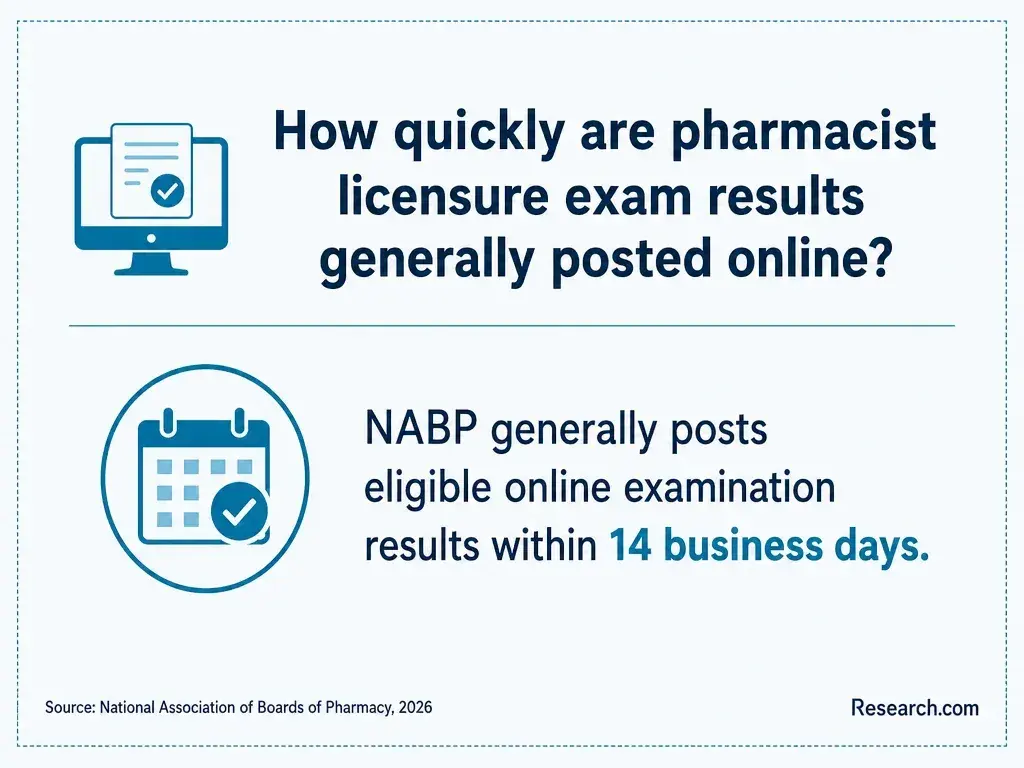
Graduating with a Pharm.D. does not itself authorize someone to practice independently as a pharmacist. State boards set licensure requirements. U.S.-educated applicants generally must meet education and supervised-experience rules, pass the North American Pharmacist Licensure Examination (NAPLEX), satisfy any applicable law-exam requirement, and complete the board's application process. The NAPLEX assesses pharmacy-practice knowledge; it is not a standalone license.
Jurisprudence requirements differ by jurisdiction. Depending on the board, an applicant may encounter the Multistate Pharmacy Jurisprudence Examination (MPJE), the Uniform Multistate Pharmacy Jurisprudence Examination (UMPJE), another law assessment, or different requirements. Confirm the current process with the board where you intend to practice. Students who may work across state lines should also check that board's intern registration and licensure rules before accepting a rotation.
Be wary of claims about pharmacy programs with shorter completion times unless they identify the exact credential. A shorter pharmacy-related degree is not automatically a substitute for an accredited professional Pharm.D. or for state licensure requirements.
What career opportunities, salaries, and job outlook follow a PharmD?
Licensed pharmacists counsel patients in settings that can include community pharmacies, hospitals, clinics, and specialty pharmacy services. The mix of conversations differs: one position may emphasize new prescriptions and access barriers, while another involves discharge instructions or ongoing treatment follow-up. Pharmacy technicians perform a separate occupation and do not ordinarily need a Pharm.D.
The Bureau of Labor Statistics reports pharmacist median annual pay of $140,910 in May 2025 and projects 5% job growth for 2025-2035. These figures describe the broad pharmacist occupation, not a promised starting salary or the outlook for a particular counseling-focused position. Location, setting, experience, and employer requirements matter.
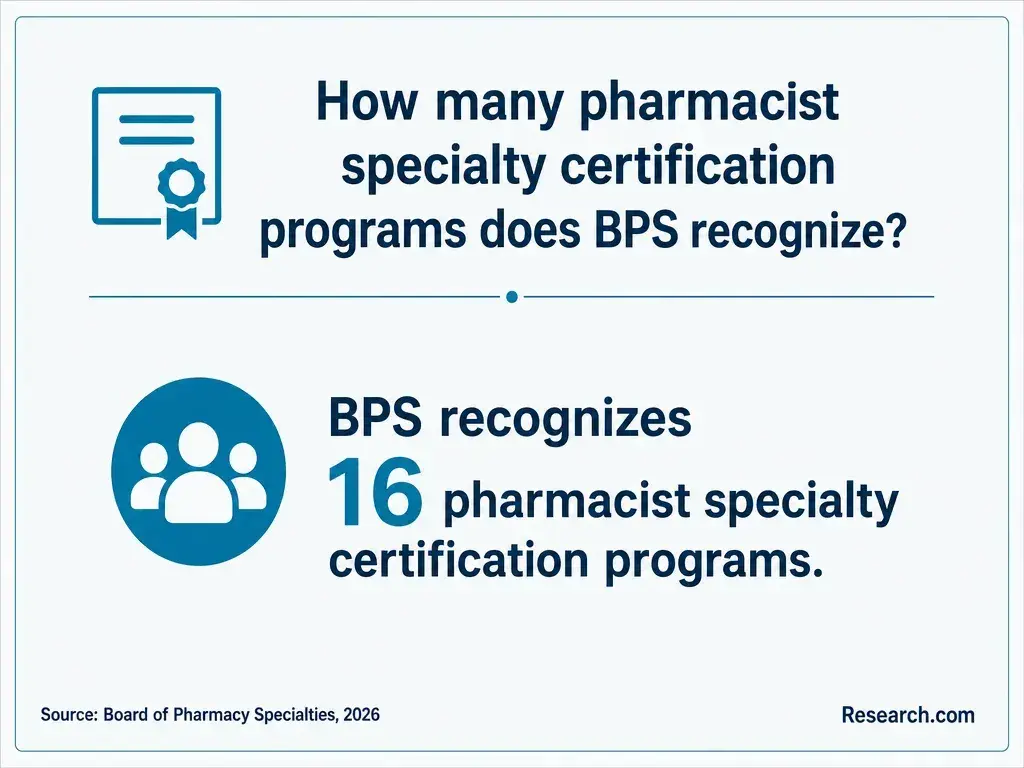
Some graduates pursue postgraduate year one (PGY1) residency training and, for more specialized practice, postgraduate year two (PGY2) training. Fellowships generally serve different training goals, while specialty board certification is a separate credential - not a state license. None is universally required for pharmacist jobs. If your goal is research or administration rather than pharmacist practice, compare online doctorate completion periods only after checking which credential the role actually requires; a shorter doctorate does not replace a licensable Pharm.D.
Other Things You Should Know About PharmD
No. Careful listening, clear explanations, and checking understanding matter more than being talkative. A program with repeated practice and specific feedback can help students develop those skills.
Do not assume so. A qualified medical interpreter may be needed for accurate communication and privacy; the appropriate process depends on the practice setting and applicable requirements.
A student should follow the supervising pharmacist's direction and the site's procedures. The pharmacist remains responsible for meeting applicable legal and professional obligations.
Documentation expectations depend on the setting, encounter, and applicable rules. Students should learn the site's procedure and record information only as directed within their supervised role.
- Use the Teach-Back Method: Tool 5 | Agency for Healthcare Research and Quality https://www.ahrq.gov/health-literacy/improve/precautions/tool5.html
- Design of a Pharmacy Curriculum on Patient Centered... - PMC https://pmc.ncbi.nlm.nih.gov/articles/PMC7838998/
- Medication Safety and Your Health | cdc.gov https://www.cdc.gov/medication-safety/about/index.html
- Health literacy | who.int https://www.who.int/news-room/fact-sheets/detail/health-literacy
- Standardized Patient Simulation | Elson S. Floyd College of Medicine https://medicine.wsu.edu/about/departments-units/vcc/standardized-patient-simulation/
- Pharmacy Practice | Midwestern University https://catalog.il.midwestern.edu/pharmacy-practice
- Do All Pharmacy Programs Offer Experiential Education? | Belmont University https://www.belmont.edu/stories/articles/2024/pharmacy-program-experiential-education.html
- Our Curriculum | ucsd.edu http://pharmacy.ucsd.edu/admissions/our-curriculum
- Curriculum and Dual Degrees | umaryland.edu https://www.pharmacy.umaryland.edu/academics/pharmd/curriculum/
- Program Overview | Experiential Education https://pharm.ucsf.edu/experiential/overview