
St. John Fisher Online Pharm.D. Tuition and Total Program Cost

Co-Founder and Chief Data Scientist
St. John Fisher's online Doctor of Pharmacy (Pharm.D.) pathway may let you complete much of your coursework away from campus, but tuition alone will not tell you what the degree will cost. Required in-person training, travel, fees, and time away from work can change the answer substantially.
This guide shows prospective students how to obtain a reliable program-specific price, estimate the full cost of attendance, and decide whether the format and path to pharmacist licensure fit their circumstances.
Key Things You Should Know
- Do not treat an advertised tuition rate as a total-program price, obtain St. John Fisher's current rate, required credit load, fee schedule, and individualized aid-year cost of attendance before comparing offers.
- Online coursework does not eliminate in-person pharmacy training. Budget for required campus activities and supervised clinical rotations, including potential travel, housing, and lost work hours.
- The Wegmans School of Pharmacy's Pharm.D. accreditation, your state's distance-learning and placement rules, and your eventual pharmacist licensure requirements are separate checks, none should be assumed from the word "online."
What is the St. John Fisher online Pharm.D. program?
St. John Fisher University's Wegmans School of Pharmacy offers an online pathway to its professional Pharm.D. degree. A Pharm.D. is the education credential for the U.S. pharmacist licensure pathway, it is not a pharmacy technician qualification or an undergraduate pre-pharmacy degree. The online designation describes how much academic instruction is delivered remotely, not a promise that every requirement can be completed from home.
For comparison, use other online Pharm.D. program options only after checking their campus visits, rotation arrangements, and pricing on the same basis. A program that appears cheaper per credit may cost more once required travel and fees are included.
How much does the St. John Fisher online Pharm.D. cost?
A reliable current tuition amount requires a current quote from St. John Fisher. Without a confirmed rate and billing schedule for the academic year you will enter, a per-credit figure - or a total assembled from an older rate, would risk understating your cost. Ask whether the online pathway is billed per credit or by term, whether rates change annually, and which fees are mandatory.
Tuition comparisons are useful only when they include the same expenses. When exploring an affordable route to a Pharm.D., request an itemized quote rather than relying on a program's headline price.
Ask the school to separate these charges so you can identify what is fixed and what depends on your circumstances:
- Professional-program tuition and mandatory university or pharmacy-school fees.
- Technology, laboratory, simulation, assessment, and clinical-placement charges, if applicable.
- Expenses billed by outside providers, such as background checks, immunizations, and required equipment.
What is the total cost of the St. John Fisher online Pharm.D.?
Your total program cost is more than tuition, it includes mandatory charges plus the costs of meeting in-person requirements. No single total is dependable for every student because travel distance, living arrangements, prerequisite needs, and clinical assignments differ. The table separates school charges from expenses you may have to fund yourself.
Use these categories to compare the school's quote with your own budget. A cost-of-attendance allowance used for financial aid may be an estimate, not the amount you will actually spend.
| Cost category | What to include in your estimate |
| Tuition and required fees | All billed professional credits or terms, plus mandatory charges and any expected rate changes. |
| Course and clinical supplies | Books, clinical references, technology, lab materials, required clothing, and testing equipment. |
| In-person attendance | Travel, lodging, meals, and time away from work for campus activities and clinical rotations. |
| Entry and graduation expenses | Unmet prerequisite courses, screenings, immunizations, intern registration, and later licensure applications and exams. |
For a per-credit tuition model, multiply the school's confirmed billable credits by its applicable tuition rates, then add required fees and your estimated personal expenses. If billing is term-based, use the term schedule instead. Comparing pharmacy degree affordability and completion time also means accounting for wages you may forgo during rotations.
Ask the financial aid office for an individualized borrowing and aid explanation for your entry year. Federal borrowing rules changed for many new graduate and professional students beginning July 1, 2026; do not assume an older Grad PLUS arrangement or another student's loan eligibility applies to you.
The accreditation question concerns the professional Pharm.D. program at the Wegmans School of Pharmacy, not whether individual online classes have a separate accreditation label. Before paying a deposit, confirm the program's current standing in the Accreditation Council for Pharmacy Education (ACPE) directory and ask the school whether the online pathway falls under that standing. Accreditation status can change, so an older brochure is not a sufficient check.
ACPE program accreditation is distinct from the university's institutional accreditation and from permission to enroll a distance-learning student or arrange clinical training in a particular state. These distinctions matter more than broad comparisons with online doctorate time to completion: a shorter doctorate in another field cannot substitute for the professional education required on the pharmacist licensure path.
Plan around a sequenced, multi-year professional curriculum rather than assuming that online delivery makes the Pharm.D. self-paced. Your actual completion date depends on the school's current cohort calendar, the prerequisites you have finished, course availability, and the timing of experiential training. Request a term-by-term plan showing campus attendance and the periods reserved for rotations before estimating how long you can keep working.
Students comparing accelerated pharmacist education should compare the time from their own starting point to graduation. A shorter advertised professional curriculum may not save time if it requires additional prerequisite work or a schedule that prevents paid employment.
Admission depends on St. John Fisher's current prerequisite and application policies for the cycle in which you apply. Pre-pharmacy science and general-education courses are preparation for entry; they are not the same as credits in the professional Pharm.D. curriculum. Do not assume a bachelor's degree is universally required, that a minimum grade ensures admission, or that another school will evaluate your completed courses identically.
Before paying for additional classes, obtain a written prerequisite review. These checks distinguish eligibility from an application that is ready to submit:
- Confirm the required courses, laboratory formats, minimum grades, and whether any coursework may remain in progress at application or enrollment.
- Check the current application route, deadlines, transcript and recommendation requirements, interview process, and any deposit or matriculation conditions.
- Ask how the school evaluates community-college, online, repeated, transfer, and older coursework in your specific record.
A guide to pharmacy school prerequisites and eligibility can help you frame those questions, but Fisher's current rules control its admissions decision. The Pharmacy College Admission Test (PCAT) was retired in January 2024; do not plan around taking it as a current admissions exam.
The professional curriculum develops knowledge of medications and disease treatment alongside patient assessment, communication, medication safety, and pharmacy practice. Supervised introductory pharmacy practice experiences (IPPEs) introduce students to practice settings; advanced pharmacy practice experiences (APPEs) require more substantial clinical participation later in the program. Ask for Fisher's current curriculum map to verify exact course names, sequence, laboratory requirements, and experiential hours rather than assuming a typical Pharm.D. outline is its published plan.
Prior science coursework may satisfy an admission prerequisite without replacing a professional course. If you hope to bring credits from another institution, review pharmacy degree credit transfer policies and obtain Fisher's written determination of how, if at all, each course applies.
The practical difference is where you complete academic instruction - not whether you must develop hands-on skills or attend supervised practice. Confirm Fisher's current live-class schedule, campus attendance calendar, assessment requirements, and rotation-placement process before deciding that the online pathway will fit around a job. Do not assume a clinical site near home or permission to substitute your current workplace for a rotation.
The table highlights the scheduling questions that affect cost as well as convenience. Exact requirements should come from the school's current pathway documents.
| Decision factor | Online pathway | Campus study |
| Academic instruction | Substantial remote instruction; scheduled participation may still be required. | Regular on-campus attendance. |
| Hands-on activities | May require campus travel at specified times. | Typically incorporated into campus attendance. |
| Clinical training | In-person placements; location and travel need confirmation. | In-person placements; a campus address does not guarantee a nearby site. |
| Budget pressure | Technology, travel, lodging, and time off work may add costs. | Commuting or relocation and living costs may add costs. |
For applicants changing fields, online Pharm.D. options for science graduates are worth comparing by prerequisite gaps and required in-person time, not simply by whether lectures are online.
A Pharm.D. graduate must meet the requirements of the state or jurisdiction where they seek to practice. That generally means applying through its board of pharmacy, meeting supervised-experience and other eligibility rules, and passing the North American Pharmacist Licensure Examination (NAPLEX). Jurisprudence testing varies: a jurisdiction may use the Multistate Pharmacy Jurisprudence Examination (MPJE), the Uniform MPJE (UMPJE), or another requirement. Passing an exam does not itself issue a pharmacist license.
Check your intended state board's rules while choosing a program, particularly if you will live or complete rotations outside New York. State authorization to study online, permission for a clinical placement, intern registration, and eligibility for a pharmacist license are separate matters. Likewise, pharmacy programs with shorter completion times should not be mistaken for shortcuts around the professional Pharm.D. and state licensure process.
What careers, salaries, and job outlook follow an online Pharm.D.?
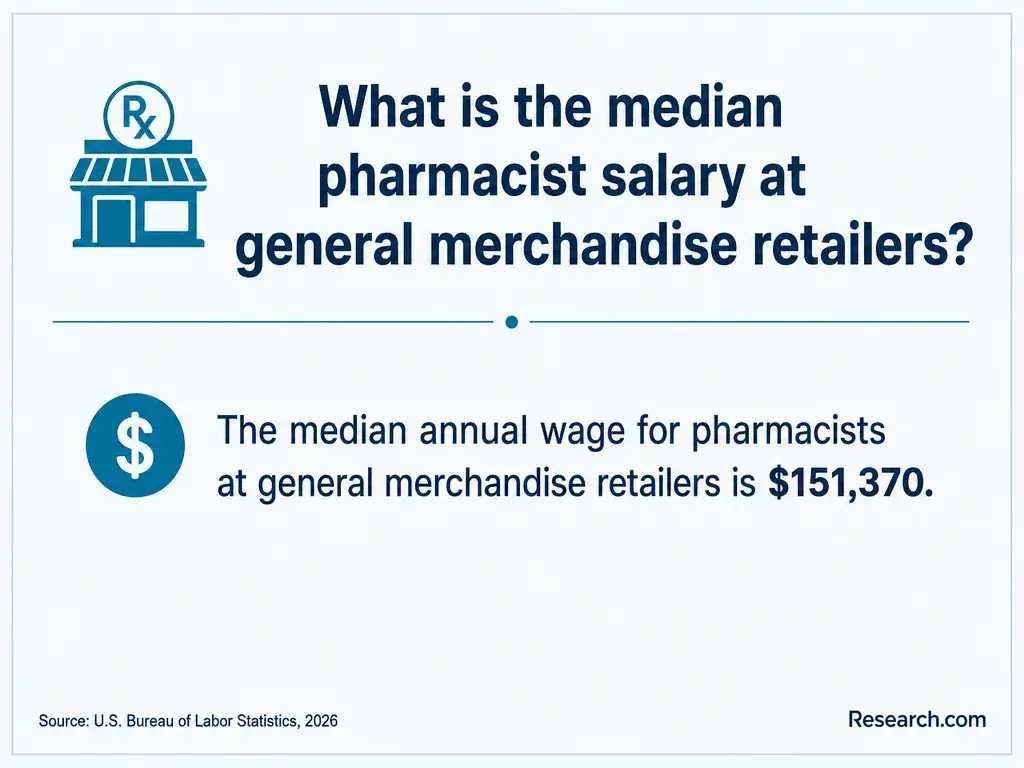
After meeting state licensure requirements, graduates may pursue pharmacist roles in community, hospital, ambulatory, or other practice settings. The U.S. Bureau of Labor Statistics reports median annual pay for pharmacists of $140,910 in May 2025. That occupation-wide median is a benchmark for evaluating potential earnings against program cost - not a prediction of a Fisher graduate's starting salary, specialty, location, or ability to repay loans.
For someone considering pharmacy school routes for returning students, the financial decision includes prerequisite costs and years in training as well as eventual pay. Ask for Fisher's recent NAPLEX outcomes and career-support information, but do not interpret either as a guarantee of licensure or employment. A residency or fellowship may support particular career goals; neither is universally required for pharmacist employment, and optional specialty board certification is separate from a state license.
Other Things You Should Know About PharmD
Do not count on an unrestricted full-time schedule. Ask Fisher for its live-session, campus, and rotation calendars, then compare those commitments with your employer's leave and scheduling policies.
Only if the school approves a qualifying site and arrangement under its experiential policies. Employment alone does not establish that a rotation meets educational, supervision, or state requirements.
That depends on approved site availability and the school's placement policies. Request a clear explanation of who secures placements, when locations are confirmed, and what happens if a nearby site is unavailable.
Request a current itemized tuition-and-fee schedule, your prerequisite evaluation, a term-by-term curriculum and attendance calendar, an explanation of placement responsibilities, and an individualized financial aid estimate. Compare those documents - not just the advertised tuition - with other offers.
- Cost of Attendance (Budget) | 2025-2026 Federal Student Aid Handbook https://fsapartners.ed.gov/knowledge-center/fsa-handbook/2025-2026/vol3/ch2-cost-attendance-budget
- Types of Financial Aid: Grants, Work-Study, and Loans | studentaid.gov https://studentaid.gov/understand-aid/types
- Estimate your college cost | usa.gov https://www.usa.gov/estimate-college-cost
- Earn an Online Pharm.D. Degree at St. John Fisher University https://onlinepharmd.sjf.edu/
- Student Cost of Attendance - Financial Aid - UCSF https://finaid.ucsf.edu/application-process/student-coa
- Financial Aid Establishment and Revisions to the Cost of Attendance | NEOMED https://www.neomed.edu/policies/3349-ac-255-financial-aid-establishment-and-revisions-to-the-cost-of-attendance/
- Doctor of Pharmacy (Pharm.D.) | Application Process | St. John Fisher University https://www.sjf.edu/graduate-programs/doctor-of-pharmacy-pharmd/application-process/
- Financial Aid and Cost | ucsf.edu https://pharmd.ucsf.edu/admissions/financial-aid-cost
- PharmD Tuition and Financial Aid | University of the Pacific https://www.pacific.edu/pharmacy/pharmd/tuition-financial-aid


