Pharmacist provider status: what PharmD students should know

Co-Founder and Chief Data Scientist
Pharmacist provider status can shape the clinical work available to you after pharmacy school, but the term does not mean the same thing in every state or insurance program. If you are considering a Doctor of Pharmacy (Pharm.D.) degree, you need to separate permission to provide a service from permission to bill for it. This guide explains those distinctions, the education and licensing steps that come first, and how to evaluate programs and career paths against the rules where you hope to practice.
Key Things You Should Know
- Provider status is not a single nationwide credential: state practice authority and a payer's billing rules are separate.
- A Pharm.D. graduate must still meet state licensing requirements; neither ACPE accreditation nor passing an exam alone grants a license.
- Clinical authority may expand career options, but the Bureau of Labor Statistics projects 5% growth for pharmacists from 2025 to 2035 across the occupation, not specifically for expanded-scope roles.
What Does Pharmacist Provider Status Mean in the United States?
Pharmacist provider status generally refers to recognition of pharmacists as professionals who can deliver specified patient-care services, receive payment for them, or both. It is not a separate national license or a blanket right to diagnose, prescribe, or bill insurers. The answer depends on the service, state law, practice setting, and payer contract.
A useful distinction is scope of practice versus reimbursement. Scope determines what a licensed pharmacist may legally do, sometimes under a collaborative practice agreement or other conditions. Reimbursement determines whether an insurer will pay for that work and who may submit the claim. An employer may also require training, protocols, or credentialing beyond the legal minimum.
When comparing degrees, remember that a credential's length or title does not establish clinical authority. Lists of short online doctorate programs are not substitutes for checking whether a program awards the professional Pharm.D. needed for the usual U.S.-educated pharmacist licensure pathway.
Can Pharmacists Bill Medicare for Clinical Services?
Not generally as independent Medicare Part B practitioners for routine pharmacist clinical visits. Pharmacists are not broadly recognized as standalone Part B practitioners under the federal provider definition. That limitation does not mean Medicare never pays for a service involving a pharmacist. Payment may be available through a qualifying physician or other practitioner's service, an eligible organization's arrangement, a pharmacy benefit, or a specific covered service—but each route has its own coverage, supervision, enrollment, and billing rules.
For example, Medicare Part D medication therapy management is organized through plan programs rather than a general right for any pharmacist to submit an independent Part B visit claim. Students should ask prospective employers which services pharmacists actually deliver, who bills for them, and how the role is funded. A practice model built around clinical care is more informative than a job posting that simply says "provider."
This distinction also matters when assessing pharmacy programs that may offer strong value: possible future reimbursement is not evidence that a degree will pay for itself.
How Do State Laws Define Pharmacist Provider Status?
States use different combinations of provider-recognition language, scope-of-practice statutes, board regulations, and insurance rules. Some authorize particular services directly; others condition authority on training, protocols, collaborative agreements, or a patient relationship. A law calling pharmacists "providers" does not necessarily require every insurer to pay every pharmacist claim.
The distinctions below help you read a state rule without assuming it answers every practice question:
| Question | What to verify | Why it matters |
| May the pharmacist provide the service? | State pharmacy law, board rules, and any required protocol or training | Defines legal authority and its limits |
| May the service be billed? | The particular payer's coverage, enrollment, and contract terms | Legal authority does not ensure payment |
| May the pharmacist perform it at this workplace? | Employer policies, staffing, documentation systems, and liability arrangements | A permitted service may not be offered at every site |
Choose a likely practice state early and check its board of pharmacy and applicable payer rules before treating expanded authority as a reason to enroll. If you are still completing prerequisites, pharmacy program admission planning should also account for where you expect to complete rotations and seek licensure.
For the standard U.S.-educated route, students complete a professional Pharm.D. program after meeting that school's pre-pharmacy prerequisites. Those undergraduate courses are preparation for admission, not the professional degree. Schools differ on required courses, credits, grades, and whether applicants need a completed bachelor's degree.
The Pharm.D. combines classroom learning with supervised practice experiences. Graduating is an educational milestone, not permission to practice independently: the state board determines licensure eligibility and issues the license. Internationally educated pharmacists generally face a different eligibility process and should obtain requirements from the relevant board and the National Association of Boards of Pharmacy (NABP).
If you already study biology, chemistry, or pre-pharmacy, compare your transcript with each school's published requirements before planning your transition from pre-pharmacy to a Pharm.D.. Do not assume that a pharmacy technician, pharmacology, or pharmaceutical sciences qualification replaces the professional degree for pharmacist licensure.
The Accreditation Council for Pharmacy Education (ACPE) accredits professional Pharm.D. programs; it does not certify graduates or issue pharmacist licenses. For the standard U.S.-educated licensing route, graduating from an ACPE-accredited professional program is a central eligibility consideration. Verify a program's current status in ACPE's official program records and confirm the requirements of the board where you intend to apply.
Keep three checks separate: ACPE professional-program accreditation, the university's institutional accreditation, and any state authorization needed to offer distance education. None automatically confirms the others or guarantees that a clinical placement in your state is available.
This matters especially if you plan to pursue Doctor of Pharmacy study online. Online coursework may still be paired with in-person labs, campus visits, and clinical rotations; ask the school how those requirements work in your location.
Licensure is issued by a state board, not by a pharmacy school or testing organization. U.S.-educated applicants generally need an eligible Pharm.D., required supervised experience, the North American Pharmacist Licensure Examination (NAPLEX), and any additional state-specific examination or application requirements. Students may also need intern registration before certain training activities. Check the board's current rules for experience, background checks, fees, and application timing.
Do not assume every jurisdiction uses the Multistate Pharmacy Jurisprudence Examination (MPJE). Jurisprudence requirements vary, and some jurisdictions began transitioning to the Uniform Multistate Pharmacy Jurisprudence Examination (UMPJE) in 2026. NABP and the destination board identify the applicable exam; passing it and the NAPLEX still does not itself issue a license.
Even if you consider Pharm.D. completion pathways, ask how the schedule accommodates required practice experiences and your intended state's licensing process. A shorter academic timeline does not waive those steps.
Professional Pharm.D. study typically integrates pharmacotherapy, medication safety, patient assessment, communication, and pharmacy law. Students apply that knowledge in supervised introductory pharmacy practice experiences (IPPEs) and later advanced pharmacy practice experiences (APPEs). These experiences build clinical judgment; they do not give students the independent authority of licensed pharmacists.
For provider-status goals, examine whether a program offers meaningful practice in documenting interventions, working with other clinicians, and navigating reimbursement and state-specific protocols. A course title alone cannot show how much hands-on experience students receive. Ask which rotation settings are available, who approves placements, and whether travel, intern registration, or other site requirements could affect your schedule.
Also confirm pharmacy transfer credit requirements before assuming previous science or professional coursework will shorten the curriculum. The receiving program decides how credit applies.
Start with eligibility, then test whether the program can support your clinical goals at a cost and schedule you can manage. An accessible admissions pathway is useful only if the resulting education and placements meet your needs. Published minimum grades or credits are admission thresholds, not promises of acceptance.
Use these checks when comparing programs; ask for written answers where a requirement could affect enrollment or licensure:
- Confirm current professional-program accreditation with ACPE and licensure eligibility with your intended state board.
- Compare prerequisite rules, total tuition and required expenses, financial aid eligibility, and any time away from paid work.
- Ask about IPPE and APPE settings, placement responsibility, possible travel, and exposure to the clinical services you hope to provide.
- Review published NAPLEX outcomes in context, alongside student support and graduation information; no single outcome measures program quality.
If admission requirements are your immediate hurdle, use information on pharmacy schools with accessible admissions as a starting point, then verify each school's current policies directly. The PCAT was retired in 2024, so it should not be treated as a currently available admissions exam.
What Are Pharmacist Salaries and Job Outlook Projections?
The Bureau of Labor Statistics reports a median annual pay of $140,910 in May 2025 for pharmacists and projects 5% job growth from 2025 to 2035, with about 12,500 openings per year. Those are occupation-wide figures, not a salary or hiring forecast for provider-status positions. Location, setting, experience, schedule, and employer expectations can change an individual offer.
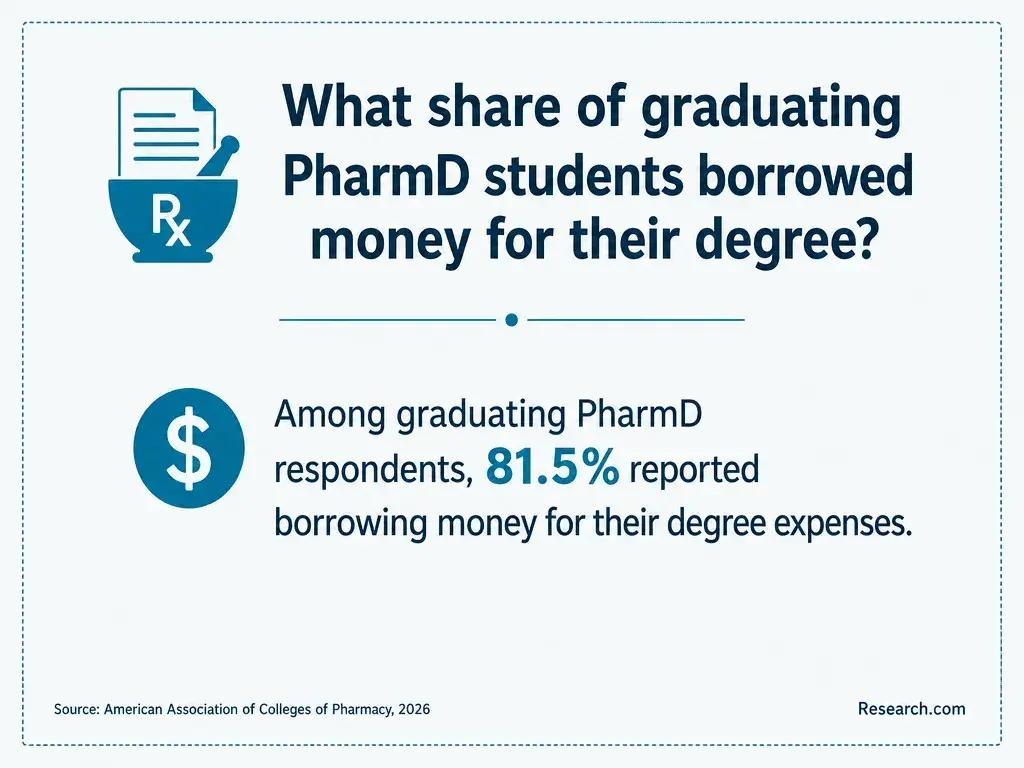
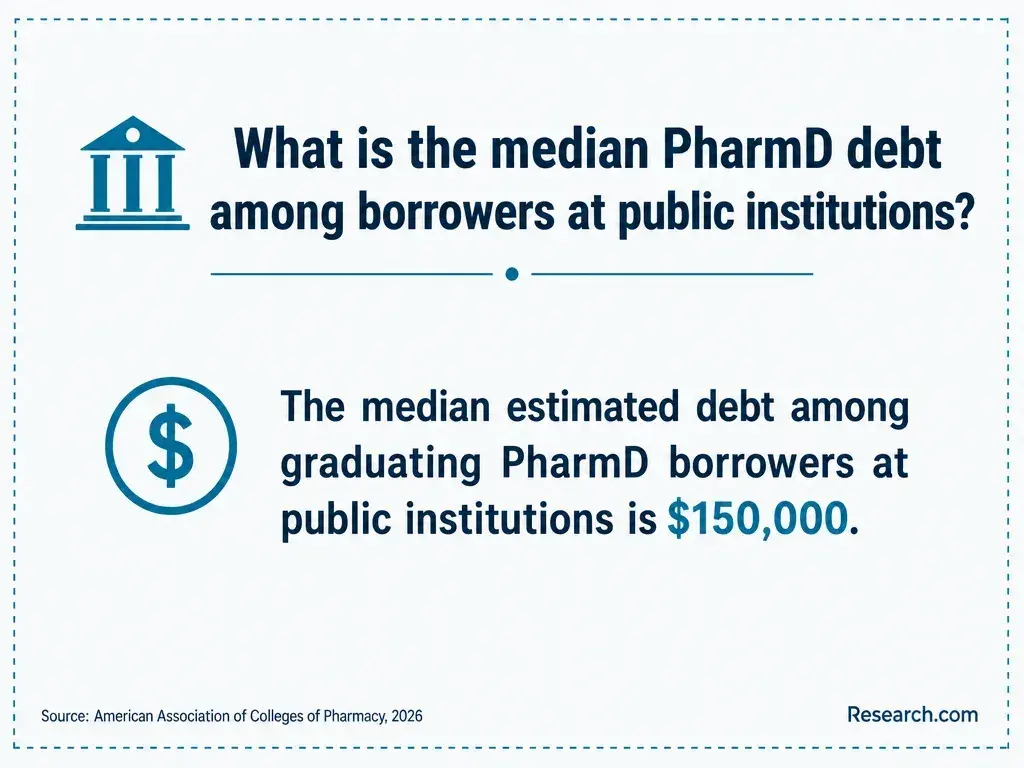
Use that broad salary context alongside a realistic education budget. Tuition is only part of the cost: prerequisites, fees, required materials, clinical-placement travel, and licensing expenses may matter. Ask each school for its current cost of attendance and aid guidance; federal borrowing rules changed for many new graduate and professional borrowers beginning July 1, 2026, so older assumptions about loan access may not apply.
An affordable route to a Pharm.D. is the one whose full cost, accreditation, placement logistics, and likely career options work together—not simply the one with the lowest advertised tuition. If expanded clinical practice is your goal, verify a real path to that work in your target state before taking on additional education costs.
Other Things You Should Know About PharmD
Yes, within the training site's policies, supervision arrangements, and applicable state rules. Student status does not authorize independent pharmacist practice.
No. Confirm what coverage an employer or training site provides and whether its limits apply to the specific services you perform.
A Pharm.D. is a doctoral degree, but title-use rules and workplace policies vary. Identify yourself clearly as a pharmacist so patients do not mistake your professional role.
Possibly. A payer or employer may require enrollment, credentialing, or a contract before claims can be submitted, even when state law permits the service.
- Pharmacists Are Not Mid-Level Providers - PMC https://pmc.ncbi.nlm.nih.gov/articles/PMC10159456/
- Frequently Asked Questions - Office of the Professions - Nysed https://www.op.nysed.gov/about/frequently-asked-questions
- Medicare Part B Drugs Overview | congress.gov https://www.congress.gov/crs-product/IF13237
- S. 2800 (Introduced-in-Senate) | govinfo.gov https://www.govinfo.gov/content/pkg/BILLS-119s2800is/xhtml/BILLS-119s2800is.html
- What Part B covers | Medicare https://www.medicare.gov/providers-services/original-medicare/part-b
- Pharmacist Information Center | cms.gov https://www.cms.gov/pharmacist-information-center
- Pharmacy Contributions to Improved Population Health | cdc.gov https://www.cdc.gov/pcd/issues/2020/20_0350.htm
- What's the Difference Between a PharmD and an RPh? | University of Findlay https://pharmdonline.findlay.edu/blog/rph-vs-pharmd
- What Is a PharmD Degree? | MCPHS https://www.mcphs.edu/admission-and-aid/blog/what-is-a-pharmd-degree
- Key state-level policy elements governing pharmacist collaborative practice | wiley.com https://accpjournals.onlinelibrary.wiley.com/doi/10.1002/jac5.1654