
Pharm.D. Eligibility After Two Years of Undergraduate Study

Co-Founder and Chief Data Scientist
Two years of undergraduate study may be enough to apply to a Doctor of Pharmacy (Pharm.D.) program, but only if your courses satisfy that school's admission requirements. For students planning their next semester or deciding whether to finish a bachelor's degree, the distinction can save time and prevent costly application mistakes.
This guide explains how to check eligibility, compare the time and cost of available pathways, and identify the requirements that still stand between admission and pharmacist licensure.
Key Things You Should Know
- Yes, some Pharm.D. programs admit applicants without a bachelor's degree after approximately two years of qualifying undergraduate coursework; the required courses and credits vary by school.
- Those undergraduate courses are prerequisites, not the professional degree. A traditional Pharm.D. curriculum commonly takes four additional years, although program structures differ.
- A Pharm.D. alone does not confer a pharmacist license. The Bureau of Labor Statistics reports pharmacist median annual pay of $140,910 in May 2025, but that figure does not predict an individual graduate's earnings.
Can you enter a PharmD program after two years of undergraduate study?
Yes, if those two years include every prerequisite required by the programs you plan to apply to. Schools assess completed courses, laboratory work, grades, and credit totals, not just the number of semesters you have attended. Two students with the same amount of college experience can therefore have different eligibility.
Start with each school's current admissions page and PharmCAS directory entry, where applicable. Compare published minimums with your transcript rather than treating a list of pharmacy schools and entry standards as proof that you qualify. Meeting a minimum makes you eligible to be considered; it does not guarantee admission.
What undergraduate prerequisites are required for PharmD admission?
Prerequisites commonly span chemistry, biology, other sciences, mathematics, and written communication. The precise courses and labs vary. A school may also specify minimum grades, a prerequisite or overall GPA, course-age limits, and a deadline for finishing courses still in progress when you apply.
Before enrolling in another class, ask each admissions office to evaluate your proposed course equivalents. The receiving school decides whether community-college, Advanced Placement, International Baccalaureate, online-lab, repeated, or other prior coursework satisfies its rules. Acceptance as undergraduate prerequisite credit is different from transfer into the professional Pharm.D. curriculum; this distinction matters when you plan to apply prior college credits to pharmacy programs.
Does PharmD admission require a bachelor's degree?
No, not at every school. Some admit applicants who have completed specified undergraduate prerequisites without awarding or requiring a bachelor's degree first; others require a degree or offer pathways designed around one. Finishing a bachelor's may give you more time to complete missing science courses or pursue another career option, but it also adds time and potentially cost if your target Pharm.D. programs do not require it.
If you are short a course at application time, check whether each school permits it to remain in progress and when it must be completed. Rules for transcripts, recommendations, interviews, supplemental applications, and deposits also differ. Use pharmacy school application readiness information as a planning aid, then confirm the current admissions cycle directly with each school. The Pharmacy College Admission Test (PCAT) was retired in 2024; it is not a current exam you can schedule to strengthen an application.
A traditional professional Pharm.D. program commonly takes four academic years after prerequisites. Some schools use different calendars or accelerated structures, so compare the actual start date, graduation date, breaks, and required in-person commitments - not just a label such as "accelerated." Two years of prerequisites followed by a four-year professional program is one possible route, not a universal timetable.
The table separates time spent preparing to apply from time spent earning the professional degree. It can help you identify which part of your own timeline a school's advertised duration describes.
| Stage | What it covers | Planning implication |
| Undergraduate preparation | School-specific prerequisite courses and labs | May take longer than two years if courses are missing or must be retaken |
| Professional Pharm.D. program | Pharmacy coursework and supervised practice experiences | Traditional programs commonly take four additional years; other calendars vary |
| Licensure | State-board eligibility, examinations, and other jurisdictional requirements | Graduation does not itself authorize practice as a pharmacist |
If speed is your priority, compare the full path from your current transcript to licensure. Broad doctoral degree length comparisons may provide context, but a shorter doctorate in another field is not a substitute for the professional Pharm.D. required for the usual U.S.-educated pharmacist pathway.
After prerequisites, students move into professional study of how medications work, how to select and monitor treatment, and how to communicate with patients and healthcare teams. Curricula commonly include pharmacology, medicinal chemistry, therapeutics, calculations, medication safety, law, and practice skills. Schools also require supervised experiential education: introductory pharmacy practice experiences (IPPEs) and more advanced pharmacy practice experiences (APPEs). A program's catalog determines its exact courses and sequence.
A biology or chemistry background may help with the scientific foundation, but it does not replace patient-care training or automatically waive professional courses. Students transitioning into a Doctor of Pharmacy program should check how their completed courses apply to admission and where additional preparation is needed.
Programs may deliver some Pharm.D. instruction online or in a hybrid format, but online coursework does not eliminate hands-on training. Confirm scheduled live classes, campus visits, labs, assessments, and in-person IPPE and APPE rotations. Ask who arranges or approves placements, whether travel may be necessary, and what intern registration, background checks, or health documentation you will need. Do not assume rotations can be completed remotely or at your current workplace.
For any of the online pharmacy education options, check the specific professional program's current status in the Accreditation Council for Pharmacy Education (ACPE) directory. ACPE professional-program accreditation is distinct from the university's institutional accreditation and from authorization to enroll a student living in your state. Confirm state authorization, clinical-placement feasibility, and your intended licensing board's rules separately before committing.
There is no reliable nationwide price for this route. Your cost depends on the school, residency classification, remaining prerequisites, program length, and living expenses. Request the current tuition and required-fee schedule for the entire professional program, then account for books and clinical resources, equipment, background checks, immunizations, rotation travel or housing, and licensing-related expenses. Compare costs in the same units; a per-credit price is not a total-program bill.
An online Pharm.D. cost comparison is a starting point, not a substitute for a personalized cost-of-attendance estimate. Ask the financial aid office how it classifies you and which aid rules apply to your entry date. Federal borrowing rules changed for many new graduate and professional borrowers beginning July 1, 2026, so do not build a plan around older loan limits or assume Grad PLUS will cover any gap. Compare likely borrowing with the time you may need to reduce paid work during rotations.
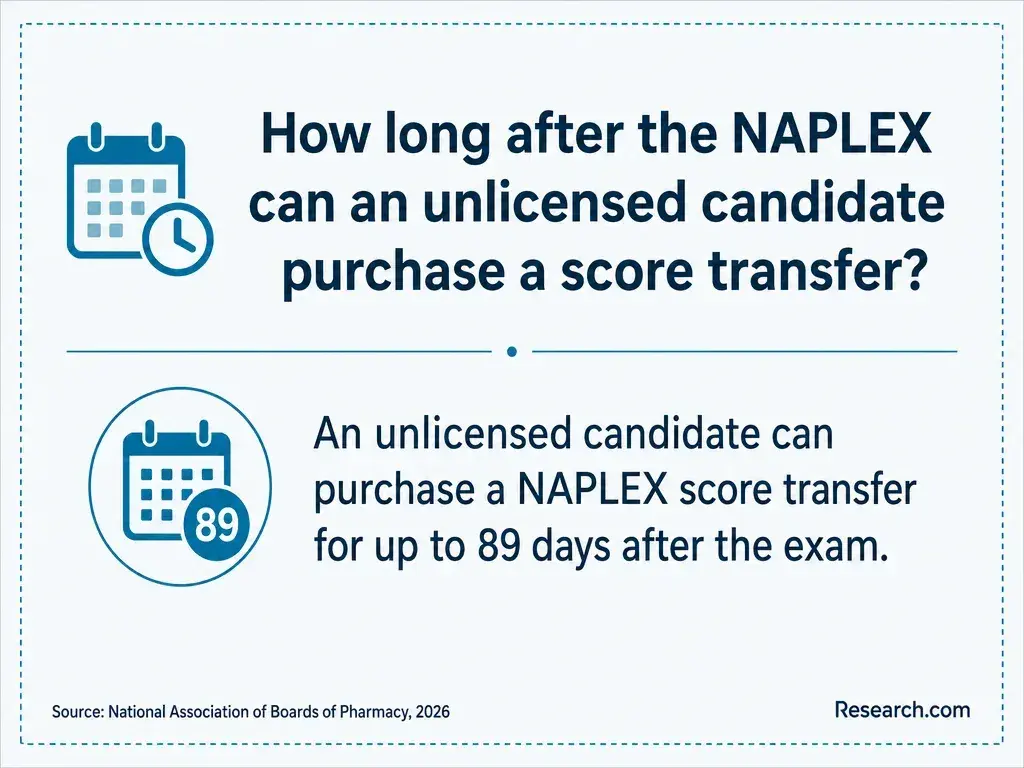
Graduating from an ACPE-accredited Pharm.D. program is an educational step toward U.S. pharmacist licensure, not a license. A state board determines eligibility and issues the license. Requirements can include registration or supervised experience, the North American Pharmacist Licensure Examination (NAPLEX), a jurisdiction-specific law examination or assessment, and other board conditions. Do not assume your intended jurisdiction uses the Multistate Pharmacy Jurisprudence Examination (MPJE): some jurisdictions began transitioning to the Uniform MPJE (UMPJE) in 2026, and rules vary.
Check the board where you intend to practice before choosing a program or rotation location. Even a Pharm.D. completion pathway with a faster academic calendar does not bypass state licensing requirements. Internationally educated pharmacists may face a different eligibility process and should consult the relevant board and the National Association of Boards of Pharmacy.
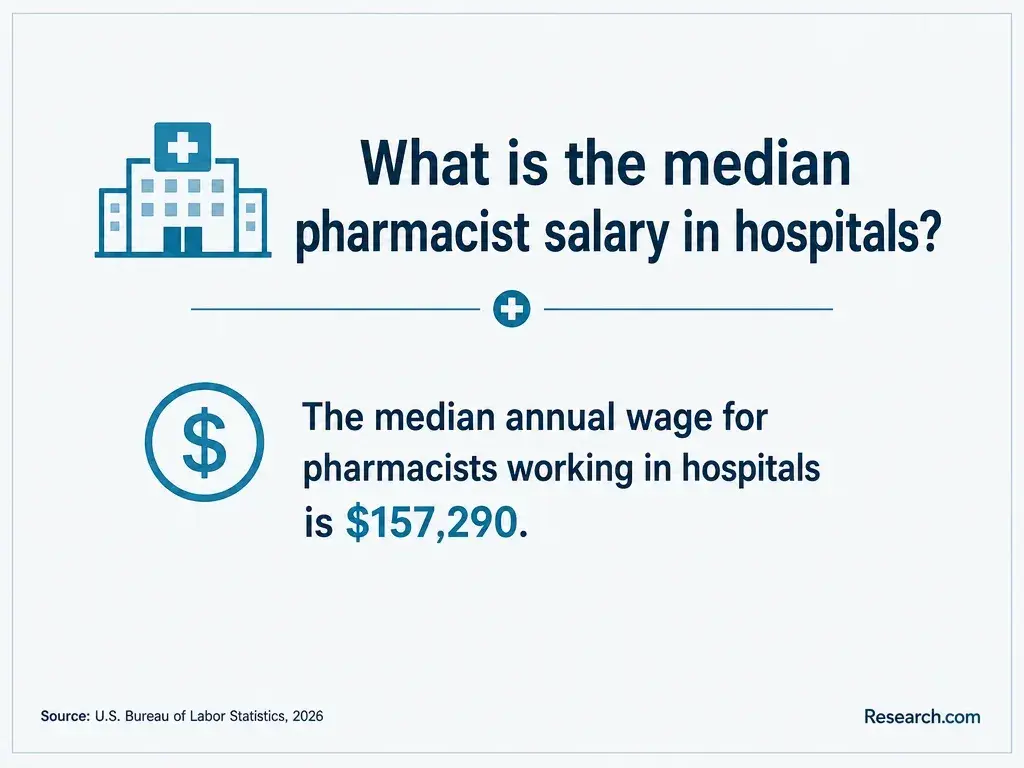
Licensed pharmacists work in settings that include community pharmacies, hospitals, ambulatory care, and specialty pharmacy. Duties and hiring expectations differ. The Bureau of Labor Statistics reports median annual pay for pharmacists of $140,910 in May 2025, with 5% projected job growth, 2025-2035 and about 12,500 openings per year projected. Those occupation-wide figures are not starting salaries or guarantees for a particular setting.
Some clinical roles favor postgraduate residency training; fellowships often emphasize areas such as industry or research. Neither is universally required for pharmacist practice. Optional specialty board certification is separate from state licensure and has its own eligibility rules. If your goal is a pharmacy support role rather than licensed pharmacist practice, shorter online pharmacy study options may be worth comparing, but a pharmacy technician qualification does not substitute for a Pharm.D. or pharmacist license.
How can you choose an accredited PharmD program?
Begin with programs whose current prerequisites match your transcript, then verify each program's ACPE status. Compare graduation timing, published tuition and fees, campus attendance, rotation placement expectations, and eligibility to enroll and complete placements from your state. Review published NAPLEX outcomes with their reporting year and cohort context rather than treating one result as a promise of your own success.
These steps turn a broad program search into a decision you can document before paying an application fee or deposit:
- Send your transcript and proposed remaining courses to each school, request written clarification of prerequisite equivalents and completion deadlines.
- Confirm professional-program accreditation, delivery requirements, rotation logistics, and the rules of the state where you intend to seek licensure.
- Request a full cost estimate and current financial aid assessment, then compare the resulting timeline and borrowing needs across your eligible programs.
Resources on affordable pharmacy studies with a focused timeline can help narrow candidates, but the lowest advertised price or shortest schedule may lose its advantage if you need extra prerequisites, extensive travel, or time away from work. Choose only after those costs and requirements are clear.
Other Things You Should Know About PharmD
Not universally. Schools set their own experience expectations. Check whether each program requires, recommends, or merely accepts work or shadowing experience, and confirm how it must be documented.
Usually, but you must follow the new admissions cycle's rules and deadlines. Ask the school whether it offers feedback, then address specific weaknesses such as missing coursework or an incomplete application.
Policies vary by school. Ask whether the program accepts the coursework, requires a particular credential evaluation, or requires certain prerequisites to be taken at a U.S. institution before paying for an evaluation.
That depends on the school's written offer and deposit policy. Check the amount, deadline, refund conditions, and whether the payment is credited toward tuition before accepting a place.
- U.S. Graduate Pharmacy References | EducationUSA https://educationusa.state.gov/your-5-steps-us-study/research-your-options/graduate/graduate-student/what-graduate-programs-a-4
- Are Prerequisite Courses Barriers to Pharmacy Admission or the Keys to Student Success? - PMC https://pmc.ncbi.nlm.nih.gov/articles/PMC10159397/
- Admissions Frequently Asked Questions and Tips | ucsf.edu https://pharmd.ucsf.edu/admissions/faq-tips
- PharmD Admissions - R. Ken Coit College of Pharmacy https://www.pharmacy.arizona.edu/academics/pharmd/admissions
- PharmD FAQs - UNC Eshelman School of Pharmacy https://pharmacy.unc.edu/education/pharmd/pharmd-admissions-faqs/
- Standardized Tests - College of Arts & Science https://cas.nyu.edu/prehealth/application-process/standardized-tests.html
- Doctor of Pharmacy | St. John's University https://www.stjohns.edu/academics/programs/doctor-pharmacy
- Admission Requirements | ufl.edu https://admissions.pharmacy.ufl.edu/steps-to-apply/application-requirements/
- Prerequisite Coursework | School of Pharmacy https://www.pharmacy.pitt.edu/academics/doctor-pharmacy/apply-pharmd-program/prerequisite-coursework
- Doctor of Pharmacy (PharmD) - Prospective Students https://www.pharmacy.umaryland.edu/academics/pharmd/prospective-students/


